
| PathWhiz ID | Pathway | Meta Data |
|---|---|---|
PW124766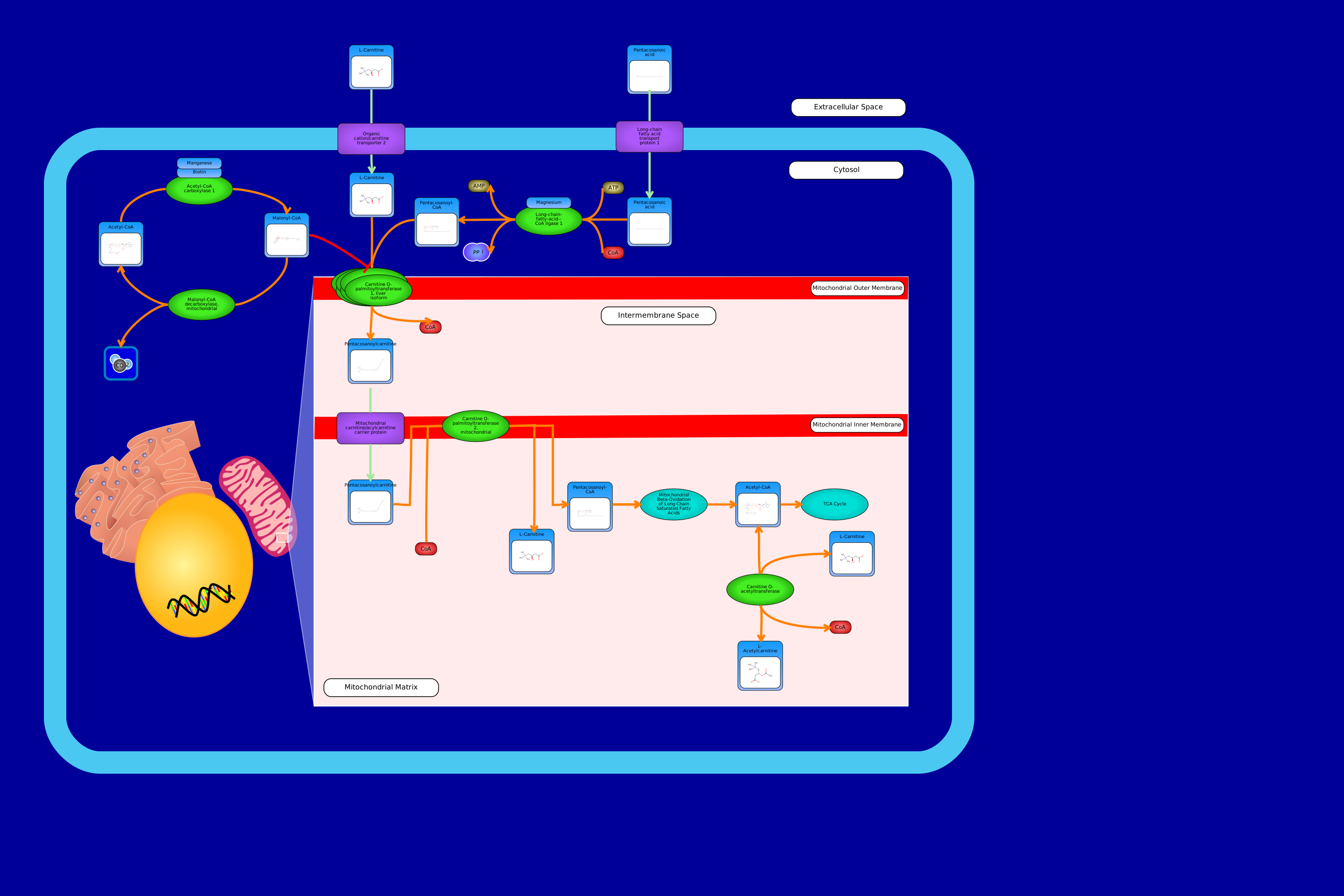 View Pathway
|
Acylcarnitine PentacosanoylcarnitineHomo sapiens
Pentacosanoylcarnitine is an acylcarnitine. The general role of acylcarnitines is to transport acyl-groups, organic acids and fatty acids, from the cytoplasm into the mitochondria so that they can be broken down to produce energy. As part of this process, pentacosanoic acid is first transported into the cell via the long-chain fatty acid transport protein 1 (FATP1). Once inside the cell it undergoes a reaction to form an acyl-CoA derivative called pentacosanoyl-CoA. This reaction is facilitated by the long-chain fatty-acid CoA ligase 1 protein, which adds a CoA moiety to appropriate acyl groups. Many acyl-CoA groups will then further react with other zwitterionic compounds such as carnitine (to form acylcarnitines) and amino acids (to form acyl amides). The carnitine needed to form acylcarnitines inside the cell is transported into the cell by the organic cation/carnitine transporter 2. In forming an acylcarnitine derivative, pentacosanoyl-CoA reacts with L-carnitine to form pentacosanoylcarnitine. This reaction is catalyzed by carnitine O-palmitoyltransferase. This enzyme resides in the mitochondrial outer membrane. While this reaction takes place, the pentacosanoylcarnitine is moved into the mitochondrial intermembrane space. Following the reaction, the newly synthesized acylcarnitine is transported into the mitochondrial matrix by a mitochondrial carnitine/acylcarnitine carrier protein found in the mitochondrial inner membrane. Once in the matrix, pentacosanoylcarnitine can react with the carnitine O-palmitoyltransferase 2 enzyme found in the mitochondrial inner membrane to once again form pentacosanoyl-CoA and L-carnitine. Pentacosanoyl-CoA then enters into the mitochondrial beta-oxidation pathway to form aceytl-CoA. Acetyl-CoA can go on to enter the TCA cycle, or it can react with L-carnitine to form L-acetylcarnitine in a reaction catalyzed by Carnitine O-acetyltransferase. This reaction can occur in both directions, and L-acetylcarnitine and CoA can react to form acetyl-CoA and L-carnitine in certain circumstances. Finally, acetyl-CoA in the cytosol can be catalyzed by acetyl-CoA carboxylase 1 to form malonyl-CoA, which inhibits the action of carnitine O-palmitoyltransferase 1, thereby preventing pentacosanoylcarnitine from forming and thereby preventing it from being transported into the mitochondria.
|
Creator: Jeanne Coleongco Created On: April 16, 2021 at 16:08 Last Updated: April 16, 2021 at 16:08 |
PW125697 View Pathway
|
Acylcarnitine Pentadeca-2,4,6-trienedioylcarnitineHomo sapiens
Pentadeca-2,4,6-trienedioylcarnitine is an acylcarnitine. The general role of acylcarnitines is to transport acyl-groups, organic acids and fatty acids, from the cytoplasm into the mitochondria so that they can be broken down to produce energy. As part of this process, pentadeca-2,4,6-trienedioic acid is first transported into the cell via the long-chain fatty acid transport protein 1 (FATP1). Once inside the cell it undergoes a reaction to form an acyl-CoA derivative called pentadeca-2,4,6-trienedioyl-CoA. This reaction is facilitated by the long-chain fatty-acid CoA ligase 1 protein, which adds a CoA moiety to appropriate acyl groups. Many acyl-CoA groups will then further react with other zwitterionic compounds such as carnitine (to form acylcarnitines) and amino acids (to form acyl amides). The carnitine needed to form acylcarnitines inside the cell is transported into the cell by the organic cation/carnitine transporter 2. In forming an acylcarnitine derivative, pentadeca-2,4,6-trienedioyl-CoA reacts with L-carnitine to form pentadeca-2,4,6-trienedioylcarnitine. This reaction is catalyzed by carnitine O-palmitoyltransferase. This enzyme resides in the mitochondrial outer membrane. While this reaction takes place, the pentadeca-2,4,6-trienedioylcarnitine is moved into the mitochondrial intermembrane space. Following the reaction, the newly synthesized acylcarnitine is transported into the mitochondrial matrix by a mitochondrial carnitine/acylcarnitine carrier protein found in the mitochondrial inner membrane. Once in the matrix, pentadeca-2,4,6-trienedioylcarnitine can react with the carnitine O-palmitoyltransferase 2 enzyme found in the mitochondrial inner membrane to once again form pentadeca-2,4,6-trienedioyl-CoA and L-carnitine. Pentadeca-2,4,6-trienedioyl-CoA then enters into the mitochondrial beta-oxidation pathway to form aceytl-CoA. Acetyl-CoA can go on to enter the TCA cycle, or it can react with L-carnitine to form L-acetylcarnitine in a reaction catalyzed by Carnitine O-acetyltransferase. This reaction can occur in both directions, and L-acetylcarnitine and CoA can react to form acetyl-CoA and L-carnitine in certain circumstances. Finally, acetyl-CoA in the cytosol can be catalyzed by acetyl-CoA carboxylase 1 to form malonyl-CoA, which inhibits the action of carnitine O-palmitoyltransferase 1, thereby preventing pentadeca-2,4,6-trienedioylcarnitine from forming and thereby preventing it from being transported into the mitochondria.
|
Creator: Jeanne Coleongco Created On: April 17, 2021 at 02:34 Last Updated: April 17, 2021 at 02:34 |
PW125699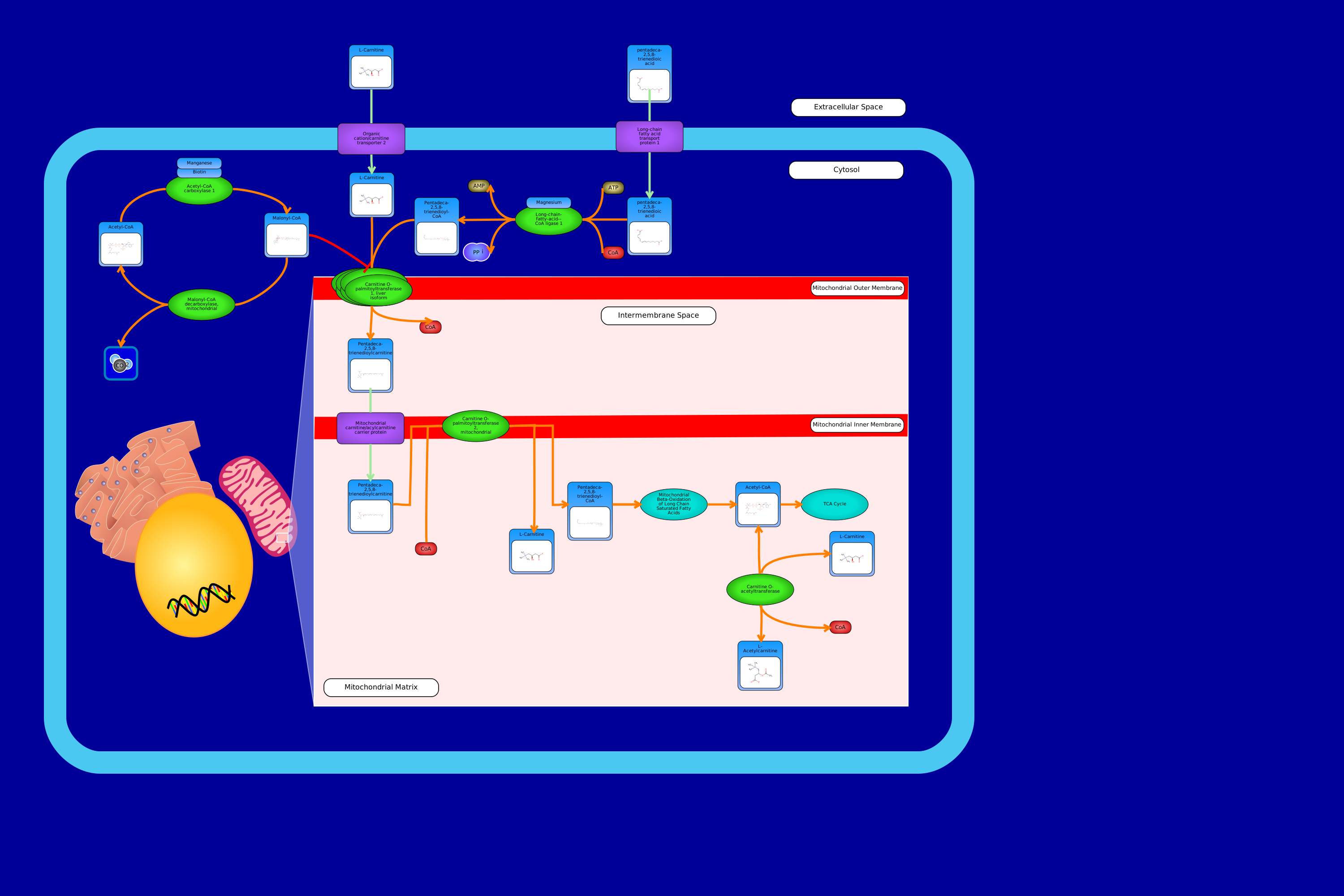 View Pathway
|
Acylcarnitine Pentadeca-2,5,8-trienedioylcarnitineHomo sapiens
Pentadeca-2,5,8-trienedioylcarnitine is an acylcarnitine. The general role of acylcarnitines is to transport acyl-groups, organic acids and fatty acids, from the cytoplasm into the mitochondria so that they can be broken down to produce energy. As part of this process, pentadeca-2,5,8-trienedioic acid is first transported into the cell via the long-chain fatty acid transport protein 1 (FATP1). Once inside the cell it undergoes a reaction to form an acyl-CoA derivative called pentadeca-2,5,8-trienedioyl-CoA. This reaction is facilitated by the long-chain fatty-acid CoA ligase 1 protein, which adds a CoA moiety to appropriate acyl groups. Many acyl-CoA groups will then further react with other zwitterionic compounds such as carnitine (to form acylcarnitines) and amino acids (to form acyl amides). The carnitine needed to form acylcarnitines inside the cell is transported into the cell by the organic cation/carnitine transporter 2. In forming an acylcarnitine derivative, pentadeca-2,5,8-trienedioyl-CoA reacts with L-carnitine to form pentadeca-2,5,8-trienedioylcarnitine. This reaction is catalyzed by carnitine O-palmitoyltransferase. This enzyme resides in the mitochondrial outer membrane. While this reaction takes place, the pentadeca-2,5,8-trienedioylcarnitine is moved into the mitochondrial intermembrane space. Following the reaction, the newly synthesized acylcarnitine is transported into the mitochondrial matrix by a mitochondrial carnitine/acylcarnitine carrier protein found in the mitochondrial inner membrane. Once in the matrix, pentadeca-2,5,8-trienedioylcarnitine can react with the carnitine O-palmitoyltransferase 2 enzyme found in the mitochondrial inner membrane to once again form pentadeca-2,5,8-trienedioyl-CoA and L-carnitine. Pentadeca-2,5,8-trienedioyl-CoA then enters into the mitochondrial beta-oxidation pathway to form aceytl-CoA. Acetyl-CoA can go on to enter the TCA cycle, or it can react with L-carnitine to form L-acetylcarnitine in a reaction catalyzed by Carnitine O-acetyltransferase. This reaction can occur in both directions, and L-acetylcarnitine and CoA can react to form acetyl-CoA and L-carnitine in certain circumstances. Finally, acetyl-CoA in the cytosol can be catalyzed by acetyl-CoA carboxylase 1 to form malonyl-CoA, which inhibits the action of carnitine O-palmitoyltransferase 1, thereby preventing pentadeca-2,5,8-trienedioylcarnitine from forming and thereby preventing it from being transported into the mitochondria.
|
Creator: Jeanne Coleongco Created On: April 17, 2021 at 02:35 Last Updated: April 17, 2021 at 02:35 |
PW125704 View Pathway
|
Acylcarnitine Pentadeca-3,5,7-trienedioylcarnitineHomo sapiens
Pentadeca-3,5,7-trienedioylcarnitine is an acylcarnitine. The general role of acylcarnitines is to transport acyl-groups, organic acids and fatty acids, from the cytoplasm into the mitochondria so that they can be broken down to produce energy. As part of this process, pentadeca-3,5,7-trienedioic acid is first transported into the cell via the long-chain fatty acid transport protein 1 (FATP1). Once inside the cell it undergoes a reaction to form an acyl-CoA derivative called pentadeca-3,5,7-trienedioyl-CoA. This reaction is facilitated by the long-chain fatty-acid CoA ligase 1 protein, which adds a CoA moiety to appropriate acyl groups. Many acyl-CoA groups will then further react with other zwitterionic compounds such as carnitine (to form acylcarnitines) and amino acids (to form acyl amides). The carnitine needed to form acylcarnitines inside the cell is transported into the cell by the organic cation/carnitine transporter 2. In forming an acylcarnitine derivative, pentadeca-3,5,7-trienedioyl-CoA reacts with L-carnitine to form pentadeca-3,5,7-trienedioylcarnitine. This reaction is catalyzed by carnitine O-palmitoyltransferase. This enzyme resides in the mitochondrial outer membrane. While this reaction takes place, the pentadeca-3,5,7-trienedioylcarnitine is moved into the mitochondrial intermembrane space. Following the reaction, the newly synthesized acylcarnitine is transported into the mitochondrial matrix by a mitochondrial carnitine/acylcarnitine carrier protein found in the mitochondrial inner membrane. Once in the matrix, pentadeca-3,5,7-trienedioylcarnitine can react with the carnitine O-palmitoyltransferase 2 enzyme found in the mitochondrial inner membrane to once again form pentadeca-3,5,7-trienedioyl-CoA and L-carnitine. Pentadeca-3,5,7-trienedioyl-CoA then enters into the mitochondrial beta-oxidation pathway to form aceytl-CoA. Acetyl-CoA can go on to enter the TCA cycle, or it can react with L-carnitine to form L-acetylcarnitine in a reaction catalyzed by Carnitine O-acetyltransferase. This reaction can occur in both directions, and L-acetylcarnitine and CoA can react to form acetyl-CoA and L-carnitine in certain circumstances. Finally, acetyl-CoA in the cytosol can be catalyzed by acetyl-CoA carboxylase 1 to form malonyl-CoA, which inhibits the action of carnitine O-palmitoyltransferase 1, thereby preventing pentadeca-3,5,7-trienedioylcarnitine from forming and thereby preventing it from being transported into the mitochondria.
|
Creator: Jeanne Coleongco Created On: April 17, 2021 at 02:37 Last Updated: April 17, 2021 at 02:37 |
PW125698 View Pathway
|
Acylcarnitine Pentadeca-3,6,9-trienedioylcarnitineHomo sapiens
Pentadeca-3,6,9-trienedioylcarnitine is an acylcarnitine. The general role of acylcarnitines is to transport acyl-groups, organic acids and fatty acids, from the cytoplasm into the mitochondria so that they can be broken down to produce energy. As part of this process, pentadeca-3,6,9-trienedioic acid is first transported into the cell via the long-chain fatty acid transport protein 1 (FATP1). Once inside the cell it undergoes a reaction to form an acyl-CoA derivative called pentadeca-3,6,9-trienedioyl-CoA. This reaction is facilitated by the long-chain fatty-acid CoA ligase 1 protein, which adds a CoA moiety to appropriate acyl groups. Many acyl-CoA groups will then further react with other zwitterionic compounds such as carnitine (to form acylcarnitines) and amino acids (to form acyl amides). The carnitine needed to form acylcarnitines inside the cell is transported into the cell by the organic cation/carnitine transporter 2. In forming an acylcarnitine derivative, pentadeca-3,6,9-trienedioyl-CoA reacts with L-carnitine to form pentadeca-3,6,9-trienedioylcarnitine. This reaction is catalyzed by carnitine O-palmitoyltransferase. This enzyme resides in the mitochondrial outer membrane. While this reaction takes place, the pentadeca-3,6,9-trienedioylcarnitine is moved into the mitochondrial intermembrane space. Following the reaction, the newly synthesized acylcarnitine is transported into the mitochondrial matrix by a mitochondrial carnitine/acylcarnitine carrier protein found in the mitochondrial inner membrane. Once in the matrix, pentadeca-3,6,9-trienedioylcarnitine can react with the carnitine O-palmitoyltransferase 2 enzyme found in the mitochondrial inner membrane to once again form pentadeca-3,6,9-trienedioyl-CoA and L-carnitine. Pentadeca-3,6,9-trienedioyl-CoA then enters into the mitochondrial beta-oxidation pathway to form aceytl-CoA. Acetyl-CoA can go on to enter the TCA cycle, or it can react with L-carnitine to form L-acetylcarnitine in a reaction catalyzed by Carnitine O-acetyltransferase. This reaction can occur in both directions, and L-acetylcarnitine and CoA can react to form acetyl-CoA and L-carnitine in certain circumstances. Finally, acetyl-CoA in the cytosol can be catalyzed by acetyl-CoA carboxylase 1 to form malonyl-CoA, which inhibits the action of carnitine O-palmitoyltransferase 1, thereby preventing pentadeca-3,6,9-trienedioylcarnitine from forming and thereby preventing it from being transported into the mitochondria.
|
Creator: Jeanne Coleongco Created On: April 17, 2021 at 02:34 Last Updated: April 17, 2021 at 02:34 |
PW125700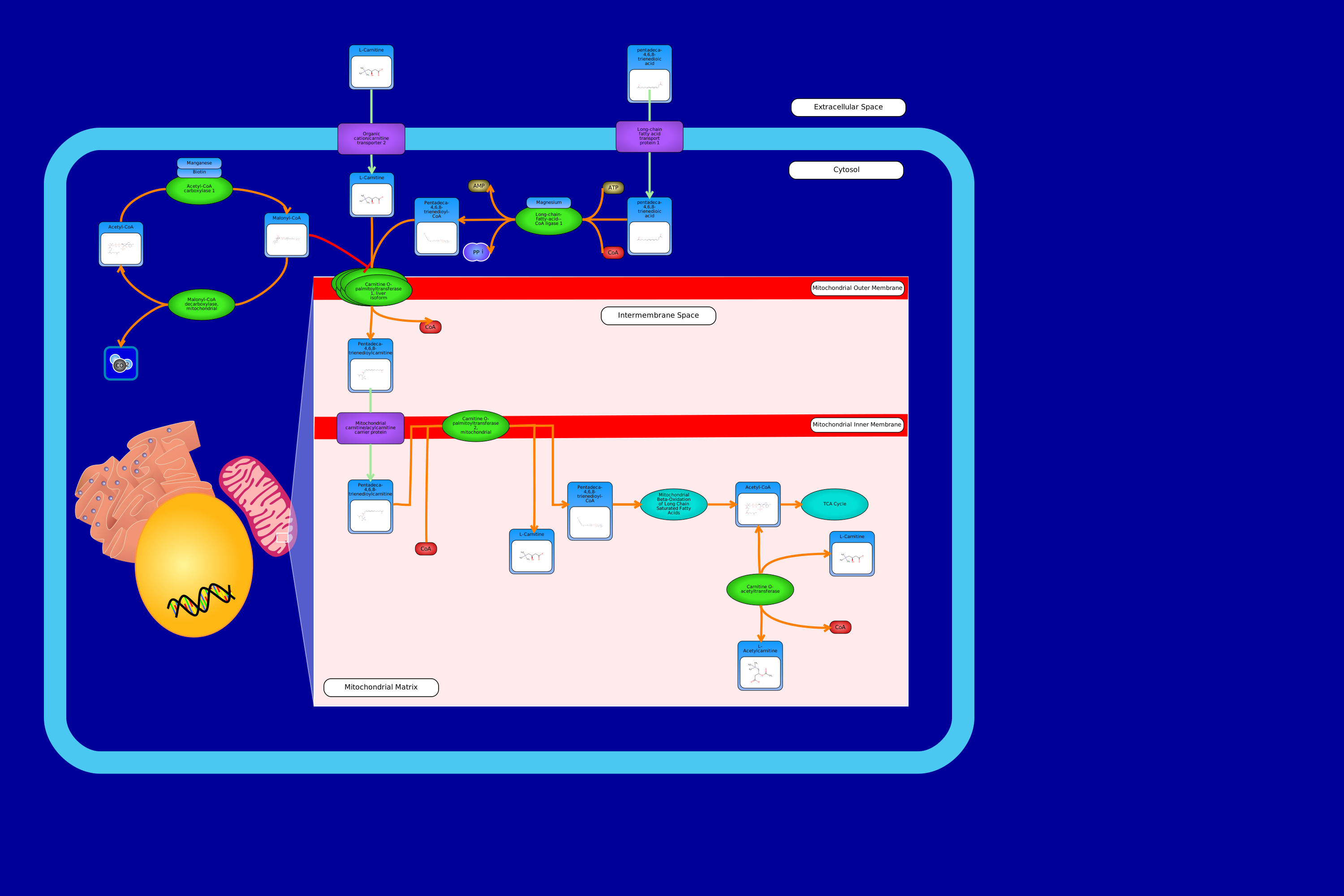 View Pathway
|
Acylcarnitine Pentadeca-4,6,8-trienedioylcarnitineHomo sapiens
Pentadeca-4,6,8-trienedioylcarnitine is an acylcarnitine. The general role of acylcarnitines is to transport acyl-groups, organic acids and fatty acids, from the cytoplasm into the mitochondria so that they can be broken down to produce energy. As part of this process, pentadeca-4,6,8-trienedioic acid is first transported into the cell via the long-chain fatty acid transport protein 1 (FATP1). Once inside the cell it undergoes a reaction to form an acyl-CoA derivative called pentadeca-4,6,8-trienedioyl-CoA. This reaction is facilitated by the long-chain fatty-acid CoA ligase 1 protein, which adds a CoA moiety to appropriate acyl groups. Many acyl-CoA groups will then further react with other zwitterionic compounds such as carnitine (to form acylcarnitines) and amino acids (to form acyl amides). The carnitine needed to form acylcarnitines inside the cell is transported into the cell by the organic cation/carnitine transporter 2. In forming an acylcarnitine derivative, pentadeca-4,6,8-trienedioyl-CoA reacts with L-carnitine to form pentadeca-4,6,8-trienedioylcarnitine. This reaction is catalyzed by carnitine O-palmitoyltransferase. This enzyme resides in the mitochondrial outer membrane. While this reaction takes place, the pentadeca-4,6,8-trienedioylcarnitine is moved into the mitochondrial intermembrane space. Following the reaction, the newly synthesized acylcarnitine is transported into the mitochondrial matrix by a mitochondrial carnitine/acylcarnitine carrier protein found in the mitochondrial inner membrane. Once in the matrix, pentadeca-4,6,8-trienedioylcarnitine can react with the carnitine O-palmitoyltransferase 2 enzyme found in the mitochondrial inner membrane to once again form pentadeca-4,6,8-trienedioyl-CoA and L-carnitine. Pentadeca-4,6,8-trienedioyl-CoA then enters into the mitochondrial beta-oxidation pathway to form aceytl-CoA. Acetyl-CoA can go on to enter the TCA cycle, or it can react with L-carnitine to form L-acetylcarnitine in a reaction catalyzed by Carnitine O-acetyltransferase. This reaction can occur in both directions, and L-acetylcarnitine and CoA can react to form acetyl-CoA and L-carnitine in certain circumstances. Finally, acetyl-CoA in the cytosol can be catalyzed by acetyl-CoA carboxylase 1 to form malonyl-CoA, which inhibits the action of carnitine O-palmitoyltransferase 1, thereby preventing pentadeca-4,6,8-trienedioylcarnitine from forming and thereby preventing it from being transported into the mitochondria.
|
Creator: Jeanne Coleongco Created On: April 17, 2021 at 02:35 Last Updated: April 17, 2021 at 02:35 |
PW125701 View Pathway
|
Acylcarnitine Pentadeca-4,7,10-trienedioylcarnitineHomo sapiens
Pentadeca-4,7,10-trienedioylcarnitine is an acylcarnitine. The general role of acylcarnitines is to transport acyl-groups, organic acids and fatty acids, from the cytoplasm into the mitochondria so that they can be broken down to produce energy. As part of this process, pentadeca-4,7,10-trienedioic acid is first transported into the cell via the long-chain fatty acid transport protein 1 (FATP1). Once inside the cell it undergoes a reaction to form an acyl-CoA derivative called pentadeca-4,7,10-trienedioyl-CoA. This reaction is facilitated by the long-chain fatty-acid CoA ligase 1 protein, which adds a CoA moiety to appropriate acyl groups. Many acyl-CoA groups will then further react with other zwitterionic compounds such as carnitine (to form acylcarnitines) and amino acids (to form acyl amides). The carnitine needed to form acylcarnitines inside the cell is transported into the cell by the organic cation/carnitine transporter 2. In forming an acylcarnitine derivative, pentadeca-4,7,10-trienedioyl-CoA reacts with L-carnitine to form pentadeca-4,7,10-trienedioylcarnitine. This reaction is catalyzed by carnitine O-palmitoyltransferase. This enzyme resides in the mitochondrial outer membrane. While this reaction takes place, the pentadeca-4,7,10-trienedioylcarnitine is moved into the mitochondrial intermembrane space. Following the reaction, the newly synthesized acylcarnitine is transported into the mitochondrial matrix by a mitochondrial carnitine/acylcarnitine carrier protein found in the mitochondrial inner membrane. Once in the matrix, pentadeca-4,7,10-trienedioylcarnitine can react with the carnitine O-palmitoyltransferase 2 enzyme found in the mitochondrial inner membrane to once again form pentadeca-4,7,10-trienedioyl-CoA and L-carnitine. Pentadeca-4,7,10-trienedioyl-CoA then enters into the mitochondrial beta-oxidation pathway to form aceytl-CoA. Acetyl-CoA can go on to enter the TCA cycle, or it can react with L-carnitine to form L-acetylcarnitine in a reaction catalyzed by Carnitine O-acetyltransferase. This reaction can occur in both directions, and L-acetylcarnitine and CoA can react to form acetyl-CoA and L-carnitine in certain circumstances. Finally, acetyl-CoA in the cytosol can be catalyzed by acetyl-CoA carboxylase 1 to form malonyl-CoA, which inhibits the action of carnitine O-palmitoyltransferase 1, thereby preventing pentadeca-4,7,10-trienedioylcarnitine from forming and thereby preventing it from being transported into the mitochondria.
|
Creator: Jeanne Coleongco Created On: April 17, 2021 at 02:36 Last Updated: April 17, 2021 at 02:36 |
PW125691 View Pathway
|
Acylcarnitine Pentadeca-5,12-dienoylcarnitineHomo sapiens
Pentadeca-5,12-dienoylcarnitine is an acylcarnitine. The general role of acylcarnitines is to transport acyl-groups, organic acids and fatty acids, from the cytoplasm into the mitochondria so that they can be broken down to produce energy. As part of this process, pentadeca-5,12-dienoic acid is first transported into the cell via the long-chain fatty acid transport protein 1 (FATP1). Once inside the cell it undergoes a reaction to form an acyl-CoA derivative called pentadeca-5,12-dienoyl-CoA. This reaction is facilitated by the long-chain fatty-acid CoA ligase 1 protein, which adds a CoA moiety to appropriate acyl groups. Many acyl-CoA groups will then further react with other zwitterionic compounds such as carnitine (to form acylcarnitines) and amino acids (to form acyl amides). The carnitine needed to form acylcarnitines inside the cell is transported into the cell by the organic cation/carnitine transporter 2. In forming an acylcarnitine derivative, pentadeca-5,12-dienoyl-CoA reacts with L-carnitine to form pentadeca-5,12-dienoylcarnitine. This reaction is catalyzed by carnitine O-palmitoyltransferase. This enzyme resides in the mitochondrial outer membrane. While this reaction takes place, the pentadeca-5,12-dienoylcarnitine is moved into the mitochondrial intermembrane space. Following the reaction, the newly synthesized acylcarnitine is transported into the mitochondrial matrix by a mitochondrial carnitine/acylcarnitine carrier protein found in the mitochondrial inner membrane. Once in the matrix, pentadeca-5,12-dienoylcarnitine can react with the carnitine O-palmitoyltransferase 2 enzyme found in the mitochondrial inner membrane to once again form pentadeca-5,12-dienoyl-CoA and L-carnitine. Pentadeca-5,12-dienoyl-CoA then enters into the mitochondrial beta-oxidation pathway to form aceytl-CoA. Acetyl-CoA can go on to enter the TCA cycle, or it can react with L-carnitine to form L-acetylcarnitine in a reaction catalyzed by Carnitine O-acetyltransferase. This reaction can occur in both directions, and L-acetylcarnitine and CoA can react to form acetyl-CoA and L-carnitine in certain circumstances. Finally, acetyl-CoA in the cytosol can be catalyzed by acetyl-CoA carboxylase 1 to form malonyl-CoA, which inhibits the action of carnitine O-palmitoyltransferase 1, thereby preventing pentadeca-5,12-dienoylcarnitine from forming and thereby preventing it from being transported into the mitochondria.
|
Creator: Jeanne Coleongco Created On: April 17, 2021 at 02:31 Last Updated: April 17, 2021 at 02:31 |
PW125703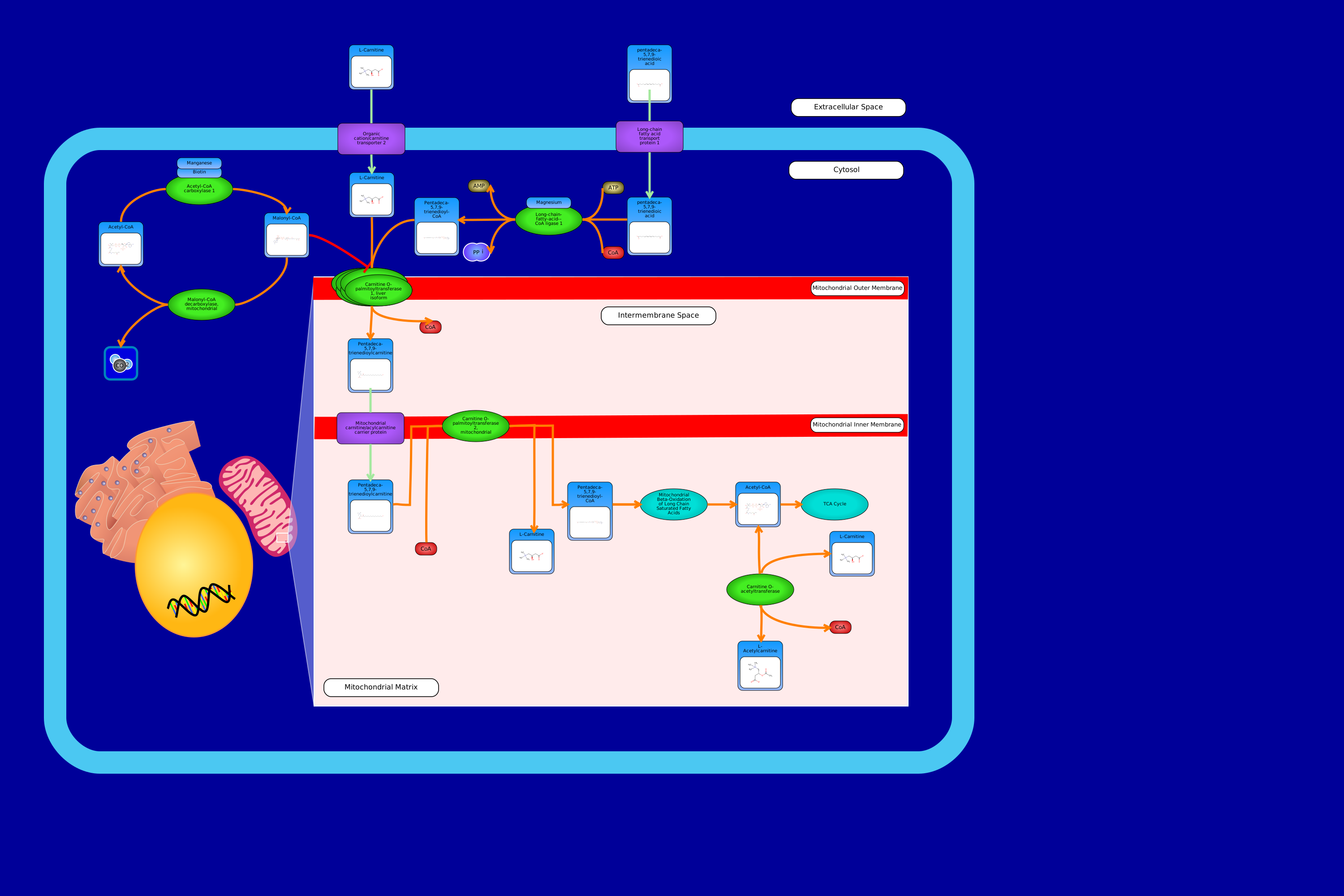 View Pathway
|
Acylcarnitine Pentadeca-5,7,9-trienedioylcarnitineHomo sapiens
Pentadeca-5,7,9-trienedioylcarnitine is an acylcarnitine. The general role of acylcarnitines is to transport acyl-groups, organic acids and fatty acids, from the cytoplasm into the mitochondria so that they can be broken down to produce energy. As part of this process, pentadeca-5,7,9-trienedioic acid is first transported into the cell via the long-chain fatty acid transport protein 1 (FATP1). Once inside the cell it undergoes a reaction to form an acyl-CoA derivative called pentadeca-5,7,9-trienedioyl-CoA. This reaction is facilitated by the long-chain fatty-acid CoA ligase 1 protein, which adds a CoA moiety to appropriate acyl groups. Many acyl-CoA groups will then further react with other zwitterionic compounds such as carnitine (to form acylcarnitines) and amino acids (to form acyl amides). The carnitine needed to form acylcarnitines inside the cell is transported into the cell by the organic cation/carnitine transporter 2. In forming an acylcarnitine derivative, pentadeca-5,7,9-trienedioyl-CoA reacts with L-carnitine to form pentadeca-5,7,9-trienedioylcarnitine. This reaction is catalyzed by carnitine O-palmitoyltransferase. This enzyme resides in the mitochondrial outer membrane. While this reaction takes place, the pentadeca-5,7,9-trienedioylcarnitine is moved into the mitochondrial intermembrane space. Following the reaction, the newly synthesized acylcarnitine is transported into the mitochondrial matrix by a mitochondrial carnitine/acylcarnitine carrier protein found in the mitochondrial inner membrane. Once in the matrix, pentadeca-5,7,9-trienedioylcarnitine can react with the carnitine O-palmitoyltransferase 2 enzyme found in the mitochondrial inner membrane to once again form pentadeca-5,7,9-trienedioyl-CoA and L-carnitine. Pentadeca-5,7,9-trienedioyl-CoA then enters into the mitochondrial beta-oxidation pathway to form aceytl-CoA. Acetyl-CoA can go on to enter the TCA cycle, or it can react with L-carnitine to form L-acetylcarnitine in a reaction catalyzed by Carnitine O-acetyltransferase. This reaction can occur in both directions, and L-acetylcarnitine and CoA can react to form acetyl-CoA and L-carnitine in certain circumstances. Finally, acetyl-CoA in the cytosol can be catalyzed by acetyl-CoA carboxylase 1 to form malonyl-CoA, which inhibits the action of carnitine O-palmitoyltransferase 1, thereby preventing pentadeca-5,7,9-trienedioylcarnitine from forming and thereby preventing it from being transported into the mitochondria.
|
Creator: Jeanne Coleongco Created On: April 17, 2021 at 02:37 Last Updated: April 17, 2021 at 02:37 |
PW125705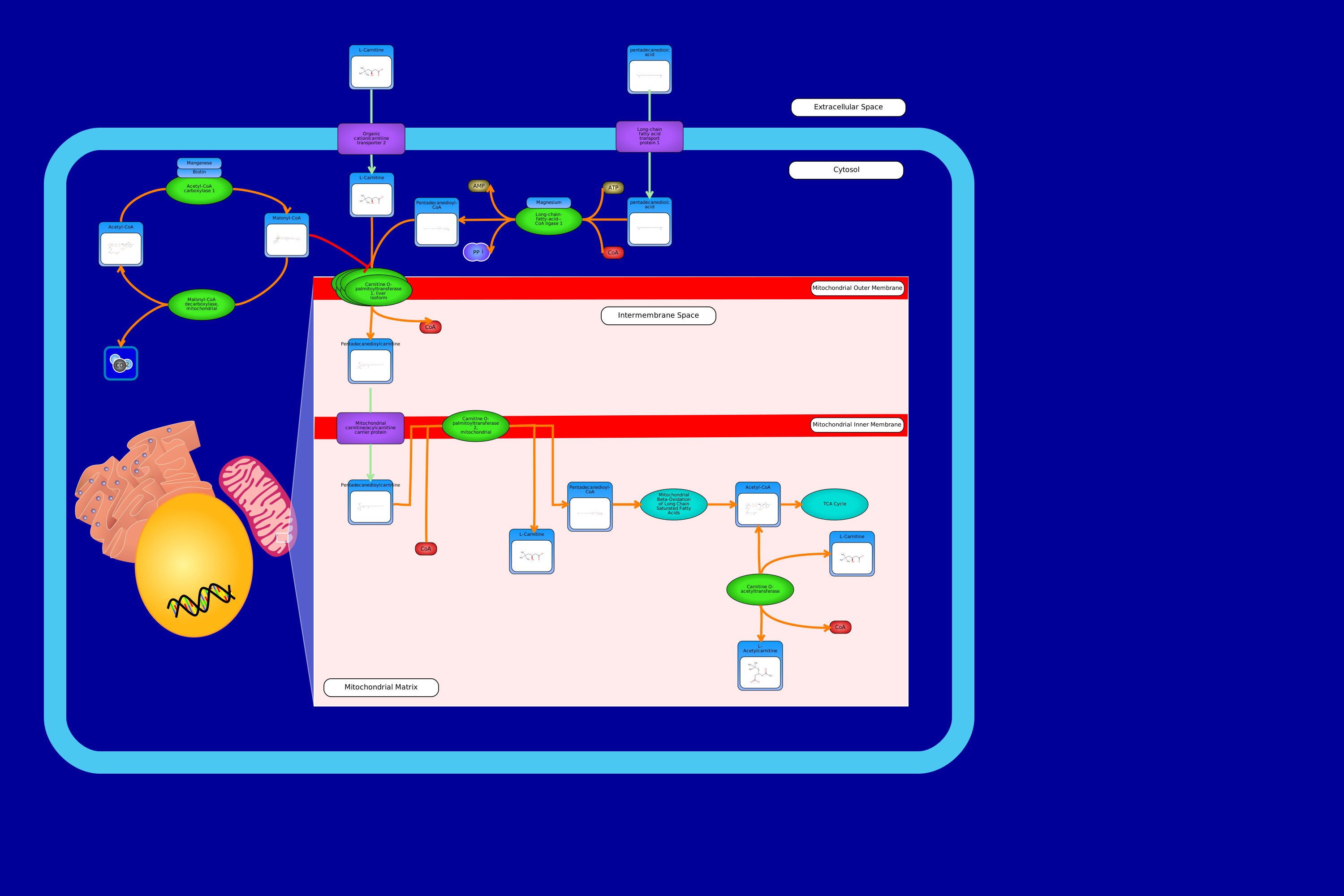 View Pathway
|
Acylcarnitine PentadecanedioylcarnitineHomo sapiens
Pentadecanedioylcarnitine is an acylcarnitine. The general role of acylcarnitines is to transport acyl-groups, organic acids and fatty acids, from the cytoplasm into the mitochondria so that they can be broken down to produce energy. As part of this process, pentadecanedioic acid is first transported into the cell via the long-chain fatty acid transport protein 1 (FATP1). Once inside the cell it undergoes a reaction to form an acyl-CoA derivative called pentadecanedioyl-CoA. This reaction is facilitated by the long-chain fatty-acid CoA ligase 1 protein, which adds a CoA moiety to appropriate acyl groups. Many acyl-CoA groups will then further react with other zwitterionic compounds such as carnitine (to form acylcarnitines) and amino acids (to form acyl amides). The carnitine needed to form acylcarnitines inside the cell is transported into the cell by the organic cation/carnitine transporter 2. In forming an acylcarnitine derivative, pentadecanedioyl-CoA reacts with L-carnitine to form pentadecanedioylcarnitine. This reaction is catalyzed by carnitine O-palmitoyltransferase. This enzyme resides in the mitochondrial outer membrane. While this reaction takes place, the pentadecanedioylcarnitine is moved into the mitochondrial intermembrane space. Following the reaction, the newly synthesized acylcarnitine is transported into the mitochondrial matrix by a mitochondrial carnitine/acylcarnitine carrier protein found in the mitochondrial inner membrane. Once in the matrix, pentadecanedioylcarnitine can react with the carnitine O-palmitoyltransferase 2 enzyme found in the mitochondrial inner membrane to once again form pentadecanedioyl-CoA and L-carnitine. Pentadecanedioyl-CoA then enters into the mitochondrial beta-oxidation pathway to form aceytl-CoA. Acetyl-CoA can go on to enter the TCA cycle, or it can react with L-carnitine to form L-acetylcarnitine in a reaction catalyzed by Carnitine O-acetyltransferase. This reaction can occur in both directions, and L-acetylcarnitine and CoA can react to form acetyl-CoA and L-carnitine in certain circumstances. Finally, acetyl-CoA in the cytosol can be catalyzed by acetyl-CoA carboxylase 1 to form malonyl-CoA, which inhibits the action of carnitine O-palmitoyltransferase 1, thereby preventing pentadecanedioylcarnitine from forming and thereby preventing it from being transported into the mitochondria.
|
Creator: Jeanne Coleongco Created On: April 17, 2021 at 02:37 Last Updated: April 17, 2021 at 02:37 |