
| PathWhiz ID | Pathway | Meta Data |
|---|---|---|
PW685804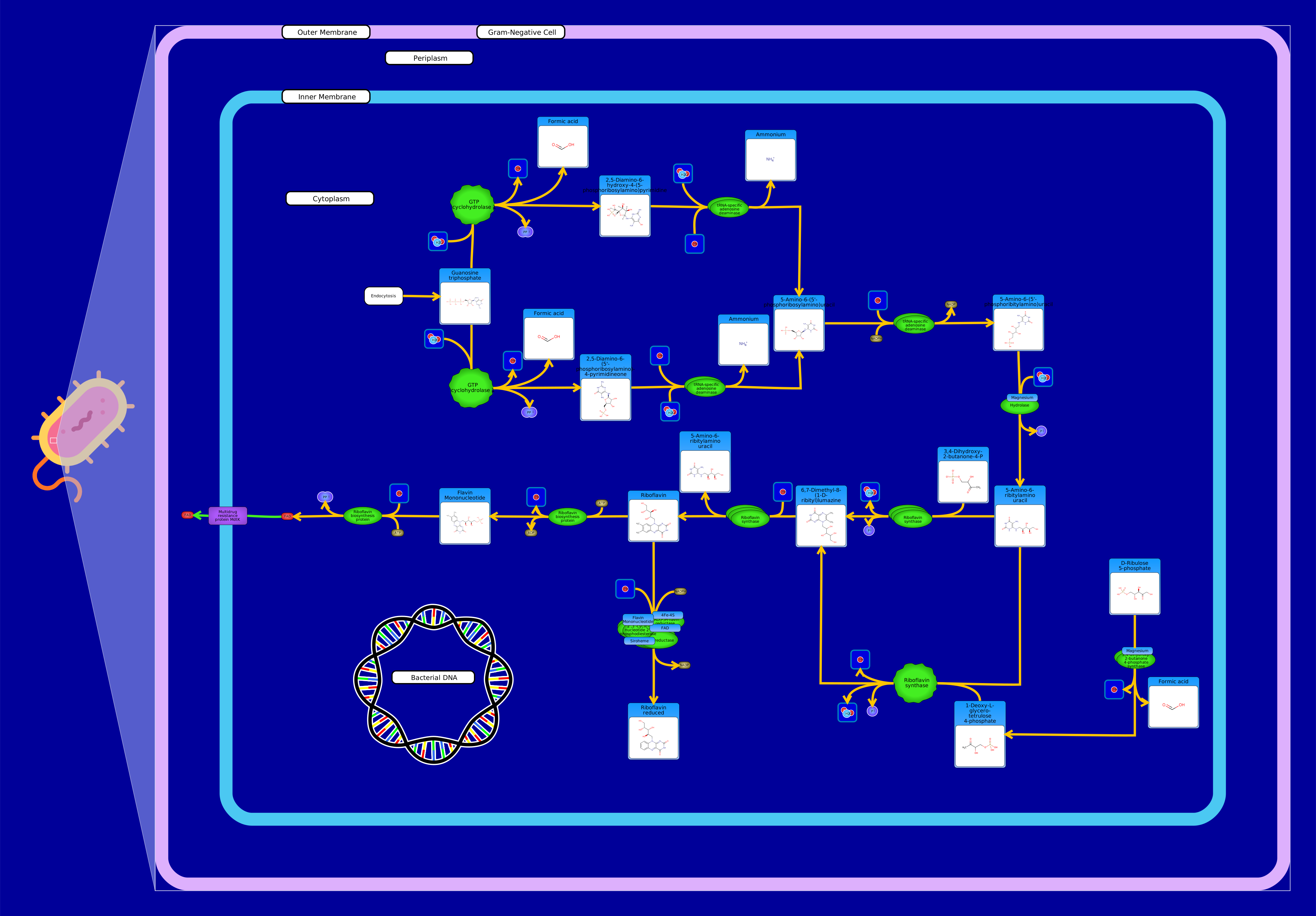 View Pathway
|
Flavin BiosynthesisSerratia marcescens subsp. marcescens Db11
The process of flavin biosynthesis starts with GTP being metabolized by interacting with 3 molecules of water through a GTP cyclohydrolase resulting in a release of formic acid, a pyrophosphate, two hydrog ions and 2,5-diamino-6-(5-phospho-D-ribosylamino)pyrimidin-4(3H)-one or 2,5-Diamino-6-hydroxy-4-(5-phosphoribosylamino)pyrimidine. Either of these compounds interacts with a water molecule and a hydrogen ion through a fused diaminohydroxyphosphoribosylaminopyrimidine deaminase / 5-amino-6-(5-phosphoribosylamino)uracil reductase resulting in an ammonium and 5-amino-6-(5-phospho-D-ribosylamino)uracil. This compound then interacts with a hydrogen ion through a NADPH dependent fused diaminohydroxyphosphoribosylaminopyrimidine deaminase / 5-amino-6-(5-phosphoribosylamino)uracil reductase resulting in the release of a NADP and a 5-amino-6-(5-phospho-D-ribitylamino)uracil. This compound then interacts with a water molecule through a 5-amino-6-(5-phospho-D-ribitylamino)uracil phosphatase resulting in a release of a phosphate, and a 5-amino-6-(D-ribitylamino)uracil.
D-ribulose 5-phosphate interacts with a3,4-dihydroxy-2-butanone 4-phosphate synthase resulting in the release of formic acid, a hydrogen ion and 1-deoxy-L-glycero-tetrulose 4-phosphate.
A 5-amino-6-(D-ribitylamino)uracil and 1-deoxy-L-glycero-tetrulose 4-phosphate interact through a 6,7-dimethyl-8-ribityllumazine synthase resulting in the release of 2 water molecules, a phosphate, a hydrogen ion and a 6,7-dimethyl-8-(1-D-ribityl)lumazine.
The latter compound then interacts with a hydrogen ion through a riboflavin synthase resulting in the release of a riboflavin and a 5-amino-6-(d-ribitylamino)uracil.
The riboflavin is then phosphorylated through an ATP dependent riboflavin kinase resulting in the release of a ADP, a hydrogen ion and a FLAVIN MONONUCLEOTIDE.
The flavin mononucleotide interad with a hydrogen ion and an ATP through the riboflavin kinase resulting in the release of a pyrophosphate and Flavin Adenine dinucleotide. This compound is then exported into the periplasm through a FMN/FAD exporter.
|
Creator: Julia Wakoli Created On: January 29, 2025 at 18:53 Last Updated: January 29, 2025 at 18:53 |
PW485831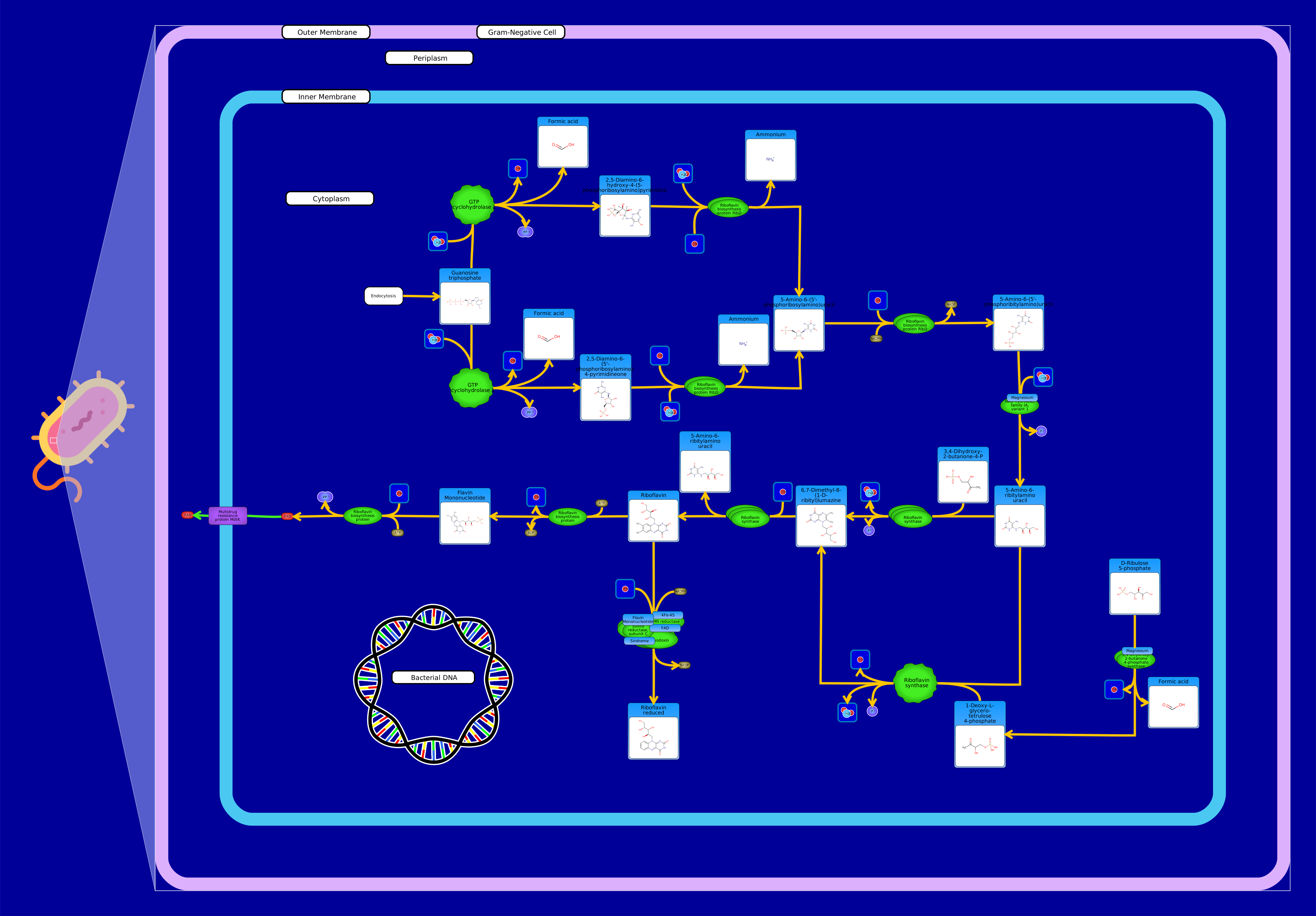 View Pathway
|
Flavin BiosynthesisEdwardsiella tarda ATCC 23685
The process of flavin biosynthesis starts with GTP being metabolized by interacting with 3 molecules of water through a GTP cyclohydrolase resulting in a release of formic acid, a pyrophosphate, two hydrog ions and 2,5-diamino-6-(5-phospho-D-ribosylamino)pyrimidin-4(3H)-one or 2,5-Diamino-6-hydroxy-4-(5-phosphoribosylamino)pyrimidine. Either of these compounds interacts with a water molecule and a hydrogen ion through a fused diaminohydroxyphosphoribosylaminopyrimidine deaminase / 5-amino-6-(5-phosphoribosylamino)uracil reductase resulting in an ammonium and 5-amino-6-(5-phospho-D-ribosylamino)uracil. This compound then interacts with a hydrogen ion through a NADPH dependent fused diaminohydroxyphosphoribosylaminopyrimidine deaminase / 5-amino-6-(5-phosphoribosylamino)uracil reductase resulting in the release of a NADP and a 5-amino-6-(5-phospho-D-ribitylamino)uracil. This compound then interacts with a water molecule through a 5-amino-6-(5-phospho-D-ribitylamino)uracil phosphatase resulting in a release of a phosphate, and a 5-amino-6-(D-ribitylamino)uracil.
D-ribulose 5-phosphate interacts with a3,4-dihydroxy-2-butanone 4-phosphate synthase resulting in the release of formic acid, a hydrogen ion and 1-deoxy-L-glycero-tetrulose 4-phosphate.
A 5-amino-6-(D-ribitylamino)uracil and 1-deoxy-L-glycero-tetrulose 4-phosphate interact through a 6,7-dimethyl-8-ribityllumazine synthase resulting in the release of 2 water molecules, a phosphate, a hydrogen ion and a 6,7-dimethyl-8-(1-D-ribityl)lumazine.
The latter compound then interacts with a hydrogen ion through a riboflavin synthase resulting in the release of a riboflavin and a 5-amino-6-(d-ribitylamino)uracil.
The riboflavin is then phosphorylated through an ATP dependent riboflavin kinase resulting in the release of a ADP, a hydrogen ion and a FLAVIN MONONUCLEOTIDE.
The flavin mononucleotide interad with a hydrogen ion and an ATP through the riboflavin kinase resulting in the release of a pyrophosphate and Flavin Adenine dinucleotide. This compound is then exported into the periplasm through a FMN/FAD exporter.
|
Creator: Julia Wakoli Created On: January 29, 2025 at 17:35 Last Updated: January 29, 2025 at 17:35 |
PW479282 View Pathway
|
Flavin BiosynthesisEscherichia coli (strain ATCC 8739 / DSM 1576 / Crooks)
The process of flavin biosynthesis starts with GTP being metabolized by interacting with 3 molecules of water through a GTP cyclohydrolase resulting in a release of formic acid, a pyrophosphate, two hydrog ions and 2,5-diamino-6-(5-phospho-D-ribosylamino)pyrimidin-4(3H)-one or 2,5-Diamino-6-hydroxy-4-(5-phosphoribosylamino)pyrimidine. Either of these compounds interacts with a water molecule and a hydrogen ion through a fused diaminohydroxyphosphoribosylaminopyrimidine deaminase / 5-amino-6-(5-phosphoribosylamino)uracil reductase resulting in an ammonium and 5-amino-6-(5-phospho-D-ribosylamino)uracil. This compound then interacts with a hydrogen ion through a NADPH dependent fused diaminohydroxyphosphoribosylaminopyrimidine deaminase / 5-amino-6-(5-phosphoribosylamino)uracil reductase resulting in the release of a NADP and a 5-amino-6-(5-phospho-D-ribitylamino)uracil. This compound then interacts with a water molecule through a 5-amino-6-(5-phospho-D-ribitylamino)uracil phosphatase resulting in a release of a phosphate, and a 5-amino-6-(D-ribitylamino)uracil.
D-ribulose 5-phosphate interacts with a3,4-dihydroxy-2-butanone 4-phosphate synthase resulting in the release of formic acid, a hydrogen ion and 1-deoxy-L-glycero-tetrulose 4-phosphate.
A 5-amino-6-(D-ribitylamino)uracil and 1-deoxy-L-glycero-tetrulose 4-phosphate interact through a 6,7-dimethyl-8-ribityllumazine synthase resulting in the release of 2 water molecules, a phosphate, a hydrogen ion and a 6,7-dimethyl-8-(1-D-ribityl)lumazine.
The latter compound then interacts with a hydrogen ion through a riboflavin synthase resulting in the release of a riboflavin and a 5-amino-6-(d-ribitylamino)uracil.
The riboflavin is then phosphorylated through an ATP dependent riboflavin kinase resulting in the release of a ADP, a hydrogen ion and a FLAVIN MONONUCLEOTIDE.
The flavin mononucleotide interad with a hydrogen ion and an ATP through the riboflavin kinase resulting in the release of a pyrophosphate and Flavin Adenine dinucleotide. This compound is then exported into the periplasm through a FMN/FAD exporter.
|
Creator: Julia Wakoli Created On: January 27, 2025 at 09:48 Last Updated: January 27, 2025 at 09:48 |
PW484123 View Pathway
|
Flavin BiosynthesisFusobacterium periodonticum 1_1_41FAA
The process of flavin biosynthesis starts with GTP being metabolized by interacting with 3 molecules of water through a GTP cyclohydrolase resulting in a release of formic acid, a pyrophosphate, two hydrog ions and 2,5-diamino-6-(5-phospho-D-ribosylamino)pyrimidin-4(3H)-one or 2,5-Diamino-6-hydroxy-4-(5-phosphoribosylamino)pyrimidine. Either of these compounds interacts with a water molecule and a hydrogen ion through a fused diaminohydroxyphosphoribosylaminopyrimidine deaminase / 5-amino-6-(5-phosphoribosylamino)uracil reductase resulting in an ammonium and 5-amino-6-(5-phospho-D-ribosylamino)uracil. This compound then interacts with a hydrogen ion through a NADPH dependent fused diaminohydroxyphosphoribosylaminopyrimidine deaminase / 5-amino-6-(5-phosphoribosylamino)uracil reductase resulting in the release of a NADP and a 5-amino-6-(5-phospho-D-ribitylamino)uracil. This compound then interacts with a water molecule through a 5-amino-6-(5-phospho-D-ribitylamino)uracil phosphatase resulting in a release of a phosphate, and a 5-amino-6-(D-ribitylamino)uracil.
D-ribulose 5-phosphate interacts with a3,4-dihydroxy-2-butanone 4-phosphate synthase resulting in the release of formic acid, a hydrogen ion and 1-deoxy-L-glycero-tetrulose 4-phosphate.
A 5-amino-6-(D-ribitylamino)uracil and 1-deoxy-L-glycero-tetrulose 4-phosphate interact through a 6,7-dimethyl-8-ribityllumazine synthase resulting in the release of 2 water molecules, a phosphate, a hydrogen ion and a 6,7-dimethyl-8-(1-D-ribityl)lumazine.
The latter compound then interacts with a hydrogen ion through a riboflavin synthase resulting in the release of a riboflavin and a 5-amino-6-(d-ribitylamino)uracil.
The riboflavin is then phosphorylated through an ATP dependent riboflavin kinase resulting in the release of a ADP, a hydrogen ion and a FLAVIN MONONUCLEOTIDE.
The flavin mononucleotide interad with a hydrogen ion and an ATP through the riboflavin kinase resulting in the release of a pyrophosphate and Flavin Adenine dinucleotide. This compound is then exported into the periplasm through a FMN/FAD exporter.
|
Creator: Julia Wakoli Created On: January 29, 2025 at 06:22 Last Updated: January 29, 2025 at 06:22 |
PW479768 View Pathway
|
Flavin BiosynthesisBacteroides xylanisolvens XB1A
The process of flavin biosynthesis starts with GTP being metabolized by interacting with 3 molecules of water through a GTP cyclohydrolase resulting in a release of formic acid, a pyrophosphate, two hydrog ions and 2,5-diamino-6-(5-phospho-D-ribosylamino)pyrimidin-4(3H)-one or 2,5-Diamino-6-hydroxy-4-(5-phosphoribosylamino)pyrimidine. Either of these compounds interacts with a water molecule and a hydrogen ion through a fused diaminohydroxyphosphoribosylaminopyrimidine deaminase / 5-amino-6-(5-phosphoribosylamino)uracil reductase resulting in an ammonium and 5-amino-6-(5-phospho-D-ribosylamino)uracil. This compound then interacts with a hydrogen ion through a NADPH dependent fused diaminohydroxyphosphoribosylaminopyrimidine deaminase / 5-amino-6-(5-phosphoribosylamino)uracil reductase resulting in the release of a NADP and a 5-amino-6-(5-phospho-D-ribitylamino)uracil. This compound then interacts with a water molecule through a 5-amino-6-(5-phospho-D-ribitylamino)uracil phosphatase resulting in a release of a phosphate, and a 5-amino-6-(D-ribitylamino)uracil.
D-ribulose 5-phosphate interacts with a3,4-dihydroxy-2-butanone 4-phosphate synthase resulting in the release of formic acid, a hydrogen ion and 1-deoxy-L-glycero-tetrulose 4-phosphate.
A 5-amino-6-(D-ribitylamino)uracil and 1-deoxy-L-glycero-tetrulose 4-phosphate interact through a 6,7-dimethyl-8-ribityllumazine synthase resulting in the release of 2 water molecules, a phosphate, a hydrogen ion and a 6,7-dimethyl-8-(1-D-ribityl)lumazine.
The latter compound then interacts with a hydrogen ion through a riboflavin synthase resulting in the release of a riboflavin and a 5-amino-6-(d-ribitylamino)uracil.
The riboflavin is then phosphorylated through an ATP dependent riboflavin kinase resulting in the release of a ADP, a hydrogen ion and a FLAVIN MONONUCLEOTIDE.
The flavin mononucleotide interad with a hydrogen ion and an ATP through the riboflavin kinase resulting in the release of a pyrophosphate and Flavin Adenine dinucleotide. This compound is then exported into the periplasm through a FMN/FAD exporter.
|
Creator: Julia Wakoli Created On: January 27, 2025 at 15:32 Last Updated: January 27, 2025 at 15:32 |
PW482134 View Pathway
|
Flavin BiosynthesisBacteroides graminisolvens DSM 19988 = JCM 15093
The process of flavin biosynthesis starts with GTP being metabolized by interacting with 3 molecules of water through a GTP cyclohydrolase resulting in a release of formic acid, a pyrophosphate, two hydrog ions and 2,5-diamino-6-(5-phospho-D-ribosylamino)pyrimidin-4(3H)-one or 2,5-Diamino-6-hydroxy-4-(5-phosphoribosylamino)pyrimidine. Either of these compounds interacts with a water molecule and a hydrogen ion through a fused diaminohydroxyphosphoribosylaminopyrimidine deaminase / 5-amino-6-(5-phosphoribosylamino)uracil reductase resulting in an ammonium and 5-amino-6-(5-phospho-D-ribosylamino)uracil. This compound then interacts with a hydrogen ion through a NADPH dependent fused diaminohydroxyphosphoribosylaminopyrimidine deaminase / 5-amino-6-(5-phosphoribosylamino)uracil reductase resulting in the release of a NADP and a 5-amino-6-(5-phospho-D-ribitylamino)uracil. This compound then interacts with a water molecule through a 5-amino-6-(5-phospho-D-ribitylamino)uracil phosphatase resulting in a release of a phosphate, and a 5-amino-6-(D-ribitylamino)uracil.
D-ribulose 5-phosphate interacts with a3,4-dihydroxy-2-butanone 4-phosphate synthase resulting in the release of formic acid, a hydrogen ion and 1-deoxy-L-glycero-tetrulose 4-phosphate.
A 5-amino-6-(D-ribitylamino)uracil and 1-deoxy-L-glycero-tetrulose 4-phosphate interact through a 6,7-dimethyl-8-ribityllumazine synthase resulting in the release of 2 water molecules, a phosphate, a hydrogen ion and a 6,7-dimethyl-8-(1-D-ribityl)lumazine.
The latter compound then interacts with a hydrogen ion through a riboflavin synthase resulting in the release of a riboflavin and a 5-amino-6-(d-ribitylamino)uracil.
The riboflavin is then phosphorylated through an ATP dependent riboflavin kinase resulting in the release of a ADP, a hydrogen ion and a FLAVIN MONONUCLEOTIDE.
The flavin mononucleotide interad with a hydrogen ion and an ATP through the riboflavin kinase resulting in the release of a pyrophosphate and Flavin Adenine dinucleotide. This compound is then exported into the periplasm through a FMN/FAD exporter.
|
Creator: Julia Wakoli Created On: January 28, 2025 at 15:30 Last Updated: January 28, 2025 at 15:30 |
PW482855 View Pathway
|
Flavin BiosynthesisPorphyromonas uenonis 60-3
The process of flavin biosynthesis starts with GTP being metabolized by interacting with 3 molecules of water through a GTP cyclohydrolase resulting in a release of formic acid, a pyrophosphate, two hydrog ions and 2,5-diamino-6-(5-phospho-D-ribosylamino)pyrimidin-4(3H)-one or 2,5-Diamino-6-hydroxy-4-(5-phosphoribosylamino)pyrimidine. Either of these compounds interacts with a water molecule and a hydrogen ion through a fused diaminohydroxyphosphoribosylaminopyrimidine deaminase / 5-amino-6-(5-phosphoribosylamino)uracil reductase resulting in an ammonium and 5-amino-6-(5-phospho-D-ribosylamino)uracil. This compound then interacts with a hydrogen ion through a NADPH dependent fused diaminohydroxyphosphoribosylaminopyrimidine deaminase / 5-amino-6-(5-phosphoribosylamino)uracil reductase resulting in the release of a NADP and a 5-amino-6-(5-phospho-D-ribitylamino)uracil. This compound then interacts with a water molecule through a 5-amino-6-(5-phospho-D-ribitylamino)uracil phosphatase resulting in a release of a phosphate, and a 5-amino-6-(D-ribitylamino)uracil.
D-ribulose 5-phosphate interacts with a3,4-dihydroxy-2-butanone 4-phosphate synthase resulting in the release of formic acid, a hydrogen ion and 1-deoxy-L-glycero-tetrulose 4-phosphate.
A 5-amino-6-(D-ribitylamino)uracil and 1-deoxy-L-glycero-tetrulose 4-phosphate interact through a 6,7-dimethyl-8-ribityllumazine synthase resulting in the release of 2 water molecules, a phosphate, a hydrogen ion and a 6,7-dimethyl-8-(1-D-ribityl)lumazine.
The latter compound then interacts with a hydrogen ion through a riboflavin synthase resulting in the release of a riboflavin and a 5-amino-6-(d-ribitylamino)uracil.
The riboflavin is then phosphorylated through an ATP dependent riboflavin kinase resulting in the release of a ADP, a hydrogen ion and a FLAVIN MONONUCLEOTIDE.
The flavin mononucleotide interad with a hydrogen ion and an ATP through the riboflavin kinase resulting in the release of a pyrophosphate and Flavin Adenine dinucleotide. This compound is then exported into the periplasm through a FMN/FAD exporter.
|
Creator: Julia Wakoli Created On: January 28, 2025 at 21:02 Last Updated: January 28, 2025 at 21:02 |
PW482944 View Pathway
|
Flavin BiosynthesisParaprevotella clara YIT 11840
The process of flavin biosynthesis starts with GTP being metabolized by interacting with 3 molecules of water through a GTP cyclohydrolase resulting in a release of formic acid, a pyrophosphate, two hydrog ions and 2,5-diamino-6-(5-phospho-D-ribosylamino)pyrimidin-4(3H)-one or 2,5-Diamino-6-hydroxy-4-(5-phosphoribosylamino)pyrimidine. Either of these compounds interacts with a water molecule and a hydrogen ion through a fused diaminohydroxyphosphoribosylaminopyrimidine deaminase / 5-amino-6-(5-phosphoribosylamino)uracil reductase resulting in an ammonium and 5-amino-6-(5-phospho-D-ribosylamino)uracil. This compound then interacts with a hydrogen ion through a NADPH dependent fused diaminohydroxyphosphoribosylaminopyrimidine deaminase / 5-amino-6-(5-phosphoribosylamino)uracil reductase resulting in the release of a NADP and a 5-amino-6-(5-phospho-D-ribitylamino)uracil. This compound then interacts with a water molecule through a 5-amino-6-(5-phospho-D-ribitylamino)uracil phosphatase resulting in a release of a phosphate, and a 5-amino-6-(D-ribitylamino)uracil.
D-ribulose 5-phosphate interacts with a3,4-dihydroxy-2-butanone 4-phosphate synthase resulting in the release of formic acid, a hydrogen ion and 1-deoxy-L-glycero-tetrulose 4-phosphate.
A 5-amino-6-(D-ribitylamino)uracil and 1-deoxy-L-glycero-tetrulose 4-phosphate interact through a 6,7-dimethyl-8-ribityllumazine synthase resulting in the release of 2 water molecules, a phosphate, a hydrogen ion and a 6,7-dimethyl-8-(1-D-ribityl)lumazine.
The latter compound then interacts with a hydrogen ion through a riboflavin synthase resulting in the release of a riboflavin and a 5-amino-6-(d-ribitylamino)uracil.
The riboflavin is then phosphorylated through an ATP dependent riboflavin kinase resulting in the release of a ADP, a hydrogen ion and a FLAVIN MONONUCLEOTIDE.
The flavin mononucleotide interad with a hydrogen ion and an ATP through the riboflavin kinase resulting in the release of a pyrophosphate and Flavin Adenine dinucleotide. This compound is then exported into the periplasm through a FMN/FAD exporter.
|
Creator: Julia Wakoli Created On: January 28, 2025 at 21:44 Last Updated: January 28, 2025 at 21:44 |
PW485816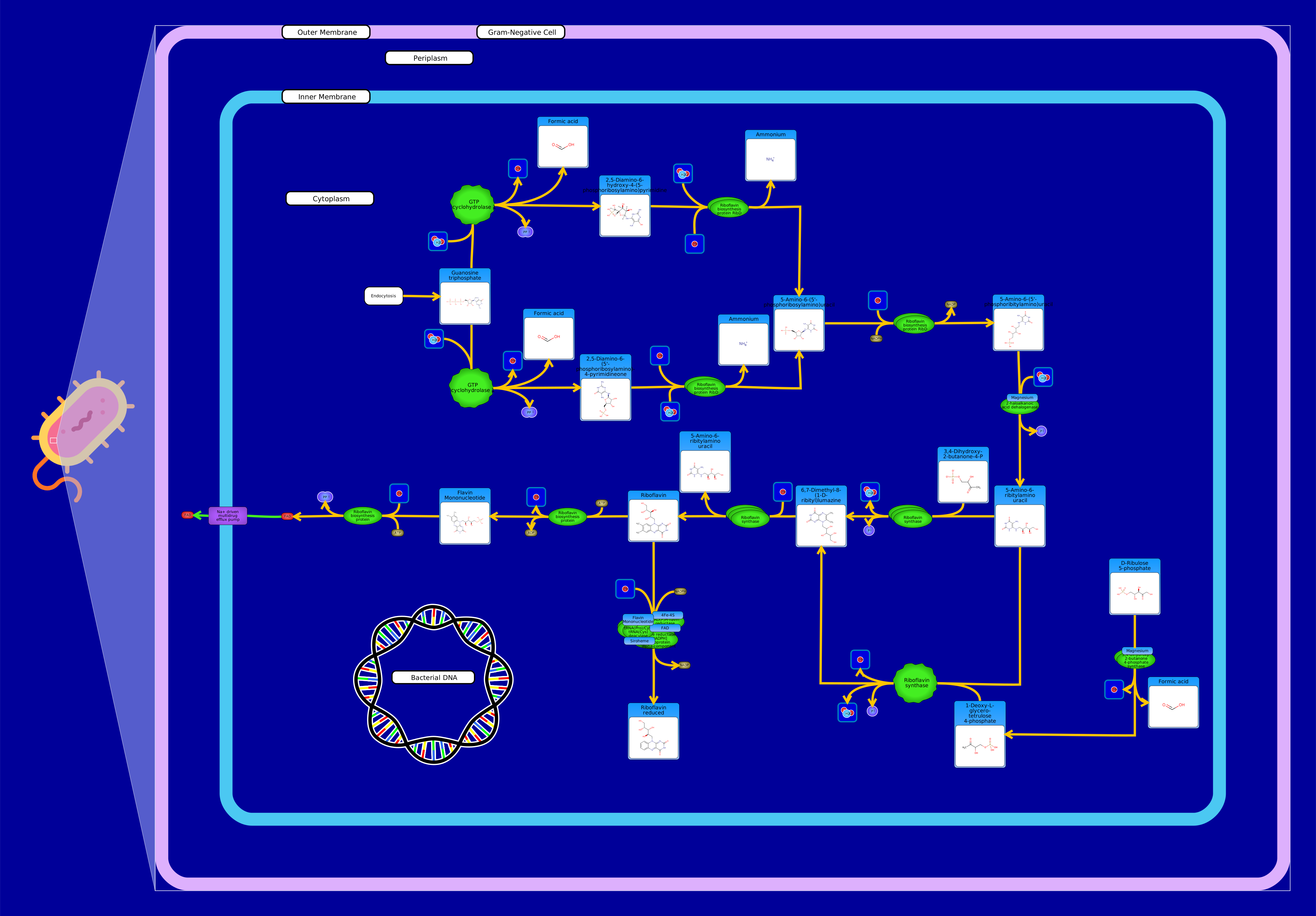 View Pathway
|
Flavin BiosynthesisMorganella morganii subsp. morganii KT
The process of flavin biosynthesis starts with GTP being metabolized by interacting with 3 molecules of water through a GTP cyclohydrolase resulting in a release of formic acid, a pyrophosphate, two hydrog ions and 2,5-diamino-6-(5-phospho-D-ribosylamino)pyrimidin-4(3H)-one or 2,5-Diamino-6-hydroxy-4-(5-phosphoribosylamino)pyrimidine. Either of these compounds interacts with a water molecule and a hydrogen ion through a fused diaminohydroxyphosphoribosylaminopyrimidine deaminase / 5-amino-6-(5-phosphoribosylamino)uracil reductase resulting in an ammonium and 5-amino-6-(5-phospho-D-ribosylamino)uracil. This compound then interacts with a hydrogen ion through a NADPH dependent fused diaminohydroxyphosphoribosylaminopyrimidine deaminase / 5-amino-6-(5-phosphoribosylamino)uracil reductase resulting in the release of a NADP and a 5-amino-6-(5-phospho-D-ribitylamino)uracil. This compound then interacts with a water molecule through a 5-amino-6-(5-phospho-D-ribitylamino)uracil phosphatase resulting in a release of a phosphate, and a 5-amino-6-(D-ribitylamino)uracil.
D-ribulose 5-phosphate interacts with a3,4-dihydroxy-2-butanone 4-phosphate synthase resulting in the release of formic acid, a hydrogen ion and 1-deoxy-L-glycero-tetrulose 4-phosphate.
A 5-amino-6-(D-ribitylamino)uracil and 1-deoxy-L-glycero-tetrulose 4-phosphate interact through a 6,7-dimethyl-8-ribityllumazine synthase resulting in the release of 2 water molecules, a phosphate, a hydrogen ion and a 6,7-dimethyl-8-(1-D-ribityl)lumazine.
The latter compound then interacts with a hydrogen ion through a riboflavin synthase resulting in the release of a riboflavin and a 5-amino-6-(d-ribitylamino)uracil.
The riboflavin is then phosphorylated through an ATP dependent riboflavin kinase resulting in the release of a ADP, a hydrogen ion and a FLAVIN MONONUCLEOTIDE.
The flavin mononucleotide interad with a hydrogen ion and an ATP through the riboflavin kinase resulting in the release of a pyrophosphate and Flavin Adenine dinucleotide. This compound is then exported into the periplasm through a FMN/FAD exporter.
|
Creator: Julia Wakoli Created On: January 29, 2025 at 17:29 Last Updated: January 29, 2025 at 17:29 |
PW486023 View Pathway
|
Flavin BiosynthesisProvidencia rustigianii DSM 4541
The process of flavin biosynthesis starts with GTP being metabolized by interacting with 3 molecules of water through a GTP cyclohydrolase resulting in a release of formic acid, a pyrophosphate, two hydrog ions and 2,5-diamino-6-(5-phospho-D-ribosylamino)pyrimidin-4(3H)-one or 2,5-Diamino-6-hydroxy-4-(5-phosphoribosylamino)pyrimidine. Either of these compounds interacts with a water molecule and a hydrogen ion through a fused diaminohydroxyphosphoribosylaminopyrimidine deaminase / 5-amino-6-(5-phosphoribosylamino)uracil reductase resulting in an ammonium and 5-amino-6-(5-phospho-D-ribosylamino)uracil. This compound then interacts with a hydrogen ion through a NADPH dependent fused diaminohydroxyphosphoribosylaminopyrimidine deaminase / 5-amino-6-(5-phosphoribosylamino)uracil reductase resulting in the release of a NADP and a 5-amino-6-(5-phospho-D-ribitylamino)uracil. This compound then interacts with a water molecule through a 5-amino-6-(5-phospho-D-ribitylamino)uracil phosphatase resulting in a release of a phosphate, and a 5-amino-6-(D-ribitylamino)uracil.
D-ribulose 5-phosphate interacts with a3,4-dihydroxy-2-butanone 4-phosphate synthase resulting in the release of formic acid, a hydrogen ion and 1-deoxy-L-glycero-tetrulose 4-phosphate.
A 5-amino-6-(D-ribitylamino)uracil and 1-deoxy-L-glycero-tetrulose 4-phosphate interact through a 6,7-dimethyl-8-ribityllumazine synthase resulting in the release of 2 water molecules, a phosphate, a hydrogen ion and a 6,7-dimethyl-8-(1-D-ribityl)lumazine.
The latter compound then interacts with a hydrogen ion through a riboflavin synthase resulting in the release of a riboflavin and a 5-amino-6-(d-ribitylamino)uracil.
The riboflavin is then phosphorylated through an ATP dependent riboflavin kinase resulting in the release of a ADP, a hydrogen ion and a FLAVIN MONONUCLEOTIDE.
The flavin mononucleotide interad with a hydrogen ion and an ATP through the riboflavin kinase resulting in the release of a pyrophosphate and Flavin Adenine dinucleotide. This compound is then exported into the periplasm through a FMN/FAD exporter.
|
Creator: Julia Wakoli Created On: January 29, 2025 at 18:53 Last Updated: January 29, 2025 at 18:53 |