
| PathWhiz ID | Pathway | Meta Data |
|---|---|---|
PW144647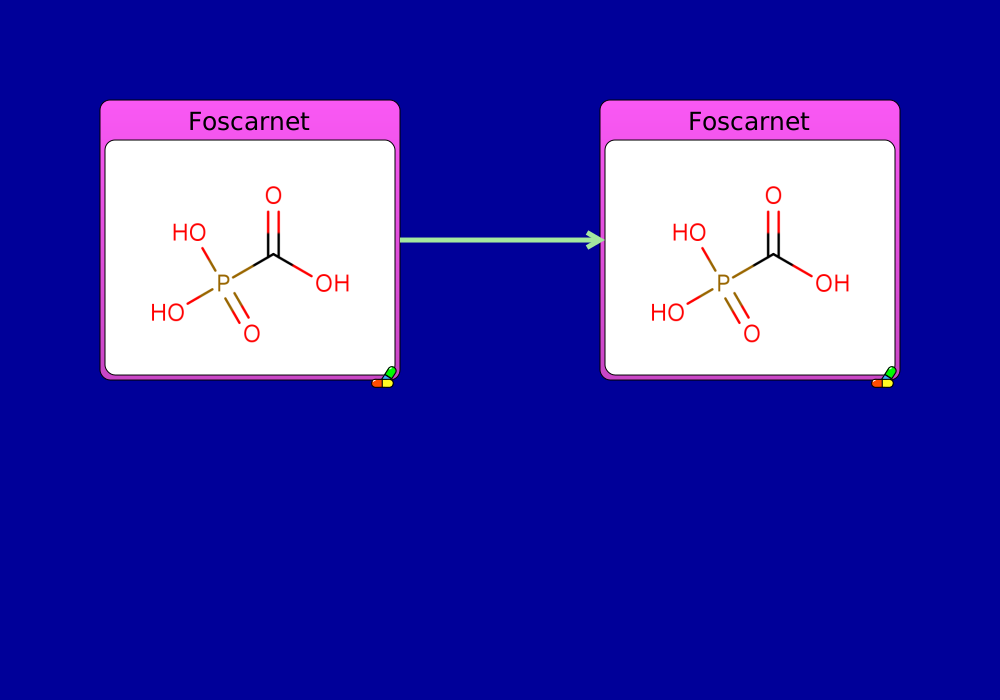 View Pathway
|
drug action
Foscarnet Drug Metabolism Action PathwayHomo sapiens
|
Creator: Ray Kruger Created On: October 07, 2023 at 14:06 Last Updated: October 07, 2023 at 14:06 |
PW146966 View Pathway
|
drug action
Fosdenopterin Drug Metabolism Action PathwayHomo sapiens
|
Creator: Ray Kruger Created On: October 07, 2023 at 19:27 Last Updated: October 07, 2023 at 19:27 |
PW144934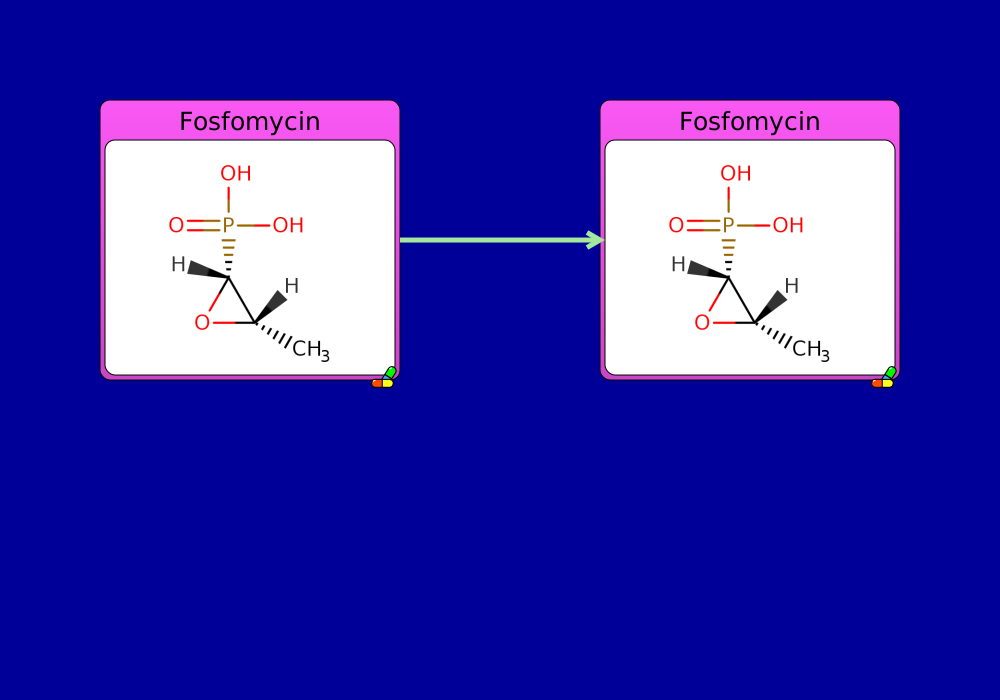 View Pathway
|
drug action
Fosfomycin Drug Metabolism Action PathwayHomo sapiens
|
Creator: Ray Kruger Created On: October 07, 2023 at 14:44 Last Updated: October 07, 2023 at 14:44 |
PW124435 View Pathway
|
drug action
Fosinopril ACE Inhibitor Action PathwayHomo sapiens
Fosinopril is angiotensin converting enzyme (ACE) inhibitor for the conversion of angiotensin I into angiotensin II. Angiotensin II is a critical circulating peptide hormone that has powerful vasoconstrictive effects and increases blood pressure. Fosinopril is used to treat hypertension, high blood pressure, congestive heart failure, and chronic renal failure as it decreases blood pressure. Fosinopril is converted into Fosinoprilat through the liver after being ingested which travels in the blood to inhibit ACE which is from the lungs. Angiotensin has many vasoconstrictive effects by binding to angiotensin II type 1 receptors (AT1) in blood vessels, kidneys, hypothalamus, and posterior pituitary. In blood vessels AT1 receptors cause vasoconstriction in the tunica media layer of smooth muscle surrounding blood vessels increasing blood pressure. Less angiotensin II that is circulating lowers the constriction of these blood vessels. AT1 receptors in the kidney are responsible for the production of aldosterone which increases salt and water retention which increases blood volume. Less angiotensin II reduces aldosterone production allowing water retention to not increase. AT1 receptors in the hypothalamus are on astrocytes which inhibit the excitatory amino acid transporter 3 from up-taking glutamate back into astrocytes. Glutamate is responsible for the activation of NMDA receptors on paraventricular nucleus neurons (PVN neurons) that lead to thirst sensation. Since angiotensin II levels are lowered, the inhibition of the uptake transporter is not limited decreasing the amount of glutamate activating NMDA on PVN neurons that makes the individual crave drinking less. This lowers the blood volume as well. Lastly, the AT1 receptors on posterior pituitary gland are responsible for the release of vasopressin. Vasopressin is an anti-diuretic hormone that cases water reabsorption in the kidney as well as causing smooth muscle contraction in blood vessels increasing blood pressure. Less angiotensin II activating vasopressin release inhibits blood pressure from increasing. Overall, Fosinopril inhibits the conversion of angiotensin I into angiotensin II, a powerful vasoconstrictor and mediator of high blood pressure so decreasing levels of angiotensin will help reduce blood pressure from climbing in individuals.
|
Creator: Selena Created On: January 12, 2021 at 16:12 Last Updated: January 12, 2021 at 16:12 |
PW000227 View Pathway
|
drug action
Fosinopril Action PathwayHomo sapiens
Fosinopril (trade name: Monopril) belongs to the class of drugs known as angiotensin-converting enzyme (ACE) inhibitors and is used primarily to lower high blood pressure (hypertension). This drug can also be used in the treatment of congestive heart failure and type II diabetes. Fosinopril is a prodrug which, following oral administration, undergoes biotransformation in vivo into its active form fosinoprilat via cleavage of its ester group by the liver. Angiotensin-converting enzyme (ACE) is a component of the body's renin–angiotensin–aldosterone system (RAAS) and cleaves inactive angiotensin I into the active vasoconstrictor angiotensin II. ACE (or kininase II) also degrades the potent vasodilator bradykinin. Consequently, ACE inhibitors decrease angiotensin II concentrations and increase bradykinin concentrations resulting in blood vessel dilation and thereby lowering blood pressure.
|
Creator: WishartLab Created On: August 22, 2013 at 10:45 Last Updated: August 22, 2013 at 10:45 |
PW144614 View Pathway
|
drug action
Fosinopril Drug Metabolism Action PathwayHomo sapiens
|
Creator: Ray Kruger Created On: October 07, 2023 at 14:02 Last Updated: October 07, 2023 at 14:02 |
PW000570 View Pathway
|
Fosinopril Metabolism PathwayHomo sapiens
Fosinopril (trade name: Monopril) belongs to the class of drugs known as angiotensin-converting enzyme (ACE) inhibitors and is used primarily to lower high blood pressure (hypertension). This drug can also be used in the treatment of congestive heart failure and type II diabetes. Fosinopril is a prodrug which, following oral administration, undergoes biotransformation in vivo into its active form fosinoprilat via cleavage of its ester group by the liver. Angiotensin-converting enzyme (ACE) is a component of the body's renin–angiotensin–aldosterone system (RAAS) and cleaves inactive angiotensin I into the active vasoconstrictor angiotensin II. ACE (or kininase II) also degrades the potent vasodilator bradykinin. Consequently, ACE inhibitors decrease angiotensin II concentrations and increase bradykinin concentrations resulting in blood vessel dilation and thereby lowering blood pressure.
|
Creator: WishartLab Created On: September 11, 2013 at 22:32 Last Updated: September 11, 2013 at 22:32 |
PW146739 View Pathway
|
drug action
Fosnetupitant Drug Metabolism Action PathwayHomo sapiens
|
Creator: Ray Kruger Created On: October 07, 2023 at 18:55 Last Updated: October 07, 2023 at 18:55 |
PW176053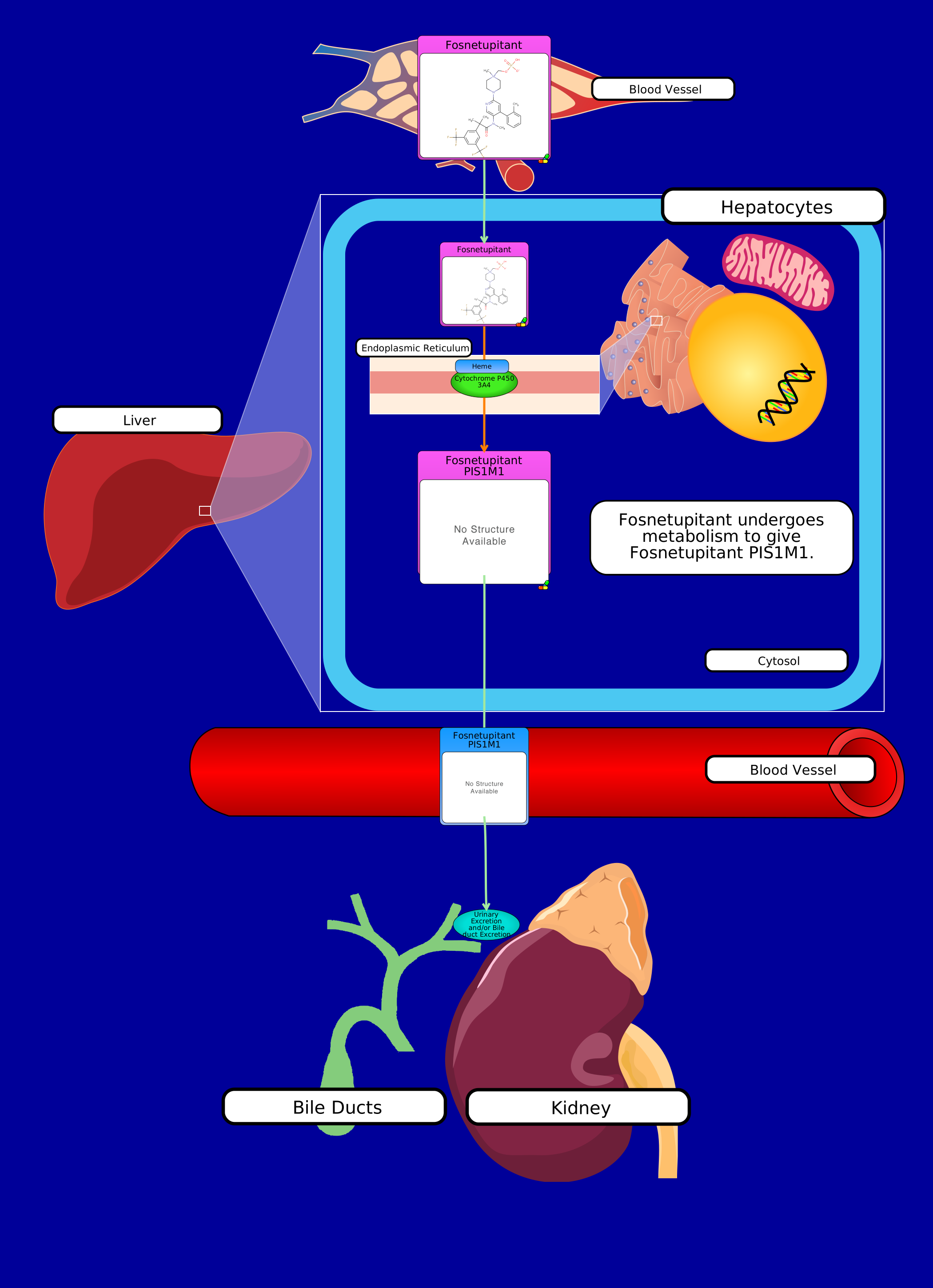 View Pathway
|
Fosnetupitant Predicted Metabolism Pathway newHomo sapiens
Metabolites of Fosnetupitant are predicted with biotransformer.
|
Creator: Omolola Created On: November 29, 2023 at 13:35 Last Updated: November 29, 2023 at 13:35 |
PW126629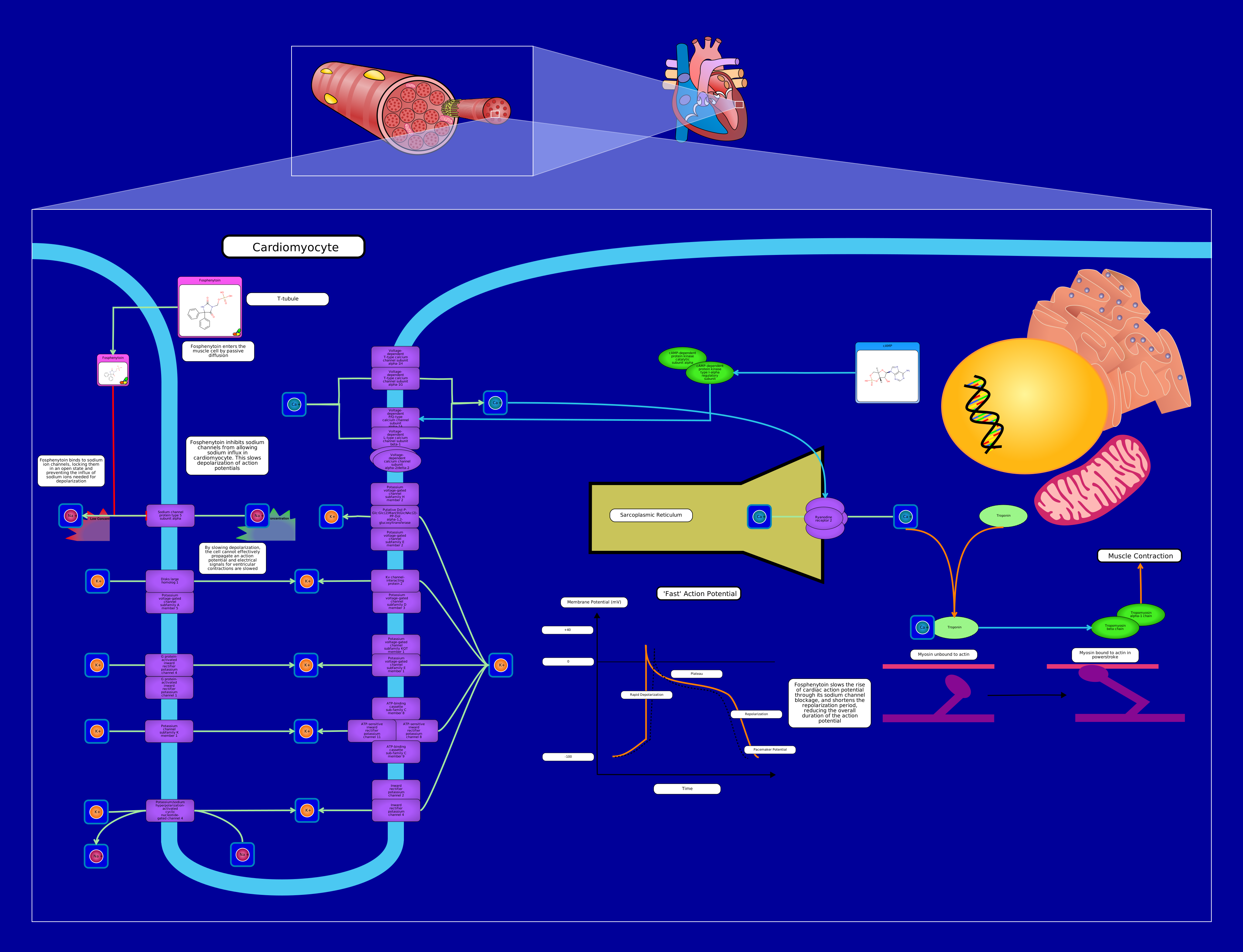 View Pathway
|
drug action
FosphenytoinHomo sapiens
Fosphenytoin is an anticonvulsant used for generalized convulsive status epilepticus to prevent treatment of seizures during surgery. Fosphenytoin is a water soluble phenytoin prodrug, it acts by slowing down impulses in the brain reducing neuronal activity and avoiding a seizure. It blocks neuronal sodium channels to limit repetitive firing of action potentials. Once administered fosphenytoin is acted upon by endogenous phosphatases to be converted into phenytoin that acts to apply the anticonvulsant properties and inhibit channel activity. It inhibits by promoting sodium efflux which stabilizes the channel against hyperexcitability. It is excreted through the urine as 5-phenylhydantoin. Adverse effects that could come from administration is nausea, vomiting, lethargy, tachycardia, bradycardia, cardiovascular complications, metabolic acidosis and in some cases overdosage can result in death.
|
Creator: Selena Created On: February 02, 2022 at 11:01 Last Updated: February 02, 2022 at 11:01 |