
| PathWhiz ID | Pathway | Meta Data |
|---|---|---|
PW121882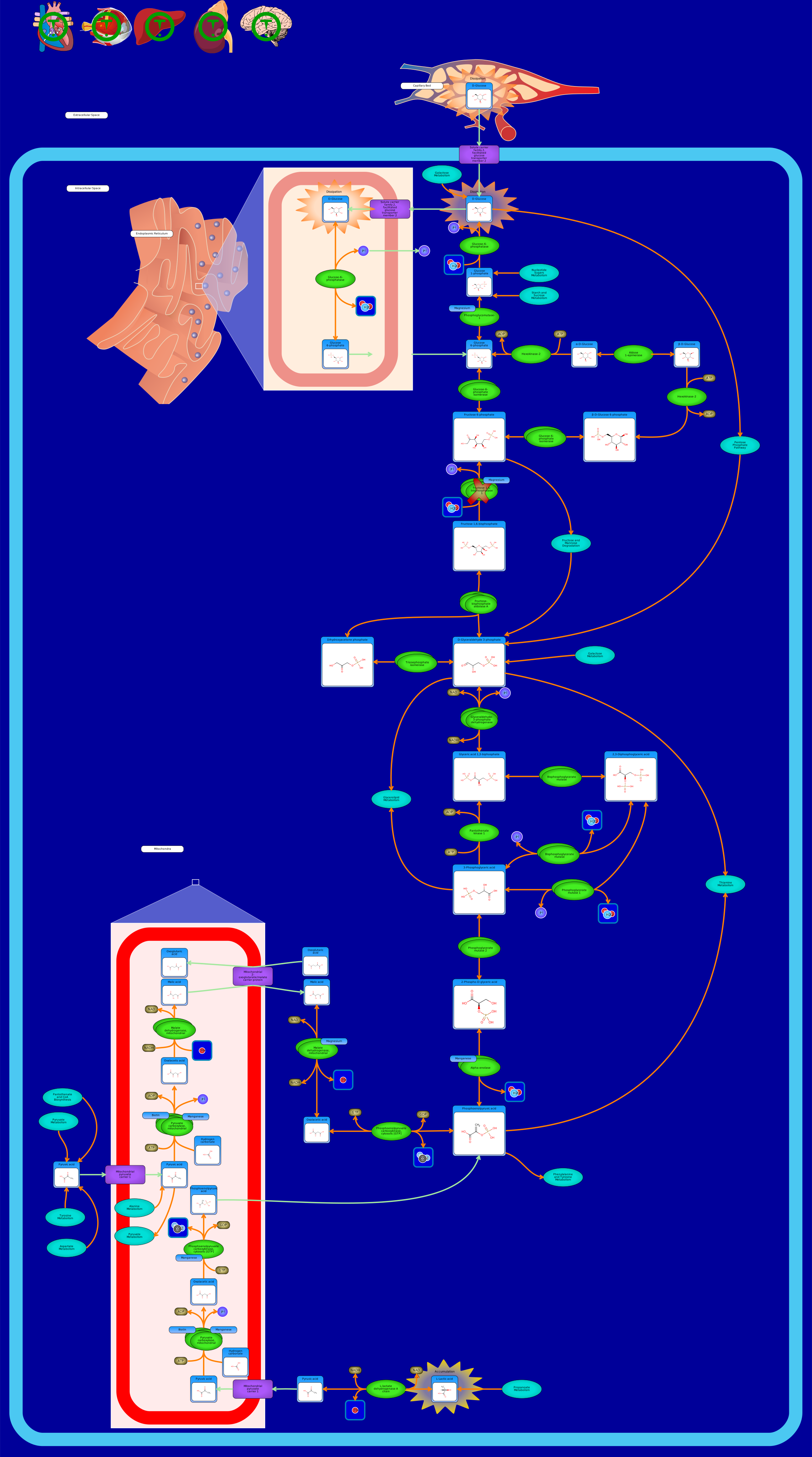 View Pathway
|
disease
Fructose-1,6-diphosphatase DeficiencyMus musculus
Fructose-1,6-bisphosphatase deficiency (FBP1D) is an autosomal recessive inborn error of metabolism (IEM) caused by a mutation in the FBP1 gene which encodes for fructose-1,6-bisphosphatase-1. This enzyme is responsible for catalyzing the conversion of fructose 1,6-bisophosphate into fructose 5-phosphate by removing a phosphate group from it as part of the gluconeogenesis pathway. FBP1D is characterized by hypoglycemia and acidosis after fasting, caused by the impairment of gluconeogenesis. Symptoms can also include hyperventilation. Treatment includes feeding more often with foods enriched with glucose, as well as avoiding foods high in fructose and sucrose, as well as avoiding fasting for longer than overnight. It is estimated that FBP1D affects between 1 in 350,000 and 1 in 900,000 individuals.
|
Creator: Ana Marcu Created On: September 10, 2018 at 15:50 Last Updated: September 10, 2018 at 15:50 |
PW501119 View Pathway
|
Fructoselysine and Psicoselysine DegradationEnterobacter cancerogenus ATCC 35316
Fructosamines are compounds that result from glycation reactions between a sugar and a primary amine, followed by isomerization via the Amadori rearrangement. In fructoselysine degradation, fructoselysine firstly converts to 1-[(5-Amino-5-carboxypentyl)amino]-1-deoxyfructose by protein frlC, and then 1-[(5-Amino-5-carboxypentyl)amino]-1-deoxyfructose is transformed to fructoselysine-6-phosphate by fructoselysine kinase which is powered by ATP. Fructoselysine-6-phosphate finally degrades to β-D-Glucose 6-phosphate and L-lysine by fructoselysine 6-phosphate deglycase.
|
Creator: Julia Wakoli Created On: February 05, 2025 at 10:53 Last Updated: February 05, 2025 at 10:53 |
PW500918 View Pathway
|
Fructoselysine and Psicoselysine DegradationCampylobacter upsaliensis JV21
Fructosamines are compounds that result from glycation reactions between a sugar and a primary amine, followed by isomerization via the Amadori rearrangement. In fructoselysine degradation, fructoselysine firstly converts to 1-[(5-Amino-5-carboxypentyl)amino]-1-deoxyfructose by protein frlC, and then 1-[(5-Amino-5-carboxypentyl)amino]-1-deoxyfructose is transformed to fructoselysine-6-phosphate by fructoselysine kinase which is powered by ATP. Fructoselysine-6-phosphate finally degrades to β-D-Glucose 6-phosphate and L-lysine by fructoselysine 6-phosphate deglycase.
|
Creator: Julia Wakoli Created On: February 05, 2025 at 08:40 Last Updated: February 05, 2025 at 08:40 |
PW686171 View Pathway
|
Fructoselysine and Psicoselysine DegradationCampylobacter rectus RM3267
Fructosamines are compounds that result from glycation reactions between a sugar and a primary amine, followed by isomerization via the Amadori rearrangement. In fructoselysine degradation, fructoselysine firstly converts to 1-[(5-Amino-5-carboxypentyl)amino]-1-deoxyfructose by protein frlC, and then 1-[(5-Amino-5-carboxypentyl)amino]-1-deoxyfructose is transformed to fructoselysine-6-phosphate by fructoselysine kinase which is powered by ATP. Fructoselysine-6-phosphate finally degrades to β-D-Glucose 6-phosphate and L-lysine by fructoselysine 6-phosphate deglycase.
|
Creator: Julia Wakoli Created On: February 05, 2025 at 08:40 Last Updated: February 05, 2025 at 08:40 |
PW498866 View Pathway
|
Fructoselysine and Psicoselysine DegradationBacteroides fluxus YIT 12057
Fructosamines are compounds that result from glycation reactions between a sugar and a primary amine, followed by isomerization via the Amadori rearrangement. In fructoselysine degradation, fructoselysine firstly converts to 1-[(5-Amino-5-carboxypentyl)amino]-1-deoxyfructose by protein frlC, and then 1-[(5-Amino-5-carboxypentyl)amino]-1-deoxyfructose is transformed to fructoselysine-6-phosphate by fructoselysine kinase which is powered by ATP. Fructoselysine-6-phosphate finally degrades to β-D-Glucose 6-phosphate and L-lysine by fructoselysine 6-phosphate deglycase.
|
Creator: Julia Wakoli Created On: February 04, 2025 at 15:59 Last Updated: February 04, 2025 at 15:59 |
PW686060 View Pathway
|
Fructoselysine and Psicoselysine DegradationEscherichia coli (strain MS 21-1)
Fructosamines are compounds that result from glycation reactions between a sugar and a primary amine, followed by isomerization via the Amadori rearrangement. In fructoselysine degradation, fructoselysine firstly converts to 1-[(5-Amino-5-carboxypentyl)amino]-1-deoxyfructose by protein frlC, and then 1-[(5-Amino-5-carboxypentyl)amino]-1-deoxyfructose is transformed to fructoselysine-6-phosphate by fructoselysine kinase which is powered by ATP. Fructoselysine-6-phosphate finally degrades to β-D-Glucose 6-phosphate and L-lysine by fructoselysine 6-phosphate deglycase.
|
Creator: Julia Wakoli Created On: February 03, 2025 at 13:41 Last Updated: February 03, 2025 at 13:41 |
PW498777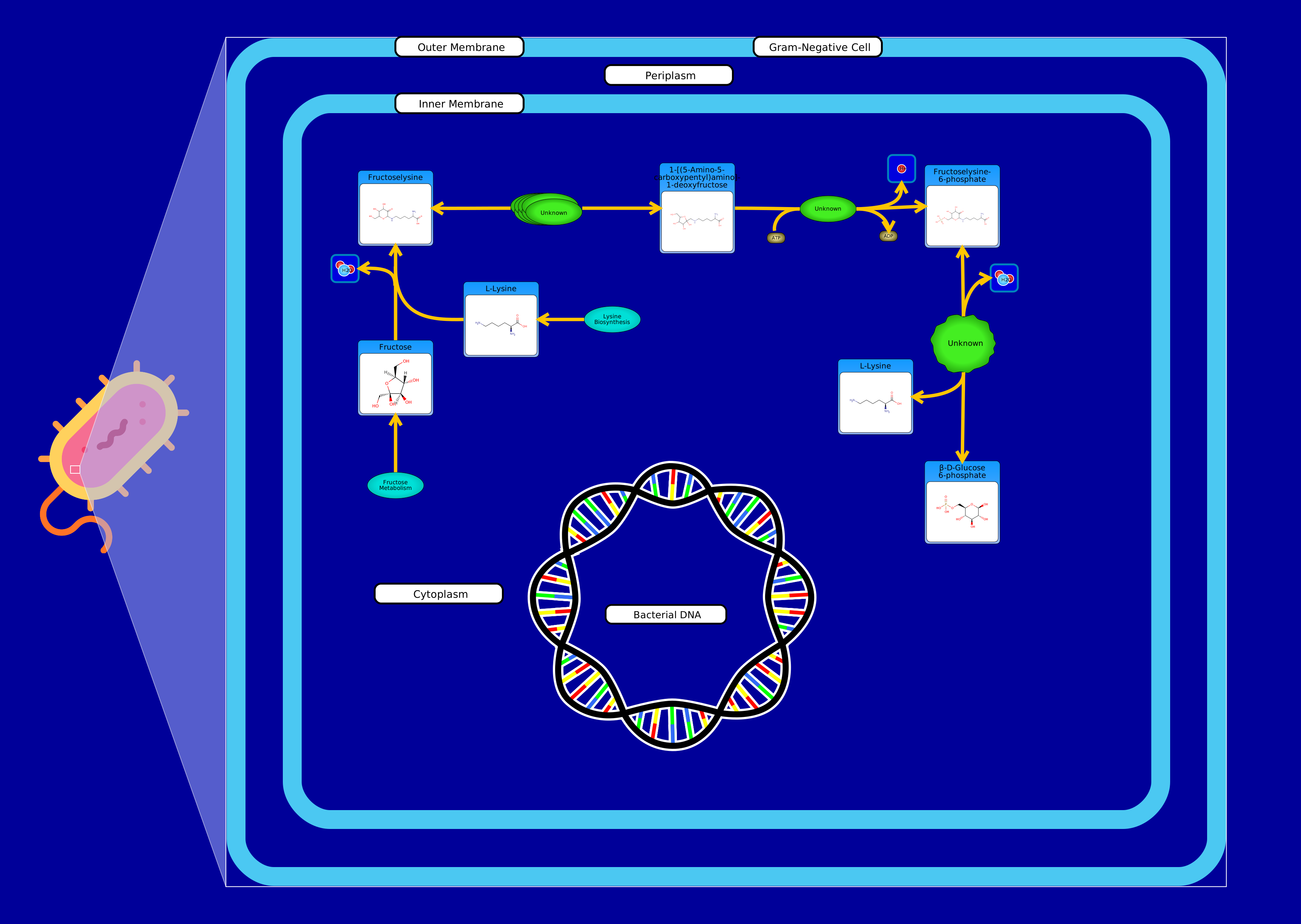 View Pathway
|
Fructoselysine and Psicoselysine DegradationBacteroides eggerthii DSM 20697
Fructosamines are compounds that result from glycation reactions between a sugar and a primary amine, followed by isomerization via the Amadori rearrangement. In fructoselysine degradation, fructoselysine firstly converts to 1-[(5-Amino-5-carboxypentyl)amino]-1-deoxyfructose by protein frlC, and then 1-[(5-Amino-5-carboxypentyl)amino]-1-deoxyfructose is transformed to fructoselysine-6-phosphate by fructoselysine kinase which is powered by ATP. Fructoselysine-6-phosphate finally degrades to β-D-Glucose 6-phosphate and L-lysine by fructoselysine 6-phosphate deglycase.
|
Creator: Julia Wakoli Created On: February 04, 2025 at 15:27 Last Updated: February 04, 2025 at 15:27 |
PW525190 View Pathway
|
Fructoselysine and Psicoselysine DegradationPrevotella copri
Fructosamines are compounds that result from glycation reactions between a sugar and a primary amine, followed by isomerization via the Amadori rearrangement. In fructoselysine degradation, fructoselysine firstly converts to 1-[(5-Amino-5-carboxypentyl)amino]-1-deoxyfructose by protein frlC, and then 1-[(5-Amino-5-carboxypentyl)amino]-1-deoxyfructose is transformed to fructoselysine-6-phosphate by fructoselysine kinase which is powered by ATP. Fructoselysine-6-phosphate finally degrades to β-D-Glucose 6-phosphate and L-lysine by fructoselysine 6-phosphate deglycase.
|
Creator: Julia Wakoli Created On: February 17, 2025 at 17:34 Last Updated: February 17, 2025 at 17:34 |
PW500820 View Pathway
|
Fructoselysine and Psicoselysine DegradationDesulfovibrio piger ATCC 29098
Fructosamines are compounds that result from glycation reactions between a sugar and a primary amine, followed by isomerization via the Amadori rearrangement. In fructoselysine degradation, fructoselysine firstly converts to 1-[(5-Amino-5-carboxypentyl)amino]-1-deoxyfructose by protein frlC, and then 1-[(5-Amino-5-carboxypentyl)amino]-1-deoxyfructose is transformed to fructoselysine-6-phosphate by fructoselysine kinase which is powered by ATP. Fructoselysine-6-phosphate finally degrades to β-D-Glucose 6-phosphate and L-lysine by fructoselysine 6-phosphate deglycase.
|
Creator: Julia Wakoli Created On: February 05, 2025 at 07:42 Last Updated: February 05, 2025 at 07:42 |
PW686075 View Pathway
|
Fructoselysine and Psicoselysine DegradationOchrobactrum intermedium LMG 3301
Fructosamines are compounds that result from glycation reactions between a sugar and a primary amine, followed by isomerization via the Amadori rearrangement. In fructoselysine degradation, fructoselysine firstly converts to 1-[(5-Amino-5-carboxypentyl)amino]-1-deoxyfructose by protein frlC, and then 1-[(5-Amino-5-carboxypentyl)amino]-1-deoxyfructose is transformed to fructoselysine-6-phosphate by fructoselysine kinase which is powered by ATP. Fructoselysine-6-phosphate finally degrades to β-D-Glucose 6-phosphate and L-lysine by fructoselysine 6-phosphate deglycase.
|
Creator: Julia Wakoli Created On: February 03, 2025 at 20:09 Last Updated: February 03, 2025 at 20:09 |