
| PathWhiz ID | Pathway | Meta Data |
|---|---|---|
PW686175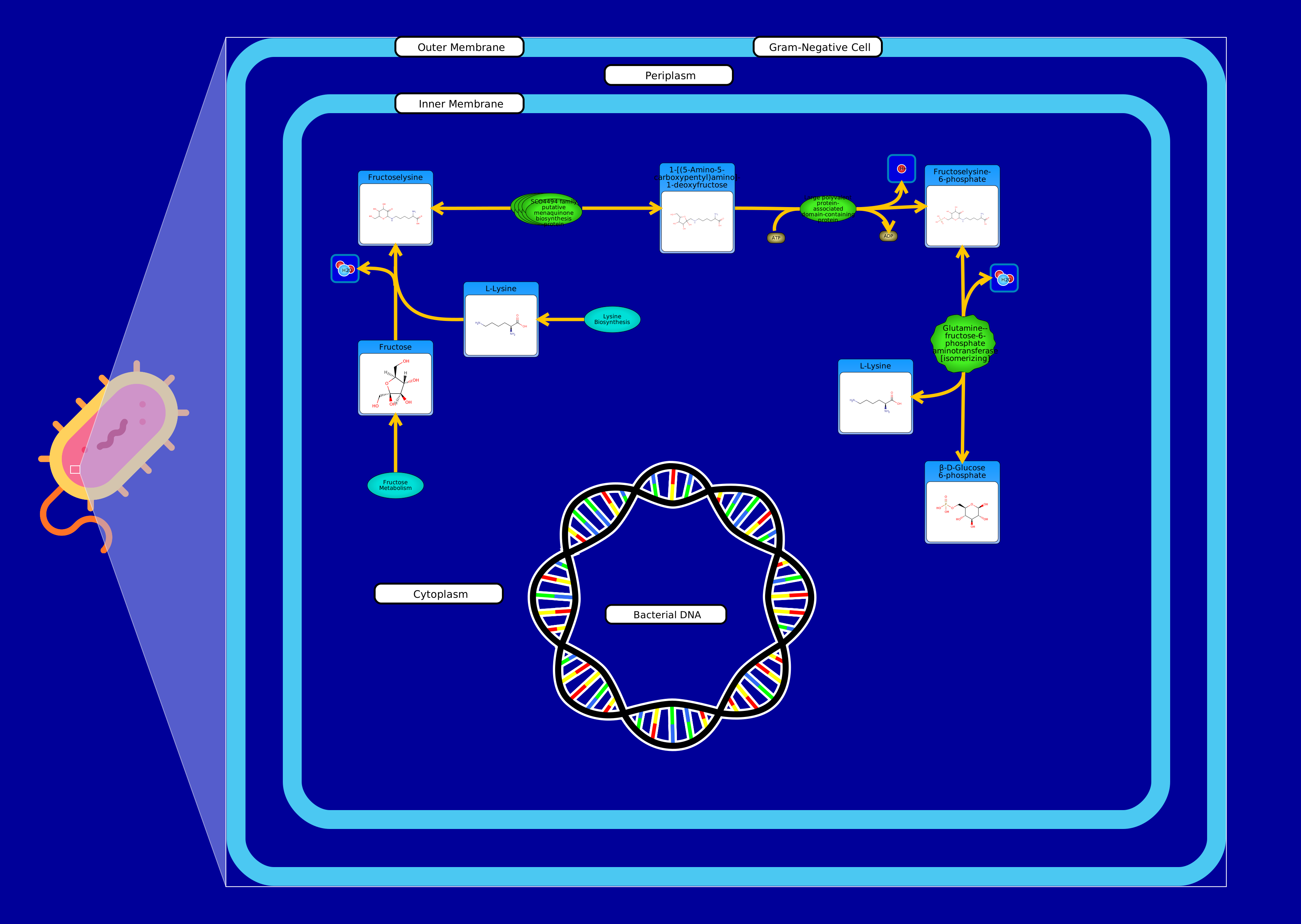 View Pathway
|
Fructoselysine and Psicoselysine DegradationHelicobacter bilis ATCC 43879
Fructosamines are compounds that result from glycation reactions between a sugar and a primary amine, followed by isomerization via the Amadori rearrangement. In fructoselysine degradation, fructoselysine firstly converts to 1-[(5-Amino-5-carboxypentyl)amino]-1-deoxyfructose by protein frlC, and then 1-[(5-Amino-5-carboxypentyl)amino]-1-deoxyfructose is transformed to fructoselysine-6-phosphate by fructoselysine kinase which is powered by ATP. Fructoselysine-6-phosphate finally degrades to β-D-Glucose 6-phosphate and L-lysine by fructoselysine 6-phosphate deglycase.
|
Creator: Julia Wakoli Created On: February 05, 2025 at 09:15 Last Updated: February 05, 2025 at 09:15 |
PW500969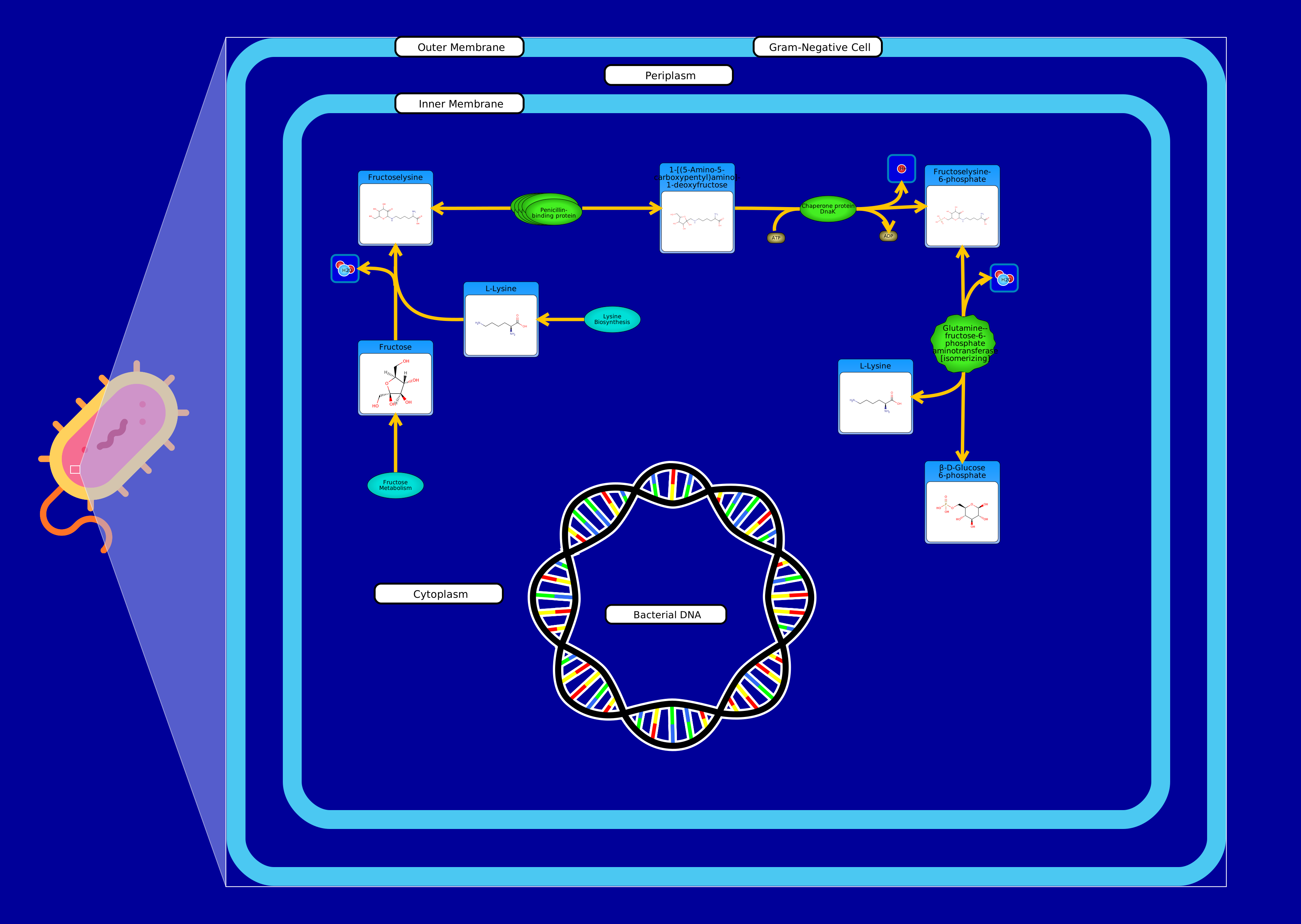 View Pathway
|
Fructoselysine and Psicoselysine DegradationHelicobacter canadensis MIT 98-5491
Fructosamines are compounds that result from glycation reactions between a sugar and a primary amine, followed by isomerization via the Amadori rearrangement. In fructoselysine degradation, fructoselysine firstly converts to 1-[(5-Amino-5-carboxypentyl)amino]-1-deoxyfructose by protein frlC, and then 1-[(5-Amino-5-carboxypentyl)amino]-1-deoxyfructose is transformed to fructoselysine-6-phosphate by fructoselysine kinase which is powered by ATP. Fructoselysine-6-phosphate finally degrades to β-D-Glucose 6-phosphate and L-lysine by fructoselysine 6-phosphate deglycase.
|
Creator: Julia Wakoli Created On: February 05, 2025 at 09:15 Last Updated: February 05, 2025 at 09:15 |
PW527331 View Pathway
|
Fructoselysine and Psicoselysine DegradationEscherichia coli HS
Fructosamines are compounds that result from glycation reactions between a sugar and a primary amine, followed by isomerization via the Amadori rearrangement. In fructoselysine degradation, fructoselysine firstly converts to 1-[(5-Amino-5-carboxypentyl)amino]-1-deoxyfructose by protein frlC, and then 1-[(5-Amino-5-carboxypentyl)amino]-1-deoxyfructose is transformed to fructoselysine-6-phosphate by fructoselysine kinase which is powered by ATP. Fructoselysine-6-phosphate finally degrades to β-D-Glucose 6-phosphate and L-lysine by fructoselysine 6-phosphate deglycase.
|
Creator: Julia Wakoli Created On: February 18, 2025 at 04:35 Last Updated: February 18, 2025 at 04:35 |
PW002049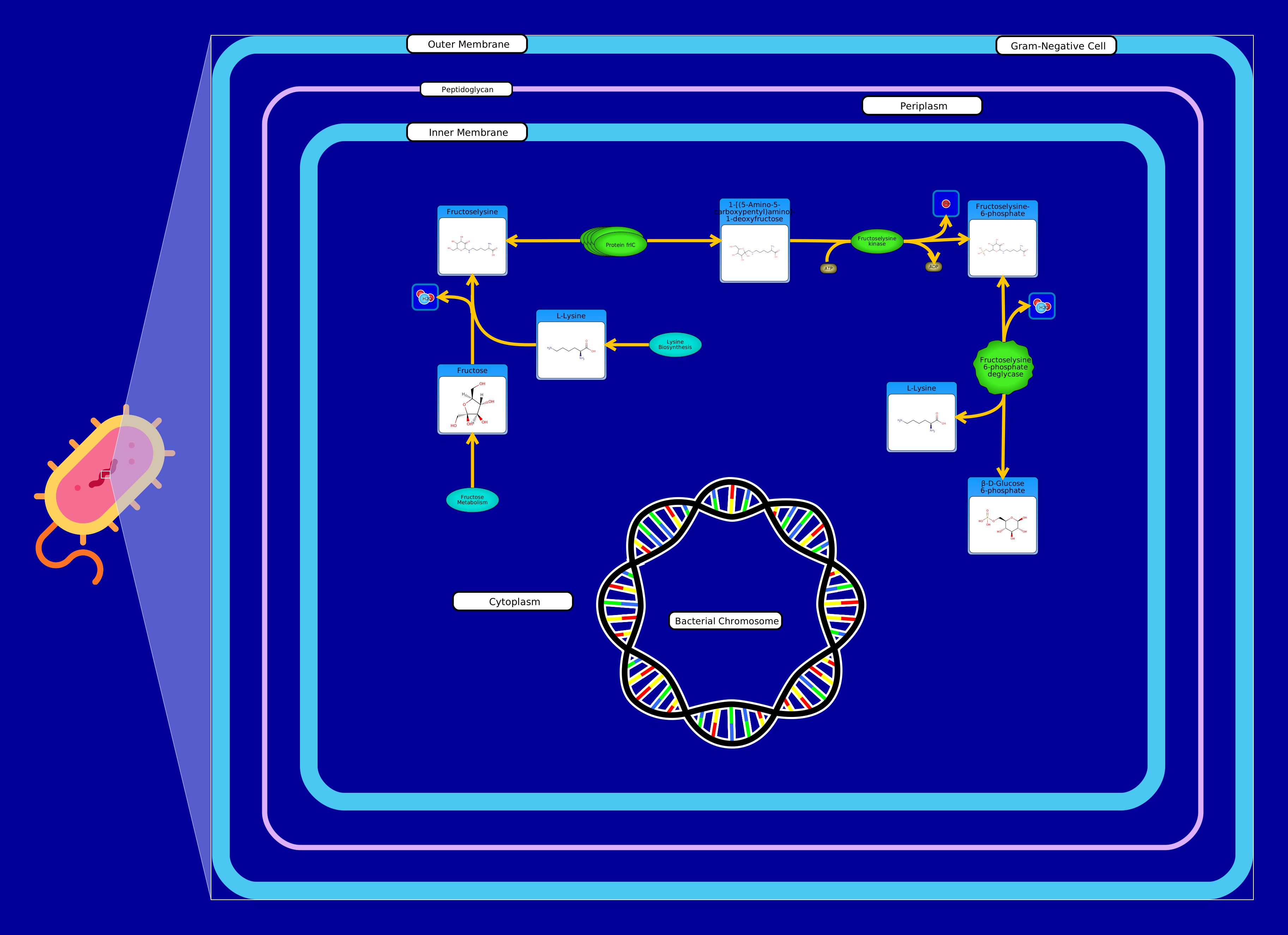 View Pathway
|
Fructoselysine and Psicoselysine DegradationEscherichia coli
Fructosamines are compounds that result from glycation reactions between a sugar and a primary amine, followed by isomerization via the Amadori rearrangement. In fructoselysine degradation, fructoselysine firstly converts to 1-[(5-Amino-5-carboxypentyl)amino]-1-deoxyfructose by protein frlC, and then 1-[(5-Amino-5-carboxypentyl)amino]-1-deoxyfructose is transformed to fructoselysine-6-phosphate by fructoselysine kinase which is powered by ATP. Fructoselysine-6-phosphate finally degrades to β-D-Glucose 6-phosphate and L-lysine by fructoselysine 6-phosphate deglycase.
|
Creator: Ana Marcu Created On: October 08, 2015 at 10:25 Last Updated: October 08, 2015 at 10:25 |
PW534094 View Pathway
|
Fructoselysine and Psicoselysine DegradationAcetomicrobium hydrogeniformans
Fructosamines are compounds that result from glycation reactions between a sugar and a primary amine, followed by isomerization via the Amadori rearrangement. In fructoselysine degradation, fructoselysine firstly converts to 1-[(5-Amino-5-carboxypentyl)amino]-1-deoxyfructose by protein frlC, and then 1-[(5-Amino-5-carboxypentyl)amino]-1-deoxyfructose is transformed to fructoselysine-6-phosphate by fructoselysine kinase which is powered by ATP. Fructoselysine-6-phosphate finally degrades to β-D-Glucose 6-phosphate and L-lysine by fructoselysine 6-phosphate deglycase.
|
Creator: Julia Wakoli Created On: February 20, 2025 at 05:10 Last Updated: February 20, 2025 at 05:10 |
PW534917 View Pathway
|
Fructoselysine and Psicoselysine DegradationEscherichia coli O113:H21
Fructosamines are compounds that result from glycation reactions between a sugar and a primary amine, followed by isomerization via the Amadori rearrangement. In fructoselysine degradation, fructoselysine firstly converts to 1-[(5-Amino-5-carboxypentyl)amino]-1-deoxyfructose by protein frlC, and then 1-[(5-Amino-5-carboxypentyl)amino]-1-deoxyfructose is transformed to fructoselysine-6-phosphate by fructoselysine kinase which is powered by ATP. Fructoselysine-6-phosphate finally degrades to β-D-Glucose 6-phosphate and L-lysine by fructoselysine 6-phosphate deglycase.
|
Creator: Julia Wakoli Created On: February 20, 2025 at 10:45 Last Updated: February 20, 2025 at 10:45 |
PW501216 View Pathway
|
Fructoselysine and Psicoselysine DegradationKluyvera ascorbata ATCC 33433
Fructosamines are compounds that result from glycation reactions between a sugar and a primary amine, followed by isomerization via the Amadori rearrangement. In fructoselysine degradation, fructoselysine firstly converts to 1-[(5-Amino-5-carboxypentyl)amino]-1-deoxyfructose by protein frlC, and then 1-[(5-Amino-5-carboxypentyl)amino]-1-deoxyfructose is transformed to fructoselysine-6-phosphate by fructoselysine kinase which is powered by ATP. Fructoselysine-6-phosphate finally degrades to β-D-Glucose 6-phosphate and L-lysine by fructoselysine 6-phosphate deglycase.
|
Creator: Julia Wakoli Created On: February 05, 2025 at 11:49 Last Updated: February 05, 2025 at 11:49 |
PW501315 View Pathway
|
Fructoselysine and Psicoselysine DegradationEdwardsiella tarda ATCC 23685
Fructosamines are compounds that result from glycation reactions between a sugar and a primary amine, followed by isomerization via the Amadori rearrangement. In fructoselysine degradation, fructoselysine firstly converts to 1-[(5-Amino-5-carboxypentyl)amino]-1-deoxyfructose by protein frlC, and then 1-[(5-Amino-5-carboxypentyl)amino]-1-deoxyfructose is transformed to fructoselysine-6-phosphate by fructoselysine kinase which is powered by ATP. Fructoselysine-6-phosphate finally degrades to β-D-Glucose 6-phosphate and L-lysine by fructoselysine 6-phosphate deglycase.
|
Creator: Julia Wakoli Created On: February 05, 2025 at 12:52 Last Updated: February 05, 2025 at 12:52 |
PW496251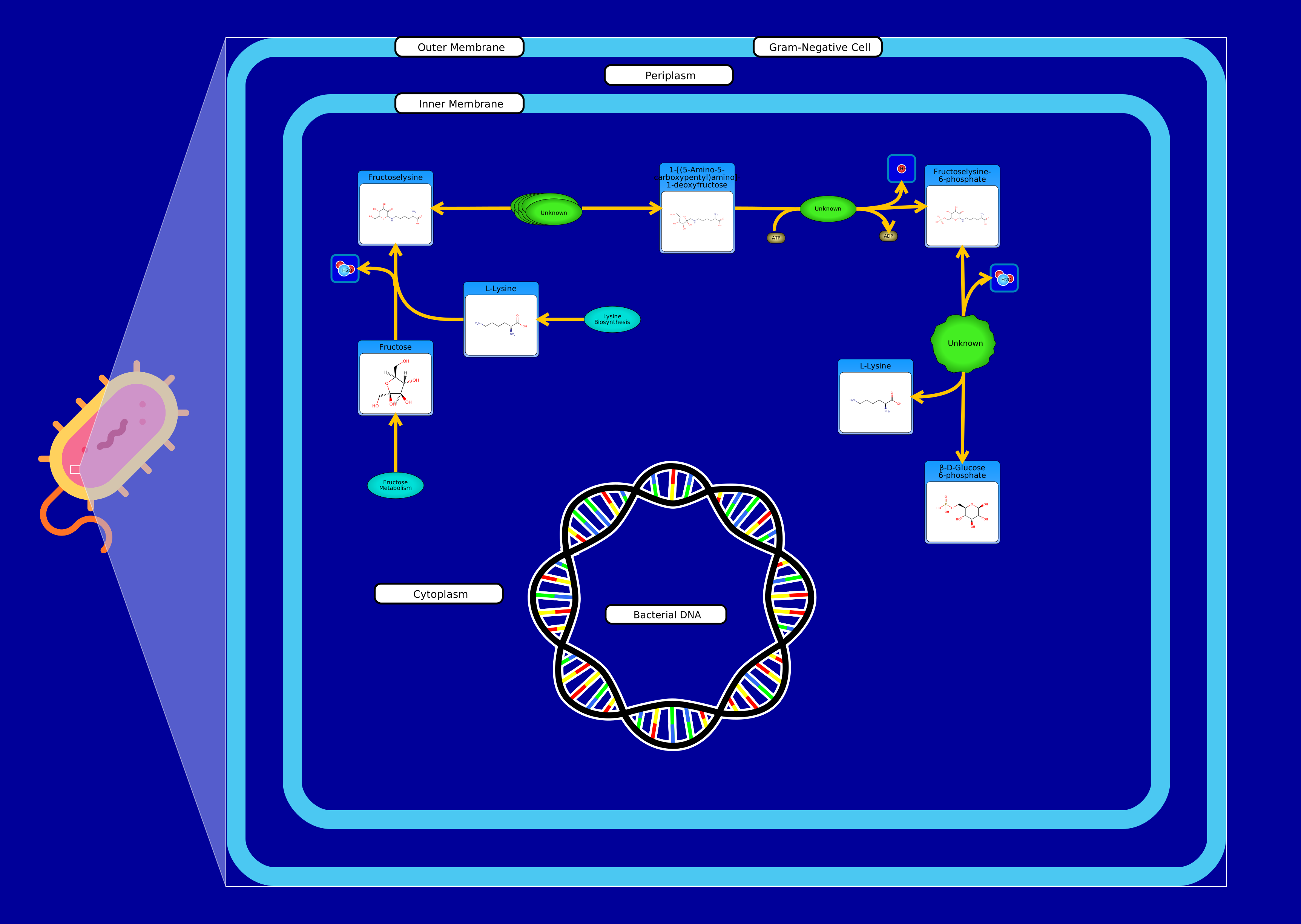 View Pathway
|
Fructoselysine and Psicoselysine DegradationPorphyromonas asaccharolytica DSM 20707
Fructosamines are compounds that result from glycation reactions between a sugar and a primary amine, followed by isomerization via the Amadori rearrangement. In fructoselysine degradation, fructoselysine firstly converts to 1-[(5-Amino-5-carboxypentyl)amino]-1-deoxyfructose by protein frlC, and then 1-[(5-Amino-5-carboxypentyl)amino]-1-deoxyfructose is transformed to fructoselysine-6-phosphate by fructoselysine kinase which is powered by ATP. Fructoselysine-6-phosphate finally degrades to β-D-Glucose 6-phosphate and L-lysine by fructoselysine 6-phosphate deglycase.
|
Creator: Julia Wakoli Created On: February 03, 2025 at 20:09 Last Updated: February 03, 2025 at 20:09 |
PW686110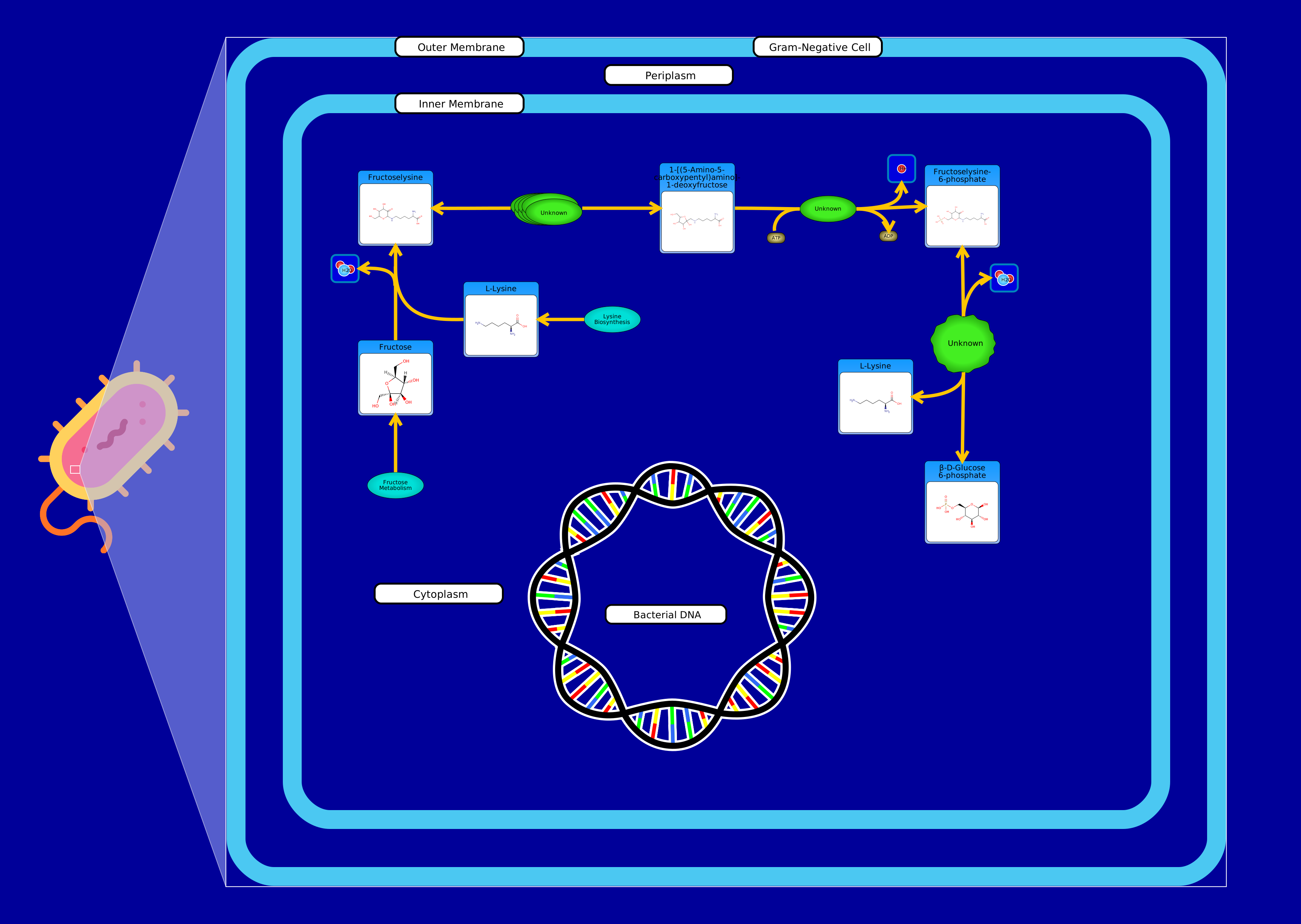 View Pathway
|
Fructoselysine and Psicoselysine DegradationBacteroides ovatus ATCC 8483
Fructosamines are compounds that result from glycation reactions between a sugar and a primary amine, followed by isomerization via the Amadori rearrangement. In fructoselysine degradation, fructoselysine firstly converts to 1-[(5-Amino-5-carboxypentyl)amino]-1-deoxyfructose by protein frlC, and then 1-[(5-Amino-5-carboxypentyl)amino]-1-deoxyfructose is transformed to fructoselysine-6-phosphate by fructoselysine kinase which is powered by ATP. Fructoselysine-6-phosphate finally degrades to β-D-Glucose 6-phosphate and L-lysine by fructoselysine 6-phosphate deglycase.
|
Creator: Julia Wakoli Created On: February 04, 2025 at 16:32 Last Updated: February 04, 2025 at 16:32 |