
| PathWhiz ID | Pathway | Meta Data |
|---|---|---|
PW002703 View Pathway
|
Gluconeogenesis 1466283783Homo sapiens
|
Creator: Guest: Anonymous Created On: June 18, 2016 at 15:03 Last Updated: June 18, 2016 at 15:03 |
PW002704 View Pathway
|
Gluconeogenesis 1466284170Homo sapiens
|
Creator: Guest: Anonymous Created On: June 18, 2016 at 15:09 Last Updated: June 18, 2016 at 15:09 |
PW124125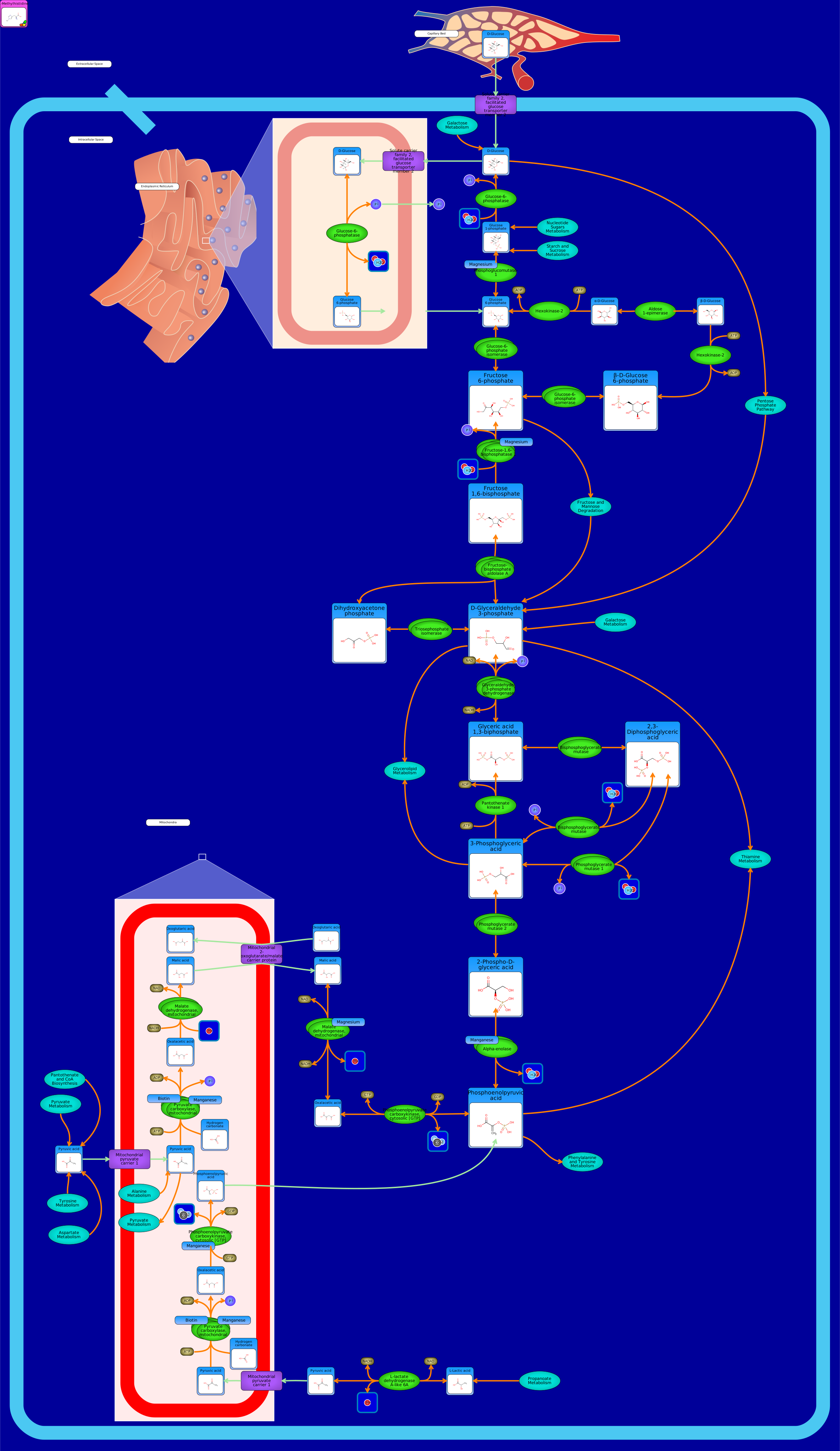 View Pathway
|
Gluconeogenesis 1466284170 1598508425Homo sapiens
|
Creator: Guest: Anonymous Created On: August 27, 2020 at 00:07 Last Updated: August 27, 2020 at 00:07 |
PW002705 View Pathway
|
Gluconeogenesis 1466291909Homo sapiens
|
Creator: Guest: Anonymous Created On: June 18, 2016 at 17:18 Last Updated: June 18, 2016 at 17:18 |
PW124127 View Pathway
|
Gluconeogenesis DPAcinetobacter baylyi (strain ATCC 33305 / BD413 / ADP1)
|
Creator: Guest: Anonymous Created On: August 27, 2020 at 00:19 Last Updated: August 27, 2020 at 00:19 |
PW226844 View Pathway
|
Gluconeogenesis eq.2Homo sapiens
|
Creator: Guest: Anonymous Created On: March 18, 2024 at 15:43 Last Updated: March 18, 2024 at 15:43 |
PW408891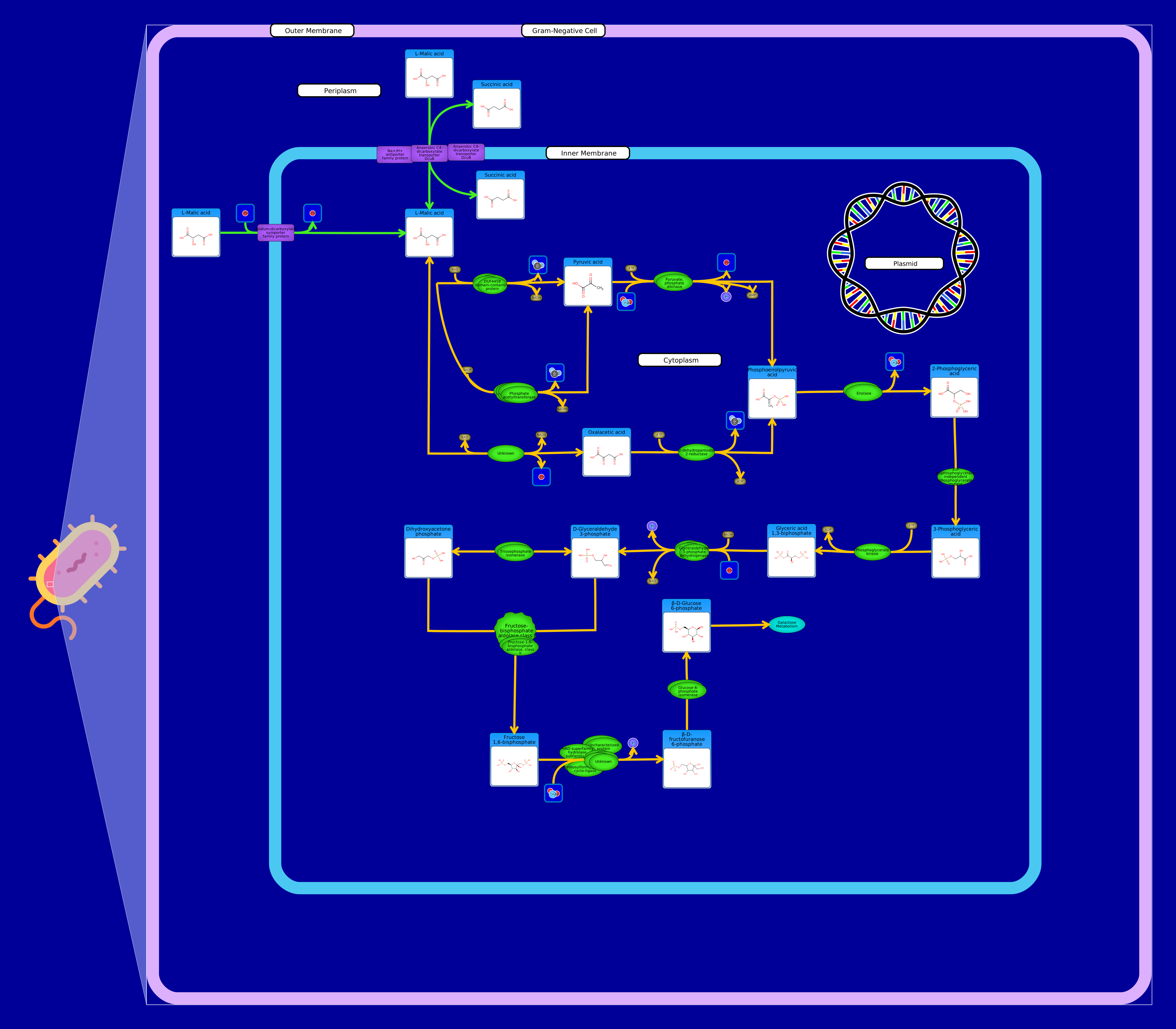 View Pathway
|
Gluconeogenesis from L-Malic AcidBacteroides sp. 1_1_14
Gluconeogenesis from L-malic acid starts from the introduction of L-malic acid into cytoplasm either through a C4 dicarboxylate / orotate:H+ symporter or a dicarboxylate transporter (succinic acid antiporter). L-malic acid is then metabolized through 3 possible ways: NAD driven malate dehydrogenase resulting in oxalacetic acid, NADP driven malate dehydrogenase B resulting pyruvic acid or malate dehydrogenase, NAD-requiring resulting in pyruvic acid.
Oxalacetic acid is processed by phosphoenolpyruvate carboxykinase (ATP driven) while pyruvic acid is processed by phosphoenolpyruvate synthetase resulting in phosphoenolpyruvic acid. This compound is dehydrated by enolase resulting in an 2-phosphoglyceric acid which is then isomerized by 2,3-bisphosphoglycerate-independent phosphoglycerate mutase resulting in a 3-phosphoglyceric acid which is phosphorylated by an ATP driven phosphoglycerate kinase resulting in a glyceric acid 1,3-biphosphate. This compound undergoes an NADH driven glyceraldehyde 3-phosphate dehydrogenase reaction resulting in a D-Glyceraldehyde 3-phosphate which is first isomerized into dihydroxyacetone phosphate through an triosephosphate isomerase. D-glyceraldehyde 3-phosphate and Dihydroxyacetone phosphate react through a fructose biphosphate aldolase protein complex resulting in a fructose 1,6-biphosphate. Fructose 1,6-biphosphateis is metabolized by a fructose-1,6-bisphosphatase resulting in a Beta-D-fructofuranose 6-phosphate which is then isomerized into a Beta-D-glucose 6-phosphate through a glucose-6-phosphate isomerase.
|
Creator: Julia Wakoli Created On: December 23, 2024 at 08:28 Last Updated: December 23, 2024 at 08:28 |
PW408935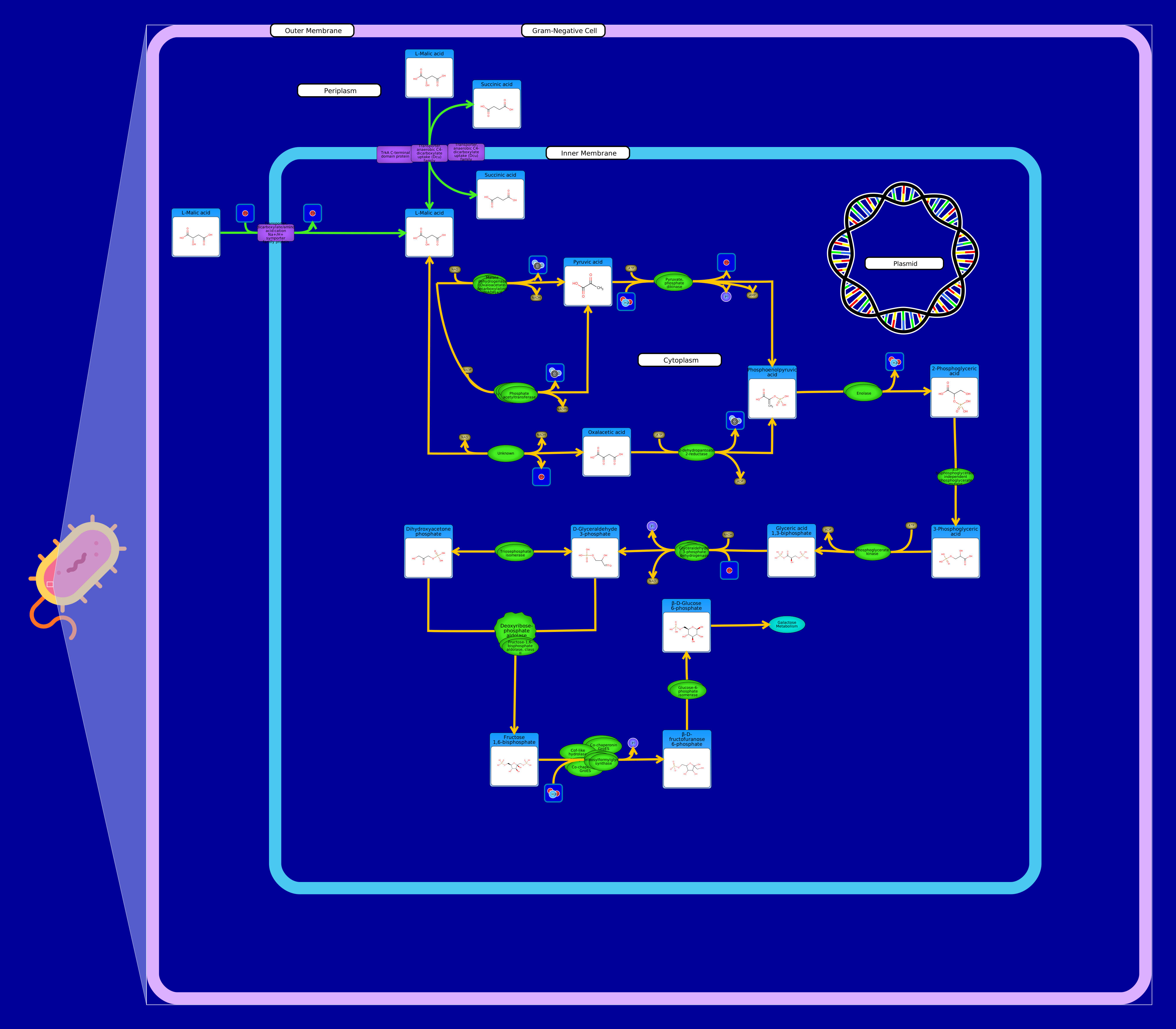 View Pathway
|
Gluconeogenesis from L-Malic AcidBacteroides sp. 2_2_4
Gluconeogenesis from L-malic acid starts from the introduction of L-malic acid into cytoplasm either through a C4 dicarboxylate / orotate:H+ symporter or a dicarboxylate transporter (succinic acid antiporter). L-malic acid is then metabolized through 3 possible ways: NAD driven malate dehydrogenase resulting in oxalacetic acid, NADP driven malate dehydrogenase B resulting pyruvic acid or malate dehydrogenase, NAD-requiring resulting in pyruvic acid.
Oxalacetic acid is processed by phosphoenolpyruvate carboxykinase (ATP driven) while pyruvic acid is processed by phosphoenolpyruvate synthetase resulting in phosphoenolpyruvic acid. This compound is dehydrated by enolase resulting in an 2-phosphoglyceric acid which is then isomerized by 2,3-bisphosphoglycerate-independent phosphoglycerate mutase resulting in a 3-phosphoglyceric acid which is phosphorylated by an ATP driven phosphoglycerate kinase resulting in a glyceric acid 1,3-biphosphate. This compound undergoes an NADH driven glyceraldehyde 3-phosphate dehydrogenase reaction resulting in a D-Glyceraldehyde 3-phosphate which is first isomerized into dihydroxyacetone phosphate through an triosephosphate isomerase. D-glyceraldehyde 3-phosphate and Dihydroxyacetone phosphate react through a fructose biphosphate aldolase protein complex resulting in a fructose 1,6-biphosphate. Fructose 1,6-biphosphateis is metabolized by a fructose-1,6-bisphosphatase resulting in a Beta-D-fructofuranose 6-phosphate which is then isomerized into a Beta-D-glucose 6-phosphate through a glucose-6-phosphate isomerase.
|
Creator: Julia Wakoli Created On: December 23, 2024 at 08:50 Last Updated: December 23, 2024 at 08:50 |
PW409027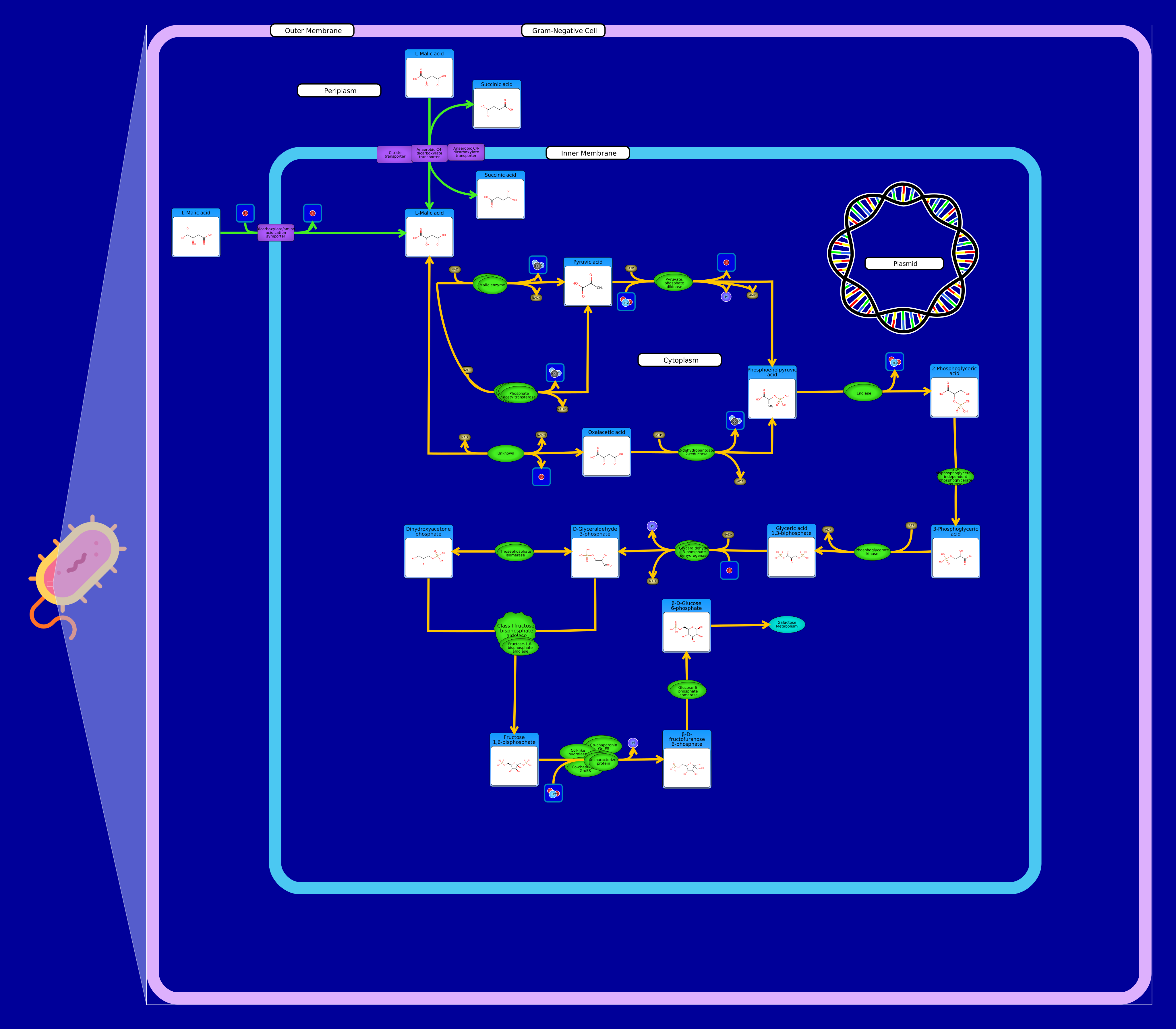 View Pathway
|
Gluconeogenesis from L-Malic AcidBacteroides sp. 4_1_36
Gluconeogenesis from L-malic acid starts from the introduction of L-malic acid into cytoplasm either through a C4 dicarboxylate / orotate:H+ symporter or a dicarboxylate transporter (succinic acid antiporter). L-malic acid is then metabolized through 3 possible ways: NAD driven malate dehydrogenase resulting in oxalacetic acid, NADP driven malate dehydrogenase B resulting pyruvic acid or malate dehydrogenase, NAD-requiring resulting in pyruvic acid.
Oxalacetic acid is processed by phosphoenolpyruvate carboxykinase (ATP driven) while pyruvic acid is processed by phosphoenolpyruvate synthetase resulting in phosphoenolpyruvic acid. This compound is dehydrated by enolase resulting in an 2-phosphoglyceric acid which is then isomerized by 2,3-bisphosphoglycerate-independent phosphoglycerate mutase resulting in a 3-phosphoglyceric acid which is phosphorylated by an ATP driven phosphoglycerate kinase resulting in a glyceric acid 1,3-biphosphate. This compound undergoes an NADH driven glyceraldehyde 3-phosphate dehydrogenase reaction resulting in a D-Glyceraldehyde 3-phosphate which is first isomerized into dihydroxyacetone phosphate through an triosephosphate isomerase. D-glyceraldehyde 3-phosphate and Dihydroxyacetone phosphate react through a fructose biphosphate aldolase protein complex resulting in a fructose 1,6-biphosphate. Fructose 1,6-biphosphateis is metabolized by a fructose-1,6-bisphosphatase resulting in a Beta-D-fructofuranose 6-phosphate which is then isomerized into a Beta-D-glucose 6-phosphate through a glucose-6-phosphate isomerase.
|
Creator: Julia Wakoli Created On: December 23, 2024 at 09:29 Last Updated: December 23, 2024 at 09:29 |
PW410238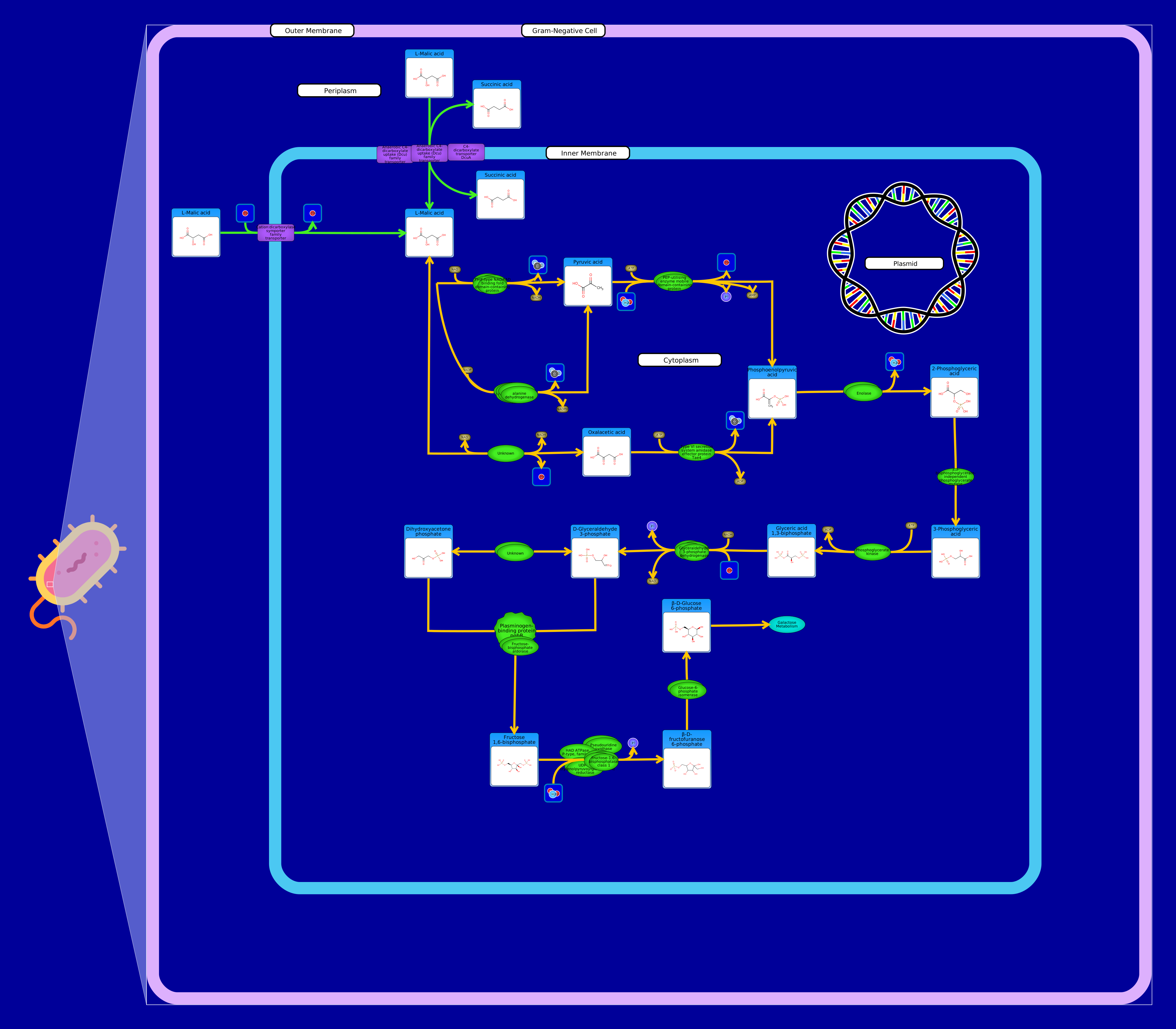 View Pathway
|
Gluconeogenesis from L-Malic AcidHelicobacter bilis ATCC 43879
Gluconeogenesis from L-malic acid starts from the introduction of L-malic acid into cytoplasm either through a C4 dicarboxylate / orotate:H+ symporter or a dicarboxylate transporter (succinic acid antiporter). L-malic acid is then metabolized through 3 possible ways: NAD driven malate dehydrogenase resulting in oxalacetic acid, NADP driven malate dehydrogenase B resulting pyruvic acid or malate dehydrogenase, NAD-requiring resulting in pyruvic acid.
Oxalacetic acid is processed by phosphoenolpyruvate carboxykinase (ATP driven) while pyruvic acid is processed by phosphoenolpyruvate synthetase resulting in phosphoenolpyruvic acid. This compound is dehydrated by enolase resulting in an 2-phosphoglyceric acid which is then isomerized by 2,3-bisphosphoglycerate-independent phosphoglycerate mutase resulting in a 3-phosphoglyceric acid which is phosphorylated by an ATP driven phosphoglycerate kinase resulting in a glyceric acid 1,3-biphosphate. This compound undergoes an NADH driven glyceraldehyde 3-phosphate dehydrogenase reaction resulting in a D-Glyceraldehyde 3-phosphate which is first isomerized into dihydroxyacetone phosphate through an triosephosphate isomerase. D-glyceraldehyde 3-phosphate and Dihydroxyacetone phosphate react through a fructose biphosphate aldolase protein complex resulting in a fructose 1,6-biphosphate. Fructose 1,6-biphosphateis is metabolized by a fructose-1,6-bisphosphatase resulting in a Beta-D-fructofuranose 6-phosphate which is then isomerized into a Beta-D-glucose 6-phosphate through a glucose-6-phosphate isomerase.
|
Creator: Julia Wakoli Created On: December 23, 2024 at 18:39 Last Updated: December 23, 2024 at 18:39 |