
| PathWhiz ID | Pathway | Meta Data |
|---|---|---|
PW528661 View Pathway
|
GlycolysisCitrobacter youngae ATCC 29220
Glycolysis is a metabolic pathway consisting of ten reactions that convert glucose to pyruvate, releasing energy to form ATP and NADH. It occurs in two phases: the chemical priming phase and the energy-yielding phase. In the priming phase, D-glucose, which can be imported or derived from galactose metabolism, is phosphorylated to glucose-6-phosphate by a hexokinase-like enzyme, using ATP. This is then converted to fructose-6-phosphate, which is further phosphorylated to fructose-1,6-bisphosphate by 6-phosphofructokinase, also using ATP. Aldolase then splits fructose-1,6-bisphosphate into dihydroxyacetone phosphate and glyceraldehyde-3-phosphate, which can interconvert via triosephosphate isomerase. In the energy-yielding phase, glyceraldehyde-3-phosphate is converted to 1,3-bisphosphoglycerate by glyceraldehyde-3-phosphate dehydrogenase, producing NADH in the process. ATP is generated when 1,3-bisphosphoglycerate is converted to 3-phosphoglycerate. Further steps involve the conversion of 3-phosphoglycerate to 2-phosphoglycerate by phosphoglycerate mutase, followed by conversion to phosphoenolpyruvate by enolase. Finally, pyruvate kinase converts phosphoenolpyruvate to pyruvate, producing ATP in the process. Pyruvate then participates in further metabolic pathways, including pyruvate metabolism, tyrosine metabolism, and the synthesis of pantothenate and CoA.
|
Creator: Julia Wakoli Created On: February 18, 2025 at 11:37 Last Updated: February 18, 2025 at 11:37 |
PW537314 View Pathway
|
GlycolysisEscherichia coli SE15
Glycolysis is a metabolic pathway consisting of ten reactions that convert glucose to pyruvate, releasing energy to form ATP and NADH. It occurs in two phases: the chemical priming phase and the energy-yielding phase. In the priming phase, D-glucose, which can be imported or derived from galactose metabolism, is phosphorylated to glucose-6-phosphate by a hexokinase-like enzyme, using ATP. This is then converted to fructose-6-phosphate, which is further phosphorylated to fructose-1,6-bisphosphate by 6-phosphofructokinase, also using ATP. Aldolase then splits fructose-1,6-bisphosphate into dihydroxyacetone phosphate and glyceraldehyde-3-phosphate, which can interconvert via triosephosphate isomerase. In the energy-yielding phase, glyceraldehyde-3-phosphate is converted to 1,3-bisphosphoglycerate by glyceraldehyde-3-phosphate dehydrogenase, producing NADH in the process. ATP is generated when 1,3-bisphosphoglycerate is converted to 3-phosphoglycerate. Further steps involve the conversion of 3-phosphoglycerate to 2-phosphoglycerate by phosphoglycerate mutase, followed by conversion to phosphoenolpyruvate by enolase. Finally, pyruvate kinase converts phosphoenolpyruvate to pyruvate, producing ATP in the process. Pyruvate then participates in further metabolic pathways, including pyruvate metabolism, tyrosine metabolism, and the synthesis of pantothenate and CoA.
|
Creator: Julia Wakoli Created On: February 21, 2025 at 13:50 Last Updated: February 21, 2025 at 13:50 |
PW522550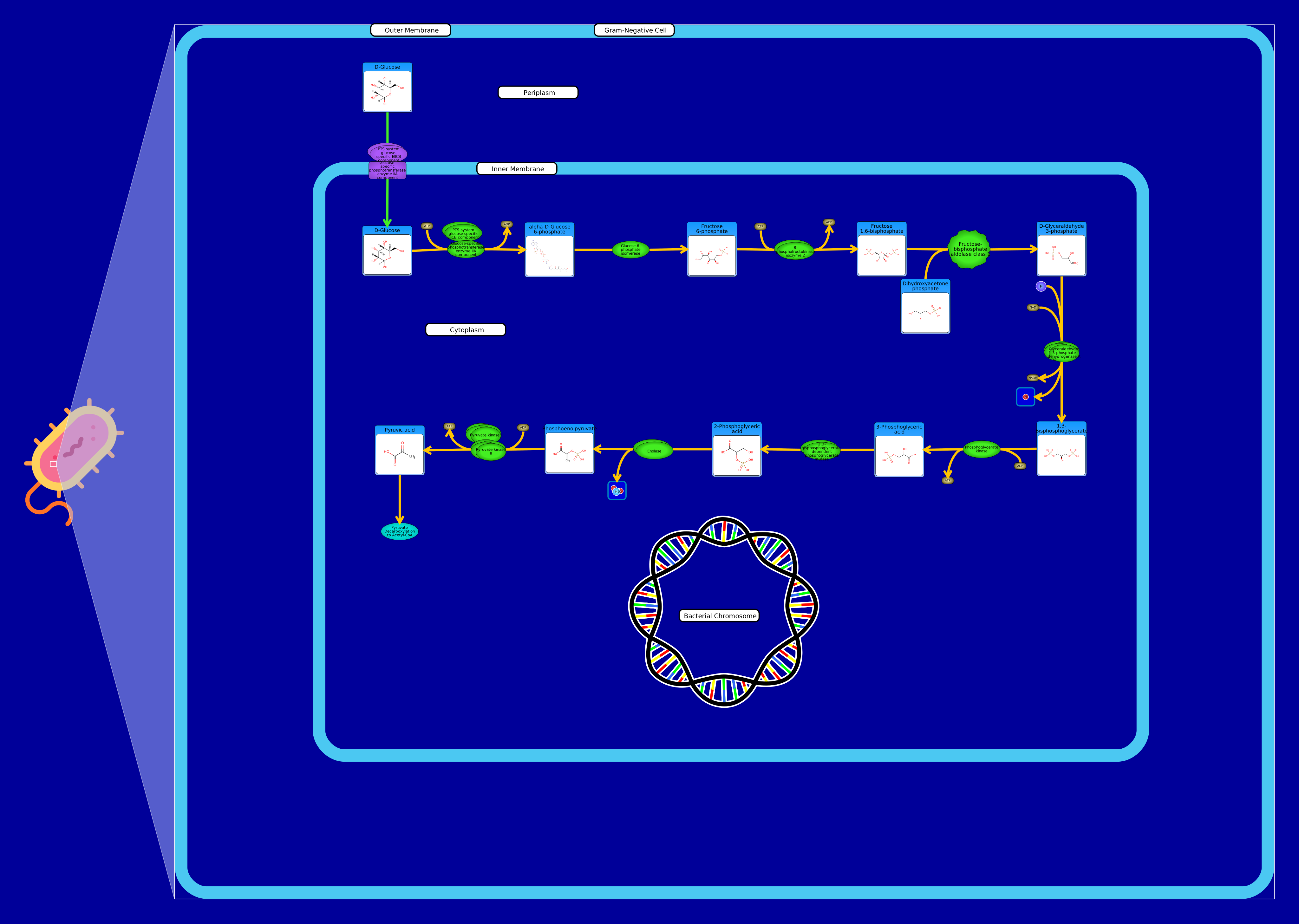 View Pathway
|
GlycolysisEscherichia coli
Glycolysis is a metabolic pathway consisting of ten reactions that convert glucose to pyruvate, releasing energy to form ATP and NADH. It occurs in two phases: the chemical priming phase and the energy-yielding phase. In the priming phase, D-glucose, which can be imported or derived from galactose metabolism, is phosphorylated to glucose-6-phosphate by a hexokinase-like enzyme, using ATP. This is then converted to fructose-6-phosphate, which is further phosphorylated to fructose-1,6-bisphosphate by 6-phosphofructokinase, also using ATP. Aldolase then splits fructose-1,6-bisphosphate into dihydroxyacetone phosphate and glyceraldehyde-3-phosphate, which can interconvert via triosephosphate isomerase. In the energy-yielding phase, glyceraldehyde-3-phosphate is converted to 1,3-bisphosphoglycerate by glyceraldehyde-3-phosphate dehydrogenase, producing NADH in the process. ATP is generated when 1,3-bisphosphoglycerate is converted to 3-phosphoglycerate. Further steps involve the conversion of 3-phosphoglycerate to 2-phosphoglycerate by phosphoglycerate mutase, followed by conversion to phosphoenolpyruvate by enolase. Finally, pyruvate kinase converts phosphoenolpyruvate to pyruvate, producing ATP in the process. Pyruvate then participates in further metabolic pathways, including pyruvate metabolism, tyrosine metabolism, and the synthesis of pantothenate and CoA.
|
Creator: Julia Wakoli Created On: February 15, 2025 at 21:57 Last Updated: February 15, 2025 at 21:57 |
PW527226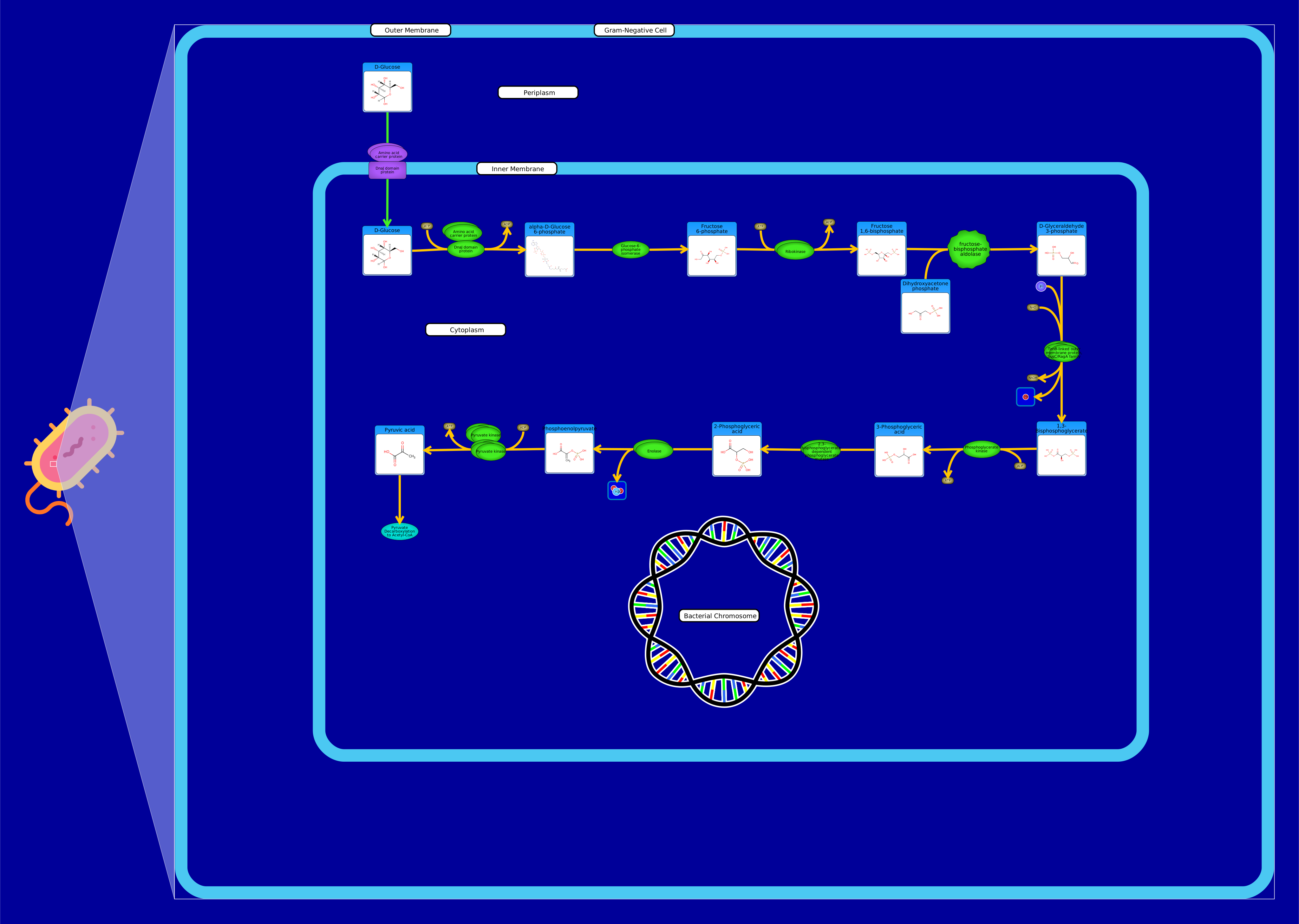 View Pathway
|
GlycolysisParabacteroides johnsonii DSM 18315
Glycolysis is a metabolic pathway consisting of ten reactions that convert glucose to pyruvate, releasing energy to form ATP and NADH. It occurs in two phases: the chemical priming phase and the energy-yielding phase. In the priming phase, D-glucose, which can be imported or derived from galactose metabolism, is phosphorylated to glucose-6-phosphate by a hexokinase-like enzyme, using ATP. This is then converted to fructose-6-phosphate, which is further phosphorylated to fructose-1,6-bisphosphate by 6-phosphofructokinase, also using ATP. Aldolase then splits fructose-1,6-bisphosphate into dihydroxyacetone phosphate and glyceraldehyde-3-phosphate, which can interconvert via triosephosphate isomerase. In the energy-yielding phase, glyceraldehyde-3-phosphate is converted to 1,3-bisphosphoglycerate by glyceraldehyde-3-phosphate dehydrogenase, producing NADH in the process. ATP is generated when 1,3-bisphosphoglycerate is converted to 3-phosphoglycerate. Further steps involve the conversion of 3-phosphoglycerate to 2-phosphoglycerate by phosphoglycerate mutase, followed by conversion to phosphoenolpyruvate by enolase. Finally, pyruvate kinase converts phosphoenolpyruvate to pyruvate, producing ATP in the process. Pyruvate then participates in further metabolic pathways, including pyruvate metabolism, tyrosine metabolism, and the synthesis of pantothenate and CoA.
|
Creator: Julia Wakoli Created On: February 18, 2025 at 04:02 Last Updated: February 18, 2025 at 04:02 |
PW529138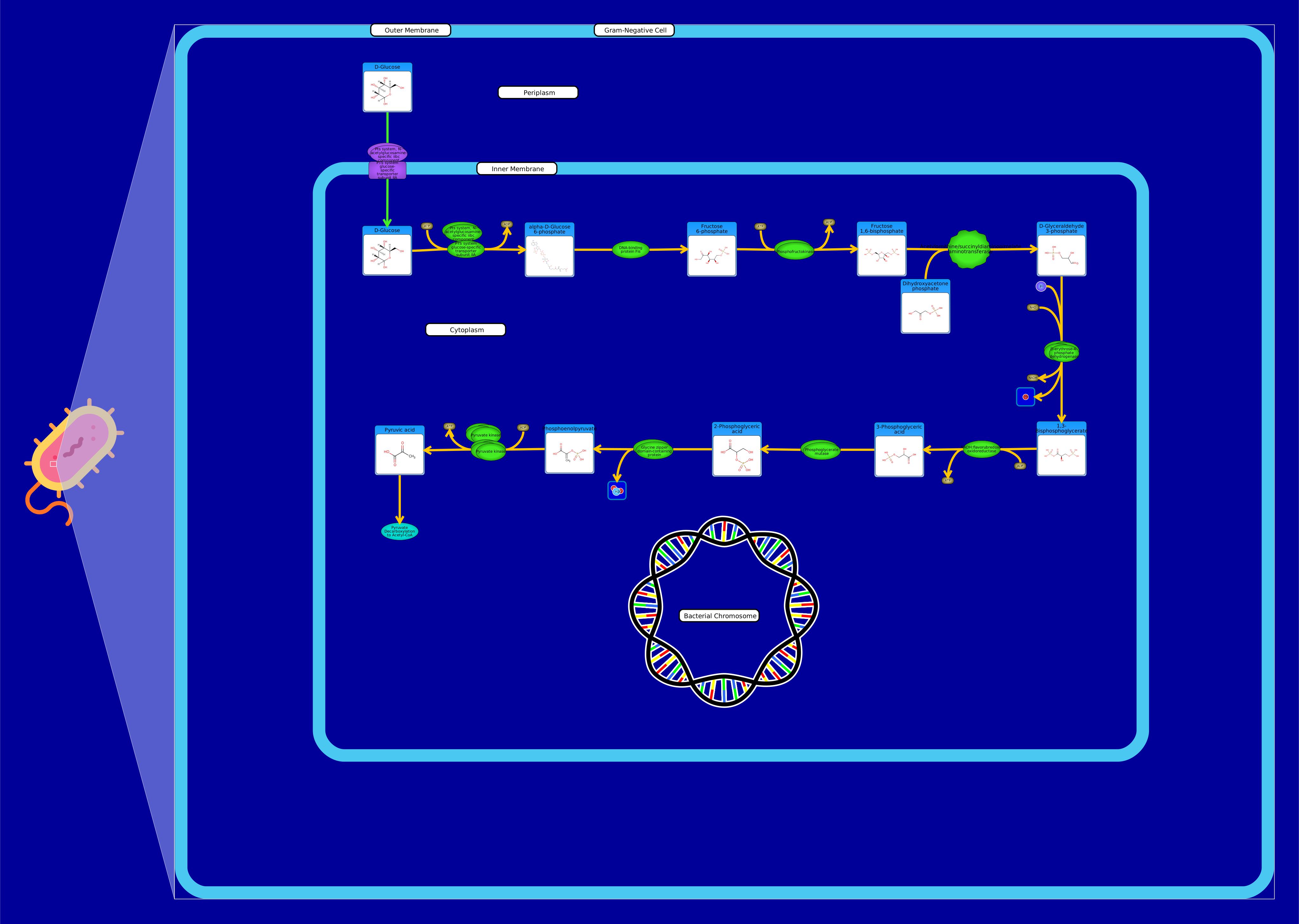 View Pathway
|
GlycolysisPlesiomonas shigelloides 302-73
Glycolysis is a metabolic pathway consisting of ten reactions that convert glucose to pyruvate, releasing energy to form ATP and NADH. It occurs in two phases: the chemical priming phase and the energy-yielding phase. In the priming phase, D-glucose, which can be imported or derived from galactose metabolism, is phosphorylated to glucose-6-phosphate by a hexokinase-like enzyme, using ATP. This is then converted to fructose-6-phosphate, which is further phosphorylated to fructose-1,6-bisphosphate by 6-phosphofructokinase, also using ATP. Aldolase then splits fructose-1,6-bisphosphate into dihydroxyacetone phosphate and glyceraldehyde-3-phosphate, which can interconvert via triosephosphate isomerase. In the energy-yielding phase, glyceraldehyde-3-phosphate is converted to 1,3-bisphosphoglycerate by glyceraldehyde-3-phosphate dehydrogenase, producing NADH in the process. ATP is generated when 1,3-bisphosphoglycerate is converted to 3-phosphoglycerate. Further steps involve the conversion of 3-phosphoglycerate to 2-phosphoglycerate by phosphoglycerate mutase, followed by conversion to phosphoenolpyruvate by enolase. Finally, pyruvate kinase converts phosphoenolpyruvate to pyruvate, producing ATP in the process. Pyruvate then participates in further metabolic pathways, including pyruvate metabolism, tyrosine metabolism, and the synthesis of pantothenate and CoA.
|
Creator: Julia Wakoli Created On: February 18, 2025 at 14:09 Last Updated: February 18, 2025 at 14:09 |
PW527512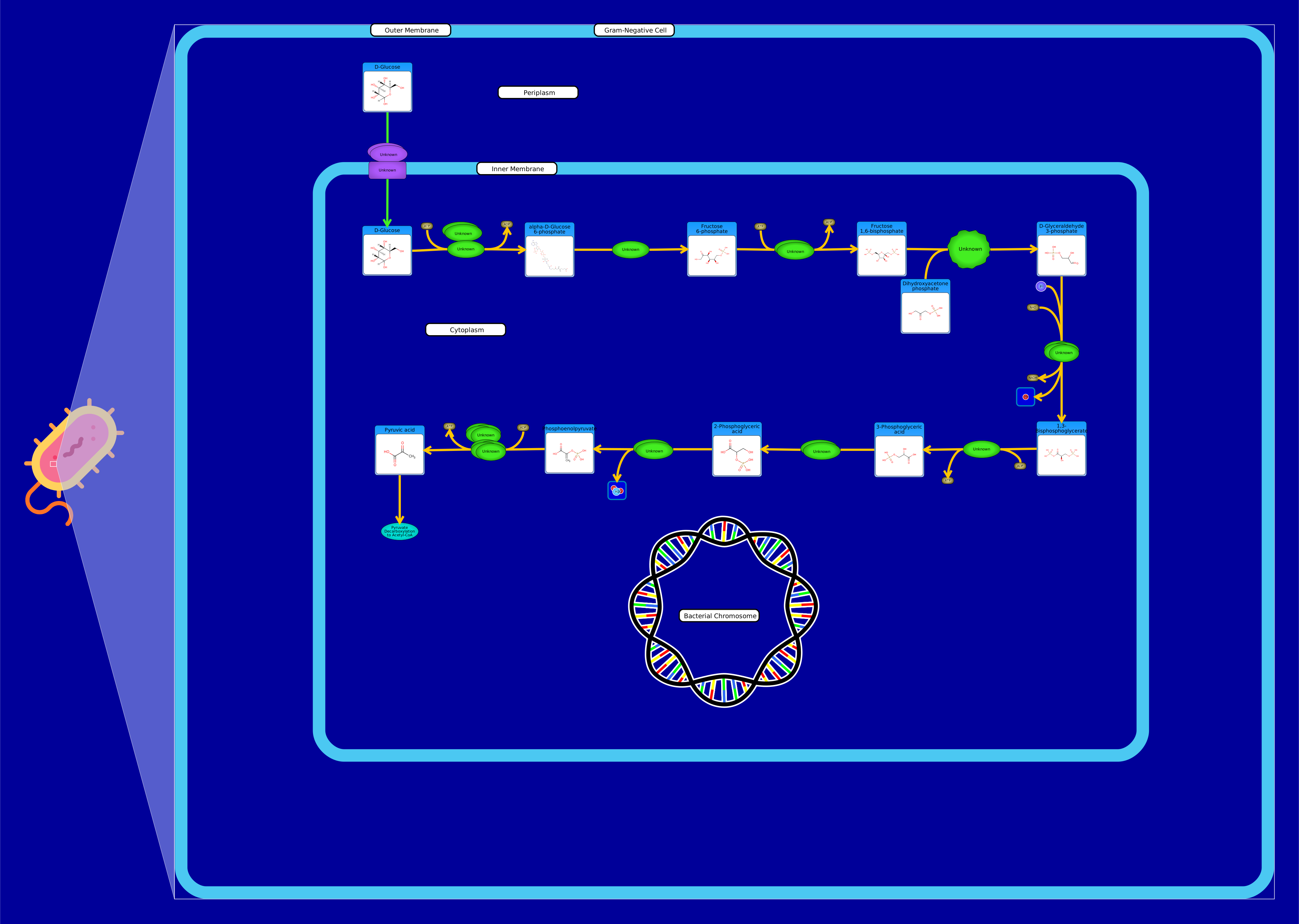 View Pathway
|
GlycolysisFusobacterium nucleatum subsp. animalis 4_8
Glycolysis is a metabolic pathway consisting of ten reactions that convert glucose to pyruvate, releasing energy to form ATP and NADH. It occurs in two phases: the chemical priming phase and the energy-yielding phase. In the priming phase, D-glucose, which can be imported or derived from galactose metabolism, is phosphorylated to glucose-6-phosphate by a hexokinase-like enzyme, using ATP. This is then converted to fructose-6-phosphate, which is further phosphorylated to fructose-1,6-bisphosphate by 6-phosphofructokinase, also using ATP. Aldolase then splits fructose-1,6-bisphosphate into dihydroxyacetone phosphate and glyceraldehyde-3-phosphate, which can interconvert via triosephosphate isomerase. In the energy-yielding phase, glyceraldehyde-3-phosphate is converted to 1,3-bisphosphoglycerate by glyceraldehyde-3-phosphate dehydrogenase, producing NADH in the process. ATP is generated when 1,3-bisphosphoglycerate is converted to 3-phosphoglycerate. Further steps involve the conversion of 3-phosphoglycerate to 2-phosphoglycerate by phosphoglycerate mutase, followed by conversion to phosphoenolpyruvate by enolase. Finally, pyruvate kinase converts phosphoenolpyruvate to pyruvate, producing ATP in the process. Pyruvate then participates in further metabolic pathways, including pyruvate metabolism, tyrosine metabolism, and the synthesis of pantothenate and CoA.
|
Creator: Julia Wakoli Created On: February 18, 2025 at 05:32 Last Updated: February 18, 2025 at 05:32 |
PW529962 View Pathway
|
GlycolysisDialister invisus DSM 15470
Glycolysis is a metabolic pathway consisting of ten reactions that convert glucose to pyruvate, releasing energy to form ATP and NADH. It occurs in two phases: the chemical priming phase and the energy-yielding phase. In the priming phase, D-glucose, which can be imported or derived from galactose metabolism, is phosphorylated to glucose-6-phosphate by a hexokinase-like enzyme, using ATP. This is then converted to fructose-6-phosphate, which is further phosphorylated to fructose-1,6-bisphosphate by 6-phosphofructokinase, also using ATP. Aldolase then splits fructose-1,6-bisphosphate into dihydroxyacetone phosphate and glyceraldehyde-3-phosphate, which can interconvert via triosephosphate isomerase. In the energy-yielding phase, glyceraldehyde-3-phosphate is converted to 1,3-bisphosphoglycerate by glyceraldehyde-3-phosphate dehydrogenase, producing NADH in the process. ATP is generated when 1,3-bisphosphoglycerate is converted to 3-phosphoglycerate. Further steps involve the conversion of 3-phosphoglycerate to 2-phosphoglycerate by phosphoglycerate mutase, followed by conversion to phosphoenolpyruvate by enolase. Finally, pyruvate kinase converts phosphoenolpyruvate to pyruvate, producing ATP in the process. Pyruvate then participates in further metabolic pathways, including pyruvate metabolism, tyrosine metabolism, and the synthesis of pantothenate and CoA.
|
Creator: Julia Wakoli Created On: February 18, 2025 at 18:20 Last Updated: February 18, 2025 at 18:20 |
PW527310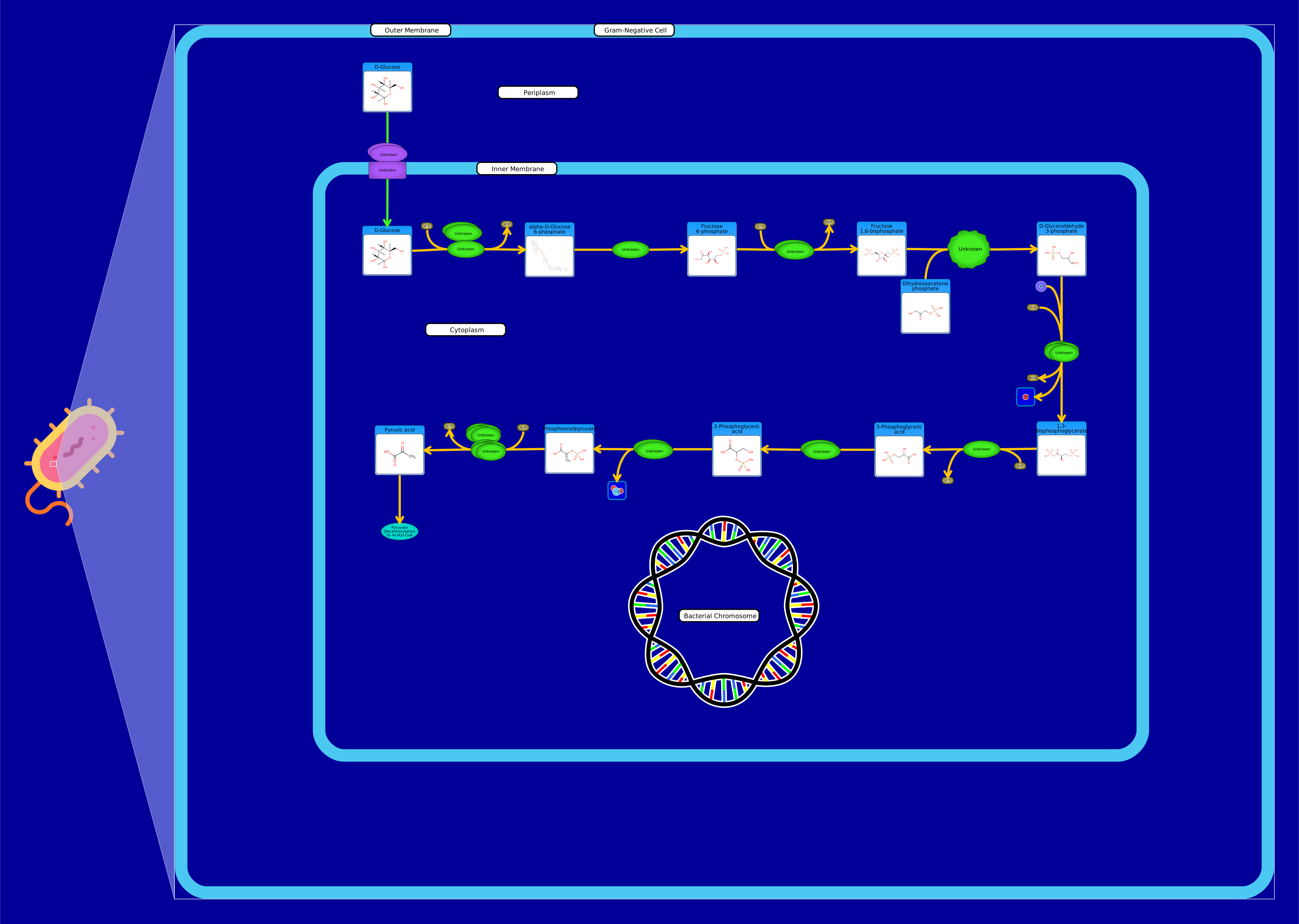 View Pathway
|
GlycolysisBacteroides coprophilus DSM 18228 = JCM 13818
Glycolysis is a metabolic pathway consisting of ten reactions that convert glucose to pyruvate, releasing energy to form ATP and NADH. It occurs in two phases: the chemical priming phase and the energy-yielding phase. In the priming phase, D-glucose, which can be imported or derived from galactose metabolism, is phosphorylated to glucose-6-phosphate by a hexokinase-like enzyme, using ATP. This is then converted to fructose-6-phosphate, which is further phosphorylated to fructose-1,6-bisphosphate by 6-phosphofructokinase, also using ATP. Aldolase then splits fructose-1,6-bisphosphate into dihydroxyacetone phosphate and glyceraldehyde-3-phosphate, which can interconvert via triosephosphate isomerase. In the energy-yielding phase, glyceraldehyde-3-phosphate is converted to 1,3-bisphosphoglycerate by glyceraldehyde-3-phosphate dehydrogenase, producing NADH in the process. ATP is generated when 1,3-bisphosphoglycerate is converted to 3-phosphoglycerate. Further steps involve the conversion of 3-phosphoglycerate to 2-phosphoglycerate by phosphoglycerate mutase, followed by conversion to phosphoenolpyruvate by enolase. Finally, pyruvate kinase converts phosphoenolpyruvate to pyruvate, producing ATP in the process. Pyruvate then participates in further metabolic pathways, including pyruvate metabolism, tyrosine metabolism, and the synthesis of pantothenate and CoA.
|
Creator: Julia Wakoli Created On: February 18, 2025 at 04:30 Last Updated: February 18, 2025 at 04:30 |
PW527505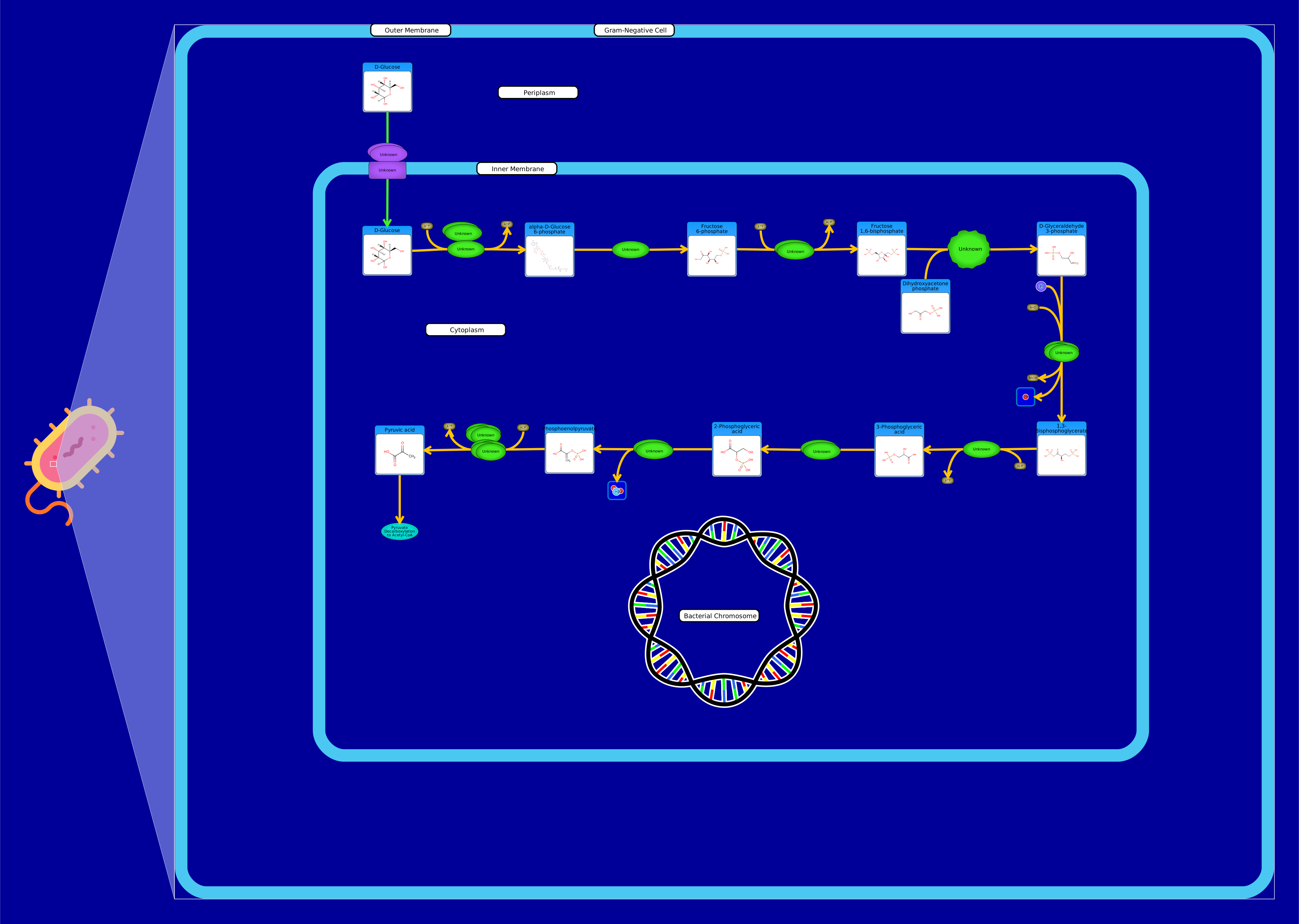 View Pathway
|
GlycolysisFusobacterium mortiferum ATCC 9817
Glycolysis is a metabolic pathway consisting of ten reactions that convert glucose to pyruvate, releasing energy to form ATP and NADH. It occurs in two phases: the chemical priming phase and the energy-yielding phase. In the priming phase, D-glucose, which can be imported or derived from galactose metabolism, is phosphorylated to glucose-6-phosphate by a hexokinase-like enzyme, using ATP. This is then converted to fructose-6-phosphate, which is further phosphorylated to fructose-1,6-bisphosphate by 6-phosphofructokinase, also using ATP. Aldolase then splits fructose-1,6-bisphosphate into dihydroxyacetone phosphate and glyceraldehyde-3-phosphate, which can interconvert via triosephosphate isomerase. In the energy-yielding phase, glyceraldehyde-3-phosphate is converted to 1,3-bisphosphoglycerate by glyceraldehyde-3-phosphate dehydrogenase, producing NADH in the process. ATP is generated when 1,3-bisphosphoglycerate is converted to 3-phosphoglycerate. Further steps involve the conversion of 3-phosphoglycerate to 2-phosphoglycerate by phosphoglycerate mutase, followed by conversion to phosphoenolpyruvate by enolase. Finally, pyruvate kinase converts phosphoenolpyruvate to pyruvate, producing ATP in the process. Pyruvate then participates in further metabolic pathways, including pyruvate metabolism, tyrosine metabolism, and the synthesis of pantothenate and CoA.
|
Creator: Julia Wakoli Created On: February 18, 2025 at 05:29 Last Updated: February 18, 2025 at 05:29 |
PW686598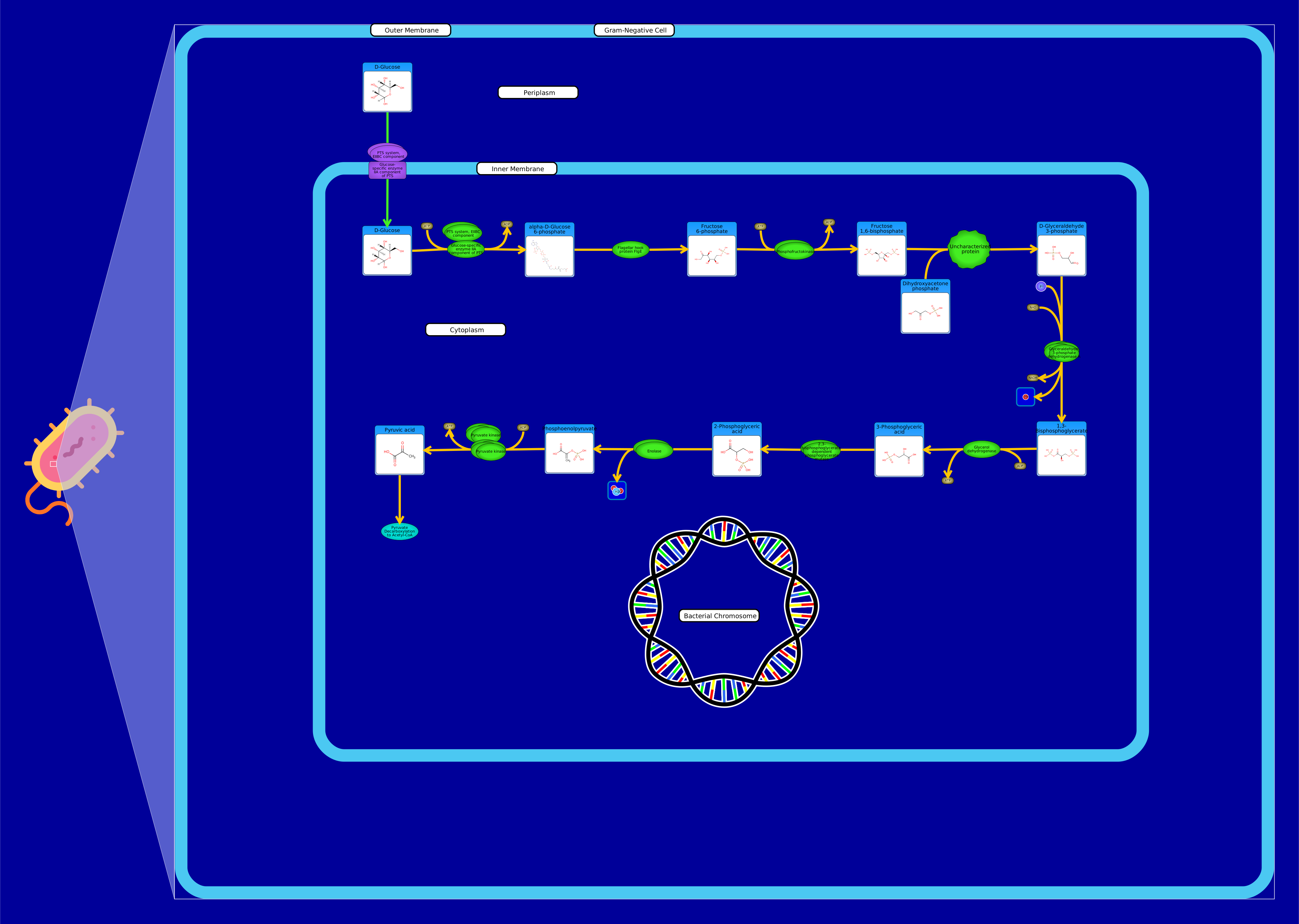 View Pathway
|
GlycolysisSerratia marcescens subsp. marcescens Db11
Glycolysis is a metabolic pathway consisting of ten reactions that convert glucose to pyruvate, releasing energy to form ATP and NADH. It occurs in two phases: the chemical priming phase and the energy-yielding phase. In the priming phase, D-glucose, which can be imported or derived from galactose metabolism, is phosphorylated to glucose-6-phosphate by a hexokinase-like enzyme, using ATP. This is then converted to fructose-6-phosphate, which is further phosphorylated to fructose-1,6-bisphosphate by 6-phosphofructokinase, also using ATP. Aldolase then splits fructose-1,6-bisphosphate into dihydroxyacetone phosphate and glyceraldehyde-3-phosphate, which can interconvert via triosephosphate isomerase. In the energy-yielding phase, glyceraldehyde-3-phosphate is converted to 1,3-bisphosphoglycerate by glyceraldehyde-3-phosphate dehydrogenase, producing NADH in the process. ATP is generated when 1,3-bisphosphoglycerate is converted to 3-phosphoglycerate. Further steps involve the conversion of 3-phosphoglycerate to 2-phosphoglycerate by phosphoglycerate mutase, followed by conversion to phosphoenolpyruvate by enolase. Finally, pyruvate kinase converts phosphoenolpyruvate to pyruvate, producing ATP in the process. Pyruvate then participates in further metabolic pathways, including pyruvate metabolism, tyrosine metabolism, and the synthesis of pantothenate and CoA.
|
Creator: Julia Wakoli Created On: February 18, 2025 at 13:42 Last Updated: February 18, 2025 at 13:42 |