
| PathWhiz ID | Pathway | Meta Data |
|---|---|---|
PW528851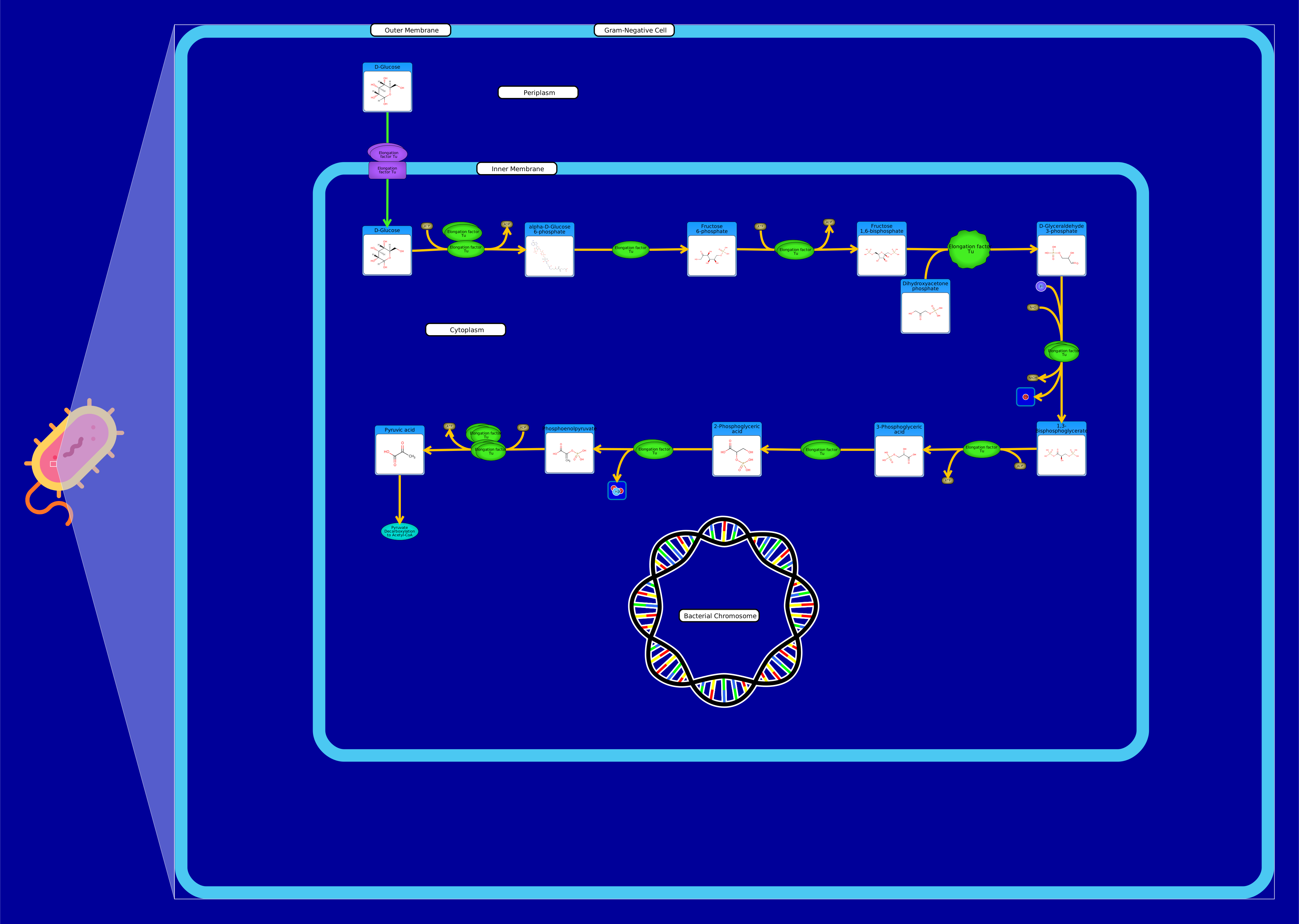 View Pathway
|
GlycolysisRaoultella planticola ATCC 33531
Glycolysis is a metabolic pathway consisting of ten reactions that convert glucose to pyruvate, releasing energy to form ATP and NADH. It occurs in two phases: the chemical priming phase and the energy-yielding phase. In the priming phase, D-glucose, which can be imported or derived from galactose metabolism, is phosphorylated to glucose-6-phosphate by a hexokinase-like enzyme, using ATP. This is then converted to fructose-6-phosphate, which is further phosphorylated to fructose-1,6-bisphosphate by 6-phosphofructokinase, also using ATP. Aldolase then splits fructose-1,6-bisphosphate into dihydroxyacetone phosphate and glyceraldehyde-3-phosphate, which can interconvert via triosephosphate isomerase. In the energy-yielding phase, glyceraldehyde-3-phosphate is converted to 1,3-bisphosphoglycerate by glyceraldehyde-3-phosphate dehydrogenase, producing NADH in the process. ATP is generated when 1,3-bisphosphoglycerate is converted to 3-phosphoglycerate. Further steps involve the conversion of 3-phosphoglycerate to 2-phosphoglycerate by phosphoglycerate mutase, followed by conversion to phosphoenolpyruvate by enolase. Finally, pyruvate kinase converts phosphoenolpyruvate to pyruvate, producing ATP in the process. Pyruvate then participates in further metabolic pathways, including pyruvate metabolism, tyrosine metabolism, and the synthesis of pantothenate and CoA.
|
Creator: Julia Wakoli Created On: February 18, 2025 at 12:34 Last Updated: February 18, 2025 at 12:34 |
PW546891 View Pathway
|
GlycolysisRaoultella planticola
Glycolysis is a metabolic pathway consisting of ten reactions that convert glucose to pyruvate, releasing energy to form ATP and NADH. It occurs in two phases: the chemical priming phase and the energy-yielding phase. In the priming phase, D-glucose, which can be imported or derived from galactose metabolism, is phosphorylated to glucose-6-phosphate by a hexokinase-like enzyme, using ATP. This is then converted to fructose-6-phosphate, which is further phosphorylated to fructose-1,6-bisphosphate by 6-phosphofructokinase, also using ATP. Aldolase then splits fructose-1,6-bisphosphate into dihydroxyacetone phosphate and glyceraldehyde-3-phosphate, which can interconvert via triosephosphate isomerase. In the energy-yielding phase, glyceraldehyde-3-phosphate is converted to 1,3-bisphosphoglycerate by glyceraldehyde-3-phosphate dehydrogenase, producing NADH in the process. ATP is generated when 1,3-bisphosphoglycerate is converted to 3-phosphoglycerate. Further steps involve the conversion of 3-phosphoglycerate to 2-phosphoglycerate by phosphoglycerate mutase, followed by conversion to phosphoenolpyruvate by enolase. Finally, pyruvate kinase converts phosphoenolpyruvate to pyruvate, producing ATP in the process. Pyruvate then participates in further metabolic pathways, including pyruvate metabolism, tyrosine metabolism, and the synthesis of pantothenate and CoA.
|
Creator: Julia Wakoli Created On: February 26, 2025 at 20:24 Last Updated: February 26, 2025 at 20:24 |
PW064742 View Pathway
|
GlycolysisSaccharomyces cerevisiae (strain ATCC 204508 / S288c)
|
Creator: Guest: Anonymous Created On: May 24, 2018 at 19:07 Last Updated: May 24, 2018 at 19:07 |
PW000146 View Pathway
|
GlycolysisHomo sapiens
Glycolysis is a metabolic pathway with sequence of ten reactions involving ten intermediate compounds that converts glucose to pyruvate. Glycolysis release free energy for forming high energy compound such as ATP and NADH. Glycolysis is consisted of two phases, which one of them is chemical priming phase and second phase is energy-yielding phase. As the starting compound of chemical priming phase, D-glucose can be obtained from galactose metabolism or imported by monosaccharide-sensing protein 1 from outside of cell. D-Glucose is catalyzed by probable hexokinase-like 2 protein to form glucose 6-phosphate which is powered by ATP. Glucose 6-phosphate transformed to fructose 6-phosphate by glucose-6-phosphate isomerase, which the later compound will be converted to fructose 1,6-bisphosphate, which is the last reaction of chemical priming phase by 6-phosphofructokinase with cofactor magnesium, and it is also powered by ATP. Before entering the second phase, aldolase catalyzing the hydrolysis of F1,6BP into dihydroxyacetone phosphate and glyceraldehyde 3-phosphate. Dihydroxyacetone phosphate and glyceraldehyde 3-phosphate can convert to each other bidirectionally by facilitation of triosephosphate isomerase. The second phase of glycolysis is yielding-energy phase that produce ATP and NADH. At the first step, D-glyceraldehyde 3-phosphate is catalyzed to glyceric acid 1,3-biphosphate by glyceraldehyde-3-phosphate dehydrogenase with NAD, which also generate NADH. ATP is generated through the reaction that convert glyceric acid 1,3-biphosphate to 3-phosphoglyceric acid. Phosphoglycerate mutase 2 catalyze 3-phosphoglyceric acid to 2-Phospho-D-glyceric acid, and alpha-enolase with cofactor magnesium catalyzes 2-Phospho-D-glyceric acid to phosphoenolpyruvic acid. Eventually, plastidial pyruvate kinase 4 converts phosphoenolpyruvic acid to pyruvate with cofactor magnesium and potassium and ADP. Pyruvate will undergo pyruvate metabolism, tyrosine metabolism and pantothenate and CoA biosynthesis.
|
Creator: WishartLab Created On: August 19, 2013 at 12:04 Last Updated: August 19, 2013 at 12:04 |
PW088336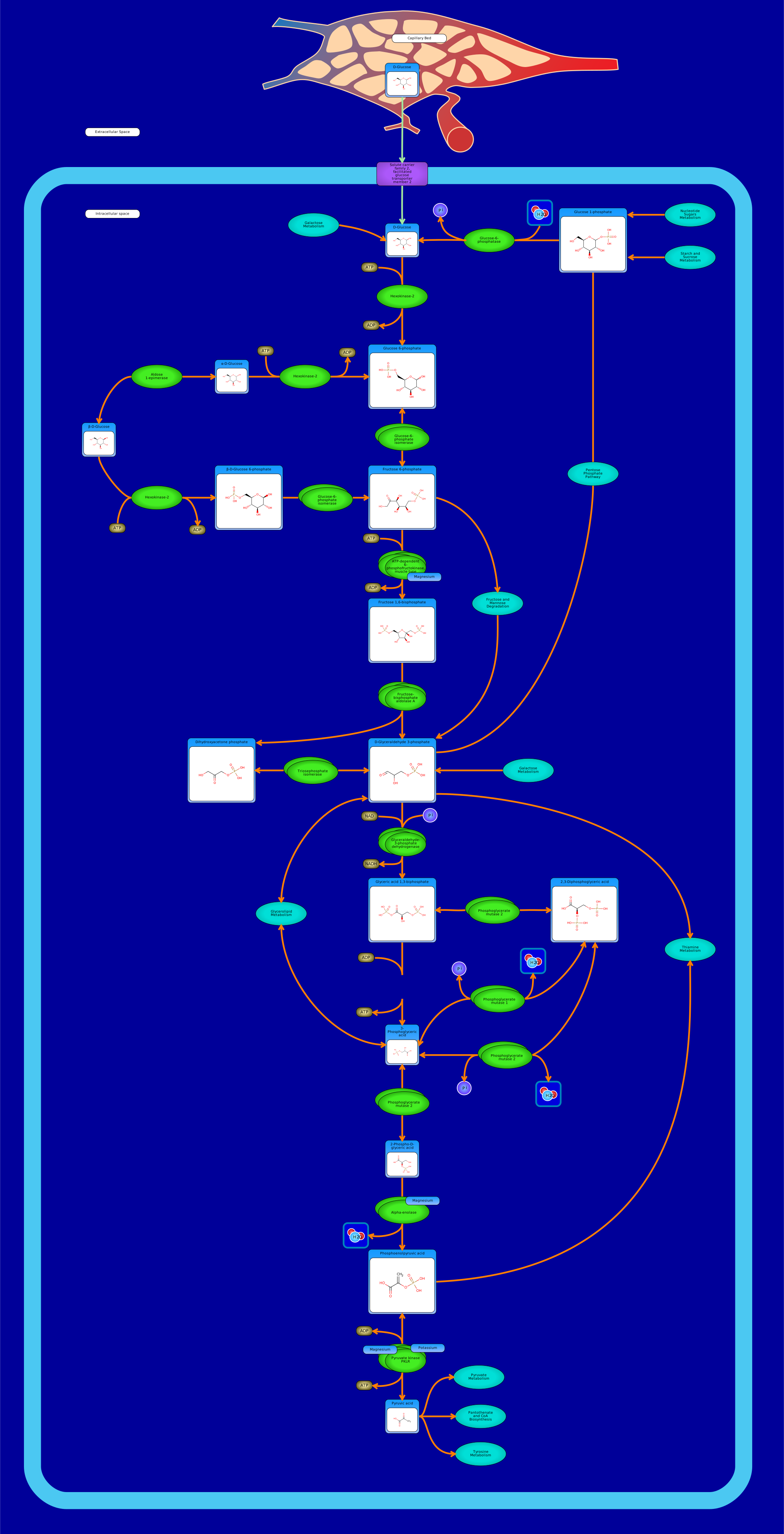 View Pathway
|
GlycolysisRattus norvegicus
Glycolysis is a metabolic pathway with sequence of ten reactions involving ten intermediate compounds that converts glucose to pyruvate. Glycolysis release free energy for forming high energy compound such as ATP and NADH. Glycolysis is consisted of two phases, which one of them is chemical priming phase and second phase is energy-yielding phase. As the starting compound of chemical priming phase, D-glucose can be obtained from galactose metabolism or imported by monosaccharide-sensing protein 1 from outside of cell. D-Glucose is catalyzed by probable hexokinase-like 2 protein to form glucose 6-phosphate which is powered by ATP. Glucose 6-phosphate transformed to fructose 6-phosphate by glucose-6-phosphate isomerase, which the later compound will be converted to fructose 1,6-bisphosphate, which is the last reaction of chemical priming phase by 6-phosphofructokinase with cofactor magnesium, and it is also powered by ATP. Before entering the second phase, aldolase catalyzing the hydrolysis of F1,6BP into dihydroxyacetone phosphate and glyceraldehyde 3-phosphate. Dihydroxyacetone phosphate and glyceraldehyde 3-phosphate can convert to each other bidirectionally by facilitation of triosephosphate isomerase. The second phase of glycolysis is yielding-energy phase that produce ATP and NADH. At the first step, D-glyceraldehyde 3-phosphate is catalyzed to glyceric acid 1,3-biphosphate by glyceraldehyde-3-phosphate dehydrogenase with NAD, which also generate NADH. ATP is generated through the reaction that convert glyceric acid 1,3-biphosphate to 3-phosphoglyceric acid. Phosphoglycerate mutase 2 catalyze 3-phosphoglyceric acid to 2-Phospho-D-glyceric acid, and alpha-enolase with cofactor magnesium catalyzes 2-Phospho-D-glyceric acid to phosphoenolpyruvic acid. Eventually, plastidial pyruvate kinase 4 converts phosphoenolpyruvic acid to pyruvate with cofactor magnesium and potassium and ADP. Pyruvate will undergo pyruvate metabolism, tyrosine metabolism and pantothenate and CoA biosynthesis.
|
Creator: Ana Marcu Created On: August 10, 2018 at 13:55 Last Updated: August 10, 2018 at 13:55 |
PW528660 View Pathway
|
GlycolysisEnterobacter cancerogenus ATCC 35316
Glycolysis is a metabolic pathway consisting of ten reactions that convert glucose to pyruvate, releasing energy to form ATP and NADH. It occurs in two phases: the chemical priming phase and the energy-yielding phase. In the priming phase, D-glucose, which can be imported or derived from galactose metabolism, is phosphorylated to glucose-6-phosphate by a hexokinase-like enzyme, using ATP. This is then converted to fructose-6-phosphate, which is further phosphorylated to fructose-1,6-bisphosphate by 6-phosphofructokinase, also using ATP. Aldolase then splits fructose-1,6-bisphosphate into dihydroxyacetone phosphate and glyceraldehyde-3-phosphate, which can interconvert via triosephosphate isomerase. In the energy-yielding phase, glyceraldehyde-3-phosphate is converted to 1,3-bisphosphoglycerate by glyceraldehyde-3-phosphate dehydrogenase, producing NADH in the process. ATP is generated when 1,3-bisphosphoglycerate is converted to 3-phosphoglycerate. Further steps involve the conversion of 3-phosphoglycerate to 2-phosphoglycerate by phosphoglycerate mutase, followed by conversion to phosphoenolpyruvate by enolase. Finally, pyruvate kinase converts phosphoenolpyruvate to pyruvate, producing ATP in the process. Pyruvate then participates in further metabolic pathways, including pyruvate metabolism, tyrosine metabolism, and the synthesis of pantothenate and CoA.
|
Creator: Julia Wakoli Created On: February 18, 2025 at 11:37 Last Updated: February 18, 2025 at 11:37 |
PW539220 View Pathway
|
GlycolysisEscherichia coli O103:H2 str. 12009
Glycolysis is a metabolic pathway consisting of ten reactions that convert glucose to pyruvate, releasing energy to form ATP and NADH. It occurs in two phases: the chemical priming phase and the energy-yielding phase. In the priming phase, D-glucose, which can be imported or derived from galactose metabolism, is phosphorylated to glucose-6-phosphate by a hexokinase-like enzyme, using ATP. This is then converted to fructose-6-phosphate, which is further phosphorylated to fructose-1,6-bisphosphate by 6-phosphofructokinase, also using ATP. Aldolase then splits fructose-1,6-bisphosphate into dihydroxyacetone phosphate and glyceraldehyde-3-phosphate, which can interconvert via triosephosphate isomerase. In the energy-yielding phase, glyceraldehyde-3-phosphate is converted to 1,3-bisphosphoglycerate by glyceraldehyde-3-phosphate dehydrogenase, producing NADH in the process. ATP is generated when 1,3-bisphosphoglycerate is converted to 3-phosphoglycerate. Further steps involve the conversion of 3-phosphoglycerate to 2-phosphoglycerate by phosphoglycerate mutase, followed by conversion to phosphoenolpyruvate by enolase. Finally, pyruvate kinase converts phosphoenolpyruvate to pyruvate, producing ATP in the process. Pyruvate then participates in further metabolic pathways, including pyruvate metabolism, tyrosine metabolism, and the synthesis of pantothenate and CoA.
|
Creator: Julia Wakoli Created On: February 22, 2025 at 09:56 Last Updated: February 22, 2025 at 09:56 |
PW528999 View Pathway
|
GlycolysisProvidencia alcalifaciens DSM 30120
Glycolysis is a metabolic pathway consisting of ten reactions that convert glucose to pyruvate, releasing energy to form ATP and NADH. It occurs in two phases: the chemical priming phase and the energy-yielding phase. In the priming phase, D-glucose, which can be imported or derived from galactose metabolism, is phosphorylated to glucose-6-phosphate by a hexokinase-like enzyme, using ATP. This is then converted to fructose-6-phosphate, which is further phosphorylated to fructose-1,6-bisphosphate by 6-phosphofructokinase, also using ATP. Aldolase then splits fructose-1,6-bisphosphate into dihydroxyacetone phosphate and glyceraldehyde-3-phosphate, which can interconvert via triosephosphate isomerase. In the energy-yielding phase, glyceraldehyde-3-phosphate is converted to 1,3-bisphosphoglycerate by glyceraldehyde-3-phosphate dehydrogenase, producing NADH in the process. ATP is generated when 1,3-bisphosphoglycerate is converted to 3-phosphoglycerate. Further steps involve the conversion of 3-phosphoglycerate to 2-phosphoglycerate by phosphoglycerate mutase, followed by conversion to phosphoenolpyruvate by enolase. Finally, pyruvate kinase converts phosphoenolpyruvate to pyruvate, producing ATP in the process. Pyruvate then participates in further metabolic pathways, including pyruvate metabolism, tyrosine metabolism, and the synthesis of pantothenate and CoA.
|
Creator: Julia Wakoli Created On: February 18, 2025 at 13:25 Last Updated: February 18, 2025 at 13:25 |
PW528937 View Pathway
|
GlycolysisEdwardsiella tarda ATCC 23685
Glycolysis is a metabolic pathway consisting of ten reactions that convert glucose to pyruvate, releasing energy to form ATP and NADH. It occurs in two phases: the chemical priming phase and the energy-yielding phase. In the priming phase, D-glucose, which can be imported or derived from galactose metabolism, is phosphorylated to glucose-6-phosphate by a hexokinase-like enzyme, using ATP. This is then converted to fructose-6-phosphate, which is further phosphorylated to fructose-1,6-bisphosphate by 6-phosphofructokinase, also using ATP. Aldolase then splits fructose-1,6-bisphosphate into dihydroxyacetone phosphate and glyceraldehyde-3-phosphate, which can interconvert via triosephosphate isomerase. In the energy-yielding phase, glyceraldehyde-3-phosphate is converted to 1,3-bisphosphoglycerate by glyceraldehyde-3-phosphate dehydrogenase, producing NADH in the process. ATP is generated when 1,3-bisphosphoglycerate is converted to 3-phosphoglycerate. Further steps involve the conversion of 3-phosphoglycerate to 2-phosphoglycerate by phosphoglycerate mutase, followed by conversion to phosphoenolpyruvate by enolase. Finally, pyruvate kinase converts phosphoenolpyruvate to pyruvate, producing ATP in the process. Pyruvate then participates in further metabolic pathways, including pyruvate metabolism, tyrosine metabolism, and the synthesis of pantothenate and CoA.
|
Creator: Julia Wakoli Created On: February 18, 2025 at 13:03 Last Updated: February 18, 2025 at 13:03 |
PW527763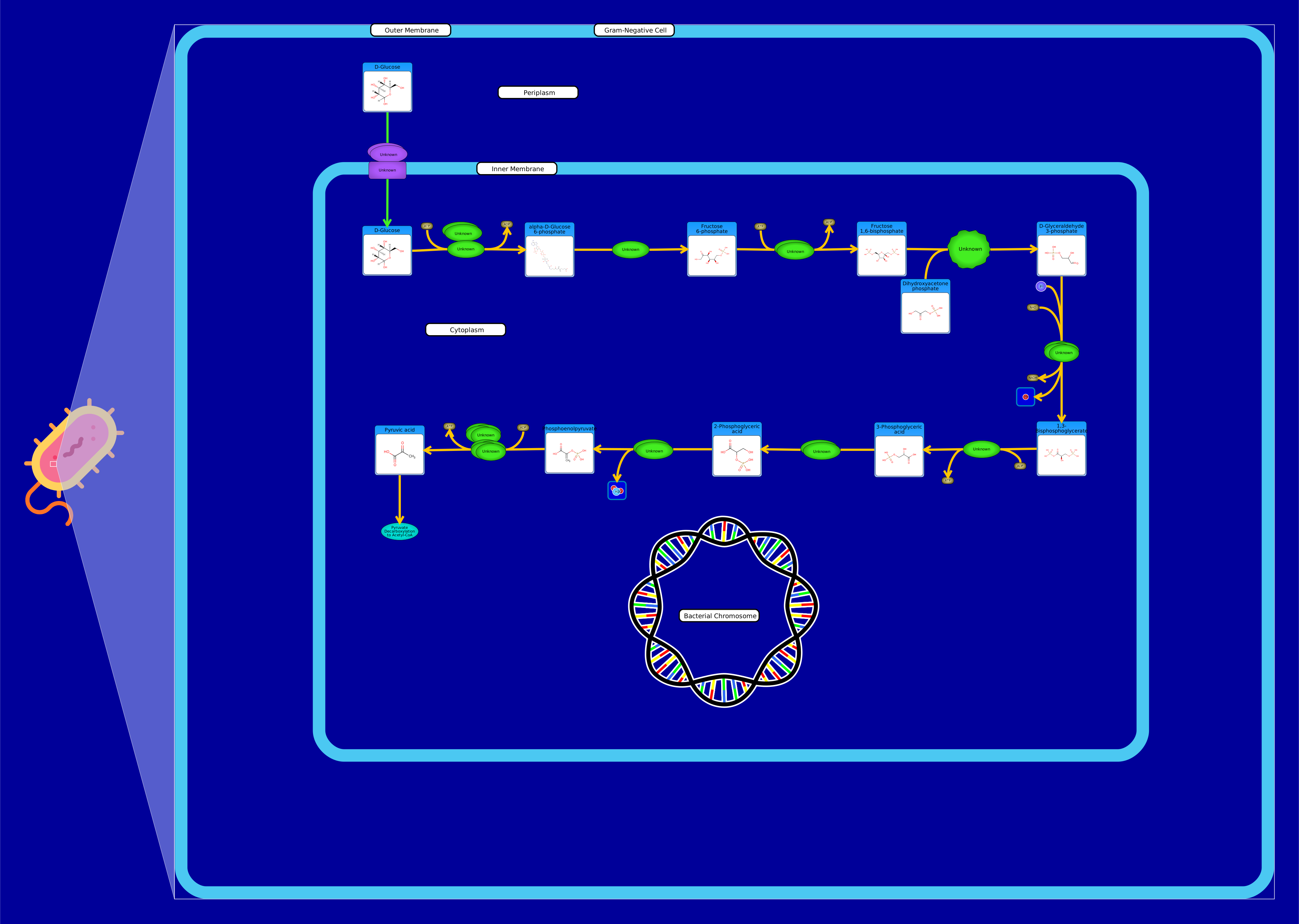 View Pathway
|
GlycolysisMethylobacterium mesophilicum SR1.6/6
Glycolysis is a metabolic pathway consisting of ten reactions that convert glucose to pyruvate, releasing energy to form ATP and NADH. It occurs in two phases: the chemical priming phase and the energy-yielding phase. In the priming phase, D-glucose, which can be imported or derived from galactose metabolism, is phosphorylated to glucose-6-phosphate by a hexokinase-like enzyme, using ATP. This is then converted to fructose-6-phosphate, which is further phosphorylated to fructose-1,6-bisphosphate by 6-phosphofructokinase, also using ATP. Aldolase then splits fructose-1,6-bisphosphate into dihydroxyacetone phosphate and glyceraldehyde-3-phosphate, which can interconvert via triosephosphate isomerase. In the energy-yielding phase, glyceraldehyde-3-phosphate is converted to 1,3-bisphosphoglycerate by glyceraldehyde-3-phosphate dehydrogenase, producing NADH in the process. ATP is generated when 1,3-bisphosphoglycerate is converted to 3-phosphoglycerate. Further steps involve the conversion of 3-phosphoglycerate to 2-phosphoglycerate by phosphoglycerate mutase, followed by conversion to phosphoenolpyruvate by enolase. Finally, pyruvate kinase converts phosphoenolpyruvate to pyruvate, producing ATP in the process. Pyruvate then participates in further metabolic pathways, including pyruvate metabolism, tyrosine metabolism, and the synthesis of pantothenate and CoA.
|
Creator: Julia Wakoli Created On: February 18, 2025 at 06:46 Last Updated: February 18, 2025 at 06:46 |