
| PathWhiz ID | Pathway | Meta Data |
|---|---|---|
PW126037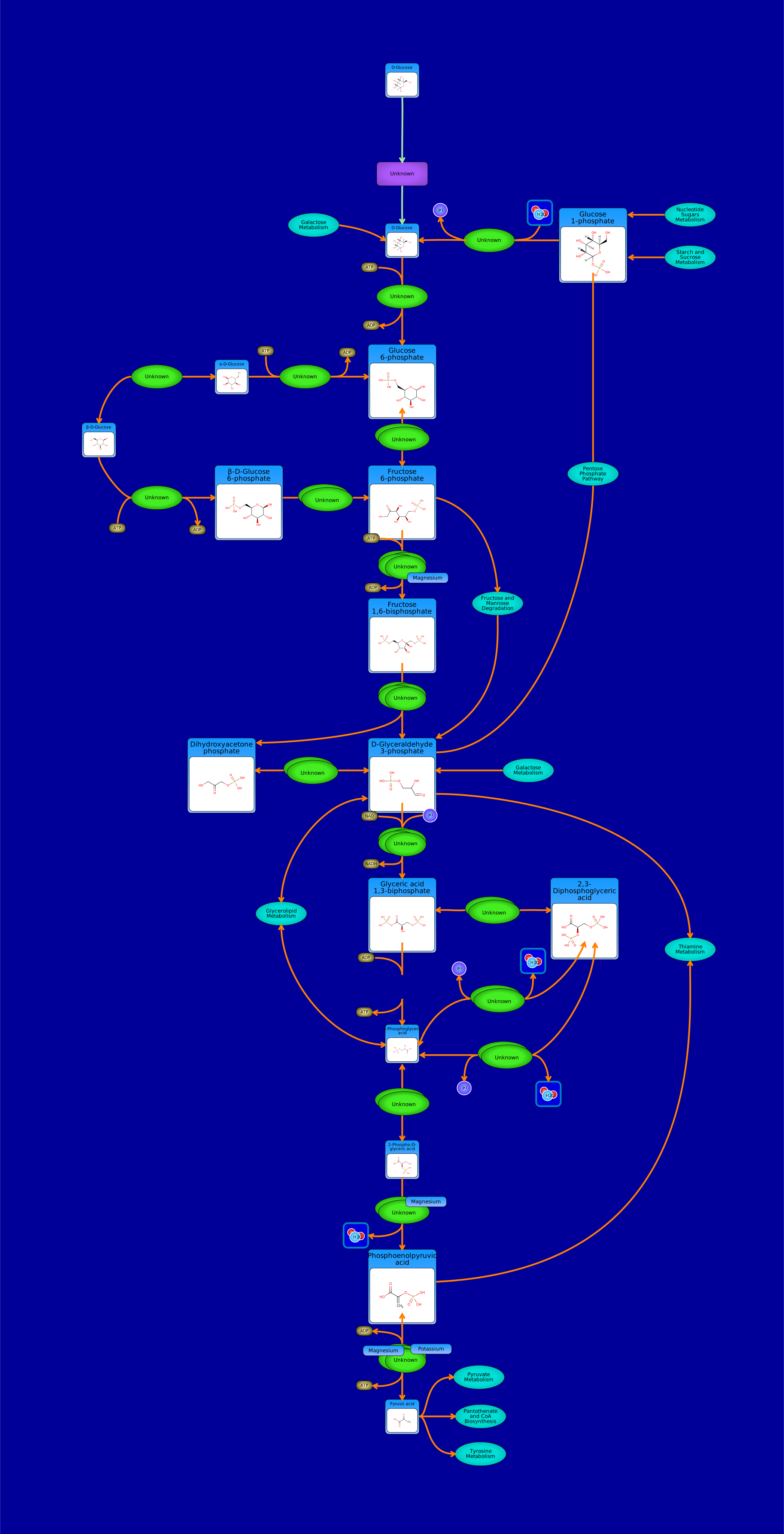 View Pathway
|
Glycolysis 1622233823Bos taurus
Glycolysis is a metabolic pathway with sequence of ten reactions involving ten intermediate compounds that converts glucose to pyruvate. Glycolysis release free energy for forming high energy compound such as ATP and NADH. Glycolysis is consisted of two phases, which one of them is chemical priming phase and second phase is energy-yielding phase. As the starting compound of chemical priming phase, D-glucose can be obtained from galactose metabolism or imported by monosaccharide-sensing protein 1 from outside of cell. D-Glucose is catalyzed by probable hexokinase-like 2 protein to form glucose 6-phosphate which is powered by ATP. Glucose 6-phosphate transformed to fructose 6-phosphate by glucose-6-phosphate isomerase, which the later compound will be converted to fructose 1,6-bisphosphate, which is the last reaction of chemical priming phase by 6-phosphofructokinase with cofactor magnesium, and it is also powered by ATP. Before entering the second phase, aldolase catalyzing the hydrolysis of F1,6BP into dihydroxyacetone phosphate and glyceraldehyde 3-phosphate. Dihydroxyacetone phosphate and glyceraldehyde 3-phosphate can convert to each other bidirectionally by facilitation of triosephosphate isomerase. The second phase of glycolysis is yielding-energy phase that produce ATP and NADH. At the first step, D-glyceraldehyde 3-phosphate is catalyzed to glyceric acid 1,3-biphosphate by glyceraldehyde-3-phosphate dehydrogenase with NAD, which also generate NADH. ATP is generated through the reaction that convert glyceric acid 1,3-biphosphate to 3-phosphoglyceric acid. Phosphoglycerate mutase 2 catalyze 3-phosphoglyceric acid to 2-Phospho-D-glyceric acid, and alpha-enolase with cofactor magnesium catalyzes 2-Phospho-D-glyceric acid to phosphoenolpyruvic acid. Eventually, plastidial pyruvate kinase 4 converts phosphoenolpyruvic acid to pyruvate with cofactor magnesium and potassium and ADP. Pyruvate will undergo pyruvate metabolism, tyrosine metabolism and pantothenate and CoA biosynthesis.
|
Creator: WishartLab Created On: May 28, 2021 at 14:30 Last Updated: May 28, 2021 at 14:30 |
PW124331 View Pathway
|
disease
Glycolysis 4Homo sapiens
|
Creator: Guest: Anonymous Created On: November 10, 2020 at 08:29 Last Updated: November 10, 2020 at 08:29 |
PW031116 View Pathway
|
Glycolysis and Krebs cycleHomo sapiens
|
Creator: Guest: Anonymous Created On: June 25, 2017 at 07:20 Last Updated: June 25, 2017 at 07:20 |
PW123903 View Pathway
|
Glycolysis and Krebs cycle 1590900752Homo sapiens
|
Creator: Guest: Anonymous Created On: May 30, 2020 at 22:52 Last Updated: May 30, 2020 at 22:52 |
PW686446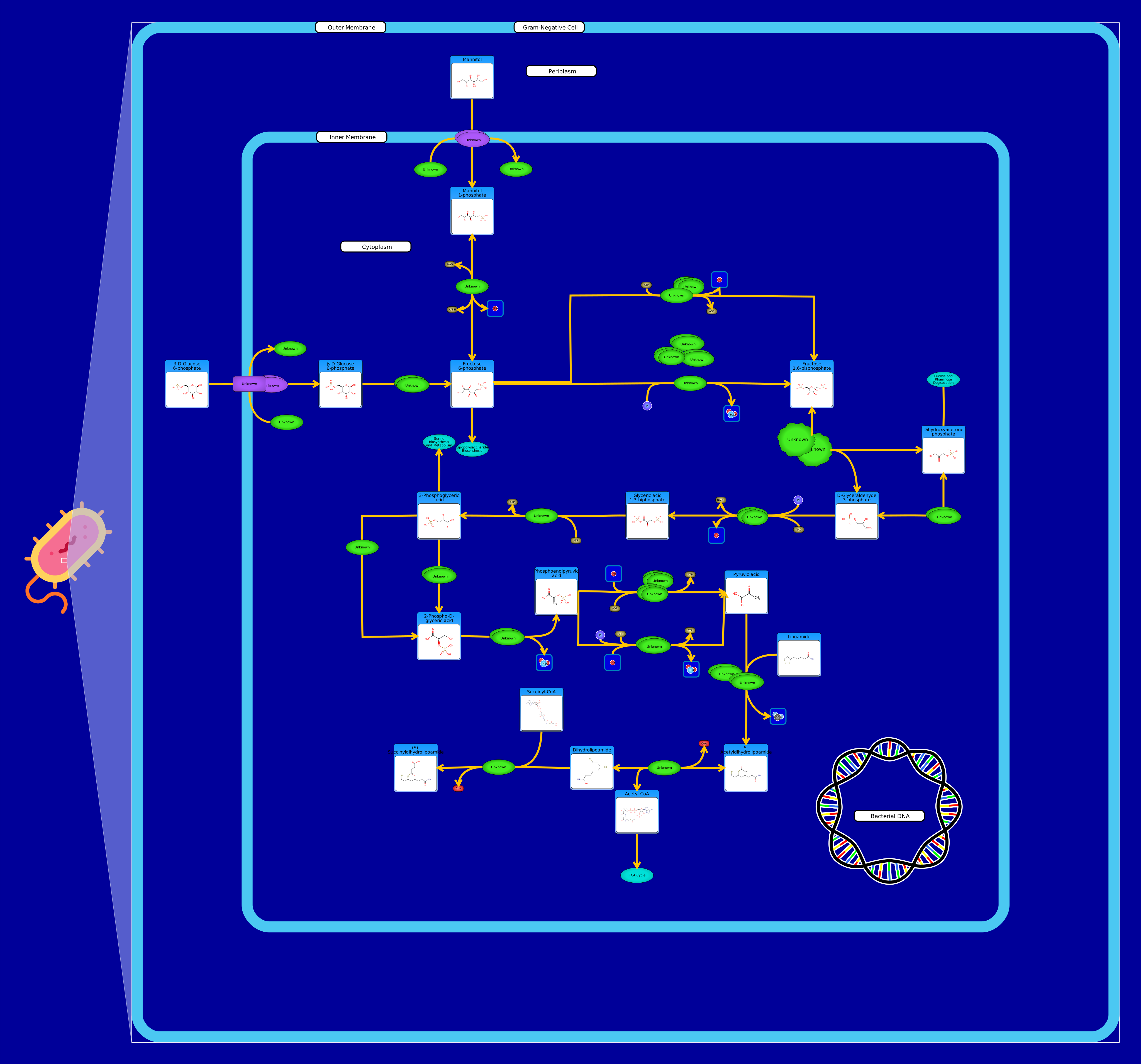 View Pathway
|
Glycolysis and Pyruvate DehydrogenaseFilifactor alocis ATCC 35896
Fructose metabolism begins with the transport of beta-D-glucose 6-phosphate through a glucose PTS permease. This compound is isomerized by a glucose-6-phosphate isomerase resulting in fructose 6-phosphate. This compound can be phosphorylated by two different enzymes: a pyridoxal phosphatase/fructose 1,6-bisphosphatase or an ATP-driven 6-phosphofructokinase-1, resulting in fructose 1,6-biphosphate. This compound can either react with a fructose bisphosphate aldolase class 1 resulting in D-glyceraldehyde 3-phosphate and dihydroxyacetone phosphate or through a fructose biphosphate aldolase class 2 resulting in D-glyceraldehyde 3-phosphate. This compound can then either react in a reversible triosephosphate isomerase resulting in dihydroxyacetone phosphate or react with a phosphate through an NAD-dependent glyceraldehyde 3-phosphate dehydrogenase resulting in glyceric acid 1,3-biphosphate. This compound is dephosphorylated by a phosphoglycerate kinase resulting in 3-phosphoglyceric acid. This compound, in turn, can either react with a 2,3-bisphosphoglycerate-independent phosphoglycerate mutase or a 2,3-bisphosphoglycerate-independent phosphoglycerate mutase resulting in 2-phospho-D-glyceric acid. This compound interacts with an enolase resulting in a phosphoenolpyruvic acid and water. Phosphoenolpyruvic acid can react either through an AMP-driven phosphoenoylpyruvate synthase or an ADP-driven pyruvate kinase protein complex resulting in pyruvic acid. The pyruvic acid reacts with CoA through an NAD-driven pyruvate dehydrogenase complex resulting in carbon dioxide and an acetyl-CoA which gets incorporated into the TCA cycle pathway.
|
Creator: Julia Wakoli Created On: February 12, 2025 at 00:24 Last Updated: February 12, 2025 at 00:24 |
PW686467 View Pathway
|
Glycolysis and Pyruvate DehydrogenaseVibrio fluvialis I21563
Fructose metabolism begins with the transport of beta-D-glucose 6-phosphate through a glucose PTS permease. This compound is isomerized by a glucose-6-phosphate isomerase resulting in fructose 6-phosphate. This compound can be phosphorylated by two different enzymes: a pyridoxal phosphatase/fructose 1,6-bisphosphatase or an ATP-driven 6-phosphofructokinase-1, resulting in fructose 1,6-biphosphate. This compound can either react with a fructose bisphosphate aldolase class 1 resulting in D-glyceraldehyde 3-phosphate and dihydroxyacetone phosphate or through a fructose biphosphate aldolase class 2 resulting in D-glyceraldehyde 3-phosphate. This compound can then either react in a reversible triosephosphate isomerase resulting in dihydroxyacetone phosphate or react with a phosphate through an NAD-dependent glyceraldehyde 3-phosphate dehydrogenase resulting in glyceric acid 1,3-biphosphate. This compound is dephosphorylated by a phosphoglycerate kinase resulting in 3-phosphoglyceric acid. This compound, in turn, can either react with a 2,3-bisphosphoglycerate-independent phosphoglycerate mutase or a 2,3-bisphosphoglycerate-independent phosphoglycerate mutase resulting in 2-phospho-D-glyceric acid. This compound interacts with an enolase resulting in a phosphoenolpyruvic acid and water. Phosphoenolpyruvic acid can react either through an AMP-driven phosphoenoylpyruvate synthase or an ADP-driven pyruvate kinase protein complex resulting in pyruvic acid. The pyruvic acid reacts with CoA through an NAD-driven pyruvate dehydrogenase complex resulting in carbon dioxide and an acetyl-CoA which gets incorporated into the TCA cycle pathway.
|
Creator: Julia Wakoli Created On: February 15, 2025 at 10:12 Last Updated: February 15, 2025 at 10:12 |
PW516353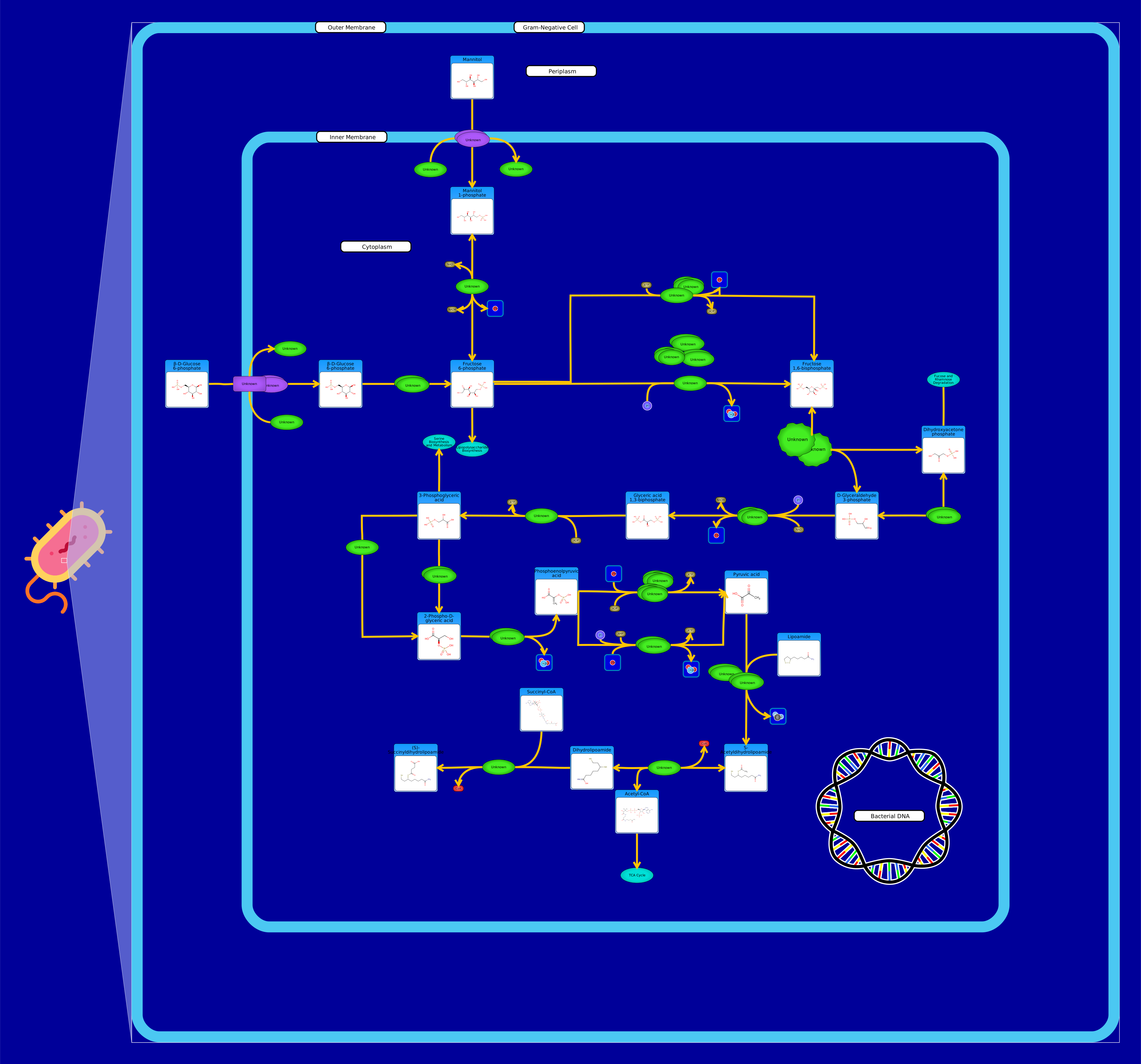 View Pathway
|
Glycolysis and Pyruvate DehydrogenaseAcinetobacter calcoaceticus PHEA-2
Fructose metabolism begins with the transport of beta-D-glucose 6-phosphate through a glucose PTS permease. This compound is isomerized by a glucose-6-phosphate isomerase resulting in fructose 6-phosphate. This compound can be phosphorylated by two different enzymes: a pyridoxal phosphatase/fructose 1,6-bisphosphatase or an ATP-driven 6-phosphofructokinase-1, resulting in fructose 1,6-biphosphate. This compound can either react with a fructose bisphosphate aldolase class 1 resulting in D-glyceraldehyde 3-phosphate and dihydroxyacetone phosphate or through a fructose biphosphate aldolase class 2 resulting in D-glyceraldehyde 3-phosphate. This compound can then either react in a reversible triosephosphate isomerase resulting in dihydroxyacetone phosphate or react with a phosphate through an NAD-dependent glyceraldehyde 3-phosphate dehydrogenase resulting in glyceric acid 1,3-biphosphate. This compound is dephosphorylated by a phosphoglycerate kinase resulting in 3-phosphoglyceric acid. This compound, in turn, can either react with a 2,3-bisphosphoglycerate-independent phosphoglycerate mutase or a 2,3-bisphosphoglycerate-independent phosphoglycerate mutase resulting in 2-phospho-D-glyceric acid. This compound interacts with an enolase resulting in a phosphoenolpyruvic acid and water. Phosphoenolpyruvic acid can react either through an AMP-driven phosphoenoylpyruvate synthase or an ADP-driven pyruvate kinase protein complex resulting in pyruvic acid. The pyruvic acid reacts with CoA through an NAD-driven pyruvate dehydrogenase complex resulting in carbon dioxide and an acetyl-CoA which gets incorporated into the TCA cycle pathway.
|
Creator: Julia Wakoli Created On: February 11, 2025 at 23:24 Last Updated: February 11, 2025 at 23:24 |
PW522273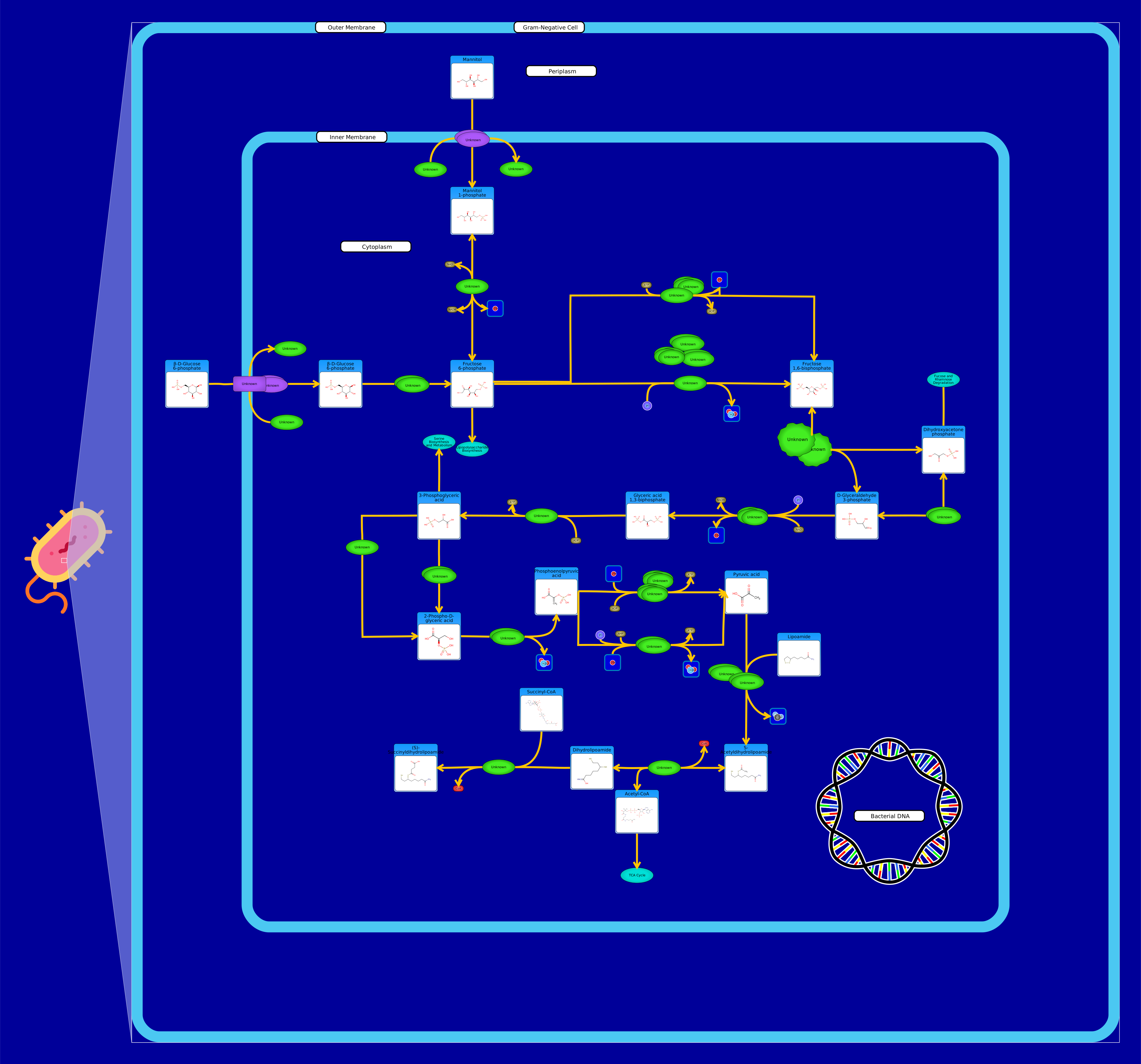 View Pathway
|
Glycolysis and Pyruvate DehydrogenaseSelenomonas ruminantium AC2024
Fructose metabolism begins with the transport of beta-D-glucose 6-phosphate through a glucose PTS permease. This compound is isomerized by a glucose-6-phosphate isomerase resulting in fructose 6-phosphate. This compound can be phosphorylated by two different enzymes: a pyridoxal phosphatase/fructose 1,6-bisphosphatase or an ATP-driven 6-phosphofructokinase-1, resulting in fructose 1,6-biphosphate. This compound can either react with a fructose bisphosphate aldolase class 1 resulting in D-glyceraldehyde 3-phosphate and dihydroxyacetone phosphate or through a fructose biphosphate aldolase class 2 resulting in D-glyceraldehyde 3-phosphate. This compound can then either react in a reversible triosephosphate isomerase resulting in dihydroxyacetone phosphate or react with a phosphate through an NAD-dependent glyceraldehyde 3-phosphate dehydrogenase resulting in glyceric acid 1,3-biphosphate. This compound is dephosphorylated by a phosphoglycerate kinase resulting in 3-phosphoglyceric acid. This compound, in turn, can either react with a 2,3-bisphosphoglycerate-independent phosphoglycerate mutase or a 2,3-bisphosphoglycerate-independent phosphoglycerate mutase resulting in 2-phospho-D-glyceric acid. This compound interacts with an enolase resulting in a phosphoenolpyruvic acid and water. Phosphoenolpyruvic acid can react either through an AMP-driven phosphoenoylpyruvate synthase or an ADP-driven pyruvate kinase protein complex resulting in pyruvic acid. The pyruvic acid reacts with CoA through an NAD-driven pyruvate dehydrogenase complex resulting in carbon dioxide and an acetyl-CoA which gets incorporated into the TCA cycle pathway.
|
Creator: Julia Wakoli Created On: February 15, 2025 at 16:30 Last Updated: February 15, 2025 at 16:30 |
PW514339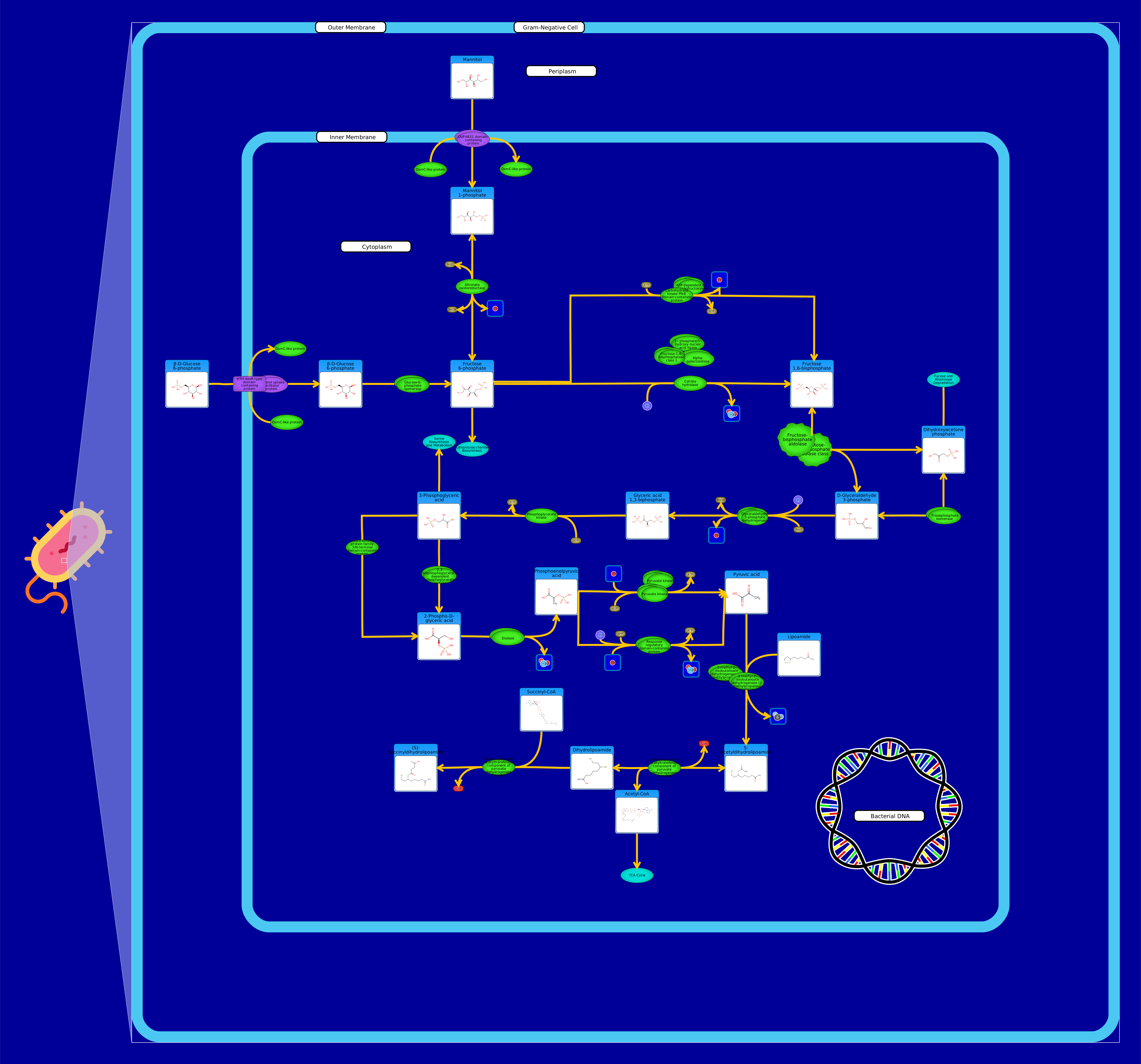 View Pathway
|
Glycolysis and Pyruvate DehydrogenaseDysgonomonas gadei ATCC BAA-286
Fructose metabolism begins with the transport of beta-D-glucose 6-phosphate through a glucose PTS permease. This compound is isomerized by a glucose-6-phosphate isomerase resulting in fructose 6-phosphate. This compound can be phosphorylated by two different enzymes: a pyridoxal phosphatase/fructose 1,6-bisphosphatase or an ATP-driven 6-phosphofructokinase-1, resulting in fructose 1,6-biphosphate. This compound can either react with a fructose bisphosphate aldolase class 1 resulting in D-glyceraldehyde 3-phosphate and dihydroxyacetone phosphate or through a fructose biphosphate aldolase class 2 resulting in D-glyceraldehyde 3-phosphate. This compound can then either react in a reversible triosephosphate isomerase resulting in dihydroxyacetone phosphate or react with a phosphate through an NAD-dependent glyceraldehyde 3-phosphate dehydrogenase resulting in glyceric acid 1,3-biphosphate. This compound is dephosphorylated by a phosphoglycerate kinase resulting in 3-phosphoglyceric acid. This compound, in turn, can either react with a 2,3-bisphosphoglycerate-independent phosphoglycerate mutase or a 2,3-bisphosphoglycerate-independent phosphoglycerate mutase resulting in 2-phospho-D-glyceric acid. This compound interacts with an enolase resulting in a phosphoenolpyruvic acid and water. Phosphoenolpyruvic acid can react either through an AMP-driven phosphoenoylpyruvate synthase or an ADP-driven pyruvate kinase protein complex resulting in pyruvic acid. The pyruvic acid reacts with CoA through an NAD-driven pyruvate dehydrogenase complex resulting in carbon dioxide and an acetyl-CoA which gets incorporated into the TCA cycle pathway.
|
Creator: Julia Wakoli Created On: February 10, 2025 at 21:50 Last Updated: February 10, 2025 at 21:50 |
PW521662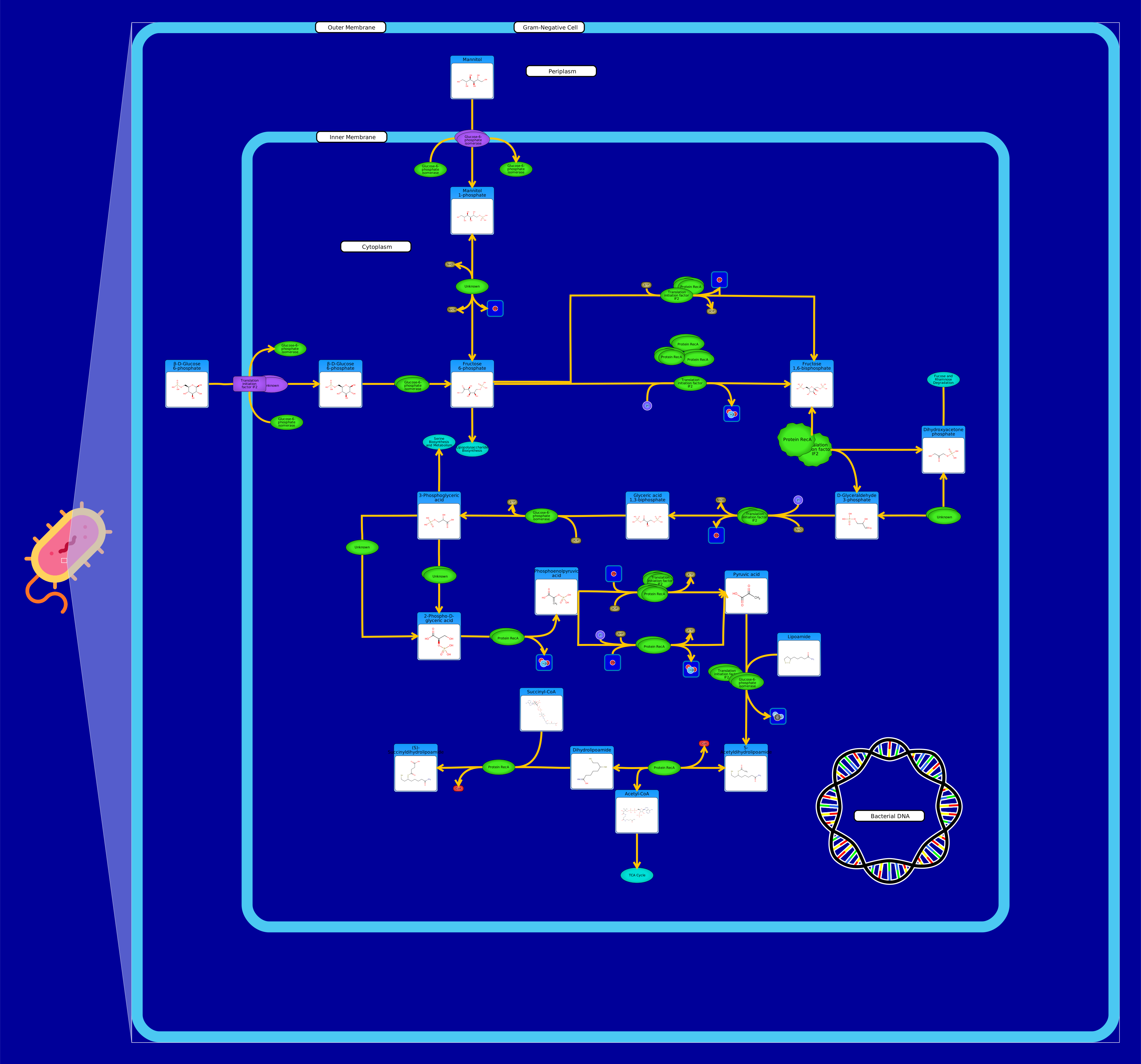 View Pathway
|
Glycolysis and Pyruvate DehydrogenaseHaemophilus sputorum CCUG 13788
Fructose metabolism begins with the transport of beta-D-glucose 6-phosphate through a glucose PTS permease. This compound is isomerized by a glucose-6-phosphate isomerase resulting in fructose 6-phosphate. This compound can be phosphorylated by two different enzymes: a pyridoxal phosphatase/fructose 1,6-bisphosphatase or an ATP-driven 6-phosphofructokinase-1, resulting in fructose 1,6-biphosphate. This compound can either react with a fructose bisphosphate aldolase class 1 resulting in D-glyceraldehyde 3-phosphate and dihydroxyacetone phosphate or through a fructose biphosphate aldolase class 2 resulting in D-glyceraldehyde 3-phosphate. This compound can then either react in a reversible triosephosphate isomerase resulting in dihydroxyacetone phosphate or react with a phosphate through an NAD-dependent glyceraldehyde 3-phosphate dehydrogenase resulting in glyceric acid 1,3-biphosphate. This compound is dephosphorylated by a phosphoglycerate kinase resulting in 3-phosphoglyceric acid. This compound, in turn, can either react with a 2,3-bisphosphoglycerate-independent phosphoglycerate mutase or a 2,3-bisphosphoglycerate-independent phosphoglycerate mutase resulting in 2-phospho-D-glyceric acid. This compound interacts with an enolase resulting in a phosphoenolpyruvic acid and water. Phosphoenolpyruvic acid can react either through an AMP-driven phosphoenoylpyruvate synthase or an ADP-driven pyruvate kinase protein complex resulting in pyruvic acid. The pyruvic acid reacts with CoA through an NAD-driven pyruvate dehydrogenase complex resulting in carbon dioxide and an acetyl-CoA which gets incorporated into the TCA cycle pathway.
|
Creator: Julia Wakoli Created On: February 15, 2025 at 07:53 Last Updated: February 15, 2025 at 07:53 |