
| PathWhiz ID | Pathway | Meta Data |
|---|---|---|
PW685002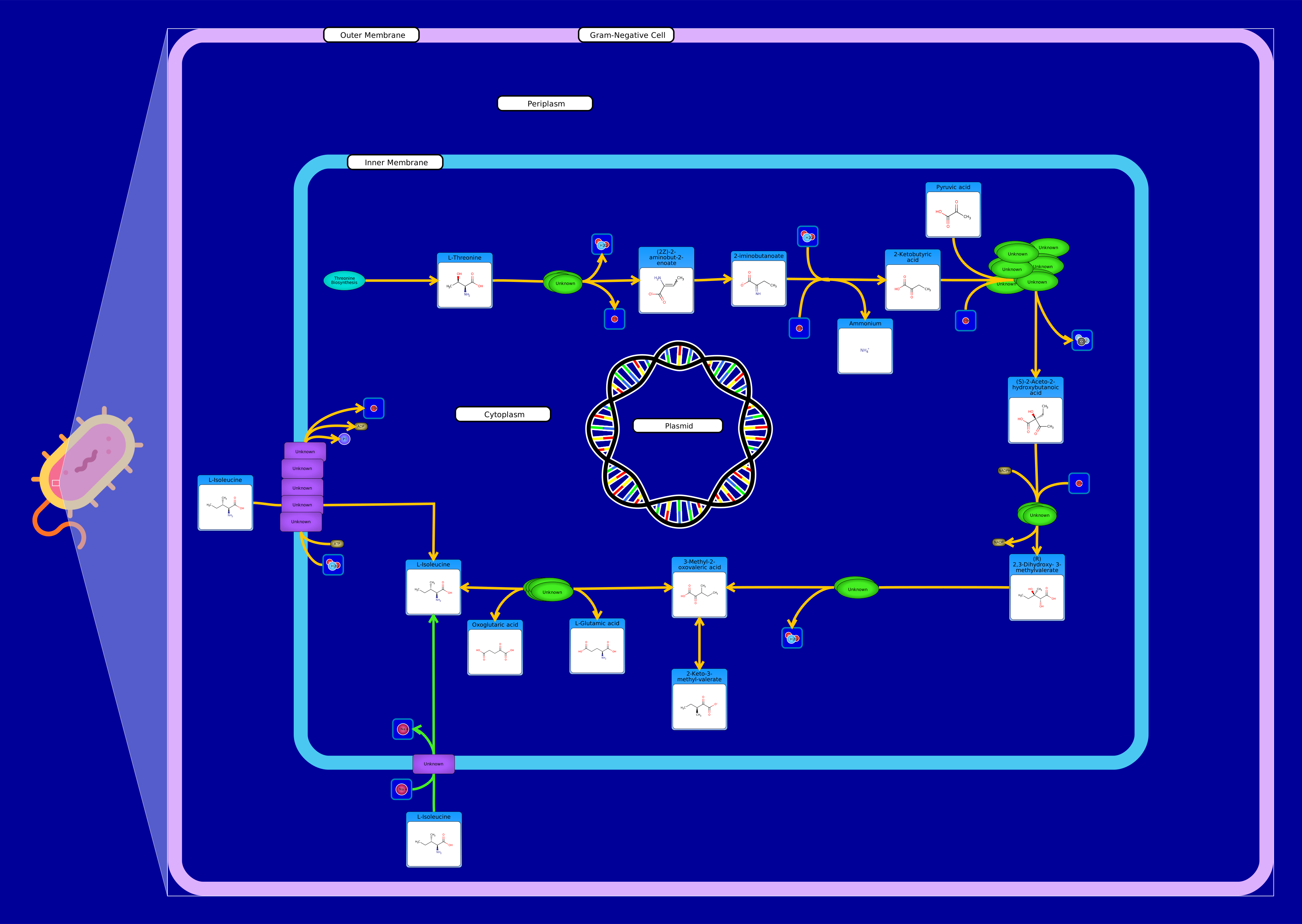 View Pathway
|
Isoleucine BiosynthesisKlebsiella pneumoniae BIDMC 31
Isoleucine biosynthesis begins with L-threonine from the threonine biosynthesis pathway. L-threonine interacts with threonine dehydratase biosynthetic releasing water, a hydrogen ion and (2Z)-2-aminobut-2-enoate. The latter is isomerized into a 2-iminobutanoate which interacts with water and a hydrogen ion spontaneously, resulting in the release of ammonium and 2-ketobutyric acid. 2-ketobutyric acid reacts with pyruvic acid and hydrogen ions through an acetohydroxybutanoate synthase / acetolactate synthase 2 resulting in carbon dioxide and (S)-2-Aceto-2-hydroxybutanoic acid. (S)-2-Aceto-2-hydroxybutanoic acid is reduced by an NADPH driven acetohydroxy acid isomeroreductase releasing NADP and acetohydroxy acid isomeroreductase. The latter compound is dehydrated by a dihydroxy acid dehydratase resulting in 3-methyl-2-oxovaleric acid. This compound reacts in a reversible reaction with L-glutamic acid through a Branched-chain-amino-acid aminotransferase resulting in oxoglutaric acid and L-isoleucine.
L-isoleucine can also be transported into the cytoplasm through two different methods: a branched chain amino acid ABC transporter or a branched chain amino acid transporter BrnQy.
|
Creator: Julia Wakoli Created On: December 23, 2024 at 20:32 Last Updated: December 23, 2024 at 20:32 |
PW410446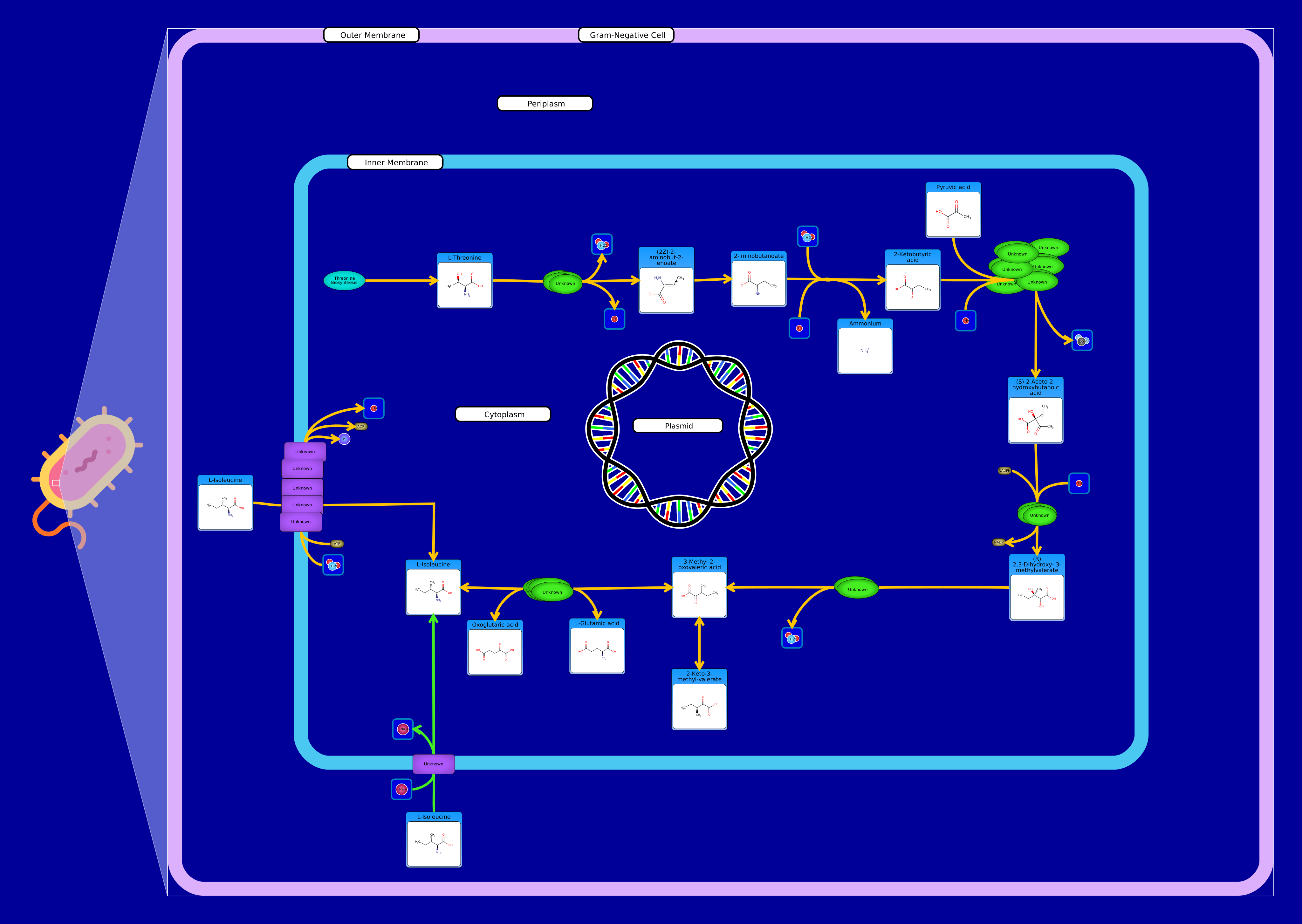 View Pathway
|
Isoleucine BiosynthesisEscherichia albertii KF1
Isoleucine biosynthesis begins with L-threonine from the threonine biosynthesis pathway. L-threonine interacts with threonine dehydratase biosynthetic releasing water, a hydrogen ion and (2Z)-2-aminobut-2-enoate. The latter is isomerized into a 2-iminobutanoate which interacts with water and a hydrogen ion spontaneously, resulting in the release of ammonium and 2-ketobutyric acid. 2-ketobutyric acid reacts with pyruvic acid and hydrogen ions through an acetohydroxybutanoate synthase / acetolactate synthase 2 resulting in carbon dioxide and (S)-2-Aceto-2-hydroxybutanoic acid. (S)-2-Aceto-2-hydroxybutanoic acid is reduced by an NADPH driven acetohydroxy acid isomeroreductase releasing NADP and acetohydroxy acid isomeroreductase. The latter compound is dehydrated by a dihydroxy acid dehydratase resulting in 3-methyl-2-oxovaleric acid. This compound reacts in a reversible reaction with L-glutamic acid through a Branched-chain-amino-acid aminotransferase resulting in oxoglutaric acid and L-isoleucine.
L-isoleucine can also be transported into the cytoplasm through two different methods: a branched chain amino acid ABC transporter or a branched chain amino acid transporter BrnQy.
|
Creator: Julia Wakoli Created On: December 23, 2024 at 20:15 Last Updated: December 23, 2024 at 20:15 |
PW411247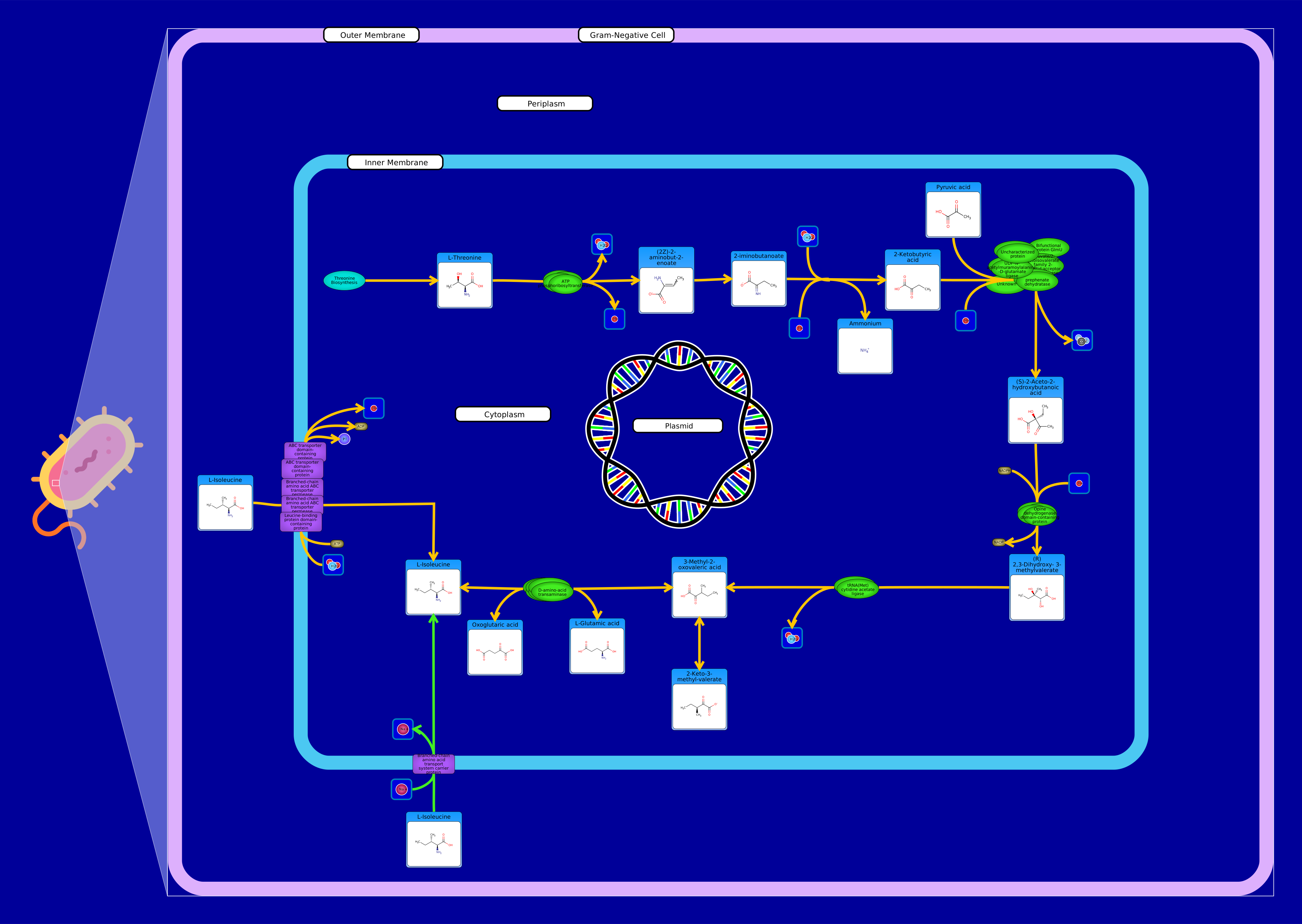 View Pathway
|
Isoleucine BiosynthesisDialister succinatiphilus YIT 11850
Isoleucine biosynthesis begins with L-threonine from the threonine biosynthesis pathway. L-threonine interacts with threonine dehydratase biosynthetic releasing water, a hydrogen ion and (2Z)-2-aminobut-2-enoate. The latter is isomerized into a 2-iminobutanoate which interacts with water and a hydrogen ion spontaneously, resulting in the release of ammonium and 2-ketobutyric acid. 2-ketobutyric acid reacts with pyruvic acid and hydrogen ions through an acetohydroxybutanoate synthase / acetolactate synthase 2 resulting in carbon dioxide and (S)-2-Aceto-2-hydroxybutanoic acid. (S)-2-Aceto-2-hydroxybutanoic acid is reduced by an NADPH driven acetohydroxy acid isomeroreductase releasing NADP and acetohydroxy acid isomeroreductase. The latter compound is dehydrated by a dihydroxy acid dehydratase resulting in 3-methyl-2-oxovaleric acid. This compound reacts in a reversible reaction with L-glutamic acid through a Branched-chain-amino-acid aminotransferase resulting in oxoglutaric acid and L-isoleucine.
L-isoleucine can also be transported into the cytoplasm through two different methods: a branched chain amino acid ABC transporter or a branched chain amino acid transporter BrnQy.
|
Creator: Julia Wakoli Created On: December 24, 2024 at 02:05 Last Updated: December 24, 2024 at 02:05 |
PW411196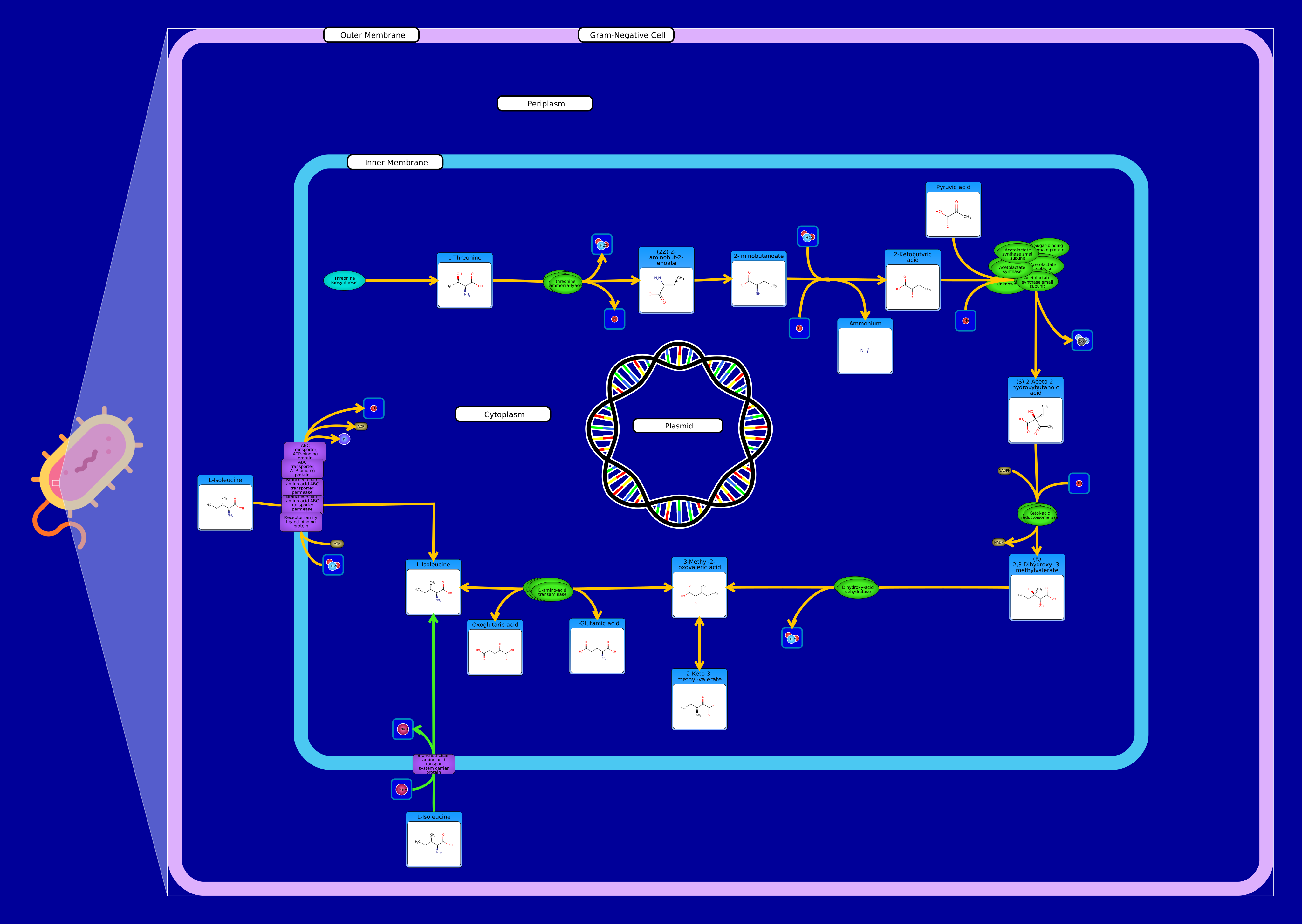 View Pathway
|
Isoleucine BiosynthesisPhascolarctobacterium succinatutens YIT 12067
Isoleucine biosynthesis begins with L-threonine from the threonine biosynthesis pathway. L-threonine interacts with threonine dehydratase biosynthetic releasing water, a hydrogen ion and (2Z)-2-aminobut-2-enoate. The latter is isomerized into a 2-iminobutanoate which interacts with water and a hydrogen ion spontaneously, resulting in the release of ammonium and 2-ketobutyric acid. 2-ketobutyric acid reacts with pyruvic acid and hydrogen ions through an acetohydroxybutanoate synthase / acetolactate synthase 2 resulting in carbon dioxide and (S)-2-Aceto-2-hydroxybutanoic acid. (S)-2-Aceto-2-hydroxybutanoic acid is reduced by an NADPH driven acetohydroxy acid isomeroreductase releasing NADP and acetohydroxy acid isomeroreductase. The latter compound is dehydrated by a dihydroxy acid dehydratase resulting in 3-methyl-2-oxovaleric acid. This compound reacts in a reversible reaction with L-glutamic acid through a Branched-chain-amino-acid aminotransferase resulting in oxoglutaric acid and L-isoleucine.
L-isoleucine can also be transported into the cytoplasm through two different methods: a branched chain amino acid ABC transporter or a branched chain amino acid transporter BrnQy.
|
Creator: Julia Wakoli Created On: December 24, 2024 at 01:42 Last Updated: December 24, 2024 at 01:42 |
PW414277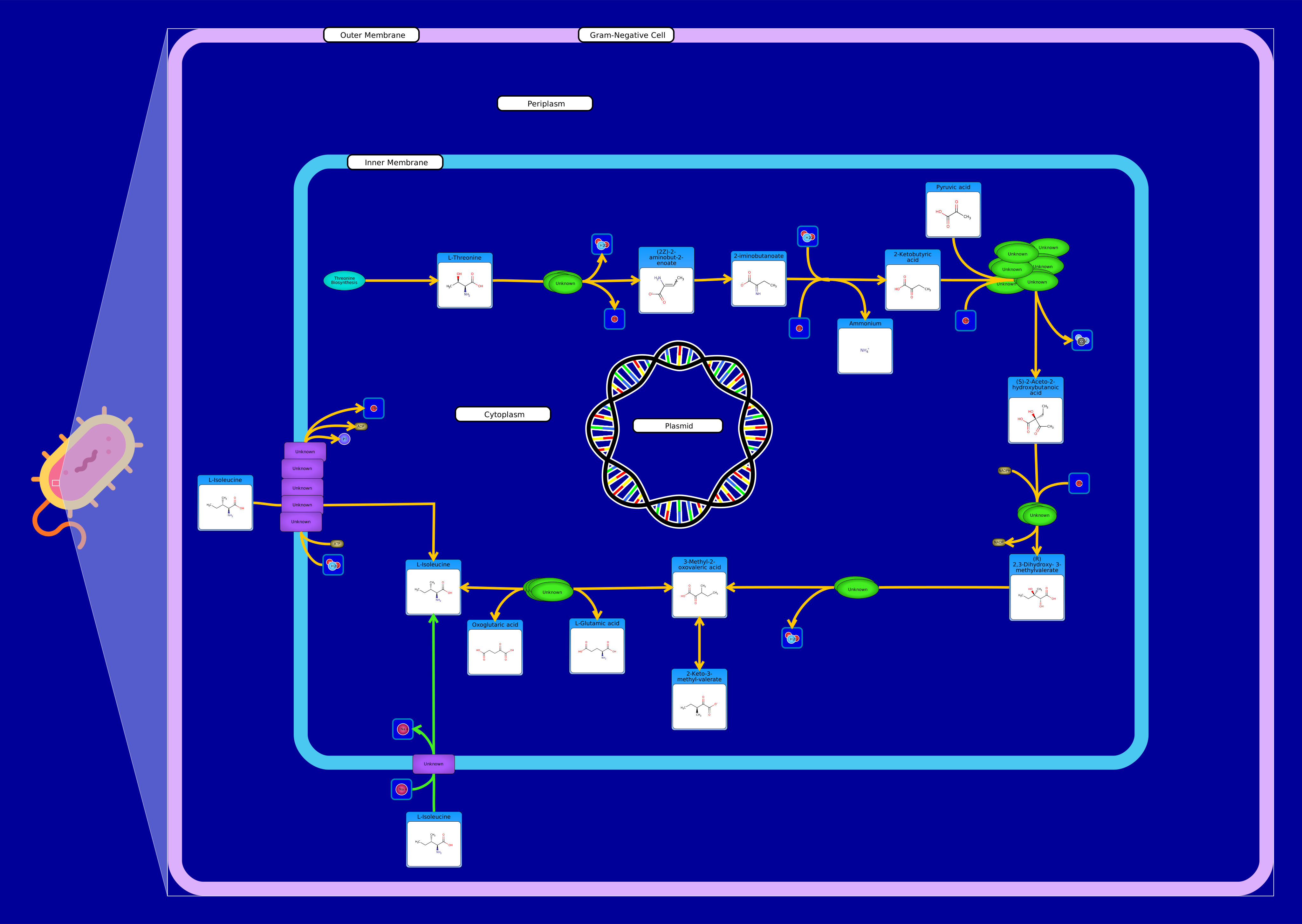 View Pathway
|
Isoleucine BiosynthesisPrevotella copri
Isoleucine biosynthesis begins with L-threonine from the threonine biosynthesis pathway. L-threonine interacts with threonine dehydratase biosynthetic releasing water, a hydrogen ion and (2Z)-2-aminobut-2-enoate. The latter is isomerized into a 2-iminobutanoate which interacts with water and a hydrogen ion spontaneously, resulting in the release of ammonium and 2-ketobutyric acid. 2-ketobutyric acid reacts with pyruvic acid and hydrogen ions through an acetohydroxybutanoate synthase / acetolactate synthase 2 resulting in carbon dioxide and (S)-2-Aceto-2-hydroxybutanoic acid. (S)-2-Aceto-2-hydroxybutanoic acid is reduced by an NADPH driven acetohydroxy acid isomeroreductase releasing NADP and acetohydroxy acid isomeroreductase. The latter compound is dehydrated by a dihydroxy acid dehydratase resulting in 3-methyl-2-oxovaleric acid. This compound reacts in a reversible reaction with L-glutamic acid through a Branched-chain-amino-acid aminotransferase resulting in oxoglutaric acid and L-isoleucine.
L-isoleucine can also be transported into the cytoplasm through two different methods: a branched chain amino acid ABC transporter or a branched chain amino acid transporter BrnQy.
|
Creator: Julia Wakoli Created On: December 25, 2024 at 16:00 Last Updated: December 25, 2024 at 16:00 |
PW408799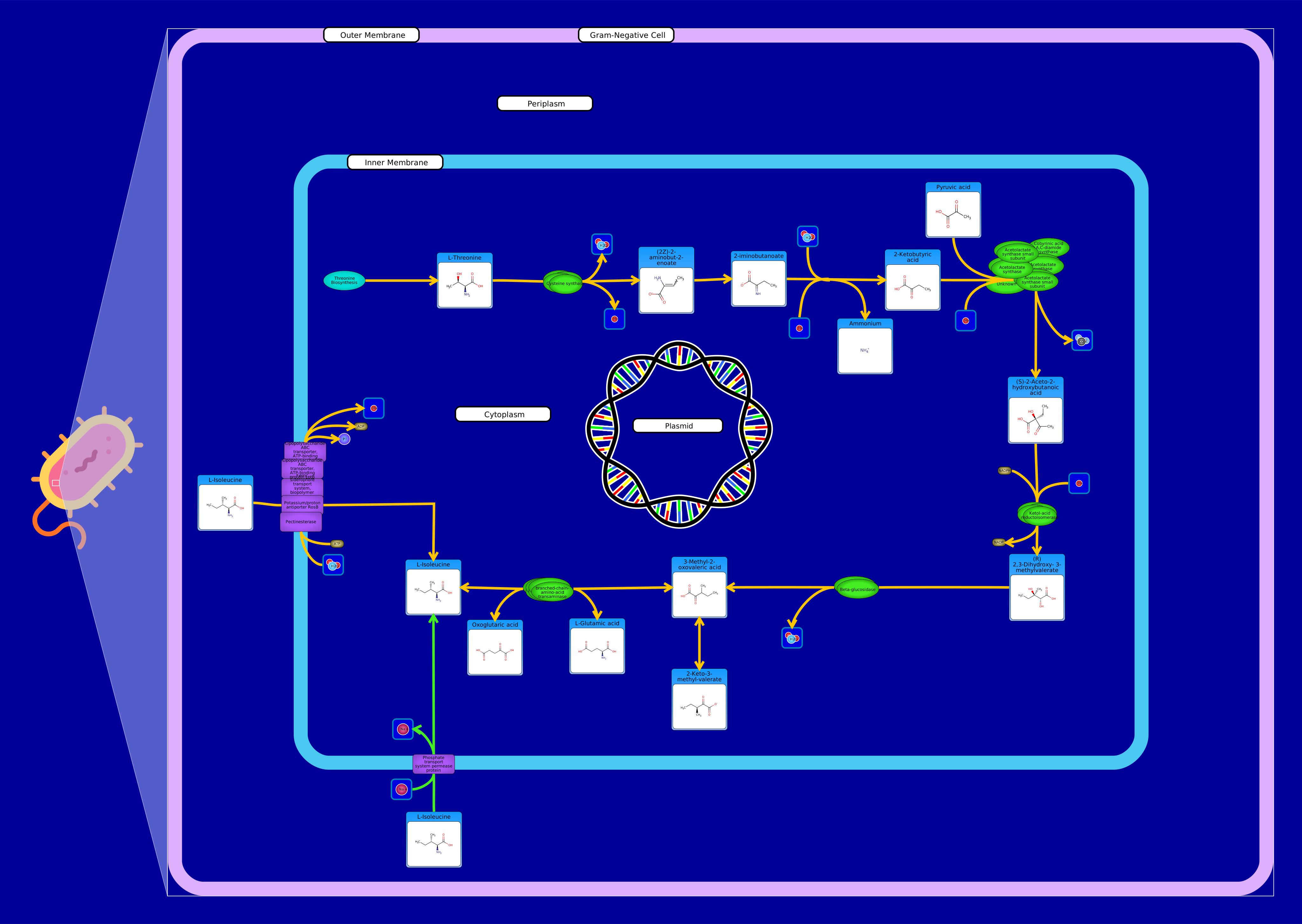 View Pathway
|
Isoleucine BiosynthesisBacteroides graminisolvens DSM 19988 = JCM 15093
Isoleucine biosynthesis begins with L-threonine from the threonine biosynthesis pathway. L-threonine interacts with threonine dehydratase biosynthetic releasing water, a hydrogen ion and (2Z)-2-aminobut-2-enoate. The latter is isomerized into a 2-iminobutanoate which interacts with water and a hydrogen ion spontaneously, resulting in the release of ammonium and 2-ketobutyric acid. 2-ketobutyric acid reacts with pyruvic acid and hydrogen ions through an acetohydroxybutanoate synthase / acetolactate synthase 2 resulting in carbon dioxide and (S)-2-Aceto-2-hydroxybutanoic acid. (S)-2-Aceto-2-hydroxybutanoic acid is reduced by an NADPH driven acetohydroxy acid isomeroreductase releasing NADP and acetohydroxy acid isomeroreductase. The latter compound is dehydrated by a dihydroxy acid dehydratase resulting in 3-methyl-2-oxovaleric acid. This compound reacts in a reversible reaction with L-glutamic acid through a Branched-chain-amino-acid aminotransferase resulting in oxoglutaric acid and L-isoleucine.
L-isoleucine can also be transported into the cytoplasm through two different methods: a branched chain amino acid ABC transporter or a branched chain amino acid transporter BrnQy.
|
Creator: Julia Wakoli Created On: December 23, 2024 at 07:41 Last Updated: December 23, 2024 at 07:41 |
PW409463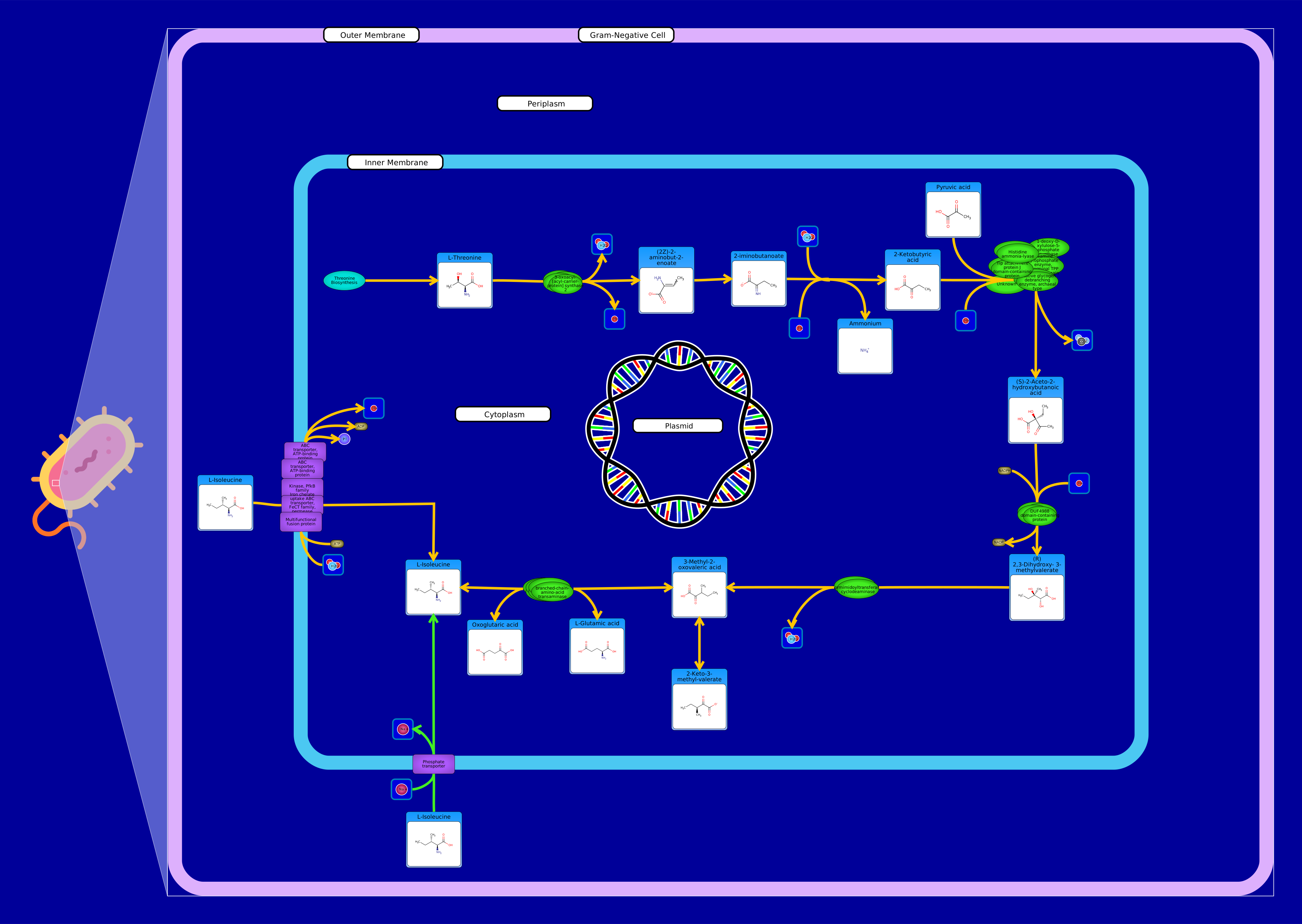 View Pathway
|
Isoleucine BiosynthesisAlistipes putredinis DSM 17216
Isoleucine biosynthesis begins with L-threonine from the threonine biosynthesis pathway. L-threonine interacts with threonine dehydratase biosynthetic releasing water, a hydrogen ion and (2Z)-2-aminobut-2-enoate. The latter is isomerized into a 2-iminobutanoate which interacts with water and a hydrogen ion spontaneously, resulting in the release of ammonium and 2-ketobutyric acid. 2-ketobutyric acid reacts with pyruvic acid and hydrogen ions through an acetohydroxybutanoate synthase / acetolactate synthase 2 resulting in carbon dioxide and (S)-2-Aceto-2-hydroxybutanoic acid. (S)-2-Aceto-2-hydroxybutanoic acid is reduced by an NADPH driven acetohydroxy acid isomeroreductase releasing NADP and acetohydroxy acid isomeroreductase. The latter compound is dehydrated by a dihydroxy acid dehydratase resulting in 3-methyl-2-oxovaleric acid. This compound reacts in a reversible reaction with L-glutamic acid through a Branched-chain-amino-acid aminotransferase resulting in oxoglutaric acid and L-isoleucine.
L-isoleucine can also be transported into the cytoplasm through two different methods: a branched chain amino acid ABC transporter or a branched chain amino acid transporter BrnQy.
|
Creator: Julia Wakoli Created On: December 23, 2024 at 12:45 Last Updated: December 23, 2024 at 12:45 |
PW409374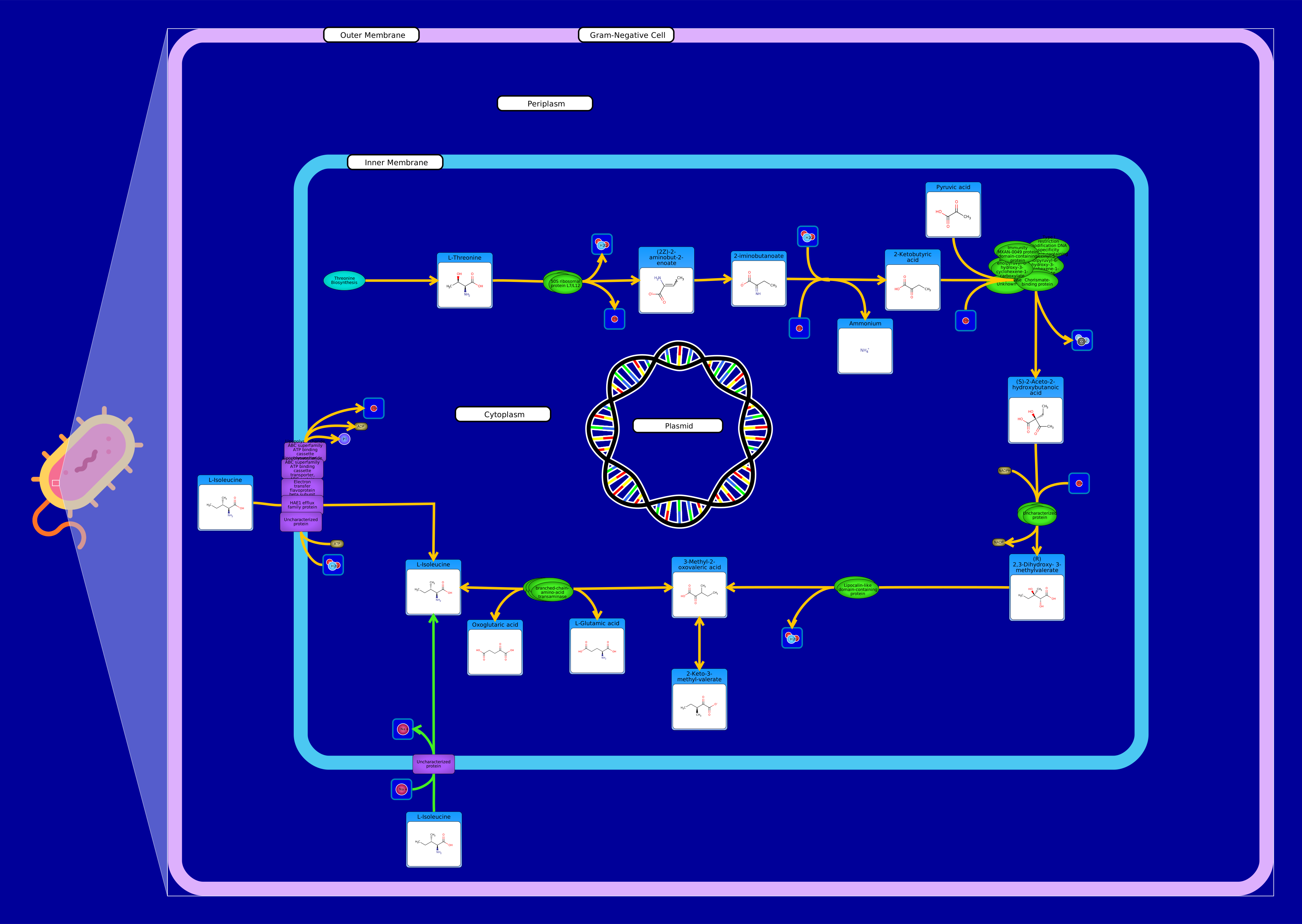 View Pathway
|
Isoleucine BiosynthesisPrevotella pallens ATCC 700821
Isoleucine biosynthesis begins with L-threonine from the threonine biosynthesis pathway. L-threonine interacts with threonine dehydratase biosynthetic releasing water, a hydrogen ion and (2Z)-2-aminobut-2-enoate. The latter is isomerized into a 2-iminobutanoate which interacts with water and a hydrogen ion spontaneously, resulting in the release of ammonium and 2-ketobutyric acid. 2-ketobutyric acid reacts with pyruvic acid and hydrogen ions through an acetohydroxybutanoate synthase / acetolactate synthase 2 resulting in carbon dioxide and (S)-2-Aceto-2-hydroxybutanoic acid. (S)-2-Aceto-2-hydroxybutanoic acid is reduced by an NADPH driven acetohydroxy acid isomeroreductase releasing NADP and acetohydroxy acid isomeroreductase. The latter compound is dehydrated by a dihydroxy acid dehydratase resulting in 3-methyl-2-oxovaleric acid. This compound reacts in a reversible reaction with L-glutamic acid through a Branched-chain-amino-acid aminotransferase resulting in oxoglutaric acid and L-isoleucine.
L-isoleucine can also be transported into the cytoplasm through two different methods: a branched chain amino acid ABC transporter or a branched chain amino acid transporter BrnQy.
|
Creator: Julia Wakoli Created On: December 23, 2024 at 12:04 Last Updated: December 23, 2024 at 12:04 |
PW409747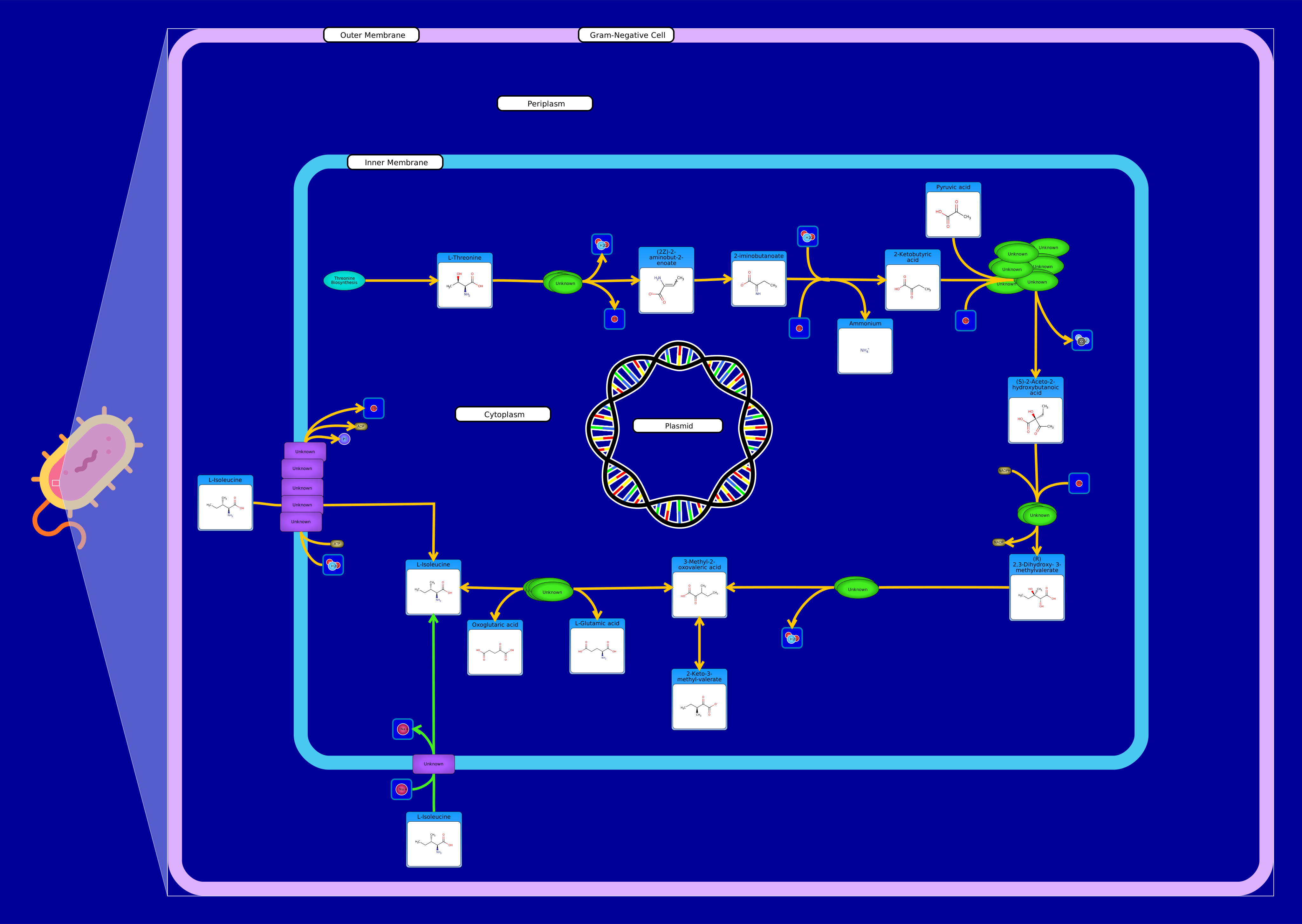 View Pathway
|
Isoleucine BiosynthesisFusobacterium nucleatum subsp. animalis D11
Isoleucine biosynthesis begins with L-threonine from the threonine biosynthesis pathway. L-threonine interacts with threonine dehydratase biosynthetic releasing water, a hydrogen ion and (2Z)-2-aminobut-2-enoate. The latter is isomerized into a 2-iminobutanoate which interacts with water and a hydrogen ion spontaneously, resulting in the release of ammonium and 2-ketobutyric acid. 2-ketobutyric acid reacts with pyruvic acid and hydrogen ions through an acetohydroxybutanoate synthase / acetolactate synthase 2 resulting in carbon dioxide and (S)-2-Aceto-2-hydroxybutanoic acid. (S)-2-Aceto-2-hydroxybutanoic acid is reduced by an NADPH driven acetohydroxy acid isomeroreductase releasing NADP and acetohydroxy acid isomeroreductase. The latter compound is dehydrated by a dihydroxy acid dehydratase resulting in 3-methyl-2-oxovaleric acid. This compound reacts in a reversible reaction with L-glutamic acid through a Branched-chain-amino-acid aminotransferase resulting in oxoglutaric acid and L-isoleucine.
L-isoleucine can also be transported into the cytoplasm through two different methods: a branched chain amino acid ABC transporter or a branched chain amino acid transporter BrnQy.
|
Creator: Julia Wakoli Created On: December 23, 2024 at 14:51 Last Updated: December 23, 2024 at 14:51 |
PW410181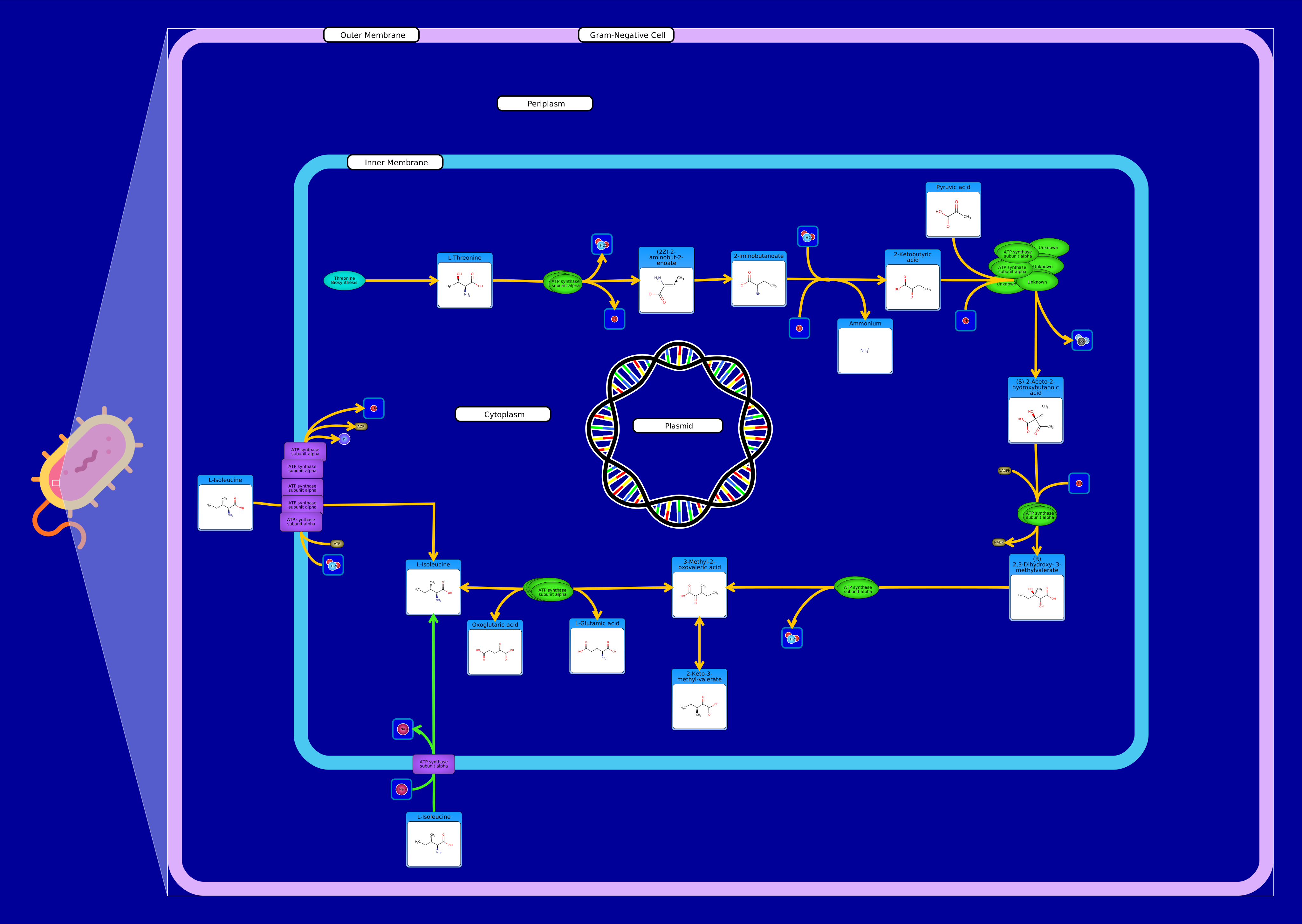 View Pathway
|
Isoleucine BiosynthesisCampylobacter hyointestinalis subsp. hyointestinalis LMG 9260
Isoleucine biosynthesis begins with L-threonine from the threonine biosynthesis pathway. L-threonine interacts with threonine dehydratase biosynthetic releasing water, a hydrogen ion and (2Z)-2-aminobut-2-enoate. The latter is isomerized into a 2-iminobutanoate which interacts with water and a hydrogen ion spontaneously, resulting in the release of ammonium and 2-ketobutyric acid. 2-ketobutyric acid reacts with pyruvic acid and hydrogen ions through an acetohydroxybutanoate synthase / acetolactate synthase 2 resulting in carbon dioxide and (S)-2-Aceto-2-hydroxybutanoic acid. (S)-2-Aceto-2-hydroxybutanoic acid is reduced by an NADPH driven acetohydroxy acid isomeroreductase releasing NADP and acetohydroxy acid isomeroreductase. The latter compound is dehydrated by a dihydroxy acid dehydratase resulting in 3-methyl-2-oxovaleric acid. This compound reacts in a reversible reaction with L-glutamic acid through a Branched-chain-amino-acid aminotransferase resulting in oxoglutaric acid and L-isoleucine.
L-isoleucine can also be transported into the cytoplasm through two different methods: a branched chain amino acid ABC transporter or a branched chain amino acid transporter BrnQy.
|
Creator: Julia Wakoli Created On: December 23, 2024 at 18:15 Last Updated: December 23, 2024 at 18:15 |