
| PathWhiz ID | Pathway | Meta Data |
|---|---|---|
PW000353 View Pathway
|
drug action
Kanamycin Action PathwayHomo sapiens
Kanamycin is an aminoglycoside antibiotic that can used for inhibiting protein synthesis of bacteria, which can be used for treating bacterial infections and tuberculosis. Kanamycin can bind to bacterial 30S ribosomal subunit protein and four nucleotides of 16S rRNA irreversibly to inhibit the formation of mRNA. Binding of kanamycin can interfere the vicinity of nucleotide 1400 in 16S rRNA that can interact with wobble base of the anticodon of tRNA, which lead to misreading of mRNA and wrong insertion of amino acids. The result is the nonfunctional or toxic peptides that is generated from the ribosome. Aminoglycosides can be used for treating bacterial infections from aerobic, Gram-negative bacteria and also Gram-postive bacteria. However, aminoglycosides may cause more damage to the host than other antibiotics for Gram-positive bacterial infection. Aminoglycosides are mostly ineffective against anaerobic bacteria, fungi and viruses.
|
Creator: WishartLab Created On: August 22, 2013 at 10:45 Last Updated: August 22, 2013 at 10:45 |
PW128357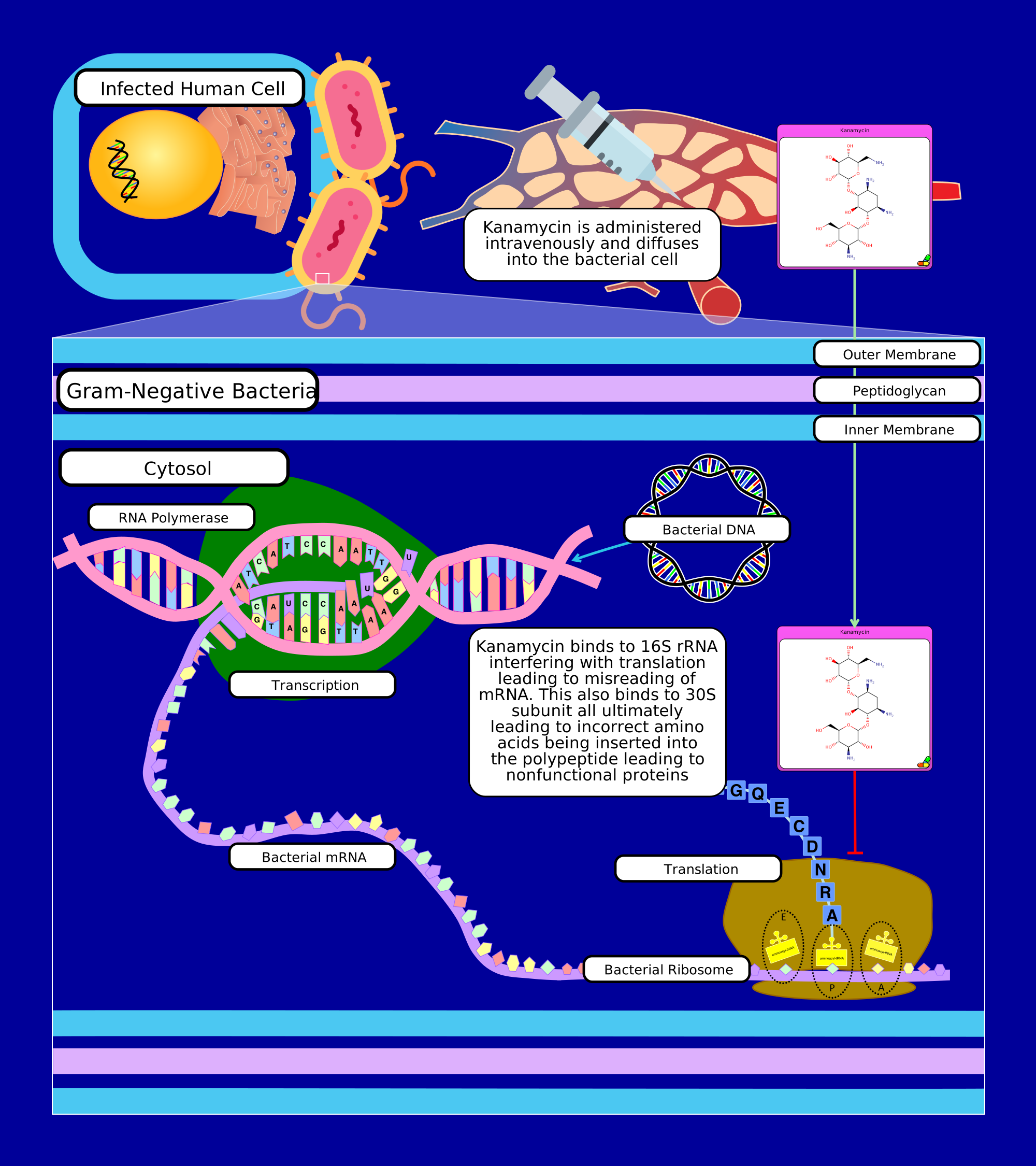 View Pathway
|
drug action
Kanamycin Action Pathway (new)Homo sapiens
Kanamycin is an antibiotic from the aminoglycoside family. It is used to treat a variety of infections caused by different bacteria. This drug is administered orally, intravenously, or by an intramuscular injection. Kanamycin is derived from Streptomyces kanamyceticus. It acts by binding irreversibly to the 30S subunit of the ribosome and 16S rRNA as it interferes with protein synthesis and wobble base pairing in tRNA. Specifically, this drug binds four nucleotides of the 16S rRNA and a single amino acid of the S12 protein. Interference in protein synthesis causes misreading leading to non-functional and toxic peptides, leading to the death of the bacteria. Like most aminoglycosides, it is associated with nephrotoxicity and ototoxicity.
|
Creator: Selena Created On: August 24, 2023 at 09:15 Last Updated: August 24, 2023 at 09:15 |
PW145259 View Pathway
|
drug action
Kanamycin Drug Metabolism Action PathwayHomo sapiens
|
Creator: Ray Kruger Created On: October 07, 2023 at 15:25 Last Updated: October 07, 2023 at 15:25 |
PW122328 View Pathway
|
Kandutsch-Russell Pathway (Cholesterol Biosynthesis)Homo sapiens
The Kandutsch-Russell pathway is the alternative pathway stemming from the mevalonate pathway completing cholesterol biosynthesis. The Bloch pathway and the Kandutsch-Russell pathway are both key to a functioning human body as cholesterol aids in the development of many important nutrients and hormones, such as vitamin D. Starting in the endoplasmic reticulum, lanosterol is the first compound used in this pathway, and when catalyzed by delta(24)-sterol-reductase, becomes 24,25-dihydrolanosterol. 24,25-Dihydrolanosterol is quickly converted to 4,4-dimethyl-14a-hydroxymethyl-5a-cholesta-8-en-3b-ol with the help of the enzyme lanosterol 14-alpha demethylase. This same enzyme, lanosterol 14-alpha demethylase, is also responsible for the conversion of 4,4-dimethyl-14a-hydroxymethyl-5a-cholesta-8-en-3b-ol into 4,4-dimethyl-14a-formyl-5a-cholest-8-en-3b-ol. Lanosterol 14alpha demethylase is used once more here, to push the pathway into the inner nuclear membrane, converting 4,4-dimethyl-14a-formyl-5a-cholest-8-en-3b-ol into 4,4-dimethyl-5a-cholesta-8,14-dien-3b-ol. Now located in the inner nuclear membrane, 4,4-dimethyl-5a-cholesta-8,14-dien-3b-ol is converted into 4,4-dimethyl-5a-cholesta-8-en-3b-ol through the help of a lamin-b receptor. Entering the endoplasmic reticulum membrane, methylsterol monooxygenase 1 is used to convert 4,4-dimethyl-5a-cholesta-8-en-3b-ol into 4a-hydroxymethyl-4b-methyl-5a-cholesta-8-en-3b-ol. 4a-Hydroxymethyl-4b-methyl-5a-cholesta-8-en-3b-ol then uses methylsterol monooxygenase 1 to become 4a-formyl-4b-methyl-5a-cholesta-8-en-3b-ol. Once again, methylsterol monooxygenase 1 is used to convert 4a-formyl-4b-methyl-5a-cholesta-8-en-3b-ol into 4a-carboxy-4b-methyl-5a-cholesta-8-en-3b-ol. Now using sterol-4-alpha-carboxylate 3-dehydrogenase, 4a-carboxy-4b-methyl-5a-cholesta-8-en-3b-ol is turned into 4a-methyl-5a-cholesta-8-en-3-one. This puts the pathway in the cell membrane, where a 3-keto-steroid reductase is used to convert 4a-methyl-5a-cholesta-8-en-3b-one into 4a-methyl-5a-cholesta-8-en-3-ol. Moving back into the endoplasmic reticulum membrane, methylsterol monooxygenase 1 converts 4a-methyl-5a-cholesta-8-en-3-ol into 4a-hydroxymethyl-5a-cholesta-8-en-3b-ol. Methylsterol monooxygenase is used twice more in this pathway, first converting 4a-hydroxymethyl-5a-cholesta-8-en-3b-ol into 4a-formyl-5a-cholesta-8-en-3b-ol, then converting 4a-formyl-5a-cholesta-8-en-3b-ol into 4a-carboxy-5a-cholesta-8-en-3b-ol. Now using sterol-4-alpha-carboxylate 3 dehydrogenase, 4a-carboxy-5a-cholesta-8-en-3b-ol becomes 5a-cholesta-8-en-3-one and brings the pathway back to the cell membrane. 5a-Cholesta-8-en-3-one teams up with a 3-keto-steroid reductase to create 5a-cholest-8-en-3b-ol. Then, stepping back into the endoplasmic reticulum membrane, 5a-cholest-8-en-3b-ol enlists the help of 3-beta-hydroxysteroid-delta(8),delta(7)-isomerase to produce lathosterol. Lathosterol and lathosterol oxidase work together to make 7-dehydrocholesterol . Finally, 7-dehydrocholesterol partners with 7-dehydrocholesterol reductase to create cholesterol, completing the final step in cholesterol biosynthesis.
|
Creator: Maïlys Paccoud Created On: January 23, 2019 at 09:56 Last Updated: January 23, 2019 at 09:56 |
PW123967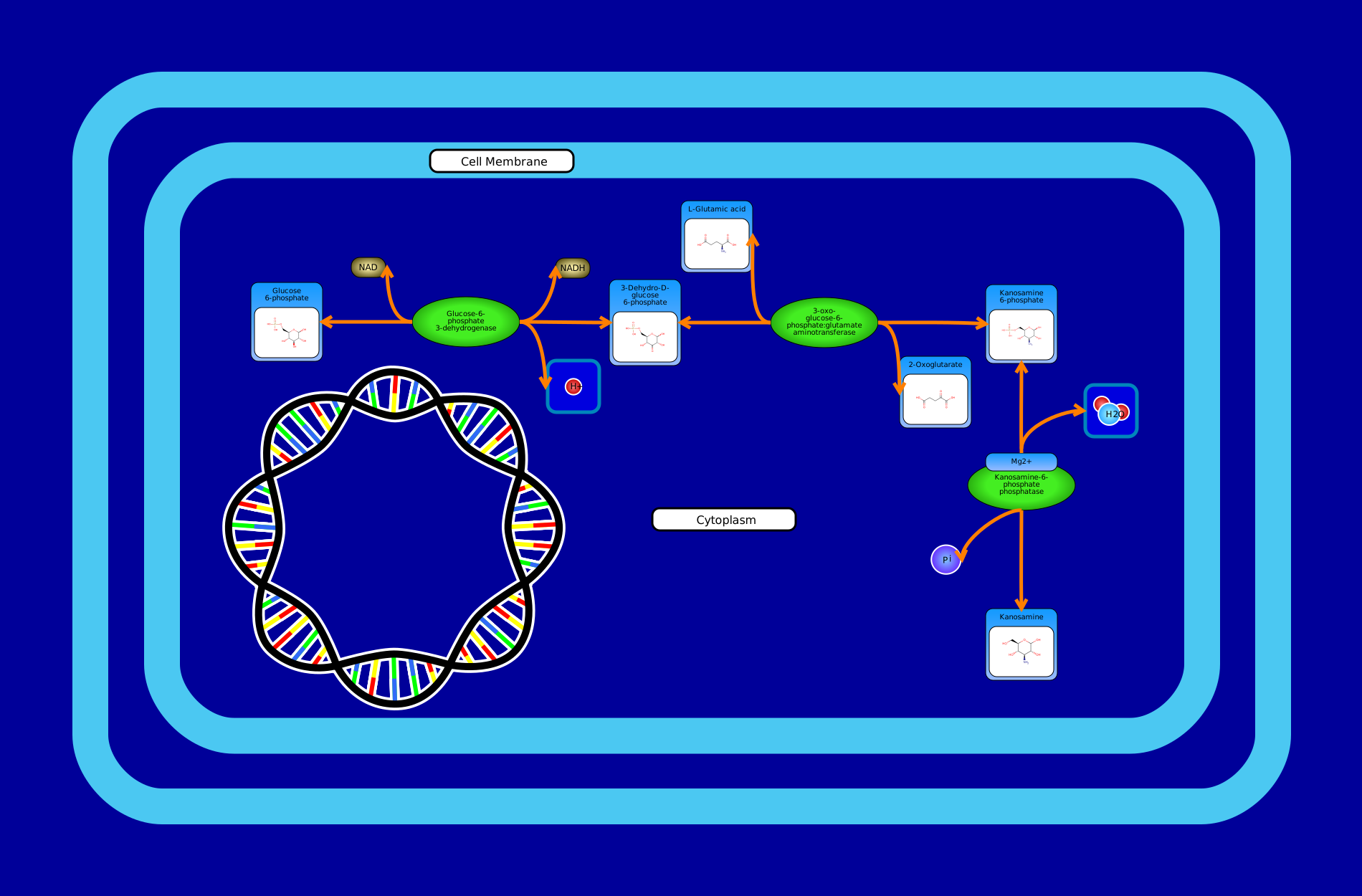 View Pathway
|
Kanosamine BiosynthesisBacillus subtilis
|
Creator: Aadhavya Sivakumaran Created On: July 07, 2020 at 10:17 Last Updated: July 07, 2020 at 10:17 |
PW145447 View Pathway
|
drug action
Kaolin Drug Metabolism Action PathwayHomo sapiens
|
Creator: Ray Kruger Created On: October 07, 2023 at 15:51 Last Updated: October 07, 2023 at 15:51 |
PW132275 View Pathway
|
Kappadione Drug MetabolismHomo sapiens
Kappadione is a drug that is not metabolized by the human body as determined by current research and biotransformer analysis. Kappadione passes through the liver and is then excreted from the body mainly through the kidney.
|
Creator: Ray Kruger Created On: September 21, 2023 at 20:33 Last Updated: September 21, 2023 at 20:33 |
PW146095 View Pathway
|
drug action
Kappadione Drug Metabolism Action PathwayHomo sapiens
|
Creator: Ray Kruger Created On: October 07, 2023 at 17:24 Last Updated: October 07, 2023 at 17:24 |
PW124346 View Pathway
|
Karla vanessa villalobos zavalaHomo sapiens
|
Creator: vanessa Created On: November 17, 2020 at 11:23 Last Updated: November 17, 2020 at 11:23 |
PW132397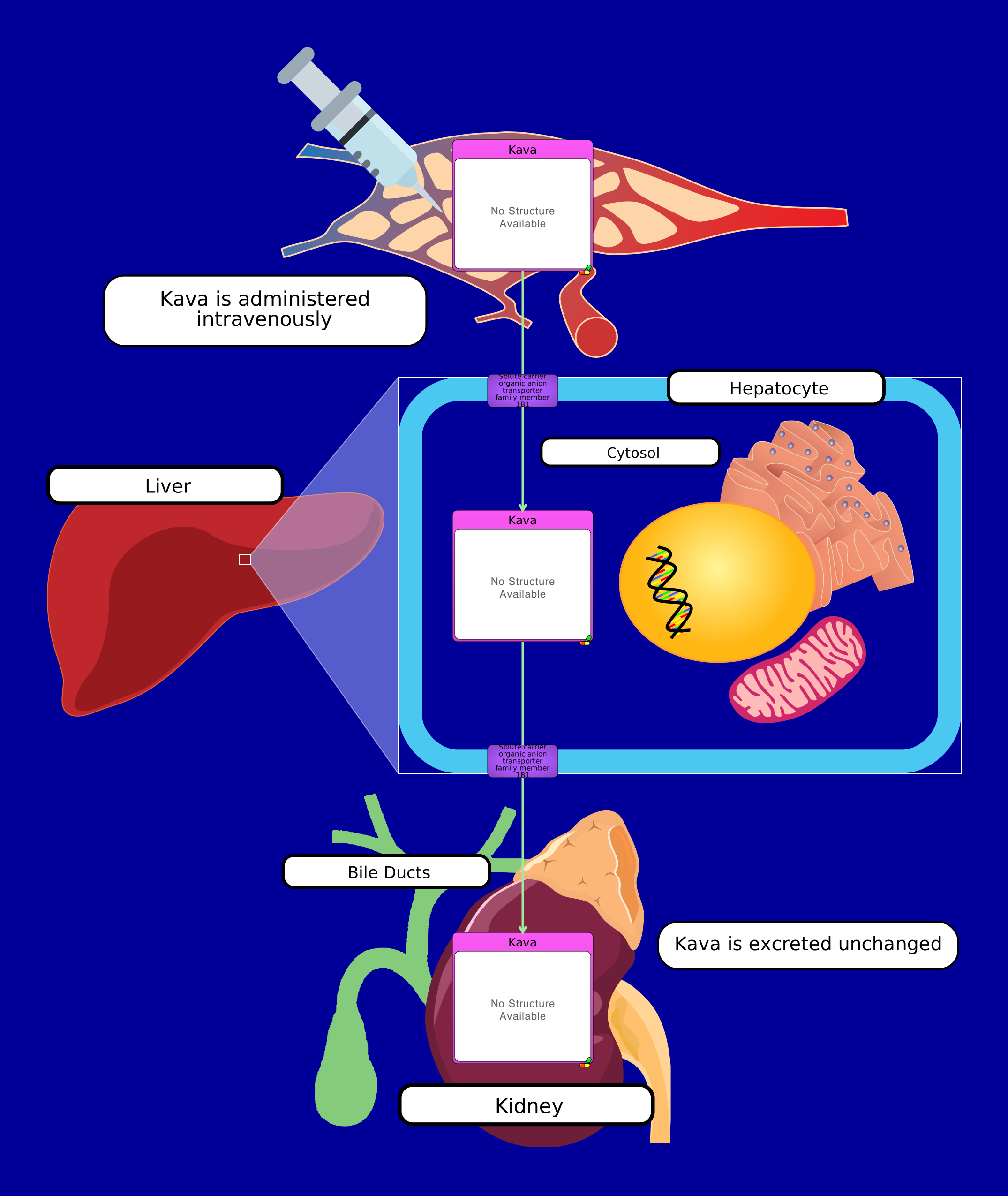 View Pathway
|
Kava Drug MetabolismHomo sapiens
Kava is a drug that is not metabolized by the human body as determined by current research and biotransformer analysis. Kava passes through the liver and is then excreted from the body mainly through the kidney.
|
Creator: Ray Kruger Created On: September 21, 2023 at 21:27 Last Updated: September 21, 2023 at 21:27 |