
| PathWhiz ID | Pathway | Meta Data |
|---|---|---|
PW415810 View Pathway
|
Methionine BiosynthesisEscherichia coli 042
This pathway shows the biosynthesis of methionine, which is an energy-costly process. Lysine biosynthesis produces L-Aspartate-semialdehyde, which later on is catalyzed to L-homoserine by bifunctional aspartokinase (also named homoserine dehydrogenase) 1 and 2. Homoserine is then activated by O-succinylation to form O-succinyl-L-homoserine via homoserine O-succinyltransferase (metA). Combining with L-cysteine, O-succinyl-L-homoserine form L-cystathionine and succinic acid by cystathionine gamma-synthase (metB). Cleavage of L-cystathionine by cystathionine beta-lyase (metC) or Protein MalY(as ) generates two small molecules: homocysteine and 2-aminoprop-2-enoate. Methionine synthase(MetH) or 5-methyltetrahydropteroyltriglutamate--homocysteine methyltransferase(MetE) will catalyzehomocysteine to form the final product: methionine. In E.coli, MetH can only function with existence of cobalamin (Vitamin B12), which can be available in the guy; without cobalamin, MetE will not be repressed so that it will catalyze the methionine. Methionine can be transported out of cell (into periplasmic space) by leucine efflux transporter.
|
Creator: Julia Wakoli Created On: December 26, 2024 at 02:08 Last Updated: December 26, 2024 at 02:08 |
PW404887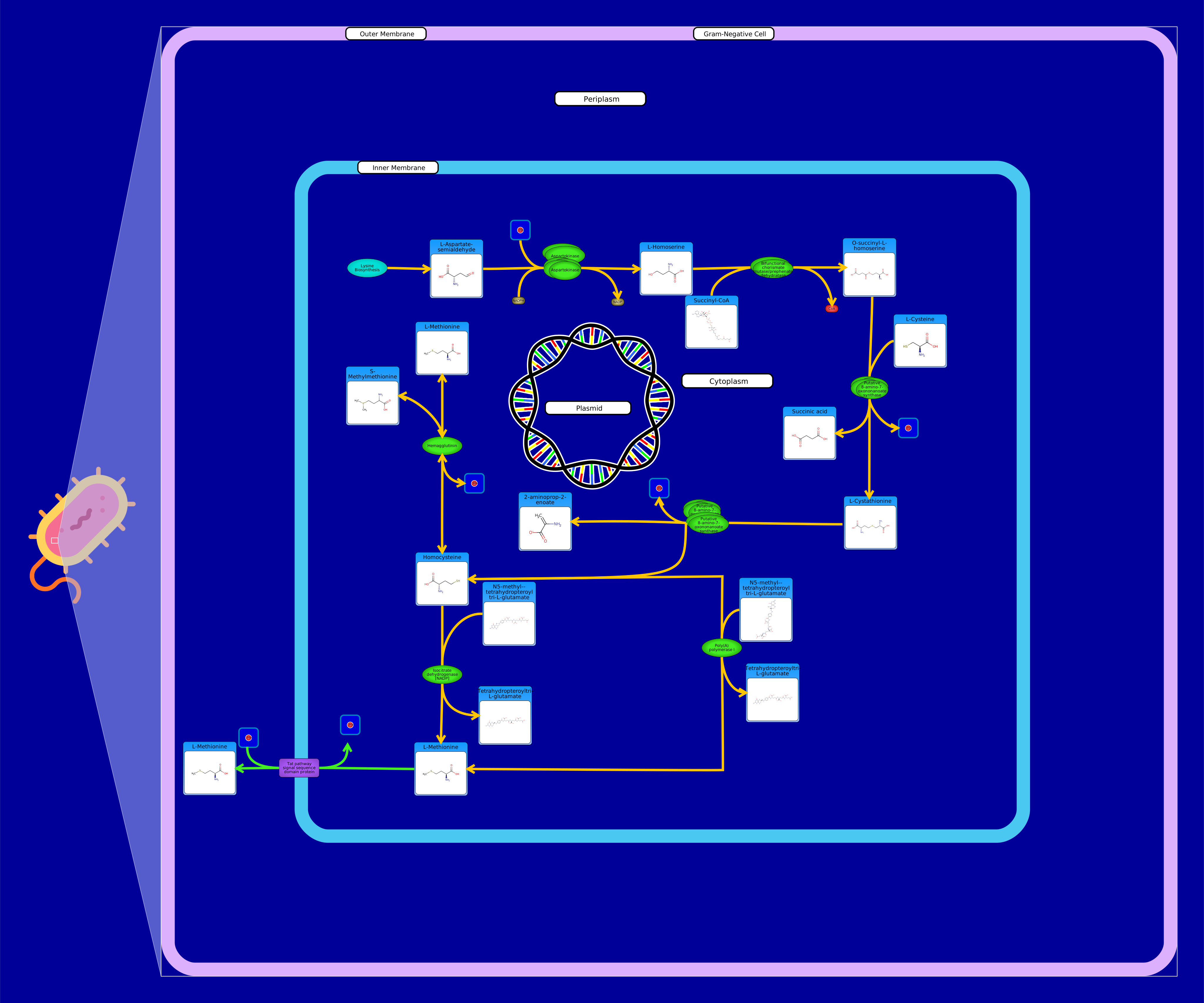 View Pathway
|
Methionine BiosynthesisNeisseria cinerea ATCC 14685
This pathway shows the biosynthesis of methionine, which is an energy-costly process. Lysine biosynthesis produces L-Aspartate-semialdehyde, which later on is catalyzed to L-homoserine by bifunctional aspartokinase (also named homoserine dehydrogenase) 1 and 2. Homoserine is then activated by O-succinylation to form O-succinyl-L-homoserine via homoserine O-succinyltransferase (metA). Combining with L-cysteine, O-succinyl-L-homoserine form L-cystathionine and succinic acid by cystathionine gamma-synthase (metB). Cleavage of L-cystathionine by cystathionine beta-lyase (metC) or Protein MalY(as ) generates two small molecules: homocysteine and 2-aminoprop-2-enoate. Methionine synthase(MetH) or 5-methyltetrahydropteroyltriglutamate--homocysteine methyltransferase(MetE) will catalyzehomocysteine to form the final product: methionine. In E.coli, MetH can only function with existence of cobalamin (Vitamin B12), which can be available in the guy; without cobalamin, MetE will not be repressed so that it will catalyze the methionine. Methionine can be transported out of cell (into periplasmic space) by leucine efflux transporter.
|
Creator: Julia Wakoli Created On: December 21, 2024 at 04:35 Last Updated: December 21, 2024 at 04:35 |
PW405443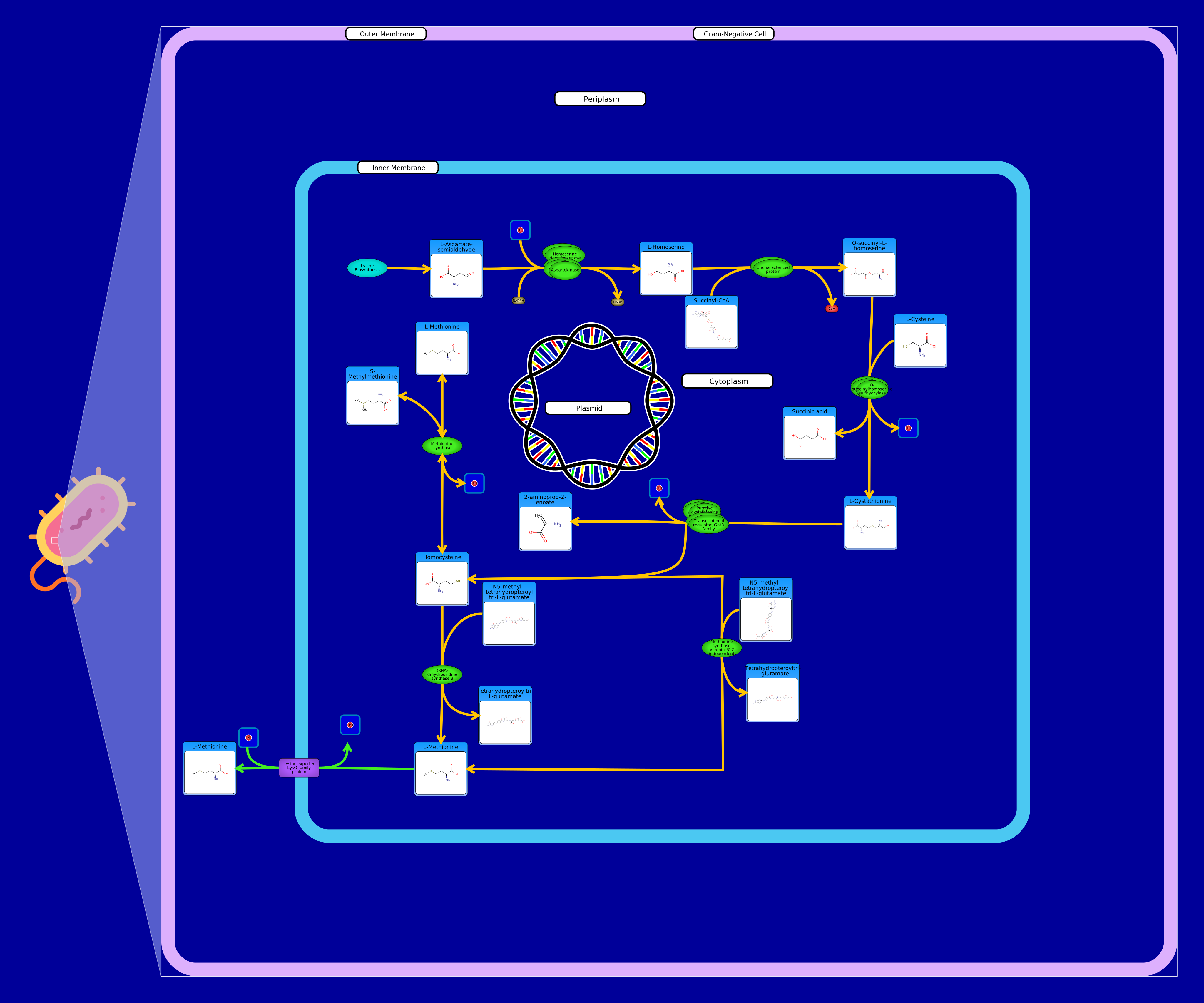 View Pathway
|
Methionine BiosynthesisAcinetobacter johnsonii SH046
This pathway shows the biosynthesis of methionine, which is an energy-costly process. Lysine biosynthesis produces L-Aspartate-semialdehyde, which later on is catalyzed to L-homoserine by bifunctional aspartokinase (also named homoserine dehydrogenase) 1 and 2. Homoserine is then activated by O-succinylation to form O-succinyl-L-homoserine via homoserine O-succinyltransferase (metA). Combining with L-cysteine, O-succinyl-L-homoserine form L-cystathionine and succinic acid by cystathionine gamma-synthase (metB). Cleavage of L-cystathionine by cystathionine beta-lyase (metC) or Protein MalY(as ) generates two small molecules: homocysteine and 2-aminoprop-2-enoate. Methionine synthase(MetH) or 5-methyltetrahydropteroyltriglutamate--homocysteine methyltransferase(MetE) will catalyzehomocysteine to form the final product: methionine. In E.coli, MetH can only function with existence of cobalamin (Vitamin B12), which can be available in the guy; without cobalamin, MetE will not be repressed so that it will catalyze the methionine. Methionine can be transported out of cell (into periplasmic space) by leucine efflux transporter.
|
Creator: Julia Wakoli Created On: December 21, 2024 at 08:38 Last Updated: December 21, 2024 at 08:38 |
PW415067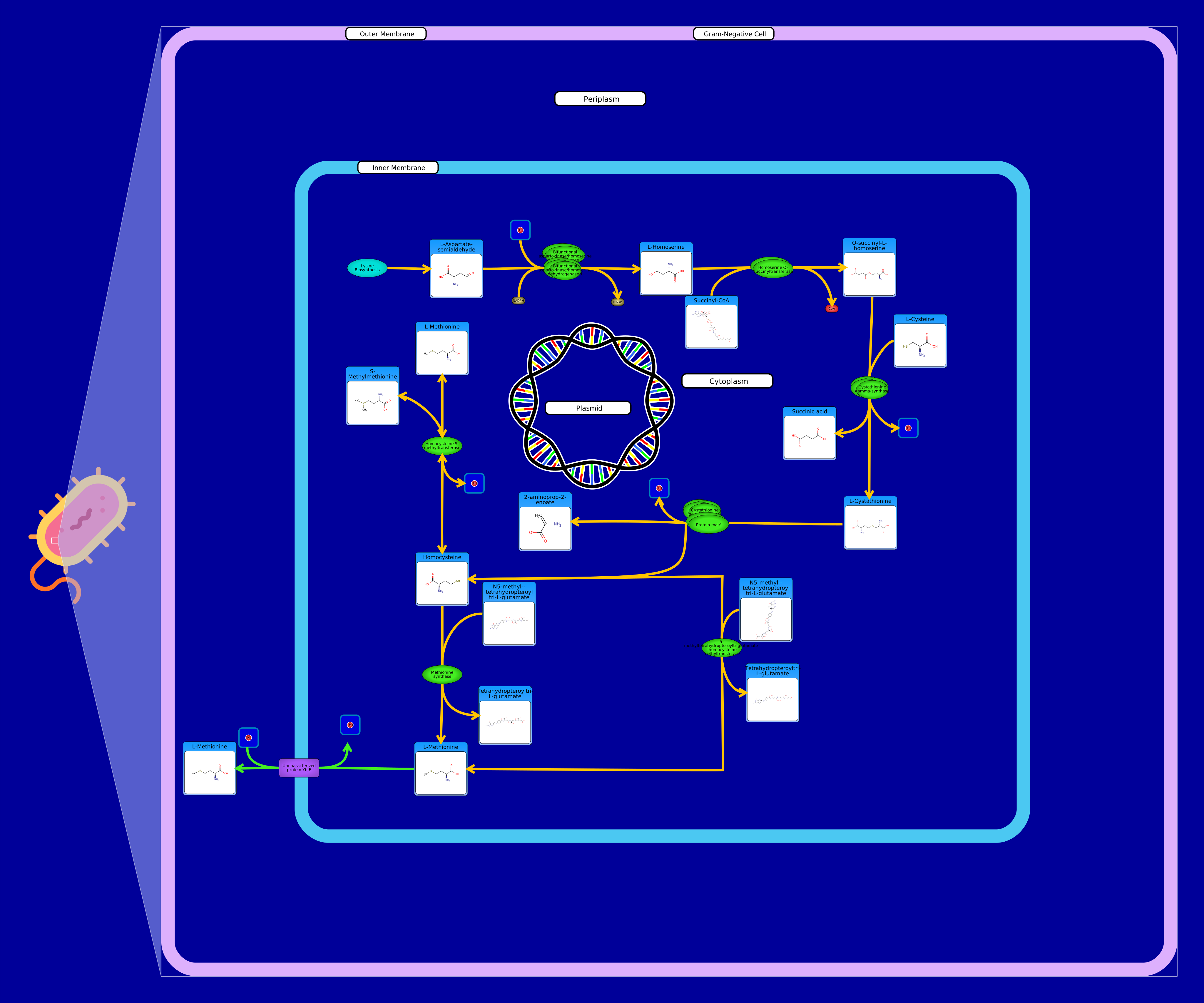 View Pathway
|
Methionine BiosynthesisEscherichia coli E24377A
This pathway shows the biosynthesis of methionine, which is an energy-costly process. Lysine biosynthesis produces L-Aspartate-semialdehyde, which later on is catalyzed to L-homoserine by bifunctional aspartokinase (also named homoserine dehydrogenase) 1 and 2. Homoserine is then activated by O-succinylation to form O-succinyl-L-homoserine via homoserine O-succinyltransferase (metA). Combining with L-cysteine, O-succinyl-L-homoserine form L-cystathionine and succinic acid by cystathionine gamma-synthase (metB). Cleavage of L-cystathionine by cystathionine beta-lyase (metC) or Protein MalY(as ) generates two small molecules: homocysteine and 2-aminoprop-2-enoate. Methionine synthase(MetH) or 5-methyltetrahydropteroyltriglutamate--homocysteine methyltransferase(MetE) will catalyzehomocysteine to form the final product: methionine. In E.coli, MetH can only function with existence of cobalamin (Vitamin B12), which can be available in the guy; without cobalamin, MetE will not be repressed so that it will catalyze the methionine. Methionine can be transported out of cell (into periplasmic space) by leucine efflux transporter.
|
Creator: Julia Wakoli Created On: December 25, 2024 at 20:52 Last Updated: December 25, 2024 at 20:52 |
PW415093 View Pathway
|
Methionine BiosynthesisEscherichia coli HS
This pathway shows the biosynthesis of methionine, which is an energy-costly process. Lysine biosynthesis produces L-Aspartate-semialdehyde, which later on is catalyzed to L-homoserine by bifunctional aspartokinase (also named homoserine dehydrogenase) 1 and 2. Homoserine is then activated by O-succinylation to form O-succinyl-L-homoserine via homoserine O-succinyltransferase (metA). Combining with L-cysteine, O-succinyl-L-homoserine form L-cystathionine and succinic acid by cystathionine gamma-synthase (metB). Cleavage of L-cystathionine by cystathionine beta-lyase (metC) or Protein MalY(as ) generates two small molecules: homocysteine and 2-aminoprop-2-enoate. Methionine synthase(MetH) or 5-methyltetrahydropteroyltriglutamate--homocysteine methyltransferase(MetE) will catalyzehomocysteine to form the final product: methionine. In E.coli, MetH can only function with existence of cobalamin (Vitamin B12), which can be available in the guy; without cobalamin, MetE will not be repressed so that it will catalyze the methionine. Methionine can be transported out of cell (into periplasmic space) by leucine efflux transporter.
|
Creator: Julia Wakoli Created On: December 25, 2024 at 21:03 Last Updated: December 25, 2024 at 21:03 |
PW405121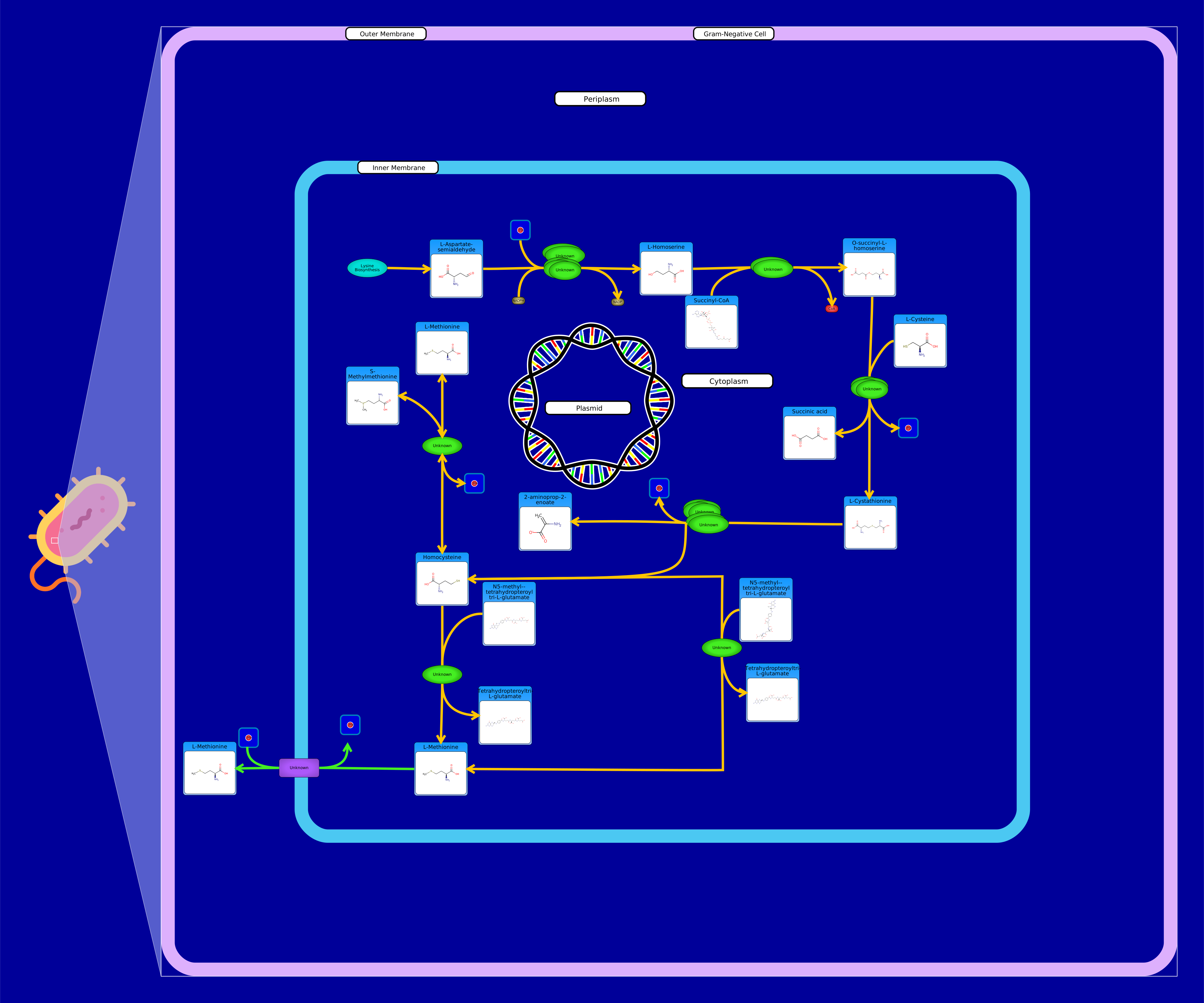 View Pathway
|
Methionine BiosynthesisSuccinatimonas hippei YIT 12066
This pathway shows the biosynthesis of methionine, which is an energy-costly process. Lysine biosynthesis produces L-Aspartate-semialdehyde, which later on is catalyzed to L-homoserine by bifunctional aspartokinase (also named homoserine dehydrogenase) 1 and 2. Homoserine is then activated by O-succinylation to form O-succinyl-L-homoserine via homoserine O-succinyltransferase (metA). Combining with L-cysteine, O-succinyl-L-homoserine form L-cystathionine and succinic acid by cystathionine gamma-synthase (metB). Cleavage of L-cystathionine by cystathionine beta-lyase (metC) or Protein MalY(as ) generates two small molecules: homocysteine and 2-aminoprop-2-enoate. Methionine synthase(MetH) or 5-methyltetrahydropteroyltriglutamate--homocysteine methyltransferase(MetE) will catalyzehomocysteine to form the final product: methionine. In E.coli, MetH can only function with existence of cobalamin (Vitamin B12), which can be available in the guy; without cobalamin, MetE will not be repressed so that it will catalyze the methionine. Methionine can be transported out of cell (into periplasmic space) by leucine efflux transporter.
|
Creator: Julia Wakoli Created On: December 21, 2024 at 06:19 Last Updated: December 21, 2024 at 06:19 |
PW405138 View Pathway
|
Methionine BiosynthesisCitrobacter freundii UCI 31
This pathway shows the biosynthesis of methionine, which is an energy-costly process. Lysine biosynthesis produces L-Aspartate-semialdehyde, which later on is catalyzed to L-homoserine by bifunctional aspartokinase (also named homoserine dehydrogenase) 1 and 2. Homoserine is then activated by O-succinylation to form O-succinyl-L-homoserine via homoserine O-succinyltransferase (metA). Combining with L-cysteine, O-succinyl-L-homoserine form L-cystathionine and succinic acid by cystathionine gamma-synthase (metB). Cleavage of L-cystathionine by cystathionine beta-lyase (metC) or Protein MalY(as ) generates two small molecules: homocysteine and 2-aminoprop-2-enoate. Methionine synthase(MetH) or 5-methyltetrahydropteroyltriglutamate--homocysteine methyltransferase(MetE) will catalyzehomocysteine to form the final product: methionine. In E.coli, MetH can only function with existence of cobalamin (Vitamin B12), which can be available in the guy; without cobalamin, MetE will not be repressed so that it will catalyze the methionine. Methionine can be transported out of cell (into periplasmic space) by leucine efflux transporter.
|
Creator: Julia Wakoli Created On: December 21, 2024 at 06:27 Last Updated: December 21, 2024 at 06:27 |
PW684844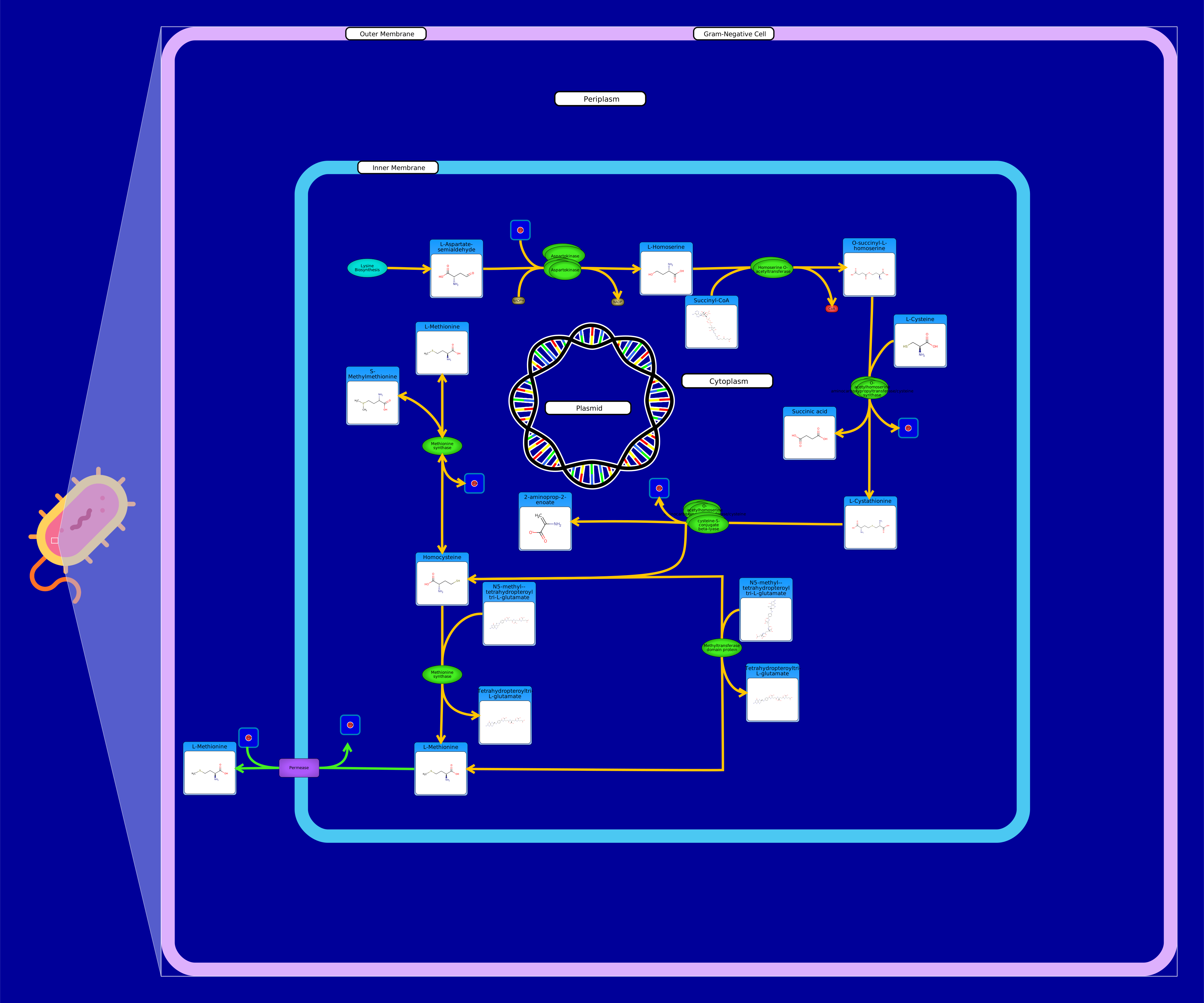 View Pathway
|
Methionine BiosynthesisPhascolarctobacterium succinatutens YIT 12067
This pathway shows the biosynthesis of methionine, which is an energy-costly process. Lysine biosynthesis produces L-Aspartate-semialdehyde, which later on is catalyzed to L-homoserine by bifunctional aspartokinase (also named homoserine dehydrogenase) 1 and 2. Homoserine is then activated by O-succinylation to form O-succinyl-L-homoserine via homoserine O-succinyltransferase (metA). Combining with L-cysteine, O-succinyl-L-homoserine form L-cystathionine and succinic acid by cystathionine gamma-synthase (metB). Cleavage of L-cystathionine by cystathionine beta-lyase (metC) or Protein MalY(as ) generates two small molecules: homocysteine and 2-aminoprop-2-enoate. Methionine synthase(MetH) or 5-methyltetrahydropteroyltriglutamate--homocysteine methyltransferase(MetE) will catalyzehomocysteine to form the final product: methionine. In E.coli, MetH can only function with existence of cobalamin (Vitamin B12), which can be available in the guy; without cobalamin, MetE will not be repressed so that it will catalyze the methionine. Methionine can be transported out of cell (into periplasmic space) by leucine efflux transporter.
|
Creator: Julia Wakoli Created On: December 21, 2024 at 10:28 Last Updated: December 21, 2024 at 10:28 |
PW405765 View Pathway
|
Methionine BiosynthesisHalococcus morrhuae DSM 1307
This pathway shows the biosynthesis of methionine, which is an energy-costly process. Lysine biosynthesis produces L-Aspartate-semialdehyde, which later on is catalyzed to L-homoserine by bifunctional aspartokinase (also named homoserine dehydrogenase) 1 and 2. Homoserine is then activated by O-succinylation to form O-succinyl-L-homoserine via homoserine O-succinyltransferase (metA). Combining with L-cysteine, O-succinyl-L-homoserine form L-cystathionine and succinic acid by cystathionine gamma-synthase (metB). Cleavage of L-cystathionine by cystathionine beta-lyase (metC) or Protein MalY(as ) generates two small molecules: homocysteine and 2-aminoprop-2-enoate. Methionine synthase(MetH) or 5-methyltetrahydropteroyltriglutamate--homocysteine methyltransferase(MetE) will catalyzehomocysteine to form the final product: methionine. In E.coli, MetH can only function with existence of cobalamin (Vitamin B12), which can be available in the guy; without cobalamin, MetE will not be repressed so that it will catalyze the methionine. Methionine can be transported out of cell (into periplasmic space) by leucine efflux transporter.
|
Creator: Julia Wakoli Created On: December 21, 2024 at 10:59 Last Updated: December 21, 2024 at 10:59 |
PW405715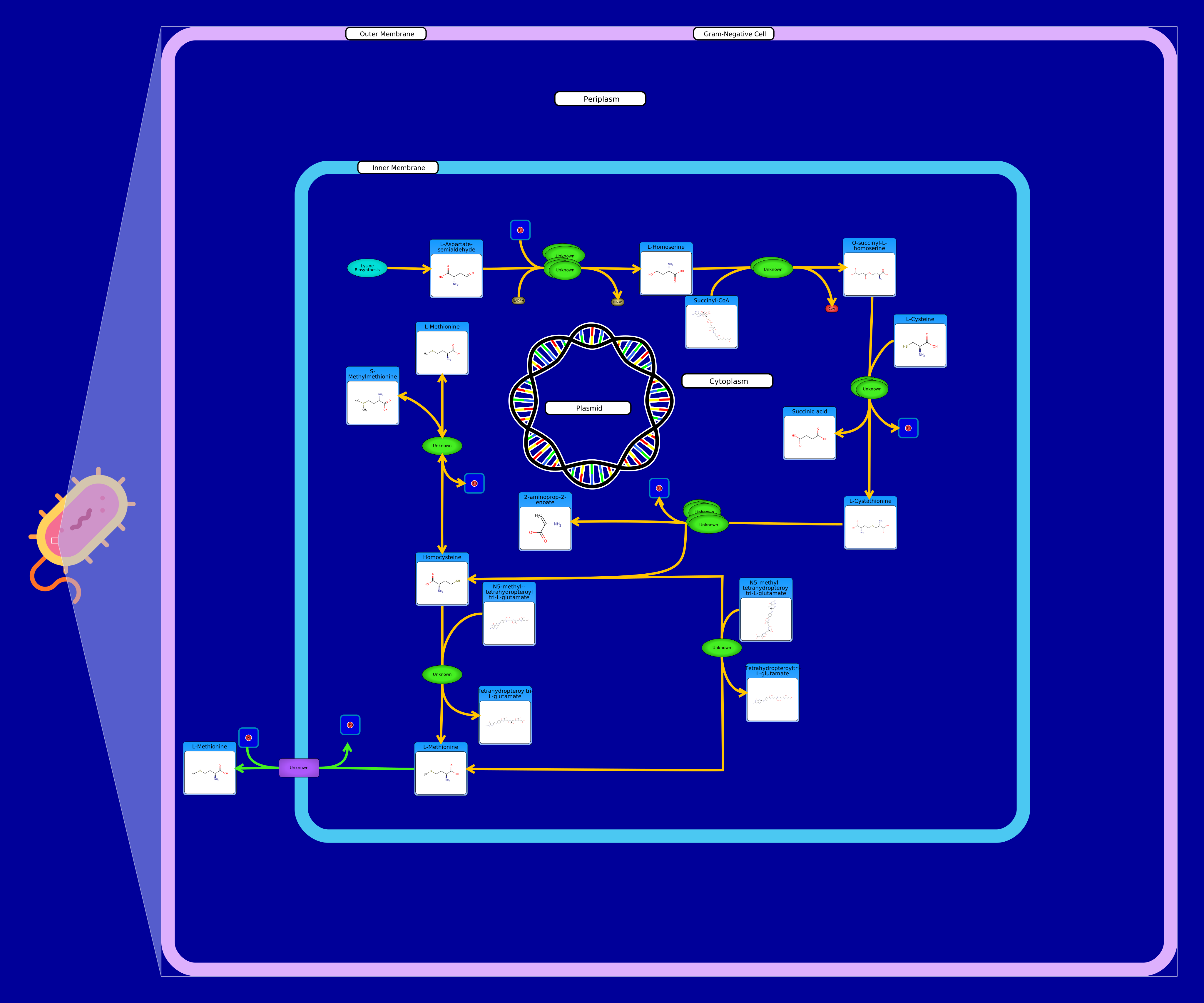 View Pathway
|
Methionine BiosynthesisMitsuokella jalaludinii DSM 13811
This pathway shows the biosynthesis of methionine, which is an energy-costly process. Lysine biosynthesis produces L-Aspartate-semialdehyde, which later on is catalyzed to L-homoserine by bifunctional aspartokinase (also named homoserine dehydrogenase) 1 and 2. Homoserine is then activated by O-succinylation to form O-succinyl-L-homoserine via homoserine O-succinyltransferase (metA). Combining with L-cysteine, O-succinyl-L-homoserine form L-cystathionine and succinic acid by cystathionine gamma-synthase (metB). Cleavage of L-cystathionine by cystathionine beta-lyase (metC) or Protein MalY(as ) generates two small molecules: homocysteine and 2-aminoprop-2-enoate. Methionine synthase(MetH) or 5-methyltetrahydropteroyltriglutamate--homocysteine methyltransferase(MetE) will catalyzehomocysteine to form the final product: methionine. In E.coli, MetH can only function with existence of cobalamin (Vitamin B12), which can be available in the guy; without cobalamin, MetE will not be repressed so that it will catalyze the methionine. Methionine can be transported out of cell (into periplasmic space) by leucine efflux transporter.
|
Creator: Julia Wakoli Created On: December 21, 2024 at 10:35 Last Updated: December 21, 2024 at 10:35 |