
| PathWhiz ID | Pathway | Meta Data |
|---|---|---|
PW404019 View Pathway
|
Methionine BiosynthesisBacteroides nordii CL02T12C05
This pathway shows the biosynthesis of methionine, which is an energy-costly process. Lysine biosynthesis produces L-Aspartate-semialdehyde, which later on is catalyzed to L-homoserine by bifunctional aspartokinase (also named homoserine dehydrogenase) 1 and 2. Homoserine is then activated by O-succinylation to form O-succinyl-L-homoserine via homoserine O-succinyltransferase (metA). Combining with L-cysteine, O-succinyl-L-homoserine form L-cystathionine and succinic acid by cystathionine gamma-synthase (metB). Cleavage of L-cystathionine by cystathionine beta-lyase (metC) or Protein MalY(as ) generates two small molecules: homocysteine and 2-aminoprop-2-enoate. Methionine synthase(MetH) or 5-methyltetrahydropteroyltriglutamate--homocysteine methyltransferase(MetE) will catalyzehomocysteine to form the final product: methionine. In E.coli, MetH can only function with existence of cobalamin (Vitamin B12), which can be available in the guy; without cobalamin, MetE will not be repressed so that it will catalyze the methionine. Methionine can be transported out of cell (into periplasmic space) by leucine efflux transporter.
|
Creator: Julia Wakoli Created On: December 20, 2024 at 22:21 Last Updated: December 20, 2024 at 22:21 |
PW404317 View Pathway
|
Methionine BiosynthesisPrevotella bivia DSM 20514
This pathway shows the biosynthesis of methionine, which is an energy-costly process. Lysine biosynthesis produces L-Aspartate-semialdehyde, which later on is catalyzed to L-homoserine by bifunctional aspartokinase (also named homoserine dehydrogenase) 1 and 2. Homoserine is then activated by O-succinylation to form O-succinyl-L-homoserine via homoserine O-succinyltransferase (metA). Combining with L-cysteine, O-succinyl-L-homoserine form L-cystathionine and succinic acid by cystathionine gamma-synthase (metB). Cleavage of L-cystathionine by cystathionine beta-lyase (metC) or Protein MalY(as ) generates two small molecules: homocysteine and 2-aminoprop-2-enoate. Methionine synthase(MetH) or 5-methyltetrahydropteroyltriglutamate--homocysteine methyltransferase(MetE) will catalyzehomocysteine to form the final product: methionine. In E.coli, MetH can only function with existence of cobalamin (Vitamin B12), which can be available in the guy; without cobalamin, MetE will not be repressed so that it will catalyze the methionine. Methionine can be transported out of cell (into periplasmic space) by leucine efflux transporter.
|
Creator: Julia Wakoli Created On: December 21, 2024 at 00:32 Last Updated: December 21, 2024 at 00:32 |
PW403984 View Pathway
|
Methionine BiosynthesisBacteroides fluxus YIT 12057
This pathway shows the biosynthesis of methionine, which is an energy-costly process. Lysine biosynthesis produces L-Aspartate-semialdehyde, which later on is catalyzed to L-homoserine by bifunctional aspartokinase (also named homoserine dehydrogenase) 1 and 2. Homoserine is then activated by O-succinylation to form O-succinyl-L-homoserine via homoserine O-succinyltransferase (metA). Combining with L-cysteine, O-succinyl-L-homoserine form L-cystathionine and succinic acid by cystathionine gamma-synthase (metB). Cleavage of L-cystathionine by cystathionine beta-lyase (metC) or Protein MalY(as ) generates two small molecules: homocysteine and 2-aminoprop-2-enoate. Methionine synthase(MetH) or 5-methyltetrahydropteroyltriglutamate--homocysteine methyltransferase(MetE) will catalyzehomocysteine to form the final product: methionine. In E.coli, MetH can only function with existence of cobalamin (Vitamin B12), which can be available in the guy; without cobalamin, MetE will not be repressed so that it will catalyze the methionine. Methionine can be transported out of cell (into periplasmic space) by leucine efflux transporter.
|
Creator: Julia Wakoli Created On: December 20, 2024 at 22:06 Last Updated: December 20, 2024 at 22:06 |
PW402436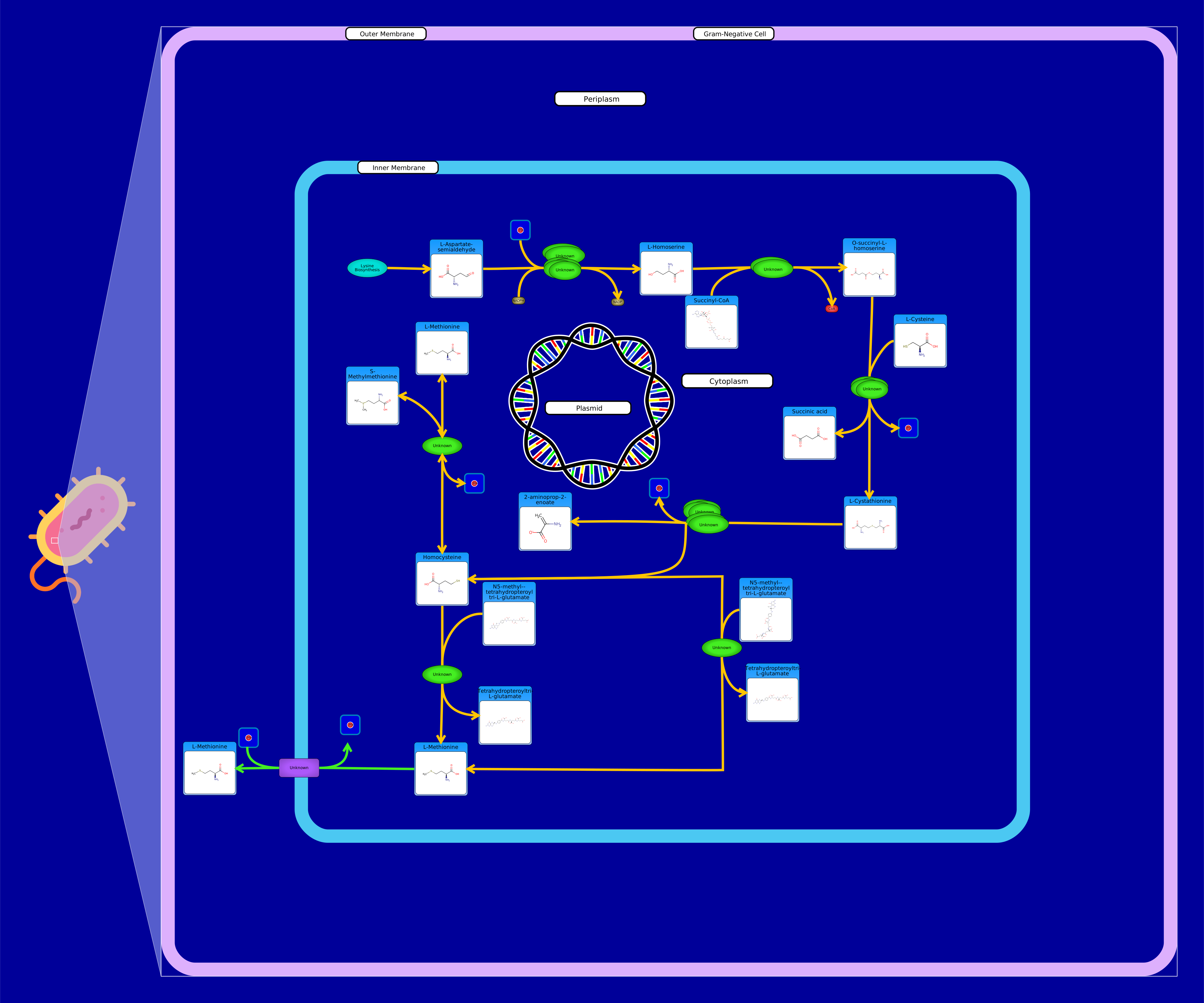 View Pathway
|
Methionine BiosynthesisEscherichia coli O157:H7
This pathway shows the biosynthesis of methionine, which is an energy-costly process. Lysine biosynthesis produces L-Aspartate-semialdehyde, which later on is catalyzed to L-homoserine by bifunctional aspartokinase (also named homoserine dehydrogenase) 1 and 2. Homoserine is then activated by O-succinylation to form O-succinyl-L-homoserine via homoserine O-succinyltransferase (metA). Combining with L-cysteine, O-succinyl-L-homoserine form L-cystathionine and succinic acid by cystathionine gamma-synthase (metB). Cleavage of L-cystathionine by cystathionine beta-lyase (metC) or Protein MalY(as ) generates two small molecules: homocysteine and 2-aminoprop-2-enoate. Methionine synthase(MetH) or 5-methyltetrahydropteroyltriglutamate--homocysteine methyltransferase(MetE) will catalyzehomocysteine to form the final product: methionine. In E.coli, MetH can only function with existence of cobalamin (Vitamin B12), which can be available in the guy; without cobalamin, MetE will not be repressed so that it will catalyze the methionine. Methionine can be transported out of cell (into periplasmic space) by leucine efflux transporter.
|
Creator: Julia Wakoli Created On: December 20, 2024 at 11:56 Last Updated: December 20, 2024 at 11:56 |
PW403573 View Pathway
|
Methionine BiosynthesisMegasphaera elsdenii DSM 20460
This pathway shows the biosynthesis of methionine, which is an energy-costly process. Lysine biosynthesis produces L-Aspartate-semialdehyde, which later on is catalyzed to L-homoserine by bifunctional aspartokinase (also named homoserine dehydrogenase) 1 and 2. Homoserine is then activated by O-succinylation to form O-succinyl-L-homoserine via homoserine O-succinyltransferase (metA). Combining with L-cysteine, O-succinyl-L-homoserine form L-cystathionine and succinic acid by cystathionine gamma-synthase (metB). Cleavage of L-cystathionine by cystathionine beta-lyase (metC) or Protein MalY(as ) generates two small molecules: homocysteine and 2-aminoprop-2-enoate. Methionine synthase(MetH) or 5-methyltetrahydropteroyltriglutamate--homocysteine methyltransferase(MetE) will catalyzehomocysteine to form the final product: methionine. In E.coli, MetH can only function with existence of cobalamin (Vitamin B12), which can be available in the guy; without cobalamin, MetE will not be repressed so that it will catalyze the methionine. Methionine can be transported out of cell (into periplasmic space) by leucine efflux transporter.
|
Creator: Julia Wakoli Created On: December 20, 2024 at 19:32 Last Updated: December 20, 2024 at 19:32 |
PW403972 View Pathway
|
Methionine BiosynthesisBacteroides faecis MAJ27
This pathway shows the biosynthesis of methionine, which is an energy-costly process. Lysine biosynthesis produces L-Aspartate-semialdehyde, which later on is catalyzed to L-homoserine by bifunctional aspartokinase (also named homoserine dehydrogenase) 1 and 2. Homoserine is then activated by O-succinylation to form O-succinyl-L-homoserine via homoserine O-succinyltransferase (metA). Combining with L-cysteine, O-succinyl-L-homoserine form L-cystathionine and succinic acid by cystathionine gamma-synthase (metB). Cleavage of L-cystathionine by cystathionine beta-lyase (metC) or Protein MalY(as ) generates two small molecules: homocysteine and 2-aminoprop-2-enoate. Methionine synthase(MetH) or 5-methyltetrahydropteroyltriglutamate--homocysteine methyltransferase(MetE) will catalyzehomocysteine to form the final product: methionine. In E.coli, MetH can only function with existence of cobalamin (Vitamin B12), which can be available in the guy; without cobalamin, MetE will not be repressed so that it will catalyze the methionine. Methionine can be transported out of cell (into periplasmic space) by leucine efflux transporter.
|
Creator: Julia Wakoli Created On: December 20, 2024 at 22:00 Last Updated: December 20, 2024 at 22:00 |
PW404115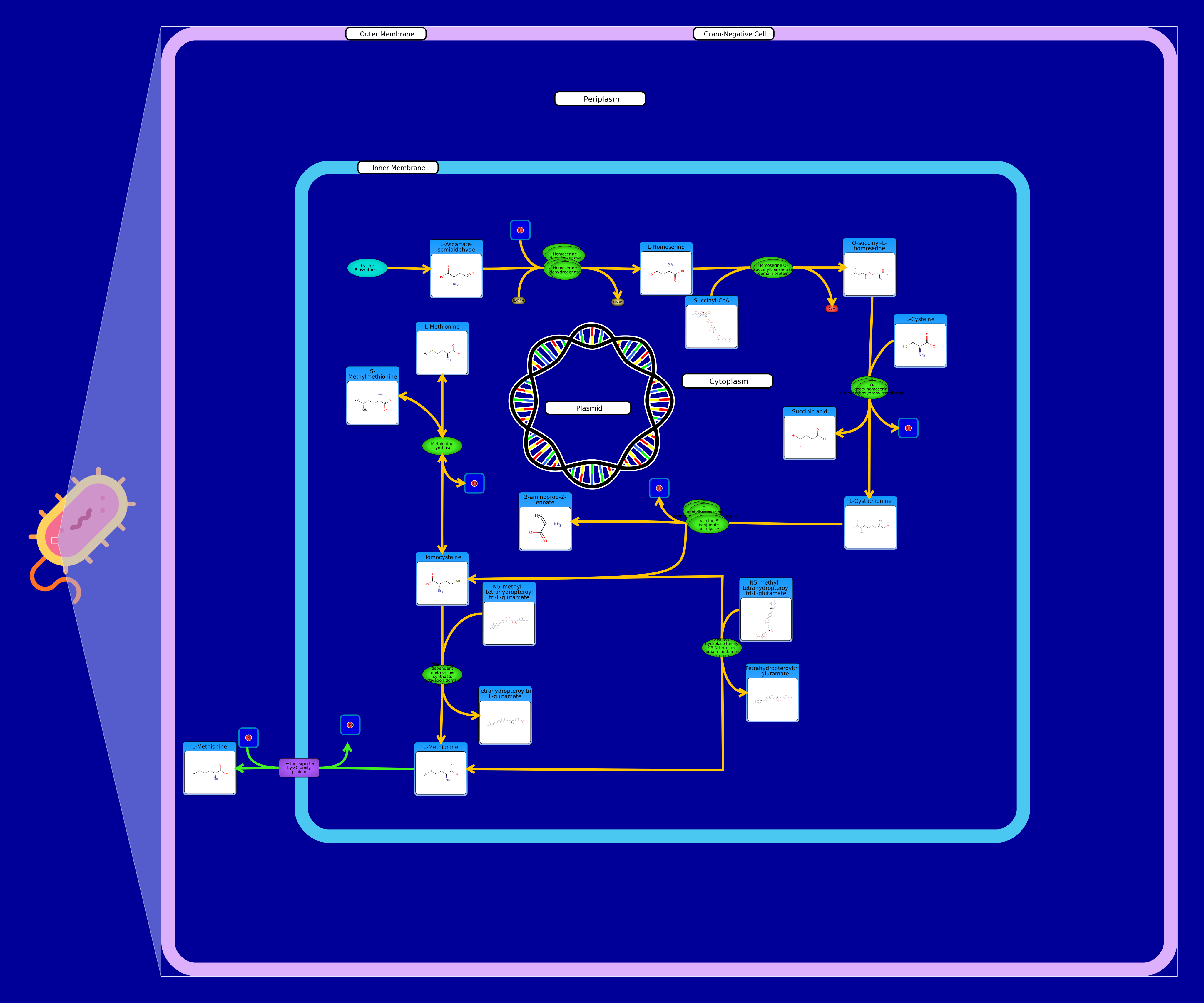 View Pathway
|
Methionine BiosynthesisBacteroides sp. 2_2_4
This pathway shows the biosynthesis of methionine, which is an energy-costly process. Lysine biosynthesis produces L-Aspartate-semialdehyde, which later on is catalyzed to L-homoserine by bifunctional aspartokinase (also named homoserine dehydrogenase) 1 and 2. Homoserine is then activated by O-succinylation to form O-succinyl-L-homoserine via homoserine O-succinyltransferase (metA). Combining with L-cysteine, O-succinyl-L-homoserine form L-cystathionine and succinic acid by cystathionine gamma-synthase (metB). Cleavage of L-cystathionine by cystathionine beta-lyase (metC) or Protein MalY(as ) generates two small molecules: homocysteine and 2-aminoprop-2-enoate. Methionine synthase(MetH) or 5-methyltetrahydropteroyltriglutamate--homocysteine methyltransferase(MetE) will catalyzehomocysteine to form the final product: methionine. In E.coli, MetH can only function with existence of cobalamin (Vitamin B12), which can be available in the guy; without cobalamin, MetE will not be repressed so that it will catalyze the methionine. Methionine can be transported out of cell (into periplasmic space) by leucine efflux transporter.
|
Creator: Julia Wakoli Created On: December 20, 2024 at 23:04 Last Updated: December 20, 2024 at 23:04 |
PW404444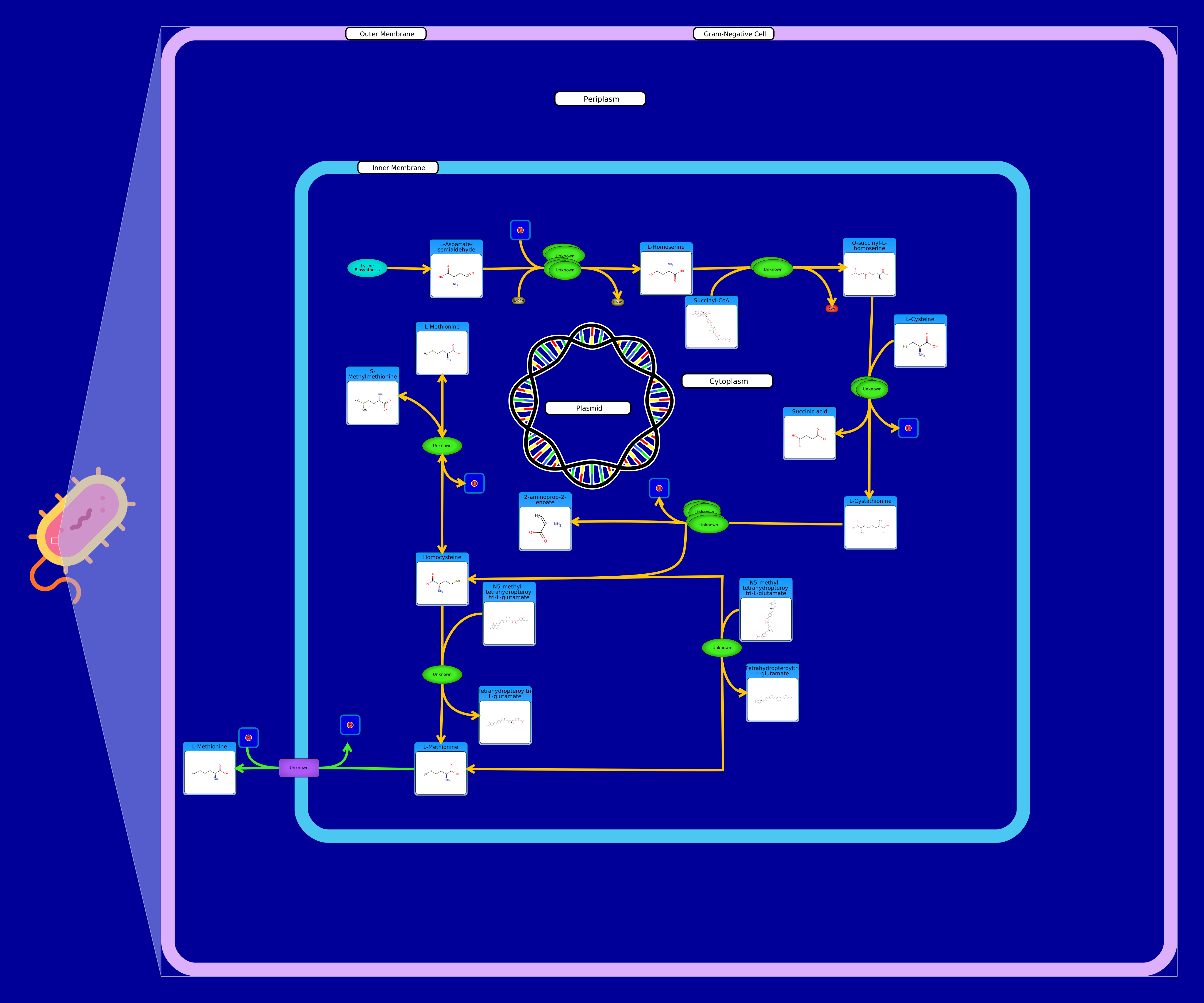 View Pathway
|
Methionine BiosynthesisPrevotella oralis ATCC 33269
This pathway shows the biosynthesis of methionine, which is an energy-costly process. Lysine biosynthesis produces L-Aspartate-semialdehyde, which later on is catalyzed to L-homoserine by bifunctional aspartokinase (also named homoserine dehydrogenase) 1 and 2. Homoserine is then activated by O-succinylation to form O-succinyl-L-homoserine via homoserine O-succinyltransferase (metA). Combining with L-cysteine, O-succinyl-L-homoserine form L-cystathionine and succinic acid by cystathionine gamma-synthase (metB). Cleavage of L-cystathionine by cystathionine beta-lyase (metC) or Protein MalY(as ) generates two small molecules: homocysteine and 2-aminoprop-2-enoate. Methionine synthase(MetH) or 5-methyltetrahydropteroyltriglutamate--homocysteine methyltransferase(MetE) will catalyzehomocysteine to form the final product: methionine. In E.coli, MetH can only function with existence of cobalamin (Vitamin B12), which can be available in the guy; without cobalamin, MetE will not be repressed so that it will catalyze the methionine. Methionine can be transported out of cell (into periplasmic space) by leucine efflux transporter.
|
Creator: Julia Wakoli Created On: December 21, 2024 at 01:21 Last Updated: December 21, 2024 at 01:21 |
PW402537 View Pathway
|
Methionine BiosynthesisAlistipes shahii WAL 8301
This pathway shows the biosynthesis of methionine, which is an energy-costly process. Lysine biosynthesis produces L-Aspartate-semialdehyde, which later on is catalyzed to L-homoserine by bifunctional aspartokinase (also named homoserine dehydrogenase) 1 and 2. Homoserine is then activated by O-succinylation to form O-succinyl-L-homoserine via homoserine O-succinyltransferase (metA). Combining with L-cysteine, O-succinyl-L-homoserine form L-cystathionine and succinic acid by cystathionine gamma-synthase (metB). Cleavage of L-cystathionine by cystathionine beta-lyase (metC) or Protein MalY(as ) generates two small molecules: homocysteine and 2-aminoprop-2-enoate. Methionine synthase(MetH) or 5-methyltetrahydropteroyltriglutamate--homocysteine methyltransferase(MetE) will catalyzehomocysteine to form the final product: methionine. In E.coli, MetH can only function with existence of cobalamin (Vitamin B12), which can be available in the guy; without cobalamin, MetE will not be repressed so that it will catalyze the methionine. Methionine can be transported out of cell (into periplasmic space) by leucine efflux transporter.
|
Creator: Julia Wakoli Created On: December 20, 2024 at 12:42 Last Updated: December 20, 2024 at 12:42 |
PW404052 View Pathway
|
Methionine BiosynthesisBacteroides pyogenes DSM 20611 = JCM 6294
This pathway shows the biosynthesis of methionine, which is an energy-costly process. Lysine biosynthesis produces L-Aspartate-semialdehyde, which later on is catalyzed to L-homoserine by bifunctional aspartokinase (also named homoserine dehydrogenase) 1 and 2. Homoserine is then activated by O-succinylation to form O-succinyl-L-homoserine via homoserine O-succinyltransferase (metA). Combining with L-cysteine, O-succinyl-L-homoserine form L-cystathionine and succinic acid by cystathionine gamma-synthase (metB). Cleavage of L-cystathionine by cystathionine beta-lyase (metC) or Protein MalY(as ) generates two small molecules: homocysteine and 2-aminoprop-2-enoate. Methionine synthase(MetH) or 5-methyltetrahydropteroyltriglutamate--homocysteine methyltransferase(MetE) will catalyzehomocysteine to form the final product: methionine. In E.coli, MetH can only function with existence of cobalamin (Vitamin B12), which can be available in the guy; without cobalamin, MetE will not be repressed so that it will catalyze the methionine. Methionine can be transported out of cell (into periplasmic space) by leucine efflux transporter.
|
Creator: Julia Wakoli Created On: December 20, 2024 at 22:35 Last Updated: December 20, 2024 at 22:35 |