
| PathWhiz ID | Pathway | Meta Data |
|---|---|---|
PW501325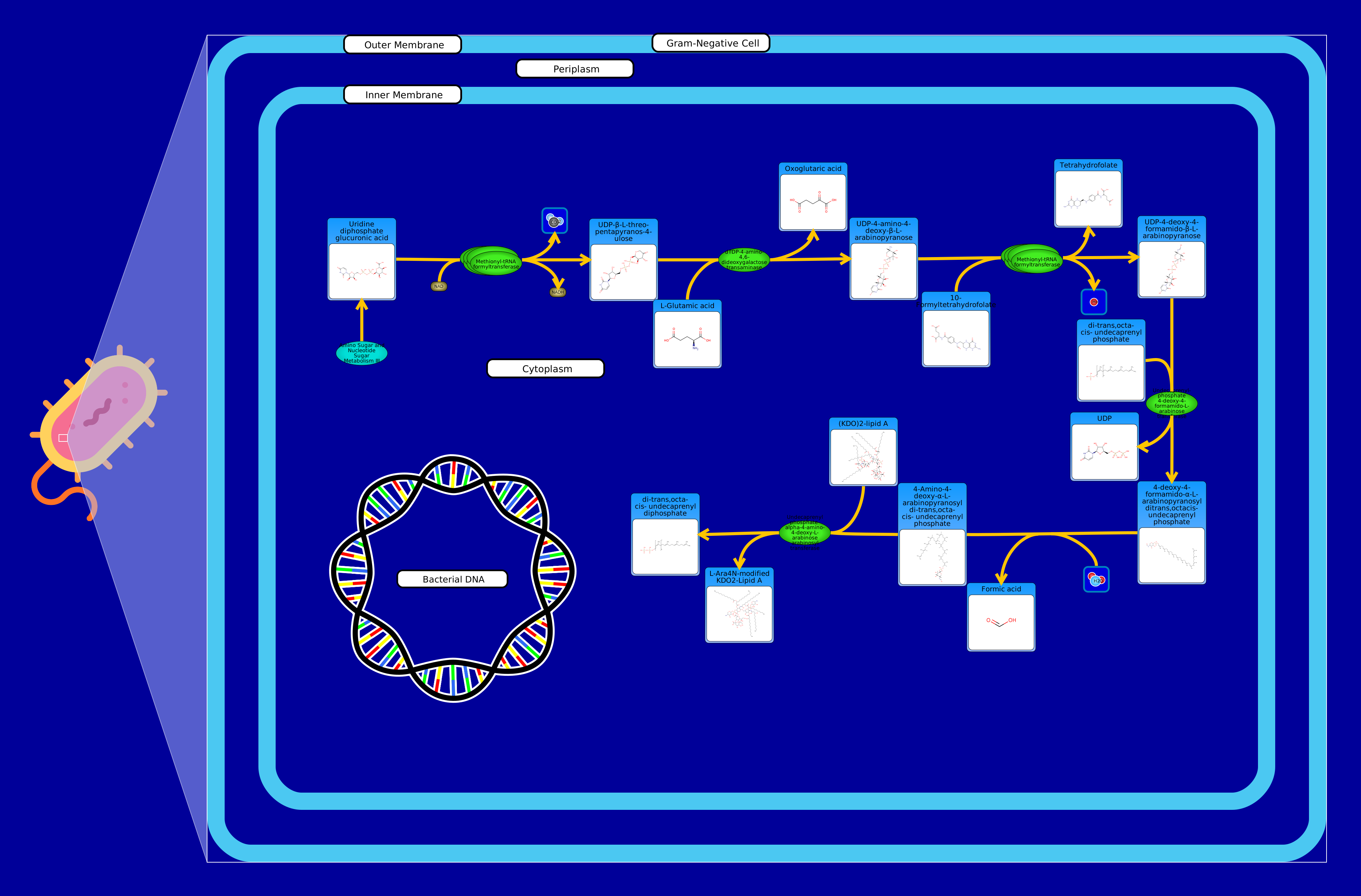 View Pathway
|
Polymyxin ResistanceMorganella morganii subsp. morganii KT
UDP-glucuronic acid compound undergoes a NAD dependent reaction through a bifunctional polymyxin resistance protein to produce UDP-Beta-L-threo-pentapyranos-4-ulose. This compound then reacts with L-glutamic acid through a UDP-4-amino-4-deoxy-L-arabinose--oxoglutarate aminotransferase to produce an oxoglutaric acid and UDP-4-amino-4-deoxy-beta-L-arabinopyranose The latter compound interacts with a N10-formyl-tetrahydrofolate through a bifunctional polymyxin resistance protein ArnA, resulting in a tetrahydrofolate, a hydrogen ion and a UDP-4-deoxy-4-formamido-beta-L-arabinopyranose, which in turn reacts with a product of the methylerythritol phosphate and polysoprenoid biosynthesis pathway, di-trans,octa-cis-undecaprenyl phosphate to produce a 4-deoxy-4-formamido-alpha-L-arabinopyranosyl ditrans, octacis-undecaprenyl phosphate.
The compound 4-deoxy-4-formamido-alpha-L-arabinopyranosyl ditrans, octacis-undecaprenyl phosphate hypothetically reacts with water and results in the release of a formic acid and 4-amino-4-deoxy-α-L-arabinopyranosyl ditrans,octacis-undecaprenyl phosphate which in turn reacts with a KDO2-lipid A through a 4-amino-4-deoxy-L-arabinose transferase resulting in the release of a di-trans,octa-cis-undecaprenyl phosphate and a L-Ara4N-modified KDO2-Lipid A
|
Creator: Julia Wakoli Created On: February 05, 2025 at 12:56 Last Updated: February 05, 2025 at 12:56 |
PW498793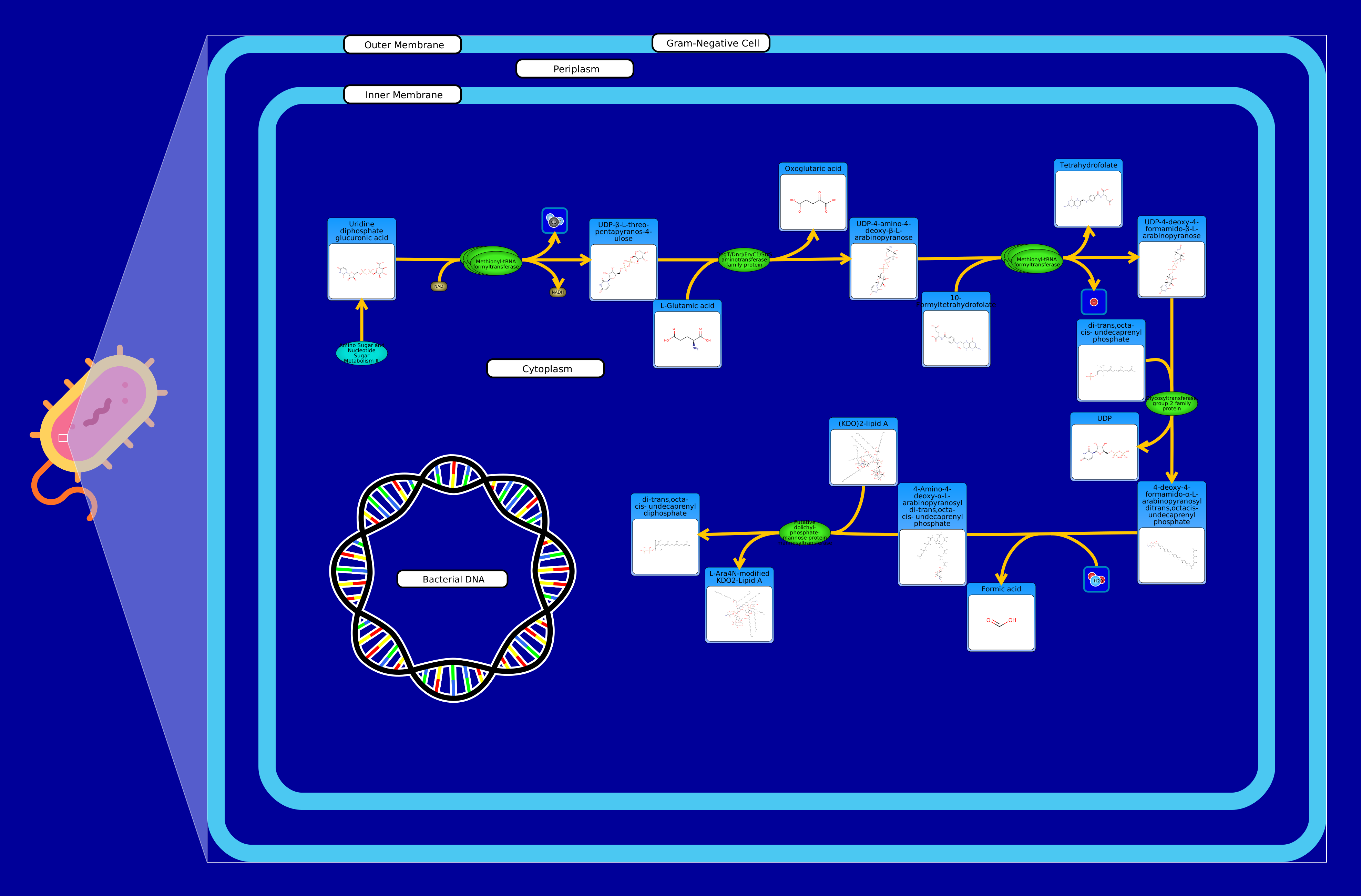 View Pathway
|
Polymyxin ResistanceBacteroides finegoldii DSM 17565
UDP-glucuronic acid compound undergoes a NAD dependent reaction through a bifunctional polymyxin resistance protein to produce UDP-Beta-L-threo-pentapyranos-4-ulose. This compound then reacts with L-glutamic acid through a UDP-4-amino-4-deoxy-L-arabinose--oxoglutarate aminotransferase to produce an oxoglutaric acid and UDP-4-amino-4-deoxy-beta-L-arabinopyranose The latter compound interacts with a N10-formyl-tetrahydrofolate through a bifunctional polymyxin resistance protein ArnA, resulting in a tetrahydrofolate, a hydrogen ion and a UDP-4-deoxy-4-formamido-beta-L-arabinopyranose, which in turn reacts with a product of the methylerythritol phosphate and polysoprenoid biosynthesis pathway, di-trans,octa-cis-undecaprenyl phosphate to produce a 4-deoxy-4-formamido-alpha-L-arabinopyranosyl ditrans, octacis-undecaprenyl phosphate.
The compound 4-deoxy-4-formamido-alpha-L-arabinopyranosyl ditrans, octacis-undecaprenyl phosphate hypothetically reacts with water and results in the release of a formic acid and 4-amino-4-deoxy-α-L-arabinopyranosyl ditrans,octacis-undecaprenyl phosphate which in turn reacts with a KDO2-lipid A through a 4-amino-4-deoxy-L-arabinose transferase resulting in the release of a di-trans,octa-cis-undecaprenyl phosphate and a L-Ara4N-modified KDO2-Lipid A
|
Creator: Julia Wakoli Created On: February 04, 2025 at 15:32 Last Updated: February 04, 2025 at 15:32 |
PW500093 View Pathway
|
Polymyxin ResistanceAlistipes indistinctus YIT 12060
UDP-glucuronic acid compound undergoes a NAD dependent reaction through a bifunctional polymyxin resistance protein to produce UDP-Beta-L-threo-pentapyranos-4-ulose. This compound then reacts with L-glutamic acid through a UDP-4-amino-4-deoxy-L-arabinose--oxoglutarate aminotransferase to produce an oxoglutaric acid and UDP-4-amino-4-deoxy-beta-L-arabinopyranose The latter compound interacts with a N10-formyl-tetrahydrofolate through a bifunctional polymyxin resistance protein ArnA, resulting in a tetrahydrofolate, a hydrogen ion and a UDP-4-deoxy-4-formamido-beta-L-arabinopyranose, which in turn reacts with a product of the methylerythritol phosphate and polysoprenoid biosynthesis pathway, di-trans,octa-cis-undecaprenyl phosphate to produce a 4-deoxy-4-formamido-alpha-L-arabinopyranosyl ditrans, octacis-undecaprenyl phosphate.
The compound 4-deoxy-4-formamido-alpha-L-arabinopyranosyl ditrans, octacis-undecaprenyl phosphate hypothetically reacts with water and results in the release of a formic acid and 4-amino-4-deoxy-α-L-arabinopyranosyl ditrans,octacis-undecaprenyl phosphate which in turn reacts with a KDO2-lipid A through a 4-amino-4-deoxy-L-arabinose transferase resulting in the release of a di-trans,octa-cis-undecaprenyl phosphate and a L-Ara4N-modified KDO2-Lipid A
|
Creator: Julia Wakoli Created On: February 05, 2025 at 00:02 Last Updated: February 05, 2025 at 00:02 |
PW500132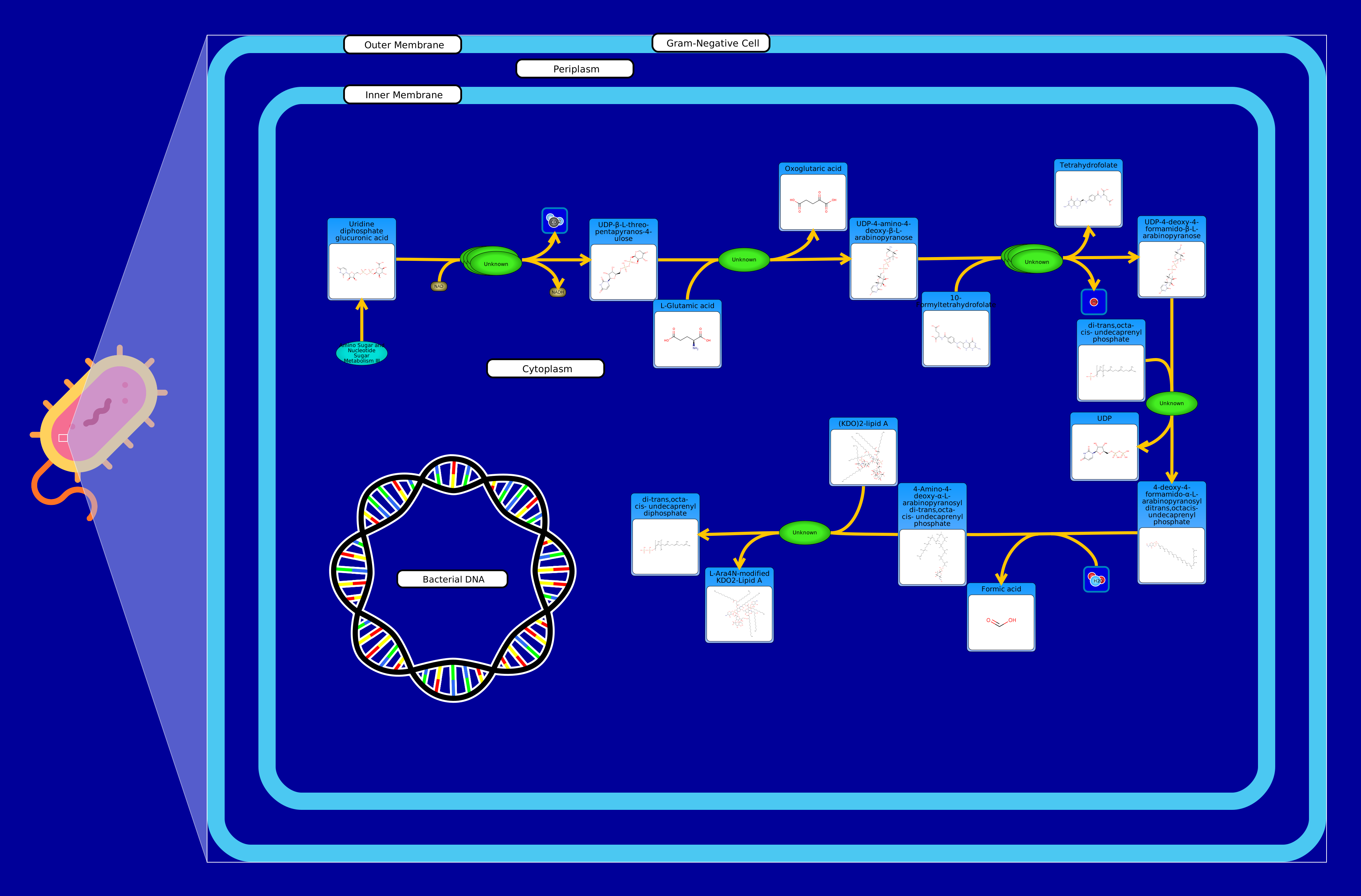 View Pathway
|
Polymyxin ResistanceParabacteroides merdae ATCC 43184
UDP-glucuronic acid compound undergoes a NAD dependent reaction through a bifunctional polymyxin resistance protein to produce UDP-Beta-L-threo-pentapyranos-4-ulose. This compound then reacts with L-glutamic acid through a UDP-4-amino-4-deoxy-L-arabinose--oxoglutarate aminotransferase to produce an oxoglutaric acid and UDP-4-amino-4-deoxy-beta-L-arabinopyranose The latter compound interacts with a N10-formyl-tetrahydrofolate through a bifunctional polymyxin resistance protein ArnA, resulting in a tetrahydrofolate, a hydrogen ion and a UDP-4-deoxy-4-formamido-beta-L-arabinopyranose, which in turn reacts with a product of the methylerythritol phosphate and polysoprenoid biosynthesis pathway, di-trans,octa-cis-undecaprenyl phosphate to produce a 4-deoxy-4-formamido-alpha-L-arabinopyranosyl ditrans, octacis-undecaprenyl phosphate.
The compound 4-deoxy-4-formamido-alpha-L-arabinopyranosyl ditrans, octacis-undecaprenyl phosphate hypothetically reacts with water and results in the release of a formic acid and 4-amino-4-deoxy-α-L-arabinopyranosyl ditrans,octacis-undecaprenyl phosphate which in turn reacts with a KDO2-lipid A through a 4-amino-4-deoxy-L-arabinose transferase resulting in the release of a di-trans,octa-cis-undecaprenyl phosphate and a L-Ara4N-modified KDO2-Lipid A
|
Creator: Julia Wakoli Created On: February 05, 2025 at 00:32 Last Updated: February 05, 2025 at 00:32 |
PW501382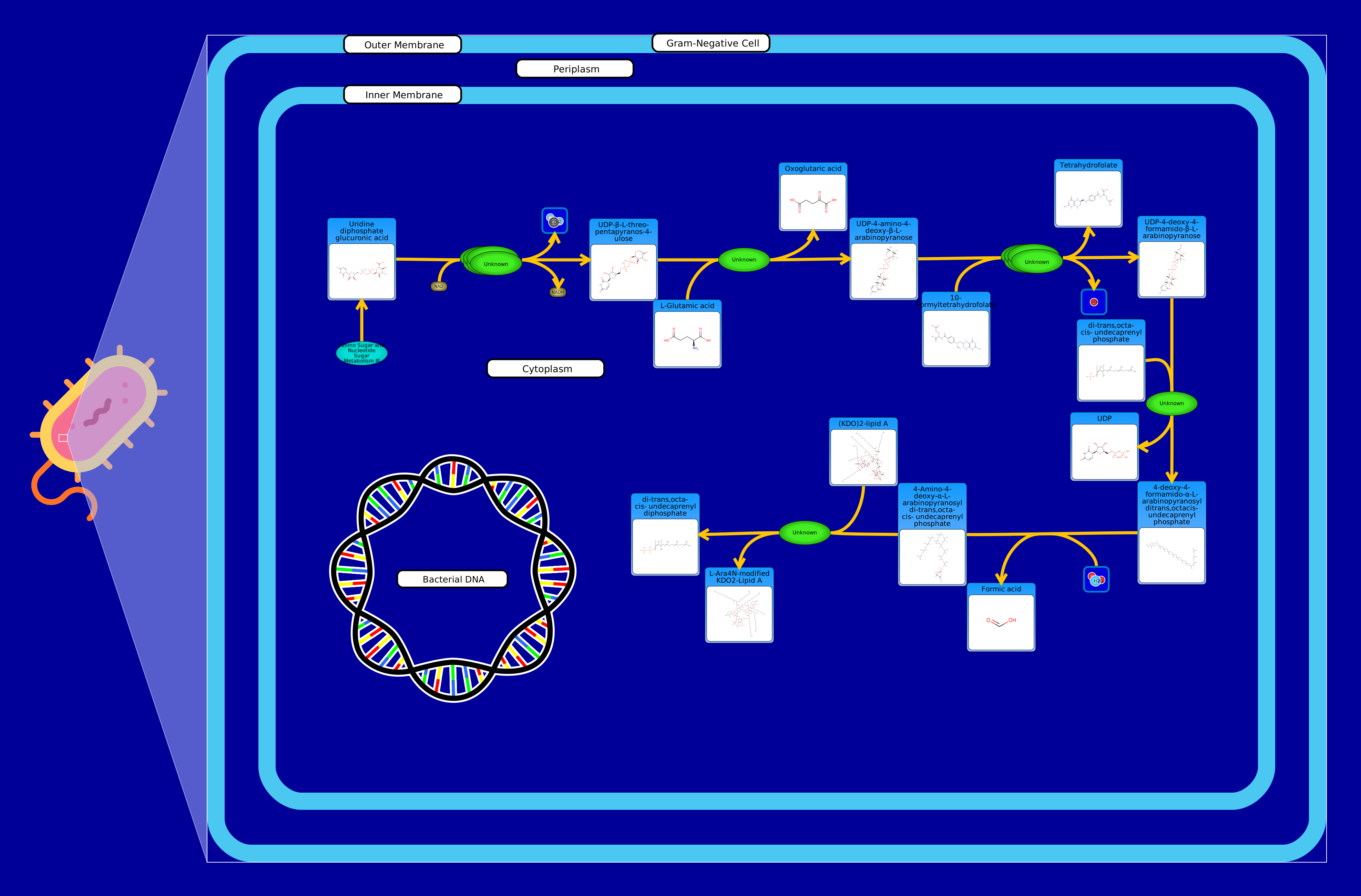 View Pathway
|
Polymyxin ResistanceProteus mirabilis ATCC 29906
UDP-glucuronic acid compound undergoes a NAD dependent reaction through a bifunctional polymyxin resistance protein to produce UDP-Beta-L-threo-pentapyranos-4-ulose. This compound then reacts with L-glutamic acid through a UDP-4-amino-4-deoxy-L-arabinose--oxoglutarate aminotransferase to produce an oxoglutaric acid and UDP-4-amino-4-deoxy-beta-L-arabinopyranose The latter compound interacts with a N10-formyl-tetrahydrofolate through a bifunctional polymyxin resistance protein ArnA, resulting in a tetrahydrofolate, a hydrogen ion and a UDP-4-deoxy-4-formamido-beta-L-arabinopyranose, which in turn reacts with a product of the methylerythritol phosphate and polysoprenoid biosynthesis pathway, di-trans,octa-cis-undecaprenyl phosphate to produce a 4-deoxy-4-formamido-alpha-L-arabinopyranosyl ditrans, octacis-undecaprenyl phosphate.
The compound 4-deoxy-4-formamido-alpha-L-arabinopyranosyl ditrans, octacis-undecaprenyl phosphate hypothetically reacts with water and results in the release of a formic acid and 4-amino-4-deoxy-α-L-arabinopyranosyl ditrans,octacis-undecaprenyl phosphate which in turn reacts with a KDO2-lipid A through a 4-amino-4-deoxy-L-arabinose transferase resulting in the release of a di-trans,octa-cis-undecaprenyl phosphate and a L-Ara4N-modified KDO2-Lipid A
|
Creator: Julia Wakoli Created On: February 05, 2025 at 13:32 Last Updated: February 05, 2025 at 13:32 |
PW501278 View Pathway
|
Polymyxin ResistanceRaoultella planticola
UDP-glucuronic acid compound undergoes a NAD dependent reaction through a bifunctional polymyxin resistance protein to produce UDP-Beta-L-threo-pentapyranos-4-ulose. This compound then reacts with L-glutamic acid through a UDP-4-amino-4-deoxy-L-arabinose--oxoglutarate aminotransferase to produce an oxoglutaric acid and UDP-4-amino-4-deoxy-beta-L-arabinopyranose The latter compound interacts with a N10-formyl-tetrahydrofolate through a bifunctional polymyxin resistance protein ArnA, resulting in a tetrahydrofolate, a hydrogen ion and a UDP-4-deoxy-4-formamido-beta-L-arabinopyranose, which in turn reacts with a product of the methylerythritol phosphate and polysoprenoid biosynthesis pathway, di-trans,octa-cis-undecaprenyl phosphate to produce a 4-deoxy-4-formamido-alpha-L-arabinopyranosyl ditrans, octacis-undecaprenyl phosphate.
The compound 4-deoxy-4-formamido-alpha-L-arabinopyranosyl ditrans, octacis-undecaprenyl phosphate hypothetically reacts with water and results in the release of a formic acid and 4-amino-4-deoxy-α-L-arabinopyranosyl ditrans,octacis-undecaprenyl phosphate which in turn reacts with a KDO2-lipid A through a 4-amino-4-deoxy-L-arabinose transferase resulting in the release of a di-trans,octa-cis-undecaprenyl phosphate and a L-Ara4N-modified KDO2-Lipid A
|
Creator: Julia Wakoli Created On: February 05, 2025 at 12:23 Last Updated: February 05, 2025 at 12:23 |
PW495654 View Pathway
|
Polymyxin ResistanceEscherichia coli (strain K12 / MC4100 / BW2952)
UDP-glucuronic acid compound undergoes a NAD dependent reaction through a bifunctional polymyxin resistance protein to produce UDP-Beta-L-threo-pentapyranos-4-ulose. This compound then reacts with L-glutamic acid through a UDP-4-amino-4-deoxy-L-arabinose--oxoglutarate aminotransferase to produce an oxoglutaric acid and UDP-4-amino-4-deoxy-beta-L-arabinopyranose The latter compound interacts with a N10-formyl-tetrahydrofolate through a bifunctional polymyxin resistance protein ArnA, resulting in a tetrahydrofolate, a hydrogen ion and a UDP-4-deoxy-4-formamido-beta-L-arabinopyranose, which in turn reacts with a product of the methylerythritol phosphate and polysoprenoid biosynthesis pathway, di-trans,octa-cis-undecaprenyl phosphate to produce a 4-deoxy-4-formamido-alpha-L-arabinopyranosyl ditrans, octacis-undecaprenyl phosphate.
The compound 4-deoxy-4-formamido-alpha-L-arabinopyranosyl ditrans, octacis-undecaprenyl phosphate hypothetically reacts with water and results in the release of a formic acid and 4-amino-4-deoxy-α-L-arabinopyranosyl ditrans,octacis-undecaprenyl phosphate which in turn reacts with a KDO2-lipid A through a 4-amino-4-deoxy-L-arabinose transferase resulting in the release of a di-trans,octa-cis-undecaprenyl phosphate and a L-Ara4N-modified KDO2-Lipid A
|
Creator: Julia Wakoli Created On: February 03, 2025 at 13:08 Last Updated: February 03, 2025 at 13:08 |
PW500282 View Pathway
|
Polymyxin ResistanceCapnocytophaga sputigena ATCC 33612
UDP-glucuronic acid compound undergoes a NAD dependent reaction through a bifunctional polymyxin resistance protein to produce UDP-Beta-L-threo-pentapyranos-4-ulose. This compound then reacts with L-glutamic acid through a UDP-4-amino-4-deoxy-L-arabinose--oxoglutarate aminotransferase to produce an oxoglutaric acid and UDP-4-amino-4-deoxy-beta-L-arabinopyranose The latter compound interacts with a N10-formyl-tetrahydrofolate through a bifunctional polymyxin resistance protein ArnA, resulting in a tetrahydrofolate, a hydrogen ion and a UDP-4-deoxy-4-formamido-beta-L-arabinopyranose, which in turn reacts with a product of the methylerythritol phosphate and polysoprenoid biosynthesis pathway, di-trans,octa-cis-undecaprenyl phosphate to produce a 4-deoxy-4-formamido-alpha-L-arabinopyranosyl ditrans, octacis-undecaprenyl phosphate.
The compound 4-deoxy-4-formamido-alpha-L-arabinopyranosyl ditrans, octacis-undecaprenyl phosphate hypothetically reacts with water and results in the release of a formic acid and 4-amino-4-deoxy-α-L-arabinopyranosyl ditrans,octacis-undecaprenyl phosphate which in turn reacts with a KDO2-lipid A through a 4-amino-4-deoxy-L-arabinose transferase resulting in the release of a di-trans,octa-cis-undecaprenyl phosphate and a L-Ara4N-modified KDO2-Lipid A
|
Creator: Julia Wakoli Created On: February 05, 2025 at 02:09 Last Updated: February 05, 2025 at 02:09 |
PW501583 View Pathway
|
Polymyxin ResistanceAcinetobacter junii SH205
UDP-glucuronic acid compound undergoes a NAD dependent reaction through a bifunctional polymyxin resistance protein to produce UDP-Beta-L-threo-pentapyranos-4-ulose. This compound then reacts with L-glutamic acid through a UDP-4-amino-4-deoxy-L-arabinose--oxoglutarate aminotransferase to produce an oxoglutaric acid and UDP-4-amino-4-deoxy-beta-L-arabinopyranose The latter compound interacts with a N10-formyl-tetrahydrofolate through a bifunctional polymyxin resistance protein ArnA, resulting in a tetrahydrofolate, a hydrogen ion and a UDP-4-deoxy-4-formamido-beta-L-arabinopyranose, which in turn reacts with a product of the methylerythritol phosphate and polysoprenoid biosynthesis pathway, di-trans,octa-cis-undecaprenyl phosphate to produce a 4-deoxy-4-formamido-alpha-L-arabinopyranosyl ditrans, octacis-undecaprenyl phosphate.
The compound 4-deoxy-4-formamido-alpha-L-arabinopyranosyl ditrans, octacis-undecaprenyl phosphate hypothetically reacts with water and results in the release of a formic acid and 4-amino-4-deoxy-α-L-arabinopyranosyl ditrans,octacis-undecaprenyl phosphate which in turn reacts with a KDO2-lipid A through a 4-amino-4-deoxy-L-arabinose transferase resulting in the release of a di-trans,octa-cis-undecaprenyl phosphate and a L-Ara4N-modified KDO2-Lipid A
|
Creator: Julia Wakoli Created On: February 05, 2025 at 15:47 Last Updated: February 05, 2025 at 15:47 |
PW496063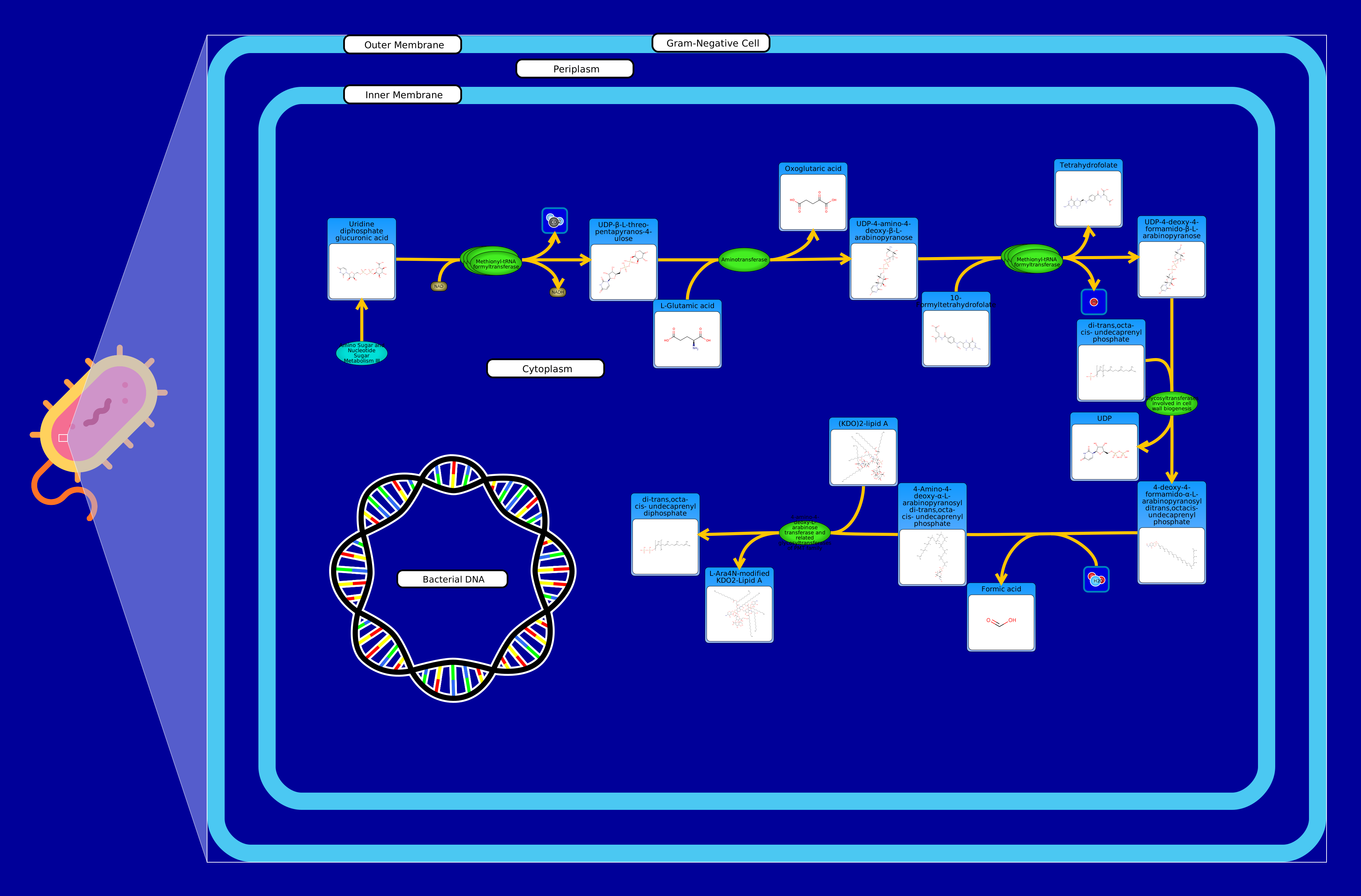 View Pathway
|
Polymyxin ResistanceBacteroides xylanisolvens XB1A
UDP-glucuronic acid compound undergoes a NAD dependent reaction through a bifunctional polymyxin resistance protein to produce UDP-Beta-L-threo-pentapyranos-4-ulose. This compound then reacts with L-glutamic acid through a UDP-4-amino-4-deoxy-L-arabinose--oxoglutarate aminotransferase to produce an oxoglutaric acid and UDP-4-amino-4-deoxy-beta-L-arabinopyranose The latter compound interacts with a N10-formyl-tetrahydrofolate through a bifunctional polymyxin resistance protein ArnA, resulting in a tetrahydrofolate, a hydrogen ion and a UDP-4-deoxy-4-formamido-beta-L-arabinopyranose, which in turn reacts with a product of the methylerythritol phosphate and polysoprenoid biosynthesis pathway, di-trans,octa-cis-undecaprenyl phosphate to produce a 4-deoxy-4-formamido-alpha-L-arabinopyranosyl ditrans, octacis-undecaprenyl phosphate.
The compound 4-deoxy-4-formamido-alpha-L-arabinopyranosyl ditrans, octacis-undecaprenyl phosphate hypothetically reacts with water and results in the release of a formic acid and 4-amino-4-deoxy-α-L-arabinopyranosyl ditrans,octacis-undecaprenyl phosphate which in turn reacts with a KDO2-lipid A through a 4-amino-4-deoxy-L-arabinose transferase resulting in the release of a di-trans,octa-cis-undecaprenyl phosphate and a L-Ara4N-modified KDO2-Lipid A
|
Creator: Julia Wakoli Created On: February 03, 2025 at 17:55 Last Updated: February 03, 2025 at 17:55 |