
| PathWhiz ID | Pathway | Meta Data |
|---|---|---|
PW123828 View Pathway
|
polyolHomo sapiens
|
Creator: Guest: Anonymous Created On: March 03, 2020 at 07:43 Last Updated: March 03, 2020 at 07:43 |
PW123598 View Pathway
|
signaling
PolyP-GrldDictyostelium discoideum
|
Creator: Guest: Anonymous Created On: September 23, 2019 at 09:21 Last Updated: September 23, 2019 at 09:21 |
PW123665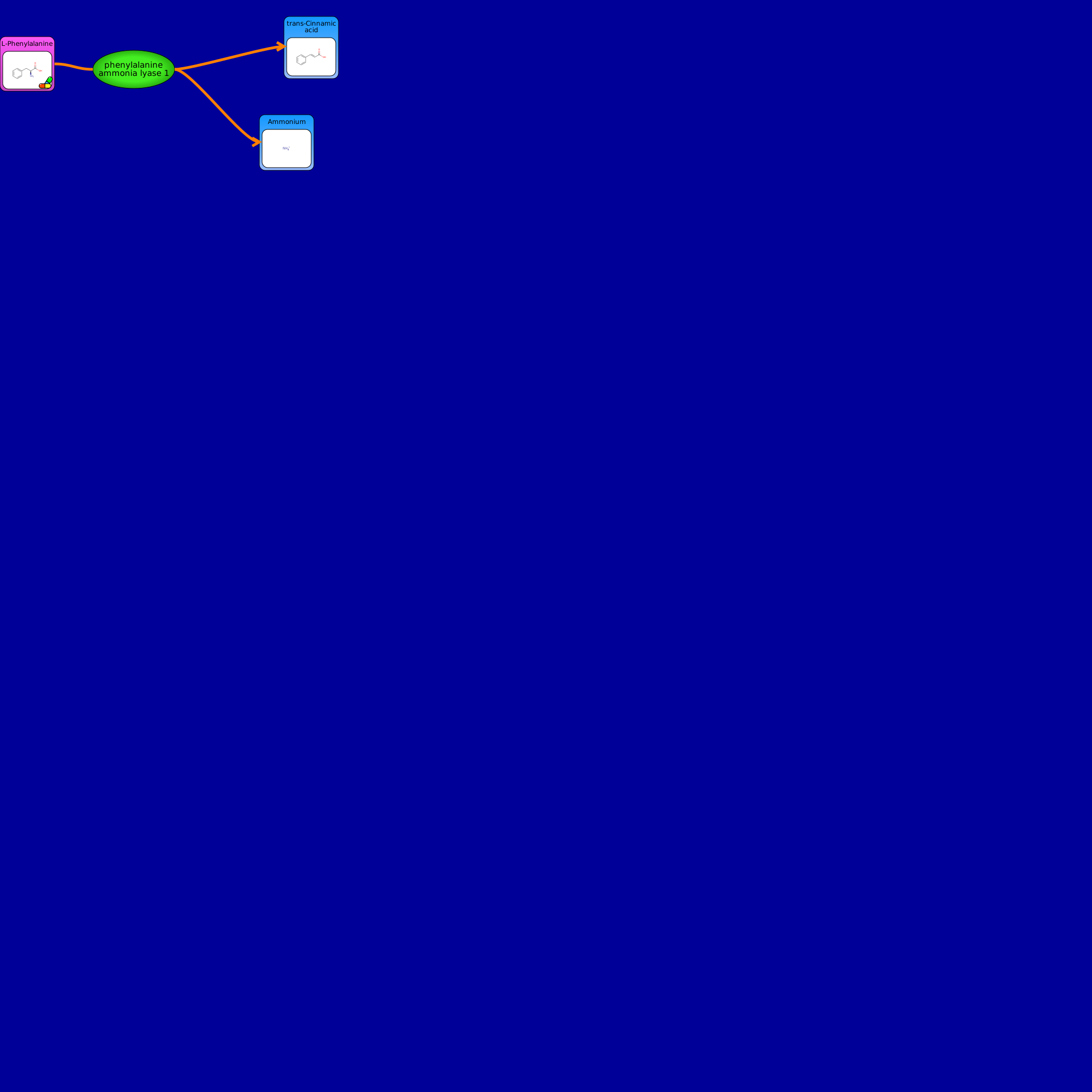 View Pathway
|
polyphenolsArabidopsis thaliana
|
Creator: Guest: Anonymous Created On: December 10, 2019 at 10:13 Last Updated: December 10, 2019 at 10:13 |
PW146366 View Pathway
|
drug action
Polyquaternium-10 (400 cps at 2%) Drug Metabolism Action PathwayHomo sapiens
|
Creator: Ray Kruger Created On: October 07, 2023 at 18:02 Last Updated: October 07, 2023 at 18:02 |
PW146332 View Pathway
|
drug action
Polysilicone-15 Drug Metabolism Action PathwayHomo sapiens
|
Creator: Ray Kruger Created On: October 07, 2023 at 17:57 Last Updated: October 07, 2023 at 17:57 |
PW146282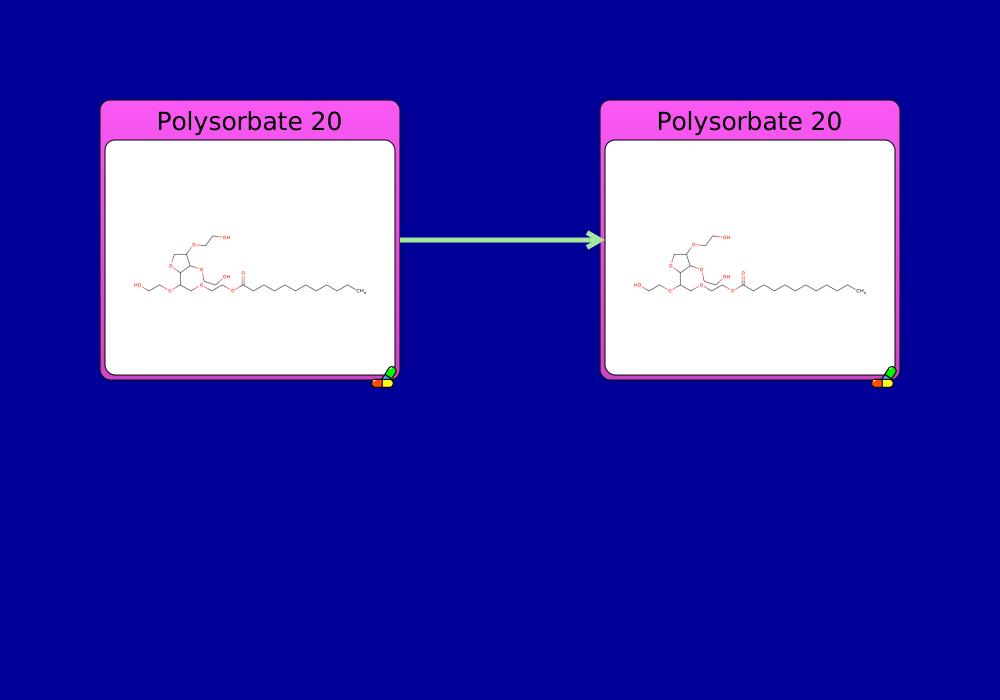 View Pathway
|
drug action
Polysorbate 20 Drug Metabolism Action PathwayHomo sapiens
|
Creator: Ray Kruger Created On: October 07, 2023 at 17:51 Last Updated: October 07, 2023 at 17:51 |
PW146210 View Pathway
|
drug action
Polysorbate 80 Drug Metabolism Action PathwayHomo sapiens
|
Creator: Ray Kruger Created On: October 07, 2023 at 17:41 Last Updated: October 07, 2023 at 17:41 |
PW147019 View Pathway
|
Polystyrene sulfonate Drug Metabolism PathwayHomo sapiens
|
Creator: Ray Kruger Created On: October 10, 2023 at 13:39 Last Updated: October 10, 2023 at 13:39 |
PW000326 View Pathway
|
drug action
Polythiazide Action PathwayHomo sapiens
Polythiazide (also known as Renese or Drenusil) is an organic compound that used for diuretic. It can inhibit the solute carrier family 12 member 3 (also known as sodium-chloride symporter) in the nephron to prevent water reabsorption. Solute carrier family 12 member 3 is also used for sodium reabsorption that count for 5% of total amount. Solute carrier family 12 member 3 transports chloride and sodium from lumen to epithelial cell, and sodium/potassium ATPases facilitate the export of sodium to basolateral interstitium to provide sodium gradient that will increase the osmolarity in interstitium, which lead to establishment of osmotic gradient for water reabsorption.
|
Creator: WishartLab Created On: August 22, 2013 at 10:45 Last Updated: August 22, 2013 at 10:45 |
PW124490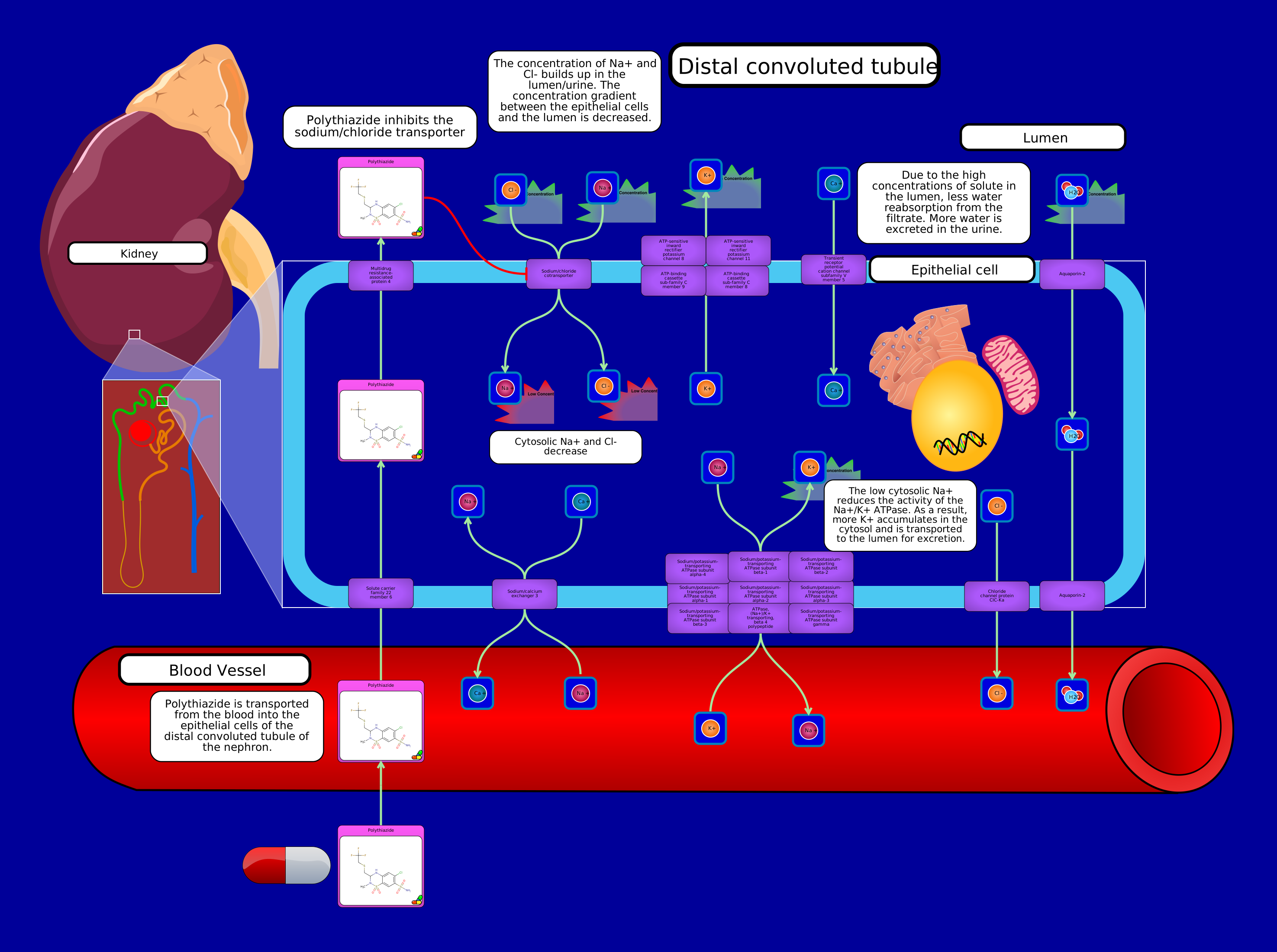 View Pathway
|
drug action
Polythiazide Diuretic Action PathwayHomo sapiens
Polythiazide is an oral diuretic drug that acts in the kidney, specifically in the distal convoluted tubule of the nephron. It is used to decrease edema and decrease blood pressure. In the distal convoluted tubule (DCT), the regulation of ions such as sodium, potassium, calcium, chloride, and magnesium occurs. In epithelial cells of the DCT, the basolateral membrane consists of the Na+/K+ ATPase, which pumps Na+ into the interstitium-blood area and K+ into the epithelial cell; the Na+/Ca2+ exchanger, which pumps Na+ into the cell and Ca2+ into the interstitium-blood; and the chloride transporter which transports chloride into the interstitium-blood. The apical membrane contains a calcium channel that transports calcium from the lumen into the epithelial cell, a potassium channel that transports K+ out of the epithelial cell, and a Na+/Cl- cotransporter which transports Na+ and Cl- into the epithelial cell. Polythiazide targets this Na+/Cl- cotransporter. Polythiazide is transported from the blood into the epithelial cells, then is transported into the urine through the multidrug-resistant associated protein-4. In the lumen, it has access to the Na+/Cl- transporter and inhibits it preventing Na+ reabsorption. The inhibition of Na+ reabsorption results in a low cytosolic concentration of Na+ and increases the solute concentration of the lumen. This decreases the lumen-epithelial cell concentration gradient and as a result, less water would be reabsorbed from the urine. This effect is valued in conditions such as hypertension because it allows more water to be excreted in urine rather than be absorbed in the blood which increases blood volume. Side effects such as low blood sodium/potassium, weight loss, nausea, vomiting, cramping, diarrhea, constipation, dizziness, vertigo, yellowing of skin or eyes (jaundice), numbness and tingling, sensitivity to light, headache, rash, hives, muscle spasm, high blood sugar, weakness or restlessness can occur from taking polythiazide. This drug is administered as an oral tablet.
|
Creator: Karxena Harford Created On: January 29, 2021 at 21:35 Last Updated: January 29, 2021 at 21:35 |