
| PathWhiz ID | Pathway | Meta Data |
|---|---|---|
PW449211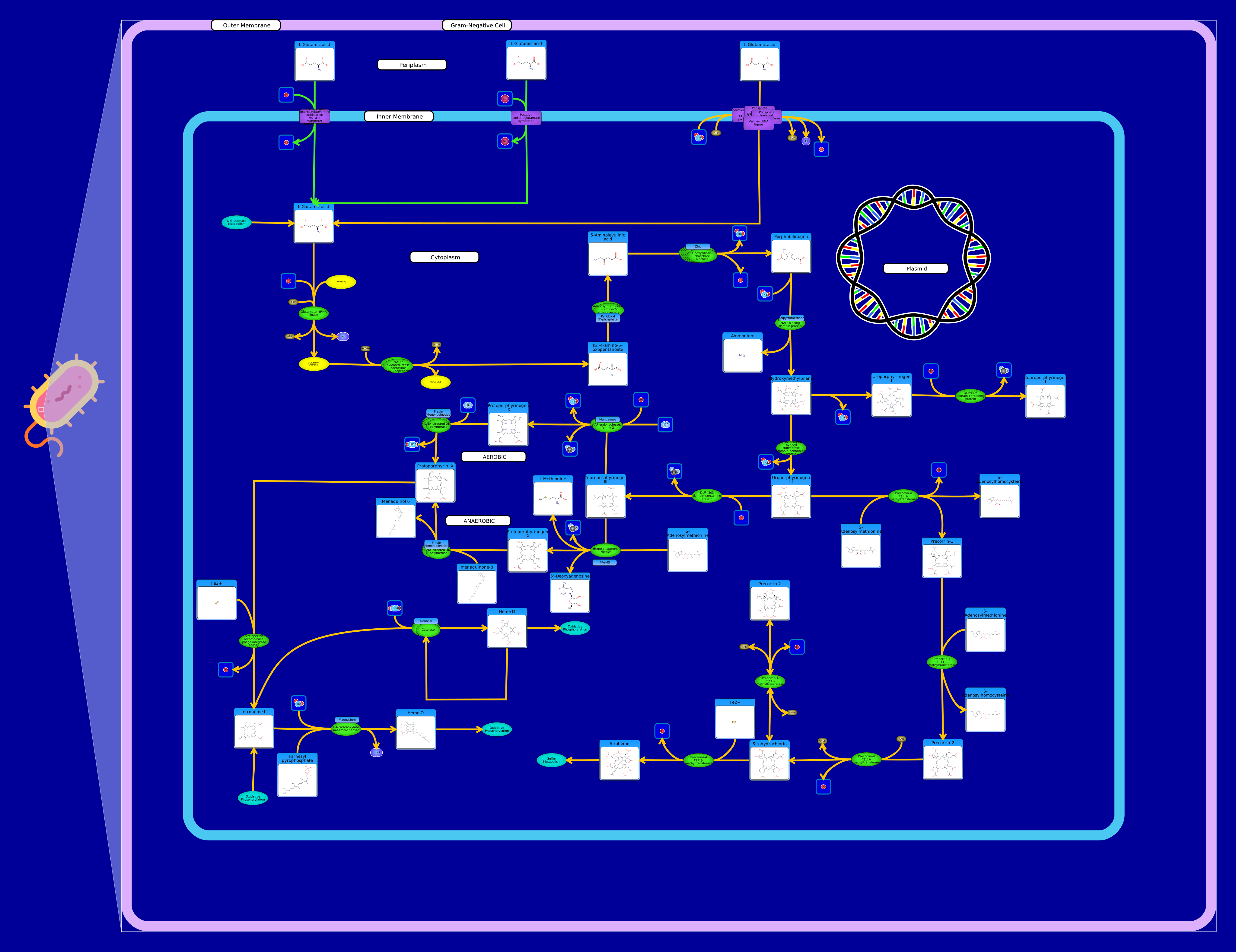 View Pathway
|
Porphyrin MetabolismParabacteroides sp. D13
The metabolism of porphyrin begins with with glutamic acid being processed by an ATP-driven glutamyl-tRNA synthetase by interacting with hydrogen ion and tRNA(Glu), resulting in amo, pyrophosphate and L-glutamyl-tRNA(Glu) Glutamic acid. Glutamic acid can be obtained as a result of L-glutamate metabolism pathway, glutamate / aspartate : H+ symporter GltP, glutamate:sodium symporter or a glutamate / aspartate ABC transporter .
L-glutamyl-tRNA(Glu) Glutamic acid interacts with a NADPH glutamyl-tRNA reductase resulting in a NADP, a tRNA(Glu) and a (S)-4-amino-5-oxopentanoate.
This compound interacts with a glutamate-1-semialdehyde aminotransferase resulting a 5-aminolevulinic acid. This compound interacts with a porphobilinogen synthase resulting in a hydrogen ion, water and porphobilinogen. The latter compound interacts with water resulting in hydroxymethylbilane synthase resulting in ammonium, and hydroxymethylbilane.
Hydroxymethylbilane can either be dehydrated to produce uroporphyrinogen I or interact with a uroporphyrinogen III synthase resulting in a water molecule and a uroporphyrinogen III.
Uroporphyrinogen I interacts with hydrogen ion through a uroporphyrinogen decarboxylase resulting in a carbon dioxide and a coproporphyrinogen I
Uroporphyrinogen III can be metabolized into precorrin by interacting with a S-adenosylmethionine through a siroheme synthase resulting in hydrogen ion, an s-adenosylhomocysteine and a precorrin-1. On the other hand, Uroporphyrinogen III interacts with hydrogen ion through a uroporphyrinogen decarboxylase resulting in a carbon dioxide and a Coproporphyrinogen III.
Precorrin-1 reacts with a S-adenosylmethionine through a siroheme synthase resulting in a S-adenosylhomocysteine and a Precorrin-2. The latter compound is processed by a NAD dependent uroporphyrin III C-methyltransferase [multifunctional] resulting in a NADH and a sirohydrochlorin. This compound then interacts with Fe 2+
uroporphyrin III C-methyltransferase [multifunctional] resulting in a hydrogen ion and a siroheme. The siroheme is then processed in sulfur metabolism pathway.
Uroporphyrinogen III can be processed in anaerobic or aerobic condition.
Anaerobic:
Uroporphyrinogen III interacts with an oxygen molecule, a hydrogen ion through a coproporphyrinogen III oxidase resulting in water, carbon dioxide and protoporphyrinogen IX. The latter compound then interacts with an 3 oxygen molecule through a protoporphyrinogen oxidase resulting in 3 hydrogen peroxide and a Protoporphyrin IX
Aerobic:
Uroporphyrinogen III reacts with S-adenosylmethionine through a coproporphyrinogen III dehydrogenase resulting in carbon dioxide, 5-deoxyadenosine, L-methionine and protoporphyrinogen IX. The latter compound interacts with a meanquinone through a protoporphyrinogen oxidase resulting in protoporphyrin IX.
The protoporphyrin IX interacts with Fe 2+ through a ferrochelatase resulting in a hydrogen ion and a ferroheme b. The ferroheme b can either be incorporated into the oxidative phosphorylation as a cofactor of the enzymes involved in that pathway or it can interact with hydrogen peroxide through a catalase HPII resulting in a heme D. Heme D can then be incorporated into the oxidative phosphyrlation pathway as a cofactor of the enzymes involved in that pathway. Ferroheme b can also interact with water and a farnesyl pyrophosphate through a heme O synthase resulting in a release of pyrophosphate and heme O. Heme O is then incorporated into the Oxidative phosphorylation pathway.
|
Creator: Julia Wakoli Created On: January 13, 2025 at 08:01 Last Updated: January 13, 2025 at 08:01 |
PW449336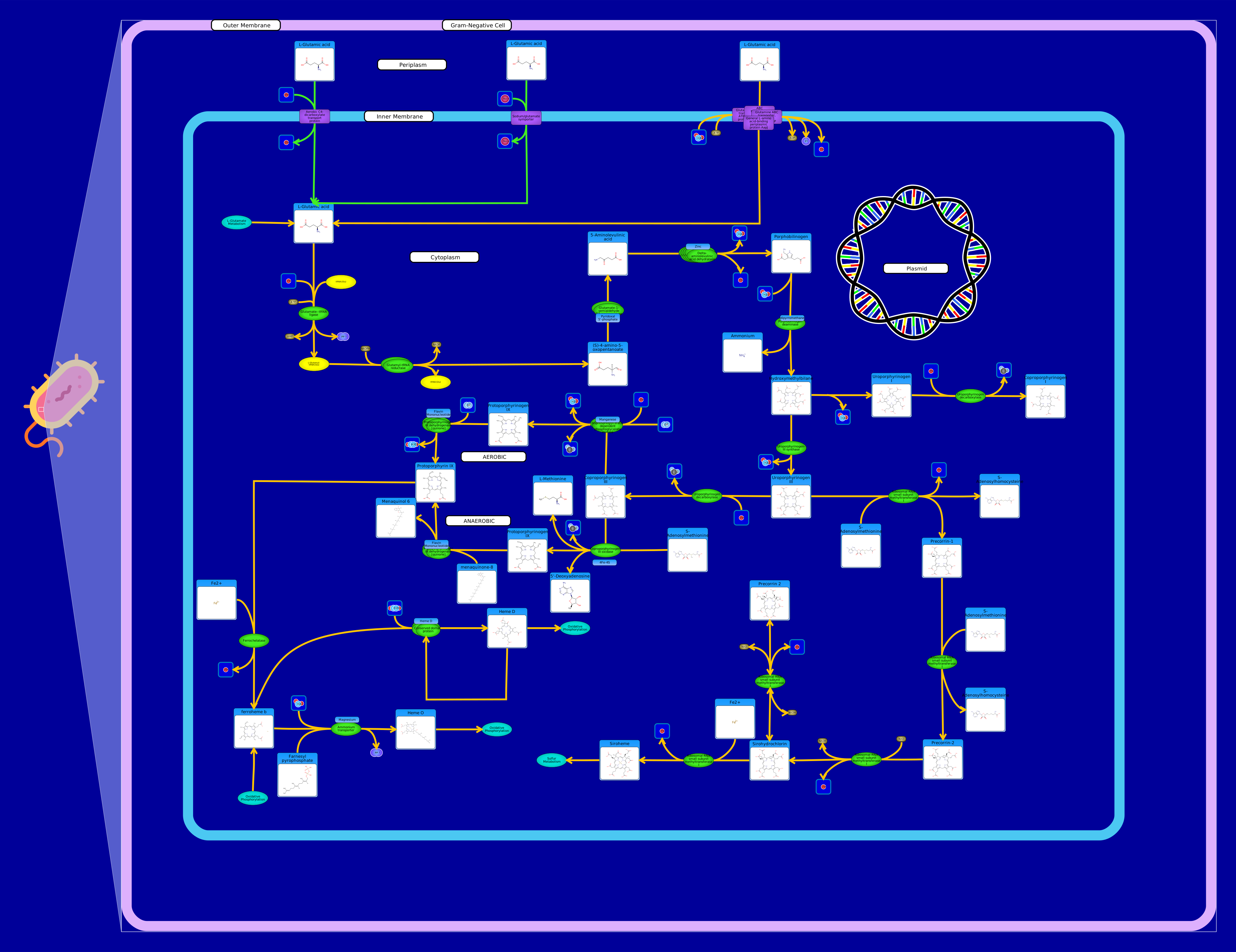 View Pathway
|
Porphyrin MetabolismParasutterella excrementihominis YIT 11859
The metabolism of porphyrin begins with with glutamic acid being processed by an ATP-driven glutamyl-tRNA synthetase by interacting with hydrogen ion and tRNA(Glu), resulting in amo, pyrophosphate and L-glutamyl-tRNA(Glu) Glutamic acid. Glutamic acid can be obtained as a result of L-glutamate metabolism pathway, glutamate / aspartate : H+ symporter GltP, glutamate:sodium symporter or a glutamate / aspartate ABC transporter .
L-glutamyl-tRNA(Glu) Glutamic acid interacts with a NADPH glutamyl-tRNA reductase resulting in a NADP, a tRNA(Glu) and a (S)-4-amino-5-oxopentanoate.
This compound interacts with a glutamate-1-semialdehyde aminotransferase resulting a 5-aminolevulinic acid. This compound interacts with a porphobilinogen synthase resulting in a hydrogen ion, water and porphobilinogen. The latter compound interacts with water resulting in hydroxymethylbilane synthase resulting in ammonium, and hydroxymethylbilane.
Hydroxymethylbilane can either be dehydrated to produce uroporphyrinogen I or interact with a uroporphyrinogen III synthase resulting in a water molecule and a uroporphyrinogen III.
Uroporphyrinogen I interacts with hydrogen ion through a uroporphyrinogen decarboxylase resulting in a carbon dioxide and a coproporphyrinogen I
Uroporphyrinogen III can be metabolized into precorrin by interacting with a S-adenosylmethionine through a siroheme synthase resulting in hydrogen ion, an s-adenosylhomocysteine and a precorrin-1. On the other hand, Uroporphyrinogen III interacts with hydrogen ion through a uroporphyrinogen decarboxylase resulting in a carbon dioxide and a Coproporphyrinogen III.
Precorrin-1 reacts with a S-adenosylmethionine through a siroheme synthase resulting in a S-adenosylhomocysteine and a Precorrin-2. The latter compound is processed by a NAD dependent uroporphyrin III C-methyltransferase [multifunctional] resulting in a NADH and a sirohydrochlorin. This compound then interacts with Fe 2+
uroporphyrin III C-methyltransferase [multifunctional] resulting in a hydrogen ion and a siroheme. The siroheme is then processed in sulfur metabolism pathway.
Uroporphyrinogen III can be processed in anaerobic or aerobic condition.
Anaerobic:
Uroporphyrinogen III interacts with an oxygen molecule, a hydrogen ion through a coproporphyrinogen III oxidase resulting in water, carbon dioxide and protoporphyrinogen IX. The latter compound then interacts with an 3 oxygen molecule through a protoporphyrinogen oxidase resulting in 3 hydrogen peroxide and a Protoporphyrin IX
Aerobic:
Uroporphyrinogen III reacts with S-adenosylmethionine through a coproporphyrinogen III dehydrogenase resulting in carbon dioxide, 5-deoxyadenosine, L-methionine and protoporphyrinogen IX. The latter compound interacts with a meanquinone through a protoporphyrinogen oxidase resulting in protoporphyrin IX.
The protoporphyrin IX interacts with Fe 2+ through a ferrochelatase resulting in a hydrogen ion and a ferroheme b. The ferroheme b can either be incorporated into the oxidative phosphorylation as a cofactor of the enzymes involved in that pathway or it can interact with hydrogen peroxide through a catalase HPII resulting in a heme D. Heme D can then be incorporated into the oxidative phosphyrlation pathway as a cofactor of the enzymes involved in that pathway. Ferroheme b can also interact with water and a farnesyl pyrophosphate through a heme O synthase resulting in a release of pyrophosphate and heme O. Heme O is then incorporated into the Oxidative phosphorylation pathway.
|
Creator: Julia Wakoli Created On: January 13, 2025 at 10:00 Last Updated: January 13, 2025 at 10:00 |
PW449324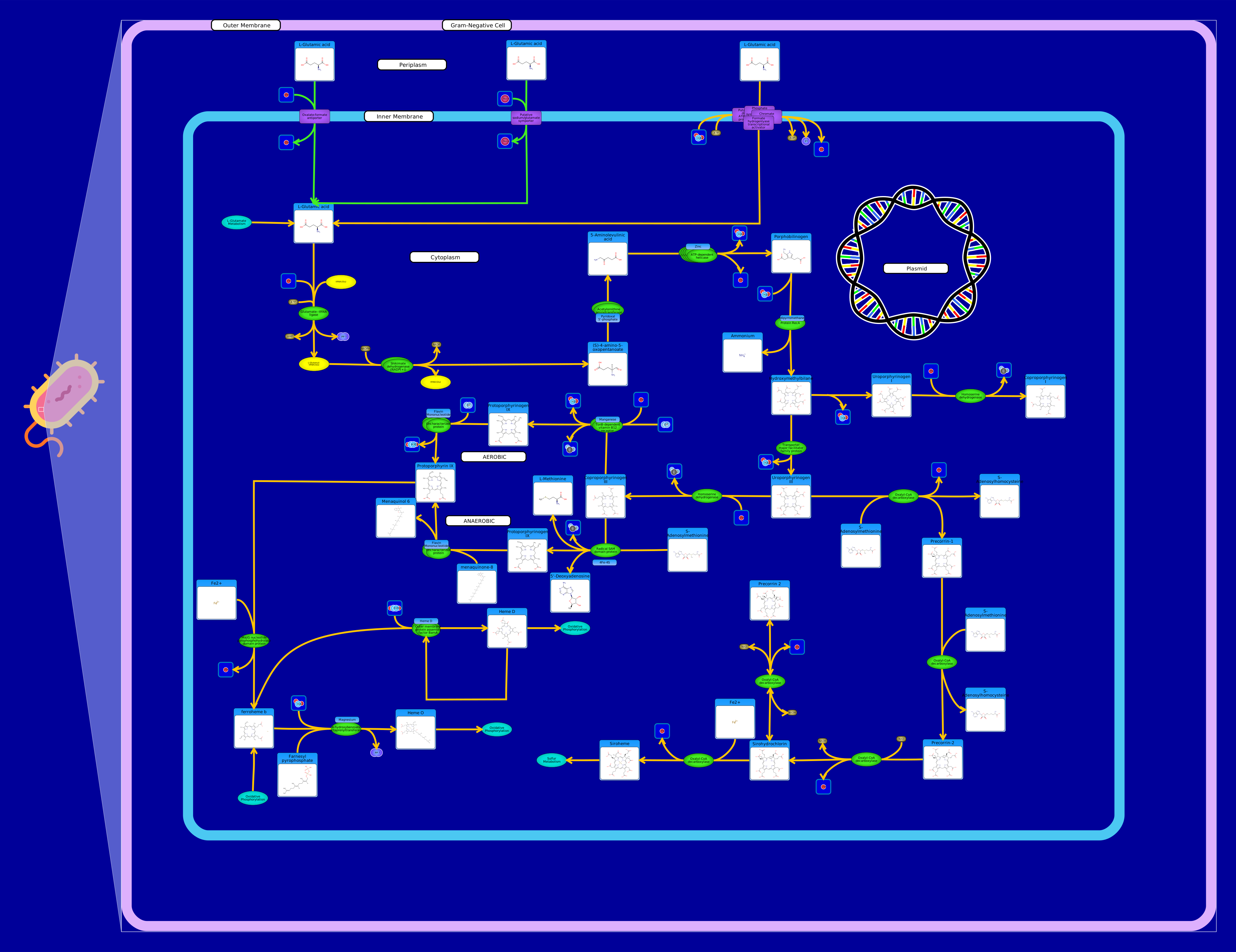 View Pathway
|
Porphyrin MetabolismOxalobacter formigenes OXCC13
The metabolism of porphyrin begins with with glutamic acid being processed by an ATP-driven glutamyl-tRNA synthetase by interacting with hydrogen ion and tRNA(Glu), resulting in amo, pyrophosphate and L-glutamyl-tRNA(Glu) Glutamic acid. Glutamic acid can be obtained as a result of L-glutamate metabolism pathway, glutamate / aspartate : H+ symporter GltP, glutamate:sodium symporter or a glutamate / aspartate ABC transporter .
L-glutamyl-tRNA(Glu) Glutamic acid interacts with a NADPH glutamyl-tRNA reductase resulting in a NADP, a tRNA(Glu) and a (S)-4-amino-5-oxopentanoate.
This compound interacts with a glutamate-1-semialdehyde aminotransferase resulting a 5-aminolevulinic acid. This compound interacts with a porphobilinogen synthase resulting in a hydrogen ion, water and porphobilinogen. The latter compound interacts with water resulting in hydroxymethylbilane synthase resulting in ammonium, and hydroxymethylbilane.
Hydroxymethylbilane can either be dehydrated to produce uroporphyrinogen I or interact with a uroporphyrinogen III synthase resulting in a water molecule and a uroporphyrinogen III.
Uroporphyrinogen I interacts with hydrogen ion through a uroporphyrinogen decarboxylase resulting in a carbon dioxide and a coproporphyrinogen I
Uroporphyrinogen III can be metabolized into precorrin by interacting with a S-adenosylmethionine through a siroheme synthase resulting in hydrogen ion, an s-adenosylhomocysteine and a precorrin-1. On the other hand, Uroporphyrinogen III interacts with hydrogen ion through a uroporphyrinogen decarboxylase resulting in a carbon dioxide and a Coproporphyrinogen III.
Precorrin-1 reacts with a S-adenosylmethionine through a siroheme synthase resulting in a S-adenosylhomocysteine and a Precorrin-2. The latter compound is processed by a NAD dependent uroporphyrin III C-methyltransferase [multifunctional] resulting in a NADH and a sirohydrochlorin. This compound then interacts with Fe 2+
uroporphyrin III C-methyltransferase [multifunctional] resulting in a hydrogen ion and a siroheme. The siroheme is then processed in sulfur metabolism pathway.
Uroporphyrinogen III can be processed in anaerobic or aerobic condition.
Anaerobic:
Uroporphyrinogen III interacts with an oxygen molecule, a hydrogen ion through a coproporphyrinogen III oxidase resulting in water, carbon dioxide and protoporphyrinogen IX. The latter compound then interacts with an 3 oxygen molecule through a protoporphyrinogen oxidase resulting in 3 hydrogen peroxide and a Protoporphyrin IX
Aerobic:
Uroporphyrinogen III reacts with S-adenosylmethionine through a coproporphyrinogen III dehydrogenase resulting in carbon dioxide, 5-deoxyadenosine, L-methionine and protoporphyrinogen IX. The latter compound interacts with a meanquinone through a protoporphyrinogen oxidase resulting in protoporphyrin IX.
The protoporphyrin IX interacts with Fe 2+ through a ferrochelatase resulting in a hydrogen ion and a ferroheme b. The ferroheme b can either be incorporated into the oxidative phosphorylation as a cofactor of the enzymes involved in that pathway or it can interact with hydrogen peroxide through a catalase HPII resulting in a heme D. Heme D can then be incorporated into the oxidative phosphyrlation pathway as a cofactor of the enzymes involved in that pathway. Ferroheme b can also interact with water and a farnesyl pyrophosphate through a heme O synthase resulting in a release of pyrophosphate and heme O. Heme O is then incorporated into the Oxidative phosphorylation pathway.
|
Creator: Julia Wakoli Created On: January 13, 2025 at 09:47 Last Updated: January 13, 2025 at 09:47 |
PW449350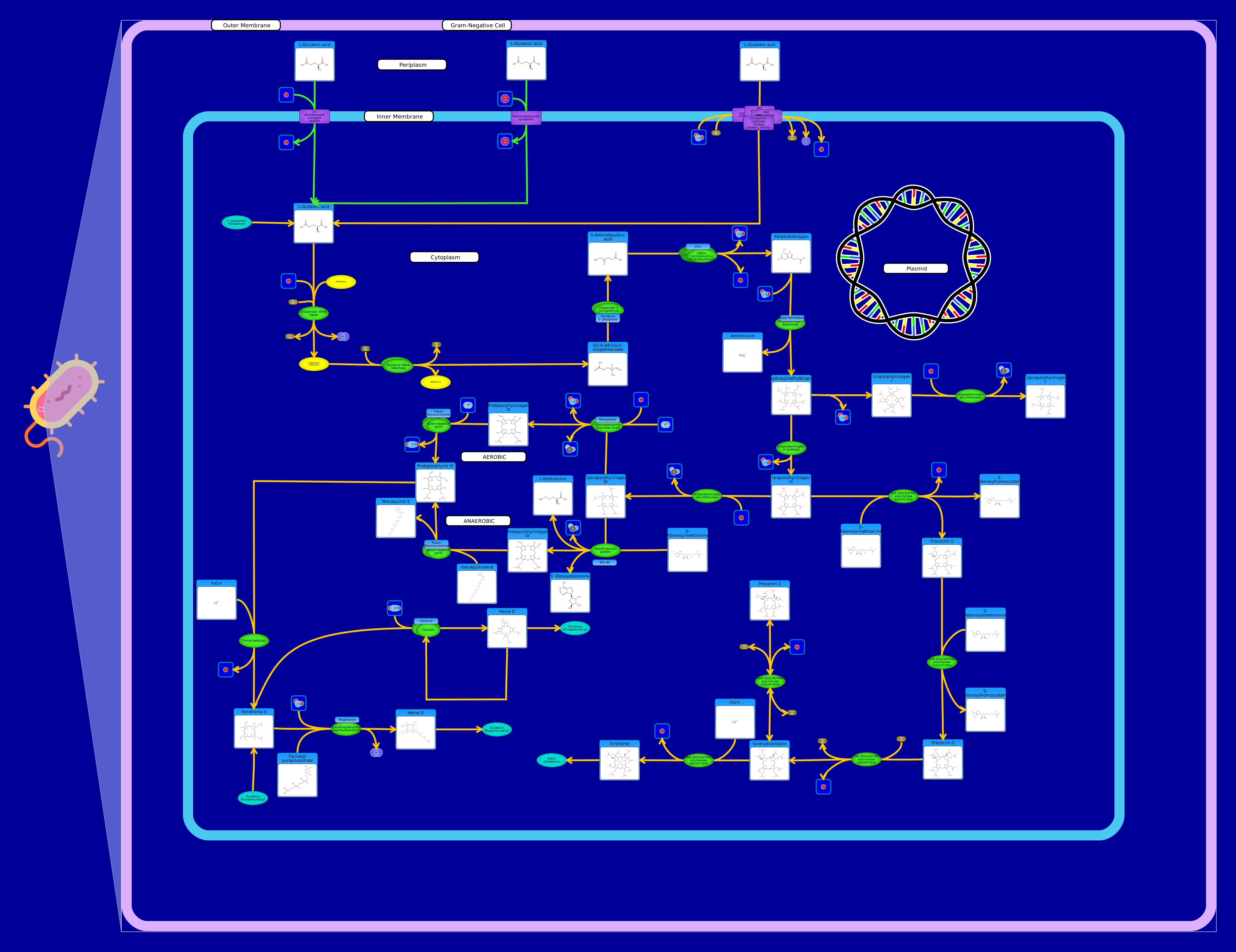 View Pathway
|
Porphyrin MetabolismNeisseria cinerea ATCC 14685
The metabolism of porphyrin begins with with glutamic acid being processed by an ATP-driven glutamyl-tRNA synthetase by interacting with hydrogen ion and tRNA(Glu), resulting in amo, pyrophosphate and L-glutamyl-tRNA(Glu) Glutamic acid. Glutamic acid can be obtained as a result of L-glutamate metabolism pathway, glutamate / aspartate : H+ symporter GltP, glutamate:sodium symporter or a glutamate / aspartate ABC transporter .
L-glutamyl-tRNA(Glu) Glutamic acid interacts with a NADPH glutamyl-tRNA reductase resulting in a NADP, a tRNA(Glu) and a (S)-4-amino-5-oxopentanoate.
This compound interacts with a glutamate-1-semialdehyde aminotransferase resulting a 5-aminolevulinic acid. This compound interacts with a porphobilinogen synthase resulting in a hydrogen ion, water and porphobilinogen. The latter compound interacts with water resulting in hydroxymethylbilane synthase resulting in ammonium, and hydroxymethylbilane.
Hydroxymethylbilane can either be dehydrated to produce uroporphyrinogen I or interact with a uroporphyrinogen III synthase resulting in a water molecule and a uroporphyrinogen III.
Uroporphyrinogen I interacts with hydrogen ion through a uroporphyrinogen decarboxylase resulting in a carbon dioxide and a coproporphyrinogen I
Uroporphyrinogen III can be metabolized into precorrin by interacting with a S-adenosylmethionine through a siroheme synthase resulting in hydrogen ion, an s-adenosylhomocysteine and a precorrin-1. On the other hand, Uroporphyrinogen III interacts with hydrogen ion through a uroporphyrinogen decarboxylase resulting in a carbon dioxide and a Coproporphyrinogen III.
Precorrin-1 reacts with a S-adenosylmethionine through a siroheme synthase resulting in a S-adenosylhomocysteine and a Precorrin-2. The latter compound is processed by a NAD dependent uroporphyrin III C-methyltransferase [multifunctional] resulting in a NADH and a sirohydrochlorin. This compound then interacts with Fe 2+
uroporphyrin III C-methyltransferase [multifunctional] resulting in a hydrogen ion and a siroheme. The siroheme is then processed in sulfur metabolism pathway.
Uroporphyrinogen III can be processed in anaerobic or aerobic condition.
Anaerobic:
Uroporphyrinogen III interacts with an oxygen molecule, a hydrogen ion through a coproporphyrinogen III oxidase resulting in water, carbon dioxide and protoporphyrinogen IX. The latter compound then interacts with an 3 oxygen molecule through a protoporphyrinogen oxidase resulting in 3 hydrogen peroxide and a Protoporphyrin IX
Aerobic:
Uroporphyrinogen III reacts with S-adenosylmethionine through a coproporphyrinogen III dehydrogenase resulting in carbon dioxide, 5-deoxyadenosine, L-methionine and protoporphyrinogen IX. The latter compound interacts with a meanquinone through a protoporphyrinogen oxidase resulting in protoporphyrin IX.
The protoporphyrin IX interacts with Fe 2+ through a ferrochelatase resulting in a hydrogen ion and a ferroheme b. The ferroheme b can either be incorporated into the oxidative phosphorylation as a cofactor of the enzymes involved in that pathway or it can interact with hydrogen peroxide through a catalase HPII resulting in a heme D. Heme D can then be incorporated into the oxidative phosphyrlation pathway as a cofactor of the enzymes involved in that pathway. Ferroheme b can also interact with water and a farnesyl pyrophosphate through a heme O synthase resulting in a release of pyrophosphate and heme O. Heme O is then incorporated into the Oxidative phosphorylation pathway.
|
Creator: Julia Wakoli Created On: January 13, 2025 at 10:15 Last Updated: January 13, 2025 at 10:15 |
PW449418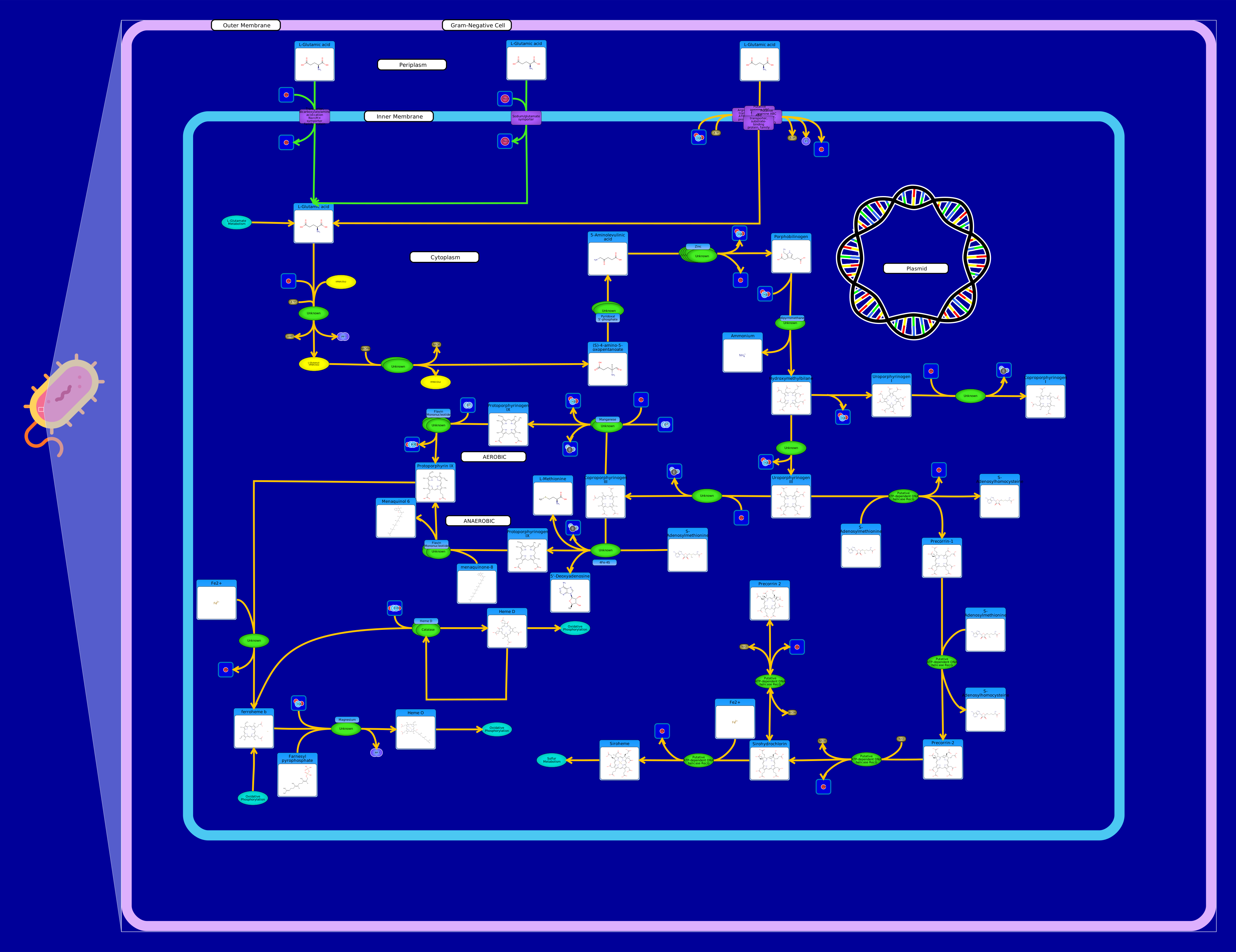 View Pathway
|
Porphyrin MetabolismHelicobacter pullorum MIT 98-5489
The metabolism of porphyrin begins with with glutamic acid being processed by an ATP-driven glutamyl-tRNA synthetase by interacting with hydrogen ion and tRNA(Glu), resulting in amo, pyrophosphate and L-glutamyl-tRNA(Glu) Glutamic acid. Glutamic acid can be obtained as a result of L-glutamate metabolism pathway, glutamate / aspartate : H+ symporter GltP, glutamate:sodium symporter or a glutamate / aspartate ABC transporter .
L-glutamyl-tRNA(Glu) Glutamic acid interacts with a NADPH glutamyl-tRNA reductase resulting in a NADP, a tRNA(Glu) and a (S)-4-amino-5-oxopentanoate.
This compound interacts with a glutamate-1-semialdehyde aminotransferase resulting a 5-aminolevulinic acid. This compound interacts with a porphobilinogen synthase resulting in a hydrogen ion, water and porphobilinogen. The latter compound interacts with water resulting in hydroxymethylbilane synthase resulting in ammonium, and hydroxymethylbilane.
Hydroxymethylbilane can either be dehydrated to produce uroporphyrinogen I or interact with a uroporphyrinogen III synthase resulting in a water molecule and a uroporphyrinogen III.
Uroporphyrinogen I interacts with hydrogen ion through a uroporphyrinogen decarboxylase resulting in a carbon dioxide and a coproporphyrinogen I
Uroporphyrinogen III can be metabolized into precorrin by interacting with a S-adenosylmethionine through a siroheme synthase resulting in hydrogen ion, an s-adenosylhomocysteine and a precorrin-1. On the other hand, Uroporphyrinogen III interacts with hydrogen ion through a uroporphyrinogen decarboxylase resulting in a carbon dioxide and a Coproporphyrinogen III.
Precorrin-1 reacts with a S-adenosylmethionine through a siroheme synthase resulting in a S-adenosylhomocysteine and a Precorrin-2. The latter compound is processed by a NAD dependent uroporphyrin III C-methyltransferase [multifunctional] resulting in a NADH and a sirohydrochlorin. This compound then interacts with Fe 2+
uroporphyrin III C-methyltransferase [multifunctional] resulting in a hydrogen ion and a siroheme. The siroheme is then processed in sulfur metabolism pathway.
Uroporphyrinogen III can be processed in anaerobic or aerobic condition.
Anaerobic:
Uroporphyrinogen III interacts with an oxygen molecule, a hydrogen ion through a coproporphyrinogen III oxidase resulting in water, carbon dioxide and protoporphyrinogen IX. The latter compound then interacts with an 3 oxygen molecule through a protoporphyrinogen oxidase resulting in 3 hydrogen peroxide and a Protoporphyrin IX
Aerobic:
Uroporphyrinogen III reacts with S-adenosylmethionine through a coproporphyrinogen III dehydrogenase resulting in carbon dioxide, 5-deoxyadenosine, L-methionine and protoporphyrinogen IX. The latter compound interacts with a meanquinone through a protoporphyrinogen oxidase resulting in protoporphyrin IX.
The protoporphyrin IX interacts with Fe 2+ through a ferrochelatase resulting in a hydrogen ion and a ferroheme b. The ferroheme b can either be incorporated into the oxidative phosphorylation as a cofactor of the enzymes involved in that pathway or it can interact with hydrogen peroxide through a catalase HPII resulting in a heme D. Heme D can then be incorporated into the oxidative phosphyrlation pathway as a cofactor of the enzymes involved in that pathway. Ferroheme b can also interact with water and a farnesyl pyrophosphate through a heme O synthase resulting in a release of pyrophosphate and heme O. Heme O is then incorporated into the Oxidative phosphorylation pathway.
|
Creator: Julia Wakoli Created On: January 13, 2025 at 11:29 Last Updated: January 13, 2025 at 11:29 |
PW449300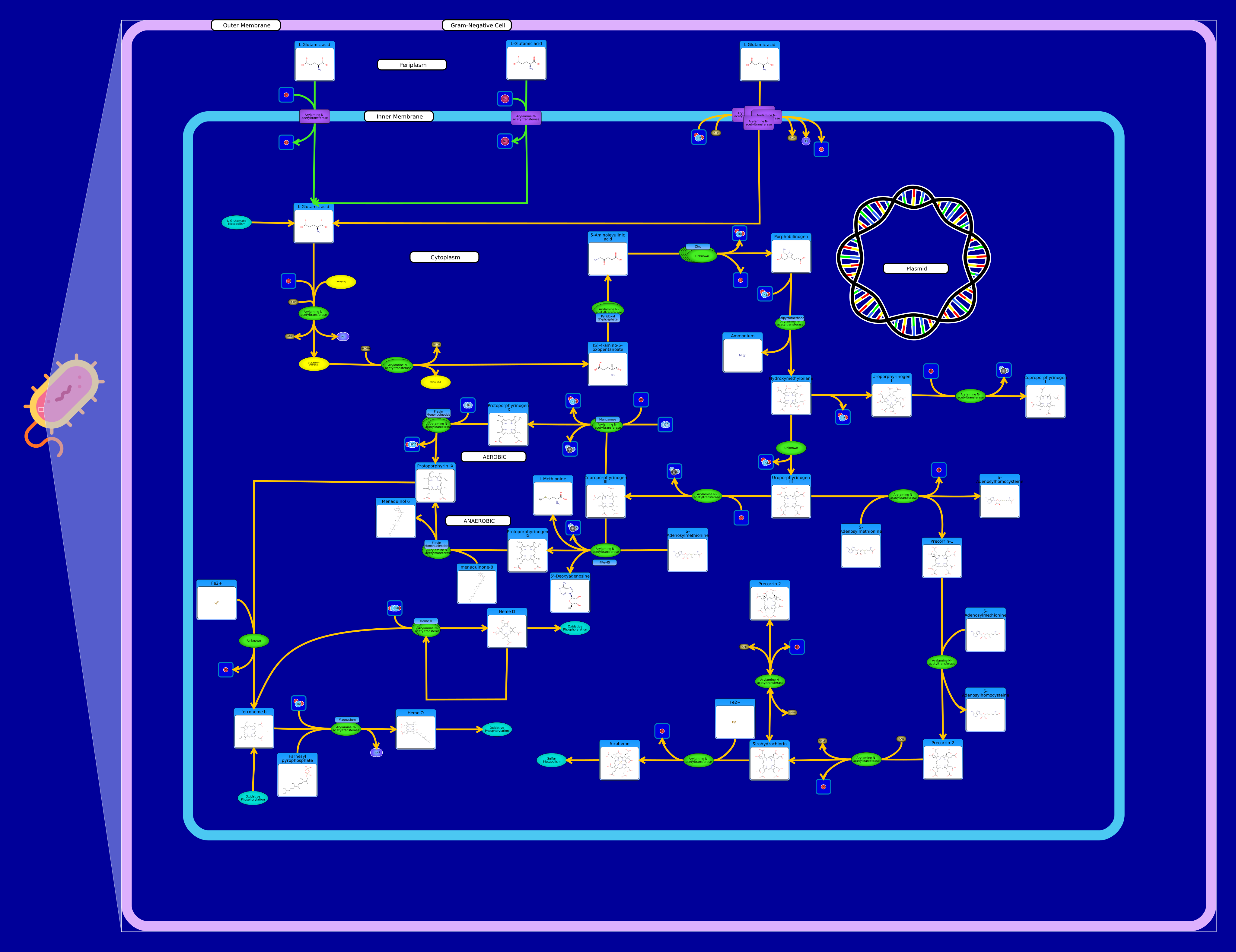 View Pathway
|
Porphyrin MetabolismAfipia birgiae 34632
The metabolism of porphyrin begins with with glutamic acid being processed by an ATP-driven glutamyl-tRNA synthetase by interacting with hydrogen ion and tRNA(Glu), resulting in amo, pyrophosphate and L-glutamyl-tRNA(Glu) Glutamic acid. Glutamic acid can be obtained as a result of L-glutamate metabolism pathway, glutamate / aspartate : H+ symporter GltP, glutamate:sodium symporter or a glutamate / aspartate ABC transporter .
L-glutamyl-tRNA(Glu) Glutamic acid interacts with a NADPH glutamyl-tRNA reductase resulting in a NADP, a tRNA(Glu) and a (S)-4-amino-5-oxopentanoate.
This compound interacts with a glutamate-1-semialdehyde aminotransferase resulting a 5-aminolevulinic acid. This compound interacts with a porphobilinogen synthase resulting in a hydrogen ion, water and porphobilinogen. The latter compound interacts with water resulting in hydroxymethylbilane synthase resulting in ammonium, and hydroxymethylbilane.
Hydroxymethylbilane can either be dehydrated to produce uroporphyrinogen I or interact with a uroporphyrinogen III synthase resulting in a water molecule and a uroporphyrinogen III.
Uroporphyrinogen I interacts with hydrogen ion through a uroporphyrinogen decarboxylase resulting in a carbon dioxide and a coproporphyrinogen I
Uroporphyrinogen III can be metabolized into precorrin by interacting with a S-adenosylmethionine through a siroheme synthase resulting in hydrogen ion, an s-adenosylhomocysteine and a precorrin-1. On the other hand, Uroporphyrinogen III interacts with hydrogen ion through a uroporphyrinogen decarboxylase resulting in a carbon dioxide and a Coproporphyrinogen III.
Precorrin-1 reacts with a S-adenosylmethionine through a siroheme synthase resulting in a S-adenosylhomocysteine and a Precorrin-2. The latter compound is processed by a NAD dependent uroporphyrin III C-methyltransferase [multifunctional] resulting in a NADH and a sirohydrochlorin. This compound then interacts with Fe 2+
uroporphyrin III C-methyltransferase [multifunctional] resulting in a hydrogen ion and a siroheme. The siroheme is then processed in sulfur metabolism pathway.
Uroporphyrinogen III can be processed in anaerobic or aerobic condition.
Anaerobic:
Uroporphyrinogen III interacts with an oxygen molecule, a hydrogen ion through a coproporphyrinogen III oxidase resulting in water, carbon dioxide and protoporphyrinogen IX. The latter compound then interacts with an 3 oxygen molecule through a protoporphyrinogen oxidase resulting in 3 hydrogen peroxide and a Protoporphyrin IX
Aerobic:
Uroporphyrinogen III reacts with S-adenosylmethionine through a coproporphyrinogen III dehydrogenase resulting in carbon dioxide, 5-deoxyadenosine, L-methionine and protoporphyrinogen IX. The latter compound interacts with a meanquinone through a protoporphyrinogen oxidase resulting in protoporphyrin IX.
The protoporphyrin IX interacts with Fe 2+ through a ferrochelatase resulting in a hydrogen ion and a ferroheme b. The ferroheme b can either be incorporated into the oxidative phosphorylation as a cofactor of the enzymes involved in that pathway or it can interact with hydrogen peroxide through a catalase HPII resulting in a heme D. Heme D can then be incorporated into the oxidative phosphyrlation pathway as a cofactor of the enzymes involved in that pathway. Ferroheme b can also interact with water and a farnesyl pyrophosphate through a heme O synthase resulting in a release of pyrophosphate and heme O. Heme O is then incorporated into the Oxidative phosphorylation pathway.
|
Creator: Julia Wakoli Created On: January 13, 2025 at 09:23 Last Updated: January 13, 2025 at 09:23 |
PW449533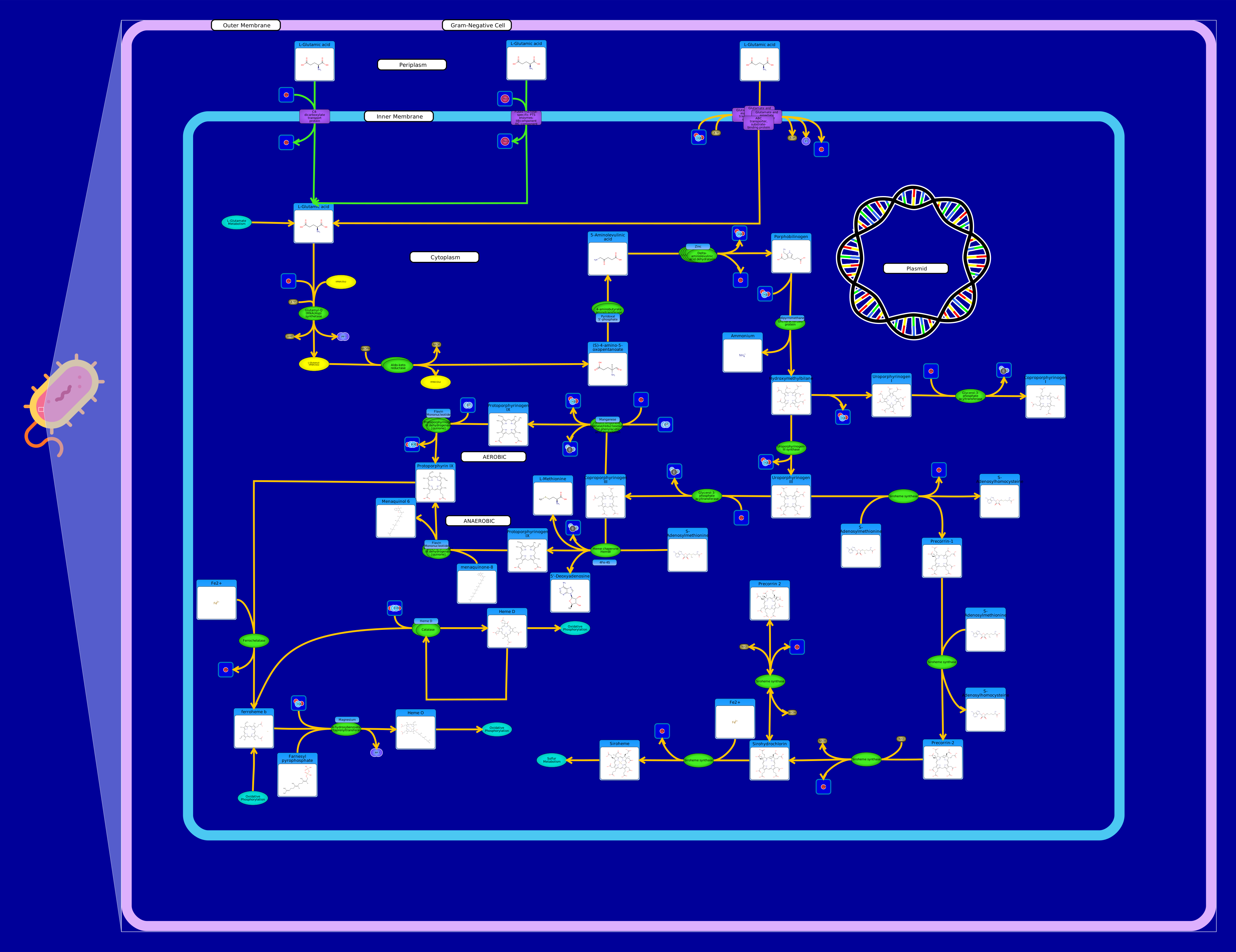 View Pathway
|
Porphyrin MetabolismSerratia marcescens subsp. marcescens Db11
The metabolism of porphyrin begins with with glutamic acid being processed by an ATP-driven glutamyl-tRNA synthetase by interacting with hydrogen ion and tRNA(Glu), resulting in amo, pyrophosphate and L-glutamyl-tRNA(Glu) Glutamic acid. Glutamic acid can be obtained as a result of L-glutamate metabolism pathway, glutamate / aspartate : H+ symporter GltP, glutamate:sodium symporter or a glutamate / aspartate ABC transporter .
L-glutamyl-tRNA(Glu) Glutamic acid interacts with a NADPH glutamyl-tRNA reductase resulting in a NADP, a tRNA(Glu) and a (S)-4-amino-5-oxopentanoate.
This compound interacts with a glutamate-1-semialdehyde aminotransferase resulting a 5-aminolevulinic acid. This compound interacts with a porphobilinogen synthase resulting in a hydrogen ion, water and porphobilinogen. The latter compound interacts with water resulting in hydroxymethylbilane synthase resulting in ammonium, and hydroxymethylbilane.
Hydroxymethylbilane can either be dehydrated to produce uroporphyrinogen I or interact with a uroporphyrinogen III synthase resulting in a water molecule and a uroporphyrinogen III.
Uroporphyrinogen I interacts with hydrogen ion through a uroporphyrinogen decarboxylase resulting in a carbon dioxide and a coproporphyrinogen I
Uroporphyrinogen III can be metabolized into precorrin by interacting with a S-adenosylmethionine through a siroheme synthase resulting in hydrogen ion, an s-adenosylhomocysteine and a precorrin-1. On the other hand, Uroporphyrinogen III interacts with hydrogen ion through a uroporphyrinogen decarboxylase resulting in a carbon dioxide and a Coproporphyrinogen III.
Precorrin-1 reacts with a S-adenosylmethionine through a siroheme synthase resulting in a S-adenosylhomocysteine and a Precorrin-2. The latter compound is processed by a NAD dependent uroporphyrin III C-methyltransferase [multifunctional] resulting in a NADH and a sirohydrochlorin. This compound then interacts with Fe 2+
uroporphyrin III C-methyltransferase [multifunctional] resulting in a hydrogen ion and a siroheme. The siroheme is then processed in sulfur metabolism pathway.
Uroporphyrinogen III can be processed in anaerobic or aerobic condition.
Anaerobic:
Uroporphyrinogen III interacts with an oxygen molecule, a hydrogen ion through a coproporphyrinogen III oxidase resulting in water, carbon dioxide and protoporphyrinogen IX. The latter compound then interacts with an 3 oxygen molecule through a protoporphyrinogen oxidase resulting in 3 hydrogen peroxide and a Protoporphyrin IX
Aerobic:
Uroporphyrinogen III reacts with S-adenosylmethionine through a coproporphyrinogen III dehydrogenase resulting in carbon dioxide, 5-deoxyadenosine, L-methionine and protoporphyrinogen IX. The latter compound interacts with a meanquinone through a protoporphyrinogen oxidase resulting in protoporphyrin IX.
The protoporphyrin IX interacts with Fe 2+ through a ferrochelatase resulting in a hydrogen ion and a ferroheme b. The ferroheme b can either be incorporated into the oxidative phosphorylation as a cofactor of the enzymes involved in that pathway or it can interact with hydrogen peroxide through a catalase HPII resulting in a heme D. Heme D can then be incorporated into the oxidative phosphyrlation pathway as a cofactor of the enzymes involved in that pathway. Ferroheme b can also interact with water and a farnesyl pyrophosphate through a heme O synthase resulting in a release of pyrophosphate and heme O. Heme O is then incorporated into the Oxidative phosphorylation pathway.
|
Creator: Julia Wakoli Created On: January 13, 2025 at 13:35 Last Updated: January 13, 2025 at 13:35 |
PW449622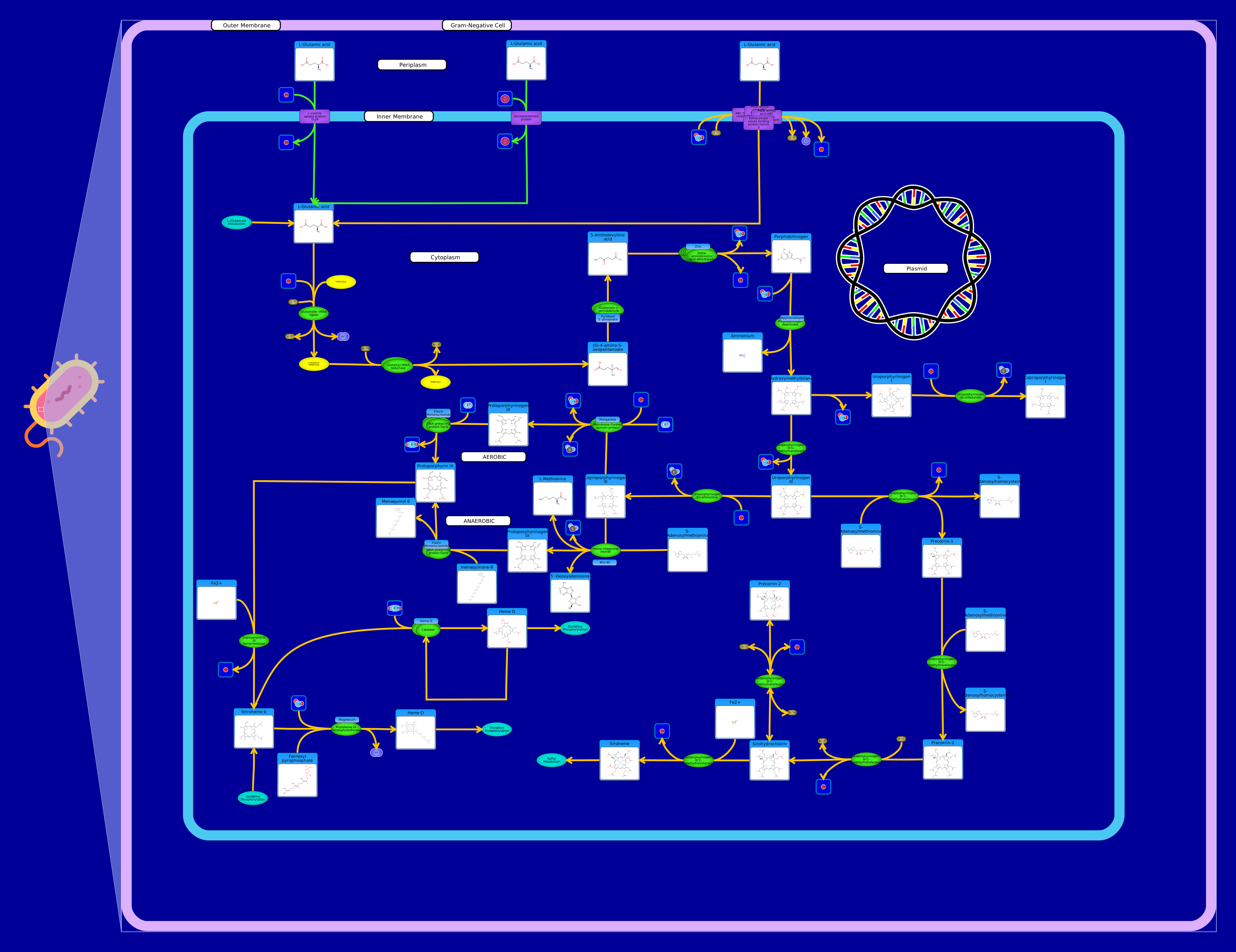 View Pathway
|
Porphyrin MetabolismPaenibacillus lactis 154
The metabolism of porphyrin begins with with glutamic acid being processed by an ATP-driven glutamyl-tRNA synthetase by interacting with hydrogen ion and tRNA(Glu), resulting in amo, pyrophosphate and L-glutamyl-tRNA(Glu) Glutamic acid. Glutamic acid can be obtained as a result of L-glutamate metabolism pathway, glutamate / aspartate : H+ symporter GltP, glutamate:sodium symporter or a glutamate / aspartate ABC transporter .
L-glutamyl-tRNA(Glu) Glutamic acid interacts with a NADPH glutamyl-tRNA reductase resulting in a NADP, a tRNA(Glu) and a (S)-4-amino-5-oxopentanoate.
This compound interacts with a glutamate-1-semialdehyde aminotransferase resulting a 5-aminolevulinic acid. This compound interacts with a porphobilinogen synthase resulting in a hydrogen ion, water and porphobilinogen. The latter compound interacts with water resulting in hydroxymethylbilane synthase resulting in ammonium, and hydroxymethylbilane.
Hydroxymethylbilane can either be dehydrated to produce uroporphyrinogen I or interact with a uroporphyrinogen III synthase resulting in a water molecule and a uroporphyrinogen III.
Uroporphyrinogen I interacts with hydrogen ion through a uroporphyrinogen decarboxylase resulting in a carbon dioxide and a coproporphyrinogen I
Uroporphyrinogen III can be metabolized into precorrin by interacting with a S-adenosylmethionine through a siroheme synthase resulting in hydrogen ion, an s-adenosylhomocysteine and a precorrin-1. On the other hand, Uroporphyrinogen III interacts with hydrogen ion through a uroporphyrinogen decarboxylase resulting in a carbon dioxide and a Coproporphyrinogen III.
Precorrin-1 reacts with a S-adenosylmethionine through a siroheme synthase resulting in a S-adenosylhomocysteine and a Precorrin-2. The latter compound is processed by a NAD dependent uroporphyrin III C-methyltransferase [multifunctional] resulting in a NADH and a sirohydrochlorin. This compound then interacts with Fe 2+
uroporphyrin III C-methyltransferase [multifunctional] resulting in a hydrogen ion and a siroheme. The siroheme is then processed in sulfur metabolism pathway.
Uroporphyrinogen III can be processed in anaerobic or aerobic condition.
Anaerobic:
Uroporphyrinogen III interacts with an oxygen molecule, a hydrogen ion through a coproporphyrinogen III oxidase resulting in water, carbon dioxide and protoporphyrinogen IX. The latter compound then interacts with an 3 oxygen molecule through a protoporphyrinogen oxidase resulting in 3 hydrogen peroxide and a Protoporphyrin IX
Aerobic:
Uroporphyrinogen III reacts with S-adenosylmethionine through a coproporphyrinogen III dehydrogenase resulting in carbon dioxide, 5-deoxyadenosine, L-methionine and protoporphyrinogen IX. The latter compound interacts with a meanquinone through a protoporphyrinogen oxidase resulting in protoporphyrin IX.
The protoporphyrin IX interacts with Fe 2+ through a ferrochelatase resulting in a hydrogen ion and a ferroheme b. The ferroheme b can either be incorporated into the oxidative phosphorylation as a cofactor of the enzymes involved in that pathway or it can interact with hydrogen peroxide through a catalase HPII resulting in a heme D. Heme D can then be incorporated into the oxidative phosphyrlation pathway as a cofactor of the enzymes involved in that pathway. Ferroheme b can also interact with water and a farnesyl pyrophosphate through a heme O synthase resulting in a release of pyrophosphate and heme O. Heme O is then incorporated into the Oxidative phosphorylation pathway.
|
Creator: Julia Wakoli Created On: January 13, 2025 at 15:02 Last Updated: January 13, 2025 at 15:02 |
PW449610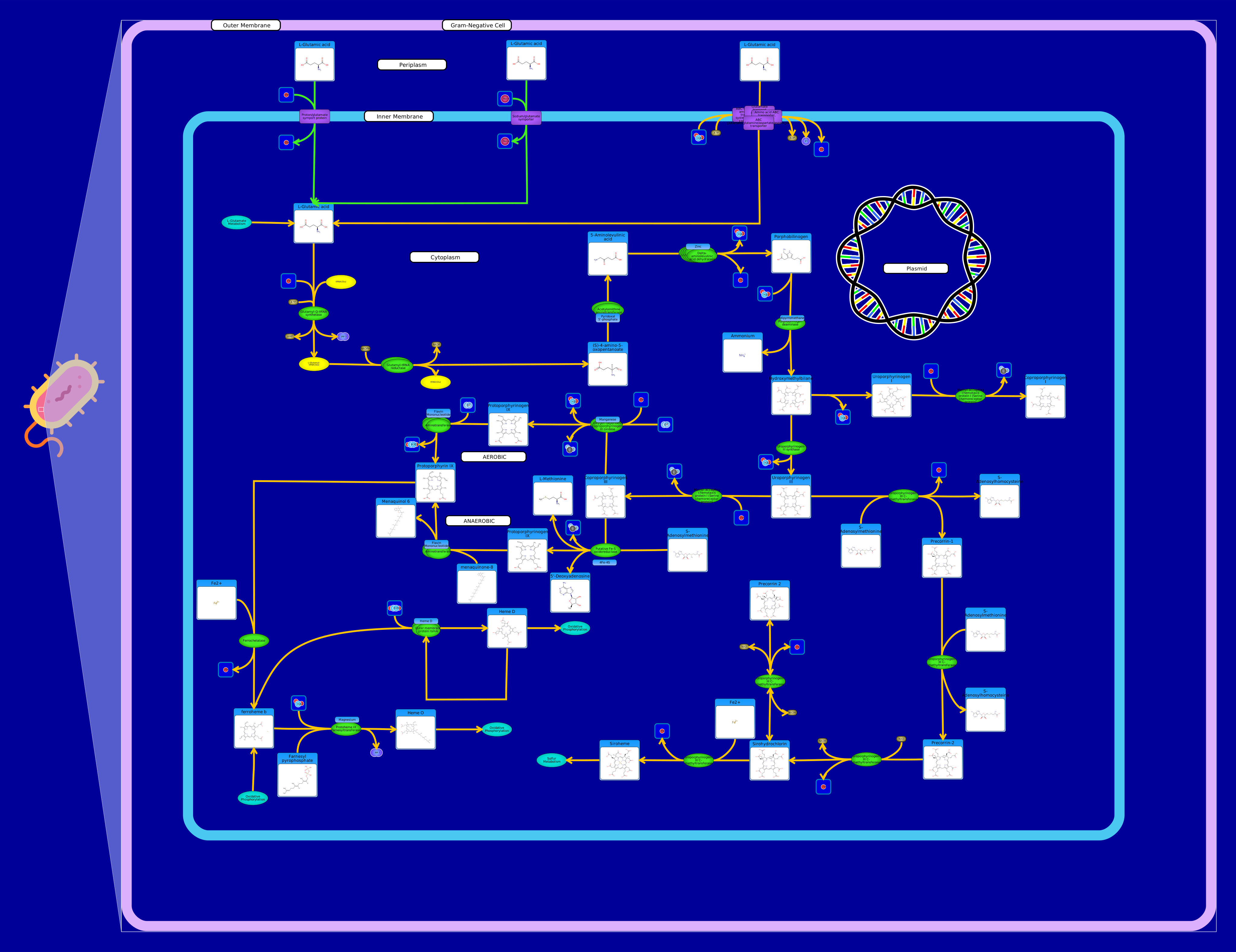 View Pathway
|
Porphyrin MetabolismVibrio fluvialis PG41
The metabolism of porphyrin begins with with glutamic acid being processed by an ATP-driven glutamyl-tRNA synthetase by interacting with hydrogen ion and tRNA(Glu), resulting in amo, pyrophosphate and L-glutamyl-tRNA(Glu) Glutamic acid. Glutamic acid can be obtained as a result of L-glutamate metabolism pathway, glutamate / aspartate : H+ symporter GltP, glutamate:sodium symporter or a glutamate / aspartate ABC transporter .
L-glutamyl-tRNA(Glu) Glutamic acid interacts with a NADPH glutamyl-tRNA reductase resulting in a NADP, a tRNA(Glu) and a (S)-4-amino-5-oxopentanoate.
This compound interacts with a glutamate-1-semialdehyde aminotransferase resulting a 5-aminolevulinic acid. This compound interacts with a porphobilinogen synthase resulting in a hydrogen ion, water and porphobilinogen. The latter compound interacts with water resulting in hydroxymethylbilane synthase resulting in ammonium, and hydroxymethylbilane.
Hydroxymethylbilane can either be dehydrated to produce uroporphyrinogen I or interact with a uroporphyrinogen III synthase resulting in a water molecule and a uroporphyrinogen III.
Uroporphyrinogen I interacts with hydrogen ion through a uroporphyrinogen decarboxylase resulting in a carbon dioxide and a coproporphyrinogen I
Uroporphyrinogen III can be metabolized into precorrin by interacting with a S-adenosylmethionine through a siroheme synthase resulting in hydrogen ion, an s-adenosylhomocysteine and a precorrin-1. On the other hand, Uroporphyrinogen III interacts with hydrogen ion through a uroporphyrinogen decarboxylase resulting in a carbon dioxide and a Coproporphyrinogen III.
Precorrin-1 reacts with a S-adenosylmethionine through a siroheme synthase resulting in a S-adenosylhomocysteine and a Precorrin-2. The latter compound is processed by a NAD dependent uroporphyrin III C-methyltransferase [multifunctional] resulting in a NADH and a sirohydrochlorin. This compound then interacts with Fe 2+
uroporphyrin III C-methyltransferase [multifunctional] resulting in a hydrogen ion and a siroheme. The siroheme is then processed in sulfur metabolism pathway.
Uroporphyrinogen III can be processed in anaerobic or aerobic condition.
Anaerobic:
Uroporphyrinogen III interacts with an oxygen molecule, a hydrogen ion through a coproporphyrinogen III oxidase resulting in water, carbon dioxide and protoporphyrinogen IX. The latter compound then interacts with an 3 oxygen molecule through a protoporphyrinogen oxidase resulting in 3 hydrogen peroxide and a Protoporphyrin IX
Aerobic:
Uroporphyrinogen III reacts with S-adenosylmethionine through a coproporphyrinogen III dehydrogenase resulting in carbon dioxide, 5-deoxyadenosine, L-methionine and protoporphyrinogen IX. The latter compound interacts with a meanquinone through a protoporphyrinogen oxidase resulting in protoporphyrin IX.
The protoporphyrin IX interacts with Fe 2+ through a ferrochelatase resulting in a hydrogen ion and a ferroheme b. The ferroheme b can either be incorporated into the oxidative phosphorylation as a cofactor of the enzymes involved in that pathway or it can interact with hydrogen peroxide through a catalase HPII resulting in a heme D. Heme D can then be incorporated into the oxidative phosphyrlation pathway as a cofactor of the enzymes involved in that pathway. Ferroheme b can also interact with water and a farnesyl pyrophosphate through a heme O synthase resulting in a release of pyrophosphate and heme O. Heme O is then incorporated into the Oxidative phosphorylation pathway.
|
Creator: Julia Wakoli Created On: January 13, 2025 at 14:48 Last Updated: January 13, 2025 at 14:48 |
PW449677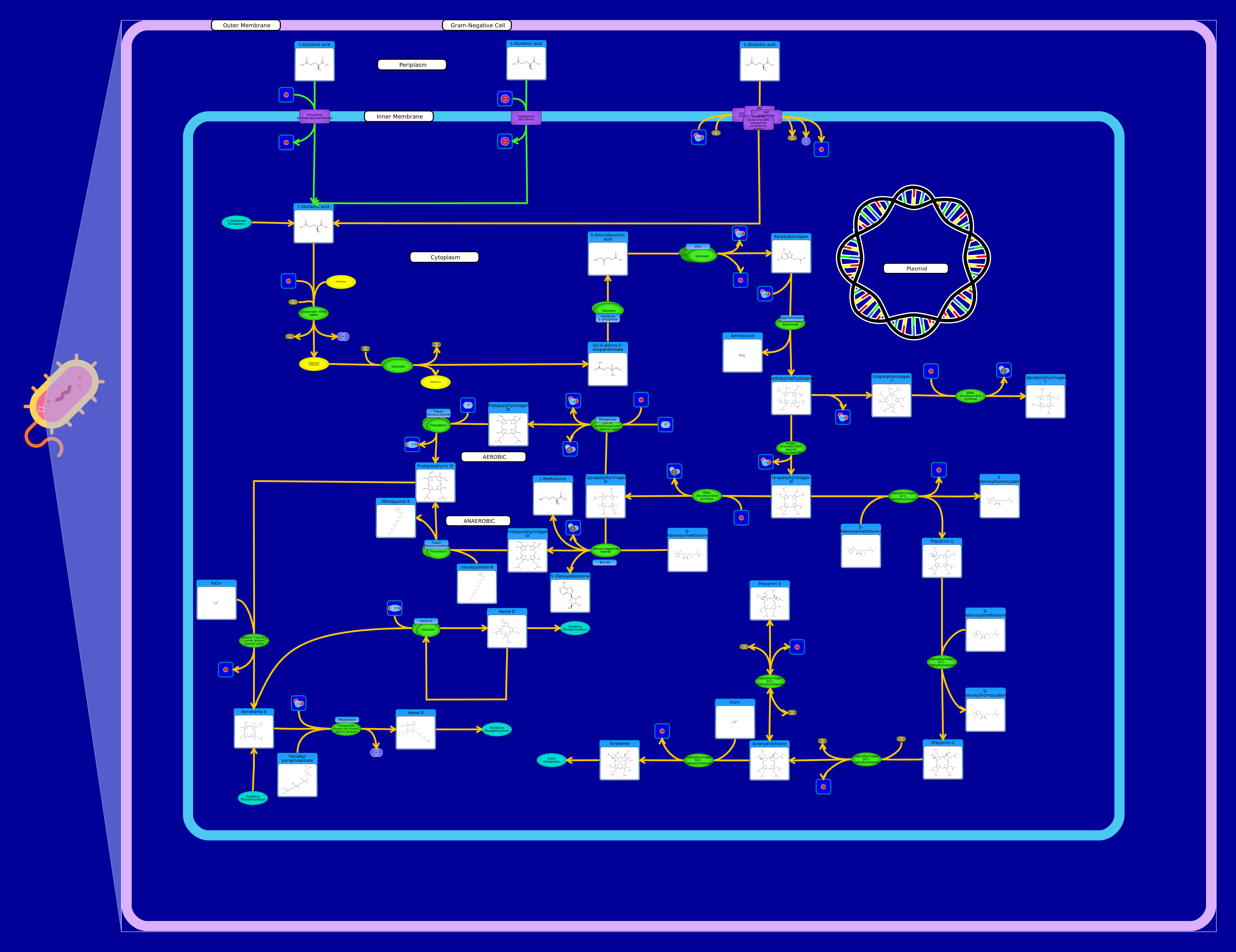 View Pathway
|
Porphyrin MetabolismPhascolarctobacterium succinatutens YIT 12067
The metabolism of porphyrin begins with with glutamic acid being processed by an ATP-driven glutamyl-tRNA synthetase by interacting with hydrogen ion and tRNA(Glu), resulting in amo, pyrophosphate and L-glutamyl-tRNA(Glu) Glutamic acid. Glutamic acid can be obtained as a result of L-glutamate metabolism pathway, glutamate / aspartate : H+ symporter GltP, glutamate:sodium symporter or a glutamate / aspartate ABC transporter .
L-glutamyl-tRNA(Glu) Glutamic acid interacts with a NADPH glutamyl-tRNA reductase resulting in a NADP, a tRNA(Glu) and a (S)-4-amino-5-oxopentanoate.
This compound interacts with a glutamate-1-semialdehyde aminotransferase resulting a 5-aminolevulinic acid. This compound interacts with a porphobilinogen synthase resulting in a hydrogen ion, water and porphobilinogen. The latter compound interacts with water resulting in hydroxymethylbilane synthase resulting in ammonium, and hydroxymethylbilane.
Hydroxymethylbilane can either be dehydrated to produce uroporphyrinogen I or interact with a uroporphyrinogen III synthase resulting in a water molecule and a uroporphyrinogen III.
Uroporphyrinogen I interacts with hydrogen ion through a uroporphyrinogen decarboxylase resulting in a carbon dioxide and a coproporphyrinogen I
Uroporphyrinogen III can be metabolized into precorrin by interacting with a S-adenosylmethionine through a siroheme synthase resulting in hydrogen ion, an s-adenosylhomocysteine and a precorrin-1. On the other hand, Uroporphyrinogen III interacts with hydrogen ion through a uroporphyrinogen decarboxylase resulting in a carbon dioxide and a Coproporphyrinogen III.
Precorrin-1 reacts with a S-adenosylmethionine through a siroheme synthase resulting in a S-adenosylhomocysteine and a Precorrin-2. The latter compound is processed by a NAD dependent uroporphyrin III C-methyltransferase [multifunctional] resulting in a NADH and a sirohydrochlorin. This compound then interacts with Fe 2+
uroporphyrin III C-methyltransferase [multifunctional] resulting in a hydrogen ion and a siroheme. The siroheme is then processed in sulfur metabolism pathway.
Uroporphyrinogen III can be processed in anaerobic or aerobic condition.
Anaerobic:
Uroporphyrinogen III interacts with an oxygen molecule, a hydrogen ion through a coproporphyrinogen III oxidase resulting in water, carbon dioxide and protoporphyrinogen IX. The latter compound then interacts with an 3 oxygen molecule through a protoporphyrinogen oxidase resulting in 3 hydrogen peroxide and a Protoporphyrin IX
Aerobic:
Uroporphyrinogen III reacts with S-adenosylmethionine through a coproporphyrinogen III dehydrogenase resulting in carbon dioxide, 5-deoxyadenosine, L-methionine and protoporphyrinogen IX. The latter compound interacts with a meanquinone through a protoporphyrinogen oxidase resulting in protoporphyrin IX.
The protoporphyrin IX interacts with Fe 2+ through a ferrochelatase resulting in a hydrogen ion and a ferroheme b. The ferroheme b can either be incorporated into the oxidative phosphorylation as a cofactor of the enzymes involved in that pathway or it can interact with hydrogen peroxide through a catalase HPII resulting in a heme D. Heme D can then be incorporated into the oxidative phosphyrlation pathway as a cofactor of the enzymes involved in that pathway. Ferroheme b can also interact with water and a farnesyl pyrophosphate through a heme O synthase resulting in a release of pyrophosphate and heme O. Heme O is then incorporated into the Oxidative phosphorylation pathway.
|
Creator: Julia Wakoli Created On: January 13, 2025 at 16:01 Last Updated: January 13, 2025 at 16:01 |