
| PathWhiz ID | Pathway | Meta Data |
|---|---|---|
PW394224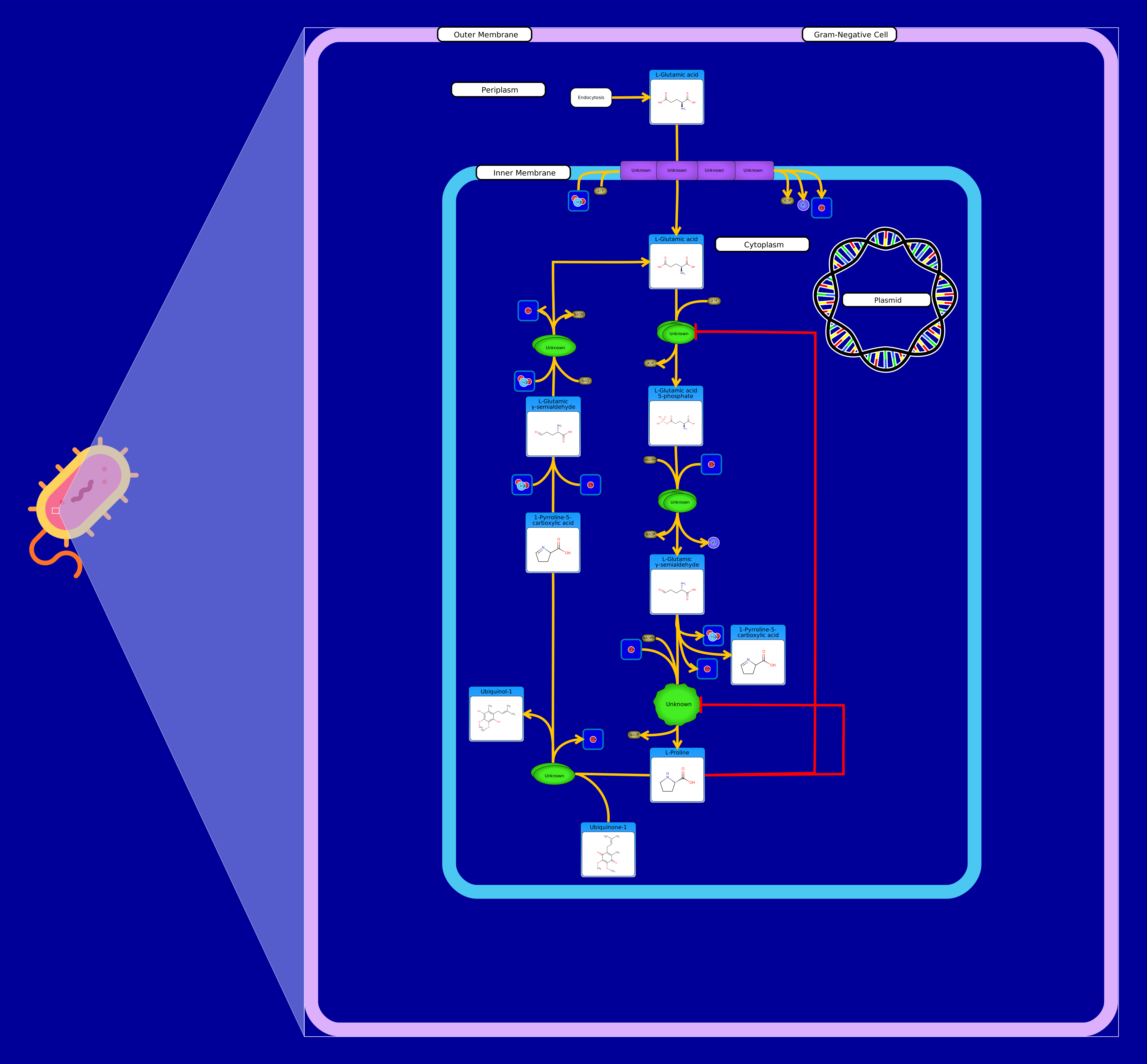 View Pathway
|
Proline MetabolismDesulfovibrio sp. 3_1_syn3
The creation of L-proline in E. coli starts with L-glutamic acid being phosphorylated through an ATP driven glutamate 5-kinase resulting in a L-glutamic acid 5-phosphate. This compound is then reduced through an NADPH driven gamma glutamyl phosphate reductase resulting in the release of a phosphate, an NADP and a L-glutamic gamma-semialdehyde. L-glutamic gamma-semialdehyde is dehydrated spontaneously, resulting in a release of water,hydrogen ion and 1-Pyrroline-5-carboxylic acid. The latter compound is reduced by an NADPH driven pyrroline-5-carboxylate reductase which is then reduced to L-proline. L-proline works as a repressor of the pyrroline-5-carboxylate reductase enzyme and glutamate 5-kinase. Three genetic loci, proA, proB and proC control the biosynthesis of L-proline in E. coli.The pathway begins with a reaction that is catalyzed by γ-glutamyl kinase, which is encoded by proB. Next, NADPH-dependent reduction of γ-glutamyl phosphate to glutamate-5-semialdehyde, occurs through catalyzation by glutamate-5-semialdehyde dehydrogenase, encoded by proA. Following this, both enzymes join together in a multimeric bi-functional enzyme complex called γ-glutamyl kinase-GP-reductase multienzyme complex. This formation is thought to protect the highly labile glutamyl phosphate from the antagonistic nucleophilic and aqueous environment found in the cell. Finally, NADPH-dependent pyrroline-5-carboxylate reductase encoded by proC catalyzes the reduction of pyrroline 5-carboxylate into L-proline. Proline is metabolized in E. coli by returning to the form of L-glutamate, which is then degraded to α-ketoglutarate,which serves as an intermediary of the TCA cycle. Interestingly enough, L-glutamate, the obligate intermediate of the proline degradation pathway, is not able to serve as an outright source of carbon and energy for E. coli, because the rate at which glutamate transport supplies exogenous glutamate is not adequate. The process by which proline is turned into L-glutamate starts with L-proline interacting with ubiquinone through a bifunctional protein putA resulting in an ubiquinol, a hydrogen ion and a 1-pyrroline-5-carboxylic acid. The latter compound is then hydrated spontaneously resulting in a L-glutamic gamma-semialdehyde. This compound is then processed by interacting with water through an NAD driven bifunctional protein putA resulting in a hydrogen ion, NADH and L-glutamic acid.
|
Creator: Julia Wakoli Created On: December 14, 2024 at 13:15 Last Updated: December 14, 2024 at 13:15 |
PW393093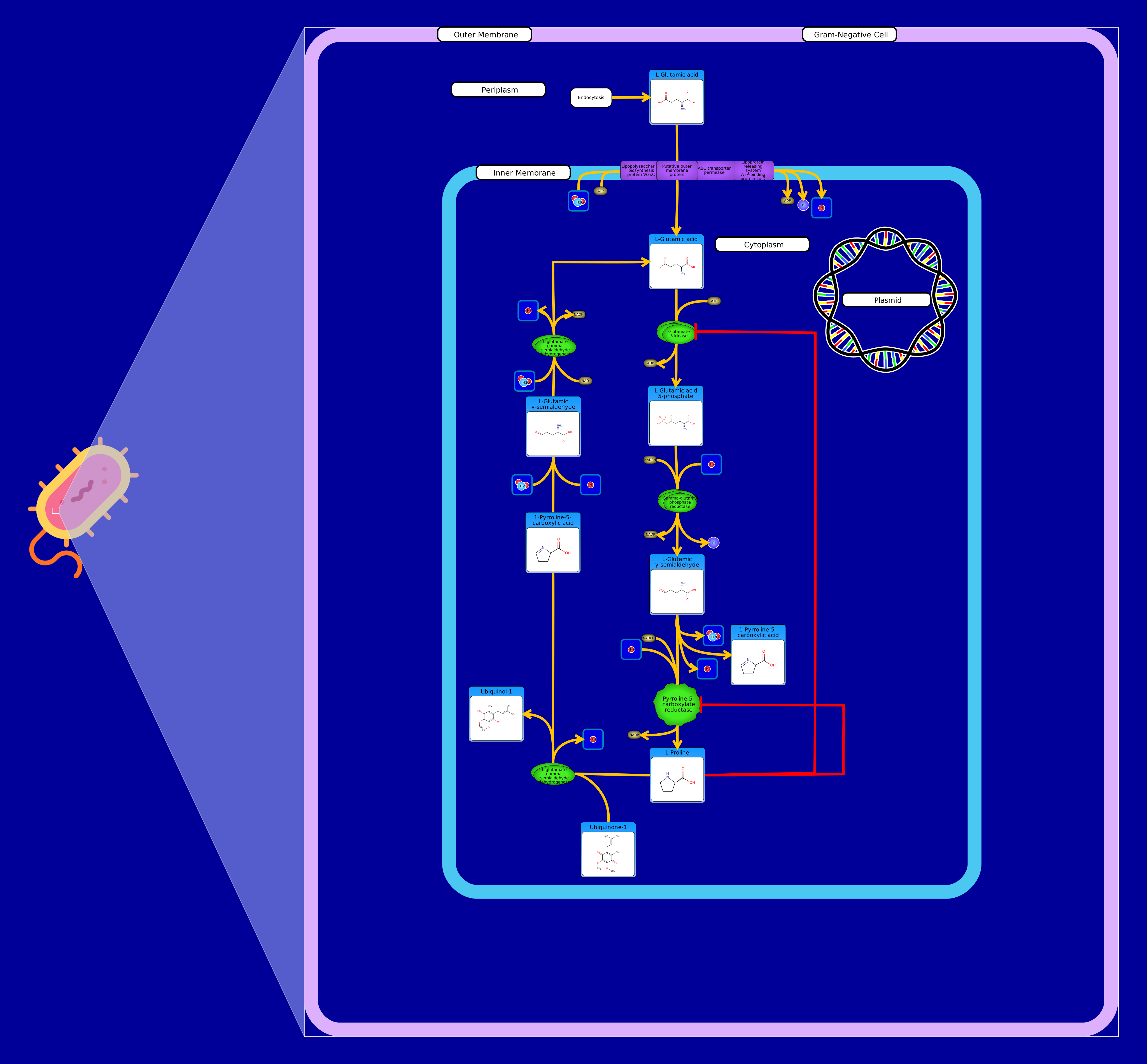 View Pathway
|
Proline MetabolismBacteroides pyogenes DSM 20611 = JCM 6294
The creation of L-proline in E. coli starts with L-glutamic acid being phosphorylated through an ATP driven glutamate 5-kinase resulting in a L-glutamic acid 5-phosphate. This compound is then reduced through an NADPH driven gamma glutamyl phosphate reductase resulting in the release of a phosphate, an NADP and a L-glutamic gamma-semialdehyde. L-glutamic gamma-semialdehyde is dehydrated spontaneously, resulting in a release of water,hydrogen ion and 1-Pyrroline-5-carboxylic acid. The latter compound is reduced by an NADPH driven pyrroline-5-carboxylate reductase which is then reduced to L-proline. L-proline works as a repressor of the pyrroline-5-carboxylate reductase enzyme and glutamate 5-kinase. Three genetic loci, proA, proB and proC control the biosynthesis of L-proline in E. coli.The pathway begins with a reaction that is catalyzed by γ-glutamyl kinase, which is encoded by proB. Next, NADPH-dependent reduction of γ-glutamyl phosphate to glutamate-5-semialdehyde, occurs through catalyzation by glutamate-5-semialdehyde dehydrogenase, encoded by proA. Following this, both enzymes join together in a multimeric bi-functional enzyme complex called γ-glutamyl kinase-GP-reductase multienzyme complex. This formation is thought to protect the highly labile glutamyl phosphate from the antagonistic nucleophilic and aqueous environment found in the cell. Finally, NADPH-dependent pyrroline-5-carboxylate reductase encoded by proC catalyzes the reduction of pyrroline 5-carboxylate into L-proline. Proline is metabolized in E. coli by returning to the form of L-glutamate, which is then degraded to α-ketoglutarate,which serves as an intermediary of the TCA cycle. Interestingly enough, L-glutamate, the obligate intermediate of the proline degradation pathway, is not able to serve as an outright source of carbon and energy for E. coli, because the rate at which glutamate transport supplies exogenous glutamate is not adequate. The process by which proline is turned into L-glutamate starts with L-proline interacting with ubiquinone through a bifunctional protein putA resulting in an ubiquinol, a hydrogen ion and a 1-pyrroline-5-carboxylic acid. The latter compound is then hydrated spontaneously resulting in a L-glutamic gamma-semialdehyde. This compound is then processed by interacting with water through an NAD driven bifunctional protein putA resulting in a hydrogen ion, NADH and L-glutamic acid.
|
Creator: Julia Wakoli Created On: December 14, 2024 at 03:02 Last Updated: December 14, 2024 at 03:02 |
PW394147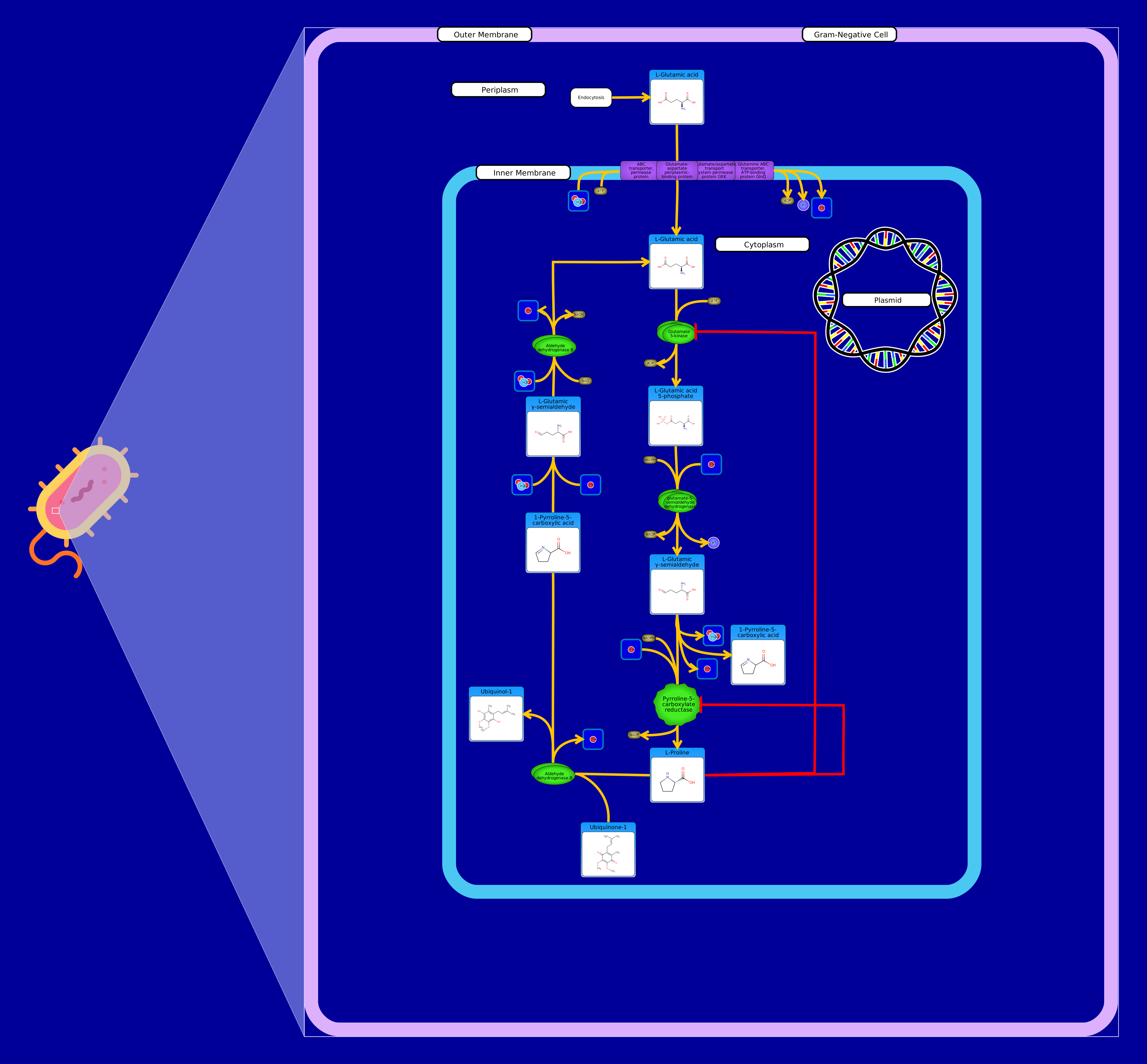 View Pathway
|
Proline MetabolismSutterella parvirubra YIT 11816
The creation of L-proline in E. coli starts with L-glutamic acid being phosphorylated through an ATP driven glutamate 5-kinase resulting in a L-glutamic acid 5-phosphate. This compound is then reduced through an NADPH driven gamma glutamyl phosphate reductase resulting in the release of a phosphate, an NADP and a L-glutamic gamma-semialdehyde. L-glutamic gamma-semialdehyde is dehydrated spontaneously, resulting in a release of water,hydrogen ion and 1-Pyrroline-5-carboxylic acid. The latter compound is reduced by an NADPH driven pyrroline-5-carboxylate reductase which is then reduced to L-proline. L-proline works as a repressor of the pyrroline-5-carboxylate reductase enzyme and glutamate 5-kinase. Three genetic loci, proA, proB and proC control the biosynthesis of L-proline in E. coli.The pathway begins with a reaction that is catalyzed by γ-glutamyl kinase, which is encoded by proB. Next, NADPH-dependent reduction of γ-glutamyl phosphate to glutamate-5-semialdehyde, occurs through catalyzation by glutamate-5-semialdehyde dehydrogenase, encoded by proA. Following this, both enzymes join together in a multimeric bi-functional enzyme complex called γ-glutamyl kinase-GP-reductase multienzyme complex. This formation is thought to protect the highly labile glutamyl phosphate from the antagonistic nucleophilic and aqueous environment found in the cell. Finally, NADPH-dependent pyrroline-5-carboxylate reductase encoded by proC catalyzes the reduction of pyrroline 5-carboxylate into L-proline. Proline is metabolized in E. coli by returning to the form of L-glutamate, which is then degraded to α-ketoglutarate,which serves as an intermediary of the TCA cycle. Interestingly enough, L-glutamate, the obligate intermediate of the proline degradation pathway, is not able to serve as an outright source of carbon and energy for E. coli, because the rate at which glutamate transport supplies exogenous glutamate is not adequate. The process by which proline is turned into L-glutamate starts with L-proline interacting with ubiquinone through a bifunctional protein putA resulting in an ubiquinol, a hydrogen ion and a 1-pyrroline-5-carboxylic acid. The latter compound is then hydrated spontaneously resulting in a L-glutamic gamma-semialdehyde. This compound is then processed by interacting with water through an NAD driven bifunctional protein putA resulting in a hydrogen ion, NADH and L-glutamic acid.
|
Creator: Julia Wakoli Created On: December 14, 2024 at 12:02 Last Updated: December 14, 2024 at 12:02 |
PW391023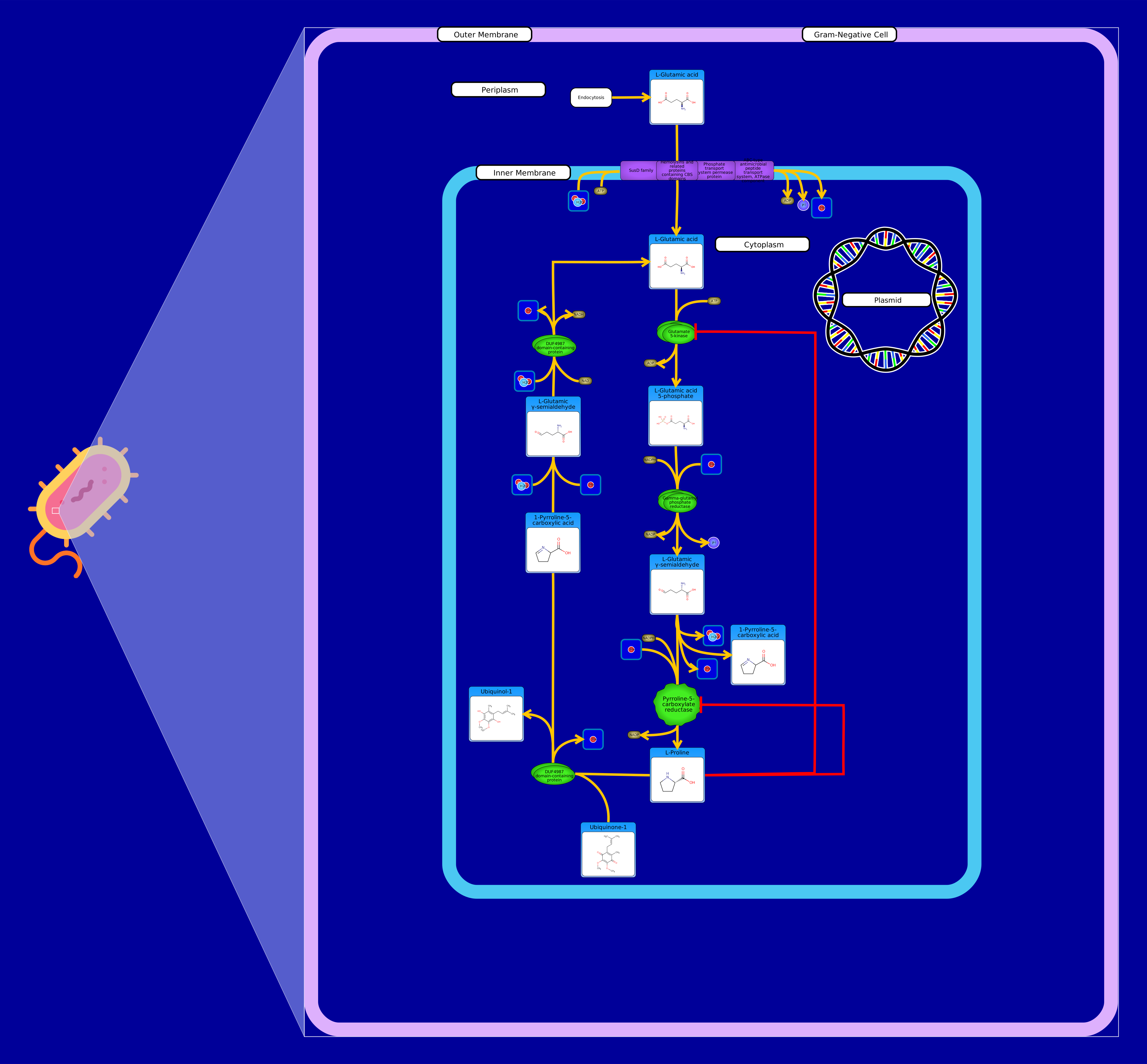 View Pathway
|
Proline MetabolismBacteroides xylanisolvens XB1A
The creation of L-proline in E. coli starts with L-glutamic acid being phosphorylated through an ATP driven glutamate 5-kinase resulting in a L-glutamic acid 5-phosphate. This compound is then reduced through an NADPH driven gamma glutamyl phosphate reductase resulting in the release of a phosphate, an NADP and a L-glutamic gamma-semialdehyde. L-glutamic gamma-semialdehyde is dehydrated spontaneously, resulting in a release of water,hydrogen ion and 1-Pyrroline-5-carboxylic acid. The latter compound is reduced by an NADPH driven pyrroline-5-carboxylate reductase which is then reduced to L-proline. L-proline works as a repressor of the pyrroline-5-carboxylate reductase enzyme and glutamate 5-kinase. Three genetic loci, proA, proB and proC control the biosynthesis of L-proline in E. coli.The pathway begins with a reaction that is catalyzed by γ-glutamyl kinase, which is encoded by proB. Next, NADPH-dependent reduction of γ-glutamyl phosphate to glutamate-5-semialdehyde, occurs through catalyzation by glutamate-5-semialdehyde dehydrogenase, encoded by proA. Following this, both enzymes join together in a multimeric bi-functional enzyme complex called γ-glutamyl kinase-GP-reductase multienzyme complex. This formation is thought to protect the highly labile glutamyl phosphate from the antagonistic nucleophilic and aqueous environment found in the cell. Finally, NADPH-dependent pyrroline-5-carboxylate reductase encoded by proC catalyzes the reduction of pyrroline 5-carboxylate into L-proline. Proline is metabolized in E. coli by returning to the form of L-glutamate, which is then degraded to α-ketoglutarate,which serves as an intermediary of the TCA cycle. Interestingly enough, L-glutamate, the obligate intermediate of the proline degradation pathway, is not able to serve as an outright source of carbon and energy for E. coli, because the rate at which glutamate transport supplies exogenous glutamate is not adequate. The process by which proline is turned into L-glutamate starts with L-proline interacting with ubiquinone through a bifunctional protein putA resulting in an ubiquinol, a hydrogen ion and a 1-pyrroline-5-carboxylic acid. The latter compound is then hydrated spontaneously resulting in a L-glutamic gamma-semialdehyde. This compound is then processed by interacting with water through an NAD driven bifunctional protein putA resulting in a hydrogen ion, NADH and L-glutamic acid.
|
Creator: Julia Wakoli Created On: December 13, 2024 at 13:43 Last Updated: December 13, 2024 at 13:43 |
PW390861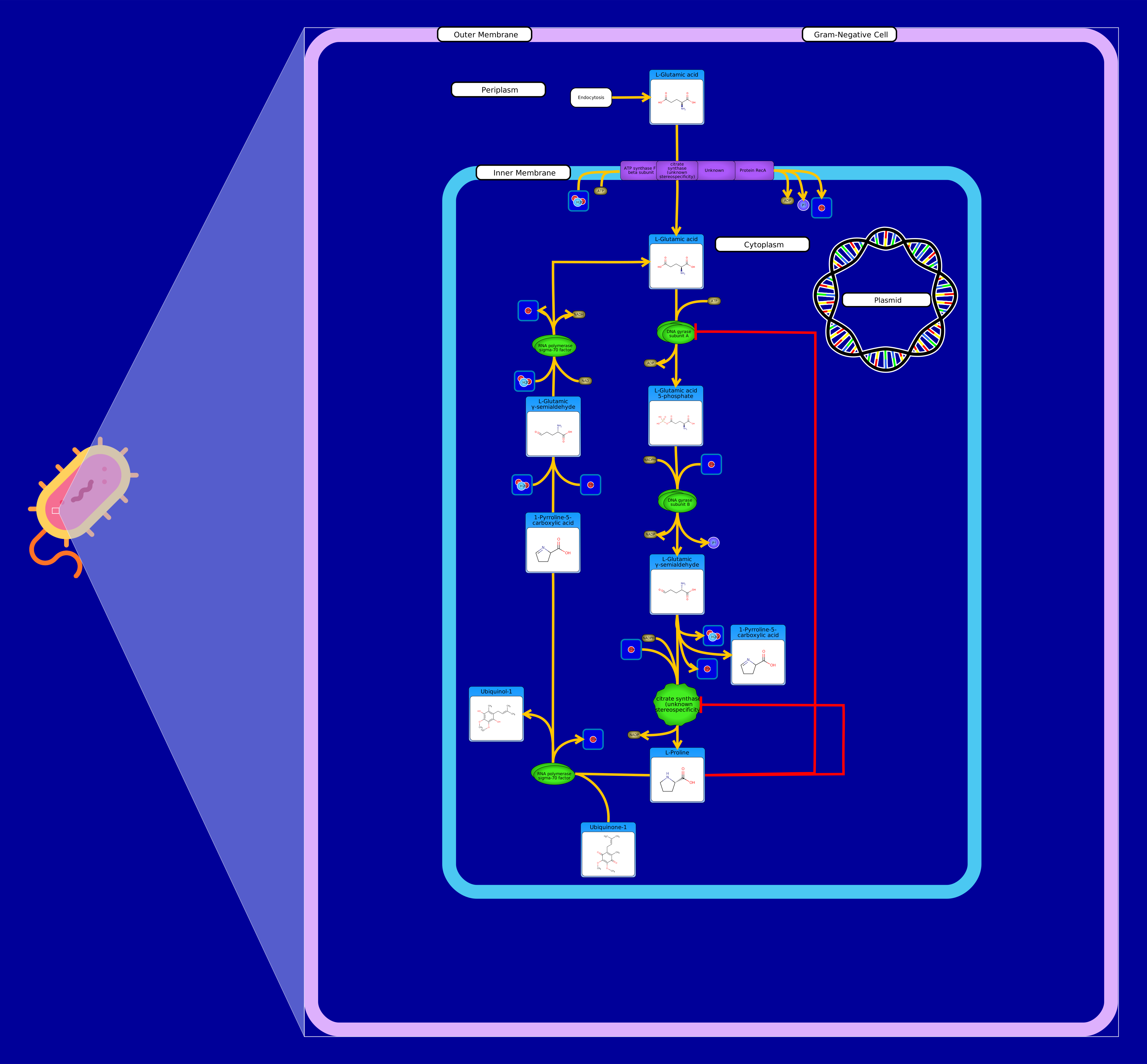 View Pathway
|
Proline MetabolismAeromonas media WS
The creation of L-proline in E. coli starts with L-glutamic acid being phosphorylated through an ATP driven glutamate 5-kinase resulting in a L-glutamic acid 5-phosphate. This compound is then reduced through an NADPH driven gamma glutamyl phosphate reductase resulting in the release of a phosphate, an NADP and a L-glutamic gamma-semialdehyde. L-glutamic gamma-semialdehyde is dehydrated spontaneously, resulting in a release of water,hydrogen ion and 1-Pyrroline-5-carboxylic acid. The latter compound is reduced by an NADPH driven pyrroline-5-carboxylate reductase which is then reduced to L-proline. L-proline works as a repressor of the pyrroline-5-carboxylate reductase enzyme and glutamate 5-kinase. Three genetic loci, proA, proB and proC control the biosynthesis of L-proline in E. coli.The pathway begins with a reaction that is catalyzed by γ-glutamyl kinase, which is encoded by proB. Next, NADPH-dependent reduction of γ-glutamyl phosphate to glutamate-5-semialdehyde, occurs through catalyzation by glutamate-5-semialdehyde dehydrogenase, encoded by proA. Following this, both enzymes join together in a multimeric bi-functional enzyme complex called γ-glutamyl kinase-GP-reductase multienzyme complex. This formation is thought to protect the highly labile glutamyl phosphate from the antagonistic nucleophilic and aqueous environment found in the cell. Finally, NADPH-dependent pyrroline-5-carboxylate reductase encoded by proC catalyzes the reduction of pyrroline 5-carboxylate into L-proline. Proline is metabolized in E. coli by returning to the form of L-glutamate, which is then degraded to α-ketoglutarate,which serves as an intermediary of the TCA cycle. Interestingly enough, L-glutamate, the obligate intermediate of the proline degradation pathway, is not able to serve as an outright source of carbon and energy for E. coli, because the rate at which glutamate transport supplies exogenous glutamate is not adequate. The process by which proline is turned into L-glutamate starts with L-proline interacting with ubiquinone through a bifunctional protein putA resulting in an ubiquinol, a hydrogen ion and a 1-pyrroline-5-carboxylic acid. The latter compound is then hydrated spontaneously resulting in a L-glutamic gamma-semialdehyde. This compound is then processed by interacting with water through an NAD driven bifunctional protein putA resulting in a hydrogen ion, NADH and L-glutamic acid.
|
Creator: Julia Wakoli Created On: December 13, 2024 at 11:35 Last Updated: December 13, 2024 at 11:35 |
PW390777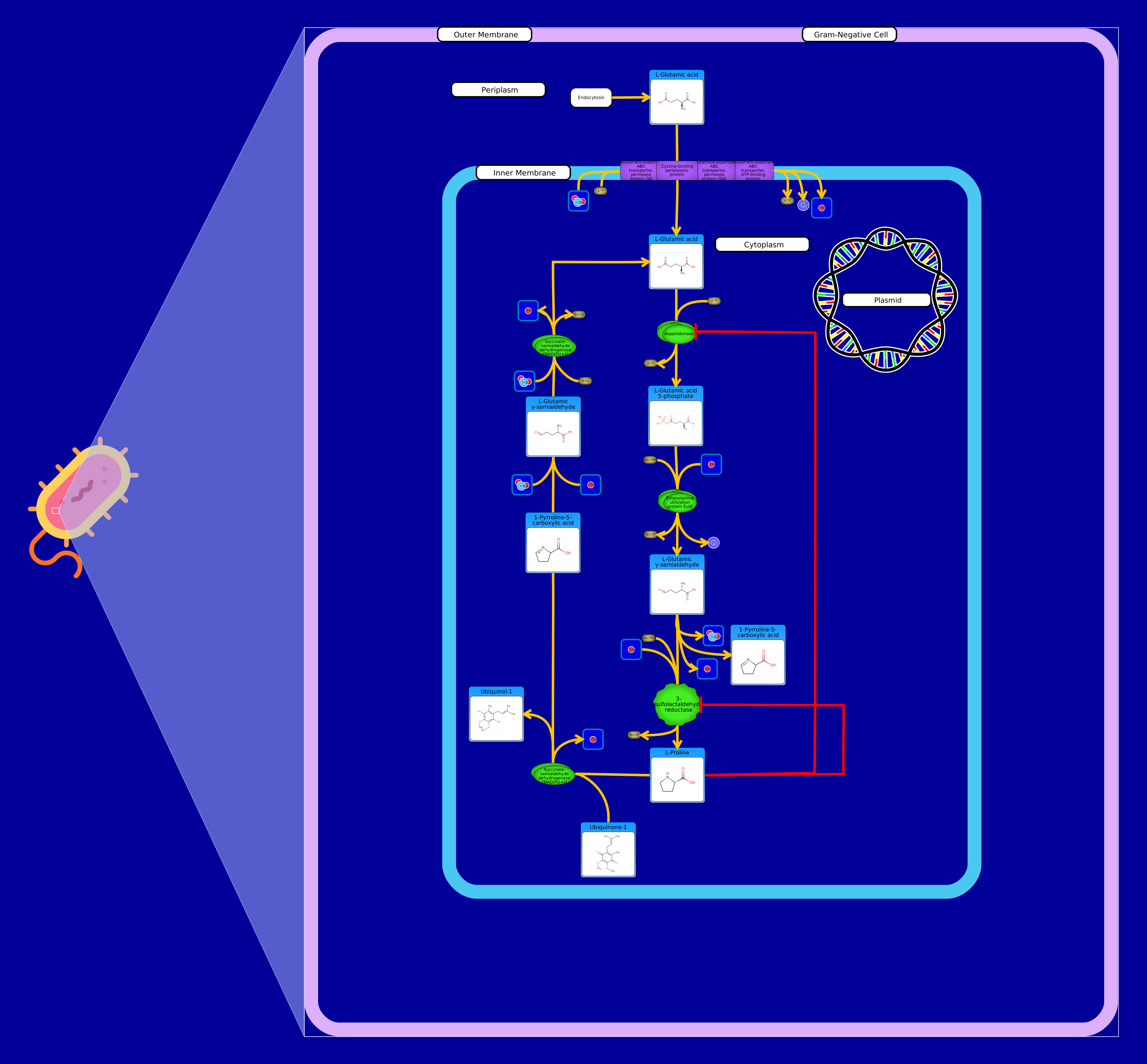 View Pathway
|
Proline MetabolismEscherichia coli (strain SMS-3-5 / SECEC)
The creation of L-proline in E. coli starts with L-glutamic acid being phosphorylated through an ATP driven glutamate 5-kinase resulting in a L-glutamic acid 5-phosphate. This compound is then reduced through an NADPH driven gamma glutamyl phosphate reductase resulting in the release of a phosphate, an NADP and a L-glutamic gamma-semialdehyde. L-glutamic gamma-semialdehyde is dehydrated spontaneously, resulting in a release of water,hydrogen ion and 1-Pyrroline-5-carboxylic acid. The latter compound is reduced by an NADPH driven pyrroline-5-carboxylate reductase which is then reduced to L-proline. L-proline works as a repressor of the pyrroline-5-carboxylate reductase enzyme and glutamate 5-kinase. Three genetic loci, proA, proB and proC control the biosynthesis of L-proline in E. coli.The pathway begins with a reaction that is catalyzed by γ-glutamyl kinase, which is encoded by proB. Next, NADPH-dependent reduction of γ-glutamyl phosphate to glutamate-5-semialdehyde, occurs through catalyzation by glutamate-5-semialdehyde dehydrogenase, encoded by proA. Following this, both enzymes join together in a multimeric bi-functional enzyme complex called γ-glutamyl kinase-GP-reductase multienzyme complex. This formation is thought to protect the highly labile glutamyl phosphate from the antagonistic nucleophilic and aqueous environment found in the cell. Finally, NADPH-dependent pyrroline-5-carboxylate reductase encoded by proC catalyzes the reduction of pyrroline 5-carboxylate into L-proline. Proline is metabolized in E. coli by returning to the form of L-glutamate, which is then degraded to α-ketoglutarate,which serves as an intermediary of the TCA cycle. Interestingly enough, L-glutamate, the obligate intermediate of the proline degradation pathway, is not able to serve as an outright source of carbon and energy for E. coli, because the rate at which glutamate transport supplies exogenous glutamate is not adequate. The process by which proline is turned into L-glutamate starts with L-proline interacting with ubiquinone through a bifunctional protein putA resulting in an ubiquinol, a hydrogen ion and a 1-pyrroline-5-carboxylic acid. The latter compound is then hydrated spontaneously resulting in a L-glutamic gamma-semialdehyde. This compound is then processed by interacting with water through an NAD driven bifunctional protein putA resulting in a hydrogen ion, NADH and L-glutamic acid.
|
Creator: Julia Wakoli Created On: December 13, 2024 at 10:26 Last Updated: December 13, 2024 at 10:26 |
PW394387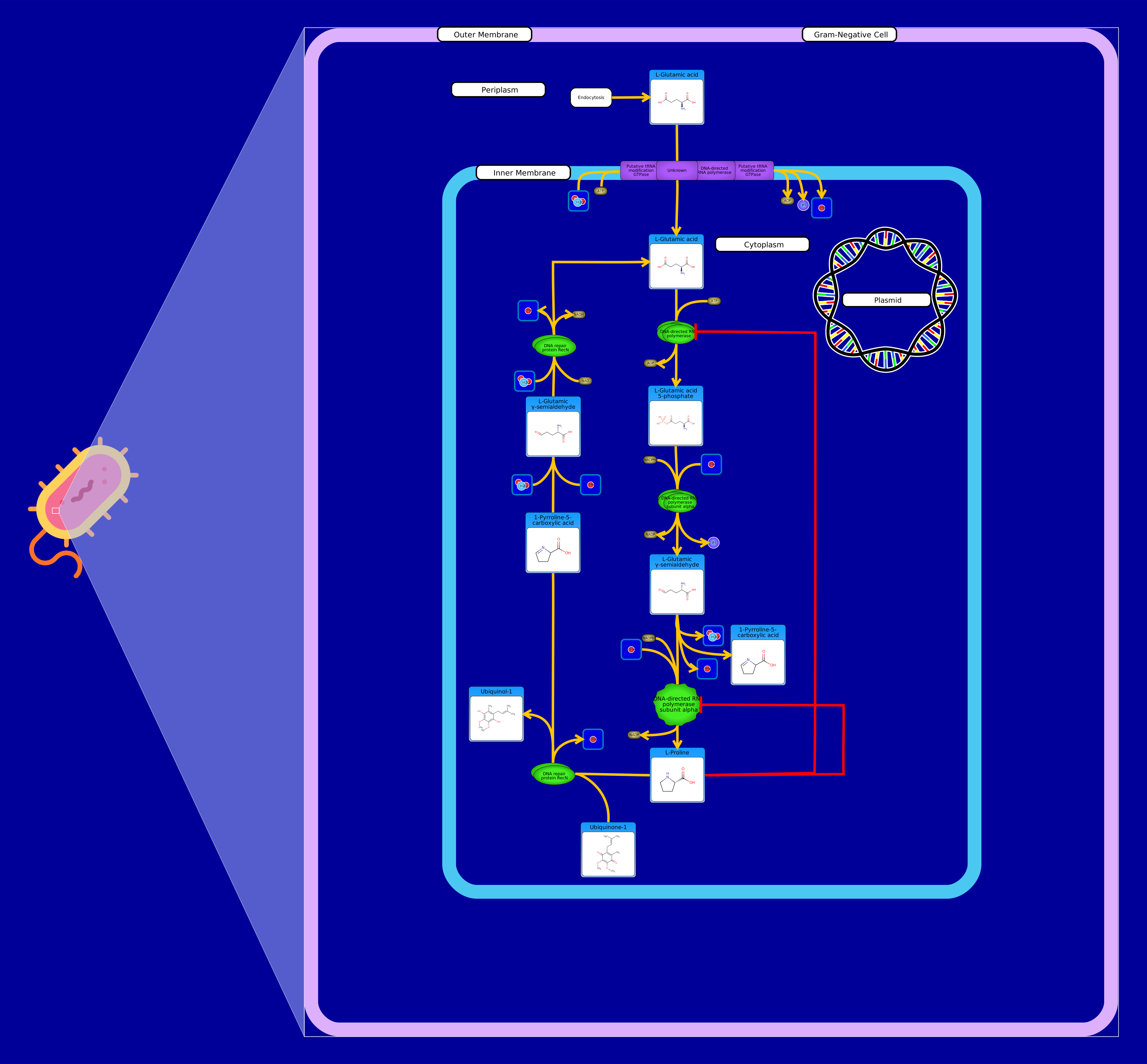 View Pathway
|
Proline MetabolismKluyvera ascorbata ATCC 33433
The creation of L-proline in E. coli starts with L-glutamic acid being phosphorylated through an ATP driven glutamate 5-kinase resulting in a L-glutamic acid 5-phosphate. This compound is then reduced through an NADPH driven gamma glutamyl phosphate reductase resulting in the release of a phosphate, an NADP and a L-glutamic gamma-semialdehyde. L-glutamic gamma-semialdehyde is dehydrated spontaneously, resulting in a release of water,hydrogen ion and 1-Pyrroline-5-carboxylic acid. The latter compound is reduced by an NADPH driven pyrroline-5-carboxylate reductase which is then reduced to L-proline. L-proline works as a repressor of the pyrroline-5-carboxylate reductase enzyme and glutamate 5-kinase. Three genetic loci, proA, proB and proC control the biosynthesis of L-proline in E. coli.The pathway begins with a reaction that is catalyzed by γ-glutamyl kinase, which is encoded by proB. Next, NADPH-dependent reduction of γ-glutamyl phosphate to glutamate-5-semialdehyde, occurs through catalyzation by glutamate-5-semialdehyde dehydrogenase, encoded by proA. Following this, both enzymes join together in a multimeric bi-functional enzyme complex called γ-glutamyl kinase-GP-reductase multienzyme complex. This formation is thought to protect the highly labile glutamyl phosphate from the antagonistic nucleophilic and aqueous environment found in the cell. Finally, NADPH-dependent pyrroline-5-carboxylate reductase encoded by proC catalyzes the reduction of pyrroline 5-carboxylate into L-proline. Proline is metabolized in E. coli by returning to the form of L-glutamate, which is then degraded to α-ketoglutarate,which serves as an intermediary of the TCA cycle. Interestingly enough, L-glutamate, the obligate intermediate of the proline degradation pathway, is not able to serve as an outright source of carbon and energy for E. coli, because the rate at which glutamate transport supplies exogenous glutamate is not adequate. The process by which proline is turned into L-glutamate starts with L-proline interacting with ubiquinone through a bifunctional protein putA resulting in an ubiquinol, a hydrogen ion and a 1-pyrroline-5-carboxylic acid. The latter compound is then hydrated spontaneously resulting in a L-glutamic gamma-semialdehyde. This compound is then processed by interacting with water through an NAD driven bifunctional protein putA resulting in a hydrogen ion, NADH and L-glutamic acid.
|
Creator: Julia Wakoli Created On: December 14, 2024 at 16:15 Last Updated: December 14, 2024 at 16:15 |
PW393618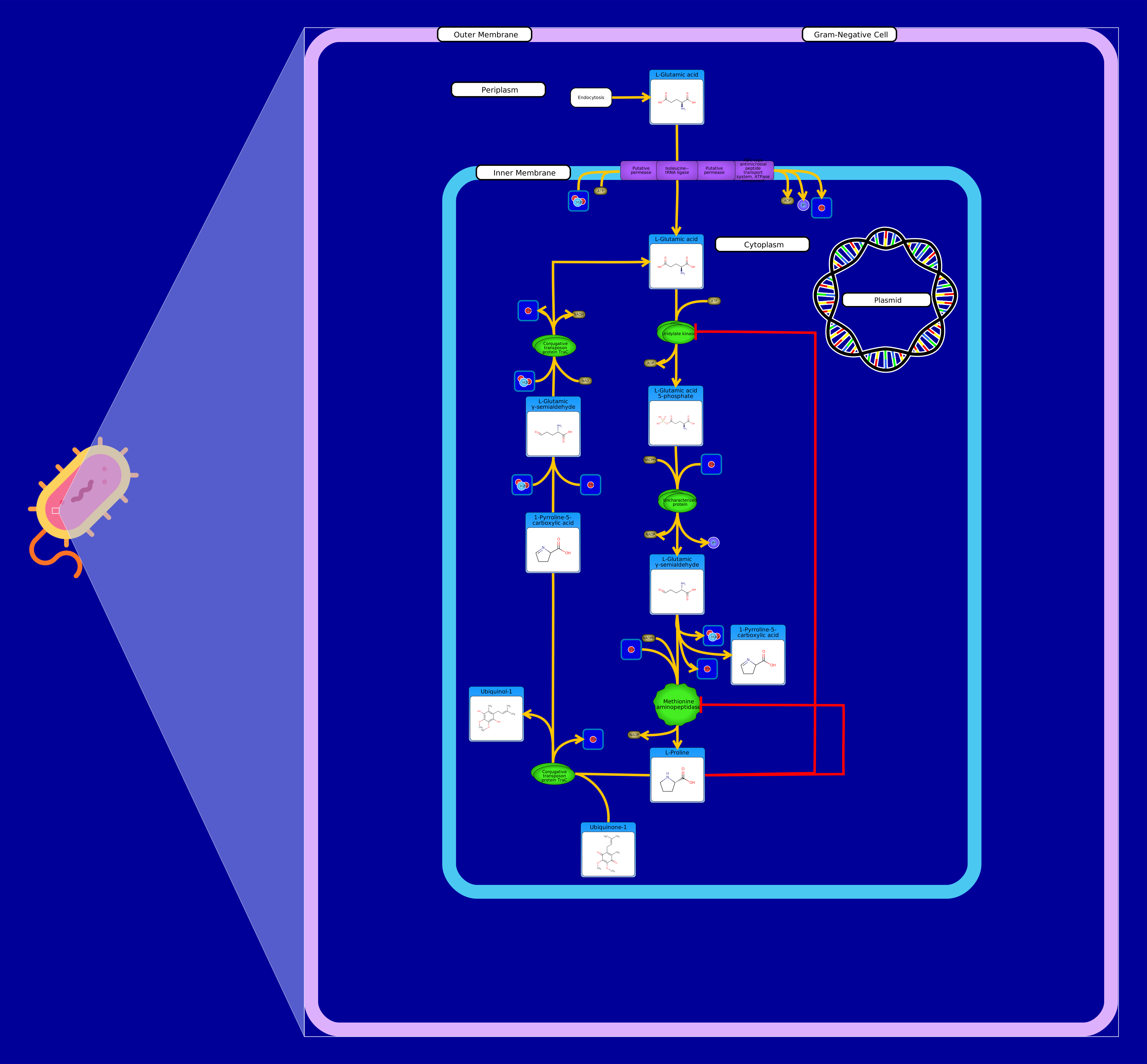 View Pathway
|
Proline MetabolismPrevotella bivia DSM 20514
The creation of L-proline in E. coli starts with L-glutamic acid being phosphorylated through an ATP driven glutamate 5-kinase resulting in a L-glutamic acid 5-phosphate. This compound is then reduced through an NADPH driven gamma glutamyl phosphate reductase resulting in the release of a phosphate, an NADP and a L-glutamic gamma-semialdehyde. L-glutamic gamma-semialdehyde is dehydrated spontaneously, resulting in a release of water,hydrogen ion and 1-Pyrroline-5-carboxylic acid. The latter compound is reduced by an NADPH driven pyrroline-5-carboxylate reductase which is then reduced to L-proline. L-proline works as a repressor of the pyrroline-5-carboxylate reductase enzyme and glutamate 5-kinase. Three genetic loci, proA, proB and proC control the biosynthesis of L-proline in E. coli.The pathway begins with a reaction that is catalyzed by γ-glutamyl kinase, which is encoded by proB. Next, NADPH-dependent reduction of γ-glutamyl phosphate to glutamate-5-semialdehyde, occurs through catalyzation by glutamate-5-semialdehyde dehydrogenase, encoded by proA. Following this, both enzymes join together in a multimeric bi-functional enzyme complex called γ-glutamyl kinase-GP-reductase multienzyme complex. This formation is thought to protect the highly labile glutamyl phosphate from the antagonistic nucleophilic and aqueous environment found in the cell. Finally, NADPH-dependent pyrroline-5-carboxylate reductase encoded by proC catalyzes the reduction of pyrroline 5-carboxylate into L-proline. Proline is metabolized in E. coli by returning to the form of L-glutamate, which is then degraded to α-ketoglutarate,which serves as an intermediary of the TCA cycle. Interestingly enough, L-glutamate, the obligate intermediate of the proline degradation pathway, is not able to serve as an outright source of carbon and energy for E. coli, because the rate at which glutamate transport supplies exogenous glutamate is not adequate. The process by which proline is turned into L-glutamate starts with L-proline interacting with ubiquinone through a bifunctional protein putA resulting in an ubiquinol, a hydrogen ion and a 1-pyrroline-5-carboxylic acid. The latter compound is then hydrated spontaneously resulting in a L-glutamic gamma-semialdehyde. This compound is then processed by interacting with water through an NAD driven bifunctional protein putA resulting in a hydrogen ion, NADH and L-glutamic acid.
|
Creator: Julia Wakoli Created On: December 14, 2024 at 06:09 Last Updated: December 14, 2024 at 06:09 |
PW393947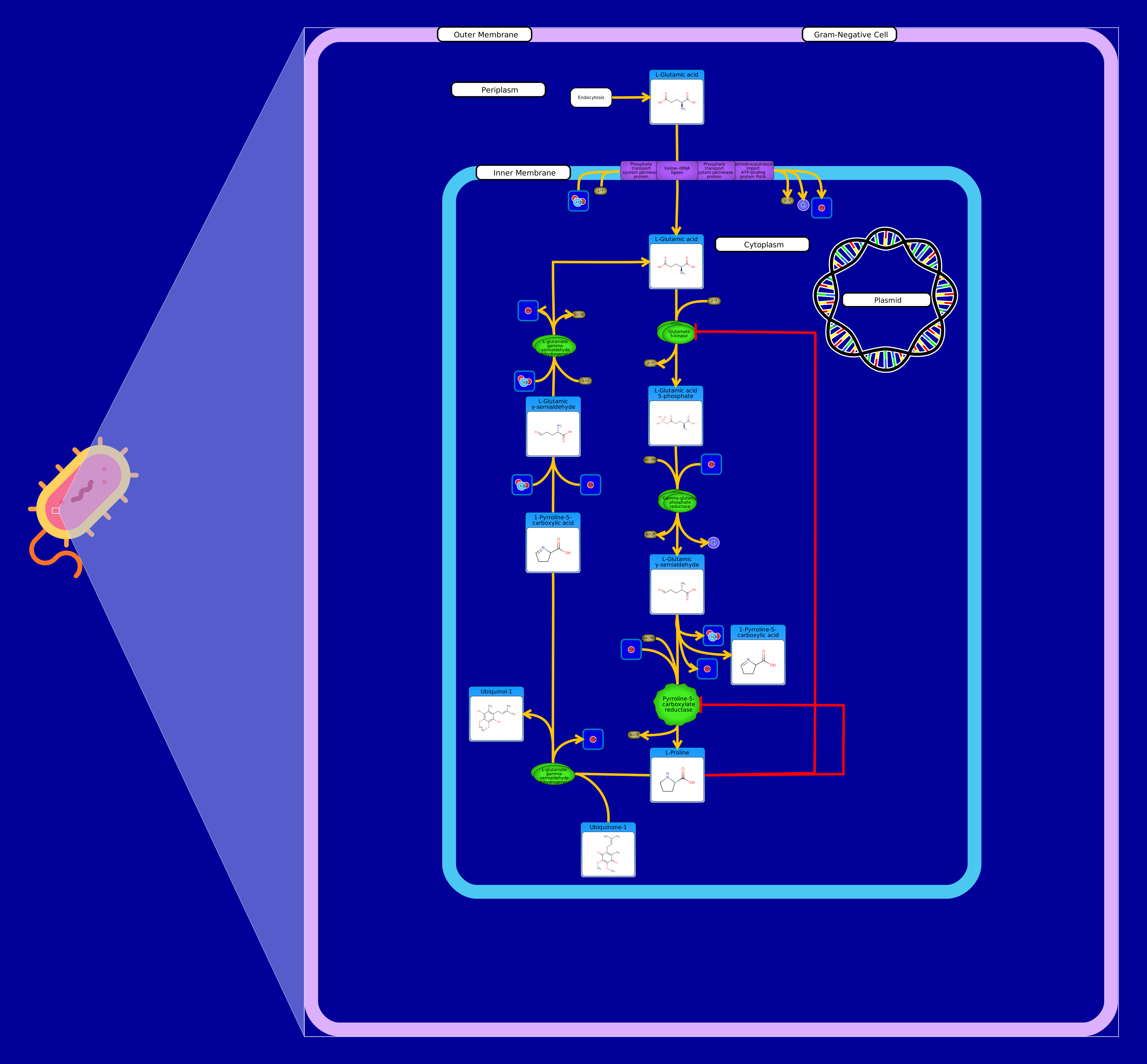 View Pathway
|
Proline MetabolismParabacteroides sp. D13
The creation of L-proline in E. coli starts with L-glutamic acid being phosphorylated through an ATP driven glutamate 5-kinase resulting in a L-glutamic acid 5-phosphate. This compound is then reduced through an NADPH driven gamma glutamyl phosphate reductase resulting in the release of a phosphate, an NADP and a L-glutamic gamma-semialdehyde. L-glutamic gamma-semialdehyde is dehydrated spontaneously, resulting in a release of water,hydrogen ion and 1-Pyrroline-5-carboxylic acid. The latter compound is reduced by an NADPH driven pyrroline-5-carboxylate reductase which is then reduced to L-proline. L-proline works as a repressor of the pyrroline-5-carboxylate reductase enzyme and glutamate 5-kinase. Three genetic loci, proA, proB and proC control the biosynthesis of L-proline in E. coli.The pathway begins with a reaction that is catalyzed by γ-glutamyl kinase, which is encoded by proB. Next, NADPH-dependent reduction of γ-glutamyl phosphate to glutamate-5-semialdehyde, occurs through catalyzation by glutamate-5-semialdehyde dehydrogenase, encoded by proA. Following this, both enzymes join together in a multimeric bi-functional enzyme complex called γ-glutamyl kinase-GP-reductase multienzyme complex. This formation is thought to protect the highly labile glutamyl phosphate from the antagonistic nucleophilic and aqueous environment found in the cell. Finally, NADPH-dependent pyrroline-5-carboxylate reductase encoded by proC catalyzes the reduction of pyrroline 5-carboxylate into L-proline. Proline is metabolized in E. coli by returning to the form of L-glutamate, which is then degraded to α-ketoglutarate,which serves as an intermediary of the TCA cycle. Interestingly enough, L-glutamate, the obligate intermediate of the proline degradation pathway, is not able to serve as an outright source of carbon and energy for E. coli, because the rate at which glutamate transport supplies exogenous glutamate is not adequate. The process by which proline is turned into L-glutamate starts with L-proline interacting with ubiquinone through a bifunctional protein putA resulting in an ubiquinol, a hydrogen ion and a 1-pyrroline-5-carboxylic acid. The latter compound is then hydrated spontaneously resulting in a L-glutamic gamma-semialdehyde. This compound is then processed by interacting with water through an NAD driven bifunctional protein putA resulting in a hydrogen ion, NADH and L-glutamic acid.
|
Creator: Julia Wakoli Created On: December 14, 2024 at 08:41 Last Updated: December 14, 2024 at 08:41 |
PW002365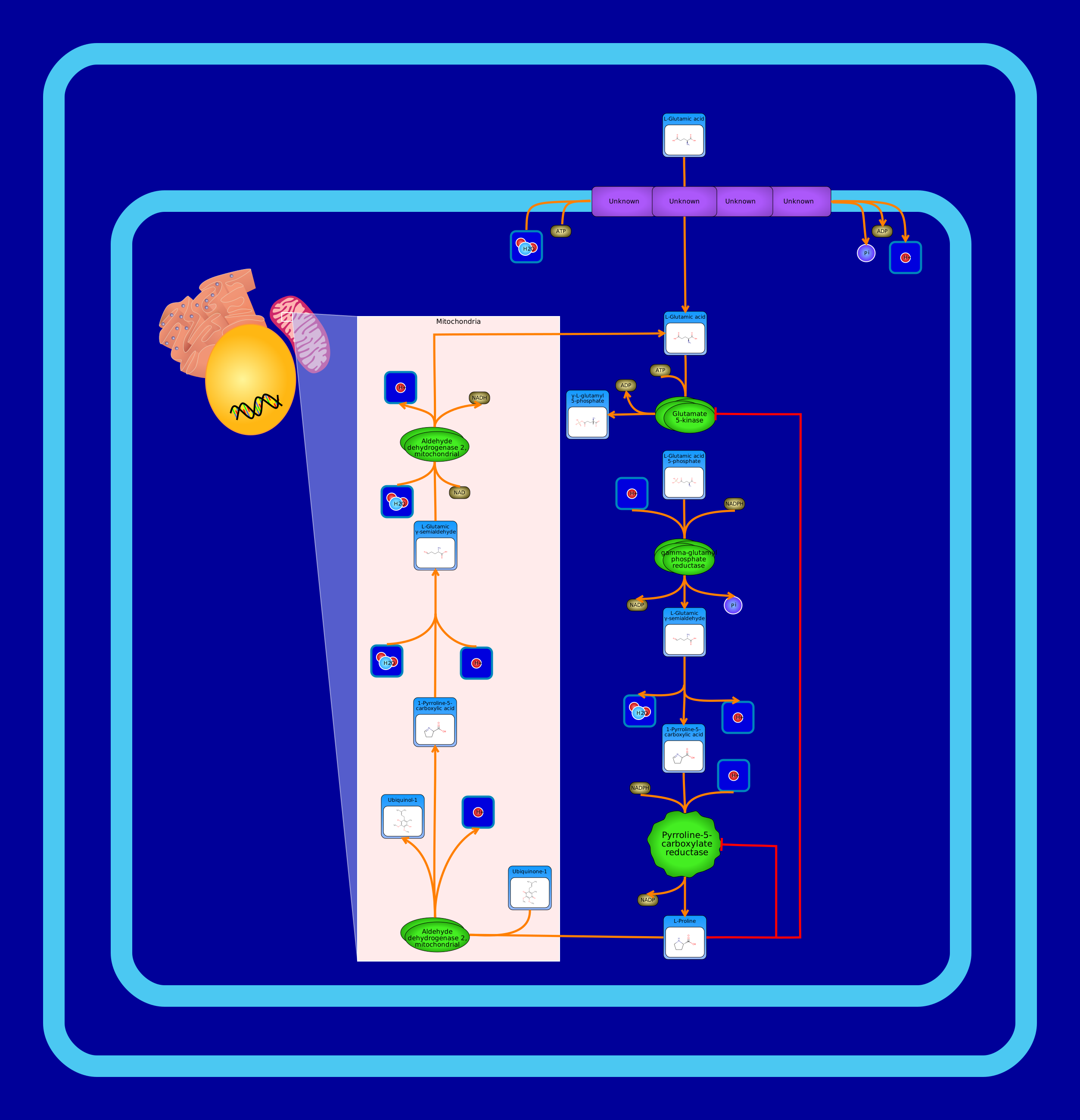 View Pathway
|
Proline MetabolismSaccharomyces cerevisiae
The biosynthesis of L-proline in E. coli involves L-glutamic acid being phosphorylated through an ATP driven glutamate 5-kinase resulting in a L-glutamic acid 5-phosphate. This compound is then reduced through a NADPH driven gamma glutamyl phosphate reductase resulting in the release of a phosphate, a NADP and a L-glutamic gamma-semialdehyde. L-glutamic gamma-semialdehyde is dehydrated spontaneously, resulting in a release of water,hydrogen ion and 1-Pyrroline-5-carboxylic acid. The latter compound is reduced by an NADPH driven pyrroline-5-carboxylate reductase which is subsequently reduced to L-proline. L-proline works as a repressor of the pyrroline-5-carboxylate reductase enzyme and glutamate 5-kinase. In E. coli, the biosynthesis of L-proline from L-glutamate is governed by three genetic loci namely proB, proA and proC. The first reaction in the pathway is catalyzed by γ-glutamyl kinase, encoded by proB . The second reaction, NADPH-dependent reduction of γ-glutamyl phosphate to glutamate-5-semialdehyde, in the pathway is catalyzed by glutamate-5-semialdehyde dehydrogenase, encoded by proA . These two enzymes aggregate into a multimeric bi-functional enzyme complex known as γ-glutamyl kinase-GP-reductase multienzyme complex. It is believed that the complex formation serves to protect the highly labile glutamyl phosphate from the hostile nucleophilic and aqueous environment found in the cell . The final step in the pathway, the reduction of pyrroline 5-carboxylate to L-proline, is catalyzed by an NADPH-dependent pyrroline-5-carboxylate reductase encoded by proC . Proline is metabolized by being converted back to L-glutamate, which is further degraded to α-ketoglutarate, an intermediate of the TCA cycle. The process by which proline is turned into L-glutamate starts with L-proline interacting with ubiquinone through a bifunctional protein putA resulting in an ubiquinol, a hydrogen ion and a 1-pyrroline-5-carboxylic acid. The latter compound is then hydrated spontaneously resulting in a L-glutamic gamma-semialdehyde. This compound is then processed by interacting with water through an NAD driven bifunctional protein putA resulting in a hydrogen ion, NADH and L-glutamic acid.
|
Creator: miguel ramirez Created On: November 23, 2015 at 14:04 Last Updated: November 23, 2015 at 14:04 |