
| PathWhiz ID | Pathway | Meta Data |
|---|---|---|
PW146150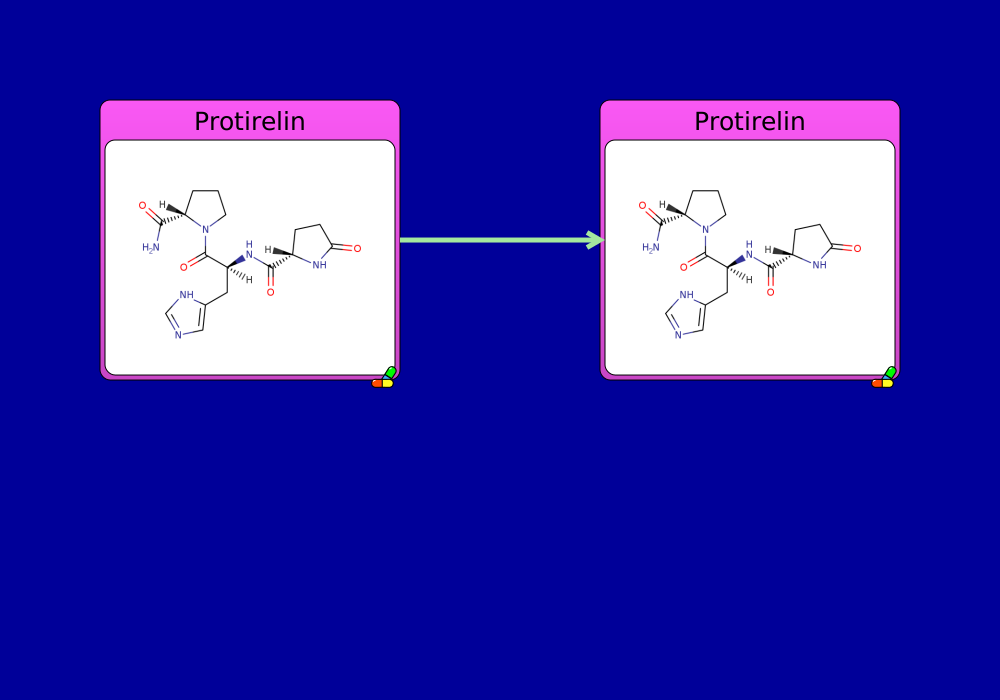 View Pathway
|
drug action
Protirelin Drug Metabolism Action PathwayHomo sapiens
|
Creator: Ray Kruger Created On: October 07, 2023 at 17:31 Last Updated: October 07, 2023 at 17:31 |
PW064773 View Pathway
|
signaling
Protocadherin Fat 1Homo sapiens
|
Creator: Guest: Anonymous Created On: June 20, 2018 at 03:13 Last Updated: June 20, 2018 at 03:13 |
PW145815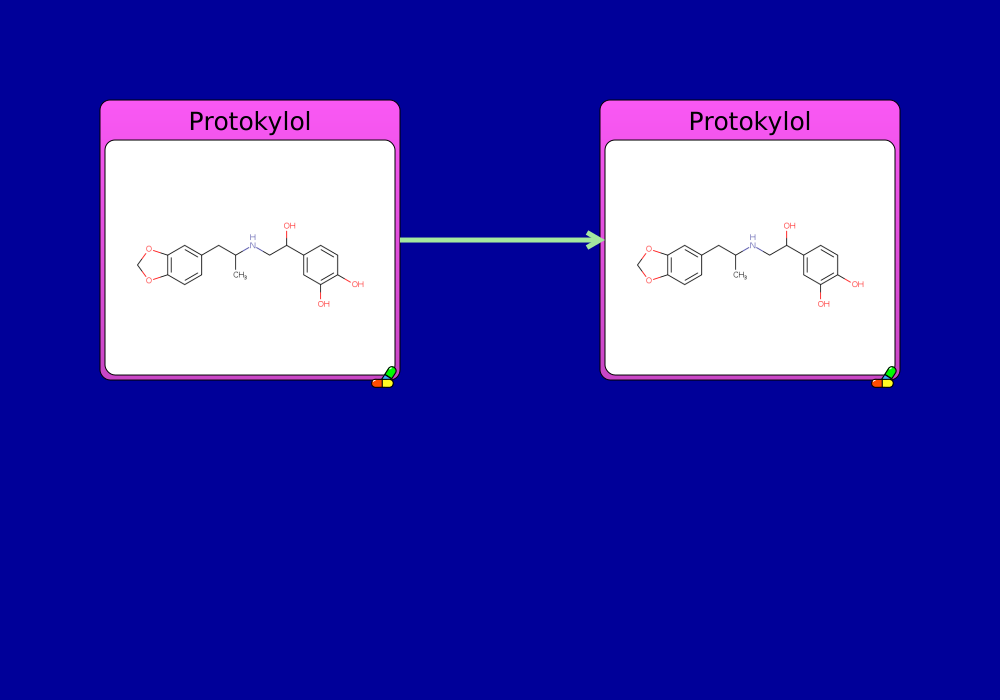 View Pathway
|
drug action
Protokylol Drug Metabolism Action PathwayHomo sapiens
|
Creator: Ray Kruger Created On: October 07, 2023 at 16:44 Last Updated: October 07, 2023 at 16:44 |
PW144470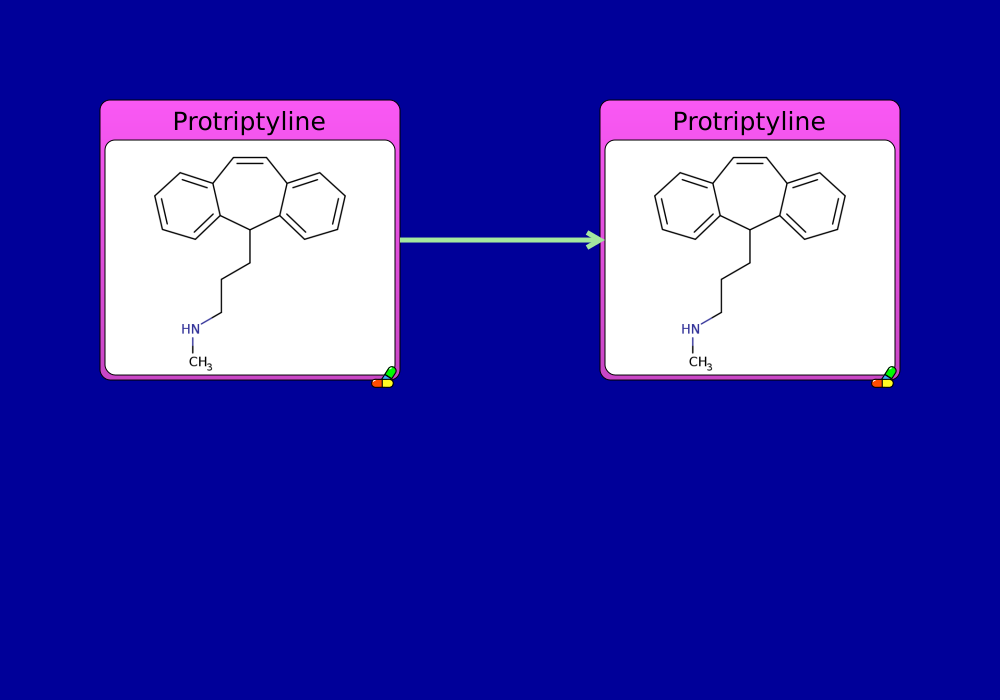 View Pathway
|
drug action
Protriptyline Drug Metabolism Action PathwayHomo sapiens
|
Creator: Ray Kruger Created On: October 07, 2023 at 13:42 Last Updated: October 07, 2023 at 13:42 |
PW176124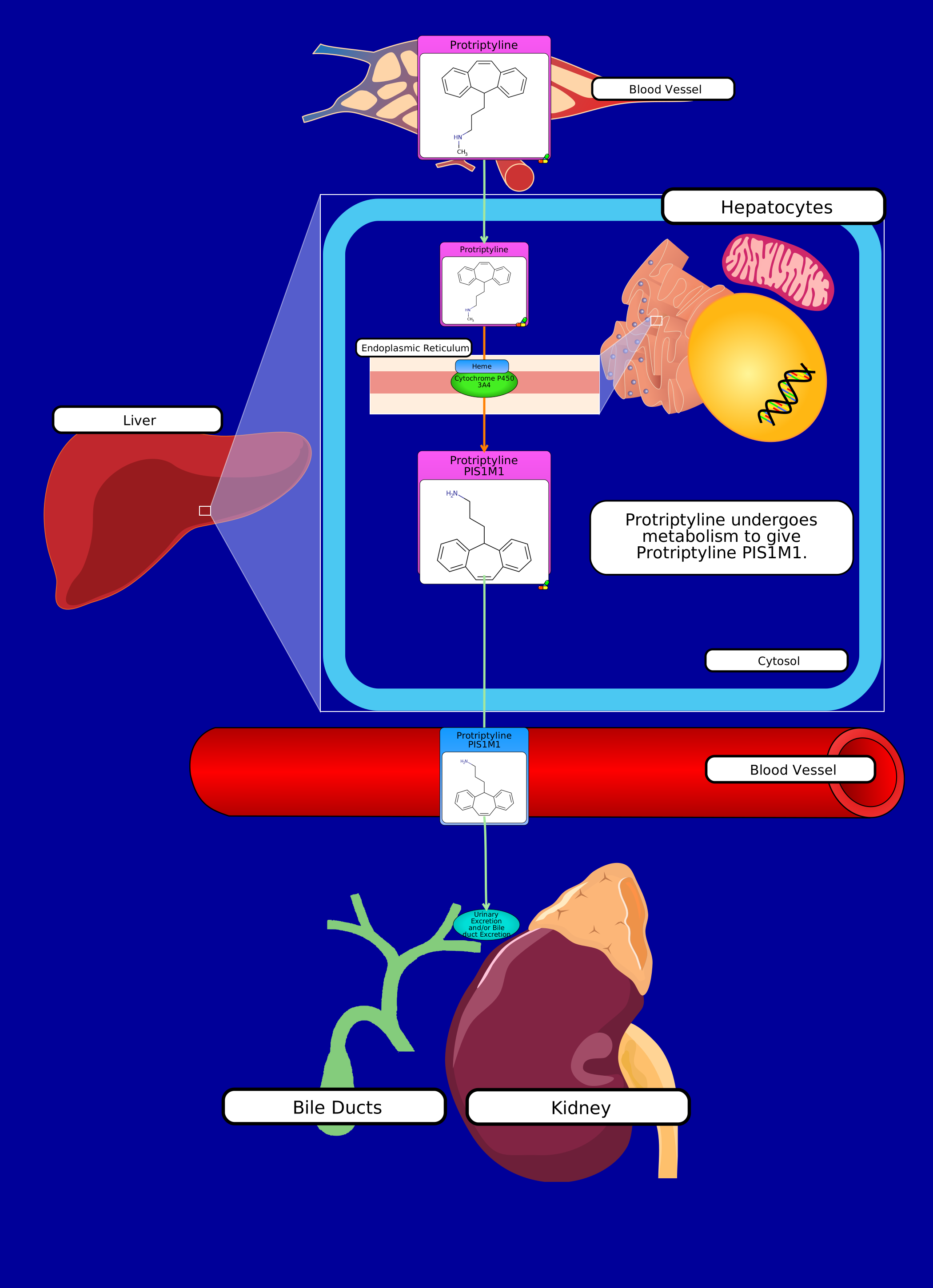 View Pathway
|
Protriptyline Predicted Metabolism Pathway newHomo sapiens
Metabolites of Protriptyline are predicted with biotransformer.
|
Creator: Omolola Created On: November 29, 2023 at 14:08 Last Updated: November 29, 2023 at 14:08 |
PW132492 View Pathway
|
Proxibarbal Drug MetabolismHomo sapiens
Proxibarbal is a drug that is not metabolized by the human body as determined by current research and biotransformer analysis. Proxibarbal passes through the liver and is then excreted from the body mainly through the kidney.
|
Creator: Ray Kruger Created On: September 21, 2023 at 22:04 Last Updated: September 21, 2023 at 22:04 |
PW146622 View Pathway
|
drug action
Proxibarbal Drug Metabolism Action PathwayHomo sapiens
|
Creator: Ray Kruger Created On: October 07, 2023 at 18:39 Last Updated: October 07, 2023 at 18:39 |
PW450366 View Pathway
|
PRPP BiosynthesisBacteroides stercoris ATCC 43183
The biosynthesis of phosphoribosyl pyrophosphate begins as a product of the pentose phosphate and D-ribose 5-phosphate interaction. When catalyzed with a phosphopentomutase, the product is a ribose 1-phosphate. Ribose 1-phosphate can interact spontaneously with ATP resulting in a release of hydrogen ion, ADP and a ribose 1,5-biphosphate. Ribose 1,5-biphosphate is then phosphorylated through a ribose 1,5-bisphosphokinase resulting in the release of ADP and phosphoribosyl pyrophosphate. Phosphoribosyl pyrophosphate will then participate in the purine nucleotides de novo biosynthesis pathway. Alternatively pentose phosphate and D-ribose 5-phosphate's interaction can be phosphorylated through an ATP driven ribose-phosphate diphosphokinase resulting in a release of a hydrogen ion, an AMP and a phosphoribosyl pyrophosphate which will again participate in the purine nucleotides de novo biosynthesis pathway.
|
Creator: Julia Wakoli Created On: January 14, 2025 at 03:33 Last Updated: January 14, 2025 at 03:33 |
PW450765 View Pathway
|
PRPP BiosynthesisMethylococcus capsulatus
The biosynthesis of phosphoribosyl pyrophosphate begins as a product of the pentose phosphate and D-ribose 5-phosphate interaction. When catalyzed with a phosphopentomutase, the product is a ribose 1-phosphate. Ribose 1-phosphate can interact spontaneously with ATP resulting in a release of hydrogen ion, ADP and a ribose 1,5-biphosphate. Ribose 1,5-biphosphate is then phosphorylated through a ribose 1,5-bisphosphokinase resulting in the release of ADP and phosphoribosyl pyrophosphate. Phosphoribosyl pyrophosphate will then participate in the purine nucleotides de novo biosynthesis pathway. Alternatively pentose phosphate and D-ribose 5-phosphate's interaction can be phosphorylated through an ATP driven ribose-phosphate diphosphokinase resulting in a release of a hydrogen ion, an AMP and a phosphoribosyl pyrophosphate which will again participate in the purine nucleotides de novo biosynthesis pathway.
|
Creator: Julia Wakoli Created On: January 14, 2025 at 08:00 Last Updated: January 14, 2025 at 08:00 |
PW455392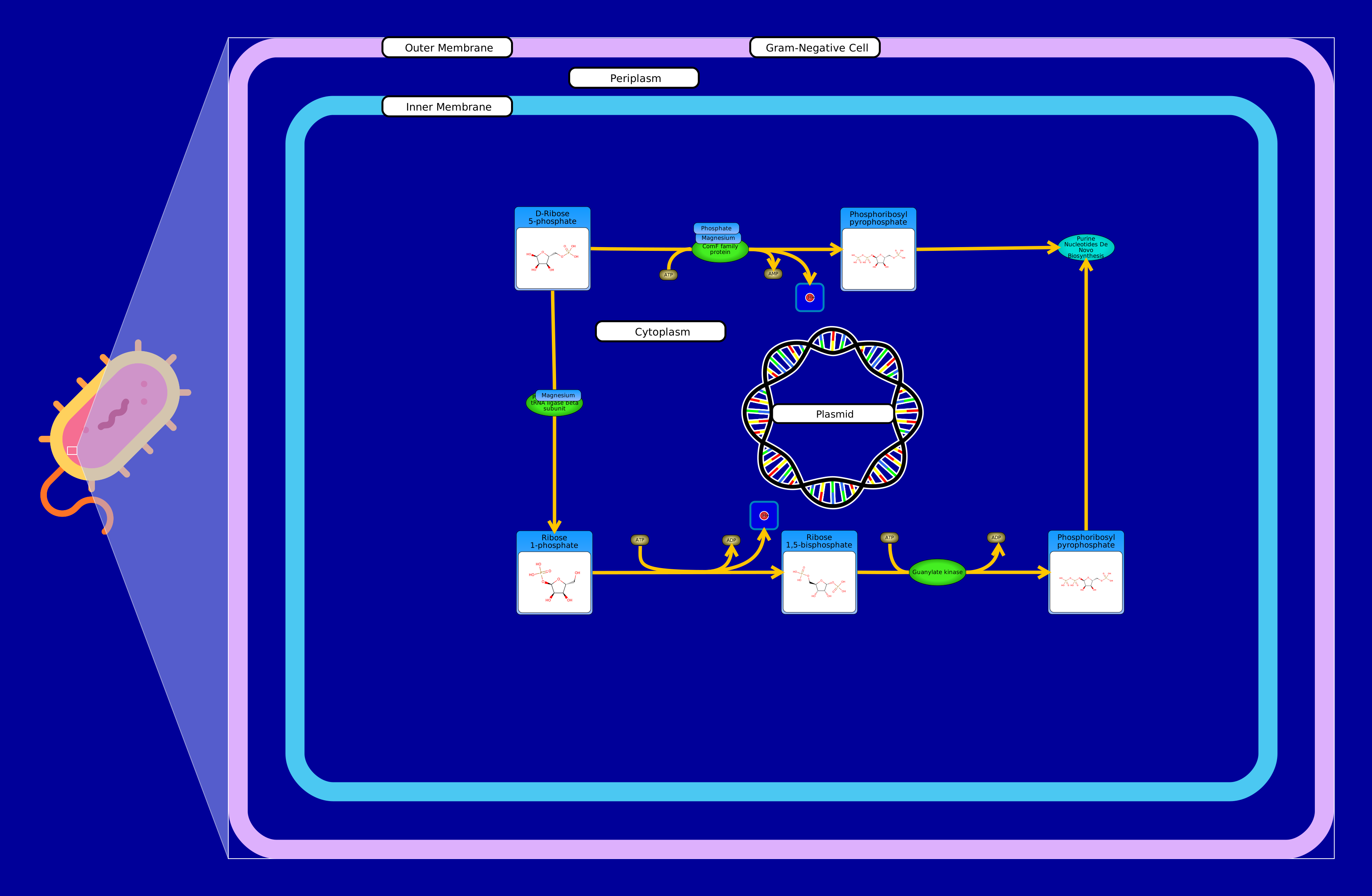 View Pathway
|
PRPP BiosynthesisProvidencia alcalifaciens DSM 30120
The biosynthesis of phosphoribosyl pyrophosphate begins as a product of the pentose phosphate and D-ribose 5-phosphate interaction. When catalyzed with a phosphopentomutase, the product is a ribose 1-phosphate. Ribose 1-phosphate can interact spontaneously with ATP resulting in a release of hydrogen ion, ADP and a ribose 1,5-biphosphate. Ribose 1,5-biphosphate is then phosphorylated through a ribose 1,5-bisphosphokinase resulting in the release of ADP and phosphoribosyl pyrophosphate. Phosphoribosyl pyrophosphate will then participate in the purine nucleotides de novo biosynthesis pathway. Alternatively pentose phosphate and D-ribose 5-phosphate's interaction can be phosphorylated through an ATP driven ribose-phosphate diphosphokinase resulting in a release of a hydrogen ion, an AMP and a phosphoribosyl pyrophosphate which will again participate in the purine nucleotides de novo biosynthesis pathway.
|
Creator: Julia Wakoli Created On: January 16, 2025 at 06:41 Last Updated: January 16, 2025 at 06:41 |