
| PathWhiz ID | Pathway | Meta Data |
|---|---|---|
PW512225 View Pathway
|
2-O-alpha-Mannosyl-D-glycerate DegradationCampylobacter upsaliensis JV21
2-O-α-Mannosyl-D-glycerate (MG; also named as Alpha-Mannosylglycerate) is an organic compound that will affect the osmosis in hyperthermophilic archaea and bacteria. In E.coli, 2-O-α-mannosyl-D-glycerate PTS permease (mngA) import MG into cell, and then phosphorylate MG to 2-O-(6-phospho-α-mannosyl)-D-glycerate by phosphocarrier protein HPr. 2-O-(6-phospho-α-mannosyl)-D-glycerate is converted to glyceric acid as well as mannose 6-phosphate by alpha-mannosidase mngB. Finally, glyceric acid is catalyzed to 2-Phospho-D-glyceric acid with ATP as energy source by Glycerate kinase 2. E.coli can't use MG as osmotic stress protection, but it can use MG as a carbon source.
|
Creator: Julia Wakoli Created On: February 09, 2025 at 17:39 Last Updated: February 09, 2025 at 17:39 |
PW512871 View Pathway
|
2-O-alpha-Mannosyl-D-glycerate DegradationProvidencia alcalifaciens DSM 30120
2-O-α-Mannosyl-D-glycerate (MG; also named as Alpha-Mannosylglycerate) is an organic compound that will affect the osmosis in hyperthermophilic archaea and bacteria. In E.coli, 2-O-α-mannosyl-D-glycerate PTS permease (mngA) import MG into cell, and then phosphorylate MG to 2-O-(6-phospho-α-mannosyl)-D-glycerate by phosphocarrier protein HPr. 2-O-(6-phospho-α-mannosyl)-D-glycerate is converted to glyceric acid as well as mannose 6-phosphate by alpha-mannosidase mngB. Finally, glyceric acid is catalyzed to 2-Phospho-D-glyceric acid with ATP as energy source by Glycerate kinase 2. E.coli can't use MG as osmotic stress protection, but it can use MG as a carbon source.
|
Creator: Julia Wakoli Created On: February 09, 2025 at 21:18 Last Updated: February 09, 2025 at 21:18 |
PW533132 View Pathway
|
2-O-alpha-Mannosyl-D-glycerate DegradationRaoultella planticola ATCC 33531
2-O-α-Mannosyl-D-glycerate (MG; also named as Alpha-Mannosylglycerate) is an organic compound that will affect the osmosis in hyperthermophilic archaea and bacteria. In E.coli, 2-O-α-mannosyl-D-glycerate PTS permease (mngA) import MG into cell, and then phosphorylate MG to 2-O-(6-phospho-α-mannosyl)-D-glycerate by phosphocarrier protein HPr. 2-O-(6-phospho-α-mannosyl)-D-glycerate is converted to glyceric acid as well as mannose 6-phosphate by alpha-mannosidase mngB. Finally, glyceric acid is catalyzed to 2-Phospho-D-glyceric acid with ATP as energy source by Glycerate kinase 2. E.coli can't use MG as osmotic stress protection, but it can use MG as a carbon source.
|
Creator: Julia Wakoli Created On: February 19, 2025 at 21:53 Last Updated: February 19, 2025 at 21:53 |
PW336580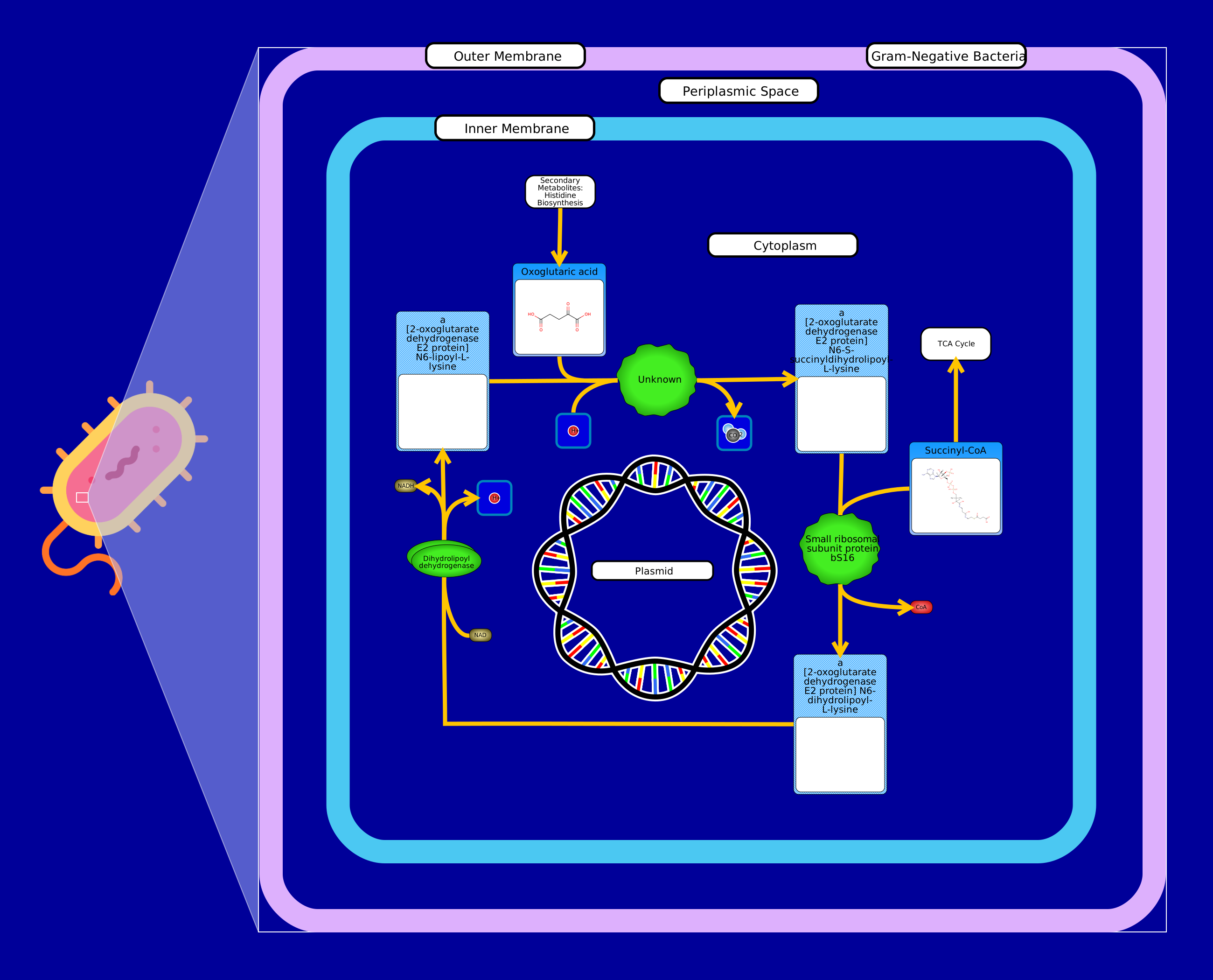 View Pathway
|
2-Oxoglutarate Decarboxylation to Succinyl-CoABacteroides finegoldii DSM 17565
2-oxoglutarate dehydrogenase complex is consisted of oxoglutarate decarboxylase, dihydrolipoyl succinyltransferase and dihydrolipoyl dehydrogenase), which is a rate-limiting enzyme of the citric acid cycle (TCA cycle) in prokaryote. The reaction that catalyzed by 2-oxoglutarate dehydrogenase complex can be generalized as 2-oxoglutarate + coenzyme A + NAD+ → succinyl-CoA + CO2 + NADH. During the OGDHC reaction cycle, 2-oxoglutarate is bound and decarboxylated by E1(o), a thiamin-diphosphate cofactor containing enzyme. The succinyl group is transferred to the lipoyl domain of E2(o) where it is carried to the active site and transferred to coenzyme A, forming succinyl-CoA. During this transfer the lipoyl group is reduced to dihydrolipoyl. The succinyl-CoA is released and the lipoyl domain of E2(o) is oxidized by E3 via transfer of protons to NAD, forming NADH and regenerating the lipoyl group back to lipoyllysine for another cycle. Under aerobic growth conditions the OGDHC not only catalyzes a key reaction in the TCA cycle, it also provides succinyl-CoA for methionine and lysine biosynthesis, the latter pathway also leading to peptidoglycan biosynthesis. The synthesis of the OGDHC is repressed by anaerobiosis and is also subject to glucose repression. It is induced by aerobic growth on acetate. (EcoCyc)
|
Creator: Julia Wakoli Created On: October 23, 2024 at 08:52 Last Updated: October 23, 2024 at 08:52 |
PW352911 View Pathway
|
2-Oxoglutarate Decarboxylation to Succinyl-CoAEscherichia coli O111:H- str. 11128
2-oxoglutarate dehydrogenase complex is consisted of oxoglutarate decarboxylase, dihydrolipoyl succinyltransferase and dihydrolipoyl dehydrogenase), which is a rate-limiting enzyme of the citric acid cycle (TCA cycle) in prokaryote. The reaction that catalyzed by 2-oxoglutarate dehydrogenase complex can be generalized as 2-oxoglutarate + coenzyme A + NAD+ → succinyl-CoA + CO2 + NADH. During the OGDHC reaction cycle, 2-oxoglutarate is bound and decarboxylated by E1(o), a thiamin-diphosphate cofactor containing enzyme. The succinyl group is transferred to the lipoyl domain of E2(o) where it is carried to the active site and transferred to coenzyme A, forming succinyl-CoA. During this transfer the lipoyl group is reduced to dihydrolipoyl. The succinyl-CoA is released and the lipoyl domain of E2(o) is oxidized by E3 via transfer of protons to NAD, forming NADH and regenerating the lipoyl group back to lipoyllysine for another cycle. Under aerobic growth conditions the OGDHC not only catalyzes a key reaction in the TCA cycle, it also provides succinyl-CoA for methionine and lysine biosynthesis, the latter pathway also leading to peptidoglycan biosynthesis. The synthesis of the OGDHC is repressed by anaerobiosis and is also subject to glucose repression. It is induced by aerobic growth on acetate. (EcoCyc)
|
Creator: Julia Wakoli Created On: November 08, 2024 at 17:33 Last Updated: November 08, 2024 at 17:33 |
PW353267 View Pathway
|
2-Oxoglutarate Decarboxylation to Succinyl-CoAAcetomicrobium hydrogeniformans
2-oxoglutarate dehydrogenase complex is consisted of oxoglutarate decarboxylase, dihydrolipoyl succinyltransferase and dihydrolipoyl dehydrogenase), which is a rate-limiting enzyme of the citric acid cycle (TCA cycle) in prokaryote. The reaction that catalyzed by 2-oxoglutarate dehydrogenase complex can be generalized as 2-oxoglutarate + coenzyme A + NAD+ → succinyl-CoA + CO2 + NADH. During the OGDHC reaction cycle, 2-oxoglutarate is bound and decarboxylated by E1(o), a thiamin-diphosphate cofactor containing enzyme. The succinyl group is transferred to the lipoyl domain of E2(o) where it is carried to the active site and transferred to coenzyme A, forming succinyl-CoA. During this transfer the lipoyl group is reduced to dihydrolipoyl. The succinyl-CoA is released and the lipoyl domain of E2(o) is oxidized by E3 via transfer of protons to NAD, forming NADH and regenerating the lipoyl group back to lipoyllysine for another cycle. Under aerobic growth conditions the OGDHC not only catalyzes a key reaction in the TCA cycle, it also provides succinyl-CoA for methionine and lysine biosynthesis, the latter pathway also leading to peptidoglycan biosynthesis. The synthesis of the OGDHC is repressed by anaerobiosis and is also subject to glucose repression. It is induced by aerobic growth on acetate. (EcoCyc)
|
Creator: Julia Wakoli Created On: November 08, 2024 at 19:31 Last Updated: November 08, 2024 at 19:31 |
PW336857 View Pathway
|
2-Oxoglutarate Decarboxylation to Succinyl-CoAHalococcus morrhuae DSM 1307
2-oxoglutarate dehydrogenase complex is consisted of oxoglutarate decarboxylase, dihydrolipoyl succinyltransferase and dihydrolipoyl dehydrogenase), which is a rate-limiting enzyme of the citric acid cycle (TCA cycle) in prokaryote. The reaction that catalyzed by 2-oxoglutarate dehydrogenase complex can be generalized as 2-oxoglutarate + coenzyme A + NAD+ → succinyl-CoA + CO2 + NADH. During the OGDHC reaction cycle, 2-oxoglutarate is bound and decarboxylated by E1(o), a thiamin-diphosphate cofactor containing enzyme. The succinyl group is transferred to the lipoyl domain of E2(o) where it is carried to the active site and transferred to coenzyme A, forming succinyl-CoA. During this transfer the lipoyl group is reduced to dihydrolipoyl. The succinyl-CoA is released and the lipoyl domain of E2(o) is oxidized by E3 via transfer of protons to NAD, forming NADH and regenerating the lipoyl group back to lipoyllysine for another cycle. Under aerobic growth conditions the OGDHC not only catalyzes a key reaction in the TCA cycle, it also provides succinyl-CoA for methionine and lysine biosynthesis, the latter pathway also leading to peptidoglycan biosynthesis. The synthesis of the OGDHC is repressed by anaerobiosis and is also subject to glucose repression. It is induced by aerobic growth on acetate. (EcoCyc)
|
Creator: Julia Wakoli Created On: October 23, 2024 at 14:21 Last Updated: October 23, 2024 at 14:21 |
PW352896 View Pathway
|
2-Oxoglutarate Decarboxylation to Succinyl-CoAEscherichia coli str. K-12 substr. DH10B
2-oxoglutarate dehydrogenase complex is consisted of oxoglutarate decarboxylase, dihydrolipoyl succinyltransferase and dihydrolipoyl dehydrogenase), which is a rate-limiting enzyme of the citric acid cycle (TCA cycle) in prokaryote. The reaction that catalyzed by 2-oxoglutarate dehydrogenase complex can be generalized as 2-oxoglutarate + coenzyme A + NAD+ → succinyl-CoA + CO2 + NADH. During the OGDHC reaction cycle, 2-oxoglutarate is bound and decarboxylated by E1(o), a thiamin-diphosphate cofactor containing enzyme. The succinyl group is transferred to the lipoyl domain of E2(o) where it is carried to the active site and transferred to coenzyme A, forming succinyl-CoA. During this transfer the lipoyl group is reduced to dihydrolipoyl. The succinyl-CoA is released and the lipoyl domain of E2(o) is oxidized by E3 via transfer of protons to NAD, forming NADH and regenerating the lipoyl group back to lipoyllysine for another cycle. Under aerobic growth conditions the OGDHC not only catalyzes a key reaction in the TCA cycle, it also provides succinyl-CoA for methionine and lysine biosynthesis, the latter pathway also leading to peptidoglycan biosynthesis. The synthesis of the OGDHC is repressed by anaerobiosis and is also subject to glucose repression. It is induced by aerobic growth on acetate. (EcoCyc)
|
Creator: Julia Wakoli Created On: November 08, 2024 at 17:29 Last Updated: November 08, 2024 at 17:29 |
PW352909 View Pathway
|
2-Oxoglutarate Decarboxylation to Succinyl-CoAEscherichia coli O103:H2 str. 12009
2-oxoglutarate dehydrogenase complex is consisted of oxoglutarate decarboxylase, dihydrolipoyl succinyltransferase and dihydrolipoyl dehydrogenase), which is a rate-limiting enzyme of the citric acid cycle (TCA cycle) in prokaryote. The reaction that catalyzed by 2-oxoglutarate dehydrogenase complex can be generalized as 2-oxoglutarate + coenzyme A + NAD+ → succinyl-CoA + CO2 + NADH. During the OGDHC reaction cycle, 2-oxoglutarate is bound and decarboxylated by E1(o), a thiamin-diphosphate cofactor containing enzyme. The succinyl group is transferred to the lipoyl domain of E2(o) where it is carried to the active site and transferred to coenzyme A, forming succinyl-CoA. During this transfer the lipoyl group is reduced to dihydrolipoyl. The succinyl-CoA is released and the lipoyl domain of E2(o) is oxidized by E3 via transfer of protons to NAD, forming NADH and regenerating the lipoyl group back to lipoyllysine for another cycle. Under aerobic growth conditions the OGDHC not only catalyzes a key reaction in the TCA cycle, it also provides succinyl-CoA for methionine and lysine biosynthesis, the latter pathway also leading to peptidoglycan biosynthesis. The synthesis of the OGDHC is repressed by anaerobiosis and is also subject to glucose repression. It is induced by aerobic growth on acetate. (EcoCyc)
|
Creator: Julia Wakoli Created On: November 08, 2024 at 17:32 Last Updated: November 08, 2024 at 17:32 |
PW352891 View Pathway
|
2-Oxoglutarate Decarboxylation to Succinyl-CoAEscherichia coli APEC O1
2-oxoglutarate dehydrogenase complex is consisted of oxoglutarate decarboxylase, dihydrolipoyl succinyltransferase and dihydrolipoyl dehydrogenase), which is a rate-limiting enzyme of the citric acid cycle (TCA cycle) in prokaryote. The reaction that catalyzed by 2-oxoglutarate dehydrogenase complex can be generalized as 2-oxoglutarate + coenzyme A + NAD+ → succinyl-CoA + CO2 + NADH. During the OGDHC reaction cycle, 2-oxoglutarate is bound and decarboxylated by E1(o), a thiamin-diphosphate cofactor containing enzyme. The succinyl group is transferred to the lipoyl domain of E2(o) where it is carried to the active site and transferred to coenzyme A, forming succinyl-CoA. During this transfer the lipoyl group is reduced to dihydrolipoyl. The succinyl-CoA is released and the lipoyl domain of E2(o) is oxidized by E3 via transfer of protons to NAD, forming NADH and regenerating the lipoyl group back to lipoyllysine for another cycle. Under aerobic growth conditions the OGDHC not only catalyzes a key reaction in the TCA cycle, it also provides succinyl-CoA for methionine and lysine biosynthesis, the latter pathway also leading to peptidoglycan biosynthesis. The synthesis of the OGDHC is repressed by anaerobiosis and is also subject to glucose repression. It is induced by aerobic growth on acetate. (EcoCyc)
|
Creator: Julia Wakoli Created On: November 08, 2024 at 17:28 Last Updated: November 08, 2024 at 17:28 |