
| PathWhiz ID | Pathway | Meta Data |
|---|---|---|
PW144280 View Pathway
|
drug action
Cystine Drug Metabolism Action PathwayHomo sapiens
|
Creator: Ray Kruger Created On: October 07, 2023 at 13:05 Last Updated: October 07, 2023 at 13:05 |
PW000699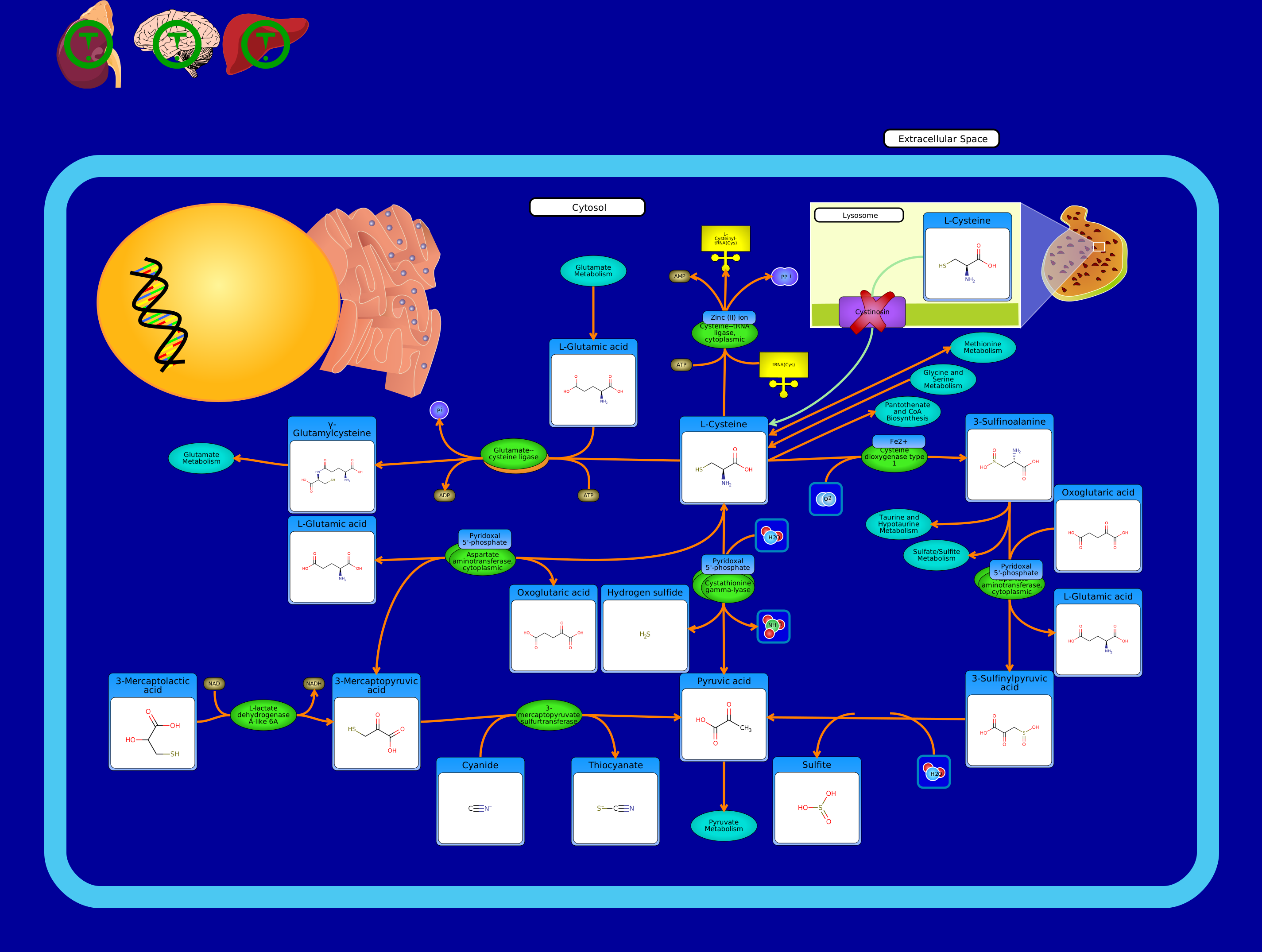 View Pathway
|
disease
Cystinosis, Ocular NonnephropathicHomo sapiens
Ocular non-nephropathic cystinosis, also known as adult-onset cystinosis, is a rare inborn error of metabolism (IEM) and autosomal recessive disorder of the cysteine metabolism pathway. It is caused by a defect in the CTNS gene, which encodes the protein cystinosin, which acts as a cystine/H+ symporter that transports L-cysteine out of the lysosome. Ocular non-nephropathic cystinosis is characterized by a buildup of cysteine in cells, in the case of this form in the cornea. Symptoms include photophobia and damage to the cornea due to crystals forming from the excess cysteine. However, unlike other forms of cystinosis, no or minimal kidney damage occurs. Treatment with cysteamine, a drug that can convert cysteine into a form that can be secreted by the lysosome, can be effective in all of the forms of cystinosis. It is estimated that ocular non-nephropathic cystinosis affects less than 1 in 100,000 to 200,000 individuals, which is the rate of the more severe nephropathic cystinosis.
|
Creator: WishartLab Created On: June 23, 2014 at 02:48 Last Updated: June 23, 2014 at 02:48 |
PW122134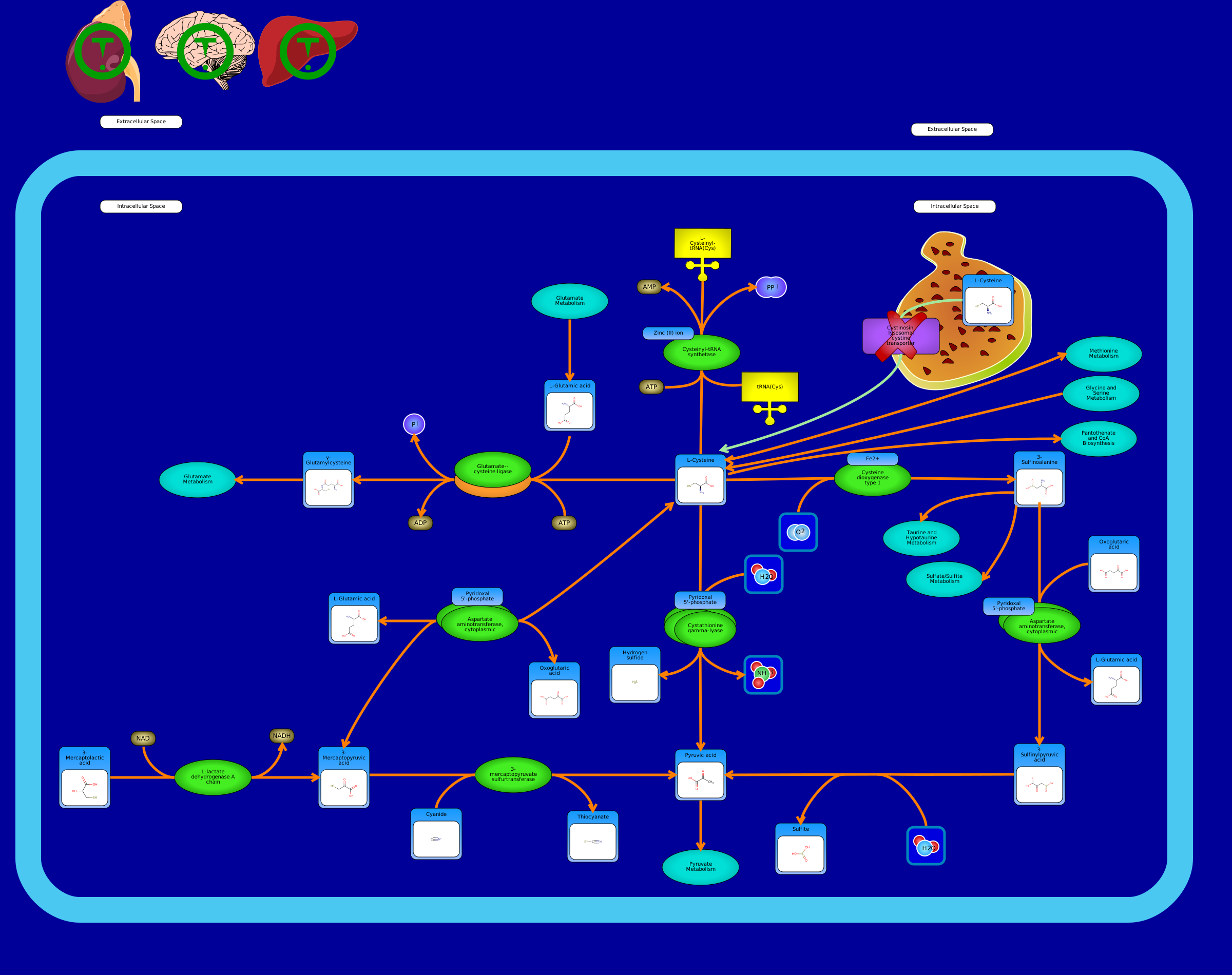 View Pathway
|
disease
Cystinosis, Ocular NonnephropathicRattus norvegicus
Ocular non-nephropathic cystinosis, also known as adult-onset cystinosis, is a rare inborn error of metabolism (IEM) and autosomal recessive disorder of the cysteine metabolism pathway. It is caused by a defect in the CTNS gene, which encodes the protein cystinosin, which acts as a cystine/H+ symporter that transports L-cysteine out of the lysosome. Ocular non-nephropathic cystinosis is characterized by a buildup of cysteine in cells, in the case of this form in the cornea. Symptoms include photophobia and damage to the cornea due to crystals forming from the excess cysteine. However, unlike other forms of cystinosis, no or minimal kidney damage occurs. Treatment with cysteamine, a drug that can convert cysteine into a form that can be secreted by the lysosome, can be effective in all of the forms of cystinosis. It is estimated that ocular non-nephropathic cystinosis affects less than 1 in 100,000 to 200,000 individuals, which is the rate of the more severe nephropathic cystinosis.
|
Creator: Ana Marcu Created On: September 10, 2018 at 15:52 Last Updated: September 10, 2018 at 15:52 |
PW121910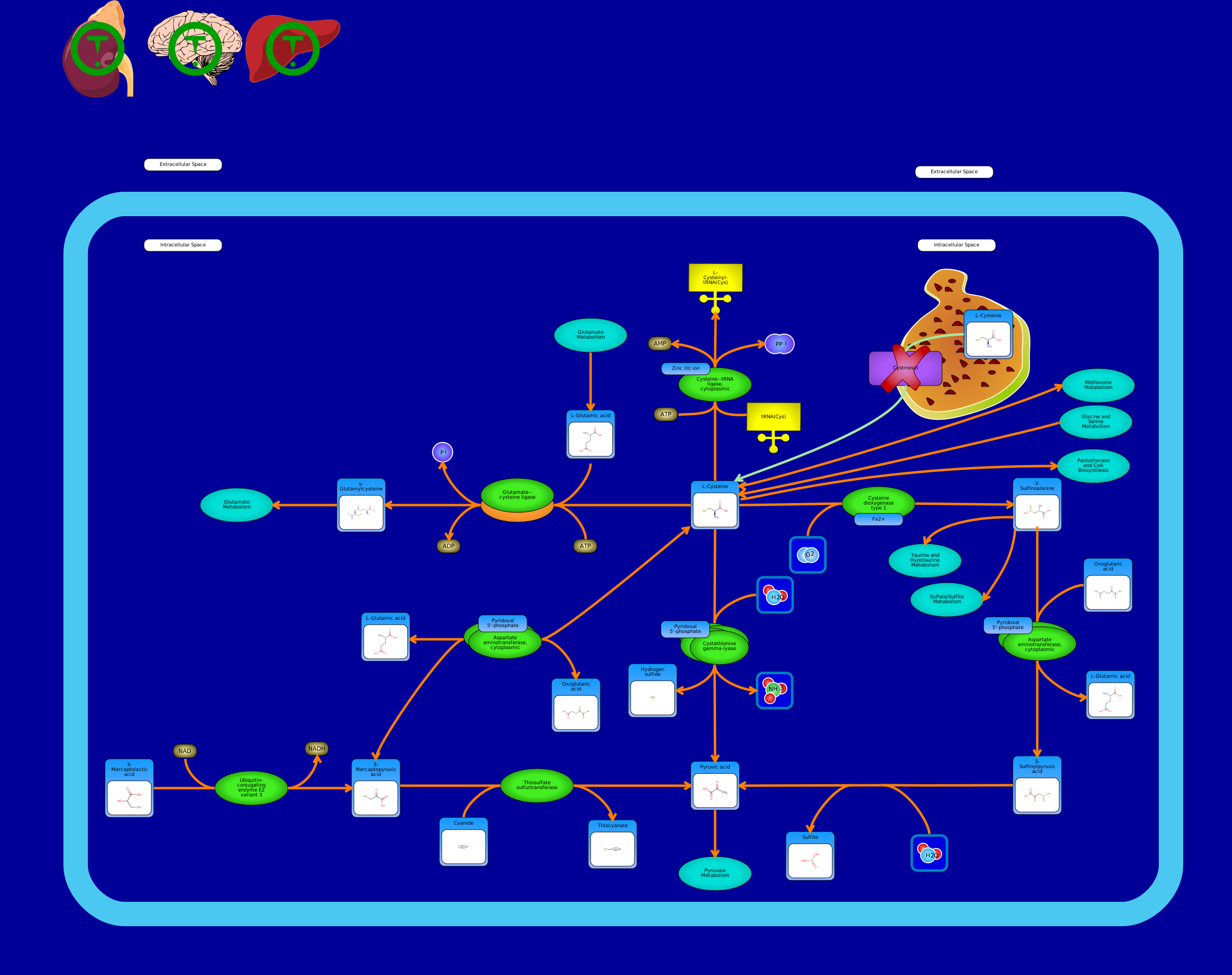 View Pathway
|
disease
Cystinosis, Ocular NonnephropathicMus musculus
Ocular non-nephropathic cystinosis, also known as adult-onset cystinosis, is a rare inborn error of metabolism (IEM) and autosomal recessive disorder of the cysteine metabolism pathway. It is caused by a defect in the CTNS gene, which encodes the protein cystinosin, which acts as a cystine/H+ symporter that transports L-cysteine out of the lysosome. Ocular non-nephropathic cystinosis is characterized by a buildup of cysteine in cells, in the case of this form in the cornea. Symptoms include photophobia and damage to the cornea due to crystals forming from the excess cysteine. However, unlike other forms of cystinosis, no or minimal kidney damage occurs. Treatment with cysteamine, a drug that can convert cysteine into a form that can be secreted by the lysosome, can be effective in all of the forms of cystinosis. It is estimated that ocular non-nephropathic cystinosis affects less than 1 in 100,000 to 200,000 individuals, which is the rate of the more severe nephropathic cystinosis.
|
Creator: Ana Marcu Created On: September 10, 2018 at 15:50 Last Updated: September 10, 2018 at 15:50 |
PW127177 View Pathway
|
disease
Cystinosis, Ocular NonnephropathicHomo sapiens
Ocular non-nephropathic cystinosis, also known as adult-onset cystinosis, is a rare inborn error of metabolism (IEM) and autosomal recessive disorder of the cysteine metabolism pathway. It is caused by a defect in the CTNS gene, which encodes the protein cystinosin, which acts as a cystine/H+ symporter that transports L-cysteine out of the lysosome. Ocular non-nephropathic cystinosis is characterized by a buildup of cysteine in cells, in the case of this form in the cornea. Symptoms include photophobia and damage to the cornea due to crystals forming from the excess cysteine. However, unlike other forms of cystinosis, no or minimal kidney damage occurs. Treatment with cysteamine, a drug that can convert cysteine into a form that can be secreted by the lysosome, can be effective in all of the forms of cystinosis. It is estimated that ocular non-nephropathic cystinosis affects less than 1 in 100,000 to 200,000 individuals, which is the rate of the more severe nephropathic cystinosis.
|
Creator: Ray Kruger Created On: November 02, 2022 at 11:52 Last Updated: November 02, 2022 at 11:52 |
PW122135 View Pathway
|
disease
CystinuriaRattus norvegicus
Cystinuria is a genetic condition caused by mutations in the SLC7A9 or SLC3A1 gene. These two genes are responsible for creating subunits of a protein that reabsorbs cystine into the blood, located in the kidneys. The mutations cause this process to be compromised and allows the amino acids to build up and have a high concentration in urine. This causes crystals to form and become stones as they grow larger. These stones can become lodged in the bladder or in the kidneys which can cause pain, develop infection and disrupt the passing of urine through the urinary tract if the stones create a blockage there.
|
Creator: Ana Marcu Created On: September 10, 2018 at 15:52 Last Updated: September 10, 2018 at 15:52 |
PW121911 View Pathway
|
disease
CystinuriaMus musculus
Cystinuria is a genetic condition caused by mutations in the SLC7A9 or SLC3A1 gene. These two genes are responsible for creating subunits of a protein that reabsorbs cystine into the blood, located in the kidneys. The mutations cause this process to be compromised and allows the amino acids to build up and have a high concentration in urine. This causes crystals to form and become stones as they grow larger. These stones can become lodged in the bladder or in the kidneys which can cause pain, develop infection and disrupt the passing of urine through the urinary tract if the stones create a blockage there.
|
Creator: Ana Marcu Created On: September 10, 2018 at 15:50 Last Updated: September 10, 2018 at 15:50 |
PW000700 View Pathway
|
disease
CystinuriaHomo sapiens
Cystinuria is a genetic condition caused by mutations in the SLC7A9 or SLC3A1 gene. These two genes are responsible for creating subunits of a protein that reabsorbs cystine into the blood, located in the kidneys. The mutations cause this process to be compromised and allows the amino acids to build up and have a high concentration in urine. This causes crystals to form and become stones as they grow larger. These stones can become lodged in the bladder or in the kidneys which can cause pain, develop infection and disrupt the passing of urine through the urinary tract if the stones create a blockage there.
|
Creator: WishartLab Created On: June 23, 2014 at 03:01 Last Updated: June 23, 2014 at 03:01 |
PW145085 View Pathway
|
drug action
Cytarabine Drug Metabolism Action PathwayHomo sapiens
|
Creator: Ray Kruger Created On: October 07, 2023 at 15:03 Last Updated: October 07, 2023 at 15:03 |
PW012920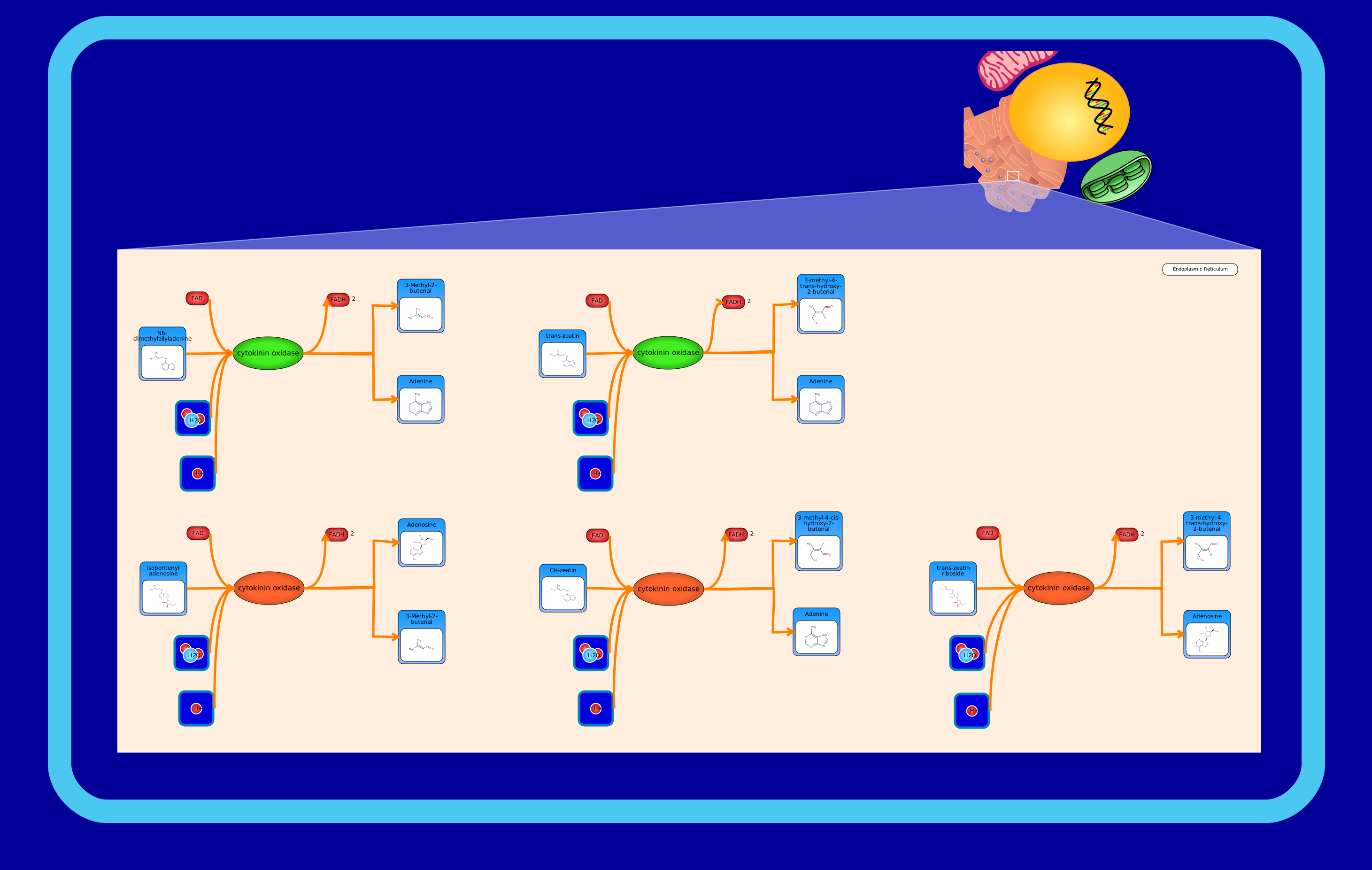 View Pathway
|
Cytokinins DegradationArabidopsis thaliana
Cytokinins (CK) are a class of plant growth substances (phytohormones) that promote cell division, or cytokinesis, in plant roots and shoots. They are involved primarily in cell growth and differentiation, but also affect apical dominance, axillary bud growth, and leaf senescence. . Their regulation can take the form of biosynthesis, import, conjugation, and degradation. Homeostasis regulation by irreversible degradation is carried out by cytokinin oxidases which form adenine-like compounds resulting from the cleavage of the N6-isopentenyl-side chain. The cytokinins degradation pathway consists of five different degradation reactions that can be localized to either the endoplasmic reticulum or the vacuole. Cytokinin oxidase was found to catalyze two such reactions: the conversion of N6-dimethylallyladenine into 3-methyl-2-butenal and adenine and the conversion of trans-zeatin into 3-methyl-4-trans-hydroxy-2-butenal and adenine. It has not yet been determined if cytokinin oxidase also catalyzes the other three reactions in the cytokinins degradation pathway: the conversion of isopentenyl adenosine into adenosine and 3-methyl-2-butenal, the conversion of cis-zeatin into 3-methyl-4-cis-hydroxy-2-butenal and adenine, and the conversion of trans-zeatin riboside into 3-methyl-4-trans-hydroxy-2-butenal and adenosine. As such, the enzyme of these reactions are coloured orange in the image.
|
Creator: Carin Li Created On: February 24, 2017 at 16:01 Last Updated: February 24, 2017 at 16:01 |