
| PathWhiz ID | Pathway | Meta Data |
|---|---|---|
PW435328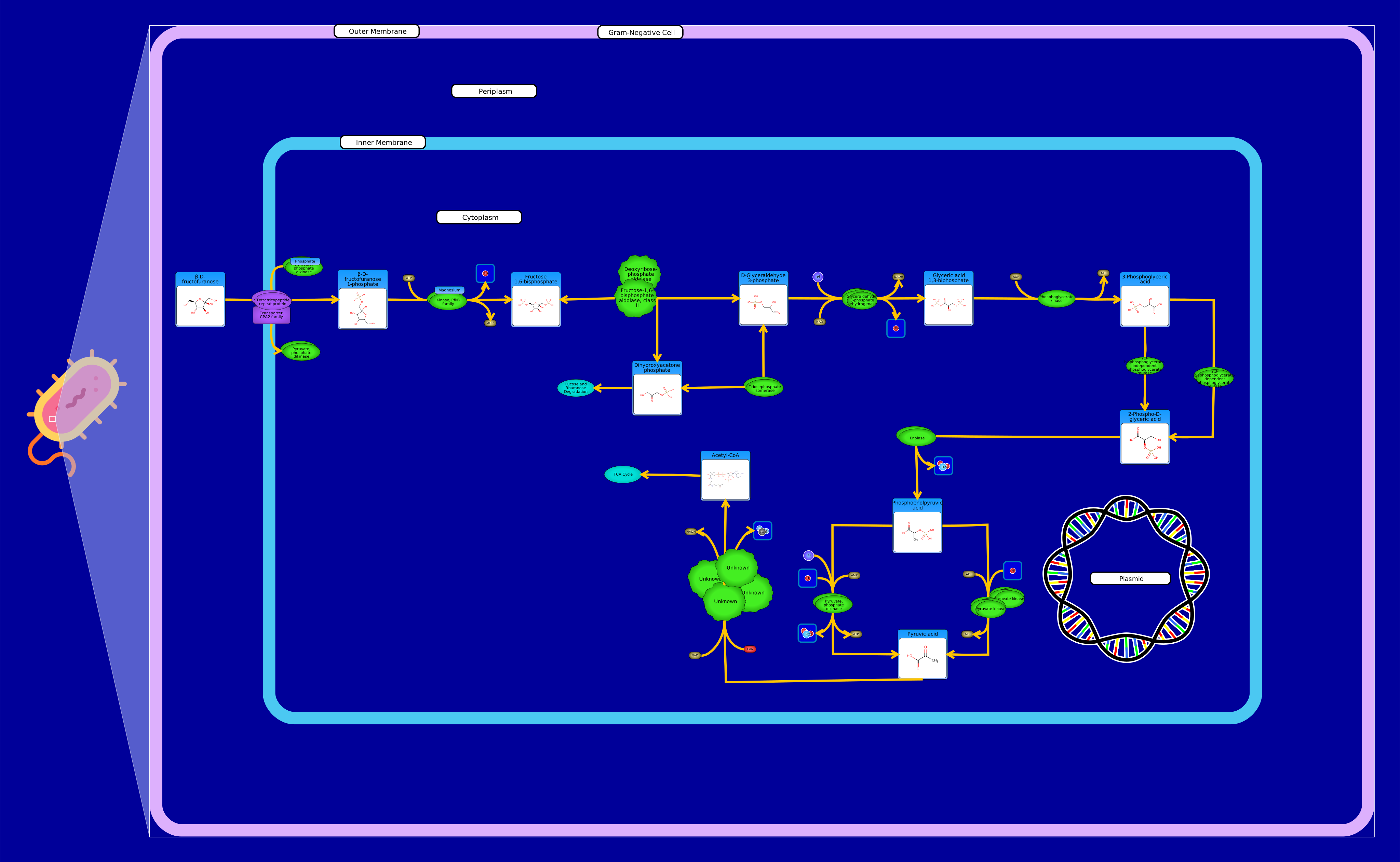 View Pathway
|
Fructose MetabolismBacteroides finegoldii DSM 17565
Fructose metabolism begins with the transport of Beta-D-fructofuranose through a fructose PTS permease, resulting in a Beta-D-fructofuranose 1-phosphate. This compound is phosphorylated by an ATP driven 1-phosphofructokinase resulting in a fructose 1,6-biphosphate. This compound can either react with a fructose bisphosphate aldolase class 1 resulting in D-glyceraldehyde 3-phosphate and a dihydroxyacetone phosphate or through a fructose biphosphate aldolase class 2 resulting in a D-glyceraldehyde 3-phosphate. This compound can then either react in a reversible triosephosphate isomerase resulting in a dihydroxyacetone phosphate or react with a phosphate through a NAD dependent Glyceraldehyde 3-phosphate dehydrogenase resulting in a glyceric acid 1,3-biphosphate. This compound is desphosphorylated by a phosphoglycerate kinase resulting in a 3-phosphoglyceric acid.This compound in turn can either react with a 2,3-bisphosphoglycerate-independent phosphoglycerate mutase or a 2,3-bisphosphoglycerate-independent phosphoglycerate mutase resulting in a 2-phospho-D-glyceric acid. This compound interacts with an enolase resulting in a phosphoenolpyruvic acid and water. Phosphoenolpyruvic acid can react either through a AMP driven phosphoenoylpyruvate synthase or a ADP driven pyruvate kinase protein complex resulting in a pyruvic acid.
Pyruvic acid reacts with CoA through a NAD driven pyruvate dehydrogenase complex resulting in a carbon dioxide and a Acetyl-CoA which gets incorporated into the TCA cycle pathway.
|
Creator: Julia Wakoli Created On: January 04, 2025 at 14:51 Last Updated: January 04, 2025 at 14:51 |
PW438992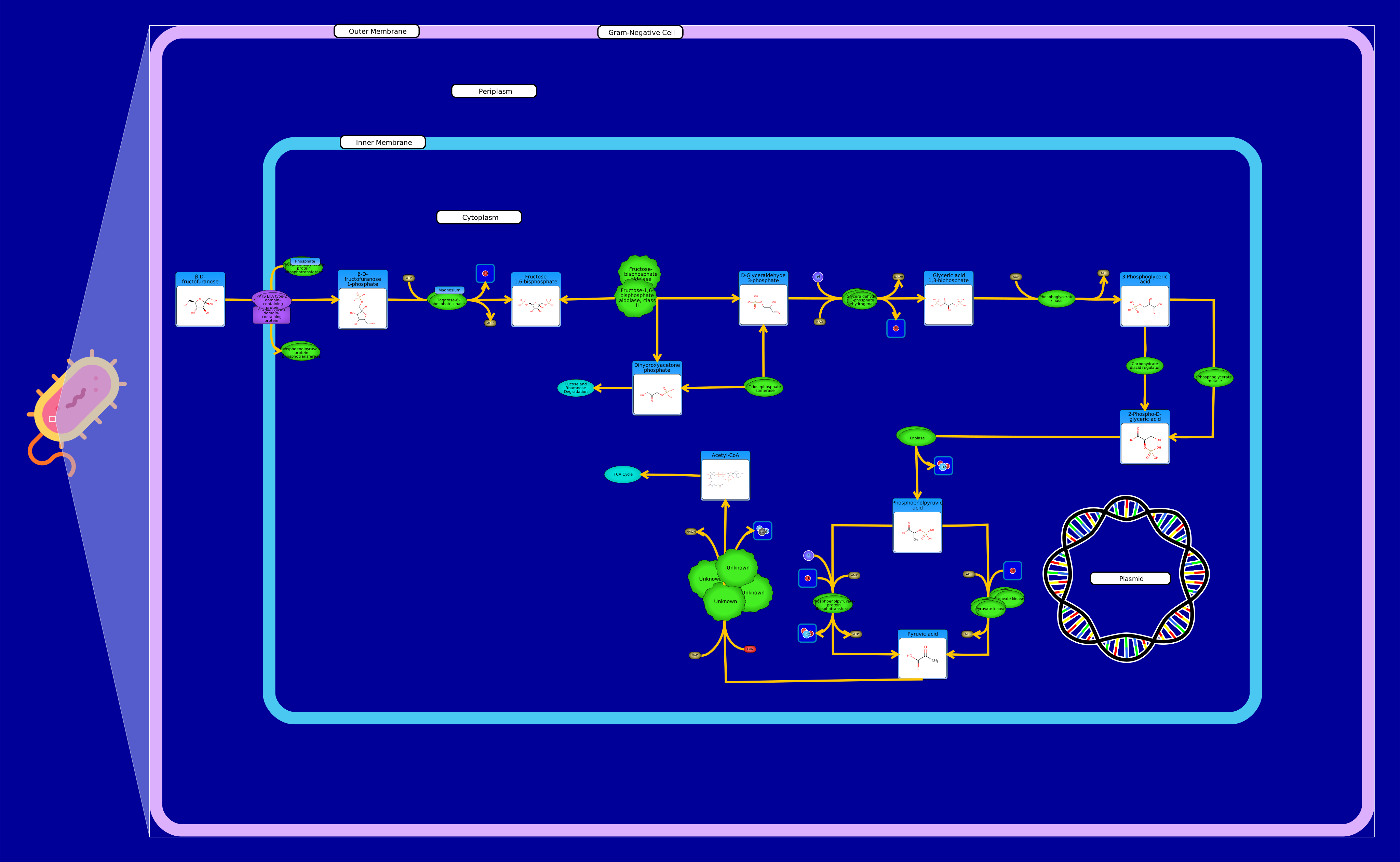 View Pathway
|
Fructose Metabolism[Clostridium] citroniae WAL-17108
Fructose metabolism begins with the transport of Beta-D-fructofuranose through a fructose PTS permease, resulting in a Beta-D-fructofuranose 1-phosphate. This compound is phosphorylated by an ATP driven 1-phosphofructokinase resulting in a fructose 1,6-biphosphate. This compound can either react with a fructose bisphosphate aldolase class 1 resulting in D-glyceraldehyde 3-phosphate and a dihydroxyacetone phosphate or through a fructose biphosphate aldolase class 2 resulting in a D-glyceraldehyde 3-phosphate. This compound can then either react in a reversible triosephosphate isomerase resulting in a dihydroxyacetone phosphate or react with a phosphate through a NAD dependent Glyceraldehyde 3-phosphate dehydrogenase resulting in a glyceric acid 1,3-biphosphate. This compound is desphosphorylated by a phosphoglycerate kinase resulting in a 3-phosphoglyceric acid.This compound in turn can either react with a 2,3-bisphosphoglycerate-independent phosphoglycerate mutase or a 2,3-bisphosphoglycerate-independent phosphoglycerate mutase resulting in a 2-phospho-D-glyceric acid. This compound interacts with an enolase resulting in a phosphoenolpyruvic acid and water. Phosphoenolpyruvic acid can react either through a AMP driven phosphoenoylpyruvate synthase or a ADP driven pyruvate kinase protein complex resulting in a pyruvic acid.
Pyruvic acid reacts with CoA through a NAD driven pyruvate dehydrogenase complex resulting in a carbon dioxide and a Acetyl-CoA which gets incorporated into the TCA cycle pathway.
|
Creator: Julia Wakoli Created On: January 06, 2025 at 22:51 Last Updated: January 06, 2025 at 22:51 |
PW002390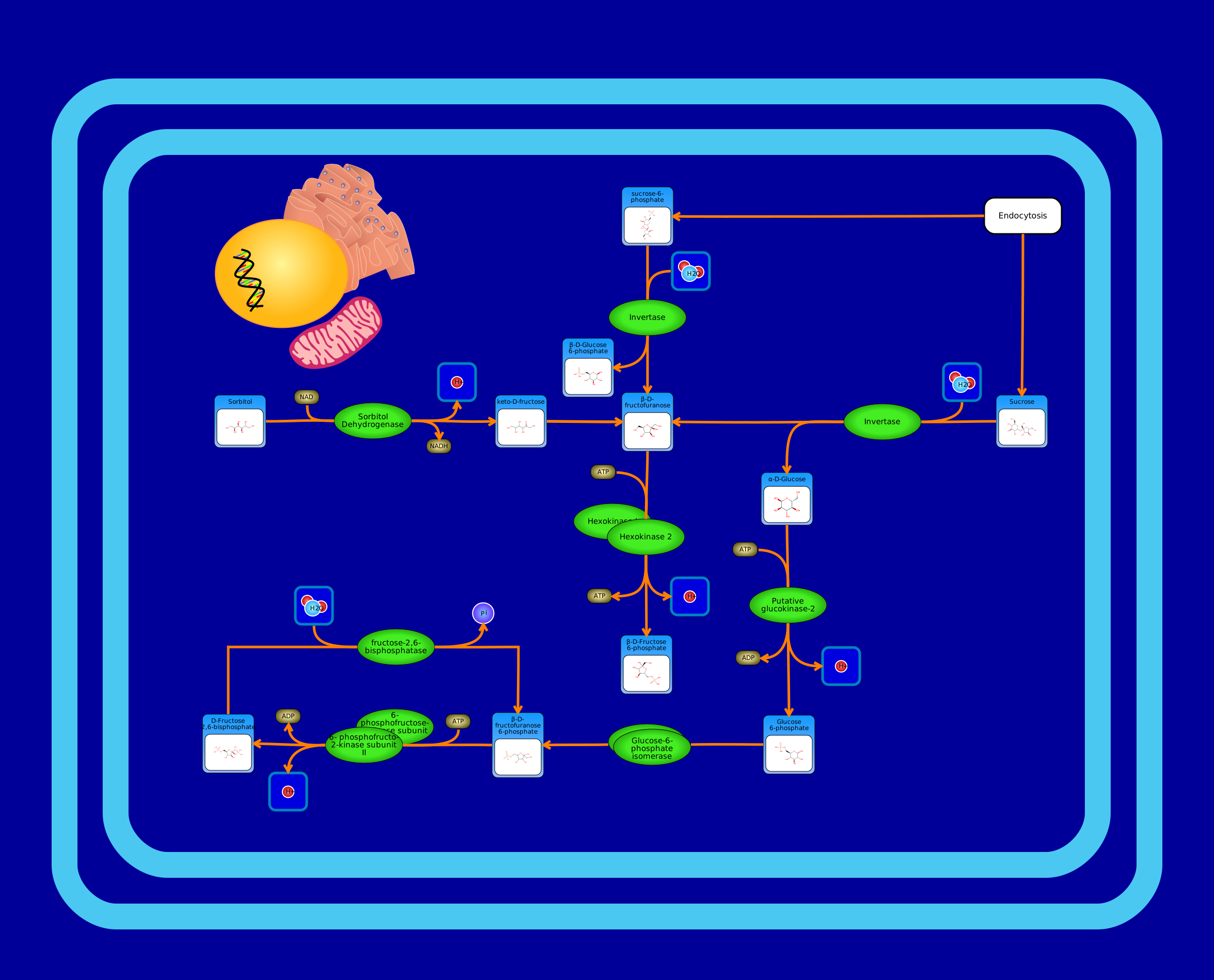 View Pathway
|
Fructose MetabolismSaccharomyces cerevisiae
The biosynthesis of fructose has multiple point of origin:
-Sucrose is metabolized by an invertase resulting in the release of B-D-fructofuranose and D-glucopyranose. D-glucopyranose is then phosphorylated through a ATP driven glucokinase resulting in the release of a hydrogen ion, ADP and D-glucopyranose 6-phosphate. The latter compound is then isomerized through a D-glucopyranose 6-phosphate isomerase resulting in the release of a B-D-fructofuranose 6-phosphate
-Sucrose is metabolized by an invertase resulting in the release of B-D-fructofuranose and D-glucopyranose. B-D-fructofuranoseis phosphorylated through an ATP driven fructokinase resulting in the release of B-D-fructofuranose 6-phosphate.
-D-sorbitol reacts with sorbitol dehydrogenase resulting in the release of keto-D-fructose.The latter compound reacts spontaneously in B-D-fructofuranose. The latter compound is then phosphorylated through a fructokinase resulting in the release of B-D-fructofuranose 6-phosphate
-Sucrose 6-phosphate reacts with an invertase resulting in the release of B-D-fructofuranose and B-D-glucose 6-phosphate. The latter compound is then phosphorylated through a fructokinase resulting in the release of B-D-fructofuranose 6-phosphate
The degradation of B-D-fructofuranose 6-phosphate starts with the phosphorylation of B-D-fructofuranose 6-phosphate through a 6-phosphofructo-2-kinase resulting in the release of B-D-fructose 2,6-bisphosphate that can be latter incorporated into glycolysis
|
Creator: miguel ramirez Created On: December 21, 2015 at 09:57 Last Updated: December 21, 2015 at 09:57 |
PW437241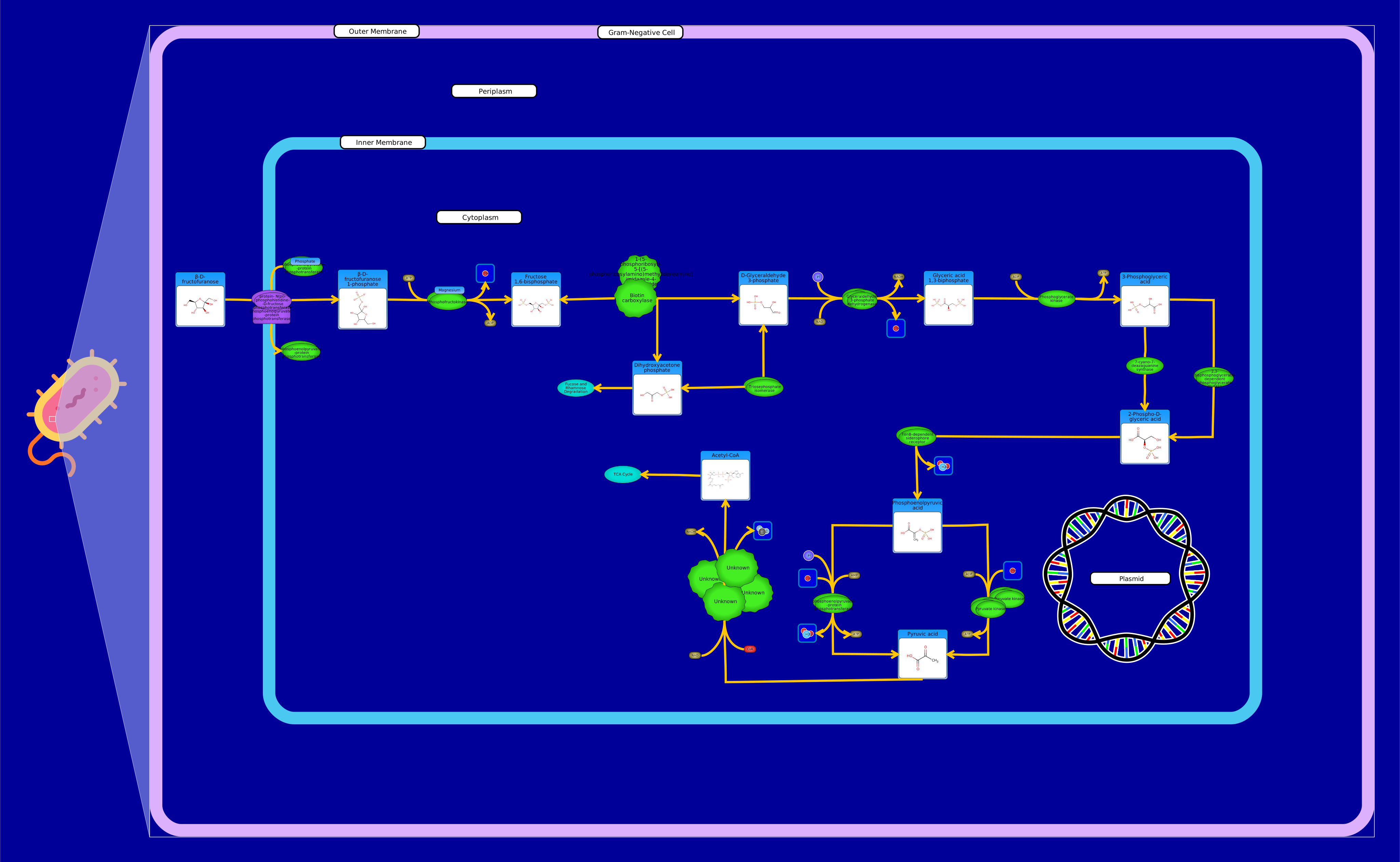 View Pathway
|
Fructose MetabolismLautropia mirabilis ATCC 51599
Fructose metabolism begins with the transport of Beta-D-fructofuranose through a fructose PTS permease, resulting in a Beta-D-fructofuranose 1-phosphate. This compound is phosphorylated by an ATP driven 1-phosphofructokinase resulting in a fructose 1,6-biphosphate. This compound can either react with a fructose bisphosphate aldolase class 1 resulting in D-glyceraldehyde 3-phosphate and a dihydroxyacetone phosphate or through a fructose biphosphate aldolase class 2 resulting in a D-glyceraldehyde 3-phosphate. This compound can then either react in a reversible triosephosphate isomerase resulting in a dihydroxyacetone phosphate or react with a phosphate through a NAD dependent Glyceraldehyde 3-phosphate dehydrogenase resulting in a glyceric acid 1,3-biphosphate. This compound is desphosphorylated by a phosphoglycerate kinase resulting in a 3-phosphoglyceric acid.This compound in turn can either react with a 2,3-bisphosphoglycerate-independent phosphoglycerate mutase or a 2,3-bisphosphoglycerate-independent phosphoglycerate mutase resulting in a 2-phospho-D-glyceric acid. This compound interacts with an enolase resulting in a phosphoenolpyruvic acid and water. Phosphoenolpyruvic acid can react either through a AMP driven phosphoenoylpyruvate synthase or a ADP driven pyruvate kinase protein complex resulting in a pyruvic acid.
Pyruvic acid reacts with CoA through a NAD driven pyruvate dehydrogenase complex resulting in a carbon dioxide and a Acetyl-CoA which gets incorporated into the TCA cycle pathway.
|
Creator: Julia Wakoli Created On: January 05, 2025 at 20:21 Last Updated: January 05, 2025 at 20:21 |
PW457794 View Pathway
|
Fructose MetabolismEscherichia coli DH1
Fructose metabolism begins with the transport of Beta-D-fructofuranose through a fructose PTS permease, resulting in a Beta-D-fructofuranose 1-phosphate. This compound is phosphorylated by an ATP driven 1-phosphofructokinase resulting in a fructose 1,6-biphosphate. This compound can either react with a fructose bisphosphate aldolase class 1 resulting in D-glyceraldehyde 3-phosphate and a dihydroxyacetone phosphate or through a fructose biphosphate aldolase class 2 resulting in a D-glyceraldehyde 3-phosphate. This compound can then either react in a reversible triosephosphate isomerase resulting in a dihydroxyacetone phosphate or react with a phosphate through a NAD dependent Glyceraldehyde 3-phosphate dehydrogenase resulting in a glyceric acid 1,3-biphosphate. This compound is desphosphorylated by a phosphoglycerate kinase resulting in a 3-phosphoglyceric acid.This compound in turn can either react with a 2,3-bisphosphoglycerate-independent phosphoglycerate mutase or a 2,3-bisphosphoglycerate-independent phosphoglycerate mutase resulting in a 2-phospho-D-glyceric acid. This compound interacts with an enolase resulting in a phosphoenolpyruvic acid and water. Phosphoenolpyruvic acid can react either through a AMP driven phosphoenoylpyruvate synthase or a ADP driven pyruvate kinase protein complex resulting in a pyruvic acid.
Pyruvic acid reacts with CoA through a NAD driven pyruvate dehydrogenase complex resulting in a carbon dioxide and a Acetyl-CoA which gets incorporated into the TCA cycle pathway.
|
Creator: Julia Wakoli Created On: January 17, 2025 at 17:02 Last Updated: January 17, 2025 at 17:02 |
PW432657 View Pathway
|
Fructose MetabolismDysgonomonas gadei ATCC BAA-286
Fructose metabolism begins with the transport of Beta-D-fructofuranose through a fructose PTS permease, resulting in a Beta-D-fructofuranose 1-phosphate. This compound is phosphorylated by an ATP driven 1-phosphofructokinase resulting in a fructose 1,6-biphosphate. This compound can either react with a fructose bisphosphate aldolase class 1 resulting in D-glyceraldehyde 3-phosphate and a dihydroxyacetone phosphate or through a fructose biphosphate aldolase class 2 resulting in a D-glyceraldehyde 3-phosphate. This compound can then either react in a reversible triosephosphate isomerase resulting in a dihydroxyacetone phosphate or react with a phosphate through a NAD dependent Glyceraldehyde 3-phosphate dehydrogenase resulting in a glyceric acid 1,3-biphosphate. This compound is desphosphorylated by a phosphoglycerate kinase resulting in a 3-phosphoglyceric acid.This compound in turn can either react with a 2,3-bisphosphoglycerate-independent phosphoglycerate mutase or a 2,3-bisphosphoglycerate-independent phosphoglycerate mutase resulting in a 2-phospho-D-glyceric acid. This compound interacts with an enolase resulting in a phosphoenolpyruvic acid and water. Phosphoenolpyruvic acid can react either through a AMP driven phosphoenoylpyruvate synthase or a ADP driven pyruvate kinase protein complex resulting in a pyruvic acid.
Pyruvic acid reacts with CoA through a NAD driven pyruvate dehydrogenase complex resulting in a carbon dioxide and a Acetyl-CoA which gets incorporated into the TCA cycle pathway.
|
Creator: Julia Wakoli Created On: January 03, 2025 at 00:38 Last Updated: January 03, 2025 at 00:38 |
PW437765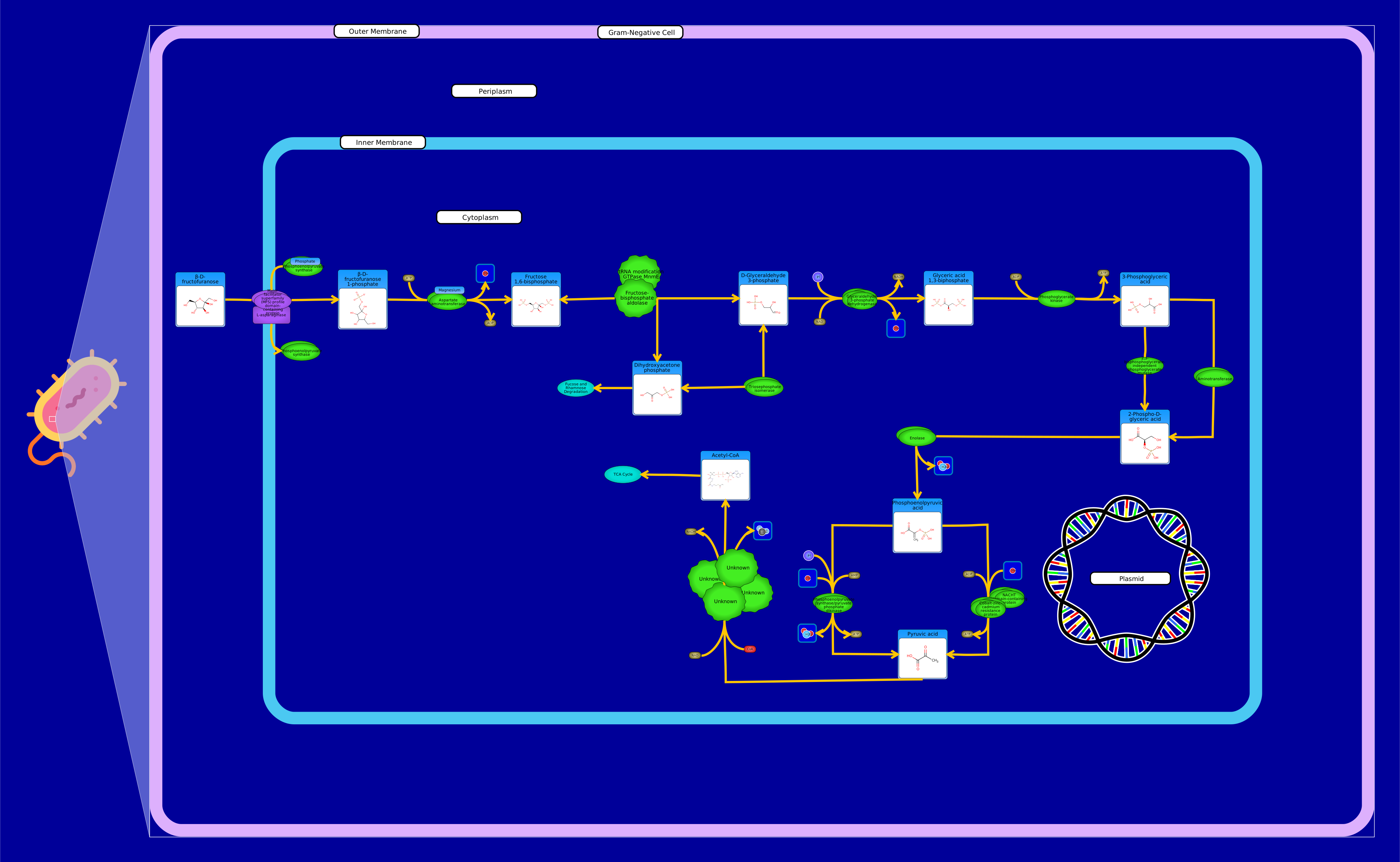 View Pathway
|
Fructose MetabolismHelicobacter cinaedi CCUG 18818 = ATCC BAA-847
Fructose metabolism begins with the transport of Beta-D-fructofuranose through a fructose PTS permease, resulting in a Beta-D-fructofuranose 1-phosphate. This compound is phosphorylated by an ATP driven 1-phosphofructokinase resulting in a fructose 1,6-biphosphate. This compound can either react with a fructose bisphosphate aldolase class 1 resulting in D-glyceraldehyde 3-phosphate and a dihydroxyacetone phosphate or through a fructose biphosphate aldolase class 2 resulting in a D-glyceraldehyde 3-phosphate. This compound can then either react in a reversible triosephosphate isomerase resulting in a dihydroxyacetone phosphate or react with a phosphate through a NAD dependent Glyceraldehyde 3-phosphate dehydrogenase resulting in a glyceric acid 1,3-biphosphate. This compound is desphosphorylated by a phosphoglycerate kinase resulting in a 3-phosphoglyceric acid.This compound in turn can either react with a 2,3-bisphosphoglycerate-independent phosphoglycerate mutase or a 2,3-bisphosphoglycerate-independent phosphoglycerate mutase resulting in a 2-phospho-D-glyceric acid. This compound interacts with an enolase resulting in a phosphoenolpyruvic acid and water. Phosphoenolpyruvic acid can react either through a AMP driven phosphoenoylpyruvate synthase or a ADP driven pyruvate kinase protein complex resulting in a pyruvic acid.
Pyruvic acid reacts with CoA through a NAD driven pyruvate dehydrogenase complex resulting in a carbon dioxide and a Acetyl-CoA which gets incorporated into the TCA cycle pathway.
|
Creator: Julia Wakoli Created On: January 06, 2025 at 04:23 Last Updated: January 06, 2025 at 04:23 |
PW456796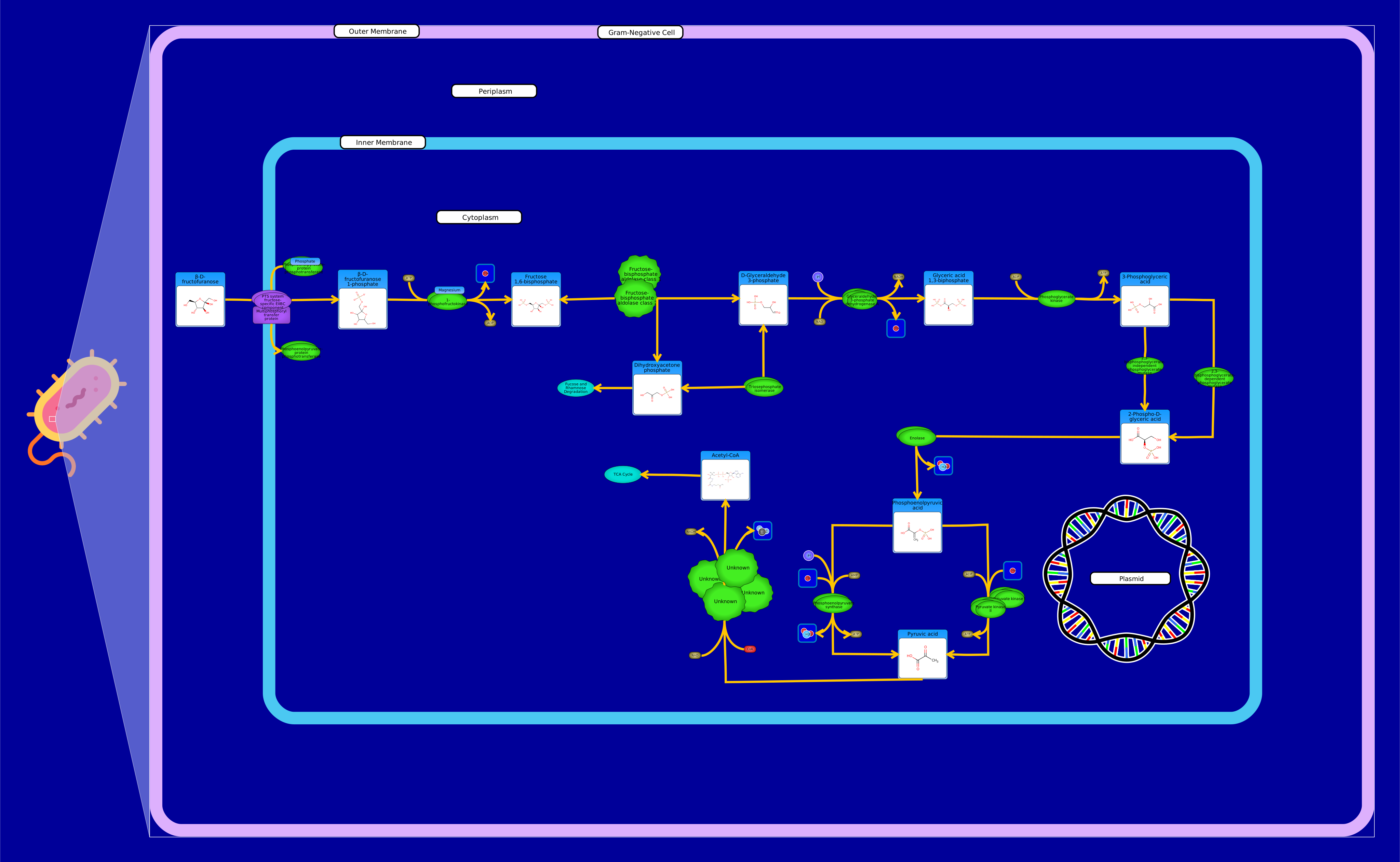 View Pathway
|
Fructose MetabolismEscherichia coli O157:H7 str. EC4115
Fructose metabolism begins with the transport of Beta-D-fructofuranose through a fructose PTS permease, resulting in a Beta-D-fructofuranose 1-phosphate. This compound is phosphorylated by an ATP driven 1-phosphofructokinase resulting in a fructose 1,6-biphosphate. This compound can either react with a fructose bisphosphate aldolase class 1 resulting in D-glyceraldehyde 3-phosphate and a dihydroxyacetone phosphate or through a fructose biphosphate aldolase class 2 resulting in a D-glyceraldehyde 3-phosphate. This compound can then either react in a reversible triosephosphate isomerase resulting in a dihydroxyacetone phosphate or react with a phosphate through a NAD dependent Glyceraldehyde 3-phosphate dehydrogenase resulting in a glyceric acid 1,3-biphosphate. This compound is desphosphorylated by a phosphoglycerate kinase resulting in a 3-phosphoglyceric acid.This compound in turn can either react with a 2,3-bisphosphoglycerate-independent phosphoglycerate mutase or a 2,3-bisphosphoglycerate-independent phosphoglycerate mutase resulting in a 2-phospho-D-glyceric acid. This compound interacts with an enolase resulting in a phosphoenolpyruvic acid and water. Phosphoenolpyruvic acid can react either through a AMP driven phosphoenoylpyruvate synthase or a ADP driven pyruvate kinase protein complex resulting in a pyruvic acid.
Pyruvic acid reacts with CoA through a NAD driven pyruvate dehydrogenase complex resulting in a carbon dioxide and a Acetyl-CoA which gets incorporated into the TCA cycle pathway.
|
Creator: Julia Wakoli Created On: January 17, 2025 at 05:47 Last Updated: January 17, 2025 at 05:47 |
PW457698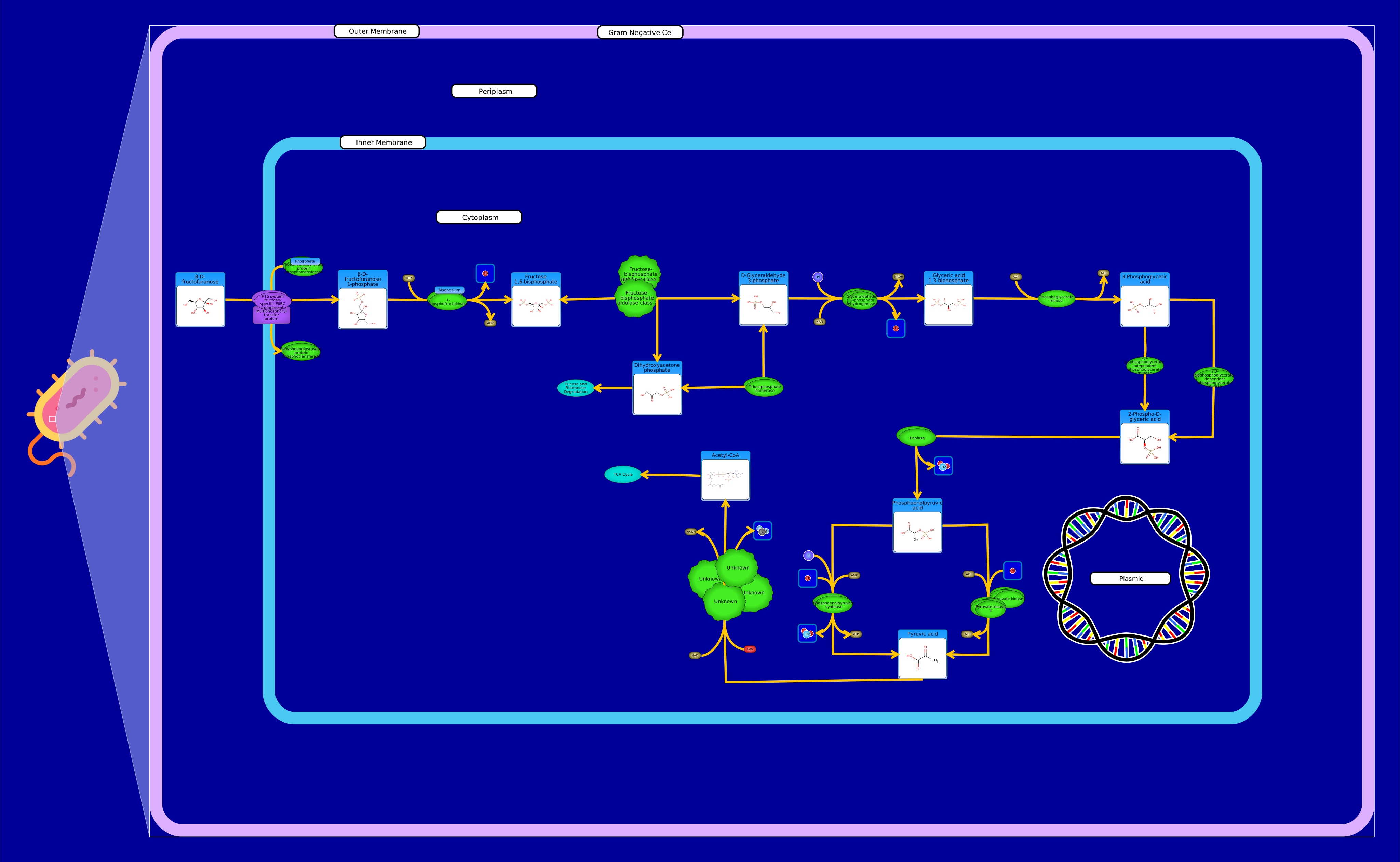 View Pathway
|
Fructose MetabolismEscherichia coli IHE3034
Fructose metabolism begins with the transport of Beta-D-fructofuranose through a fructose PTS permease, resulting in a Beta-D-fructofuranose 1-phosphate. This compound is phosphorylated by an ATP driven 1-phosphofructokinase resulting in a fructose 1,6-biphosphate. This compound can either react with a fructose bisphosphate aldolase class 1 resulting in D-glyceraldehyde 3-phosphate and a dihydroxyacetone phosphate or through a fructose biphosphate aldolase class 2 resulting in a D-glyceraldehyde 3-phosphate. This compound can then either react in a reversible triosephosphate isomerase resulting in a dihydroxyacetone phosphate or react with a phosphate through a NAD dependent Glyceraldehyde 3-phosphate dehydrogenase resulting in a glyceric acid 1,3-biphosphate. This compound is desphosphorylated by a phosphoglycerate kinase resulting in a 3-phosphoglyceric acid.This compound in turn can either react with a 2,3-bisphosphoglycerate-independent phosphoglycerate mutase or a 2,3-bisphosphoglycerate-independent phosphoglycerate mutase resulting in a 2-phospho-D-glyceric acid. This compound interacts with an enolase resulting in a phosphoenolpyruvic acid and water. Phosphoenolpyruvic acid can react either through a AMP driven phosphoenoylpyruvate synthase or a ADP driven pyruvate kinase protein complex resulting in a pyruvic acid.
Pyruvic acid reacts with CoA through a NAD driven pyruvate dehydrogenase complex resulting in a carbon dioxide and a Acetyl-CoA which gets incorporated into the TCA cycle pathway.
|
Creator: Julia Wakoli Created On: January 17, 2025 at 15:51 Last Updated: January 17, 2025 at 15:51 |
PW436623 View Pathway
|
Fructose MetabolismTannerella forsythia
Fructose metabolism begins with the transport of Beta-D-fructofuranose through a fructose PTS permease, resulting in a Beta-D-fructofuranose 1-phosphate. This compound is phosphorylated by an ATP driven 1-phosphofructokinase resulting in a fructose 1,6-biphosphate. This compound can either react with a fructose bisphosphate aldolase class 1 resulting in D-glyceraldehyde 3-phosphate and a dihydroxyacetone phosphate or through a fructose biphosphate aldolase class 2 resulting in a D-glyceraldehyde 3-phosphate. This compound can then either react in a reversible triosephosphate isomerase resulting in a dihydroxyacetone phosphate or react with a phosphate through a NAD dependent Glyceraldehyde 3-phosphate dehydrogenase resulting in a glyceric acid 1,3-biphosphate. This compound is desphosphorylated by a phosphoglycerate kinase resulting in a 3-phosphoglyceric acid.This compound in turn can either react with a 2,3-bisphosphoglycerate-independent phosphoglycerate mutase or a 2,3-bisphosphoglycerate-independent phosphoglycerate mutase resulting in a 2-phospho-D-glyceric acid. This compound interacts with an enolase resulting in a phosphoenolpyruvic acid and water. Phosphoenolpyruvic acid can react either through a AMP driven phosphoenoylpyruvate synthase or a ADP driven pyruvate kinase protein complex resulting in a pyruvic acid.
Pyruvic acid reacts with CoA through a NAD driven pyruvate dehydrogenase complex resulting in a carbon dioxide and a Acetyl-CoA which gets incorporated into the TCA cycle pathway.
|
Creator: Julia Wakoli Created On: January 05, 2025 at 11:04 Last Updated: January 05, 2025 at 11:04 |