
| PathWhiz ID | Pathway | Meta Data |
|---|---|---|
PW685181 View Pathway
|
Galactitol and Galactonate DegradationHafnia alvei ATCC 51873
Escherichia coli can solely use D-galactonate as a carbon and energy source. The initial step, after the transport of galactonic acid into the cell is the dehydration of D-galactonate to 2-dehydro-3-deoxy-D-galactonate by D-galactonate dehydratase. Subsequent phosphorylation by 2-dehydro-3-deoxygalactonate kinase and aldol cleavage by 2-oxo-3-deoxygalactonate 6-phosphate aldolase produces pyruvate and D-glyceraldehyde-3-phosphate, which enter central metabolism. Galactitol can also be utilized by E. coli K-12 as the sole source of carbon and energy. Each enters the cell via a specific phosphotransferase system, so the first intracellular species is D-galactitol-1-phosphate or D-galactitol-6-phosphate, which are identical. This sugar alcohol phosphate becomes the substrate for a dehydrogenase that oxidizes its 2-alcohol group to a keto group. Galactitol-1-phosphate is dehydrogenated to tagatose-6-phosphate which is then acted on by a kinase and an aldose and eventually is converted to glycolysis intermediates.
|
Creator: Julia Wakoli Created On: December 27, 2024 at 10:49 Last Updated: December 27, 2024 at 10:49 |
PW685204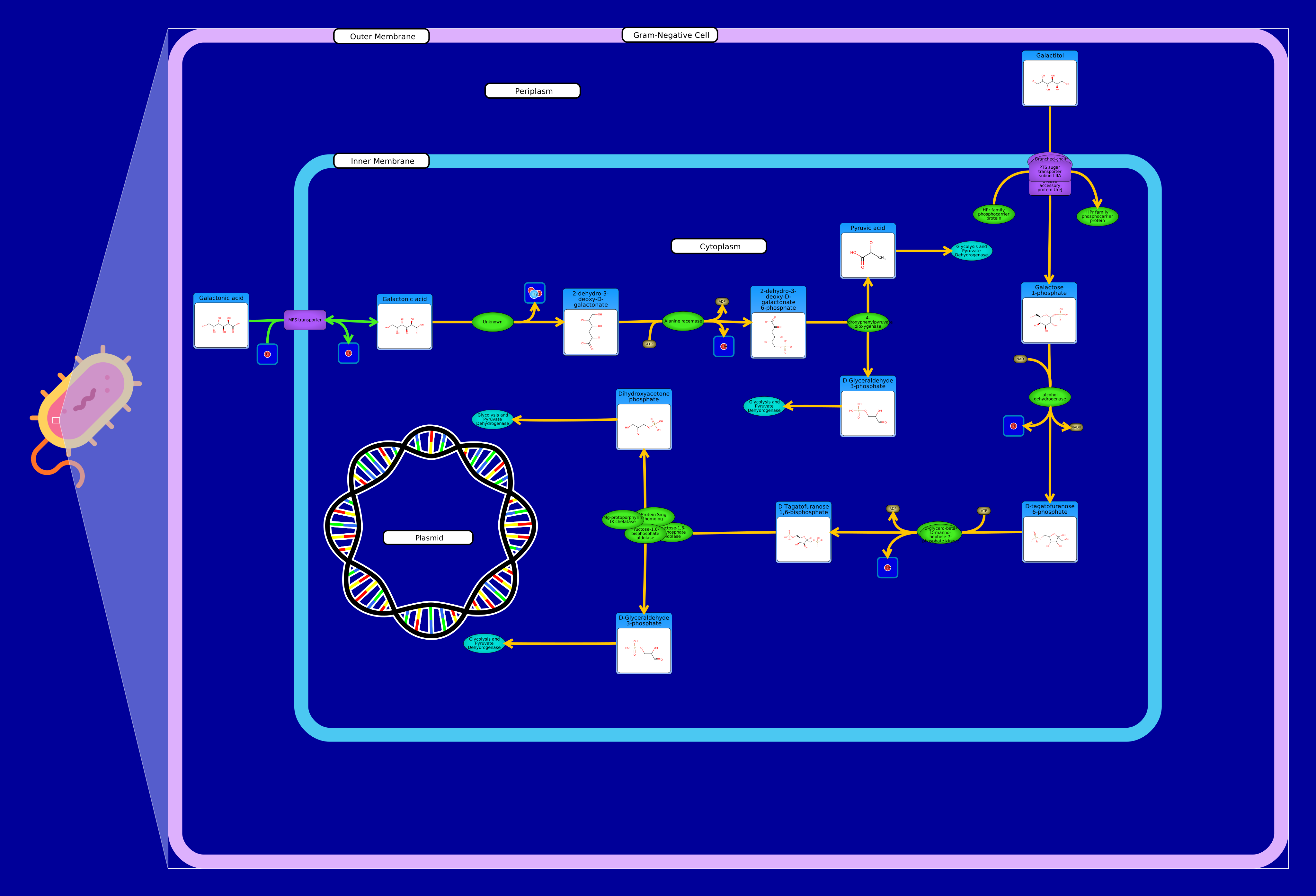 View Pathway
|
Galactitol and Galactonate DegradationMethylibium sp. Pch-M
Escherichia coli can solely use D-galactonate as a carbon and energy source. The initial step, after the transport of galactonic acid into the cell is the dehydration of D-galactonate to 2-dehydro-3-deoxy-D-galactonate by D-galactonate dehydratase. Subsequent phosphorylation by 2-dehydro-3-deoxygalactonate kinase and aldol cleavage by 2-oxo-3-deoxygalactonate 6-phosphate aldolase produces pyruvate and D-glyceraldehyde-3-phosphate, which enter central metabolism. Galactitol can also be utilized by E. coli K-12 as the sole source of carbon and energy. Each enters the cell via a specific phosphotransferase system, so the first intracellular species is D-galactitol-1-phosphate or D-galactitol-6-phosphate, which are identical. This sugar alcohol phosphate becomes the substrate for a dehydrogenase that oxidizes its 2-alcohol group to a keto group. Galactitol-1-phosphate is dehydrogenated to tagatose-6-phosphate which is then acted on by a kinase and an aldose and eventually is converted to glycolysis intermediates.
|
Creator: Julia Wakoli Created On: December 27, 2024 at 21:33 Last Updated: December 27, 2024 at 21:33 |
PW426011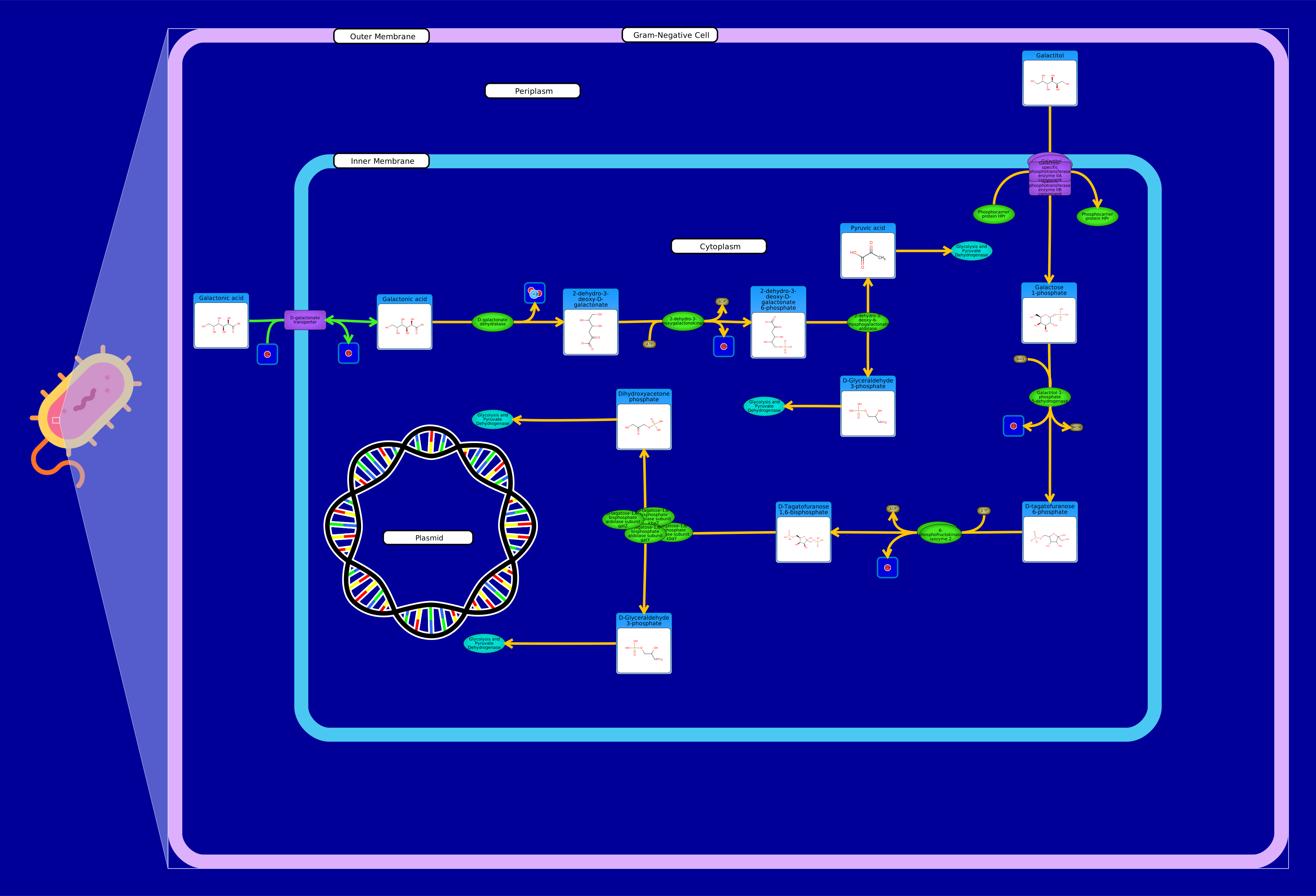 View Pathway
|
Galactitol and Galactonate DegradationEscherichia coli W
Escherichia coli can solely use D-galactonate as a carbon and energy source. The initial step, after the transport of galactonic acid into the cell is the dehydration of D-galactonate to 2-dehydro-3-deoxy-D-galactonate by D-galactonate dehydratase. Subsequent phosphorylation by 2-dehydro-3-deoxygalactonate kinase and aldol cleavage by 2-oxo-3-deoxygalactonate 6-phosphate aldolase produces pyruvate and D-glyceraldehyde-3-phosphate, which enter central metabolism. Galactitol can also be utilized by E. coli K-12 as the sole source of carbon and energy. Each enters the cell via a specific phosphotransferase system, so the first intracellular species is D-galactitol-1-phosphate or D-galactitol-6-phosphate, which are identical. This sugar alcohol phosphate becomes the substrate for a dehydrogenase that oxidizes its 2-alcohol group to a keto group. Galactitol-1-phosphate is dehydrogenated to tagatose-6-phosphate which is then acted on by a kinase and an aldose and eventually is converted to glycolysis intermediates.
|
Creator: Julia Wakoli Created On: December 30, 2024 at 11:02 Last Updated: December 30, 2024 at 11:02 |
PW412571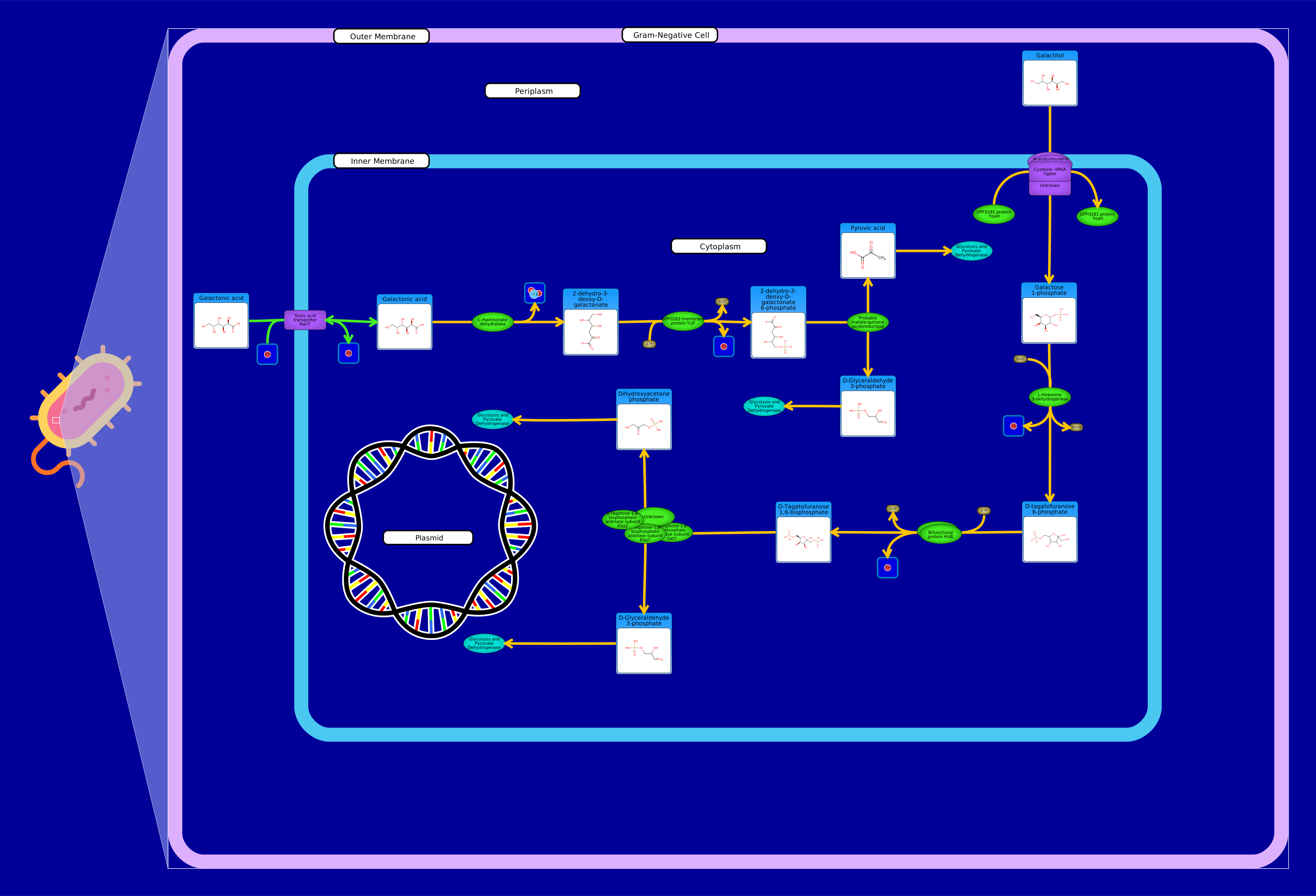 View Pathway
|
Galactitol and Galactonate DegradationEscherichia coli (strain K12 / MC4100 / BW2952)
Escherichia coli can solely use D-galactonate as a carbon and energy source. The initial step, after the transport of galactonic acid into the cell is the dehydration of D-galactonate to 2-dehydro-3-deoxy-D-galactonate by D-galactonate dehydratase. Subsequent phosphorylation by 2-dehydro-3-deoxygalactonate kinase and aldol cleavage by 2-oxo-3-deoxygalactonate 6-phosphate aldolase produces pyruvate and D-glyceraldehyde-3-phosphate, which enter central metabolism. Galactitol can also be utilized by E. coli K-12 as the sole source of carbon and energy. Each enters the cell via a specific phosphotransferase system, so the first intracellular species is D-galactitol-1-phosphate or D-galactitol-6-phosphate, which are identical. This sugar alcohol phosphate becomes the substrate for a dehydrogenase that oxidizes its 2-alcohol group to a keto group. Galactitol-1-phosphate is dehydrogenated to tagatose-6-phosphate which is then acted on by a kinase and an aldose and eventually is converted to glycolysis intermediates.
|
Creator: Julia Wakoli Created On: December 24, 2024 at 20:45 Last Updated: December 24, 2024 at 20:45 |
PW413244 View Pathway
|
Galactitol and Galactonate DegradationPrevotella copri
Escherichia coli can solely use D-galactonate as a carbon and energy source. The initial step, after the transport of galactonic acid into the cell is the dehydration of D-galactonate to 2-dehydro-3-deoxy-D-galactonate by D-galactonate dehydratase. Subsequent phosphorylation by 2-dehydro-3-deoxygalactonate kinase and aldol cleavage by 2-oxo-3-deoxygalactonate 6-phosphate aldolase produces pyruvate and D-glyceraldehyde-3-phosphate, which enter central metabolism. Galactitol can also be utilized by E. coli K-12 as the sole source of carbon and energy. Each enters the cell via a specific phosphotransferase system, so the first intracellular species is D-galactitol-1-phosphate or D-galactitol-6-phosphate, which are identical. This sugar alcohol phosphate becomes the substrate for a dehydrogenase that oxidizes its 2-alcohol group to a keto group. Galactitol-1-phosphate is dehydrogenated to tagatose-6-phosphate which is then acted on by a kinase and an aldose and eventually is converted to glycolysis intermediates.
|
Creator: Julia Wakoli Created On: December 25, 2024 at 07:22 Last Updated: December 25, 2024 at 07:22 |
PW423446 View Pathway
|
Galactitol and Galactonate DegradationEscherichia coli SE15
Escherichia coli can solely use D-galactonate as a carbon and energy source. The initial step, after the transport of galactonic acid into the cell is the dehydration of D-galactonate to 2-dehydro-3-deoxy-D-galactonate by D-galactonate dehydratase. Subsequent phosphorylation by 2-dehydro-3-deoxygalactonate kinase and aldol cleavage by 2-oxo-3-deoxygalactonate 6-phosphate aldolase produces pyruvate and D-glyceraldehyde-3-phosphate, which enter central metabolism. Galactitol can also be utilized by E. coli K-12 as the sole source of carbon and energy. Each enters the cell via a specific phosphotransferase system, so the first intracellular species is D-galactitol-1-phosphate or D-galactitol-6-phosphate, which are identical. This sugar alcohol phosphate becomes the substrate for a dehydrogenase that oxidizes its 2-alcohol group to a keto group. Galactitol-1-phosphate is dehydrogenated to tagatose-6-phosphate which is then acted on by a kinase and an aldose and eventually is converted to glycolysis intermediates.
|
Creator: Julia Wakoli Created On: December 29, 2024 at 17:13 Last Updated: December 29, 2024 at 17:13 |
PW685140 View Pathway
|
Galactitol and Galactonate DegradationBacteroides sp. 1_1_30
Escherichia coli can solely use D-galactonate as a carbon and energy source. The initial step, after the transport of galactonic acid into the cell is the dehydration of D-galactonate to 2-dehydro-3-deoxy-D-galactonate by D-galactonate dehydratase. Subsequent phosphorylation by 2-dehydro-3-deoxygalactonate kinase and aldol cleavage by 2-oxo-3-deoxygalactonate 6-phosphate aldolase produces pyruvate and D-glyceraldehyde-3-phosphate, which enter central metabolism. Galactitol can also be utilized by E. coli K-12 as the sole source of carbon and energy. Each enters the cell via a specific phosphotransferase system, so the first intracellular species is D-galactitol-1-phosphate or D-galactitol-6-phosphate, which are identical. This sugar alcohol phosphate becomes the substrate for a dehydrogenase that oxidizes its 2-alcohol group to a keto group. Galactitol-1-phosphate is dehydrogenated to tagatose-6-phosphate which is then acted on by a kinase and an aldose and eventually is converted to glycolysis intermediates.
|
Creator: Julia Wakoli Created On: December 26, 2024 at 07:17 Last Updated: December 26, 2024 at 07:17 |
PW416456 View Pathway
|
Galactitol and Galactonate DegradationBacteroides sp. 1_1_14
Escherichia coli can solely use D-galactonate as a carbon and energy source. The initial step, after the transport of galactonic acid into the cell is the dehydration of D-galactonate to 2-dehydro-3-deoxy-D-galactonate by D-galactonate dehydratase. Subsequent phosphorylation by 2-dehydro-3-deoxygalactonate kinase and aldol cleavage by 2-oxo-3-deoxygalactonate 6-phosphate aldolase produces pyruvate and D-glyceraldehyde-3-phosphate, which enter central metabolism. Galactitol can also be utilized by E. coli K-12 as the sole source of carbon and energy. Each enters the cell via a specific phosphotransferase system, so the first intracellular species is D-galactitol-1-phosphate or D-galactitol-6-phosphate, which are identical. This sugar alcohol phosphate becomes the substrate for a dehydrogenase that oxidizes its 2-alcohol group to a keto group. Galactitol-1-phosphate is dehydrogenated to tagatose-6-phosphate which is then acted on by a kinase and an aldose and eventually is converted to glycolysis intermediates.
|
Creator: Julia Wakoli Created On: December 26, 2024 at 06:31 Last Updated: December 26, 2024 at 06:31 |
PW425175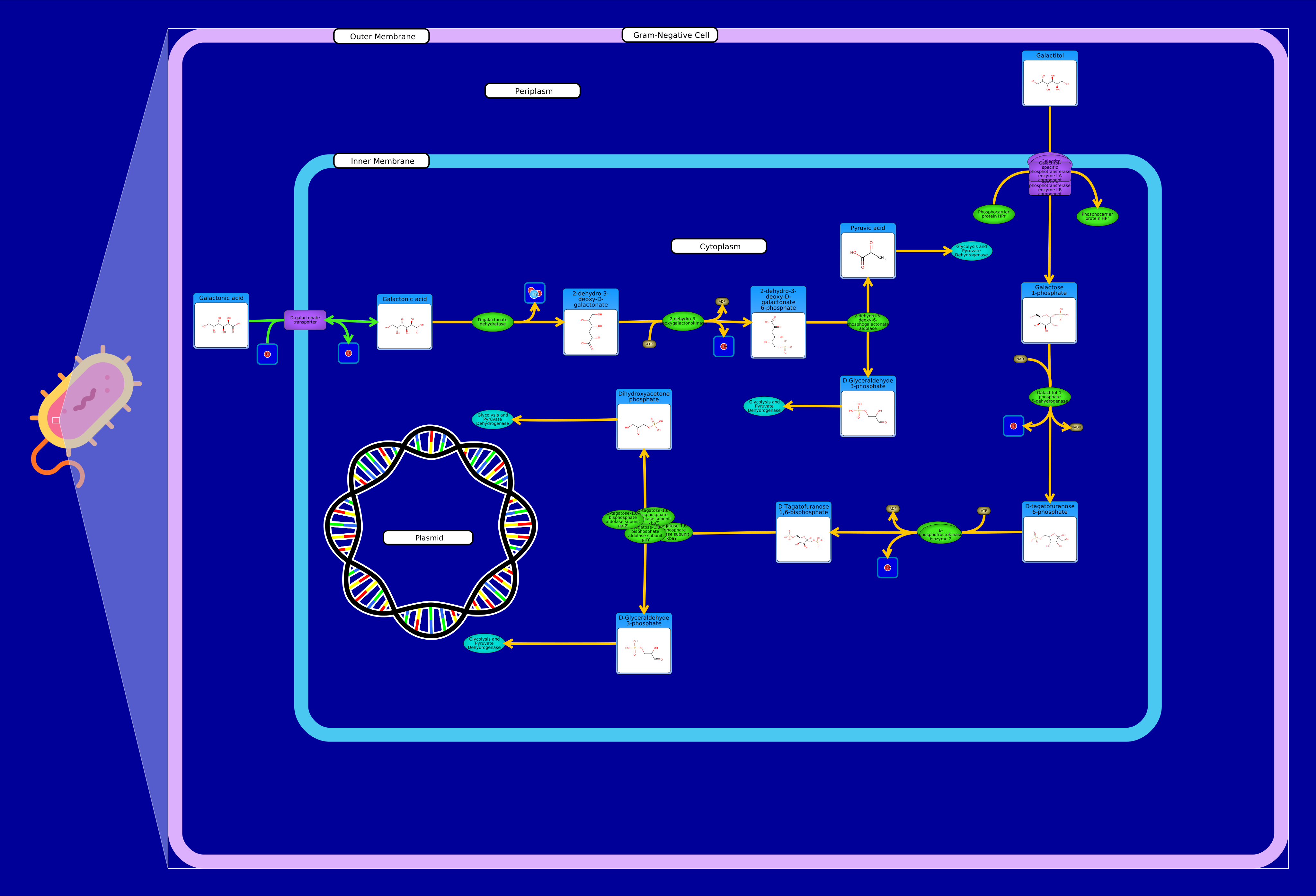 View Pathway
|
Galactitol and Galactonate DegradationEscherichia coli IAI1
Escherichia coli can solely use D-galactonate as a carbon and energy source. The initial step, after the transport of galactonic acid into the cell is the dehydration of D-galactonate to 2-dehydro-3-deoxy-D-galactonate by D-galactonate dehydratase. Subsequent phosphorylation by 2-dehydro-3-deoxygalactonate kinase and aldol cleavage by 2-oxo-3-deoxygalactonate 6-phosphate aldolase produces pyruvate and D-glyceraldehyde-3-phosphate, which enter central metabolism. Galactitol can also be utilized by E. coli K-12 as the sole source of carbon and energy. Each enters the cell via a specific phosphotransferase system, so the first intracellular species is D-galactitol-1-phosphate or D-galactitol-6-phosphate, which are identical. This sugar alcohol phosphate becomes the substrate for a dehydrogenase that oxidizes its 2-alcohol group to a keto group. Galactitol-1-phosphate is dehydrogenated to tagatose-6-phosphate which is then acted on by a kinase and an aldose and eventually is converted to glycolysis intermediates.
|
Creator: Julia Wakoli Created On: December 30, 2024 at 05:00 Last Updated: December 30, 2024 at 05:00 |
PW412627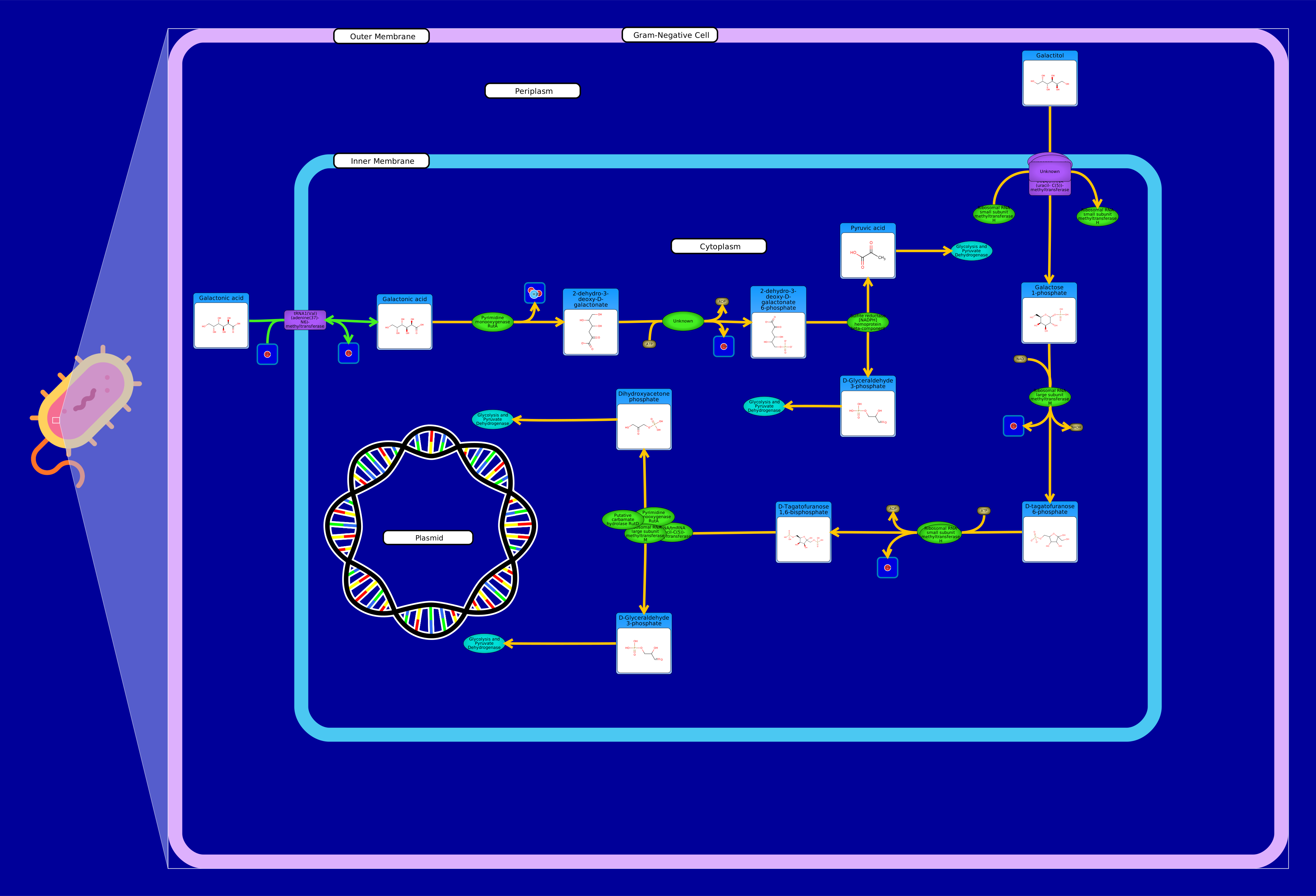 View Pathway
|
Galactitol and Galactonate DegradationEscherichia coli (strain B / REL606)
Escherichia coli can solely use D-galactonate as a carbon and energy source. The initial step, after the transport of galactonic acid into the cell is the dehydration of D-galactonate to 2-dehydro-3-deoxy-D-galactonate by D-galactonate dehydratase. Subsequent phosphorylation by 2-dehydro-3-deoxygalactonate kinase and aldol cleavage by 2-oxo-3-deoxygalactonate 6-phosphate aldolase produces pyruvate and D-glyceraldehyde-3-phosphate, which enter central metabolism. Galactitol can also be utilized by E. coli K-12 as the sole source of carbon and energy. Each enters the cell via a specific phosphotransferase system, so the first intracellular species is D-galactitol-1-phosphate or D-galactitol-6-phosphate, which are identical. This sugar alcohol phosphate becomes the substrate for a dehydrogenase that oxidizes its 2-alcohol group to a keto group. Galactitol-1-phosphate is dehydrogenated to tagatose-6-phosphate which is then acted on by a kinase and an aldose and eventually is converted to glycolysis intermediates.
|
Creator: Julia Wakoli Created On: December 24, 2024 at 21:35 Last Updated: December 24, 2024 at 21:35 |