
| PathWhiz ID | Pathway | Meta Data |
|---|---|---|
PW126155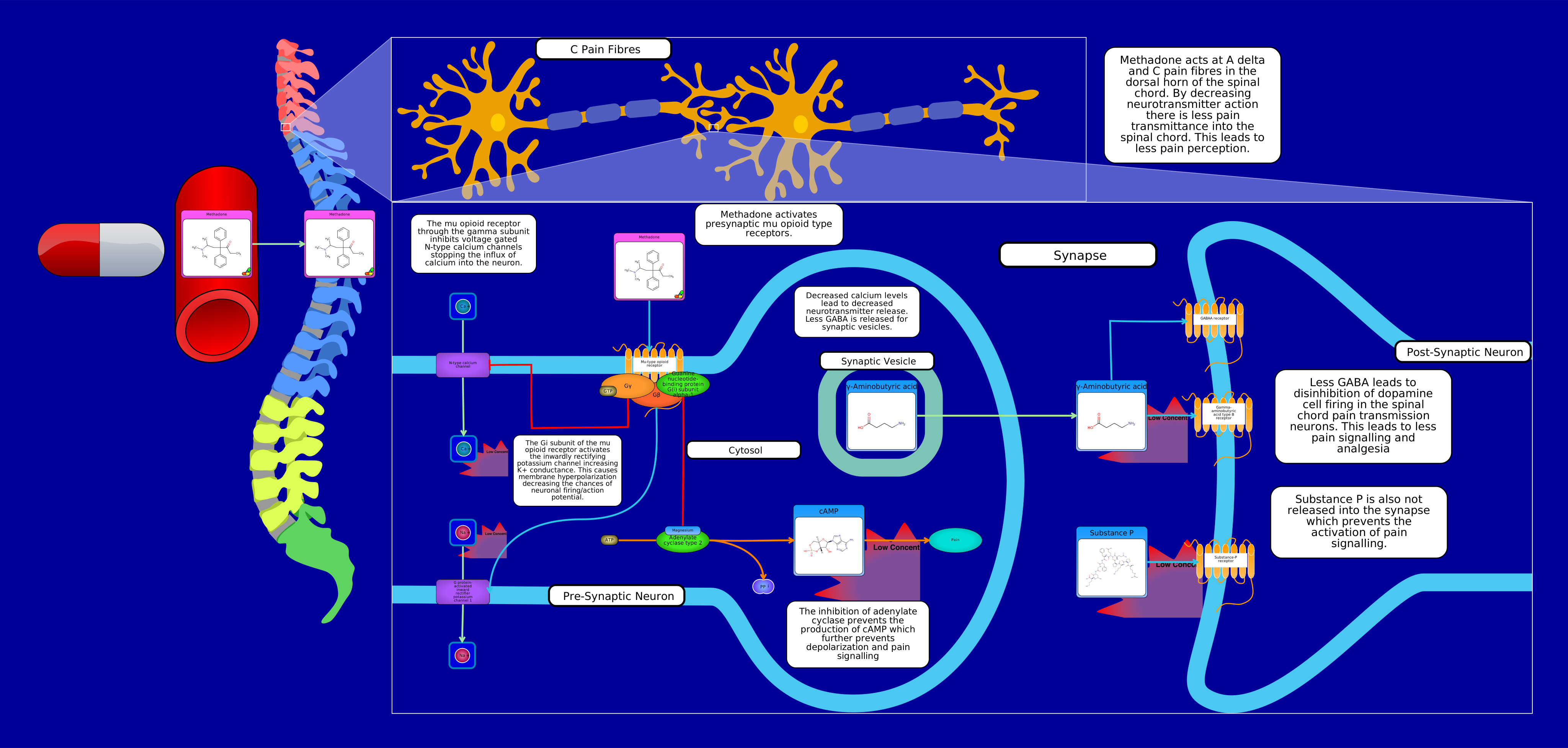 View Pathway
|
drug action
Methadone Opioid Agonist Action PathwayHomo sapiens
Methadone is a synthetic mu-opioid receptor agonst as well as a N-methyl-d-aspartate (NMDA) receptor antagonist. As a mu opioid receptor agonist it exerts similar qualities to other opioids like morphine and heroin by decreasing GABA release from presynatic neurons leading to the disinhibition of dopamine neurons in the spinal chord. This causes analgesia effects promoting pain relief. Methadone by antagonizing NMDA receptors on the post synaptic membrane leads to less calcium influx through the receptor subunits. This also leads to slower depolarization of the neurons in the central nervous system dampening the pain pathway. Due to it's NMDA antagonism it has improved analgesic effect and opioid tolerance. Since it is similar to morphine and other opioids it also has similar risks with addiction, respiratory depression and constipation. Methadone is used as an addiction treatment because of its long duration of action and half life. It's long duration of action makes it ideal for Opioid Agonist Treatment (OAT) or Opioid Substitution Therapy (OST). OAT and OST is the substitution of illicit opioids with the long-acting opioids to prevent withdrawal symptoms for 24-36 hours which ultimately reduce cravings and drug-seeking behaviours leading to the patient less like to seek illicit opioid drug usage.
|
Creator: Kristen Yee Created On: July 07, 2021 at 21:31 Last Updated: July 07, 2021 at 21:31 |
PW000655 View Pathway
|
drug action
Methadyl Acetate Action PathwayHomo sapiens
Methadyl Acetate (also known as Acetylmethadol) is a synthetic opioid analgesic that can bind to mu-type opioid receptor to activate associated G-protein in the sensory neurons of central nervous system (CNS), which will reduce the level of intracellular cAMP by inhibiting adenylate cyclase. The binding of methadyl acetate will eventually lead to reduced pain because of decreased nerve conduction and release of neurotransmitter. Therefore, methadyl acetate can reduce nerve conduction and decrease neurotransmitter release; so that perception of pain signals can be blocked.
|
Creator: WishartLab Created On: April 21, 2014 at 06:23 Last Updated: April 21, 2014 at 06:23 |
PW128396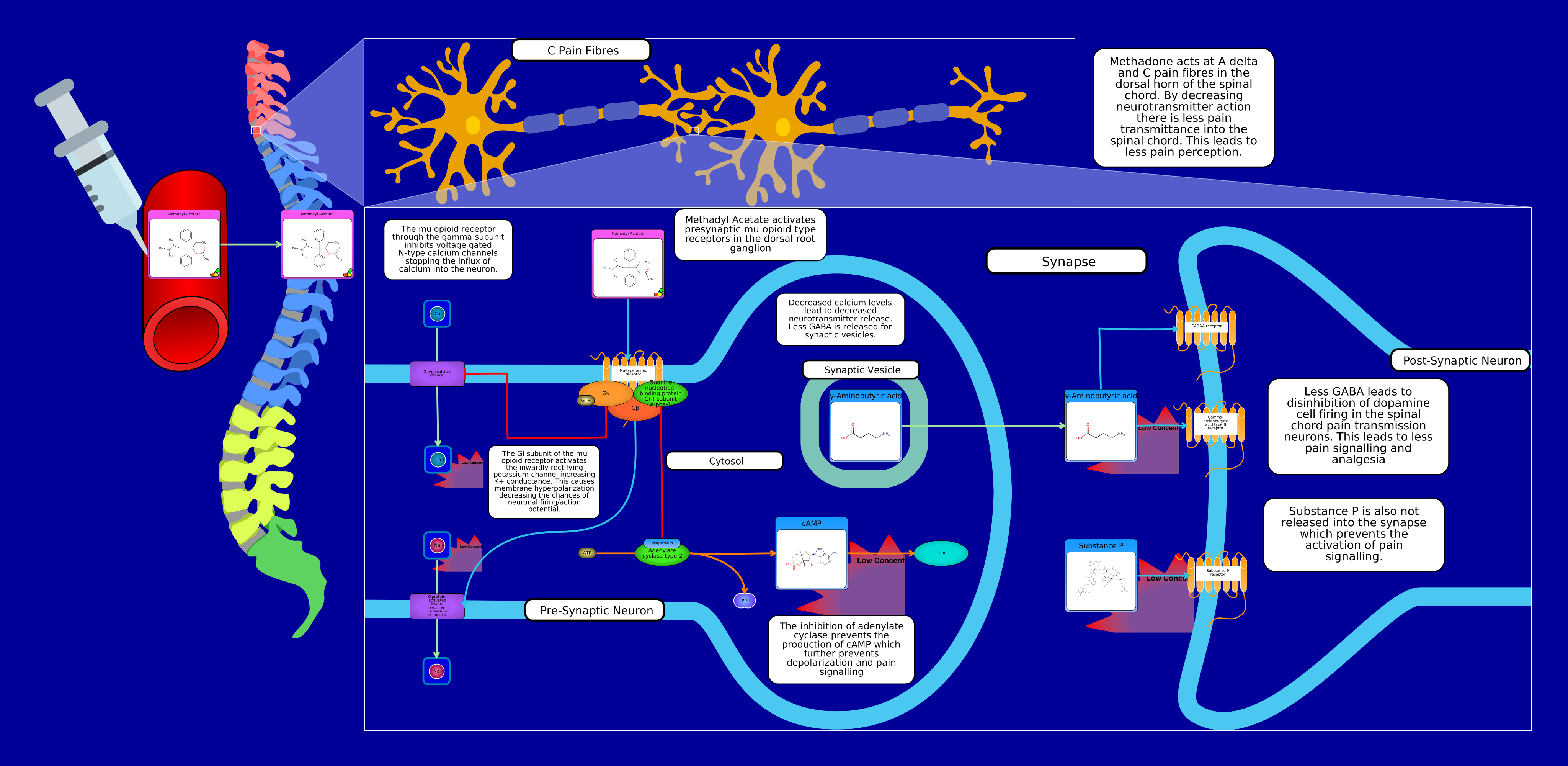 View Pathway
|
drug action
Methadyl acetate Opioid Agonist Action PathwayHomo sapiens
Methadyl acetate is a narcotic analgesic with a long onset and duration of action, used to treat narcotic dependence.
Methadyl acetate binds to mu opioid receptors, stimulating the exchange of GTP for GDP on the G-protein complex. As the effector system is adenylate cyclase and cAMP located at the inner surface of the plasma membrane, opioids decrease intracellular cAMP by inhibiting adenylate cyclase. Subsequently, the release of nociceptive neurotransmitters such as GABA is inhibited. Opioids close N-type voltage-operated calcium channels and open calcium-dependent inwardly rectifying potassium channels. This results in hyperpolarization and reduced neuronal excitability. Morphine acts at A delta and C pain fibres in the dorsal horn of the spinal cord. By decreasing neurotransmitter action there is less pain transmittance into the spinal cord. This leads to less pain perception.
|
Creator: Ray Kruger Created On: August 27, 2023 at 17:55 Last Updated: August 27, 2023 at 17:55 |
PW126773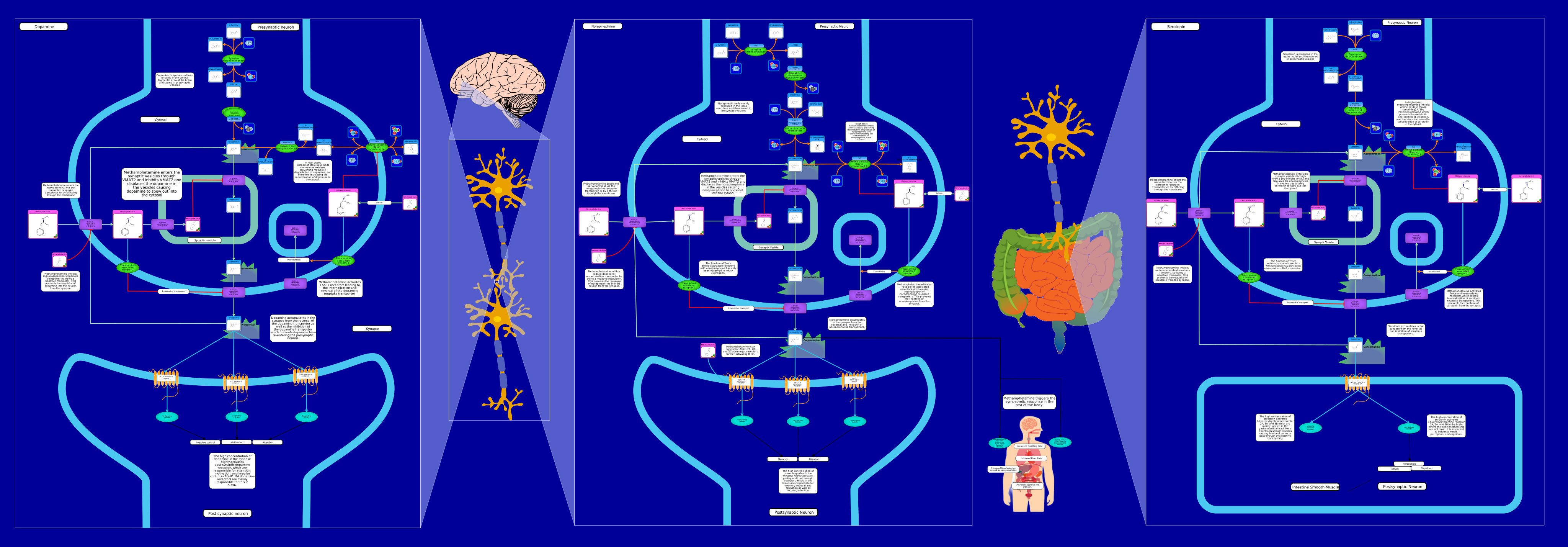 View Pathway
|
drug action
Methamphetamine Dopamine Reuptake Inhibitor Action PathwayHomo sapiens
Methamphetamine (metamfetamine) is a psychostimulant and sympathomimetic drug. It is mainly taken recreationally but can be taken for ADHD and exogenous obesity in the form of a drug called Desoxyn. Methamphetamine induces effects of euphoria and affects heart rate, body temperature, blood pressure, appetite, attention, mood, and responses associated with alertness or alarm conditions. The drug triggers mainly a fight or flight response in the body and brain.
Methamphetamine enters the brain readily through the blood brain barrier due to its small size and lipophilicity. Once in the brain it acts on dopamine, norepinephrine, and serotonin neurological pathways. Dopamine is synthesized mainly in the ventral tegmental area from tyrosine into L-dopa which then synthesizes dopamine, and it is then stored in the presynaptic vesicles in the required areas. Methamphetamine enters the neuron through sodium-dependent dopamine transporters where it also is a negative modulator for the transporter, preventing dopamine from re-entering the neuron. Methamphetamine is also capable of entering the neuron through diffusion. It inhibits Amine oxidase [flavin-containing] A ( MAOA) which is an enzyme that metabolizes dopamine, therefore the inhibition of it prevents the metabolic degradation of dopamine in the neuron. This increases the concentration of dopamine in the cytosol. Once in the neuron it inhibits synaptic vesicular amine transporter, preventing dopamine from entering synaptic vesicles, but also displacing dopamine from the vesicles and making it spew into the cytosol. Methamphetamine activates trace amine receptor 1 which internalizes sodium dependent dopamine transporters as well as reversing of the transporter. This causes the high concentration of dopamine in the cytosol to be ejected into the synapse where it accumulates since it cannot re-enter the neuron due to the inhibition of the sodium-dependent dopamine transporter. The high concentration of dopamine in the synapse activates the dopamine receptors on the postsynaptic membrane. D4 dopamine receptors are the receptors implicated in ADHD, but the high concentration of dopamine would activate all dopamine receptors. These receptors in the prefrontal cortex regulate impulse control, motivation, and attention through G-protein coupled cascades.
|
Creator: Ray Kruger Created On: March 23, 2022 at 09:47 Last Updated: March 23, 2022 at 09:47 |
PW147024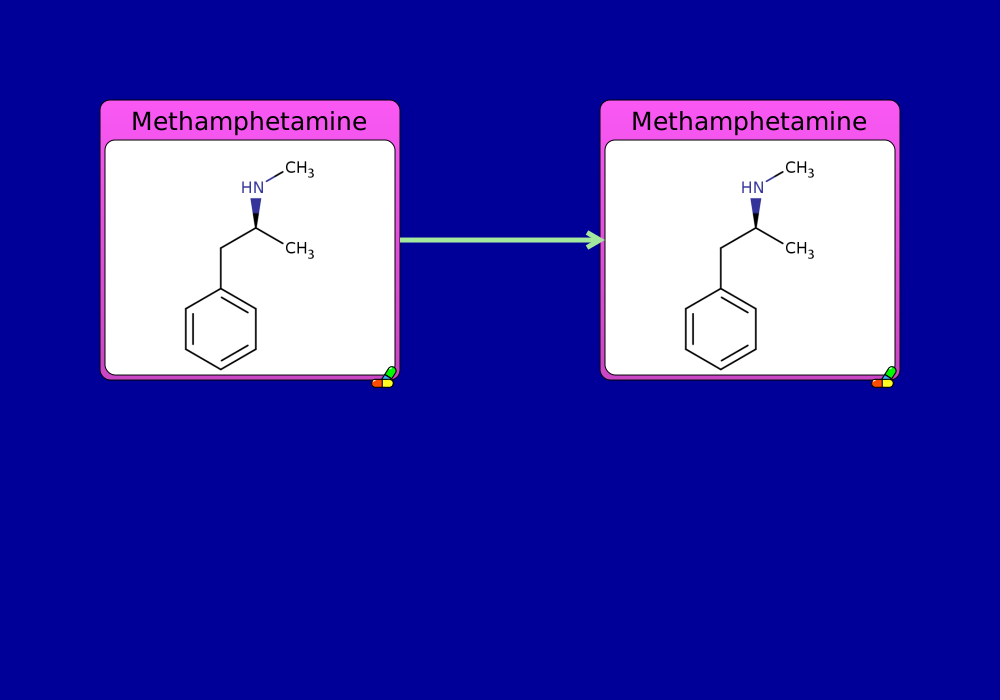 View Pathway
|
Methamphetamine Drug Metabolism PathwayHomo sapiens
|
Creator: Ray Kruger Created On: October 10, 2023 at 13:40 Last Updated: October 10, 2023 at 13:40 |
PW128220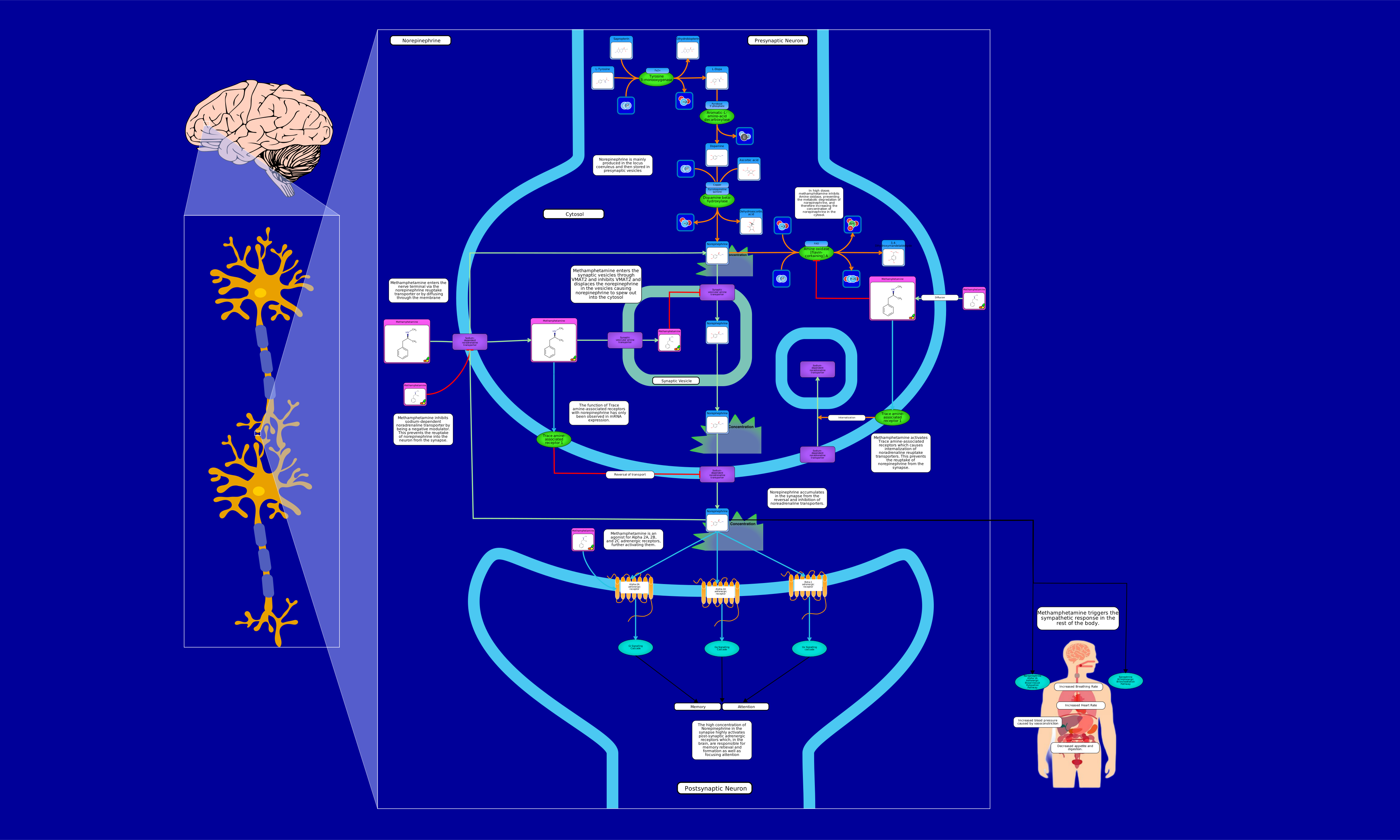 View Pathway
|
drug action
Methamphetamine Norepinephrine Reuptake Inhibitor Action PathwayHomo sapiens
Methamphetamine (metamfetamine) is a psychostimulant and sympathomimetic drug. It is mainly taken recreationally but can be taken for ADHD and exogenous obesity in the form of a drug called Desoxyn. Methamphetamine induces effects of euphoria and affects heart rate, body temperature, blood pressure, appetite, attention, mood, and responses associated with alertness or alarm conditions. The drug triggers mainly a fight or flight response in the body and brain.
Methamphetamine also acts on norepinephrine pathways in similar ways. Norepinephrine is synthesized from dopamine and stored in presynaptic vesicles. Methamphetamine has the same mechanisms of action for displacing norepinephrine into the cytosol and inhibiting the re-uptake of norepinephrine from the synapse. Methamphetamine's mechanisms of action in the norepinephrine pathway is less studied, but it is known that methamphetamine is a negative modulator of sodium-dependent norepinephrine transporters like it is for dopamine transporters. MAOA directly metabolizes norepinephrine into 3,4-Dihydroxymandelaldehyde which is prevented by the inhibition of MAOA by methamphetamine. The accumulated norepinephrine in the synapse activates alpha-1, alpha-2, and beta-1 adrenergic receptors. Methamphetamine also activates alpha 2A, 2B, and 2C adrenergic receptors, further activating their effects on the postsynaptic membrane. Alpha-1 adrenergic receptors activate Gq protein coupled cascades. Alpha-2 receptors activate Gi protein coupled cascades. Beta-1 activates Gs coupled cascades. These cascades help regulate memory and attention. Methamphetamine also causes an accumulation of norepinephrine in other places in the body which causes the fight or flight response seen in the norepinephrine pathway and epinephrine pathway. This causes increased heartrate, increased blood pressure caused by vasoconstriction, increased breathing rate, and decreased appetite and digestion.
|
Creator: Ray Kruger Created On: August 03, 2023 at 16:36 Last Updated: August 03, 2023 at 16:36 |
PW128322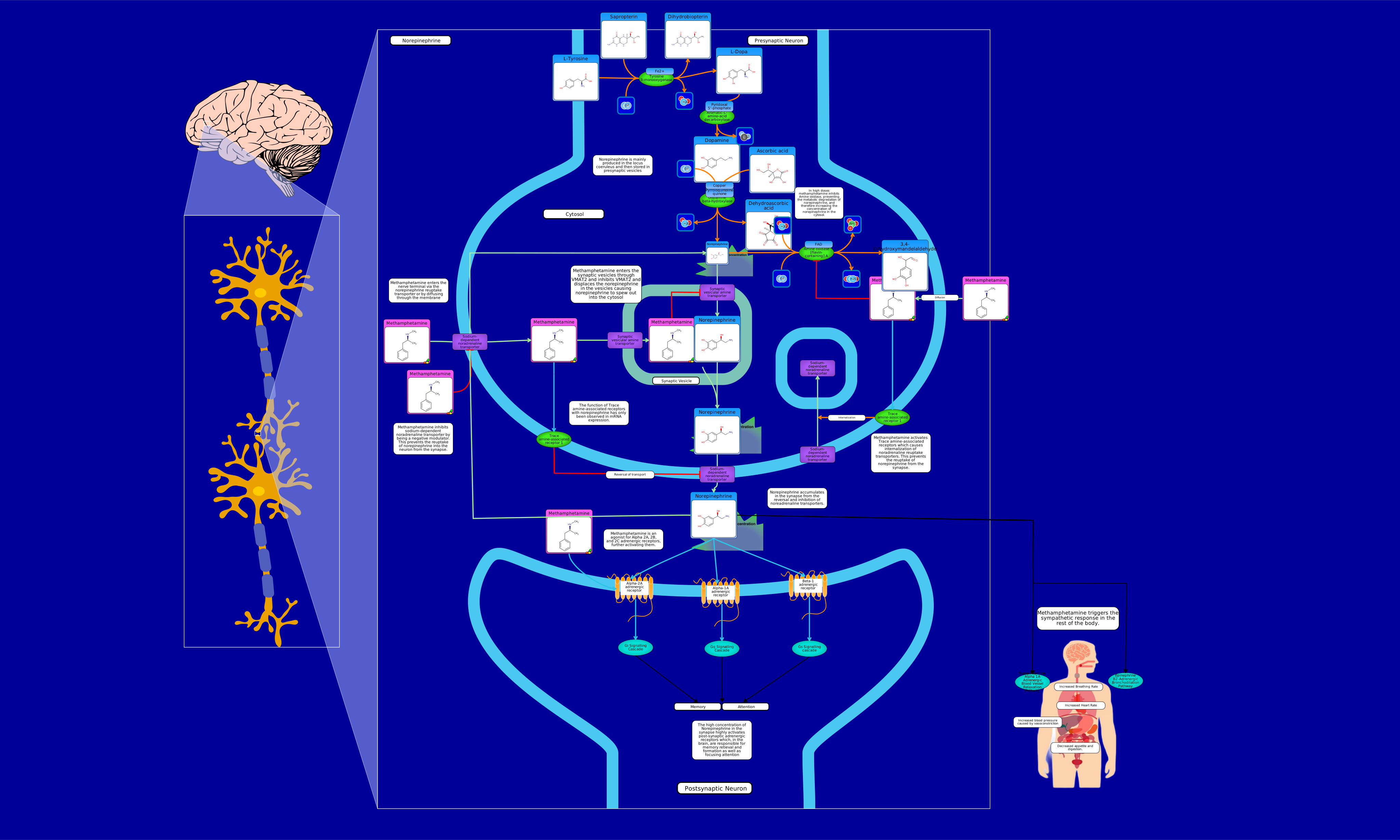 View Pathway
|
drug action
Methamphetamine Norepinephrine Reuptake Inhibitor Action Pathway (flipped)Homo sapiens
|
Creator: Anaya Created On: August 19, 2023 at 12:40 Last Updated: August 19, 2023 at 12:40 |
PW128221 View Pathway
|
drug action
Methamphetamine Serotonin Reuptake Inhibitor Action PathwayHomo sapiens
Methamphetamine (metamfetamine) is a psychostimulant and sympathomimetic drug. It is mainly taken recreationally but can be taken for ADHD and exogenous obesity in the form of a drug called Desoxyn. Methamphetamine induces effects of euphoria and affects heart rate, body temperature, blood pressure, appetite, attention, mood, and responses associated with alertness or alarm conditions. The drug triggers mainly a fight or flight response in the body and brain.
Methamphetamine acts on the serotonin pathway both in the brain and in the gastrointestinal tract. More than 90% of serotonin is produced in gut cells. It is synthesized from Tryptophan which synthesizes 5-Hydroxy-L-tryptophan which synthesizes serotonin or 5-hydroxytryptamine. The mechanisms in which methamphetamine acts on serotonin are very similar to that of dopamine and norepinephrine in the presynaptic neuron. Methamphetamine inhibits Amine oxidase [flavin-containing] A which when uninhibited metabolizes serotonin into 5-Hydroxyindoleacetic acid. The inhibition of this causes serotonin to accumulate in the cytosol. Like norepinephrine the methods are less tested than for dopamine. The high concentration of serotonin in the synapse activates 5-hydroxytryptamine receptor 2A, 3A, and 3B on the postsynaptic neuron membrane. Activation of 5-hydroxytryptamine receptors in the gut causes the smooth muscles around intestines to contract which causes food to pass through the intestine more quickly. The faster food passes through, the less nutrients absorbed into the blood stream which would help with exogenous obesity. In the brain, the mechanisms of 5-hydroxytryptamine receptor activation is not well understood, but it has been found that there is an effect on mood, perception, cognition, which can possibly help with ADHD.
|
Creator: Ray Kruger Created On: August 03, 2023 at 16:36 Last Updated: August 03, 2023 at 16:36 |
PW123909 View Pathway
|
Methanol pathway in P. pastorisPichia pastoris
|
Creator: Guest: Anonymous Created On: June 02, 2020 at 06:50 Last Updated: June 02, 2020 at 06:50 |
PW145040 View Pathway
|
drug action
Methantheline Drug Metabolism Action PathwayHomo sapiens
|
Creator: Ray Kruger Created On: October 07, 2023 at 14:58 Last Updated: October 07, 2023 at 14:58 |