
| PathWhiz ID | Pathway | Meta Data |
|---|---|---|
PW176792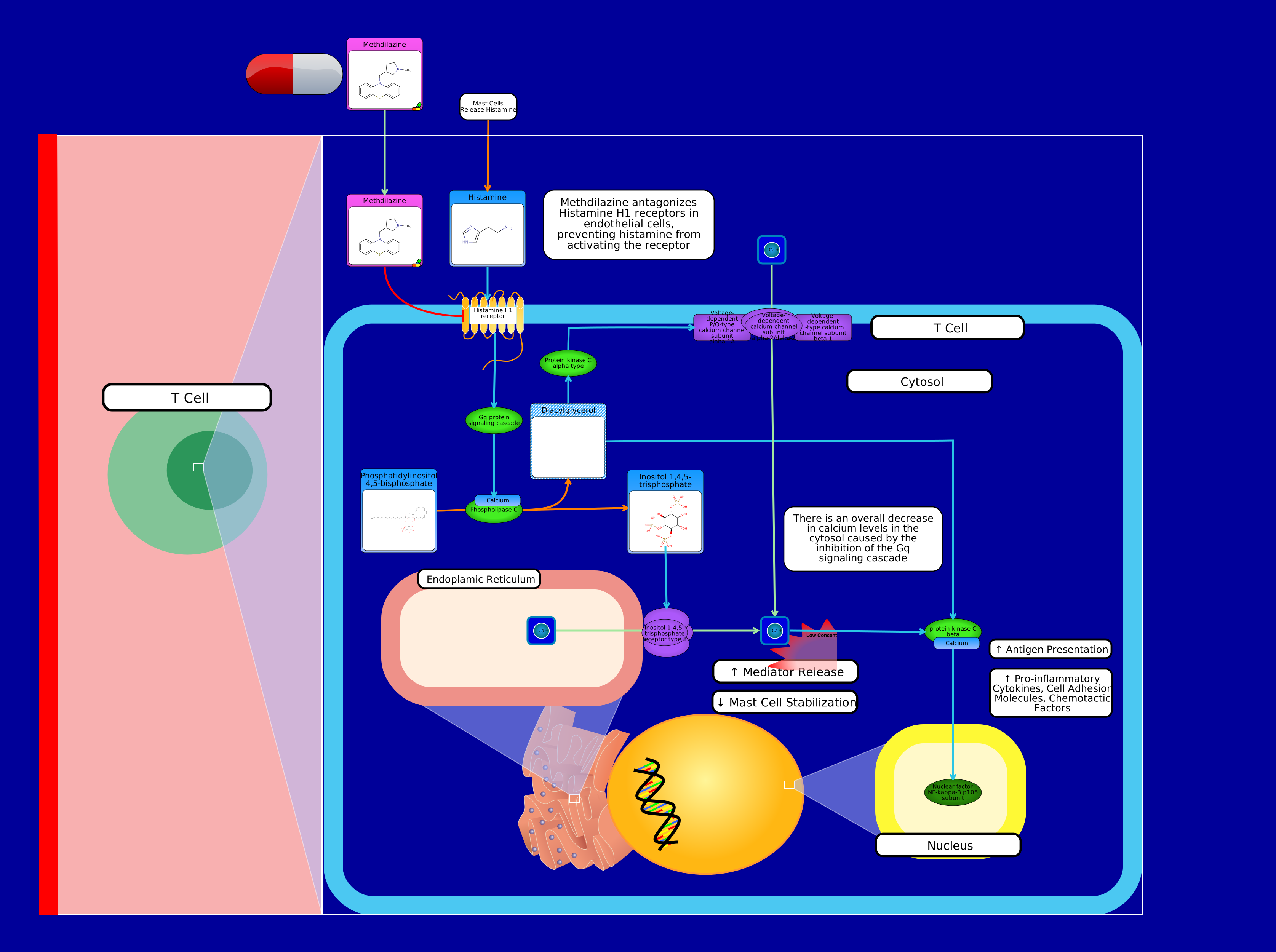 View Pathway
|
drug action
Methdilazine H1-Antihistamine Immune Response Action PathwayHomo sapiens
Methdilazine is an H1-antihistamine. H1-antihistamines interfere with the agonist action of histamine at the H1 receptor and are administered to attenuate inflammatory process in order to treat conditions such as allergic rhinitis, allergic conjunctivitis, and urticaria. H1-antihistamines act on H1 receptors in T-cells to inhibit the immune response, in blood vessels to constrict dilated blood vessels, and in smooth muscles of lungs and intestines to relax those muscles.
H1-antihistamines interfere with the agonist action of histamine at the H1 receptor and are administered to attenuate inflammatory process in order to treat conditions such as allergic rhinitis, allergic conjunctivitis, and urticaria. Reducing the activity of the NF-κB immune response transcription factor through the phospholipase C and the phosphatidylinositol (PIP2) signalling pathways also decreases antigen presentation and the expression of pro-inflammatory cytokines, cell adhesion molecules, and chemotactic factors. Furthermore, lowering calcium ion concentration leads to increased mast cell stability which reduces further histamine release. First-generation antihistamines readily cross the blood-brain barrier and cause sedation and other adverse central nervous system (CNS) effects (e.g. nervousness and insomnia). Second-generation antihistamines are more selective for H1-receptors of the peripheral nervous system (PNS) and do not cross the blood-brain barrier. Consequently, these newer drugs elicit fewer adverse drug reactions.
|
Creator: Carin Li Created On: December 19, 2023 at 15:06 Last Updated: December 19, 2023 at 15:06 |
PW145804 View Pathway
|
drug action
Methenamine Drug Metabolism Action PathwayHomo sapiens
|
Creator: Ray Kruger Created On: October 07, 2023 at 16:42 Last Updated: October 07, 2023 at 16:42 |
PW144874 View Pathway
|
drug action
Methimazole Drug Metabolism Action PathwayHomo sapiens
|
Creator: Ray Kruger Created On: October 07, 2023 at 14:36 Last Updated: October 07, 2023 at 14:36 |
PW123876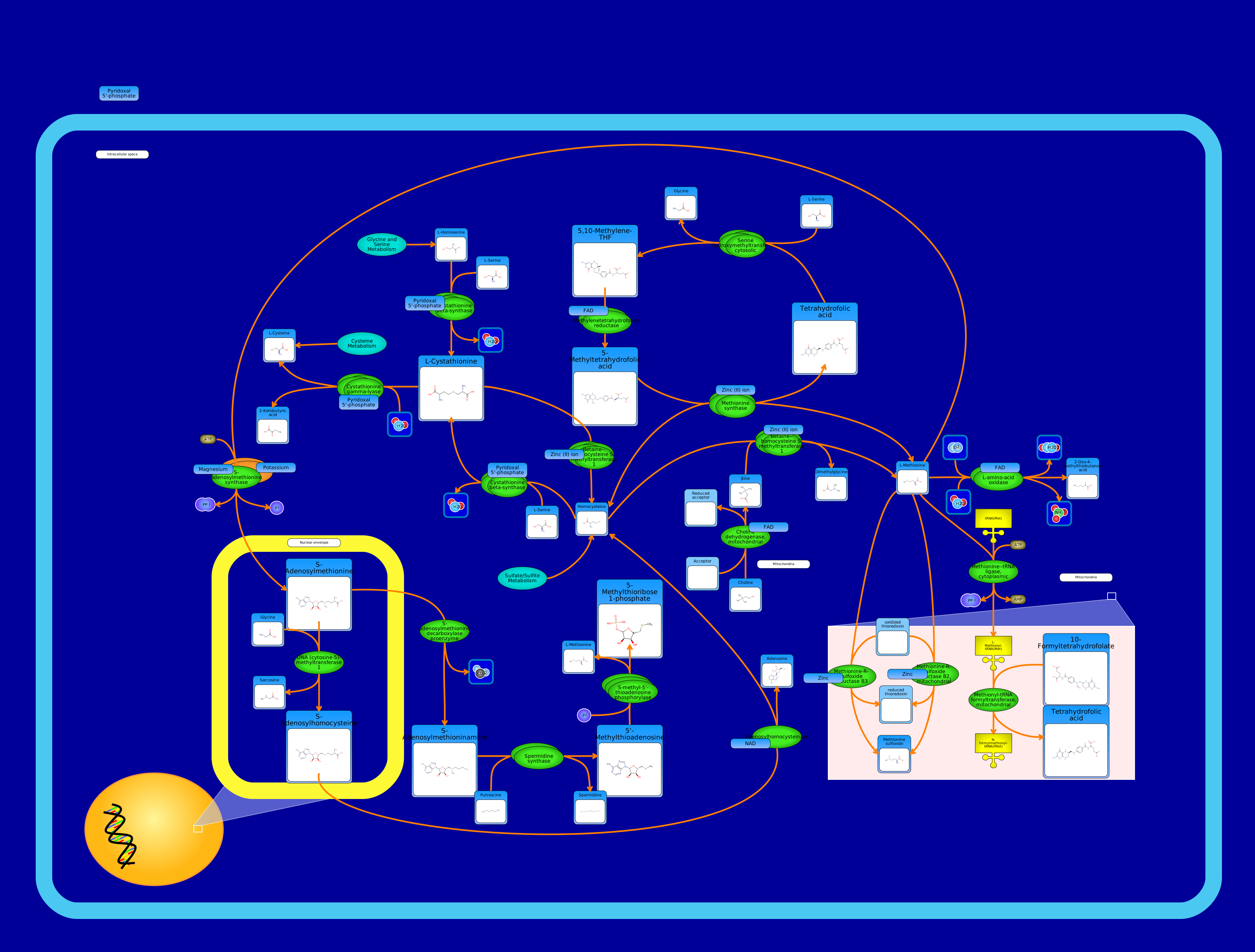 View Pathway
|
methionineHomo sapiens
|
Creator: Guest: Anonymous Created On: April 30, 2020 at 09:43 Last Updated: April 30, 2020 at 09:43 |
PW123877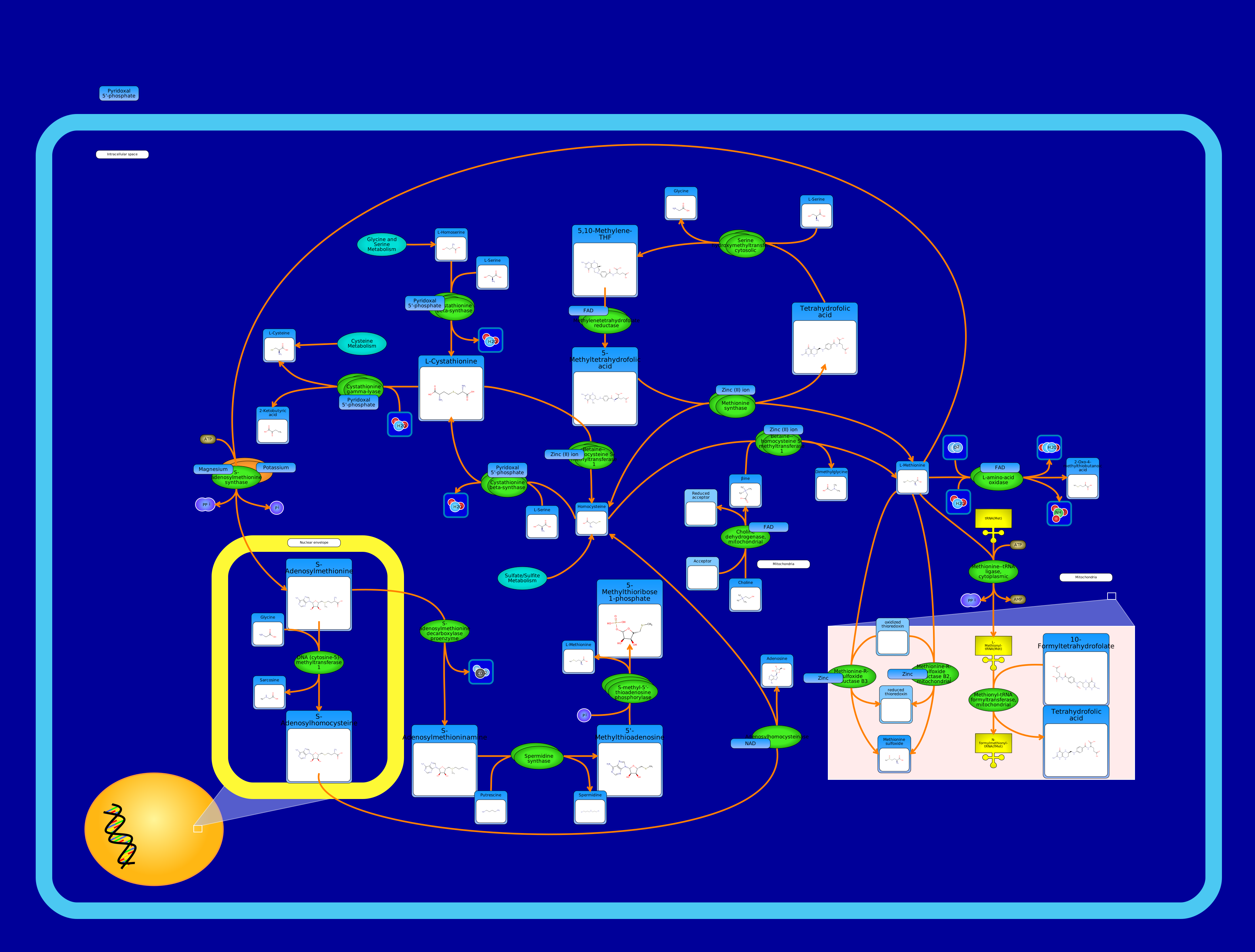 View Pathway
|
MethionineHomo sapiens
|
Creator: Guest: Anonymous Created On: April 30, 2020 at 09:55 Last Updated: April 30, 2020 at 09:55 |
PW000105 View Pathway
|
disease
Methionine Adenosyltransferase DeficiencyHomo sapiens
Methionine adenosyltransferase (MAT; Hypermethioninemia; MAT I/III deficiency) deficiency is caused by mutations in the MAT1A gene which causes isolated hypermethioninemia. MAT catalyzes the formation of adenosylmethionine from methionine and ATP. Adenosylmethionine is an important methyl donor in most transmethylation reactions. MAT dificiency is characterized by increased homocysteine and methionine levels in plasma; and accumulation of methionine in urine. Symptoms include dystonia, mental retardation and unusual odor.
|
Creator: WishartLab Created On: August 01, 2013 at 15:52 Last Updated: August 01, 2013 at 15:52 |
PW127248 View Pathway
|
disease
Methionine Adenosyltransferase DeficiencyHomo sapiens
Methionine adenosyltransferase (MAT; Hypermethioninemia; MAT I/III deficiency) deficiency is caused by mutations in the MAT1A gene which causes isolated hypermethioninemia. MAT catalyzes the formation of adenosylmethionine from methionine and ATP. Adenosylmethionine is an important methyl donor in most transmethylation reactions. MAT dificiency is characterized by increased homocysteine and methionine levels in plasma; and accumulation of methionine in urine. Symptoms include dystonia, mental retardation and unusual odor.
|
Creator: Ray Kruger Created On: November 22, 2022 at 11:44 Last Updated: November 22, 2022 at 11:44 |
PW121999 View Pathway
|
disease
Methionine Adenosyltransferase DeficiencyRattus norvegicus
Methionine adenosyltransferase (MAT; Hypermethioninemia; MAT I/III deficiency) deficiency is caused by mutations in the MAT1A gene which causes isolated hypermethioninemia. MAT catalyzes the formation of adenosylmethionine from methionine and ATP. Adenosylmethionine is an important methyl donor in most transmethylation reactions. MAT dificiency is characterized by increased homocysteine and methionine levels in plasma; and accumulation of methionine in urine. Symptoms include dystonia, mental retardation and unusual odor.
|
Creator: Ana Marcu Created On: September 10, 2018 at 15:51 Last Updated: September 10, 2018 at 15:51 |
PW121774 View Pathway
|
disease
Methionine Adenosyltransferase DeficiencyMus musculus
Methionine adenosyltransferase (MAT; Hypermethioninemia; MAT I/III deficiency) deficiency is caused by mutations in the MAT1A gene which causes isolated hypermethioninemia. MAT catalyzes the formation of adenosylmethionine from methionine and ATP. Adenosylmethionine is an important methyl donor in most transmethylation reactions. MAT dificiency is characterized by increased homocysteine and methionine levels in plasma; and accumulation of methionine in urine. Symptoms include dystonia, mental retardation and unusual odor.
|
Creator: Ana Marcu Created On: September 10, 2018 at 15:49 Last Updated: September 10, 2018 at 15:49 |
PW402730 View Pathway
|
Methionine BiosynthesisParabacteroides goldsteinii dnLKV18
This pathway shows the biosynthesis of methionine, which is an energy-costly process. Lysine biosynthesis produces L-Aspartate-semialdehyde, which later on is catalyzed to L-homoserine by bifunctional aspartokinase (also named homoserine dehydrogenase) 1 and 2. Homoserine is then activated by O-succinylation to form O-succinyl-L-homoserine via homoserine O-succinyltransferase (metA). Combining with L-cysteine, O-succinyl-L-homoserine form L-cystathionine and succinic acid by cystathionine gamma-synthase (metB). Cleavage of L-cystathionine by cystathionine beta-lyase (metC) or Protein MalY(as ) generates two small molecules: homocysteine and 2-aminoprop-2-enoate. Methionine synthase(MetH) or 5-methyltetrahydropteroyltriglutamate--homocysteine methyltransferase(MetE) will catalyzehomocysteine to form the final product: methionine. In E.coli, MetH can only function with existence of cobalamin (Vitamin B12), which can be available in the guy; without cobalamin, MetE will not be repressed so that it will catalyze the methionine. Methionine can be transported out of cell (into periplasmic space) by leucine efflux transporter.
|
Creator: Julia Wakoli Created On: December 20, 2024 at 14:07 Last Updated: December 20, 2024 at 14:07 |