
Browsing Pathways
Showing 367921 -
367930 of 605359 pathways
| PathBank ID | Pathway Name and Description | Pathway Class | Chemical Compounds | Proteins |
|---|---|---|---|---|
SMP0725247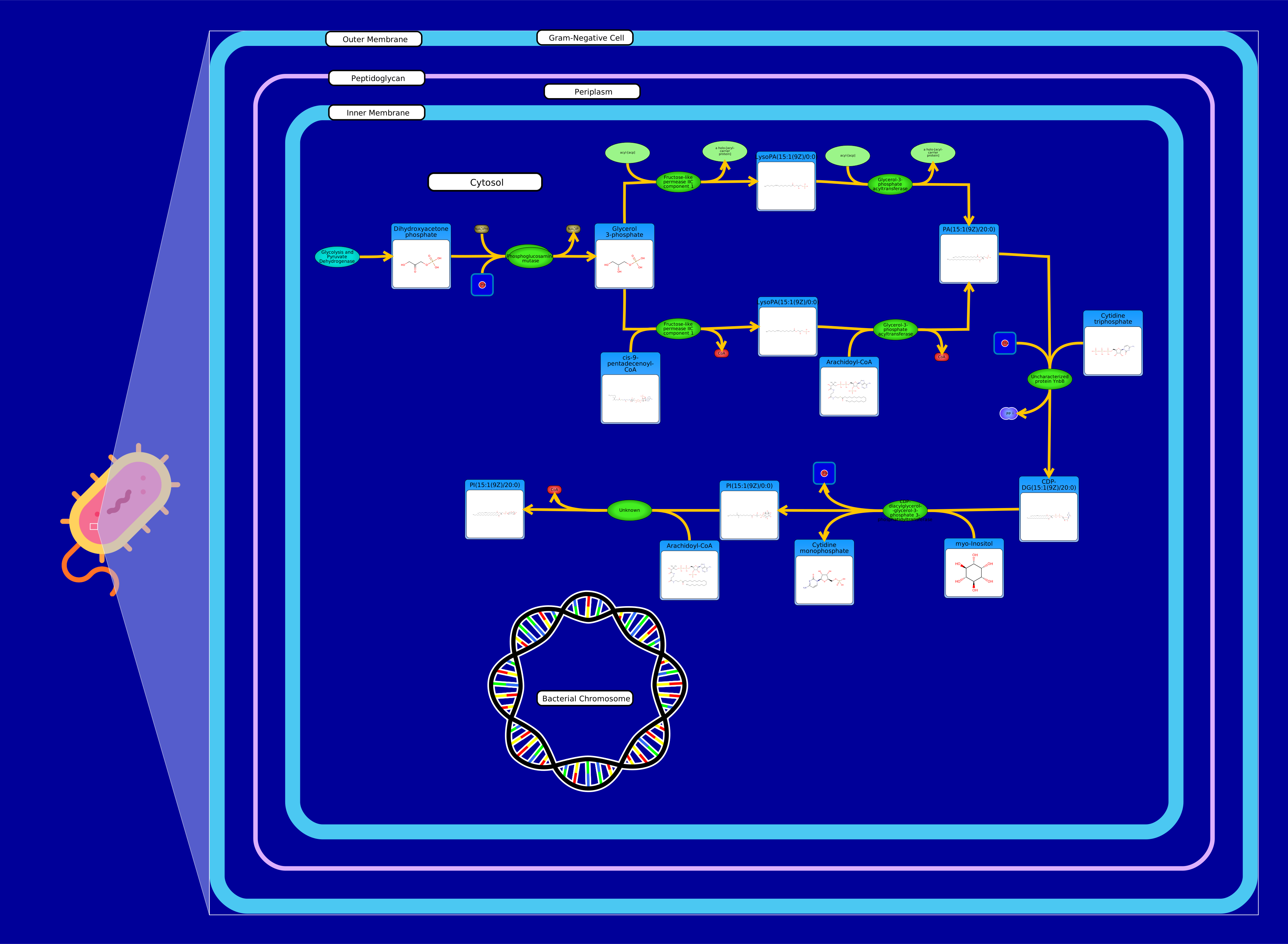 View Pathway
|
phosphatidylinositol (PI(15:1(9Z)/20:0)) BiosynthesisEscherichia coli (strain K12)
Phosphatidylinositol (PI) biosynthesis in bacteria is a multistep enzymatic process that begins with the formation of glycerol 3-phosphate from dihydroxyacetone phosphate, catalyzed by glycerol-3-phosphate dehydrogenase. This initial step provides the glycerol backbone essential for subsequent acylation reactions. Glycerol-3-phosphate is first acylated at the sn-1 position by glycerol-3-phosphate acyltransferase, which transfers a fatty acyl group from acyl-CoA (for example, 3-hydroxydodecanoyl-CoA) to form lysophosphatidic acid (LysoPA), specifically LysoPA(12:0/0:0). The sn-2 position of LysoPA is then acylated by 1-acylglycerol-3-phosphate O-acyltransferase using a second fatty acyl donor, such as oleoyl-CoA, generating phosphatidic acid (PA(12:0/18:1(9Z))). Phosphatidic acid is subsequently activated through the formation of CDP-diacylglycerol (CDP-DG) in a reaction catalyzed by CDP-diglyceride synthetase, which consumes cytidine triphosphate and releases pyrophosphate. The CDP-DG intermediate then reacts with myo-inositol in a reaction catalyzed by CDP-diacylglycerol–glycerol-3-phosphate 3-phosphatidyltransferase, producing phosphatidylinositol with an empty sn-2 position (PI(12:0/0:0)) and releasing cytidine monophosphate and a proton. The final step, introducing the sn-2 fatty acyl group to form the mature PI species, such as PI(12:0/14:1(9Z)), is carried out by a membrane-bound O-acyltransferase (MBOAT) that transfers an acyl group from acyl-CoA (e.g., myristoleoyl-CoA) to the sn-2 position of PI. This step is poorly characterized in most bacteria, and the specific enzyme(s) responsible remain largely unannotated in bacterial genomes. Overall, bacterial PI biosynthesis demonstrates a tightly coordinated sequence of acylation, activation, and inositol transfer reactions, culminating in the formation of functionally diverse phosphatidylinositol species that contribute to membrane structure and signaling.
|
Metabolite
Metabolic
|
|
|
SMP0725233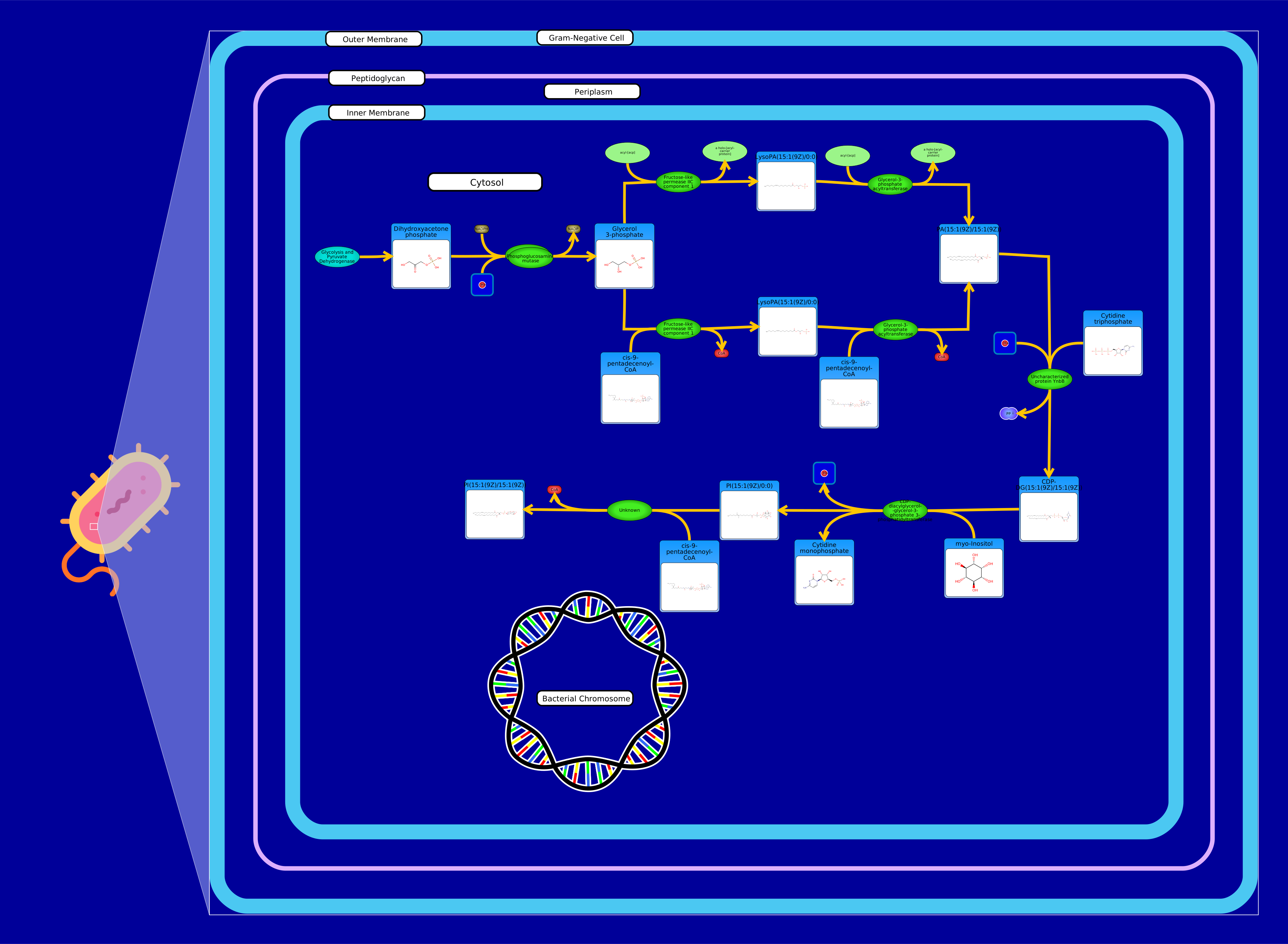 View Pathway
|
phosphatidylinositol (PI(15:1(9Z)/15:1(9Z))) BiosynthesisEscherichia coli (strain K12)
Phosphatidylinositol (PI) biosynthesis in bacteria is a multistep enzymatic process that begins with the formation of glycerol 3-phosphate from dihydroxyacetone phosphate, catalyzed by glycerol-3-phosphate dehydrogenase. This initial step provides the glycerol backbone essential for subsequent acylation reactions. Glycerol-3-phosphate is first acylated at the sn-1 position by glycerol-3-phosphate acyltransferase, which transfers a fatty acyl group from acyl-CoA (for example, 3-hydroxydodecanoyl-CoA) to form lysophosphatidic acid (LysoPA), specifically LysoPA(12:0/0:0). The sn-2 position of LysoPA is then acylated by 1-acylglycerol-3-phosphate O-acyltransferase using a second fatty acyl donor, such as oleoyl-CoA, generating phosphatidic acid (PA(12:0/18:1(9Z))). Phosphatidic acid is subsequently activated through the formation of CDP-diacylglycerol (CDP-DG) in a reaction catalyzed by CDP-diglyceride synthetase, which consumes cytidine triphosphate and releases pyrophosphate. The CDP-DG intermediate then reacts with myo-inositol in a reaction catalyzed by CDP-diacylglycerol–glycerol-3-phosphate 3-phosphatidyltransferase, producing phosphatidylinositol with an empty sn-2 position (PI(12:0/0:0)) and releasing cytidine monophosphate and a proton. The final step, introducing the sn-2 fatty acyl group to form the mature PI species, such as PI(12:0/14:1(9Z)), is carried out by a membrane-bound O-acyltransferase (MBOAT) that transfers an acyl group from acyl-CoA (e.g., myristoleoyl-CoA) to the sn-2 position of PI. This step is poorly characterized in most bacteria, and the specific enzyme(s) responsible remain largely unannotated in bacterial genomes. Overall, bacterial PI biosynthesis demonstrates a tightly coordinated sequence of acylation, activation, and inositol transfer reactions, culminating in the formation of functionally diverse phosphatidylinositol species that contribute to membrane structure and signaling.
|
Metabolite
Metabolic
|
|
|
SMP0725515 View Pathway
|
Cardiolipin Biosynthesis CL(16:1(9Z)/16:0/16:0/16:1(9Z))Escherichia coli
Phospholipids are membrane components in E. coli. The major phospholipids of E. coli are phosphatidylethanolamine, phosphatidylglycerol, and cardiolipin. All phospholipids contain sn-glycerol-3-phosphate esterified with fatty acids at the sn-1 and sn-2 positions. The reaction starts from a glycerone phosphate (dihydroxyacetone phosphate) produced in glycolysis. The glycerone phosphate is transformed into an sn-glycerol 3-phosphate (glycerol 3 phosphate) by NADPH-driven glycerol-3-phosphate dehydrogenase. sn-Glycerol 3-phosphate is transformed to a 1-acyl-sn-glycerol 3-phosphate (lysophosphatidic acid). This can be achieved by an sn-glycerol-3-phosphate acyltransferase that interacts either with a long-chain acyl-CoA or with an acyl-[acp]. The 1-acyl-sn-glycerol 3-phosphate is transformed into a 1,2-diacyl-sn-glycerol 3-phosphate (phosphatidic acid) through a 1-acylglycerol-3-phosphate O-acyltransferase. This compound is then converted into a CPD-diacylglycerol through a CTP phosphatidate cytididyltransferase. CPD-diacylglycerol can be transformed either into an L-1-phosphatidylserine or an L-1-phosphatidylglycerol-phosphate through a phosphatidylserine synthase or a phosphatidylglycerophosphate synthase, respectively. The L-1-phosphatidylserine transforms into L-1-phosphatidylethanolamine through a phosphatidylserine decarboxylase. On the other hand, L-1-phosphatidylglycerol-phosphate gets transformed into an L-1-phosphatidyl-glycerol through a phosphatidylglycerophosphatase. These 2 products combine to produce a cardiolipin and an ethanolamine. The L-1 phosphatidyl-glycerol can also interact with cardiolipin synthase resulting in a glycerol and a cardiolipin.
|
Metabolite
Metabolic
|
|
|
SMP0725522 View Pathway
|
Cardiolipin Biosynthesis CL(16:1(9Z)/16:0/16:1(9Z)/18:0)Escherichia coli
Phospholipids are membrane components in E. coli. The major phospholipids of E. coli are phosphatidylethanolamine, phosphatidylglycerol, and cardiolipin. All phospholipids contain sn-glycerol-3-phosphate esterified with fatty acids at the sn-1 and sn-2 positions. The reaction starts from a glycerone phosphate (dihydroxyacetone phosphate) produced in glycolysis. The glycerone phosphate is transformed into an sn-glycerol 3-phosphate (glycerol 3 phosphate) by NADPH-driven glycerol-3-phosphate dehydrogenase. sn-Glycerol 3-phosphate is transformed to a 1-acyl-sn-glycerol 3-phosphate (lysophosphatidic acid). This can be achieved by an sn-glycerol-3-phosphate acyltransferase that interacts either with a long-chain acyl-CoA or with an acyl-[acp]. The 1-acyl-sn-glycerol 3-phosphate is transformed into a 1,2-diacyl-sn-glycerol 3-phosphate (phosphatidic acid) through a 1-acylglycerol-3-phosphate O-acyltransferase. This compound is then converted into a CPD-diacylglycerol through a CTP phosphatidate cytididyltransferase. CPD-diacylglycerol can be transformed either into an L-1-phosphatidylserine or an L-1-phosphatidylglycerol-phosphate through a phosphatidylserine synthase or a phosphatidylglycerophosphate synthase, respectively. The L-1-phosphatidylserine transforms into L-1-phosphatidylethanolamine through a phosphatidylserine decarboxylase. On the other hand, L-1-phosphatidylglycerol-phosphate gets transformed into an L-1-phosphatidyl-glycerol through a phosphatidylglycerophosphatase. These 2 products combine to produce a cardiolipin and an ethanolamine. The L-1 phosphatidyl-glycerol can also interact with cardiolipin synthase resulting in a glycerol and a cardiolipin.
|
Metabolite
Metabolic
|
|
|
SMP0725517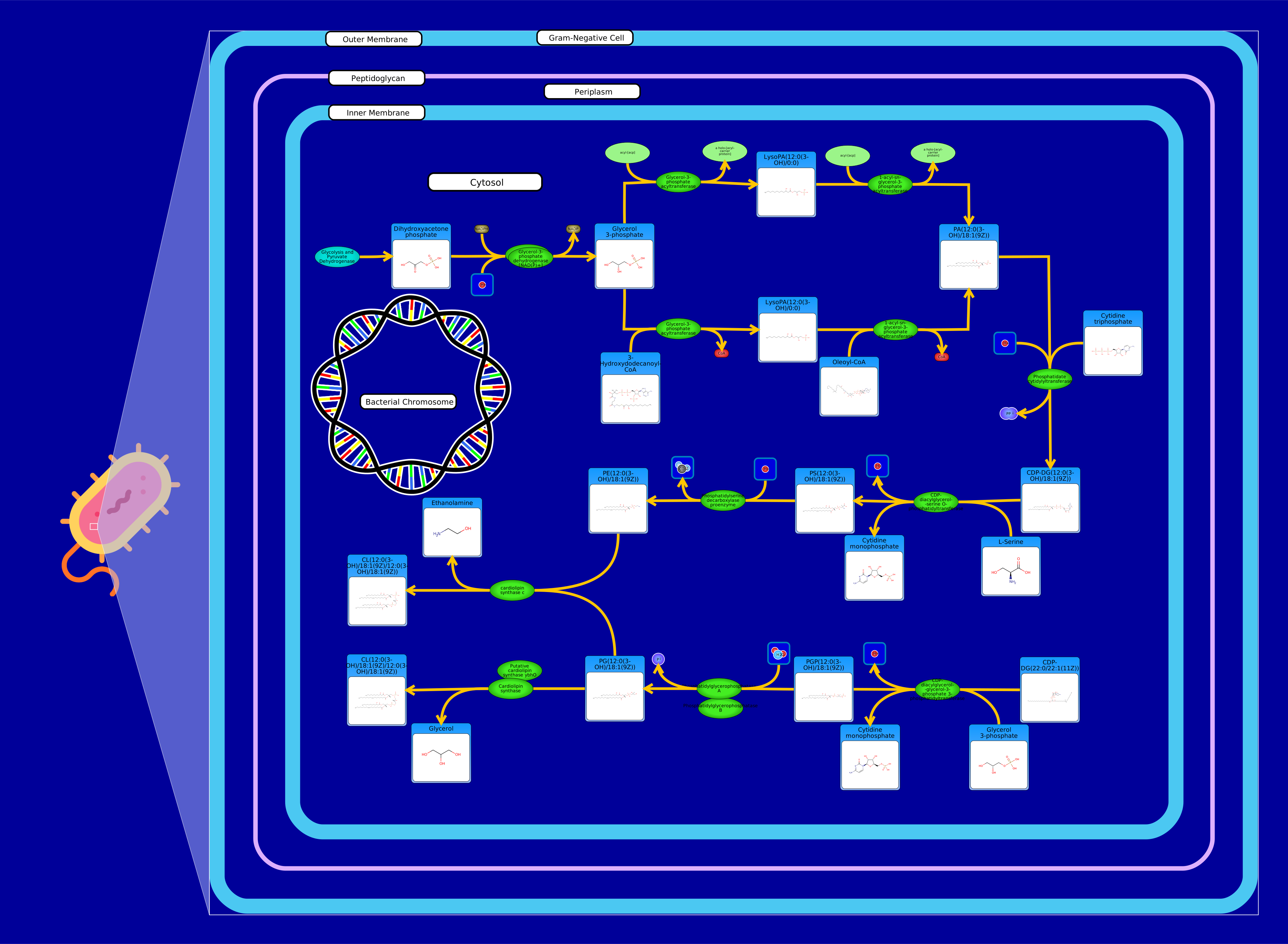 View Pathway
|
Cardiolipin Biosynthesis CL(16:1(9Z)/16:0/16:0/18:1(9Z))Escherichia coli
Phospholipids are membrane components in E. coli. The major phospholipids of E. coli are phosphatidylethanolamine, phosphatidylglycerol, and cardiolipin. All phospholipids contain sn-glycerol-3-phosphate esterified with fatty acids at the sn-1 and sn-2 positions. The reaction starts from a glycerone phosphate (dihydroxyacetone phosphate) produced in glycolysis. The glycerone phosphate is transformed into an sn-glycerol 3-phosphate (glycerol 3 phosphate) by NADPH-driven glycerol-3-phosphate dehydrogenase. sn-Glycerol 3-phosphate is transformed to a 1-acyl-sn-glycerol 3-phosphate (lysophosphatidic acid). This can be achieved by an sn-glycerol-3-phosphate acyltransferase that interacts either with a long-chain acyl-CoA or with an acyl-[acp]. The 1-acyl-sn-glycerol 3-phosphate is transformed into a 1,2-diacyl-sn-glycerol 3-phosphate (phosphatidic acid) through a 1-acylglycerol-3-phosphate O-acyltransferase. This compound is then converted into a CPD-diacylglycerol through a CTP phosphatidate cytididyltransferase. CPD-diacylglycerol can be transformed either into an L-1-phosphatidylserine or an L-1-phosphatidylglycerol-phosphate through a phosphatidylserine synthase or a phosphatidylglycerophosphate synthase, respectively. The L-1-phosphatidylserine transforms into L-1-phosphatidylethanolamine through a phosphatidylserine decarboxylase. On the other hand, L-1-phosphatidylglycerol-phosphate gets transformed into an L-1-phosphatidyl-glycerol through a phosphatidylglycerophosphatase. These 2 products combine to produce a cardiolipin and an ethanolamine. The L-1 phosphatidyl-glycerol can also interact with cardiolipin synthase resulting in a glycerol and a cardiolipin.
|
Metabolite
Metabolic
|
|
|
SMP0728795 View Pathway
|
Plasmalogen Biosynthesis PlsPE(16:1(9z)/17:1(9z))Clostridium butyricum
|
Metabolite
Metabolic
|
|
|
SMP0728790
View Pathway
|
Plasmalogen Biosynthesis PlsPE(16:1(9z)/17:0)Clostridium butyricum
|
Metabolite
Metabolic
|
||
SMP0728807
View Pathway
|
Plasmalogen Biosynthesis PlsPE(18:0/16:1(9z))Clostridium butyricum
|
Metabolite
Metabolic
|
||
SMP0728809
View Pathway
|
Plasmalogen Biosynthesis PlsPE(18:0/18:1(9z))Clostridium butyricum
|
Metabolite
Metabolic
|
||
SMP0728802
View Pathway
|
Plasmalogen Biosynthesis PlsPE(18:0/16:0)Clostridium butyricum
|
Metabolite
Metabolic
|
Showing 367921 -
367930 of 540746 pathways