Page not found.

Browsing Pathways
Showing 368071 -
368080 of 605359 pathways
| PathBank ID | Pathway Name and Description | Pathway Class | Chemical Compounds | Proteins |
|---|---|---|---|---|
SMP0123080 View Pathway
|
Sorafenib Metabolism PathwayHomo sapiens
|
Metabolite
Metabolic
|
||
SMP0123087
View Pathway
|
Calcium-binding allergenArabidopsis thaliana
|
Metabolite
Metabolic
|
|
|
SMP0123092 View Pathway
|
Moexipril ACE Inhibitor Action PathwayHomo sapiens
Moexipril is an angiotensin-converting enzyme (ACE) inhibitor for the conversion of angiotensin I into angiotensin II. Angiotensin II is a critical circulating peptide hormone that has powerful vasoconstrictive effects and increases blood pressure. Moexipril is used to treat hypertension, high blood pressure, congestive heart failure, and chronic renal failure as it decreases blood pressure. Moexipril is converted into Moexiprilat through the liver after being ingested which travels in the blood to inhibit ACE which is from the lungs. Angiotensin has many vasoconstrictive effects by binding to angiotensin II type 1 receptor (AT1) in blood vessels, kidneys, hypothalamus, and posterior pituitary. In blood vessels AT1 receptors cause vasoconstriction in the tunica media layer of smooth muscle surrounding blood vessels increasing blood pressure. Less angiotensin II that is circulating lowers the constriction of these blood vessels. AT1 receptors in the kidney are responsible for the production of aldosterone which increases salt and water retention which increases blood volume. Less angiotensin II reduces aldosterone production allowing water retention to not increase. AT1 receptors in the hypothalamus are on astrocytes which inhibit the excitatory amino acid transporter 3 from up-taking glutamate back into astrocytes. Glutamate is responsible for the activation of NMDA receptors on paraventricular nucleus neurons (PVN neurons) that lead to thirst sensation. Since angiotensin II levels are lowered, the inhibition of the uptake transporter is not limited decreasing the amount of glutamate activating NMDA on PVN neurons that makes the individual crave drinking less. This lowers the blood volume as well. Lastly, the AT1 receptors on posterior pituitary gland are responsible for the release of vasopressin. Vasopressin is an anti-diuretic hormone that cases water reabsorption in the kidney as well as causing smooth muscle contraction in blood vessels increasing blood pressure. Less angiotensin II activating vasopressin release inhibits blood pressure from increasing. Overall, Moexipril inhibits the conversion of angiotensin I into angiotensin II, a powerful vasoconstrictor and mediator of high blood pressure so decreasing levels of angiotensin will help reduce blood pressure from climbing in individuals.
|
Metabolite
Drug Action
|
|
|
SMP0123099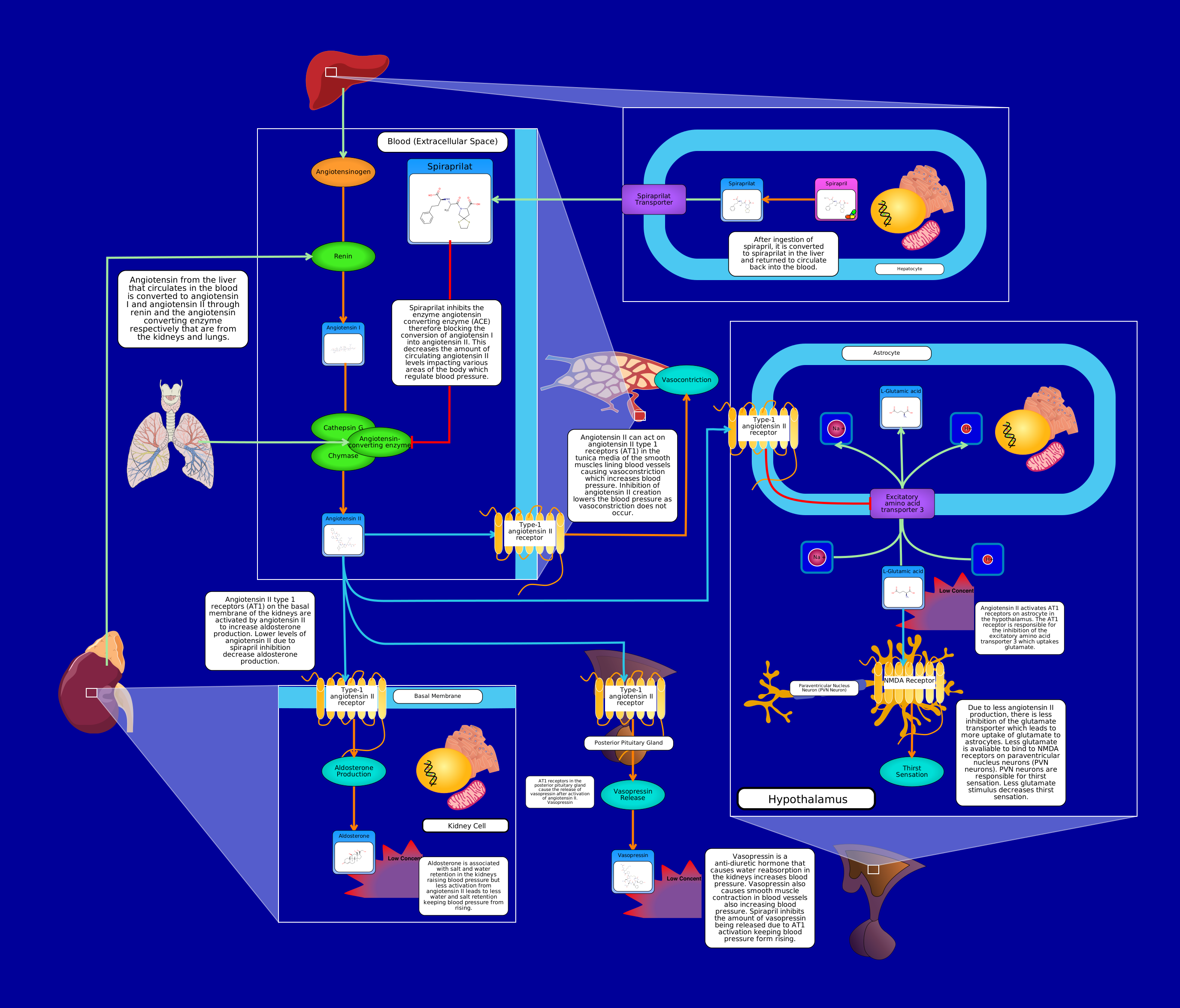 View Pathway
|
SpiraprilHomo sapiens
Spirapril is an angiotensin-converting enzyme (ACE) inhibitor for the conversion of angiotensin I into angiotensin II. Angiotensin II is a critical circulating peptide hormone that has powerful vasoconstrictive effects and increases blood pressure. Spirapril is used to treat hypertension, high blood pressure, congestive heart failure, and chronic renal failure as it decreases blood pressure. Spirapril is converted into spiraprilat through the liver after being ingested which travels in the blood to inhibit ACE which is from the lungs. Angiotensin has many vasoconstrictive effects by binding to angiotensin II type 1 receptor (AT1) in blood vessels, kidneys, hypothalamus, and posterior pituitary. In blood vessels, AT1 receptors cause vasoconstriction in the tunica media layer of smooth muscle surrounding blood vessels increasing blood pressure. Less angiotensin II that is circulating lowers the constriction of these blood vessels. AT1 receptors in the kidney are responsible for the production of aldosterone which increases salt and water retention which increases blood volume. Less angiotensin II reduces aldosterone production allowing water retention to not increase. AT1 receptors in the hypothalamus are on astrocytes which inhibit the excitatory amino acid transporter 3 from up-taking glutamate back into astrocytes. Glutamate is responsible for the activation of NMDA receptors on paraventricular nucleus neurons (PVN neurons) that lead to thirst sensation. Since angiotensin II levels are lowered, the inhibition of the uptake transporter is not limited decreasing the amount of glutamate activating NMDA on PVN neurons that make the individual crave drinking less. This lowers the blood volume as well. Lastly, the AT1 receptors on posterior pituitary gland are responsible for the release of vasopressin. Vasopressin is an anti-diuretic hormone that cases water reabsorption in the kidney as well as causing smooth muscle contraction in blood vessels increasing blood pressure. Less angiotensin II activating vasopressin release inhibits blood pressure from increasing. Overall, Spirapril inhibits the conversion of angiotensin I into angiotensin II, a powerful vasoconstrictor and mediator of high blood pressure so decreasing levels of angiotensin will help reduce blood pressure from climbing in individuals.
|
Metabolite
Drug Action
|
|
|
SMP0123104 View Pathway
|
Trandolapril ACE Inhibitor Action PathwayHomo sapiens
Trandolapril is an angiotensin-converting enzyme (ACE) inhibitor for the conversion of angiotensin I into angiotensin II. Angiotensin II is a critical circulating peptide hormone that has powerful vasoconstrictive effects and increases blood pressure. Trandolapril is used to treat hypertension, high blood pressure, congestive heart failure, and chronic renal failure as it decreases blood pressure. Trandolapril is converted into trandolaprilat through the liver after being ingested which travels in the blood to inhibit ACE which is from the lungs. Angiotensin has many vasoconstrictive effects by binding to angiotensin II type 1 receptor (AT1) in blood vessels, kidneys, hypothalamus, and posterior pituitary. In blood vessels, AT1 receptors cause vasoconstriction in the tunica media layer of smooth muscle surrounding blood vessels increasing blood pressure. Less angiotensin II that is circulating lowers the constriction of these blood vessels. AT1 receptors in the kidney are responsible for the production of aldosterone which increases salt and water retention which increases blood volume. Less angiotensin II reduces aldosterone production allowing water retention to not increase. AT1 receptors in the hypothalamus are on astrocytes which inhibit the excitatory amino acid transporter 3 from up-taking glutamate back into astrocytes. Glutamate is responsible for the activation of NMDA receptors on paraventricular nucleus neurons (PVN neurons) that lead to thirst sensation. Since angiotensin II levels are lowered, the inhibition of the uptake transporter is not limited decreasing the amount of glutamate activating NMDA on PVN neurons that make the individual crave drinking less. This lowers the blood volume as well. Lastly, the AT1 receptors on posterior pituitary gland are responsible for the release of vasopressin. Vasopressin is an anti-diuretic hormone that cases water reabsorption in the kidney as well as causing smooth muscle contraction in blood vessels increasing blood pressure. Less angiotensin II activating vasopressin release inhibits blood pressure from increasing. Overall, Trandolapril inhibits the conversion of angiotensin I into angiotensin II, a powerful vasoconstrictor and mediator of high blood pressure so decreasing levels of angiotensin will help reduce blood pressure from climbing in individuals. Overdose symptoms are due to severe hypotension leading experiencing effects such as cough, headache, and dizziness.
|
Metabolite
Drug Action
|
|
|
SMP0123106 View Pathway
|
TCA Cycle - 12Escherichia coli (strain K12)
also known as the TCA cycle (tricarboxylic acid cycle) or the Krebs cycle – is a series of chemical reactions used by all aerobic organisms to release stored energy through the oxidation of acetyl-CoA derived from carbohydrates, fats, and proteins.
|
Metabolite
Metabolic
|
|
|
SMP0123111 View Pathway
|
polyhydroxyalkanoates synthesisBacteria
|
Metabolite
Metabolic
|
|
|
SMP0123118 View Pathway
|
Tutorial PathwayCannabis sativa
|
Metabolite
Metabolic
|
||
SMP0123123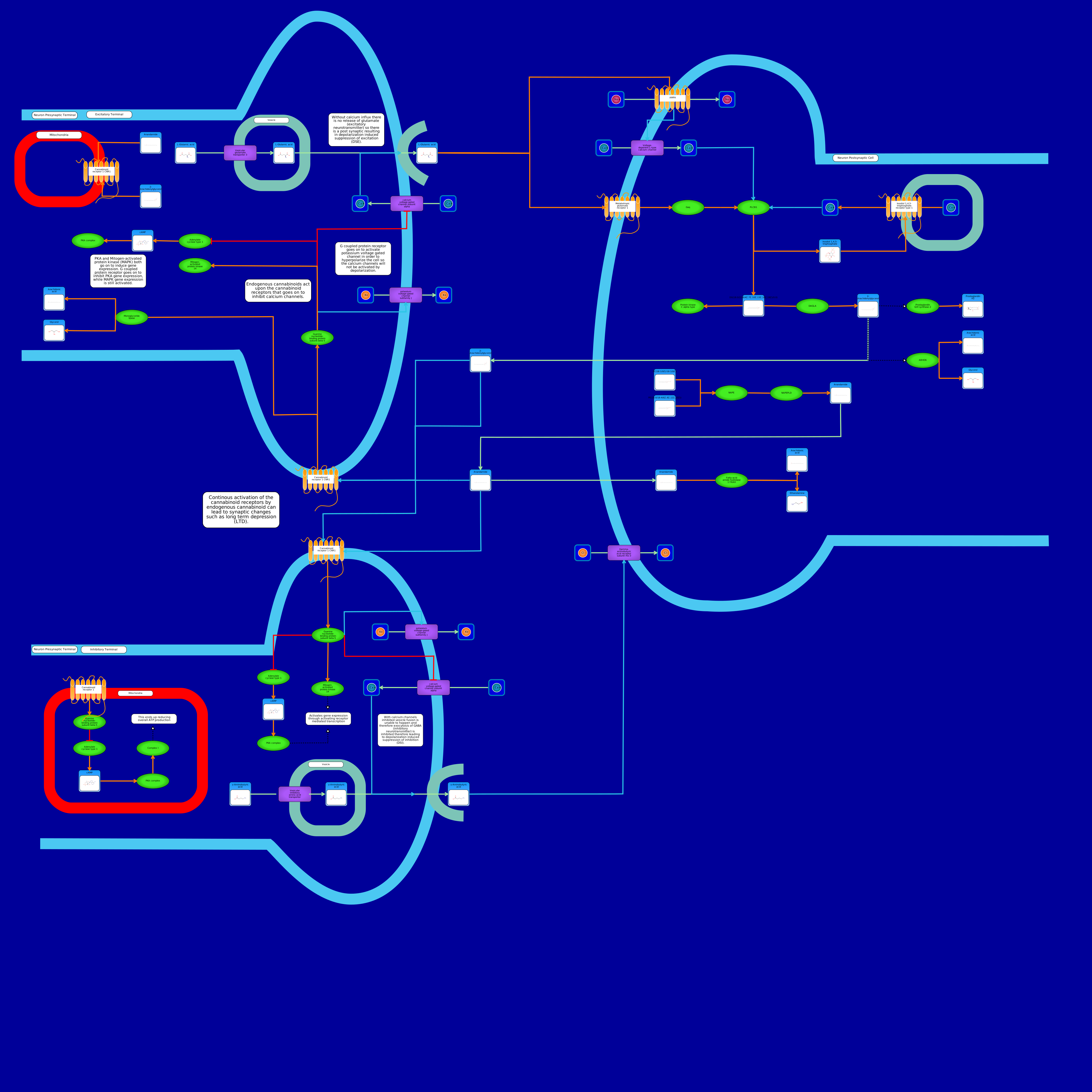 View Pathway
|
Cannabinoid SignalingHomo sapiens
Endogenous cannbinoids the most common being 2-arachidonoyl glycerol (2-AG) and arachidonoyl ethanolamide (anandamide, AEA), that acts upon the cannabinoid receptors (CB1), these receptors can also be activated by exogenous cannabinoids such as tetrahydrocannabinol (THC). 2-AG and AEA binds to cannabinoid receptors 1 that goes on to activate g coupled protein Gi and Go, these go on to inhibit adenylate cyclase and calcium voltage gated channels and activates MAP kinases and inward retictifying potassium channels overall eliciting diverse effects. The inhibition of adenylate cyclase leads to reduced ATP production and inhibition of calcium voltage gated channels halts vesicle fusion and release of glutamate and GABA from excitatory and inhibitory pre synaptic terminals respectively. This leads to depolarization induced supression of excitation and inhibition that can cause long term synaptic change that being long term depression (LTD). If endogenous cannabinoids are continously activated and released this leads to continous inactivation causing LTD, with the post synaptic neuron only acting to synthesize and release endogenous cannabinoids to act retrogradely onto the pre synaptic terminals and later taken up again to be degraded. AEA is taken up by the post synaptic neuron to be degraded by fatty acid amino hydrolase (FAAH) and 2-AG is broken down by hydrolytic enzymes and can be converted into prostaglandins which is an inflammatory mediator. Some exogenous cannabinoids such as tetrahydrocannabinol (THC) acts as an agonist to act on the CB1 receptors much like the endogenous cannabinoids to elicit similar effects and cannabidiol (CBD) acts as an antagonist to attenuate the effects of THC.
|
Metabolite
Drug Action
|
|
|
SMP0123125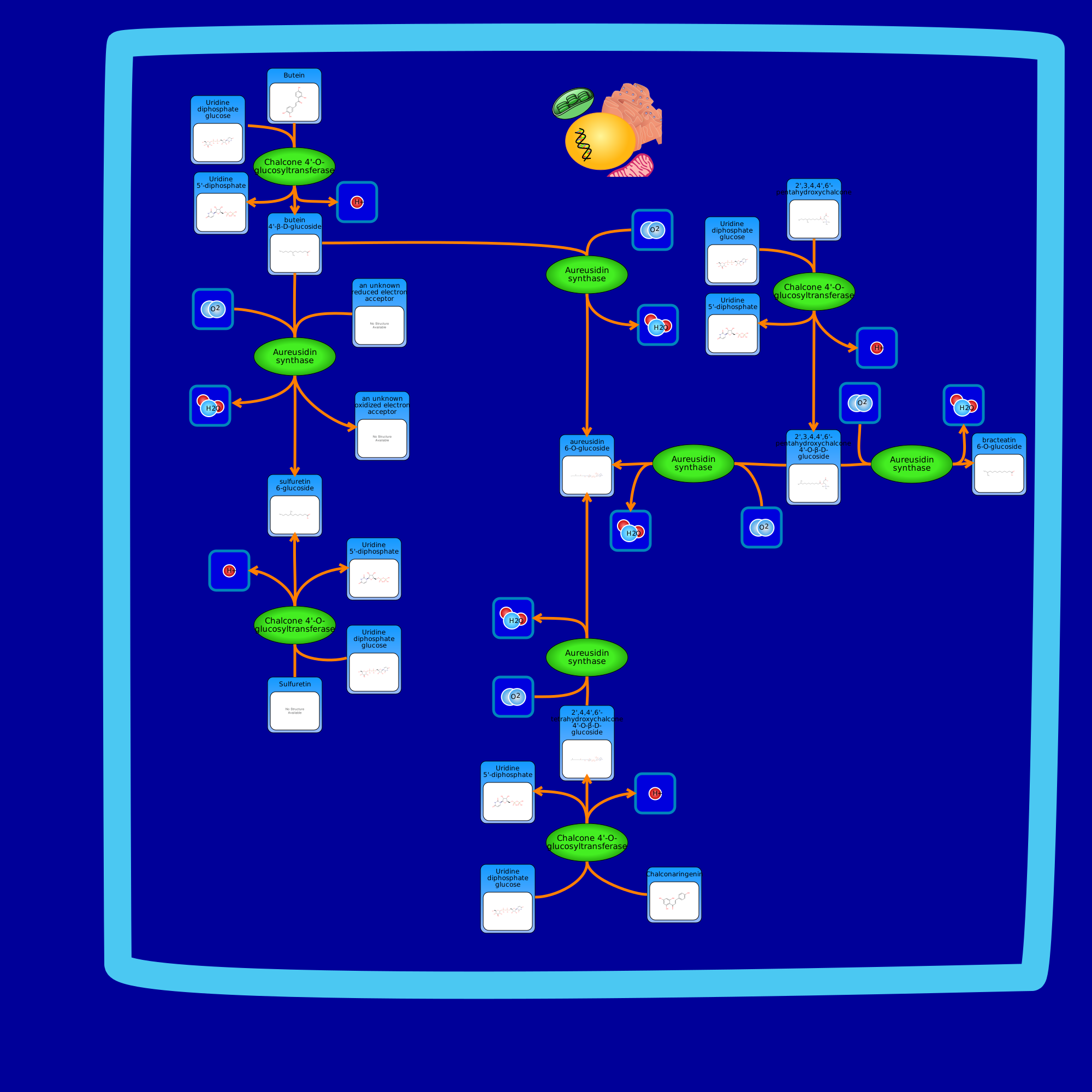 View Pathway
|
Aurone biosynthesisAntirrhinum majus
|
Metabolite
Metabolic
|
|
Showing 368071 -
368080 of 540746 pathways