
Browsing Pathways
Showing 368121 -
368130 of 605359 pathways
| PathBank ID | Pathway Name and Description | Pathway Class | Chemical Compounds | Proteins |
|---|---|---|---|---|
SMP0123361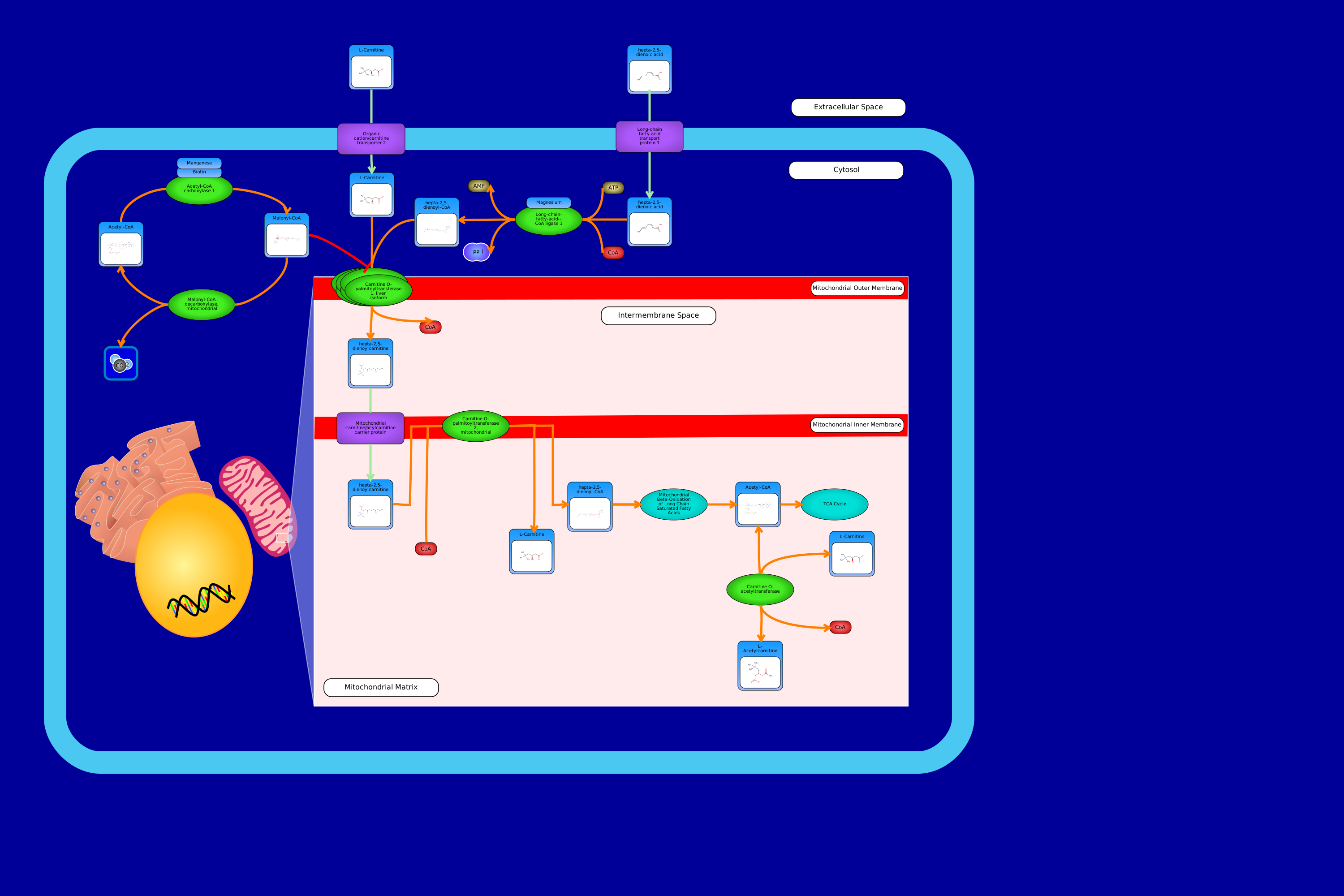 View Pathway
|
Acylcarnitine hepta-2,5-dienoylcarnitineHomo sapiens
hepta-2,5-dienoylcarnitine is an acylcarnitine. The general role of acylcarnitines is to transport acyl-groups, organic acids and fatty acids, from the cytoplasm into the mitochondria so that they can be broken down to produce energy. As part of this process, hepta-2,5-dienoic acid is first transported into the cell via the long-chain fatty acid transport protein 1 (FATP1). Once inside the cell it undergoes a reaction to form an acyl-CoA derivative called hepta-2,5-dienoyl-CoA. This reaction is facilitated by the long-chain fatty-acid CoA ligase 1 protein, which adds a CoA moiety to appropriate acyl groups. Many acyl-CoA groups will then further react with other zwitterionic compounds such as carnitine (to form acylcarnitines) and amino acids (to form acyl amides). The carnitine needed to form acylcarnitines inside the cell is transported into the cell by the organic cation/carnitine transporter 2. In forming an acylcarnitine derivative, hepta-2,5-dienoyl-CoA reacts with L-carnitine to form hepta-2,5-dienoylcarnitine. This reaction is catalyzed by carnitine O-palmitoyltransferase. This enzyme resides in the mitochondrial outer membrane. While this reaction takes place, the hepta-2,5-dienoylcarnitine is moved into the mitochondrial intermembrane space. Following the reaction, the newly synthesized acylcarnitine is transported into the mitochondrial matrix by a mitochondrial carnitine/acylcarnitine carrier protein found in the mitochondrial inner membrane. Once in the matrix, hepta-2,5-dienoylcarnitine can react with the carnitine O-palmitoyltransferase 2 enzyme found in the mitochondrial inner membrane to once again form hepta-2,5-dienoyl-CoA and L-carnitine. hepta-2,5-dienoyl-CoA then enters into the mitochondrial beta-oxidation pathway to form aceytl-CoA. Acetyl-CoA can go on to enter the TCA cycle, or it can react with L-carnitine to form L-acetylcarnitine in a reaction catalyzed by Carnitine O-acetyltransferase. This reaction can occur in both directions, and L-acetylcarnitine and CoA can react to form acetyl-CoA and L-carnitine in certain circumstances. Finally, acetyl-CoA in the cytosol can be catalyzed by acetyl-CoA carboxylase 1 to form malonyl-CoA, which inhibits the action of carnitine O-palmitoyltransferase 1, thereby preventing hepta-2,5-dienoylcarnitine from forming and thereby preventing it from being transported into the mitochondria.
|
Metabolite
Metabolic
|
|
|
SMP0123368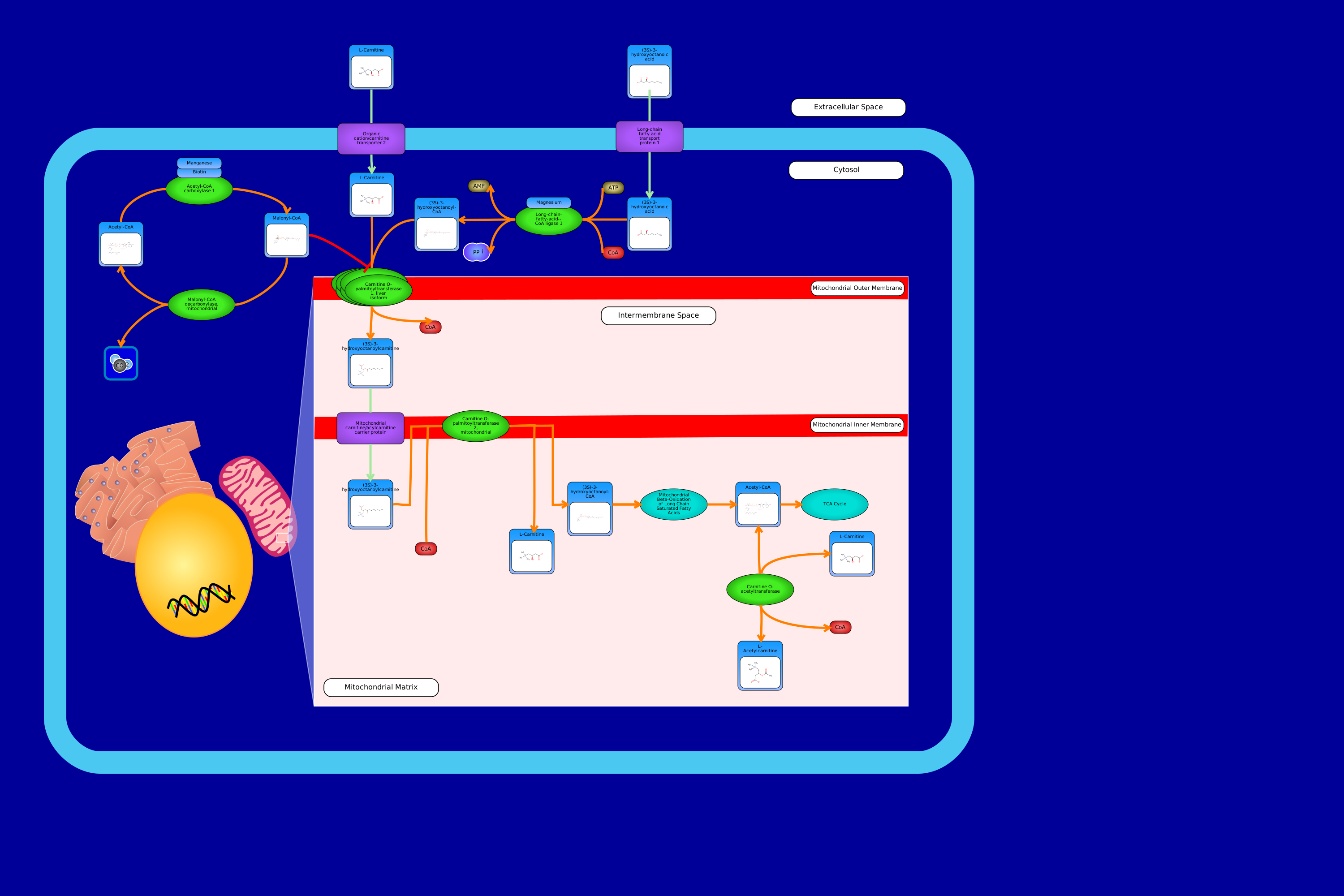 View Pathway
|
Acylcarnitine (3S)-3-hydroxyoctanoylcarnitineHomo sapiens
(3S)-3-hydroxyoctanoylcarnitine is an acylcarnitine. The general role of acylcarnitines is to transport acyl-groups, organic acids and fatty acids, from the cytoplasm into the mitochondria so that they can be broken down to produce energy. As part of this process, (3S)-3-hydroxyoctanoic acid is first transported into the cell via the long-chain fatty acid transport protein 1 (FATP1). Once inside the cell it undergoes a reaction to form an acyl-CoA derivative called (3S)-3-hydroxyoctanoyl-CoA. This reaction is facilitated by the long-chain fatty-acid CoA ligase 1 protein, which adds a CoA moiety to appropriate acyl groups. Many acyl-CoA groups will then further react with other zwitterionic compounds such as carnitine (to form acylcarnitines) and amino acids (to form acyl amides). The carnitine needed to form acylcarnitines inside the cell is transported into the cell by the organic cation/carnitine transporter 2. In forming an acylcarnitine derivative, (3S)-3-hydroxyoctanoyl-CoA reacts with L-carnitine to form (3S)-3-hydroxyoctanoylcarnitine. This reaction is catalyzed by carnitine O-palmitoyltransferase. This enzyme resides in the mitochondrial outer membrane. While this reaction takes place, the (3S)-3-hydroxyoctanoylcarnitine is moved into the mitochondrial intermembrane space. Following the reaction, the newly synthesized acylcarnitine is transported into the mitochondrial matrix by a mitochondrial carnitine/acylcarnitine carrier protein found in the mitochondrial inner membrane. Once in the matrix, (3S)-3-hydroxyoctanoylcarnitine can react with the carnitine O-palmitoyltransferase 2 enzyme found in the mitochondrial inner membrane to once again form (3S)-3-hydroxyoctanoyl-CoA and L-carnitine. (3S)-3-hydroxyoctanoyl-CoA then enters into the mitochondrial beta-oxidation pathway to form aceytl-CoA. Acetyl-CoA can go on to enter the TCA cycle, or it can react with L-carnitine to form L-acetylcarnitine in a reaction catalyzed by Carnitine O-acetyltransferase. This reaction can occur in both directions, and L-acetylcarnitine and CoA can react to form acetyl-CoA and L-carnitine in certain circumstances. Finally, acetyl-CoA in the cytosol can be catalyzed by acetyl-CoA carboxylase 1 to form malonyl-CoA, which inhibits the action of carnitine O-palmitoyltransferase 1, thereby preventing (3S)-3-hydroxyoctanoylcarnitine from forming and thereby preventing it from being transported into the mitochondria.
|
Metabolite
Metabolic
|
|
|
SMP0123373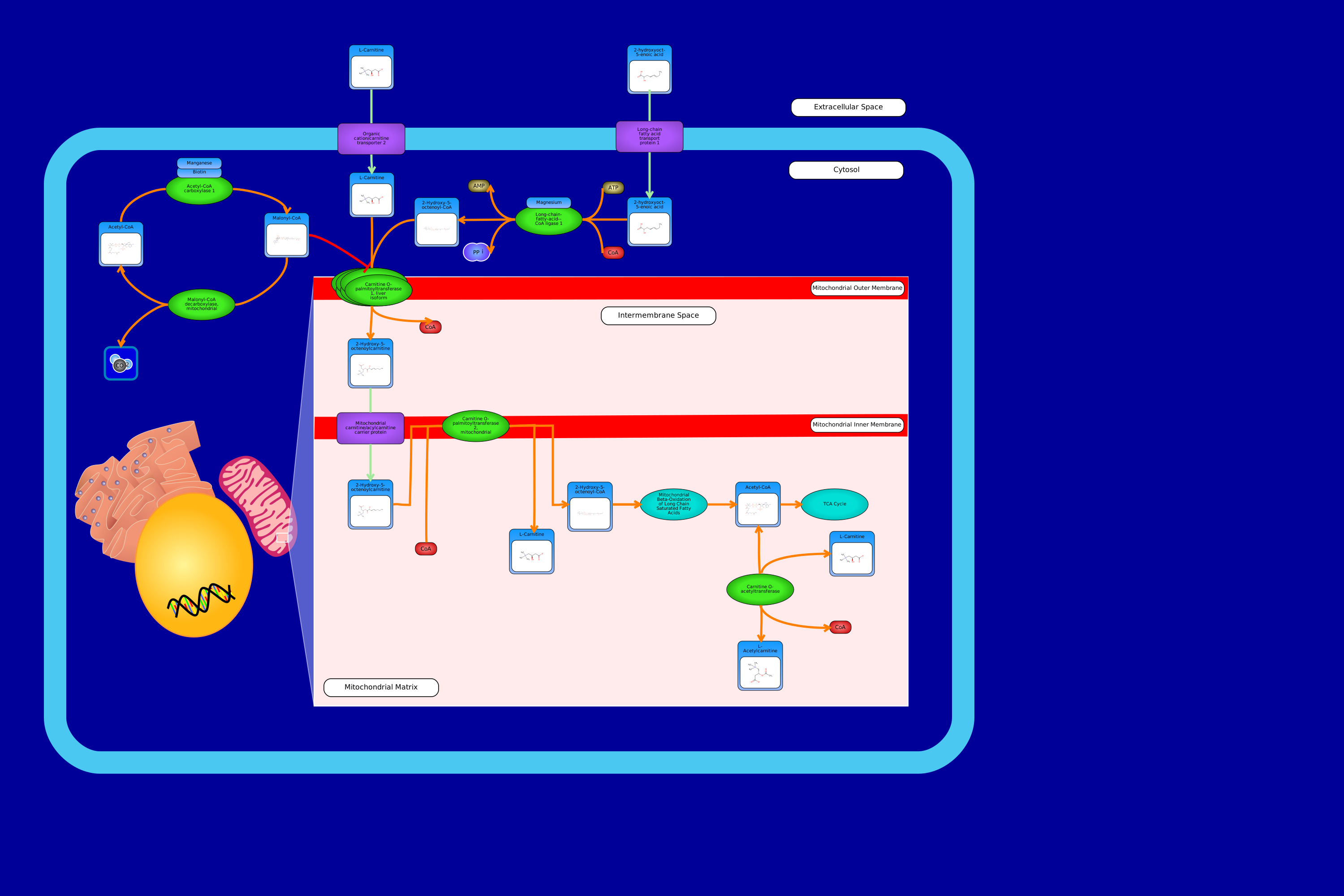 View Pathway
|
Acylcarnitine 2-Hydroxy-5-octenoylcarnitineHomo sapiens
2-Hydroxy-5-octenoylcarnitine is an acylcarnitine. The general role of acylcarnitines is to transport acyl-groups, organic acids and fatty acids, from the cytoplasm into the mitochondria so that they can be broken down to produce energy. As part of this process, 2-hydroxy-5-octenoic acid is first transported into the cell via the long-chain fatty acid transport protein 1 (FATP1). Once inside the cell it undergoes a reaction to form an acyl-CoA derivative called 2-hydroxy-5-octenoyl-CoA. This reaction is facilitated by the long-chain fatty-acid CoA ligase 1 protein, which adds a CoA moiety to appropriate acyl groups. Many acyl-CoA groups will then further react with other zwitterionic compounds such as carnitine (to form acylcarnitines) and amino acids (to form acyl amides). The carnitine needed to form acylcarnitines inside the cell is transported into the cell by the organic cation/carnitine transporter 2. In forming an acylcarnitine derivative, 2-hydroxy-5-octenoyl-CoA reacts with L-carnitine to form 2-hydroxy-5-octenoylcarnitine. This reaction is catalyzed by carnitine O-palmitoyltransferase. This enzyme resides in the mitochondrial outer membrane. While this reaction takes place, the 2-hydroxy-5-octenoylcarnitine is moved into the mitochondrial intermembrane space. Following the reaction, the newly synthesized acylcarnitine is transported into the mitochondrial matrix by a mitochondrial carnitine/acylcarnitine carrier protein found in the mitochondrial inner membrane. Once in the matrix, 2-hydroxy-5-octenoylcarnitine can react with the carnitine O-palmitoyltransferase 2 enzyme found in the mitochondrial inner membrane to once again form 2-hydroxy-5-octenoyl-CoA and L-carnitine. 2-Hydroxy-5-octenoyl-CoA then enters into the mitochondrial beta-oxidation pathway to form aceytl-CoA. Acetyl-CoA can go on to enter the TCA cycle, or it can react with L-carnitine to form L-acetylcarnitine in a reaction catalyzed by Carnitine O-acetyltransferase. This reaction can occur in both directions, and L-acetylcarnitine and CoA can react to form acetyl-CoA and L-carnitine in certain circumstances. Finally, acetyl-CoA in the cytosol can be catalyzed by acetyl-CoA carboxylase 1 to form malonyl-CoA, which inhibits the action of carnitine O-palmitoyltransferase 1, thereby preventing 2-hydroxy-5-octenoylcarnitine from forming and thereby preventing it from being transported into the mitochondria.
|
Metabolite
Metabolic
|
|
|
SMP0123375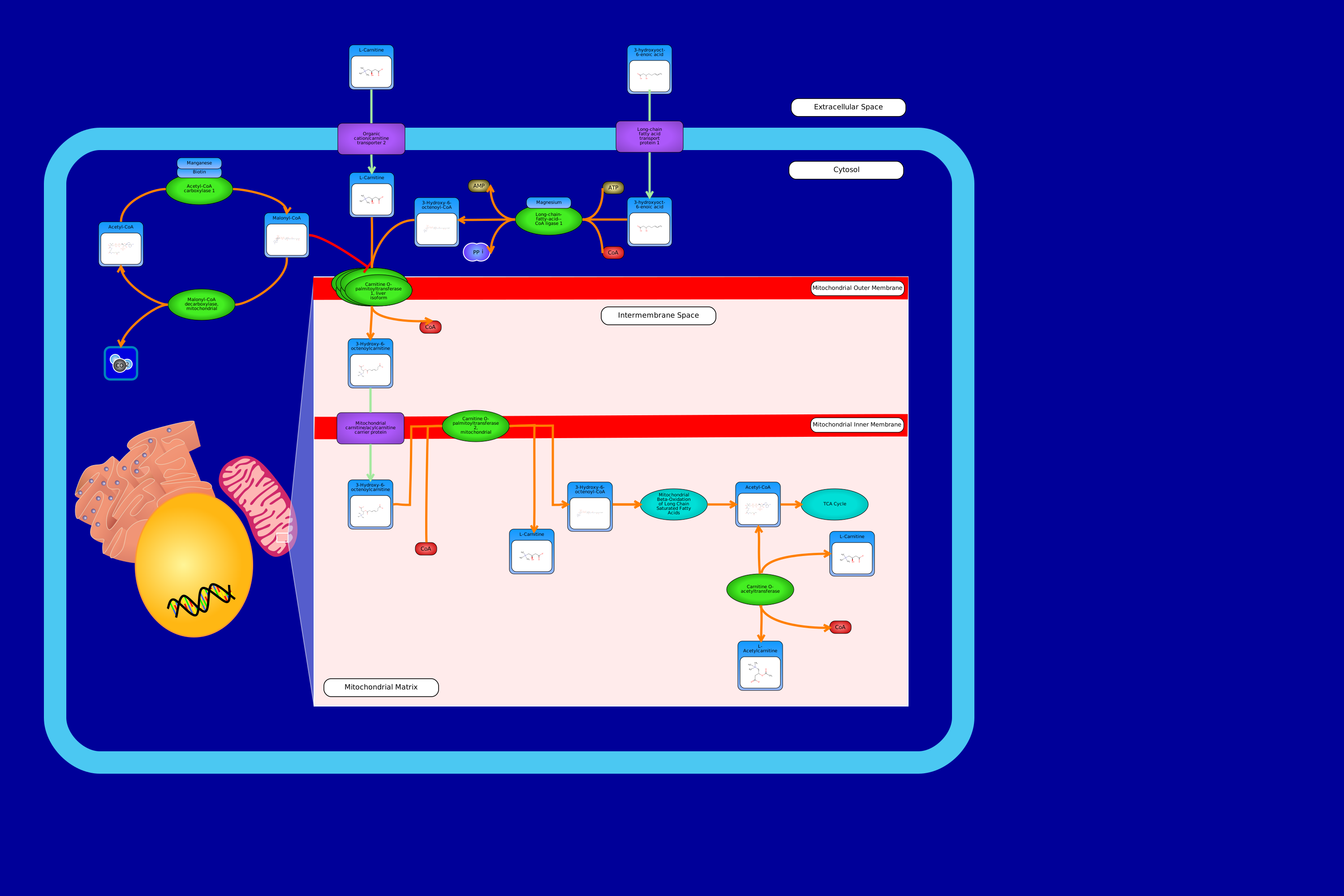 View Pathway
|
Acylcarnitine 3-Hydroxy-6-octenoylcarnitineHomo sapiens
3-Hydroxy-6-octenoylcarnitine is an acylcarnitine. The general role of acylcarnitines is to transport acyl-groups, organic acids and fatty acids, from the cytoplasm into the mitochondria so that they can be broken down to produce energy. As part of this process, 3-hydroxy-6-octenoic acid is first transported into the cell via the long-chain fatty acid transport protein 1 (FATP1). Once inside the cell it undergoes a reaction to form an acyl-CoA derivative called 3-hydroxy-6-octenoyl-CoA. This reaction is facilitated by the long-chain fatty-acid CoA ligase 1 protein, which adds a CoA moiety to appropriate acyl groups. Many acyl-CoA groups will then further react with other zwitterionic compounds such as carnitine (to form acylcarnitines) and amino acids (to form acyl amides). The carnitine needed to form acylcarnitines inside the cell is transported into the cell by the organic cation/carnitine transporter 2. In forming an acylcarnitine derivative, 3-hydroxy-6-octenoyl-CoA reacts with L-carnitine to form 3-hydroxy-6-octenoylcarnitine. This reaction is catalyzed by carnitine O-palmitoyltransferase. This enzyme resides in the mitochondrial outer membrane. While this reaction takes place, the 3-hydroxy-6-octenoylcarnitine is moved into the mitochondrial intermembrane space. Following the reaction, the newly synthesized acylcarnitine is transported into the mitochondrial matrix by a mitochondrial carnitine/acylcarnitine carrier protein found in the mitochondrial inner membrane. Once in the matrix, 3-hydroxy-6-octenoylcarnitine can react with the carnitine O-palmitoyltransferase 2 enzyme found in the mitochondrial inner membrane to once again form 3-hydroxy-6-octenoyl-CoA and L-carnitine. 3-Hydroxy-6-octenoyl-CoA then enters into the mitochondrial beta-oxidation pathway to form aceytl-CoA. Acetyl-CoA can go on to enter the TCA cycle, or it can react with L-carnitine to form L-acetylcarnitine in a reaction catalyzed by Carnitine O-acetyltransferase. This reaction can occur in both directions, and L-acetylcarnitine and CoA can react to form acetyl-CoA and L-carnitine in certain circumstances. Finally, acetyl-CoA in the cytosol can be catalyzed by acetyl-CoA carboxylase 1 to form malonyl-CoA, which inhibits the action of carnitine O-palmitoyltransferase 1, thereby preventing 3-hydroxy-6-octenoylcarnitine from forming and thereby preventing it from being transported into the mitochondria.
|
Metabolite
Metabolic
|
|
|
SMP0123380 View Pathway
|
Acylcarnitine (2E)-oct-2-enedioylcarnitineHomo sapiens
(2E)-oct-2-enedioylcarnitine is an acylcarnitine. The general role of acylcarnitines is to transport acyl-groups, organic acids and fatty acids, from the cytoplasm into the mitochondria so that they can be broken down to produce energy. As part of this process, (2E)-oct-2-enedioic acid is first transported into the cell via the long-chain fatty acid transport protein 1 (FATP1). Once inside the cell it undergoes a reaction to form an acyl-CoA derivative called (2E)-oct-2-enedioyl-CoA. This reaction is facilitated by the long-chain fatty-acid CoA ligase 1 protein, which adds a CoA moiety to appropriate acyl groups. Many acyl-CoA groups will then further react with other zwitterionic compounds such as carnitine (to form acylcarnitines) and amino acids (to form acyl amides). The carnitine needed to form acylcarnitines inside the cell is transported into the cell by the organic cation/carnitine transporter 2. In forming an acylcarnitine derivative, (2E)-oct-2-enedioyl-CoA reacts with L-carnitine to form (2E)-oct-2-enedioylcarnitine. This reaction is catalyzed by carnitine O-palmitoyltransferase. This enzyme resides in the mitochondrial outer membrane. While this reaction takes place, the (2E)-oct-2-enedioylcarnitine is moved into the mitochondrial intermembrane space. Following the reaction, the newly synthesized acylcarnitine is transported into the mitochondrial matrix by a mitochondrial carnitine/acylcarnitine carrier protein found in the mitochondrial inner membrane. Once in the matrix, (2E)-oct-2-enedioylcarnitine can react with the carnitine O-palmitoyltransferase 2 enzyme found in the mitochondrial inner membrane to once again form (2E)-oct-2-enedioyl-CoA and L-carnitine. (2E)-oct-2-enedioyl-CoA then enters into the mitochondrial beta-oxidation pathway to form aceytl-CoA. Acetyl-CoA can go on to enter the TCA cycle, or it can react with L-carnitine to form L-acetylcarnitine in a reaction catalyzed by Carnitine O-acetyltransferase. This reaction can occur in both directions, and L-acetylcarnitine and CoA can react to form acetyl-CoA and L-carnitine in certain circumstances. Finally, acetyl-CoA in the cytosol can be catalyzed by acetyl-CoA carboxylase 1 to form malonyl-CoA, which inhibits the action of carnitine O-palmitoyltransferase 1, thereby preventing (2E)-oct-2-enedioylcarnitine from forming and thereby preventing it from being transported into the mitochondria.
|
Metabolite
Metabolic
|
|
|
SMP0123387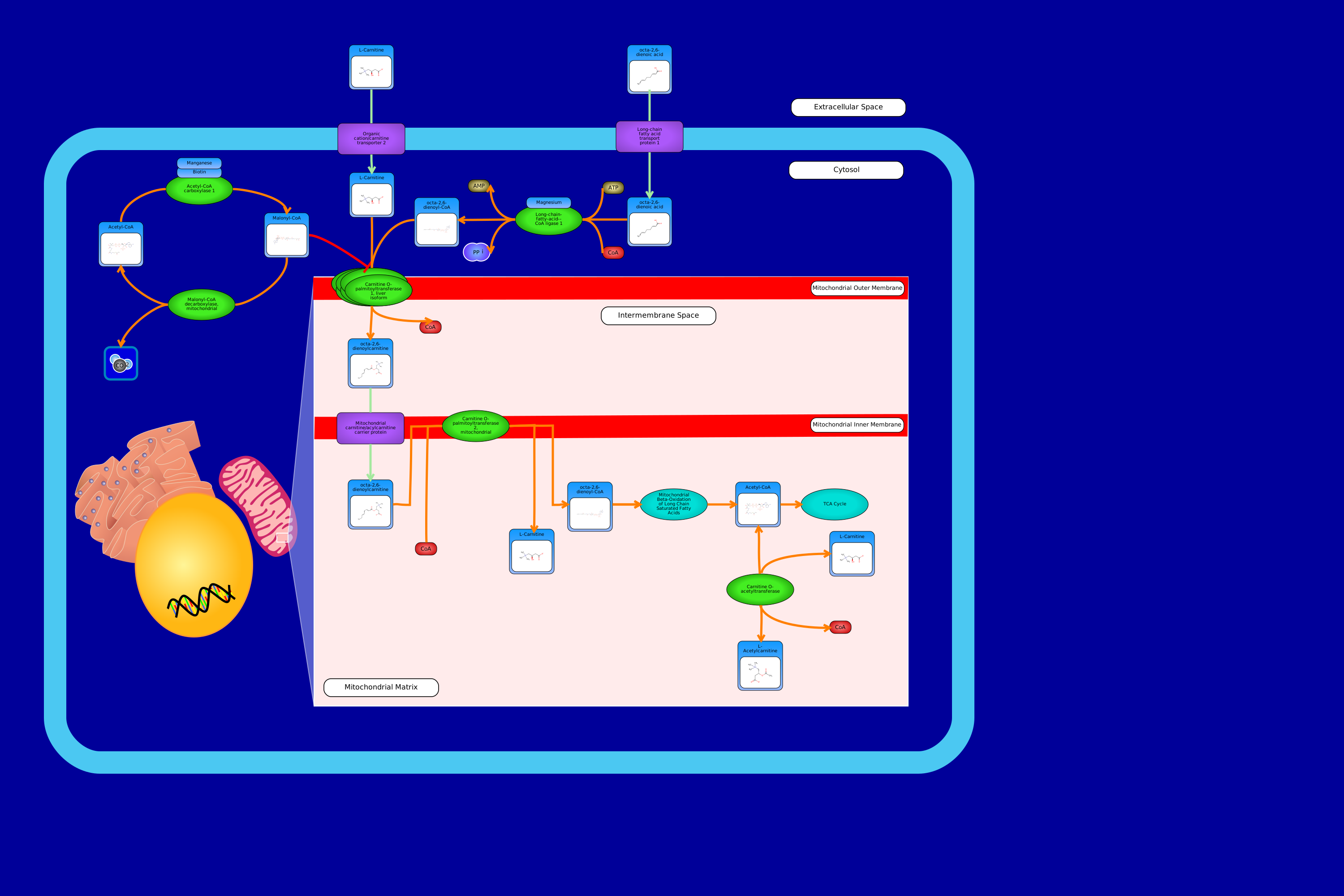 View Pathway
|
Acylcarnitine octa-2,6-dienoylcarnitineHomo sapiens
octa-2,6-dienoylcarnitine is an acylcarnitine. The general role of acylcarnitines is to transport acyl-groups, organic acids and fatty acids, from the cytoplasm into the mitochondria so that they can be broken down to produce energy. As part of this process, octa-2,6-dienoic acid is first transported into the cell via the long-chain fatty acid transport protein 1 (FATP1). Once inside the cell it undergoes a reaction to form an acyl-CoA derivative called octa-2,6-dienoyl-CoA. This reaction is facilitated by the long-chain fatty-acid CoA ligase 1 protein, which adds a CoA moiety to appropriate acyl groups. Many acyl-CoA groups will then further react with other zwitterionic compounds such as carnitine (to form acylcarnitines) and amino acids (to form acyl amides). The carnitine needed to form acylcarnitines inside the cell is transported into the cell by the organic cation/carnitine transporter 2. In forming an acylcarnitine derivative, octa-2,6-dienoyl-CoA reacts with L-carnitine to form octa-2,6-dienoylcarnitine. This reaction is catalyzed by carnitine O-palmitoyltransferase. This enzyme resides in the mitochondrial outer membrane. While this reaction takes place, the octa-2,6-dienoylcarnitine is moved into the mitochondrial intermembrane space. Following the reaction, the newly synthesized acylcarnitine is transported into the mitochondrial matrix by a mitochondrial carnitine/acylcarnitine carrier protein found in the mitochondrial inner membrane. Once in the matrix, octa-2,6-dienoylcarnitine can react with the carnitine O-palmitoyltransferase 2 enzyme found in the mitochondrial inner membrane to once again form octa-2,6-dienoyl-CoA and L-carnitine. octa-2,6-dienoyl-CoA then enters into the mitochondrial beta-oxidation pathway to form aceytl-CoA. Acetyl-CoA can go on to enter the TCA cycle, or it can react with L-carnitine to form L-acetylcarnitine in a reaction catalyzed by Carnitine O-acetyltransferase. This reaction can occur in both directions, and L-acetylcarnitine and CoA can react to form acetyl-CoA and L-carnitine in certain circumstances. Finally, acetyl-CoA in the cytosol can be catalyzed by acetyl-CoA carboxylase 1 to form malonyl-CoA, which inhibits the action of carnitine O-palmitoyltransferase 1, thereby preventing octa-2,6-dienoylcarnitine from forming and thereby preventing it from being transported into the mitochondria.
|
Metabolite
Metabolic
|
|
|
SMP0123392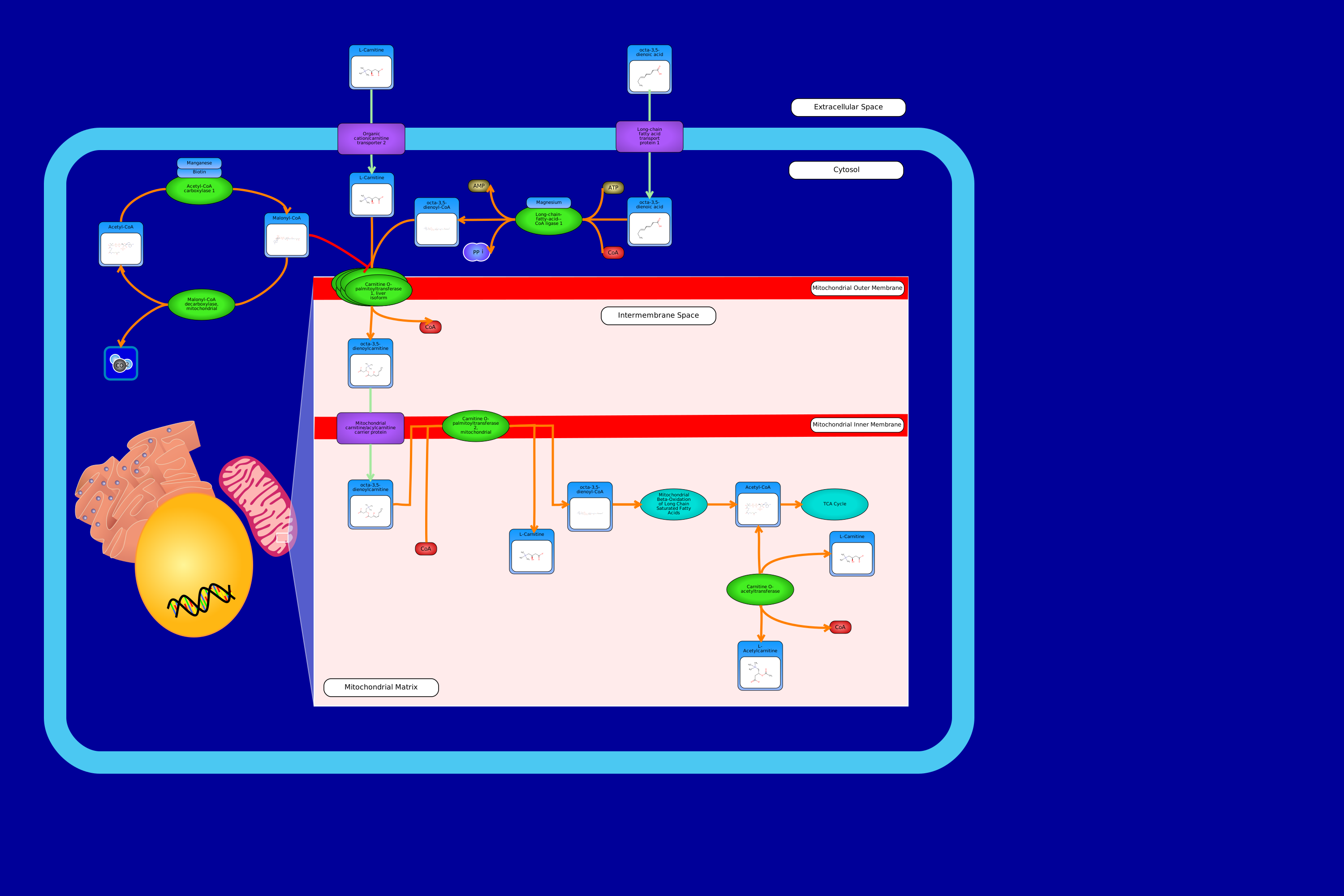 View Pathway
|
Acylcarnitine octa-3,5-dienoylcarnitineHomo sapiens
octa-3,5-dienoylcarnitine is an acylcarnitine. The general role of acylcarnitines is to transport acyl-groups, organic acids and fatty acids, from the cytoplasm into the mitochondria so that they can be broken down to produce energy. As part of this process, octa-3,5-dienoic acid is first transported into the cell via the long-chain fatty acid transport protein 1 (FATP1). Once inside the cell it undergoes a reaction to form an acyl-CoA derivative called octa-3,5-dienoyl-CoA. This reaction is facilitated by the long-chain fatty-acid CoA ligase 1 protein, which adds a CoA moiety to appropriate acyl groups. Many acyl-CoA groups will then further react with other zwitterionic compounds such as carnitine (to form acylcarnitines) and amino acids (to form acyl amides). The carnitine needed to form acylcarnitines inside the cell is transported into the cell by the organic cation/carnitine transporter 2. In forming an acylcarnitine derivative, octa-3,5-dienoyl-CoA reacts with L-carnitine to form octa-3,5-dienoylcarnitine. This reaction is catalyzed by carnitine O-palmitoyltransferase. This enzyme resides in the mitochondrial outer membrane. While this reaction takes place, the octa-3,5-dienoylcarnitine is moved into the mitochondrial intermembrane space. Following the reaction, the newly synthesized acylcarnitine is transported into the mitochondrial matrix by a mitochondrial carnitine/acylcarnitine carrier protein found in the mitochondrial inner membrane. Once in the matrix, octa-3,5-dienoylcarnitine can react with the carnitine O-palmitoyltransferase 2 enzyme found in the mitochondrial inner membrane to once again form octa-3,5-dienoyl-CoA and L-carnitine. octa-3,5-dienoyl-CoA then enters into the mitochondrial beta-oxidation pathway to form aceytl-CoA. Acetyl-CoA can go on to enter the TCA cycle, or it can react with L-carnitine to form L-acetylcarnitine in a reaction catalyzed by Carnitine O-acetyltransferase. This reaction can occur in both directions, and L-acetylcarnitine and CoA can react to form acetyl-CoA and L-carnitine in certain circumstances. Finally, acetyl-CoA in the cytosol can be catalyzed by acetyl-CoA carboxylase 1 to form malonyl-CoA, which inhibits the action of carnitine O-palmitoyltransferase 1, thereby preventing octa-3,5-dienoylcarnitine from forming and thereby preventing it from being transported into the mitochondria.
|
Metabolite
Metabolic
|
|
|
SMP0123394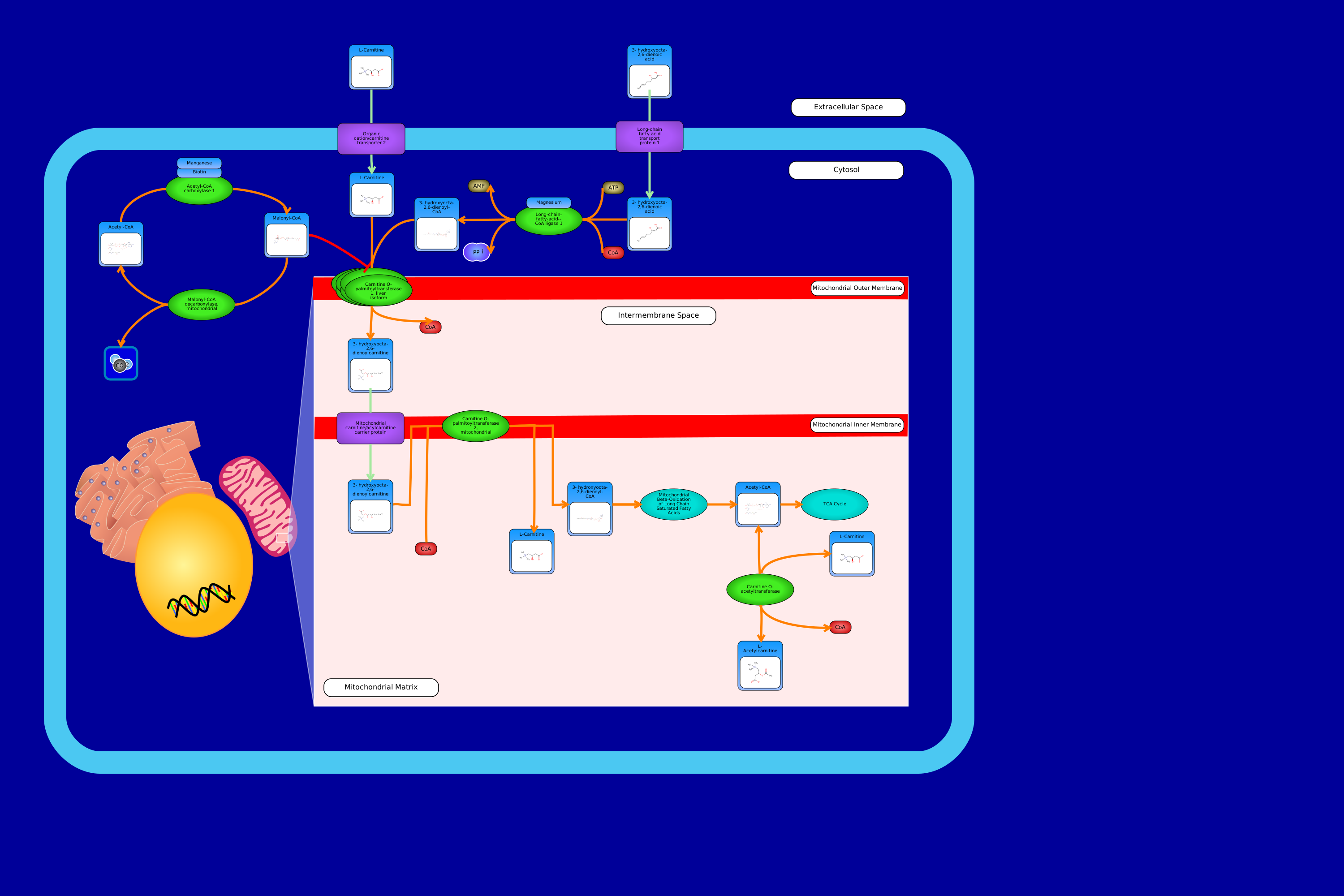 View Pathway
|
Acylcarnitine 3-hydroxyocta-2,6-dienoylcarnitineHomo sapiens
3-hydroxyocta-2,6-dienoylcarnitine is an acylcarnitine. The general role of acylcarnitines is to transport acyl-groups, organic acids and fatty acids, from the cytoplasm into the mitochondria so that they can be broken down to produce energy. As part of this process, 3-hydroxyocta-2,6-dienoic acid is first transported into the cell via the long-chain fatty acid transport protein 1 (FATP1). Once inside the cell it undergoes a reaction to form an acyl-CoA derivative called 3-hydroxyocta-2,6-dienoyl-CoA. This reaction is facilitated by the long-chain fatty-acid CoA ligase 1 protein, which adds a CoA moiety to appropriate acyl groups. Many acyl-CoA groups will then further react with other zwitterionic compounds such as carnitine (to form acylcarnitines) and amino acids (to form acyl amides). The carnitine needed to form acylcarnitines inside the cell is transported into the cell by the organic cation/carnitine transporter 2. In forming an acylcarnitine derivative, 3-hydroxyocta-2,6-dienoyl-CoA reacts with L-carnitine to form 3-hydroxyocta-2,6-dienoylcarnitine. This reaction is catalyzed by carnitine O-palmitoyltransferase. This enzyme resides in the mitochondrial outer membrane. While this reaction takes place, the 3-hydroxyocta-2,6-dienoylcarnitine is moved into the mitochondrial intermembrane space. Following the reaction, the newly synthesized acylcarnitine is transported into the mitochondrial matrix by a mitochondrial carnitine/acylcarnitine carrier protein found in the mitochondrial inner membrane. Once in the matrix, 3-hydroxyocta-2,6-dienoylcarnitine can react with the carnitine O-palmitoyltransferase 2 enzyme found in the mitochondrial inner membrane to once again form 3-hydroxyocta-2,6-dienoyl-CoA and L-carnitine. 3-hydroxyocta-2,6-dienoyl-CoA then enters into the mitochondrial beta-oxidation pathway to form aceytl-CoA. Acetyl-CoA can go on to enter the TCA cycle, or it can react with L-carnitine to form L-acetylcarnitine in a reaction catalyzed by Carnitine O-acetyltransferase. This reaction can occur in both directions, and L-acetylcarnitine and CoA can react to form acetyl-CoA and L-carnitine in certain circumstances. Finally, acetyl-CoA in the cytosol can be catalyzed by acetyl-CoA carboxylase 1 to form malonyl-CoA, which inhibits the action of carnitine O-palmitoyltransferase 1, thereby preventing 3-hydroxyocta-2,6-dienoylcarnitine from forming and thereby preventing it from being transported into the mitochondria.
|
Metabolite
Metabolic
|
|
|
SMP0123399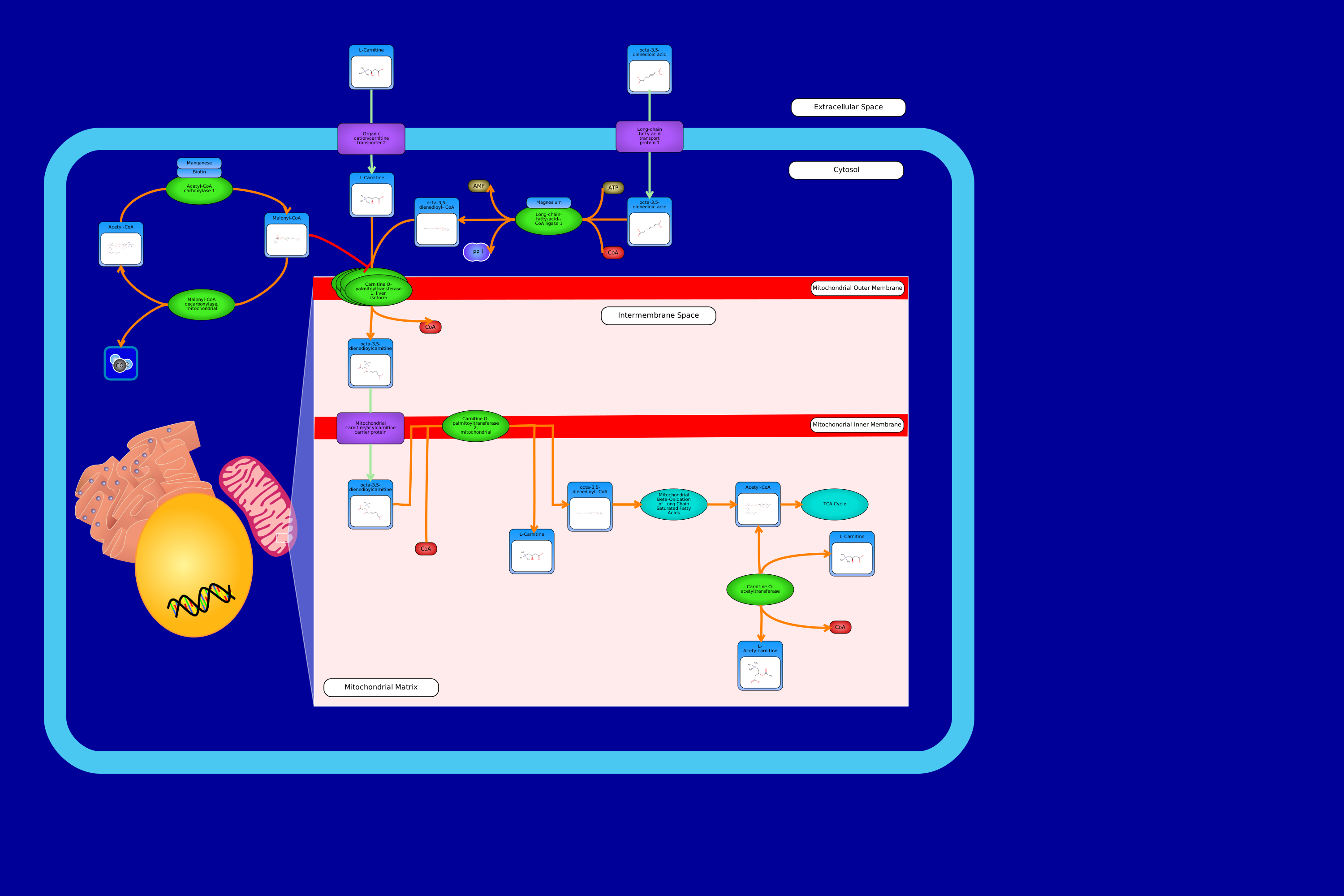 View Pathway
|
Acylcarnitine octa-3,5-dienedioylcarnitineHomo sapiens
octa-3,5-dienedioylcarnitine is an acylcarnitine. The general role of acylcarnitines is to transport acyl-groups, organic acids and fatty acids, from the cytoplasm into the mitochondria so that they can be broken down to produce energy. As part of this process, octa-3,5-dienedioic acid is first transported into the cell via the long-chain fatty acid transport protein 1 (FATP1). Once inside the cell it undergoes a reaction to form an acyl-CoA derivative called octa-3,5-dienedioyl-CoA. This reaction is facilitated by the long-chain fatty-acid CoA ligase 1 protein, which adds a CoA moiety to appropriate acyl groups. Many acyl-CoA groups will then further react with other zwitterionic compounds such as carnitine (to form acylcarnitines) and amino acids (to form acyl amides). The carnitine needed to form acylcarnitines inside the cell is transported into the cell by the organic cation/carnitine transporter 2. In forming an acylcarnitine derivative, octa-3,5-dienedioyl-CoA reacts with L-carnitine to form octa-3,5-dienedioylcarnitine. This reaction is catalyzed by carnitine O-palmitoyltransferase. This enzyme resides in the mitochondrial outer membrane. While this reaction takes place, the octa-3,5-dienedioylcarnitine is moved into the mitochondrial intermembrane space. Following the reaction, the newly synthesized acylcarnitine is transported into the mitochondrial matrix by a mitochondrial carnitine/acylcarnitine carrier protein found in the mitochondrial inner membrane. Once in the matrix, octa-3,5-dienedioylcarnitine can react with the carnitine O-palmitoyltransferase 2 enzyme found in the mitochondrial inner membrane to once again form octa-3,5-dienedioyl-CoA and L-carnitine. octa-3,5-dienedioyl-CoA then enters into the mitochondrial beta-oxidation pathway to form aceytl-CoA. Acetyl-CoA can go on to enter the TCA cycle, or it can react with L-carnitine to form L-acetylcarnitine in a reaction catalyzed by Carnitine O-acetyltransferase. This reaction can occur in both directions, and L-acetylcarnitine and CoA can react to form acetyl-CoA and L-carnitine in certain circumstances. Finally, acetyl-CoA in the cytosol can be catalyzed by acetyl-CoA carboxylase 1 to form malonyl-CoA, which inhibits the action of carnitine O-palmitoyltransferase 1, thereby preventing octa-3,5-dienedioylcarnitine from forming and thereby preventing it from being transported into the mitochondria.
|
Metabolite
Metabolic
|
|
|
SMP0123406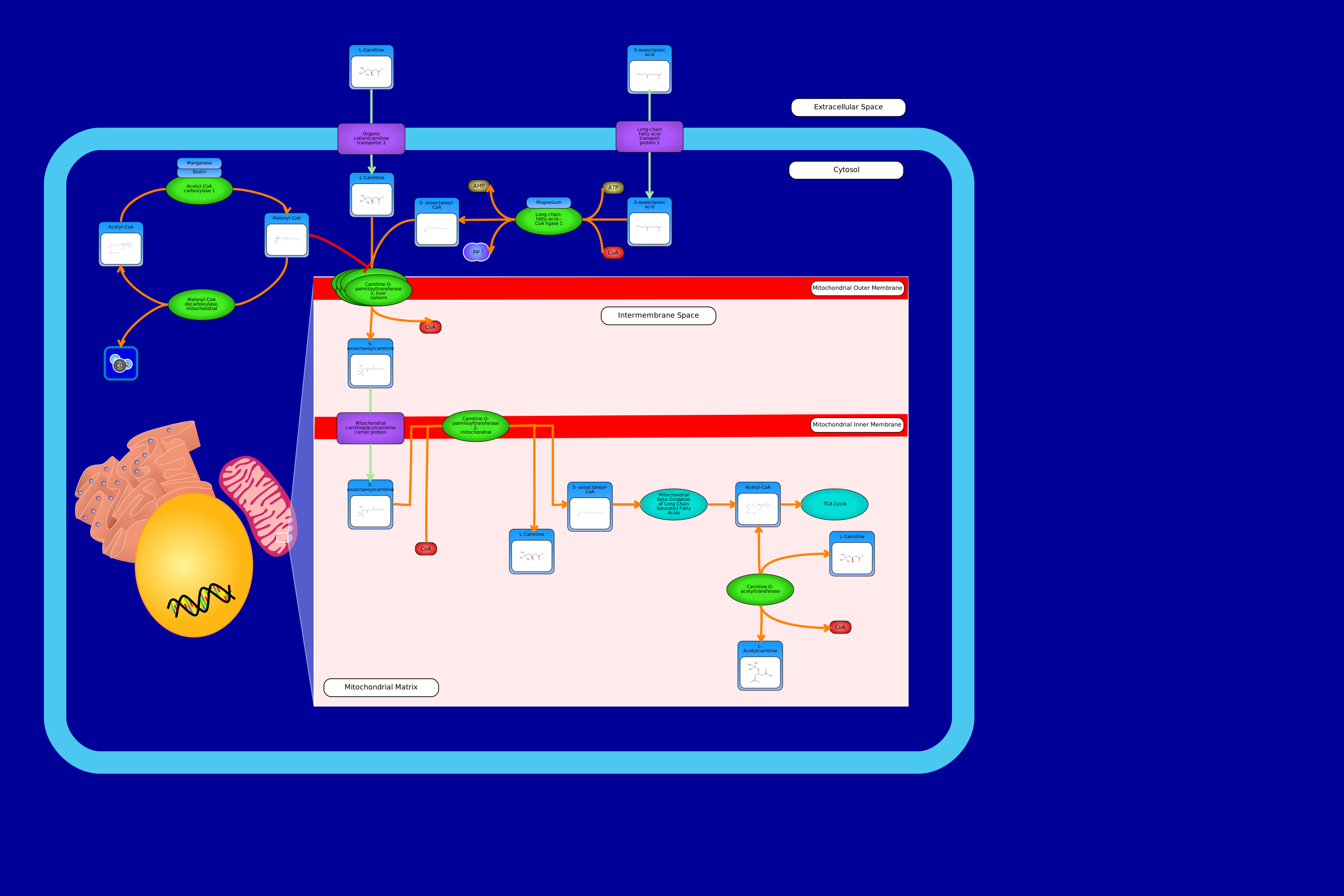 View Pathway
|
Acylcarnitine 5-oxooctanoylcarnitineHomo sapiens
5-oxooctanoylcarnitine is an acylcarnitine. The general role of acylcarnitines is to transport acyl-groups, organic acids and fatty acids, from the cytoplasm into the mitochondria so that they can be broken down to produce energy. As part of this process, 5-oxooctanoic acid is first transported into the cell via the long-chain fatty acid transport protein 1 (FATP1). Once inside the cell it undergoes a reaction to form an acyl-CoA derivative called 5-oxooctanoyl-CoA. This reaction is facilitated by the long-chain fatty-acid CoA ligase 1 protein, which adds a CoA moiety to appropriate acyl groups. Many acyl-CoA groups will then further react with other zwitterionic compounds such as carnitine (to form acylcarnitines) and amino acids (to form acyl amides). The carnitine needed to form acylcarnitines inside the cell is transported into the cell by the organic cation/carnitine transporter 2. In forming an acylcarnitine derivative, 5-oxooctanoyl-CoA reacts with L-carnitine to form 5-oxooctanoylcarnitine. This reaction is catalyzed by carnitine O-palmitoyltransferase. This enzyme resides in the mitochondrial outer membrane. While this reaction takes place, the 5-oxooctanoylcarnitine is moved into the mitochondrial intermembrane space. Following the reaction, the newly synthesized acylcarnitine is transported into the mitochondrial matrix by a mitochondrial carnitine/acylcarnitine carrier protein found in the mitochondrial inner membrane. Once in the matrix, 5-oxooctanoylcarnitine can react with the carnitine O-palmitoyltransferase 2 enzyme found in the mitochondrial inner membrane to once again form 5-oxooctanoyl-CoA and L-carnitine. 5-oxooctanoyl-CoA then enters into the mitochondrial beta-oxidation pathway to form aceytl-CoA. Acetyl-CoA can go on to enter the TCA cycle, or it can react with L-carnitine to form L-acetylcarnitine in a reaction catalyzed by Carnitine O-acetyltransferase. This reaction can occur in both directions, and L-acetylcarnitine and CoA can react to form acetyl-CoA and L-carnitine in certain circumstances. Finally, acetyl-CoA in the cytosol can be catalyzed by acetyl-CoA carboxylase 1 to form malonyl-CoA, which inhibits the action of carnitine O-palmitoyltransferase 1, thereby preventing 5-oxooctanoylcarnitine from forming and thereby preventing it from being transported into the mitochondria.
|
Metabolite
Metabolic
|
|
|
Showing 368121 -
368130 of 540746 pathways