
Browsing Pathways
Showing 368151 -
368160 of 605359 pathways
| PathBank ID | Pathway Name and Description | Pathway Class | Chemical Compounds | Proteins |
|---|---|---|---|---|
SMP0123512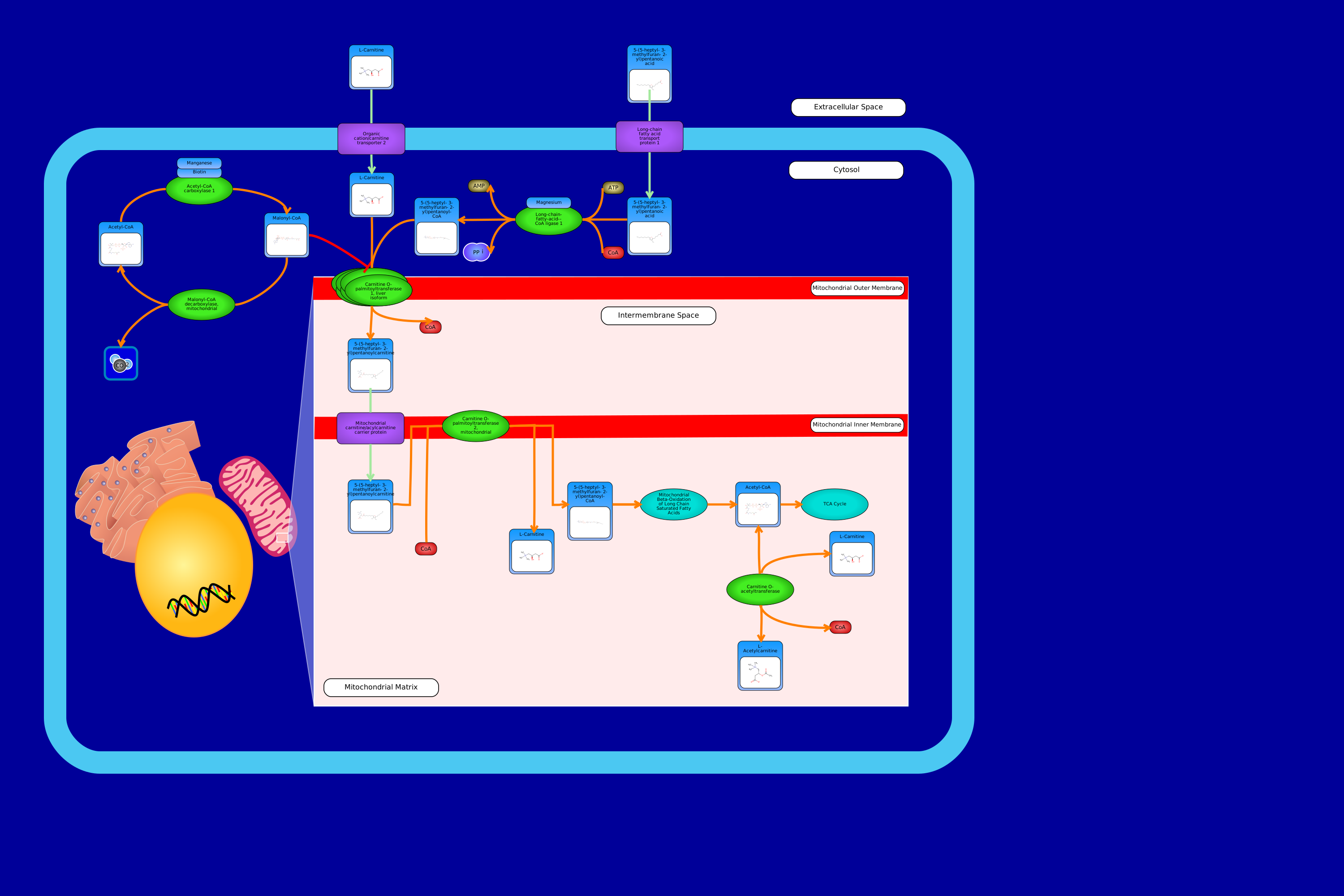 View Pathway
|
Acylcarnitine 5-(5-heptyl-3-methylfuran-2-yl)pentanoylcarnitineHomo sapiens
5-(5-heptyl-3-methylfuran-2-yl)pentanoylcarnitine is an acylcarnitine. The general role of acylcarnitines is to transport acyl-groups, organic acids and fatty acids, from the cytoplasm into the mitochondria so that they can be broken down to produce energy. As part of this process, 5-(5-heptyl-3-methylfuran-2-yl)pentanoic acid is first transported into the cell via the long-chain fatty acid transport protein 1 (FATP1). Once inside the cell it undergoes a reaction to form an acyl-CoA derivative called 5-(5-heptyl-3-methylfuran-2-yl)pentanoyl-CoA. This reaction is facilitated by the long-chain fatty-acid CoA ligase 1 protein, which adds a CoA moiety to appropriate acyl groups. Many acyl-CoA groups will then further react with other zwitterionic compounds such as carnitine (to form acylcarnitines) and amino acids (to form acyl amides). The carnitine needed to form acylcarnitines inside the cell is transported into the cell by the organic cation/carnitine transporter 2. In forming an acylcarnitine derivative, 5-(5-heptyl-3-methylfuran-2-yl)pentanoyl-CoA reacts with L-carnitine to form 5-(5-heptyl-3-methylfuran-2-yl)pentanoylcarnitine. This reaction is catalyzed by carnitine O-palmitoyltransferase. This enzyme resides in the mitochondrial outer membrane. While this reaction takes place, the 5-(5-heptyl-3-methylfuran-2-yl)pentanoylcarnitine is moved into the mitochondrial intermembrane space. Following the reaction, the newly synthesized acylcarnitine is transported into the mitochondrial matrix by a mitochondrial carnitine/acylcarnitine carrier protein found in the mitochondrial inner membrane. Once in the matrix, 5-(5-heptyl-3-methylfuran-2-yl)pentanoylcarnitine can react with the carnitine O-palmitoyltransferase 2 enzyme found in the mitochondrial inner membrane to once again form 5-(5-heptyl-3-methylfuran-2-yl)pentanoyl-CoA and L-carnitine. 5-(5-heptyl-3-methylfuran-2-yl)pentanoyl-CoA then enters into the mitochondrial beta-oxidation pathway to form aceytl-CoA. Acetyl-CoA can go on to enter the TCA cycle, or it can react with L-carnitine to form L-acetylcarnitine in a reaction catalyzed by Carnitine O-acetyltransferase. This reaction can occur in both directions, and L-acetylcarnitine and CoA can react to form acetyl-CoA and L-carnitine in certain circumstances. Finally, acetyl-CoA in the cytosol can be catalyzed by acetyl-CoA carboxylase 1 to form malonyl-CoA, which inhibits the action of carnitine O-palmitoyltransferase 1, thereby preventing 5-(5-heptyl-3-methylfuran-2-yl)pentanoylcarnitine from forming and thereby preventing it from being transported into the mitochondria.
|
Metabolite
Metabolic
|
|
|
SMP0123514 View Pathway
|
Acylcarnitine 7-(3,4-dimethyl-5-propylfuran-2-yl)heptanoylcarnitineHomo sapiens
7-(3,4-dimethyl-5-propylfuran-2-yl)heptanoylcarnitine is an acylcarnitine. The general role of acylcarnitines is to transport acyl-groups, organic acids and fatty acids, from the cytoplasm into the mitochondria so that they can be broken down to produce energy. As part of this process, 7-(3,4-dimethyl-5-propylfuran-2-yl)heptanoic acid is first transported into the cell via the long-chain fatty acid transport protein 1 (FATP1). Once inside the cell it undergoes a reaction to form an acyl-CoA derivative called 7-(3,4-dimethyl-5-propylfuran-2-yl)heptanoyl-CoA. This reaction is facilitated by the long-chain fatty-acid CoA ligase 1 protein, which adds a CoA moiety to appropriate acyl groups. Many acyl-CoA groups will then further react with other zwitterionic compounds such as carnitine (to form acylcarnitines) and amino acids (to form acyl amides). The carnitine needed to form acylcarnitines inside the cell is transported into the cell by the organic cation/carnitine transporter 2. In forming an acylcarnitine derivative, 7-(3,4-dimethyl-5-propylfuran-2-yl)heptanoyl-CoA reacts with L-carnitine to form 7-(3,4-dimethyl-5-propylfuran-2-yl)heptanoylcarnitine. This reaction is catalyzed by carnitine O-palmitoyltransferase. This enzyme resides in the mitochondrial outer membrane. While this reaction takes place, the 7-(3,4-dimethyl-5-propylfuran-2-yl)heptanoylcarnitine is moved into the mitochondrial intermembrane space. Following the reaction, the newly synthesized acylcarnitine is transported into the mitochondrial matrix by a mitochondrial carnitine/acylcarnitine carrier protein found in the mitochondrial inner membrane. Once in the matrix, 7-(3,4-dimethyl-5-propylfuran-2-yl)heptanoylcarnitine can react with the carnitine O-palmitoyltransferase 2 enzyme found in the mitochondrial inner membrane to once again form 7-(3,4-dimethyl-5-propylfuran-2-yl)heptanoyl-CoA and L-carnitine. 7-(3,4-dimethyl-5-propylfuran-2-yl)heptanoyl-CoA then enters into the mitochondrial beta-oxidation pathway to form aceytl-CoA. Acetyl-CoA can go on to enter the TCA cycle, or it can react with L-carnitine to form L-acetylcarnitine in a reaction catalyzed by Carnitine O-acetyltransferase. This reaction can occur in both directions, and L-acetylcarnitine and CoA can react to form acetyl-CoA and L-carnitine in certain circumstances. Finally, acetyl-CoA in the cytosol can be catalyzed by acetyl-CoA carboxylase 1 to form malonyl-CoA, which inhibits the action of carnitine O-palmitoyltransferase 1, thereby preventing 7-(3,4-dimethyl-5-propylfuran-2-yl)heptanoylcarnitine from forming and thereby preventing it from being transported into the mitochondria.
|
Metabolite
Metabolic
|
|
|
SMP0120877 View Pathway
|
Vitamin C in the BrainHomo sapiens
Ascorbate (Vitamin C) is a very important molecule in the brain. Ascorbate is transported into brain through Sodium-dependent Vitamin C Transporter-2 (SVCT2), and will be reduced to dehydroascorbic acid, which is the oxidized form of ascorbate. Dehydroascorbic acid is transported into extracellular place and enter astrocyte space via Solute carrier family 2, facilitated glucose transporter members (GLUT family). Once dehydroascorbic acid in astrocyte cells, it is rapidly reduced to ascorbate to do further reactions that are associated with other pathways. Ascorbate is proposed as a neuromodulator of glutamatergic, dopaminergic, cholinergic and GABAergic transmission and related behaviors; it also has a number of other important functions, participating as a co-factor in several enzyme reactions including catecholamine synthesis, collagen production and regulation of HIF-1α.
|
Metabolite
Signaling
|
||
SMP0120879 View Pathway
|
IL-10 Anti-inflammatory Signaling PathwayHomo sapiens
Interleukin-10 (IL-10) is an anti-inflammatory cytokine with important immunoregulatory functions. It is primarily secreted by antigen-presenting cells such as activated T-cells, monocytes, B-cells and macrophages. In biologically functional form, it exists as a homodimer that binds to tetrameric heterodimer IL-10 receptor and induces downstream signaling. IL-10 is associated with survival, proliferation and anti-apoptotic activities of various cancers such as Burkitt lymphoma, non-Hodgkins lymphoma and non-small scell lung cancer. In addition, it plays a central role in survival and persistence of intracellular pathogens such as Leishmania donovani, Mycobacterium tuberculosis and Trypanosoma cruzi inside the host.
|
Metabolite
Signaling
|
||
SMP0120891 View Pathway
|
LINK-A AKTHomo sapiens
The long intergenic non coding RNA, LINK-A interacts with PIP3 to recruit AKT to the celll membrane thus facilitating its phosphorylation by PDK1 and MTOR. This leads to hyper-activation of AKT.
|
Metabolite
Signaling
|
|
|
SMP0120976 View Pathway
|
Test 2Homo sapiens
|
Protein
|
||
SMP0120978 View Pathway
|
sddwAndro
sffer
|
Metabolite
Metabolic
|
||
SMP0120991 View Pathway
|
Secondary metabolites pathwaysBacteria
|
Metabolite
Metabolic
|
|
|
SMP0120993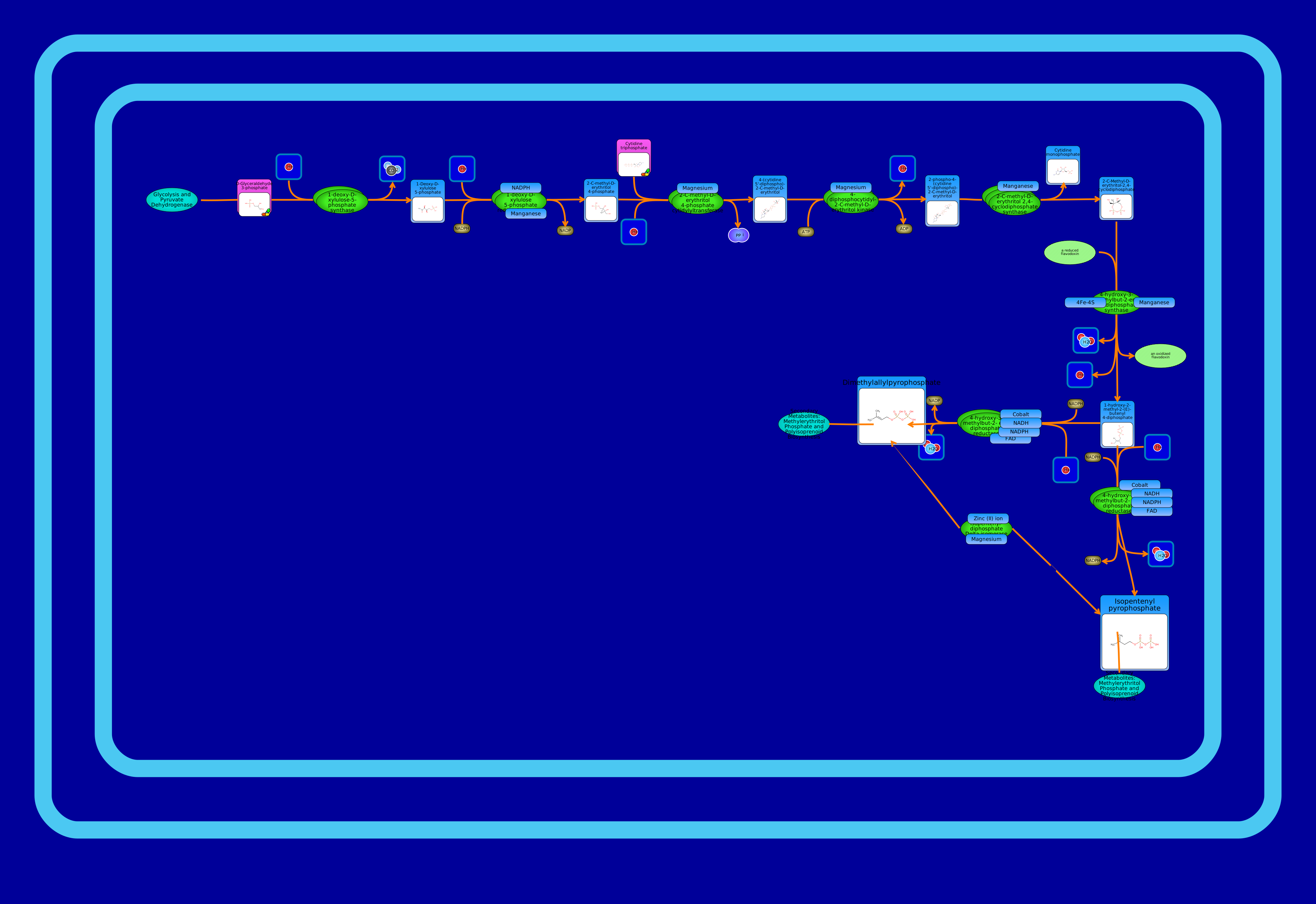 View Pathway
|
The MEP/DOXP pathway of PaenibacillusBacteria
Terpenoids, also known as isoprenoids, are a large class of natural products consisting of isoprene (C5) units. There are two biosynthetic pathways, the mevalonate pathway [MD:M00095] and the non-mevalonate pathway or the MEP/DOXP pathway [MD:M00096], for the terpenoid building blocks: isopentenyl diphosphate (IPP) and dimethylallyl diphosphate (DMAPP). The action of prenyltransferases then generates higher-order building blocks: geranyl diphosphate (GPP), farsenyl diphosphate (FPP), and geranylgeranyl diphosphate (GGPP), which are the precursors of monoterpenoids (C10), sesquiterpenoids (C15), and diterpenoids (C20), respectively. Condensation of these building blocks gives rise to the precursors of sterols (C30) and carotenoids (C40). The MEP/DOXP pathway is absent in higher animals and fungi, but in green plants the MEP/DOXP and mevalonate pathways co-exist in separate cellular compartments. The MEP/DOXP pathway, operating in the plastids, is responsible for the formation of essential oil monoterpenes and linalyl acetate, some sesquiterpenes, diterpenes, and carotenoids and phytol. The mevalonate pathway, operating in the cytosol, gives rise to triterpenes, sterols, and most sesquiterpenes.
|
Metabolite
Metabolic
|
|
|
SMP0120998 View Pathway
|
Angiotensin Metabolism XuanHomo sapiens
Angiotensin is a peptide hormone that causes vasoconstriction and a subsequent increase in blood pressure. It is part of the renin-angiotensin system, which is a major target for drugs that lower blood pressure. Angiotensin also stimulates the release of aldosterone, another hormone, from the adrenal cortex. Aldosterone promotes sodium retention in the distal nephron, in the kidney, which also drives blood pressure up. (Wikipedia)
|
Metabolite
Physiological
|
Showing 368151 -
368160 of 540746 pathways