
Browsing Pathways
Showing 372771 -
372780 of 605359 pathways
| PathBank ID | Pathway Name and Description | Pathway Class | Chemical Compounds | Proteins |
|---|---|---|---|---|
SMP0166665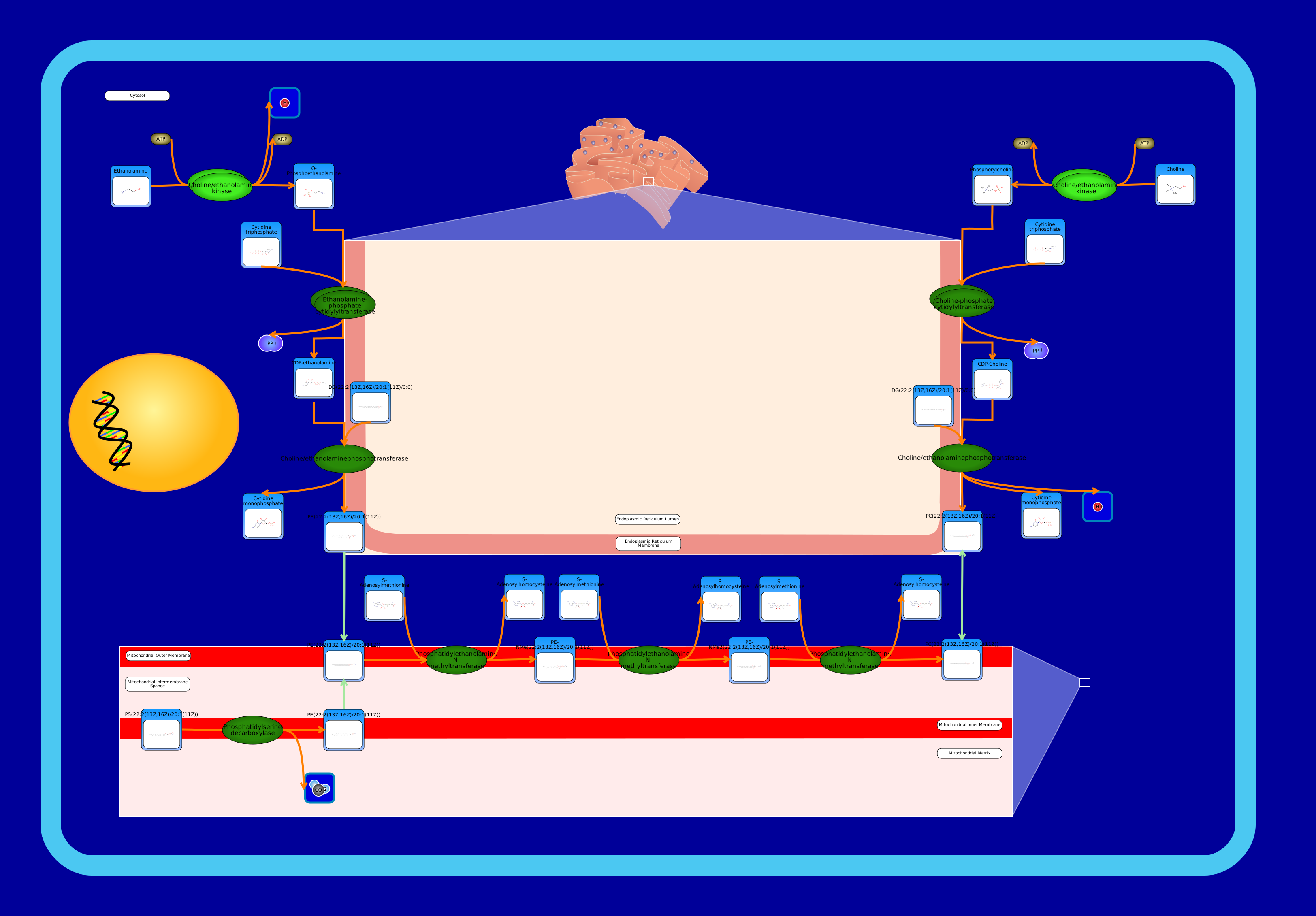 View Pathway
|
Phosphatidylcholine Biosynthesis PC(22:2(13Z,16Z)/20:1(11Z))Rattus norvegicus
Phosphatidylcholines (PC) are a class of phospholipids that incorporate a phosphocholine headgroup into a diacylglycerol backbone. They are the most abundant phospholipid in eukaryotic cell membranes and has both structural and signalling roles. In eukaryotes, there exist two phosphatidylcholine biosynthesis pathways: the Kennedy pathway and the methylation pathway. The Kennedy pathway begins with the direct phosphorylation of free choline into phosphocholine followed by conversion into CDP-choline and subsequently phosphatidylcholine. It is the major synthesis route in animals. The methylation pathway involves the 3 successive methylations of phosphatidylethanolamine to form phosphatidylcholine. The first reaction of the Kennedy pathway involves the cytosol-localized enzyme choline/ethanolamine kinase catalyzing the conversion of choline into phosphocholine. Second, choline-phosphate cytidylyltransferase, localized to the endoplasmic reticulum membrane, catalyzes the conversion of phosphocholine to CDP-choline. Last, choline/ethanolaminephosphotransferase catalyzes phosphatidylcholine biosynthesis from CDP-choline. It requires either magnesium or manganese ions as cofactors. A parallel Kennedy pathway forms phosphatidylethanolamine from ethanolamine - the only difference being a different enzyme, ethanolamine-phosphate cytidylyltransferase, catalyzing the second step. Phosphatidylethanolamine is also synthesized from phosphatidylserine in the mitochondrial membrane by phosphatidylserine decarboxylase. Phosphatidylethanolamine funnels into the methylation pathway in which phosphatidylethanolamine N-methyltransferase (PEMT) then catalyzes three sequential N-methylation steps to convert phosphatidylethanolamine to phosphatidylcholine. PEMT uses S-adenosyl-L-methionine as a methyl donor.
|
Metabolite
Metabolic
|
|
|
SMP0166670 View Pathway
|
Phosphatidylcholine Biosynthesis PC(22:2(13Z,16Z)/20:4(8Z,11Z,14Z,17Z))Rattus norvegicus
Phosphatidylcholines (PC) are a class of phospholipids that incorporate a phosphocholine headgroup into a diacylglycerol backbone. They are the most abundant phospholipid in eukaryotic cell membranes and has both structural and signalling roles. In eukaryotes, there exist two phosphatidylcholine biosynthesis pathways: the Kennedy pathway and the methylation pathway. The Kennedy pathway begins with the direct phosphorylation of free choline into phosphocholine followed by conversion into CDP-choline and subsequently phosphatidylcholine. It is the major synthesis route in animals. The methylation pathway involves the 3 successive methylations of phosphatidylethanolamine to form phosphatidylcholine. The first reaction of the Kennedy pathway involves the cytosol-localized enzyme choline/ethanolamine kinase catalyzing the conversion of choline into phosphocholine. Second, choline-phosphate cytidylyltransferase, localized to the endoplasmic reticulum membrane, catalyzes the conversion of phosphocholine to CDP-choline. Last, choline/ethanolaminephosphotransferase catalyzes phosphatidylcholine biosynthesis from CDP-choline. It requires either magnesium or manganese ions as cofactors. A parallel Kennedy pathway forms phosphatidylethanolamine from ethanolamine - the only difference being a different enzyme, ethanolamine-phosphate cytidylyltransferase, catalyzing the second step. Phosphatidylethanolamine is also synthesized from phosphatidylserine in the mitochondrial membrane by phosphatidylserine decarboxylase. Phosphatidylethanolamine funnels into the methylation pathway in which phosphatidylethanolamine N-methyltransferase (PEMT) then catalyzes three sequential N-methylation steps to convert phosphatidylethanolamine to phosphatidylcholine. PEMT uses S-adenosyl-L-methionine as a methyl donor.
|
Metabolite
Metabolic
|
|
|
SMP0166672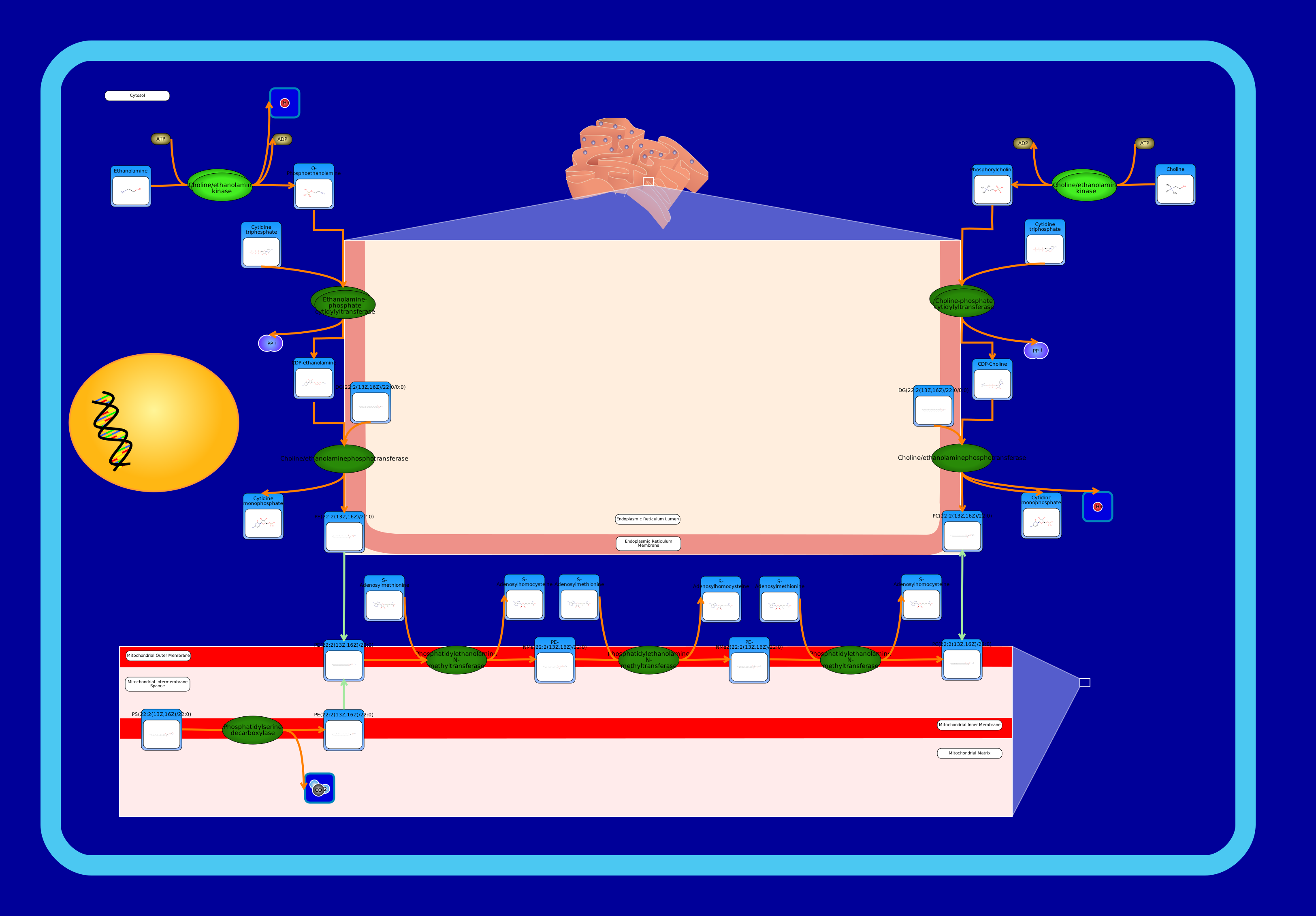 View Pathway
|
Phosphatidylcholine Biosynthesis PC(22:2(13Z,16Z)/22:0)Rattus norvegicus
Phosphatidylcholines (PC) are a class of phospholipids that incorporate a phosphocholine headgroup into a diacylglycerol backbone. They are the most abundant phospholipid in eukaryotic cell membranes and has both structural and signalling roles. In eukaryotes, there exist two phosphatidylcholine biosynthesis pathways: the Kennedy pathway and the methylation pathway. The Kennedy pathway begins with the direct phosphorylation of free choline into phosphocholine followed by conversion into CDP-choline and subsequently phosphatidylcholine. It is the major synthesis route in animals. The methylation pathway involves the 3 successive methylations of phosphatidylethanolamine to form phosphatidylcholine. The first reaction of the Kennedy pathway involves the cytosol-localized enzyme choline/ethanolamine kinase catalyzing the conversion of choline into phosphocholine. Second, choline-phosphate cytidylyltransferase, localized to the endoplasmic reticulum membrane, catalyzes the conversion of phosphocholine to CDP-choline. Last, choline/ethanolaminephosphotransferase catalyzes phosphatidylcholine biosynthesis from CDP-choline. It requires either magnesium or manganese ions as cofactors. A parallel Kennedy pathway forms phosphatidylethanolamine from ethanolamine - the only difference being a different enzyme, ethanolamine-phosphate cytidylyltransferase, catalyzing the second step. Phosphatidylethanolamine is also synthesized from phosphatidylserine in the mitochondrial membrane by phosphatidylserine decarboxylase. Phosphatidylethanolamine funnels into the methylation pathway in which phosphatidylethanolamine N-methyltransferase (PEMT) then catalyzes three sequential N-methylation steps to convert phosphatidylethanolamine to phosphatidylcholine. PEMT uses S-adenosyl-L-methionine as a methyl donor.
|
Metabolite
Metabolic
|
|
|
SMP0166677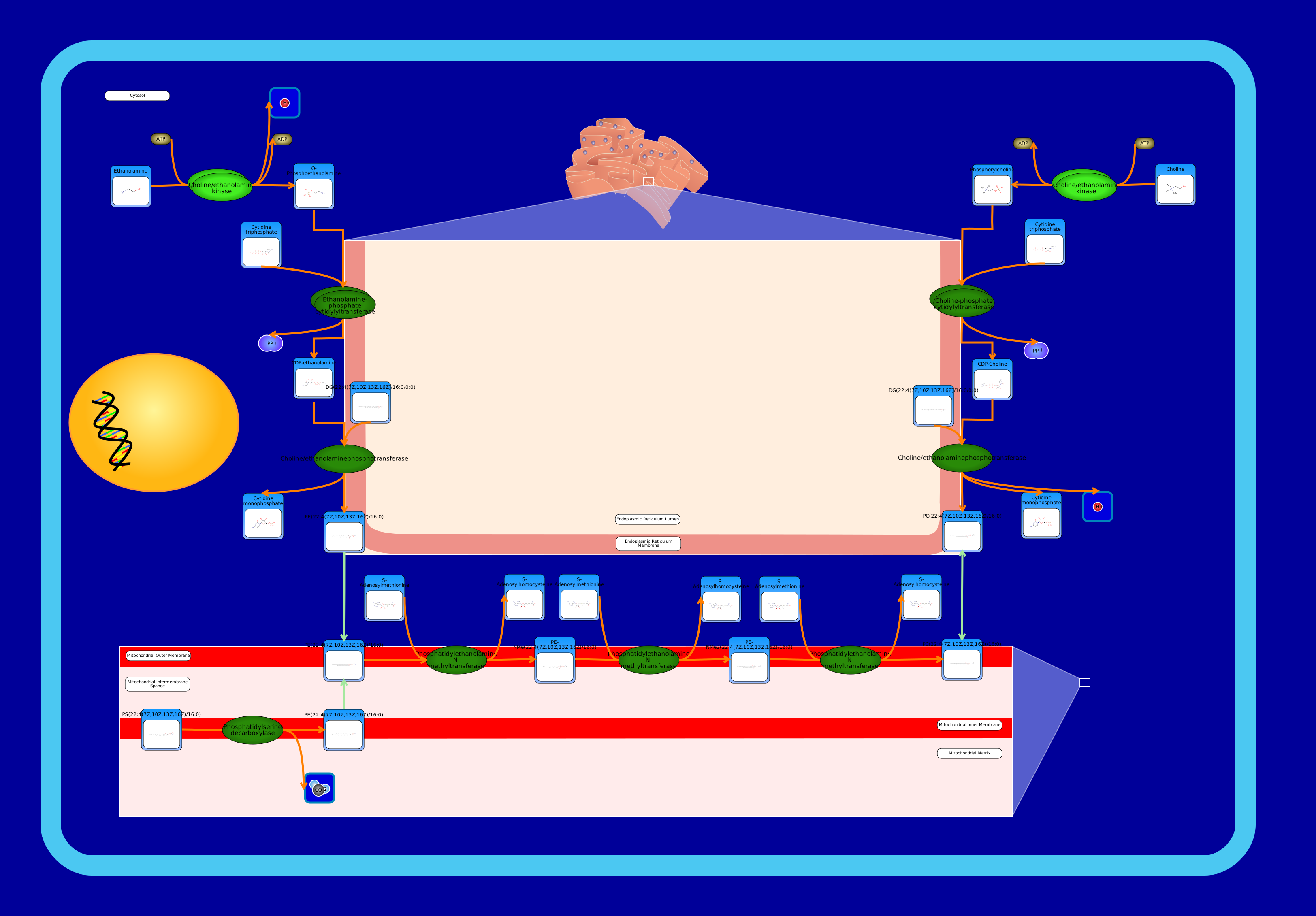 View Pathway
|
Phosphatidylcholine Biosynthesis PC(22:4(7Z,10Z,13Z,16Z)/16:0)Rattus norvegicus
Phosphatidylcholines (PC) are a class of phospholipids that incorporate a phosphocholine headgroup into a diacylglycerol backbone. They are the most abundant phospholipid in eukaryotic cell membranes and has both structural and signalling roles. In eukaryotes, there exist two phosphatidylcholine biosynthesis pathways: the Kennedy pathway and the methylation pathway. The Kennedy pathway begins with the direct phosphorylation of free choline into phosphocholine followed by conversion into CDP-choline and subsequently phosphatidylcholine. It is the major synthesis route in animals. The methylation pathway involves the 3 successive methylations of phosphatidylethanolamine to form phosphatidylcholine. The first reaction of the Kennedy pathway involves the cytosol-localized enzyme choline/ethanolamine kinase catalyzing the conversion of choline into phosphocholine. Second, choline-phosphate cytidylyltransferase, localized to the endoplasmic reticulum membrane, catalyzes the conversion of phosphocholine to CDP-choline. Last, choline/ethanolaminephosphotransferase catalyzes phosphatidylcholine biosynthesis from CDP-choline. It requires either magnesium or manganese ions as cofactors. A parallel Kennedy pathway forms phosphatidylethanolamine from ethanolamine - the only difference being a different enzyme, ethanolamine-phosphate cytidylyltransferase, catalyzing the second step. Phosphatidylethanolamine is also synthesized from phosphatidylserine in the mitochondrial membrane by phosphatidylserine decarboxylase. Phosphatidylethanolamine funnels into the methylation pathway in which phosphatidylethanolamine N-methyltransferase (PEMT) then catalyzes three sequential N-methylation steps to convert phosphatidylethanolamine to phosphatidylcholine. PEMT uses S-adenosyl-L-methionine as a methyl donor.
|
Metabolite
Metabolic
|
|
|
SMP0166684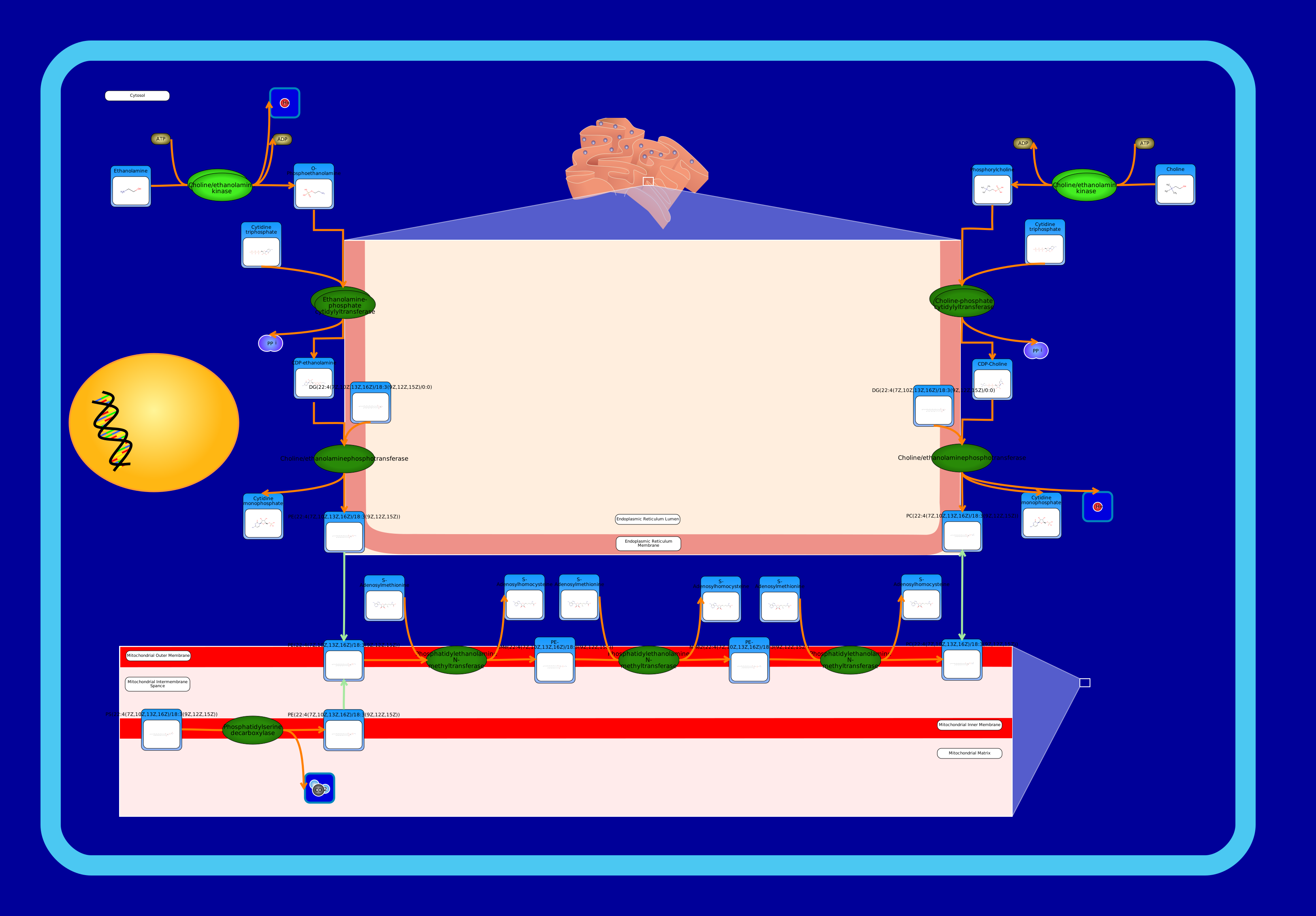 View Pathway
|
Phosphatidylcholine Biosynthesis PC(22:4(7Z,10Z,13Z,16Z)/18:3(9Z,12Z,15Z))Rattus norvegicus
Phosphatidylcholines (PC) are a class of phospholipids that incorporate a phosphocholine headgroup into a diacylglycerol backbone. They are the most abundant phospholipid in eukaryotic cell membranes and has both structural and signalling roles. In eukaryotes, there exist two phosphatidylcholine biosynthesis pathways: the Kennedy pathway and the methylation pathway. The Kennedy pathway begins with the direct phosphorylation of free choline into phosphocholine followed by conversion into CDP-choline and subsequently phosphatidylcholine. It is the major synthesis route in animals. The methylation pathway involves the 3 successive methylations of phosphatidylethanolamine to form phosphatidylcholine. The first reaction of the Kennedy pathway involves the cytosol-localized enzyme choline/ethanolamine kinase catalyzing the conversion of choline into phosphocholine. Second, choline-phosphate cytidylyltransferase, localized to the endoplasmic reticulum membrane, catalyzes the conversion of phosphocholine to CDP-choline. Last, choline/ethanolaminephosphotransferase catalyzes phosphatidylcholine biosynthesis from CDP-choline. It requires either magnesium or manganese ions as cofactors. A parallel Kennedy pathway forms phosphatidylethanolamine from ethanolamine - the only difference being a different enzyme, ethanolamine-phosphate cytidylyltransferase, catalyzing the second step. Phosphatidylethanolamine is also synthesized from phosphatidylserine in the mitochondrial membrane by phosphatidylserine decarboxylase. Phosphatidylethanolamine funnels into the methylation pathway in which phosphatidylethanolamine N-methyltransferase (PEMT) then catalyzes three sequential N-methylation steps to convert phosphatidylethanolamine to phosphatidylcholine. PEMT uses S-adenosyl-L-methionine as a methyl donor.
|
Metabolite
Metabolic
|
|
|
SMP0166689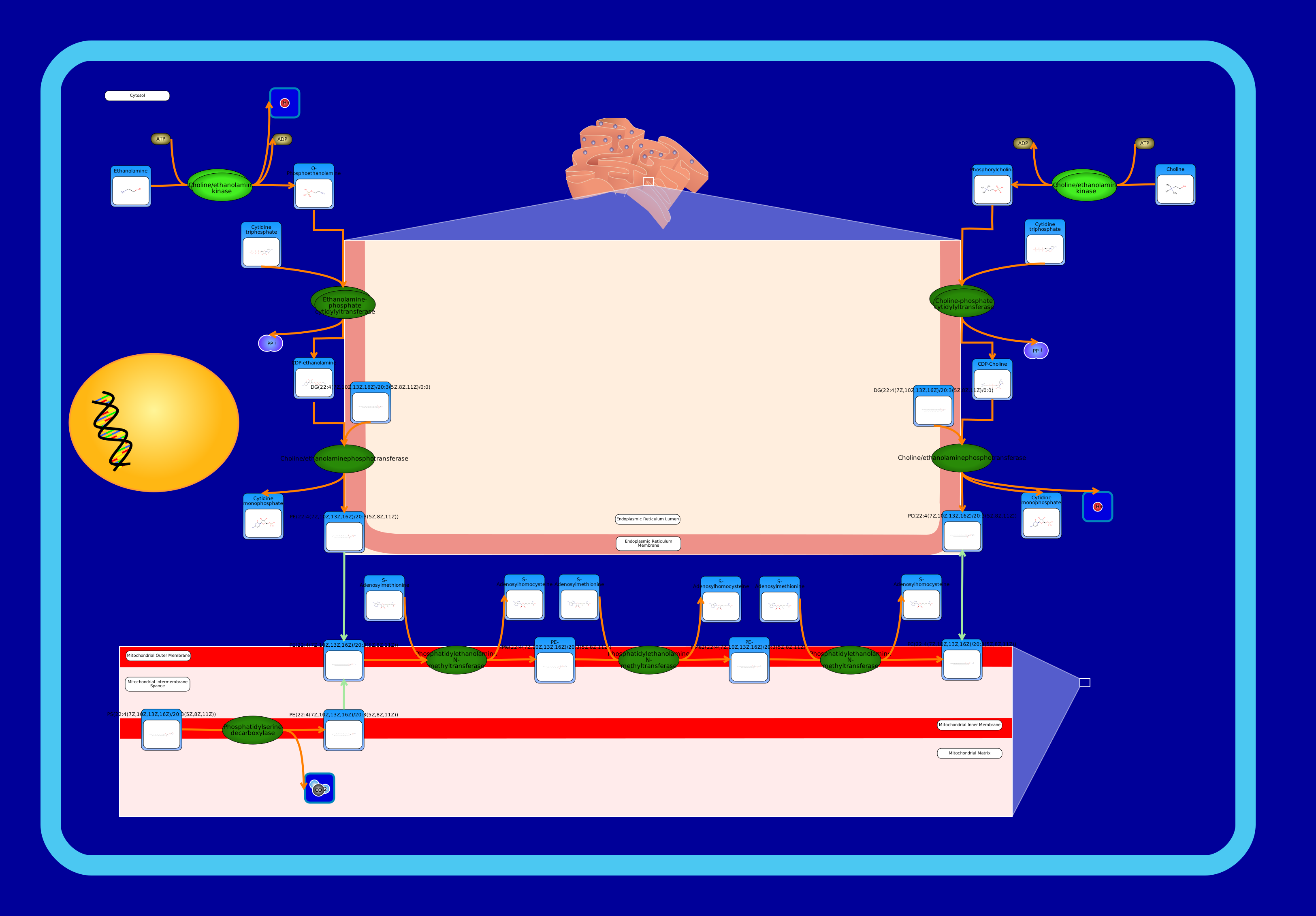 View Pathway
|
Phosphatidylcholine Biosynthesis PC(22:4(7Z,10Z,13Z,16Z)/20:3(5Z,8Z,11Z))Rattus norvegicus
Phosphatidylcholines (PC) are a class of phospholipids that incorporate a phosphocholine headgroup into a diacylglycerol backbone. They are the most abundant phospholipid in eukaryotic cell membranes and has both structural and signalling roles. In eukaryotes, there exist two phosphatidylcholine biosynthesis pathways: the Kennedy pathway and the methylation pathway. The Kennedy pathway begins with the direct phosphorylation of free choline into phosphocholine followed by conversion into CDP-choline and subsequently phosphatidylcholine. It is the major synthesis route in animals. The methylation pathway involves the 3 successive methylations of phosphatidylethanolamine to form phosphatidylcholine. The first reaction of the Kennedy pathway involves the cytosol-localized enzyme choline/ethanolamine kinase catalyzing the conversion of choline into phosphocholine. Second, choline-phosphate cytidylyltransferase, localized to the endoplasmic reticulum membrane, catalyzes the conversion of phosphocholine to CDP-choline. Last, choline/ethanolaminephosphotransferase catalyzes phosphatidylcholine biosynthesis from CDP-choline. It requires either magnesium or manganese ions as cofactors. A parallel Kennedy pathway forms phosphatidylethanolamine from ethanolamine - the only difference being a different enzyme, ethanolamine-phosphate cytidylyltransferase, catalyzing the second step. Phosphatidylethanolamine is also synthesized from phosphatidylserine in the mitochondrial membrane by phosphatidylserine decarboxylase. Phosphatidylethanolamine funnels into the methylation pathway in which phosphatidylethanolamine N-methyltransferase (PEMT) then catalyzes three sequential N-methylation steps to convert phosphatidylethanolamine to phosphatidylcholine. PEMT uses S-adenosyl-L-methionine as a methyl donor.
|
Metabolite
Metabolic
|
|
|
SMP0166691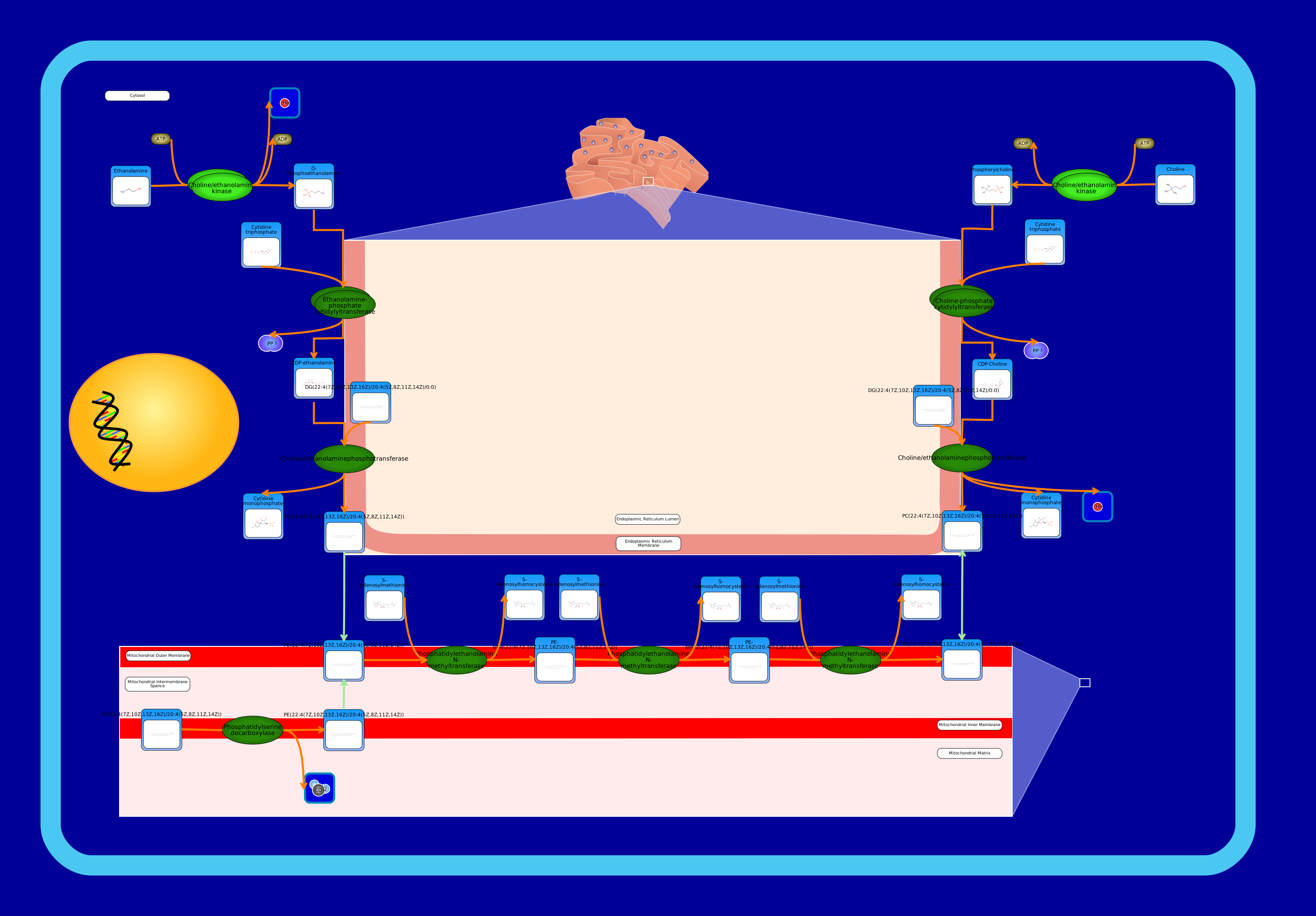 View Pathway
|
Phosphatidylcholine Biosynthesis PC(22:4(7Z,10Z,13Z,16Z)/20:4(5Z,8Z,11Z,14Z))Rattus norvegicus
Phosphatidylcholines (PC) are a class of phospholipids that incorporate a phosphocholine headgroup into a diacylglycerol backbone. They are the most abundant phospholipid in eukaryotic cell membranes and has both structural and signalling roles. In eukaryotes, there exist two phosphatidylcholine biosynthesis pathways: the Kennedy pathway and the methylation pathway. The Kennedy pathway begins with the direct phosphorylation of free choline into phosphocholine followed by conversion into CDP-choline and subsequently phosphatidylcholine. It is the major synthesis route in animals. The methylation pathway involves the 3 successive methylations of phosphatidylethanolamine to form phosphatidylcholine. The first reaction of the Kennedy pathway involves the cytosol-localized enzyme choline/ethanolamine kinase catalyzing the conversion of choline into phosphocholine. Second, choline-phosphate cytidylyltransferase, localized to the endoplasmic reticulum membrane, catalyzes the conversion of phosphocholine to CDP-choline. Last, choline/ethanolaminephosphotransferase catalyzes phosphatidylcholine biosynthesis from CDP-choline. It requires either magnesium or manganese ions as cofactors. A parallel Kennedy pathway forms phosphatidylethanolamine from ethanolamine - the only difference being a different enzyme, ethanolamine-phosphate cytidylyltransferase, catalyzing the second step. Phosphatidylethanolamine is also synthesized from phosphatidylserine in the mitochondrial membrane by phosphatidylserine decarboxylase. Phosphatidylethanolamine funnels into the methylation pathway in which phosphatidylethanolamine N-methyltransferase (PEMT) then catalyzes three sequential N-methylation steps to convert phosphatidylethanolamine to phosphatidylcholine. PEMT uses S-adenosyl-L-methionine as a methyl donor.
|
Metabolite
Metabolic
|
|
|
SMP0166696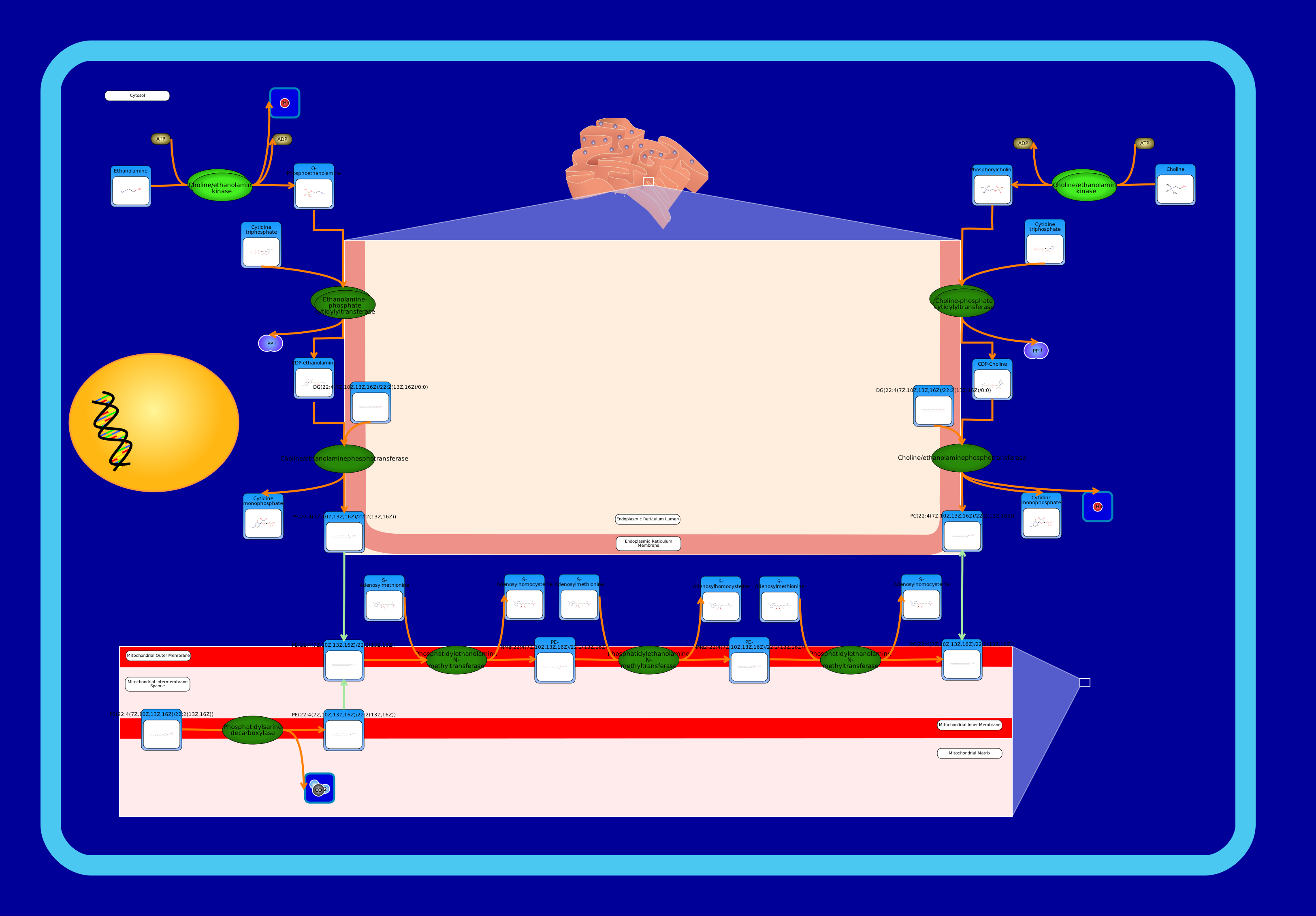 View Pathway
|
Phosphatidylcholine Biosynthesis PC(22:4(7Z,10Z,13Z,16Z)/22:2(13Z,16Z))Rattus norvegicus
Phosphatidylcholines (PC) are a class of phospholipids that incorporate a phosphocholine headgroup into a diacylglycerol backbone. They are the most abundant phospholipid in eukaryotic cell membranes and has both structural and signalling roles. In eukaryotes, there exist two phosphatidylcholine biosynthesis pathways: the Kennedy pathway and the methylation pathway. The Kennedy pathway begins with the direct phosphorylation of free choline into phosphocholine followed by conversion into CDP-choline and subsequently phosphatidylcholine. It is the major synthesis route in animals. The methylation pathway involves the 3 successive methylations of phosphatidylethanolamine to form phosphatidylcholine. The first reaction of the Kennedy pathway involves the cytosol-localized enzyme choline/ethanolamine kinase catalyzing the conversion of choline into phosphocholine. Second, choline-phosphate cytidylyltransferase, localized to the endoplasmic reticulum membrane, catalyzes the conversion of phosphocholine to CDP-choline. Last, choline/ethanolaminephosphotransferase catalyzes phosphatidylcholine biosynthesis from CDP-choline. It requires either magnesium or manganese ions as cofactors. A parallel Kennedy pathway forms phosphatidylethanolamine from ethanolamine - the only difference being a different enzyme, ethanolamine-phosphate cytidylyltransferase, catalyzing the second step. Phosphatidylethanolamine is also synthesized from phosphatidylserine in the mitochondrial membrane by phosphatidylserine decarboxylase. Phosphatidylethanolamine funnels into the methylation pathway in which phosphatidylethanolamine N-methyltransferase (PEMT) then catalyzes three sequential N-methylation steps to convert phosphatidylethanolamine to phosphatidylcholine. PEMT uses S-adenosyl-L-methionine as a methyl donor.
|
Metabolite
Metabolic
|
|
|
SMP0166703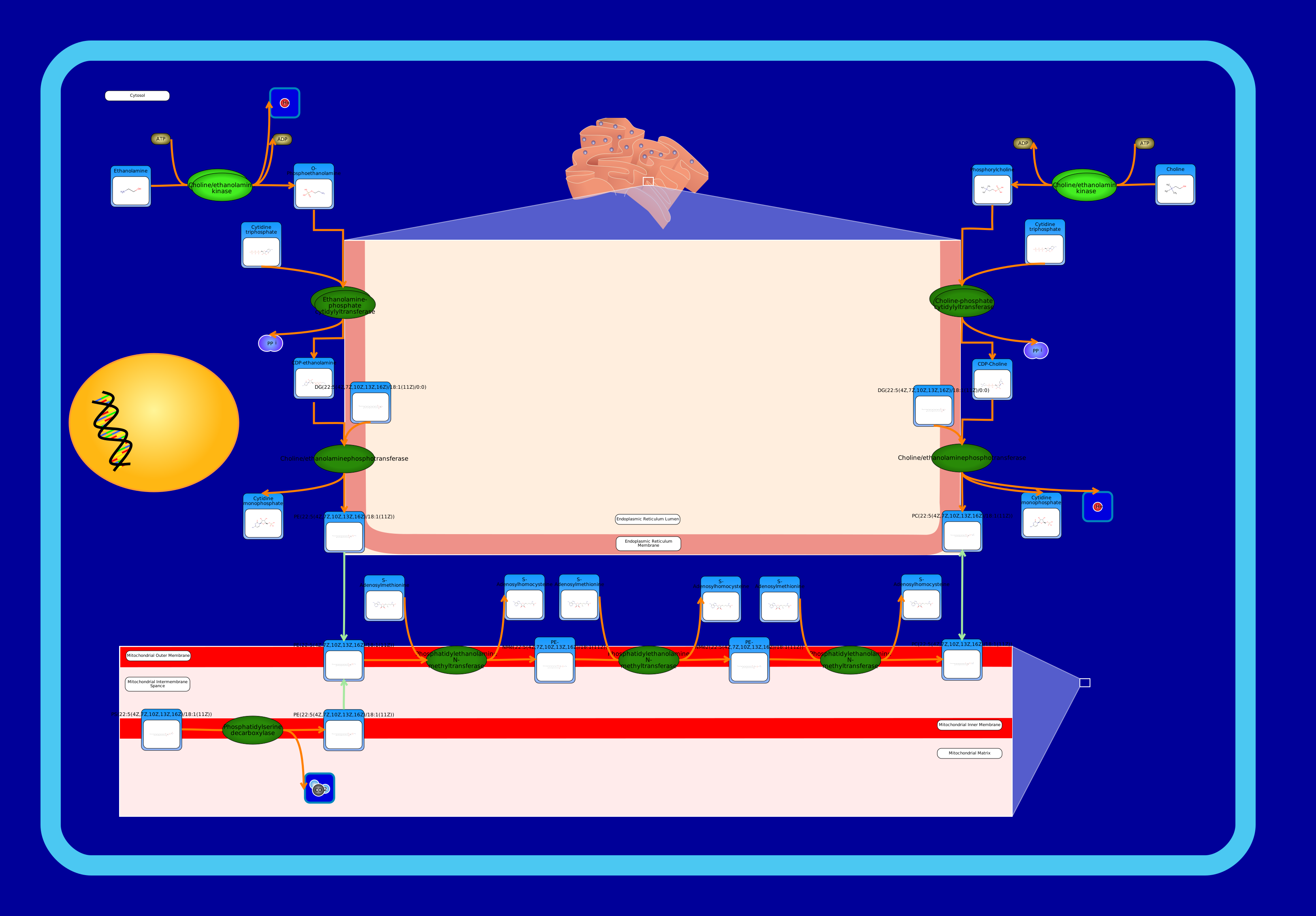 View Pathway
|
Phosphatidylcholine Biosynthesis PC(22:5(4Z,7Z,10Z,13Z,16Z)/18:1(11Z))Rattus norvegicus
Phosphatidylcholines (PC) are a class of phospholipids that incorporate a phosphocholine headgroup into a diacylglycerol backbone. They are the most abundant phospholipid in eukaryotic cell membranes and has both structural and signalling roles. In eukaryotes, there exist two phosphatidylcholine biosynthesis pathways: the Kennedy pathway and the methylation pathway. The Kennedy pathway begins with the direct phosphorylation of free choline into phosphocholine followed by conversion into CDP-choline and subsequently phosphatidylcholine. It is the major synthesis route in animals. The methylation pathway involves the 3 successive methylations of phosphatidylethanolamine to form phosphatidylcholine. The first reaction of the Kennedy pathway involves the cytosol-localized enzyme choline/ethanolamine kinase catalyzing the conversion of choline into phosphocholine. Second, choline-phosphate cytidylyltransferase, localized to the endoplasmic reticulum membrane, catalyzes the conversion of phosphocholine to CDP-choline. Last, choline/ethanolaminephosphotransferase catalyzes phosphatidylcholine biosynthesis from CDP-choline. It requires either magnesium or manganese ions as cofactors. A parallel Kennedy pathway forms phosphatidylethanolamine from ethanolamine - the only difference being a different enzyme, ethanolamine-phosphate cytidylyltransferase, catalyzing the second step. Phosphatidylethanolamine is also synthesized from phosphatidylserine in the mitochondrial membrane by phosphatidylserine decarboxylase. Phosphatidylethanolamine funnels into the methylation pathway in which phosphatidylethanolamine N-methyltransferase (PEMT) then catalyzes three sequential N-methylation steps to convert phosphatidylethanolamine to phosphatidylcholine. PEMT uses S-adenosyl-L-methionine as a methyl donor.
|
Metabolite
Metabolic
|
|
|
SMP0166708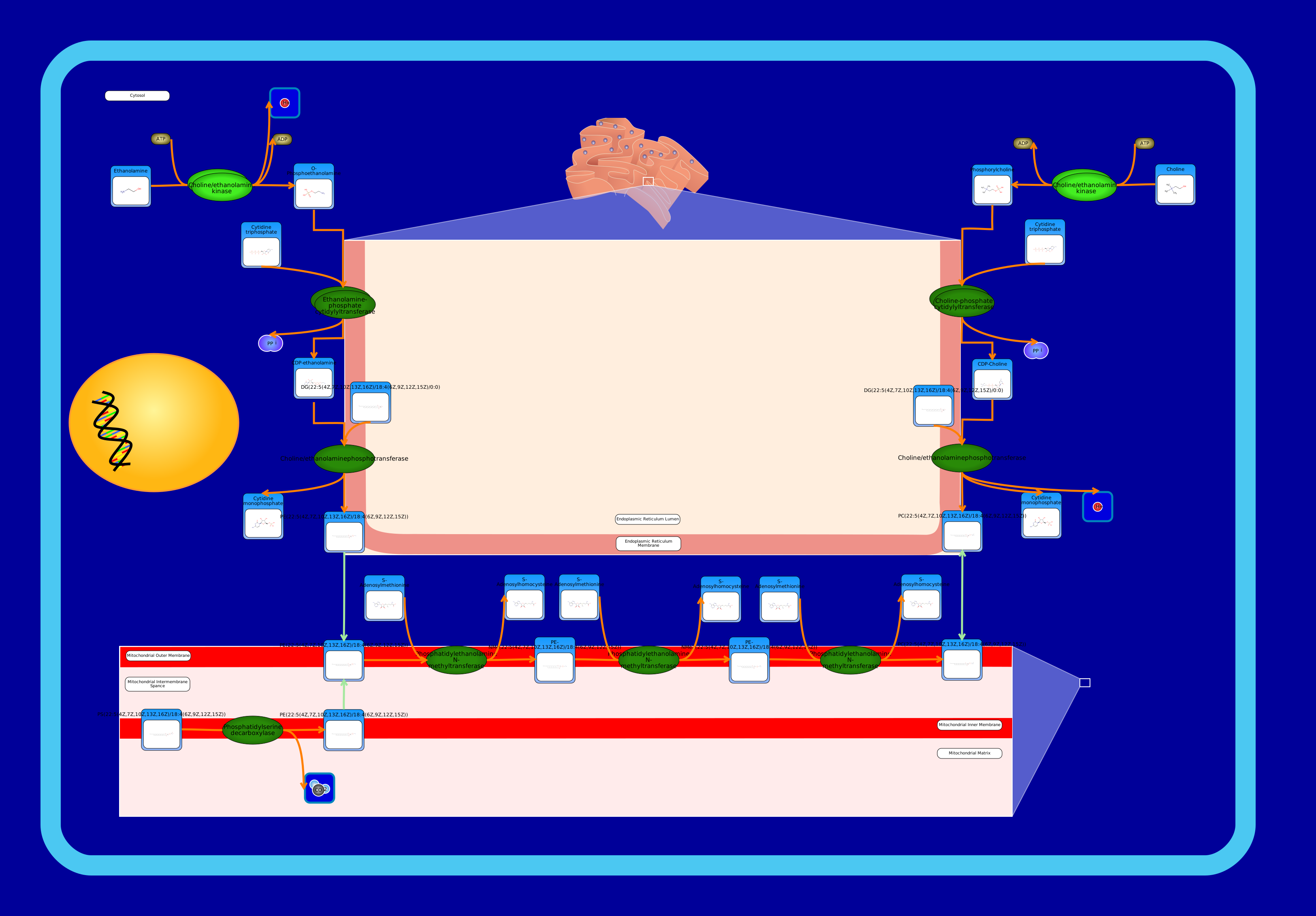 View Pathway
|
Phosphatidylcholine Biosynthesis PC(22:5(4Z,7Z,10Z,13Z,16Z)/18:4(6Z,9Z,12Z,15Z))Rattus norvegicus
Phosphatidylcholines (PC) are a class of phospholipids that incorporate a phosphocholine headgroup into a diacylglycerol backbone. They are the most abundant phospholipid in eukaryotic cell membranes and has both structural and signalling roles. In eukaryotes, there exist two phosphatidylcholine biosynthesis pathways: the Kennedy pathway and the methylation pathway. The Kennedy pathway begins with the direct phosphorylation of free choline into phosphocholine followed by conversion into CDP-choline and subsequently phosphatidylcholine. It is the major synthesis route in animals. The methylation pathway involves the 3 successive methylations of phosphatidylethanolamine to form phosphatidylcholine. The first reaction of the Kennedy pathway involves the cytosol-localized enzyme choline/ethanolamine kinase catalyzing the conversion of choline into phosphocholine. Second, choline-phosphate cytidylyltransferase, localized to the endoplasmic reticulum membrane, catalyzes the conversion of phosphocholine to CDP-choline. Last, choline/ethanolaminephosphotransferase catalyzes phosphatidylcholine biosynthesis from CDP-choline. It requires either magnesium or manganese ions as cofactors. A parallel Kennedy pathway forms phosphatidylethanolamine from ethanolamine - the only difference being a different enzyme, ethanolamine-phosphate cytidylyltransferase, catalyzing the second step. Phosphatidylethanolamine is also synthesized from phosphatidylserine in the mitochondrial membrane by phosphatidylserine decarboxylase. Phosphatidylethanolamine funnels into the methylation pathway in which phosphatidylethanolamine N-methyltransferase (PEMT) then catalyzes three sequential N-methylation steps to convert phosphatidylethanolamine to phosphatidylcholine. PEMT uses S-adenosyl-L-methionine as a methyl donor.
|
Metabolite
Metabolic
|
|
Showing 372771 -
372780 of 540842 pathways