
Browsing Pathways
Showing 375801 -
375810 of 605359 pathways
| PathBank ID | Pathway Name and Description | Pathway Class | Chemical Compounds | Proteins |
|---|---|---|---|---|
SMP0170856 View Pathway
|
De Novo Triacylglycerol Biosynthesis TG(16:1(9Z)/24:1(15Z)/20:4(5Z,8Z,11Z,14Z))Rattus norvegicus
A triglyceride (TG, triacylglycerol, TAG, or triacylglyceride) is an ester derived from glycerol and three fatty acids. Triglycerides are the main constituents of body fat in humans and other animals, as well as vegetable fat. They are also present in the blood to enable the bidirectional transference of adipose fat and blood glucose from the liver, and are a major component of human skin oils. (Wikipedia) De novo biosynthesis of triglycerides is also known as the phosphatidic acid pathway, and it is mainly associated with the liver and adipose tissue. All membrane-localized enzymes are coloured dark green in the image. First, dihydroxyacetone phosphate (or glycerone phosphate) from glycolysis is used by the cytosolic enzyme glycerol-3-phosphate dehydrogenase [NAD(+)] to synthesize sn-glycerol 3-phosphate. Second, the mitochondrial outer membrane enzyme glycerol-3-phosphate acyltransferase esterifies an acyl-group to the sn-1 position of sn-glycerol 3-phosphate to form 1-acyl-sn-glycerol 3-phosphate (lysophosphatidic acid or LPA). The next three steps are localized to the endoplasmic reticulum membrane. The enzyme 1-acyl-sn-glycerol-3-phosphate acyltransferase converts LPA into phosphatidic acid (1,2-diacyl-sn-glycerol 3-phosphate) by esterifying an acyl-group to the sn-2 position of the glycerol backbone. Next, magnesium-dependent phosphatidate phosphatase catalyzes the conversion of phosphatidic acid into diacylglycerol. Last, the enzyme diacylglycerol O-acyltransferase synthesizes triacylglycerol from diacylglycerol and a fatty acyl-CoA.
|
Metabolite
Metabolic
|
||
SMP0170863 View Pathway
|
De Novo Triacylglycerol Biosynthesis TG(16:1(9Z)/24:1(15Z)/20:5(5Z,8Z,11Z,14Z,17Z))Rattus norvegicus
A triglyceride (TG, triacylglycerol, TAG, or triacylglyceride) is an ester derived from glycerol and three fatty acids. Triglycerides are the main constituents of body fat in humans and other animals, as well as vegetable fat. They are also present in the blood to enable the bidirectional transference of adipose fat and blood glucose from the liver, and are a major component of human skin oils. (Wikipedia) De novo biosynthesis of triglycerides is also known as the phosphatidic acid pathway, and it is mainly associated with the liver and adipose tissue. All membrane-localized enzymes are coloured dark green in the image. First, dihydroxyacetone phosphate (or glycerone phosphate) from glycolysis is used by the cytosolic enzyme glycerol-3-phosphate dehydrogenase [NAD(+)] to synthesize sn-glycerol 3-phosphate. Second, the mitochondrial outer membrane enzyme glycerol-3-phosphate acyltransferase esterifies an acyl-group to the sn-1 position of sn-glycerol 3-phosphate to form 1-acyl-sn-glycerol 3-phosphate (lysophosphatidic acid or LPA). The next three steps are localized to the endoplasmic reticulum membrane. The enzyme 1-acyl-sn-glycerol-3-phosphate acyltransferase converts LPA into phosphatidic acid (1,2-diacyl-sn-glycerol 3-phosphate) by esterifying an acyl-group to the sn-2 position of the glycerol backbone. Next, magnesium-dependent phosphatidate phosphatase catalyzes the conversion of phosphatidic acid into diacylglycerol. Last, the enzyme diacylglycerol O-acyltransferase synthesizes triacylglycerol from diacylglycerol and a fatty acyl-CoA.
|
Metabolite
Metabolic
|
||
SMP0170868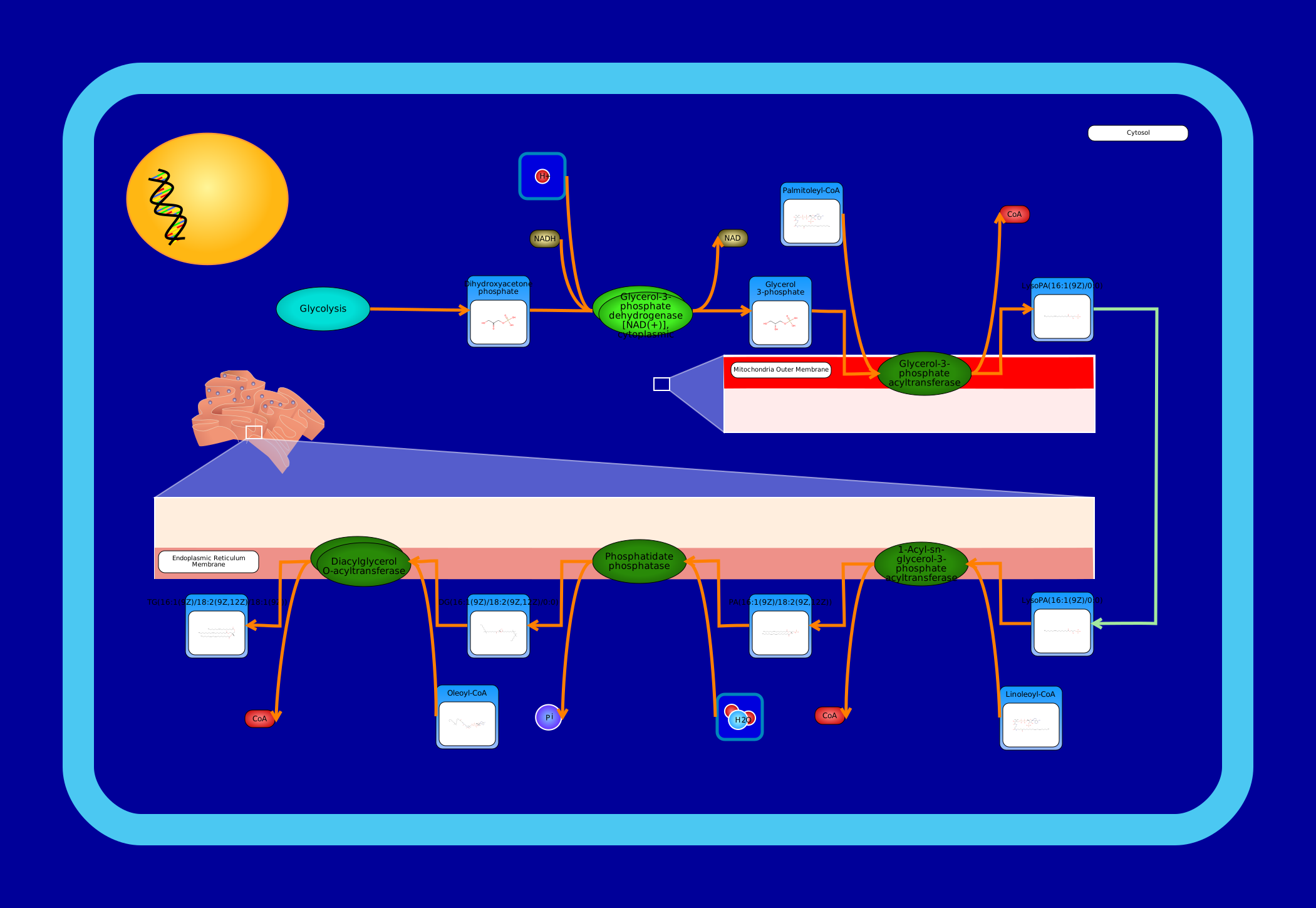 View Pathway
|
De Novo Triacylglycerol Biosynthesis TG(16:1(9Z)/18:2(9Z,12Z)/18:1(9Z))Rattus norvegicus
A triglyceride (TG, triacylglycerol, TAG, or triacylglyceride) is an ester derived from glycerol and three fatty acids. Triglycerides are the main constituents of body fat in humans and other animals, as well as vegetable fat. They are also present in the blood to enable the bidirectional transference of adipose fat and blood glucose from the liver, and are a major component of human skin oils. (Wikipedia) De novo biosynthesis of triglycerides is also known as the phosphatidic acid pathway, and it is mainly associated with the liver and adipose tissue. All membrane-localized enzymes are coloured dark green in the image. First, dihydroxyacetone phosphate (or glycerone phosphate) from glycolysis is used by the cytosolic enzyme glycerol-3-phosphate dehydrogenase [NAD(+)] to synthesize sn-glycerol 3-phosphate. Second, the mitochondrial outer membrane enzyme glycerol-3-phosphate acyltransferase esterifies an acyl-group to the sn-1 position of sn-glycerol 3-phosphate to form 1-acyl-sn-glycerol 3-phosphate (lysophosphatidic acid or LPA). The next three steps are localized to the endoplasmic reticulum membrane. The enzyme 1-acyl-sn-glycerol-3-phosphate acyltransferase converts LPA into phosphatidic acid (1,2-diacyl-sn-glycerol 3-phosphate) by esterifying an acyl-group to the sn-2 position of the glycerol backbone. Next, magnesium-dependent phosphatidate phosphatase catalyzes the conversion of phosphatidic acid into diacylglycerol. Last, the enzyme diacylglycerol O-acyltransferase synthesizes triacylglycerol from diacylglycerol and a fatty acyl-CoA.
|
Metabolite
Metabolic
|
||
SMP0170875 View Pathway
|
De Novo Triacylglycerol Biosynthesis TG(16:1(9Z)/20:4(5Z,8Z,11Z,14Z)/18:1(9Z))Rattus norvegicus
A triglyceride (TG, triacylglycerol, TAG, or triacylglyceride) is an ester derived from glycerol and three fatty acids. Triglycerides are the main constituents of body fat in humans and other animals, as well as vegetable fat. They are also present in the blood to enable the bidirectional transference of adipose fat and blood glucose from the liver, and are a major component of human skin oils. (Wikipedia) De novo biosynthesis of triglycerides is also known as the phosphatidic acid pathway, and it is mainly associated with the liver and adipose tissue. All membrane-localized enzymes are coloured dark green in the image. First, dihydroxyacetone phosphate (or glycerone phosphate) from glycolysis is used by the cytosolic enzyme glycerol-3-phosphate dehydrogenase [NAD(+)] to synthesize sn-glycerol 3-phosphate. Second, the mitochondrial outer membrane enzyme glycerol-3-phosphate acyltransferase esterifies an acyl-group to the sn-1 position of sn-glycerol 3-phosphate to form 1-acyl-sn-glycerol 3-phosphate (lysophosphatidic acid or LPA). The next three steps are localized to the endoplasmic reticulum membrane. The enzyme 1-acyl-sn-glycerol-3-phosphate acyltransferase converts LPA into phosphatidic acid (1,2-diacyl-sn-glycerol 3-phosphate) by esterifying an acyl-group to the sn-2 position of the glycerol backbone. Next, magnesium-dependent phosphatidate phosphatase catalyzes the conversion of phosphatidic acid into diacylglycerol. Last, the enzyme diacylglycerol O-acyltransferase synthesizes triacylglycerol from diacylglycerol and a fatty acyl-CoA.
|
Metabolite
Metabolic
|
||
SMP0170880 View Pathway
|
De Novo Triacylglycerol Biosynthesis TG(16:1(9Z)/20:4(5Z,8Z,11Z,14Z)/18:3(9Z,12Z,15Z))Rattus norvegicus
A triglyceride (TG, triacylglycerol, TAG, or triacylglyceride) is an ester derived from glycerol and three fatty acids. Triglycerides are the main constituents of body fat in humans and other animals, as well as vegetable fat. They are also present in the blood to enable the bidirectional transference of adipose fat and blood glucose from the liver, and are a major component of human skin oils. (Wikipedia) De novo biosynthesis of triglycerides is also known as the phosphatidic acid pathway, and it is mainly associated with the liver and adipose tissue. All membrane-localized enzymes are coloured dark green in the image. First, dihydroxyacetone phosphate (or glycerone phosphate) from glycolysis is used by the cytosolic enzyme glycerol-3-phosphate dehydrogenase [NAD(+)] to synthesize sn-glycerol 3-phosphate. Second, the mitochondrial outer membrane enzyme glycerol-3-phosphate acyltransferase esterifies an acyl-group to the sn-1 position of sn-glycerol 3-phosphate to form 1-acyl-sn-glycerol 3-phosphate (lysophosphatidic acid or LPA). The next three steps are localized to the endoplasmic reticulum membrane. The enzyme 1-acyl-sn-glycerol-3-phosphate acyltransferase converts LPA into phosphatidic acid (1,2-diacyl-sn-glycerol 3-phosphate) by esterifying an acyl-group to the sn-2 position of the glycerol backbone. Next, magnesium-dependent phosphatidate phosphatase catalyzes the conversion of phosphatidic acid into diacylglycerol. Last, the enzyme diacylglycerol O-acyltransferase synthesizes triacylglycerol from diacylglycerol and a fatty acyl-CoA.
|
Metabolite
Metabolic
|
||
SMP0002366 View Pathway
|
D-serine in SchizophreniaHomo sapiens
In the late 1990s, it was demonstrated that DSR is an obligatory endogenous coagonist of the N-methyl-D-aspartate receptor (NMDAR), functioning in vivo as a specific and potent full agonist at the NMDAR-associated glycine (GLY) modulatory site (GMS). The NMDAR subtype of glutamate (GLU) receptors is widely expressed in the central nervous system (CNS) and has a cardinal role in activity-dependent changes in synaptic strength and connectivity underlying higher brain functions such as memory and learning. NMDAR requires glutamate and glycine or D-serine. D-serine is biosynthesized in glial cells from L-serine which itself is biosynthesized from glucose provided by blood. L-serine can also be transported outside the glial cell and into the post-synaptic neuron where L-serine can be transformed to D-serine through a SR.
D-serine gets transported outside the glial cell when glutamate binds to a AMPA. D-serine is also metabolize by a DAAO thus releasing NH3, H2O2 and alpha-Ketoglutaric acid.
In schizophrenia, NMDAR shows a glutaminergic hypofunction and increase activity of DAAO. Thus lower concentrations of D-serine are detected in patients with Schizophrenia.
|
Metabolite
Disease
|
|
|
SMP0002376 View Pathway
|
Folate Metabolism Replication TestCaenorhabditis elegans
|
Metabolite
Metabolic
|
|
|
SMP0002395 View Pathway
|
Hedgehog (Hh) signallingHomo sapiens
|
Metabolite
Signaling
|
|
|
SMP0002423 View Pathway
|
Cysteine MetabolismArabidopsis thaliana
|
Metabolite
Metabolic
|
|
|
SMP0002437 View Pathway
|
essayHomo sapiens
|
Metabolite
Disease
|
Showing 375801 -
375810 of 540822 pathways