
Browsing Pathways
Showing 540791 -
540800 of 605359 pathways
| PathBank ID | Pathway Name and Description | Pathway Class | Chemical Compounds | Proteins |
|---|---|---|---|---|
SMP0729262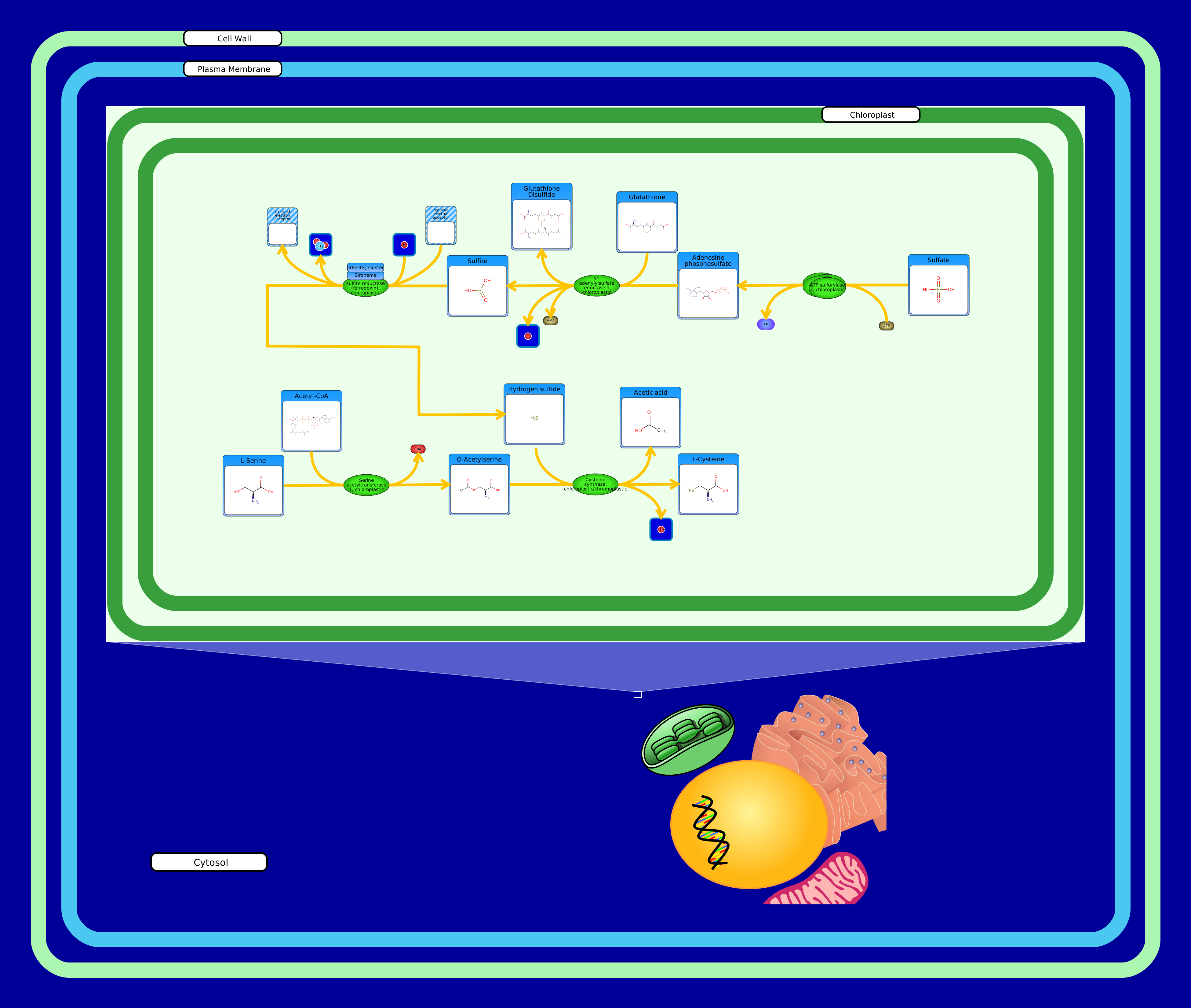 View Pathway
|
Cysteine BiosynthesisArabidopsis thaliana
In Arabidopsis thaliana, cysteine biosynthesis links sulfate assimilation with amino acid metabolism through a coordinated five-step pathway. The process begins with uptake and activation of inorganic sulfate, which is converted to adenosine 5′-phosphosulfate (APS) by ATP sulfurylase. APS is then reduced to sulfite by APS reductase and further reduced to hydrogen sulfide by sulfite reductase, providing the reduced sulfur needed for amino acid synthesis. In parallel, L-serine is activated by serine acetyltransferase to form O-acetylserine, which serves as the carbon–nitrogen backbone for cysteine. In the final step, O-acetylserine(thiol)lyase catalyzes the incorporation of hydrogen sulfide into O-acetylserine, producing L-cysteine. This pathway supplies cysteine as a central sulfur-containing amino acid required for protein synthesis, glutathione production, and sulfur-dependent metabolic processes in plants.
|
Metabolite
Metabolic
|
||
SMP0729264 View Pathway
|
Triacylglycerol Degradation 1770345845Arabidopsis thaliana
In higher plants, the primary seed storage reserve is triacylglycerol rather than carbohydrates. Thus, triacylglycerol degradation is an important pathway from which plants obtain energy for growth. First, triacylglycerol lipase, an enzyme localized to the oil body (storage vacuole) membrane, catalyzes the conversion of a triglyceride into a 1,2-diglyceride. Second, the predicted enzyme diglyceride lipase (coloured orange in the image) is theorized to catalyze the conversion of a 1,2-diglyceride iinto a 2-acylglycerol. Third, a 2-acylglycerol is spontaneously converted into a 1-monoglyceride. Fourth, acylhydrolase catalyzes the conversion of a 1-monoglyceride into glycerol. Fifth, glycerol kinase catalyzes the conversion of glycerol into glycerol 3-phosphate. Sixth, glycerol-3-phosphate dehydrogenase (coloured dark green in the image), localized to the mitochondrial inner membrane, catalyzes the conversion of glycerol 3-phosphate into glycerone phosphate.
|
Metabolite
Metabolic
|
Showing 540791 -
540800 of 540792 pathways