
Browsing Pathways
Showing 540811 -
540820 of 605359 pathways
| PathBank ID | Pathway Name and Description | Pathway Class | Chemical Compounds | Proteins |
|---|---|---|---|---|
SMP0125361 View Pathway
|
Ubiquinone and other terpenoid-quinone biosynthesis 1636480163 1652153943Cannabis sativa
|
Metabolite
Metabolic
|
||
SMP0729243 View Pathway
|
Arabidopyrone BiosynthesisArabidopsis thaliana
|
Metabolite
Metabolic
|
||
SMP0729246
View Pathway
|
Fenugreek MetabolismRattus norvegicus
|
Metabolite
Physiological
|
|
|
SMP0729269
View Pathway
|
alpha- glucans pathwayHomo sapiens
Fungal α-Glucan (ligand): Presented on the fungal cell wall. It can (a) bind host receptors or (b) mask β-glucan.
Dectin-1/Mincle (host cell membrane): C-type lectin receptors on macrophages/DCs that bind α-glucan
. Engagement recruits Syk kinase (cytosol) and the CARD9–BCL10–MALT1 complex, activating NF-κB in the nucleus
.
NF-κB → Cytokines/DC maturation (nucleus): Active NF-κB drives transcription of pro-inflammatory cytokines (TNF-α, IL-12)
, leading to dendritic cell maturation (↑MHC-II/CD80/86) and Th1 polarization
. This completes the host innate immune response.
α-Glucan immune evasion: Fungal α-(1→3)-glucan in the cell wall (gray) physically shields underlying β-glucans, so Dectin-1 cannot detect them
. This prevents β-glucan–triggered PRR signaling (no arrow from β-glucan to Dectin-1).
Fungal GPCR–cAMP–PKA signaling: In fungal cells (green), α-glucan (or related stimuli) activates a Gα-coupled receptor (GPCR) on the fungal membrane. This triggers adenylyl cyclase → cAMP → PKA in the cytosol (green arrows)
. PKA phosphorylates transcription factors (nucleus), upregulating genes for metabolism, cellulase production, and cell differentiation
.
|
Metabolite
Signaling
|
|
|
SMP0729250
View Pathway
|
Amino Sugar and Nucleotide Sugar Metabolism IStaphylococcus aureus
The synthesis of amino sugars and nucleotide sugars starts with the phosphorylation of N-Acetylmuramic acid (MurNac) through its transport from the periplasmic space to the cytoplasm. Once in the cytoplasm, MurNac and water undergo a reversible reaction through a N-acetylmuramic acid 6-phosphate etherase, producing a D-lactic acid and N-Acetyl-D-Glucosamine 6-phosphate. This latter compound can also be introduced into the cytoplasm through a phosphorylating PTS permase in the inner membrane that allows for the transport of N-Acetyl-D-glucosamine from the periplasmic space. N-Acetyl-D-Glucosamine 6-phosphate can also be obtained from chitin dependent reactions. Chitin is hydrated through a bifunctional chitinase to produce chitobiose. This in turn gets hydrated by a beta-hexosaminidase to produce N-acetyl-D-glucosamine. The latter undergoes an atp dependent phosphorylation leading to the production of N-Acetyl-D-Glucosamine 6-phosphate.
N-Acetyl-D-Glucosamine 6-phosphate is then be deacetylated in order to produce Glucosamine 6-phosphate through a N-acetylglucosamine-6-phosphate deacetylase. This compound can either be isomerized or deaminated into Beta-D-fructofuranose 6-phosphate through a glucosamine-fructose-6-phosphate aminotransferase and a glucosamine-6-phosphate deaminase respectively.
Glucosamine 6-phosphate undergoes a reversible reaction to glucosamine 1 phosphate through a phosphoglucosamine mutase. This compound is then acetylated through a bifunctional protein glmU to produce a N-Acetyl glucosamine 1-phosphate.
N-Acetyl glucosamine 1-phosphate enters the nucleotide sugar synthesis by reacting with UTP and hydrogen ion through a bifunctional protein glmU releasing pyrophosphate and a Uridine diphosphate-N-acetylglucosamine.This compound can either be isomerized into a UDP-N-acetyl-D-mannosamine or undergo a reaction with phosphoenolpyruvic acid through UDP-N-acetylglucosamine 1-carboxyvinyltransferase releasing a phosphate and a UDP-N-Acetyl-alpha-D-glucosamine-enolpyruvate.
UDP-N-acetyl-D-mannosamine undergoes a NAD dependent dehydrogenation through a UDP-N-acetyl-D-mannosamine dehydrogenase, releasing NADH, a hydrogen ion and a UDP-N-Acetyl-alpha-D-mannosaminuronate, This compound is then used in the production of enterobacterial common antigens.
UDP-N-Acetyl-alpha-D-glucosamine-enolpyruvate is reduced through a NADPH dependent UDP-N-acetylenolpyruvoylglucosamine reductase, releasing a NADP and a UDP-N-acetyl-alpha-D-muramate. The latter is also involved in the D-glutamine and D-glutamate metabolism.
|
Metabolite
Metabolic
|
|
|
SMP0729275
View Pathway
|
presenilin 1 calcium signalingMus musculus
|
Metabolite
Signaling
|
|
|
SMP0729279
View Pathway
|
Serina-TCA-EMCPMethylobacterium extorquens PA1
|
Metabolite
Metabolic
|
|
|
SMP0122566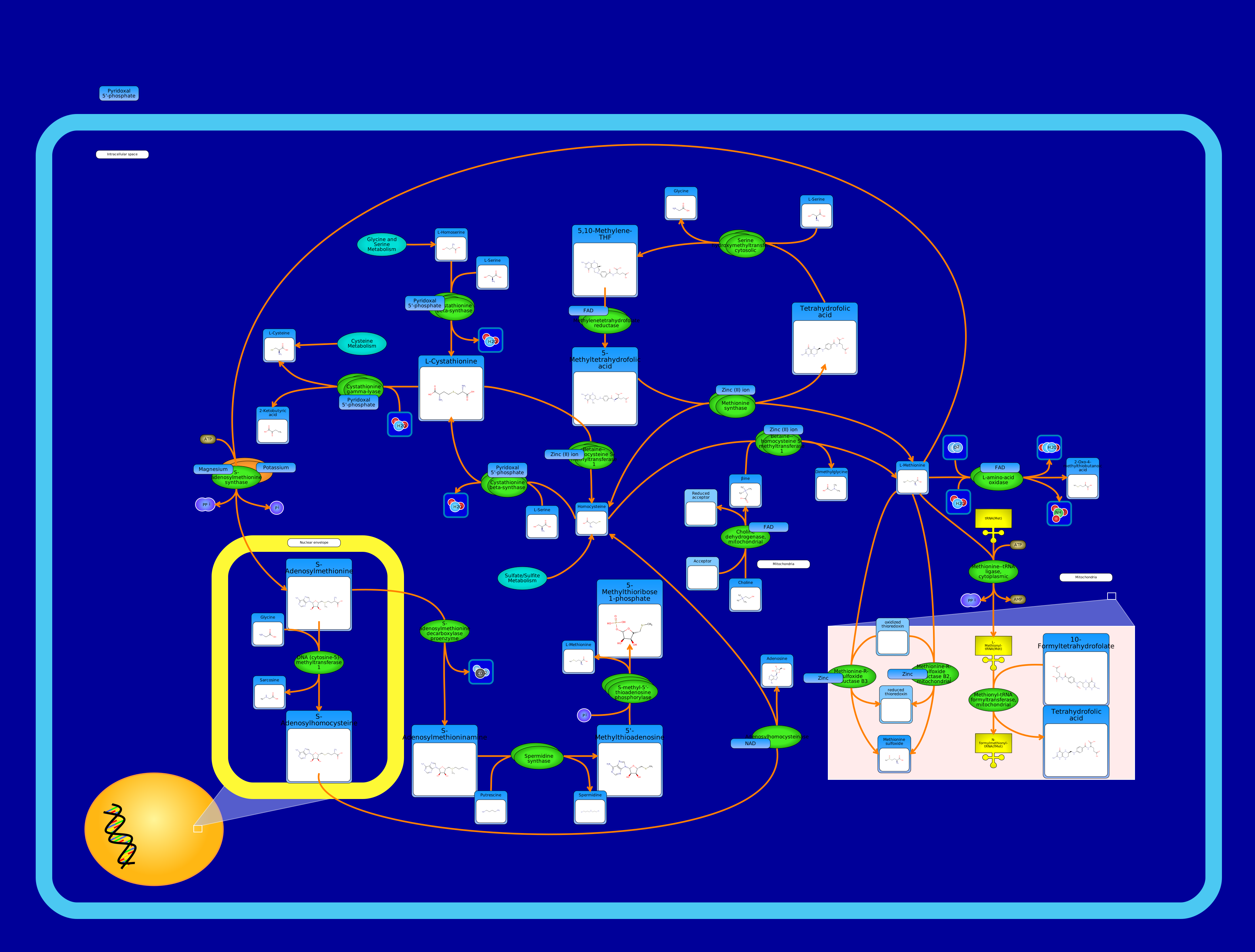 View Pathway
|
MethionineHomo sapiens
|
Metabolite
Metabolic
|
|
|
SMP0729286
View Pathway
|
Generated Pathway 1771965371Homo sapiens
|
Metabolite
Metabolic
|
|
|
SMP0729290
View Pathway
|
ILK SignalingHomo sapiens
|
Metabolite
Signaling
|
|
|
Showing 540811 -
540820 of 540821 pathways