
Browsing Pathways
Showing 540831 -
540840 of 605359 pathways
| PathBank ID | Pathway Name and Description | Pathway Class | Chemical Compounds | Proteins |
|---|---|---|---|---|
SMP0729279 View Pathway
|
Serina-TCA-EMCPMethylobacterium extorquens PA1
|
Metabolite
Metabolic
|
|
|
SMP0122566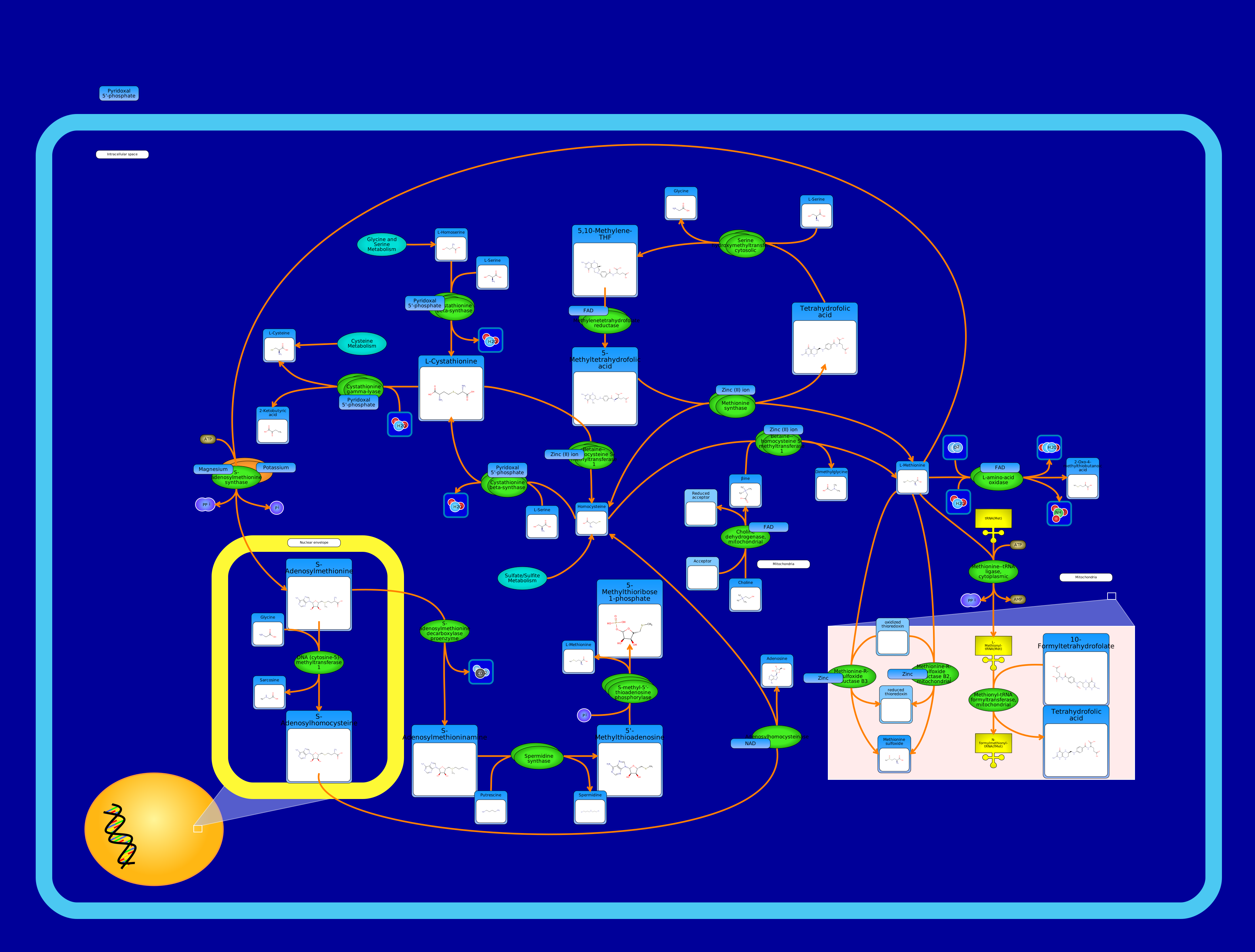 View Pathway
|
MethionineHomo sapiens
|
Metabolite
Metabolic
|
|
|
SMP0729304
View Pathway
|
Glycolysis and Pyruvate Dehydrogenase to deleteBacillus subtilis (strain 168)
Fructose metabolism begins with the transport of beta-D-glucose 6-phosphate through a glucose PTS permease. This compound is isomerized by a glucose-6-phosphate isomerase resulting in fructose 6-phosphate. This compound can be phosphorylated by two different enzymes: a pyridoxal phosphatase/fructose 1,6-bisphosphatase or an ATP-driven 6-phosphofructokinase-1, resulting in fructose 1,6-biphosphate. This compound can either react with a fructose bisphosphate aldolase class 1 resulting in D-glyceraldehyde 3-phosphate and dihydroxyacetone phosphate or through a fructose biphosphate aldolase class 2 resulting in D-glyceraldehyde 3-phosphate. This compound can then either react in a reversible triosephosphate isomerase resulting in dihydroxyacetone phosphate or react with a phosphate through an NAD-dependent glyceraldehyde 3-phosphate dehydrogenase resulting in glyceric acid 1,3-biphosphate. This compound is dephosphorylated by a phosphoglycerate kinase resulting in 3-phosphoglyceric acid. This compound, in turn, can either react with a 2,3-bisphosphoglycerate-independent phosphoglycerate mutase or a 2,3-bisphosphoglycerate-independent phosphoglycerate mutase resulting in 2-phospho-D-glyceric acid. This compound interacts with an enolase resulting in a phosphoenolpyruvic acid and water. Phosphoenolpyruvic acid can react either through an AMP-driven phosphoenoylpyruvate synthase or an ADP-driven pyruvate kinase protein complex resulting in pyruvic acid. The pyruvic acid reacts with CoA through an NAD-driven pyruvate dehydrogenase complex resulting in carbon dioxide and an acetyl-CoA which gets incorporated into the TCA cycle pathway.
|
Metabolite
Metabolic
|
|
|
SMP0122598 View Pathway
|
Methanol pathway in P. pastorisPichia pastoris
|
Metabolite
Metabolic
|
|
|
Showing 540831 -
540840 of 540834 pathways