
Browsing Pathways
Showing 31 -
40 of 605359 pathways
| PathBank ID | Pathway Name and Description | Pathway Class | Chemical Compounds | Proteins |
|---|---|---|---|---|
SMP0002319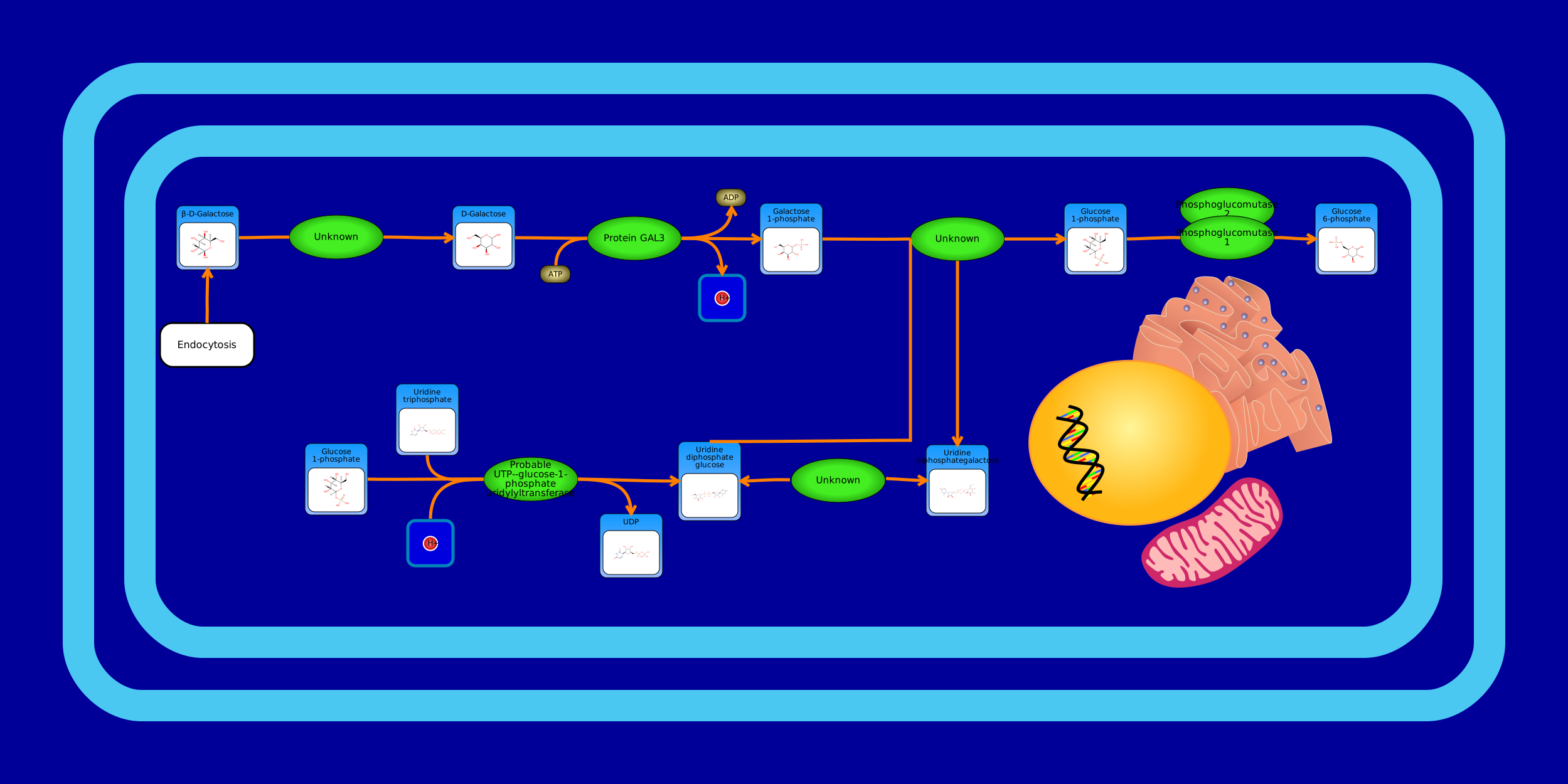 View Pathway
|
Leloir PathwaySaccharomyces cerevisiae
The pathway starts with the isomerization of Beta-D-galactose into Alpha-D-galactose through a galactose mutarotase. Alpha-D-galactose is then phosphorylated through an ATP dependent galactokinase resulting in the release of ADP, a hydrogen ion and alpha-D-galactose 1-phosphate. The latter compound reacts with UDP glucose which is the result of UTP reacting with alpha-D-glucose through a uridinephosphoglucose pyrophosphorylase. The reaction between alpha-D-galactose 1-phosphate and UDP glucose results in the release of glucose 1-phosphate and UDP-alpha-D-galactose.
Glucose 1-phosphate can be further isomerized into glucose 6-phosphate, while UDP-alpha-D-galactose can be reverted into UDP glucose through a UDP-epimerase.
|
Metabolite
Metabolic
|
||
SMP0002334 View Pathway
|
Tetrahydrofolate BiosynthesisSaccharomyces cerevisiae
The biosynthesis of tetrahydrofolate begins with guanosine triphosphate interacting with water through GTP-cyclohydrlase resulting in the release of a formic acid, a hydrogen ion and a dihydroneopterin triphosphate. The latter compound then reacts with water in a spontaneous reaction resulting in the release of pyrophosphate, hydrogen ion and dihydroneopterinphosphate. Dihydroneopterin phosphate then reacts spontaneously with water resulting in the release of phosphate and 7,8-dihydroneopterin. This compound reacts wuth a folic acid synthesis enzyme resulting in the release of glycoaldehyde and 6-hydroxymethyl-7,8-dihydropterin. The latter compound is then diphosphorylated through an ATP driven folic acid synthesis resulting in the release of AMP, a hydrogen ion and 6-hydroxymethyl-7,8-dihydropterin diphosphate. This compound reacts with p-Aminobenzoic acid that is release from chorismate, the reaction happens through a folic acid synthesis resulting in the pyrophosphate and 7,8-dihydropteric acid. The latter compound reacts with glutamic acid through an ATP driven folic acid synthesis 3 resulting in the release of hydrogen ion, a phosphate, ADP and a 7,8-dihydrofolate monoglutamate. The latter compound reacts with a hydrogen ion through a NADPH through a dihydrofolate reductase resulting in the release of NADP and tetrahydrofolate. This compound can also be a result of 5,10 methenyltetrahydrofolic acid reacting with water through a mitochondrials c1-tetrahydrofolate synthase which releases a 10-formyltetrahydrofolate. This compound in turn reacts with a 5-phosphoribosyl-N-formylglycinamide through a glycinamide ribotide transformylase resulting in the release of a tetrahydrofolate and a 5'phosphoribosyl-N-fromylglycinamide.
|
Metabolite
Metabolic
|
|
|
SMP0002343 View Pathway
|
Cardiolipin BiosynthesisSaccharomyces cerevisiae
The biosynthesis of cardiolipin (CL) begins in the endoplasmic reticulum. Glycerone phosphate interacts with an NADPH resulting in the release of NADP and glycerol 3-phosphate. Glycerol 3-phosphate reacts with glycerol-3-phosphate O-acyltransferase resulting in the release of 1-acyl-sn-glycerol 3-phosphate (lysophosphatidic acid or LysoPA). The resulting compound reacts with an acyl-CoA via lysophosphatidate acyltransferase, resulting in the release of a phosphatidic acid (PA or 1,2-diacyl-sn-glycerol 3-phosphate). Phosphatidic acid is transported to the mitochondrial outer membrane. Once in, it gets transported into the mitochondrial inner membrane. The phosphatidic acid reacts with cytidine triphosphate through a phosphatidate cytidyltransferase resulting in the release of a CDP-diacylglycerol (CDP-DG). The resulting compound reacts with a glycerol 3-phosphate through a CDP-diacylglycerol-glycerol-3-phosphate 3-phosphatidyltransferase resulting in the release of cytidine monophosphate and phosphatidylglycerophosphate (PGP). PGP reacts with phosphatidylglycerophosphatase GEP4 resulting in the release of phosphatidylglycerol (PG). PG reacts with a CDP-DG through a cardiolipin synthase resulting in the release of CL and cytidine monophosphate. Cardiolipin remodelling begins with the removal of an acyl chain to form 1-monolysocardiolipin (1-MLCL) via the lipase Cld1p. This is followed by the enzyme Taz1p transferring an acyl chain from a phospholipid (e.g. phosphatidylcholine) to reform cardiolipin.
|
Metabolite
Metabolic
|
|
|
SMP0012064 View Pathway
|
Triacylglycerol DegradationArabidopsis thaliana
In higher plants, the primary seed storage reserve is triacylglycerol rather than carbohydrates. Thus, triacylglycerol degradation is an important pathway from which plants obtain energy for growth. First, triacylglycerol lipase, an enzyme localized to the oil body (storage vacuole) membrane, catalyzes the conversion of a triglyceride into a 1,2-diglyceride. Second, the predicted enzyme diglyceride lipase (coloured orange in the image) is theorized to catalyze the conversion of a 1,2-diglyceride iinto a 2-acylglycerol. Third, a 2-acylglycerol is spontaneously converted into a 1-monoglyceride. Fourth, acylhydrolase catalyzes the conversion of a 1-monoglyceride into glycerol. Fifth, glycerol kinase catalyzes the conversion of glycerol into glycerol 3-phosphate. Sixth, glycerol-3-phosphate dehydrogenase (coloured dark green in the image), localized to the mitochondrial inner membrane, catalyzes the conversion of glycerol 3-phosphate into glycerone phosphate.
|
Metabolite
Metabolic
|
||
SMP0012089 View Pathway
|
PhotosynthesisArabidopsis thaliana
Photosynthesis involves the transfer and harvesting of energy from sunlight and the fixation of carbon dioxide into carbohydrates. This process occurs in higher plants, including Arabidopsis thaliana. Oxygenic photosynthesis requires water, which acts as an electron donor molecule. The reactions which involve the trapping of sunlight are known as "light reactions", and result in the production of NADPH, adenosine triphosphate, and molecular oxygen. The "dark reactions" are known as the Calvin cycle, and involve the use of the products of the light reactions to fix carbon dioxide and produce carbohydrates. Photosynthesis begins with photosystem II, located in the thylakoid membrane within chloroplasts, which captures light energy to transfer electrons from water to plastoquinone. This process generates oxygen as well as a proton gradient used to synthesize ATP. The D1/D2 (psbA/psbD) reaction center heterodimer binds P680, the primary electron donor of PSII as well as several subsequent electron acceptors. Next, the cytochrome b6-f complex mediates electron transfer between photosystem II (PSII) and photosystem I (PSI). Plastoquinol shuttles electrons from PSII to cytochrome b6-f complex. Plastocyanin shuttles electrons from cytochrome b6-f complex to PSI. Photosystem I is a plastocyanin-ferredoxin oxidoreductase which uses light energy to transfer an electron from the donor P700 chlorophyll pair to the electron acceptors A0, A1, FX, FA and FB in turn. The function of PSI is to produce the NADPH necessary for the reduction of CO2 in the Calvin-Benson cycle. Finally, the proton gradient allows ATPase to synthesize ATP from ADP. The light-independent Calvin-Benson cycle consist of nine reactions that take place in the chloroplast stroma. Beginning with the enzyme RuBisCO, D-ribulose-1,5-bisphosphate is converted into 3-phosphoglyceric acid. It requires magnesium ion as a cofactor. Next, chloroplastic glyceraldehyde 3-phosphate dehydrogenase catalyzes the conversion of glyceric acid 1,3-biphosphate into D-glyceraldehyde 3-phosphate. Then triose-phosphate isomerase catalyzes the conversion of D-glyceraldehyde 3-phosphate into dihydroxyacetone phosphate. Next, the enzyme fructose-bisphosphate aldolase catalyzes the conversion of dihydroxyacetone phosphate into fructose 1,6-bisphosphate. Then fructose-1,6-bisphosphatase catalyzes the conversion of fructose 1,6-bisphosphate into fructose-6-phosphate. It requires magnesium ion as a cofactor. Next, transketolase catalyzes the conversion of fructose-6-phosphate into xylulose 5-phosphate. It requires a divalent metal cation and thiamine diphosphate as cofactors. Then the enzyme ribulose-phosphate 3-epimerase is catalyzes the interconverson of xylulose 5-phosphate and D-ribulose 5-phosphate. Lastly, phosphoribulokinase catalyzes the conversion of D-ribulose 5-phosphate to regenerate D-ribulose-1,5-bisphosphate. An alternative pathway intersects the Calvin-Benson cycle providing another route to synthesize D-ribulose 5-phosphate and D-xylulose 5-phosphate, which both feed back into the main cycle, from dihydroxyacetone phosphate. This subpathway begins with the predicted enzyme sedoheptulose-1,7-bisphosphate aldolase theorized to catalyze the converson of glycerone phosphate and D-erythrose 4-phosphate into sedoheptulose-1,7-bisphosphate. Next, sedoheptulose-1,7-bisphosphatase catalyzes the conversion of sedoheptulose-1,7-bisphosphate into D-sedoheptulose 7-phosphate. Next, transketolase catalyzes the converson of D-sedoheptulose 7-phosphate into D-ribose 5-phosphate and D-xylulose 5-phosphate (which feeds back into the main cycle). Lastly, ribose-5-phosphate isomerase is the probable enzyme that catalyzes the interconverson of D-ribose 5-phosphate and D-ribulose 5-phosphate. D-ribulose 5-phosphate feeds back into the main cycle.
|
Metabolite
Metabolic
|
|
|
SMP0012446 View Pathway
|
Ascorbate MetabolismArabidopsis thaliana
Vitamin C (ascorbate) is a vitamin found in food and used as a dietary supplement. The vast majority of animals and plants are able to synthesize vitamin C, through a sequence of enzyme-driven steps, which convert monosaccharides to vitamin C. In plants, this is accomplished through the conversion of mannose or galactose to ascorbic acid starting in the cytosol and ending in the mitochondrial matrix . First, GDP-mannose 3,5-epimerase catalyzes the reversible epimerization of GDP-D-mannose into either GDP-L-gulose or GDP-L-galactose. It also can reversibly epimerize GDP-L-gulose into GDP-L-galactose and vice versa. It requires NAD as a cofactor. Second, GDP-L-galactose phosphorylase catalyzes the conversion of GDP-L-galactose into L-galactose 1-phosphate. Third, L-galactose 1-phosphate phosphatase catalyzes the conversion of L-galactose 1-phosphate into L-galactose. It requires magnesium ion as a cofactor. Fourth, L-galactose dehydrogenase catalyzes the conversion of L-galactose into L-galactono-1,4-lactone. L-galactono-1,4-lactone must then be imported into the mitochondrial matrix by a predicted innermitochondrial membrane transporter to complete ascorbate synthesis. L-galactono-1,4-lactone dehydrogenase, localized to the innermitochondrial membrane (coloured dark green in the image), catalyzes two reactions in ascorbate metabolism: the conversion of L-galactono-1,4-lactone into L-ascorbate and the subsequent conversion of L-ascorbate into L-dehydroascorbate. It requires FAD as a cofactor. Ascorbate can then be converted into monodehydroascorbate radical by the mitochondrial L-ascorbate peroxidase S (this plays a key role in hydrogen peroxide removal). Monodehydroascorbate reductase 5 then can convert monodehydroascorbate radical back into L-ascorbate.
|
Metabolite
Metabolic
|
||
SMP0012467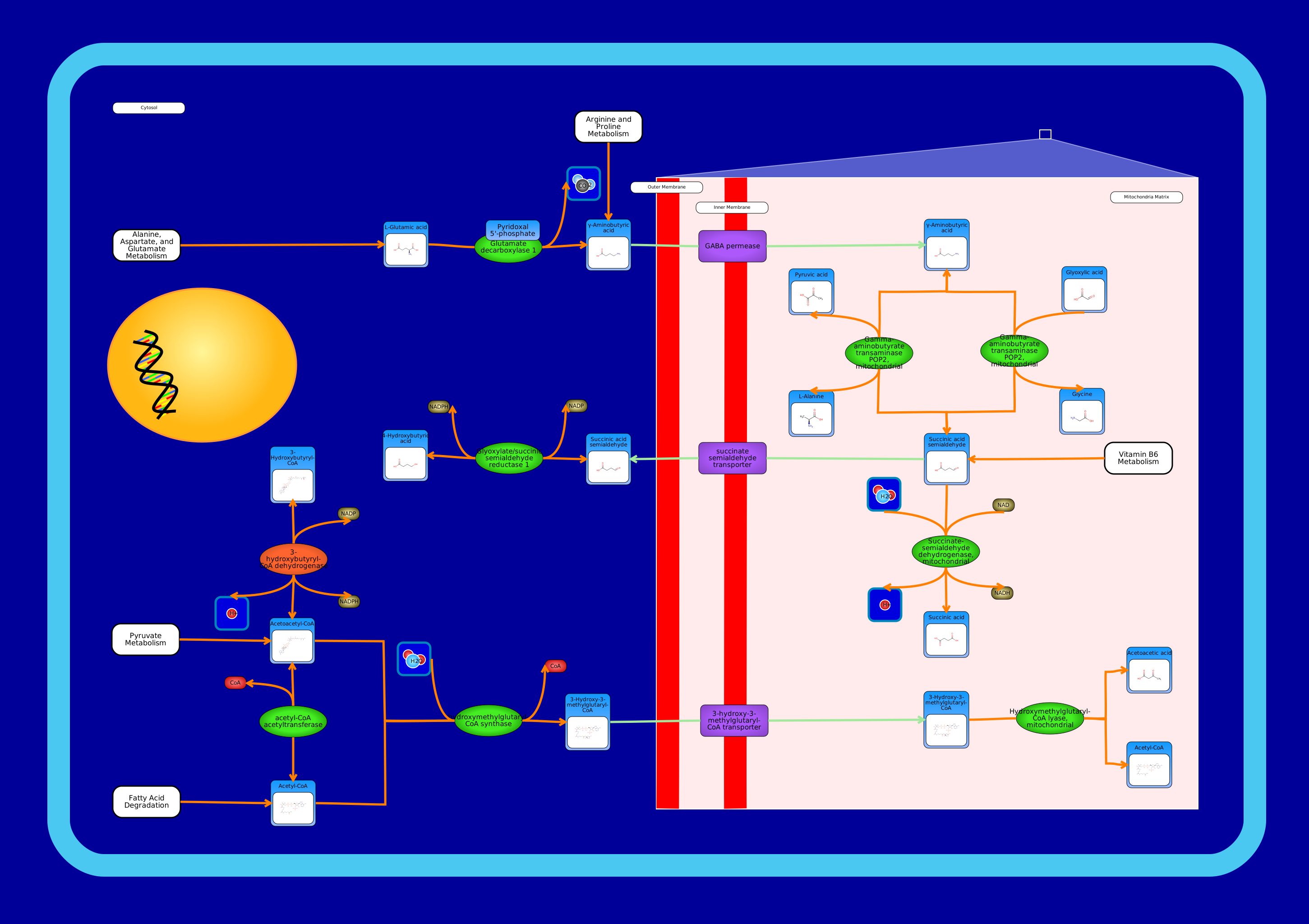 View Pathway
|
Butanoate MetabolismArabidopsis thaliana
Butanoate or butyrate is the traditional name for the conjugate base of butanoic acid (also known as butyric acid). Butanoate metabolism includes L-glutamate degradation into the signal molecule GABA followed by subsequent reactions to make further products. Glutamate decarboxylase is an enzyme in the cytosol that catalyzes the conversion of L-glutamate into 4-aminobutanoate (GABA). It requires pyridoxal 5'-phosphate as a cofactor. This is followed by GABA permease, belonging to the APC Family of transport proteins, transporting GABA from the cytosol into the mitochondria matrix. Next, gamma-aminobutyrate transaminase degrades gamma-amino butyric acid (GABA) into succinate semialdehyde and uses either pyruvate or glyoxylate as an amino-group acceptor. The pyruvate-dependent activity is reversible while the glyoxylate-dependent activity is irreversible. Afterwards, succinate-semialdehyde dehydrogenase oxidizes succinate semialdehyde into succinate. A predicted succinate semialdehyde transporter in the mitochondria inner membrane is theorized to export succinate semialdehyde from the mitochondrial matrix into the cytosol. There, glyoxylate/succinic semialdehyde reductase catalyzes the reversible conversion of succinate semialdehyde into 4-hydroxybutanoate. Butanoate metabolism in Arabidopsis thaliana also includes reactions involving acetyl-CoA and acetoacetyl-CoA. 3-hydroxybutyryl-CoA dehydrogenase is a predicted enzyme (coloured orange in the image) in the cytosol that is theorized to catalyze the reversible conversion of 3-hydroxybutanoyl-CoA into acetoacetyl-CoA. Acetyl-CoA acetyltransferase then catalyzes the reversible conversion of acetoacetyl-CoA into acetyl-CoA. Then, hydroxymethylglutaryl-CoA synthase condenses acetyl-CoA with acetoacetyl-CoA to form 3-hydroxy-3-methylglutaryl-CoA. This is followed by a predicted 3-hydroxy-3-methylglutaryl-CoA transporter localized to the mitochondria inner membrane that is theorized to import 3-hydroxy-3-methylglutaryl-CoA into the mitochondrial matrix from the cytosol. Once there, hydroxymethylglutaryl-CoA lyase catalyzes the synthesis of acetoacetate and acetyl-CoA from 3-hydroxy-3-methylglutaryl-CoA.
|
Metabolite
Metabolic
|
|
|
SMP0014205 View Pathway
|
Phosphatidylcholine BiosynthesisArabidopsis thaliana
Phosphatidylcholines (PC) are a class of phospholipids that incorporate a phosphocholine headgroup into a diacylglycerol backbone. They are the most abundant phospholipid in eukaryotic cell membranes and has both structural and signalling roles. In eukaryotes, there exist two phosphatidylcholine biosynthesis pathways: the Kennedy pathway and the methylation pathway. The Kennedy pathway begins with the direct phosphorylation of free choline into phosphocholine followed by conversion into CDP-choline and subsequently phosphatidylcholine. It is the major synthesis route in animals. The methylation pathway involves the 3 successive methylations of phosphoethanolamine to form phosphocholine which is then funnelled into the Kennedy pathway to make phosphatidylcholine. In plants, phosphatidylcholine biosynthesis is implemented using a mix between the two pathways. An alternative of the methylation pathway uses phosphatidylethanolamine as a starting compound, but no enzyme has been found in Arabidopsis to catalyze the first methylation to form phosphatidyl-N-methylethanolamine. Many enzymes involved in this pathway are localized to the cell membrane but are not drawn as such for clarity. Instead, they are indicated with a dark green colour and appear to be free floating in the cytosol. The first reaction of the Kennedy pathway involves the membrane-localized enzyme choline/ethanolamine kinase catalyzing the conversion of choline into phosphocholine. Second, choline-phosphate cytidylyltransferase catalyzes the conversion of phosphocholine to CDP-choline. Last, choline/ethanolaminephosphotransferase, localized to the cell membrane, catalyzes phosphatidylcholine biosynthesis from CDP-choline. It requires either magnesium or manganese ions as cofactors. Note that phosphatidylcholine can be converted to either phosphocholine by a non-specific phospholipase or converted to choline by phospholipase D. Phosphocholine can also be converted to choline via phosphoethanolamine/phosphocholine phosphatase. The methylation pathway begins with serine decarboxylase catalyzing the biosynthesis of ethanolamine from serine. It requires pyridoxal 5'-phosphate as a cofactor. Next, choline/ethanolamine kinase, localized to the cell membrane, catalyzes the conversion of ethanolamine to phosphoethanolamine. Phosphoethanolamine N-methyltransferase (PEAMT), located in the cytosol, then catalyzes three sequential N-methylation steps to convert phosphoethanolamine to phosphocholine. PEAMT uses S-adenosyl-L-methionine as a methyl donor. Phosphocholine then enters the Kennedy pathway. Alternatively, in a subpathway parallel to the Kennedy pathway, phosphoethanolamine can be converted into phosphatidylethanolamine. Phosphatidylethanolamine is also synthesized from phosphatidylserine in the endoplasmic reticulum by phosphatidylserine decarboxylase. Note that phosphatidylethanolamine can be converted to either phosphoethanolamine by a non-specific phospholipase or converted to ethanolamine by phospholipase D. The two methylated intermediates N-methylethanolamine phosphate and N-dimethylethanolamine phosphate can also undergo reactions parallel to the Kennedy pathway to form the methylated intermediates of phosphatidylethanolamine (otherwise catalyzed by phosphatidyl-N-methylethanolamine N-methyltransferase, localized to the endoplasmic reticulum membrane, to form phosphatidylcholine).
|
Metabolite
Metabolic
|
|
|
SMP0014212 View Pathway
|
Phosphatidylcholine BiosynthesisHomo sapiens
Phosphatidylcholines (PC) are a class of phospholipids that incorporate a phosphocholine headgroup into a diacylglycerol backbone. They are the most abundant phospholipid in eukaryotic cell membranes and has both structural and signalling roles. In eukaryotes, there exist two phosphatidylcholine biosynthesis pathways: the Kennedy pathway and the methylation pathway. The Kennedy pathway begins with the direct phosphorylation of free choline into phosphocholine followed by conversion into CDP-choline and subsequently phosphatidylcholine. It is the major synthesis route in animals. The methylation pathway involves the 3 successive methylations of phosphatidylethanolamine to form phosphatidylcholine. The first reaction of the Kennedy pathway involves the cytosol-localized enzyme choline/ethanolamine kinase catalyzing the conversion of choline into phosphocholine. Second, choline-phosphate cytidylyltransferase, localized to the endoplasmic reticulum membrane, catalyzes the conversion of phosphocholine to CDP-choline. Last, choline/ethanolaminephosphotransferase catalyzes phosphatidylcholine biosynthesis from CDP-choline. It requires either magnesium or manganese ions as cofactors. A parallel Kennedy pathway forms phosphatidylethanolamine from ethanolamine - the only difference being a different enzyme, ethanolamine-phosphate cytidylyltransferase, catalyzing the second step. Phosphatidylethanolamine is also synthesized from phosphatidylserine in the mitochondrial membrane by phosphatidylserine decarboxylase. Phosphatidylethanolamine funnels into the methylation pathway in which phosphatidylethanolamine N-methyltransferase (PEMT) then catalyzes three sequential N-methylation steps to convert phosphatidylethanolamine to phosphatidylcholine. PEMT uses S-adenosyl-L-methionine as a methyl donor.
|
Metabolite
Metabolic
|
||
SMP0063472 View Pathway
|
Vitamin B6 MetabolismArabidopsis thaliana
Vitamin B6 is a water-soluble vitamin essential for all living organisms. It is an important cofactor for enzymatic reactions in over one hundred different cellular reactions and processes. Vitamin B6 exists in different natural forms called vitamers, which are produced by plants, bacteria, and fungi, but not by animals and humans. These vitamers include: pyridoxal (PL), pyridoxine (PN) and pyridoxamine (PM) and their phosphorylated vitamers, PLP, PNP and PMP respectively. Vitamin B6 metabolic pathway was mainly characterized in E. coli, however most organisms, including plants, utilize an alternate pathway. In plants, the various vitamers can be produced via different specific pathways. In A. thaliana, this biosynthetic pathway involves few subpathways, which include: glycolysis, pentose phosphate pathway (PPP), and glyoxylate and dicarboxylate metabolism. Glyceraldehyde 3-phosphate produced by glycolysis and ribulose 5-phosphate produced by PPP are synthesized to pyridoxal 5-phosphate by a synthase. Pyridoxal 5-phosphate is then dephosphorylated to pyridoxal. Pyridoxal, a form of vitamin B6, could act as a precursor for butanoate metabolsim. Moreover, from PPP, 2-Oxo-3-hydroxy-4-phosphobutanoate is produced, this is synthesized to O-phospho-4-hydroxy-L-threonine and then to 4-hydroxy-L-threonine. Pyridoxine could also be produced after a multistep reaction from 4-hydroxy-L-threonine, which is then synthesized to pyridoxal. Glycoaldehyde produced from glyoxylate and dicarboxylate metabolism is converted to pyridoxine. Pyridoxine could also undergo phosphorylation where it is converted to pyridoxine phosphate which is then synthesized to pyridoxal 5-phosphate where the later is dephosphorylated to pyridoxal. Pyridoxal could also be synthesized to pyridoxamine, this that is phosphorylated to pyridoxamin 5-phosphate, which is then synthesized to pyridoxal 5-phosphate.
|
Metabolite
Metabolic
|
|
Showing 31 -
40 of 540792 pathways